
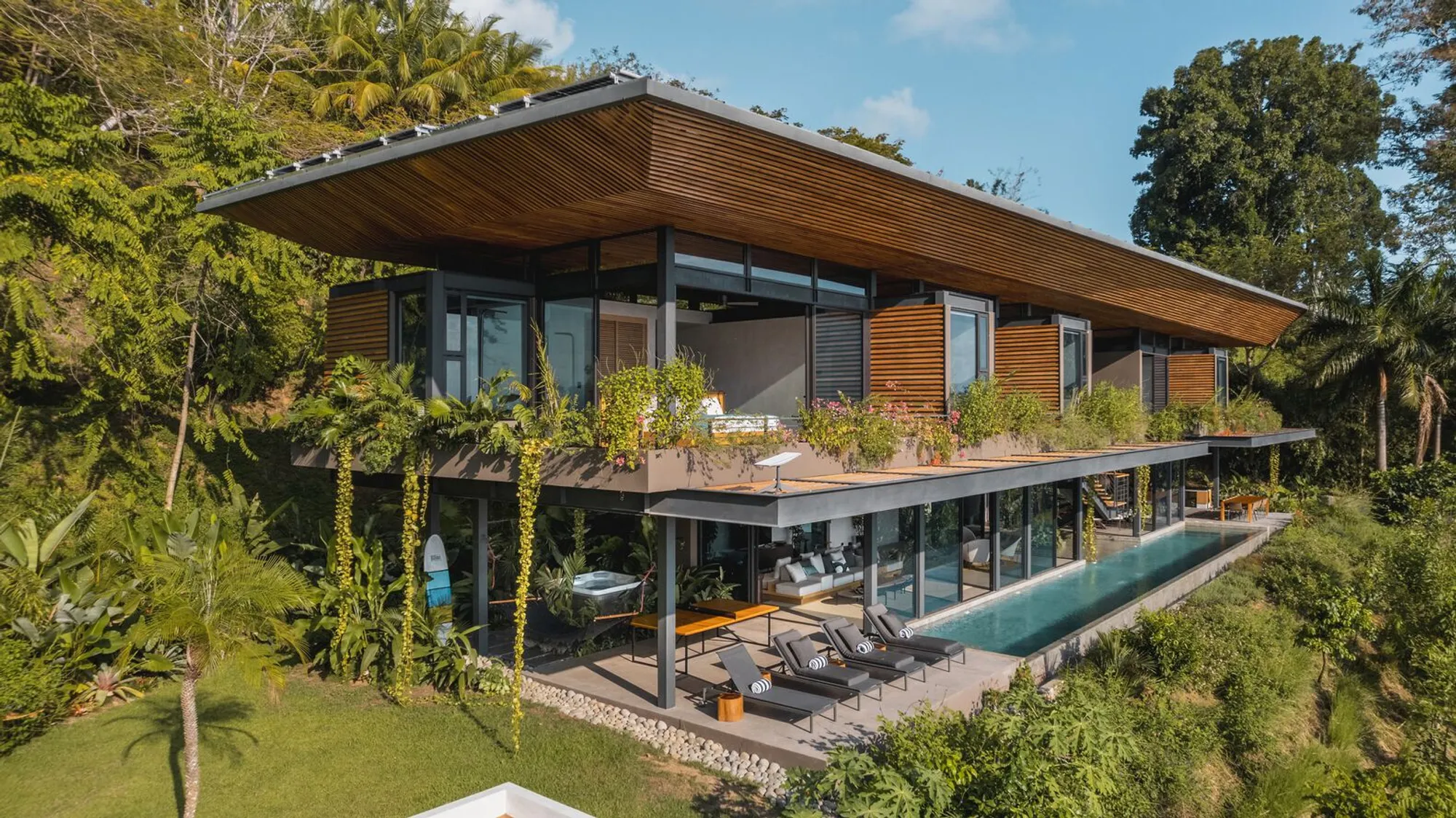
Cascada de Luz House, Costa Rica | Tropical Sustainable Architecture by Studio Saxe
A sustainable tropical residence blending perforated roof, cascading greenery, ocean views, and passive design into immersive rainforest living.


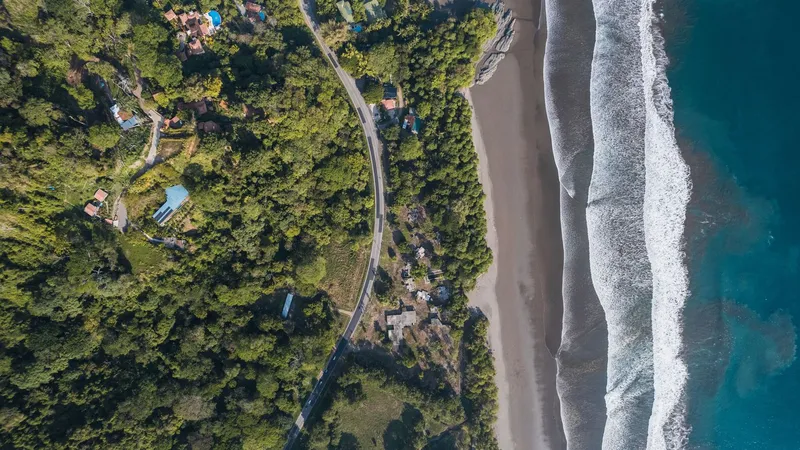
Nestled into the lush mountainside of Bahía Ballena, directly across from the coastal town of Dominical, Cascada de Luz House is a contemporary tropical residence that dissolves boundaries between architecture, landscape, and climate. Designed by Studio Saxe, the 705-square-meter home exemplifies sustainable residential architecture in Costa Rica, responding sensitively to topography, biodiversity, and oceanic horizons.
Overlooking the Pacific surf lineup, where whales annually migrate and rear their young, the house is conceived as a sequence of spatial experiences that progressively reveal the site’s ecological richness. From filtered daylight and ocean breezes to immersive jungle gardens and reflective water elements, Cascada de Luz House embodies a refined balance between luxury living and environmental responsibility.
Architecture Rooted in Landscape and Light
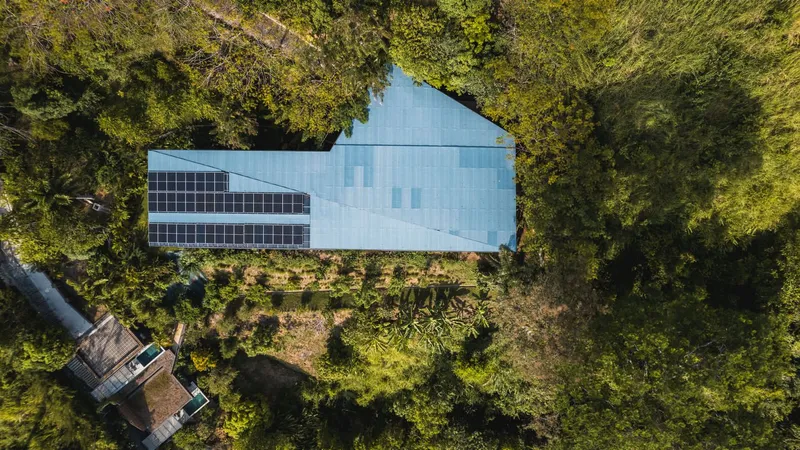
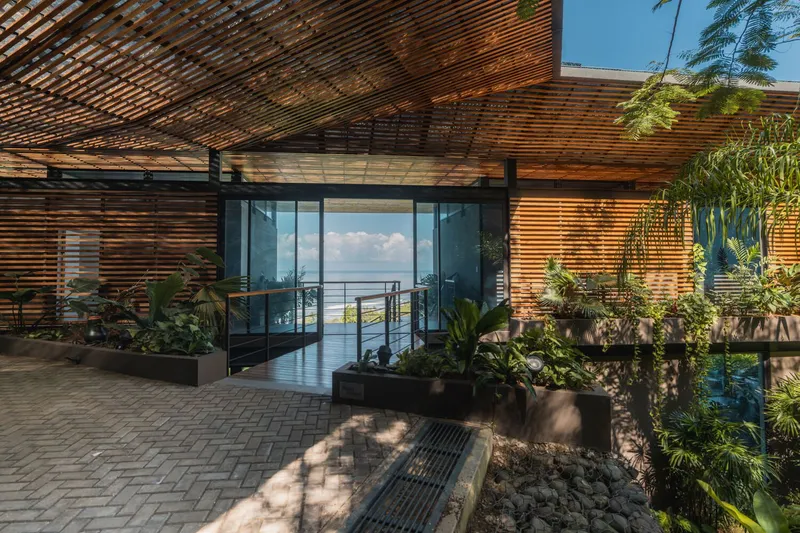
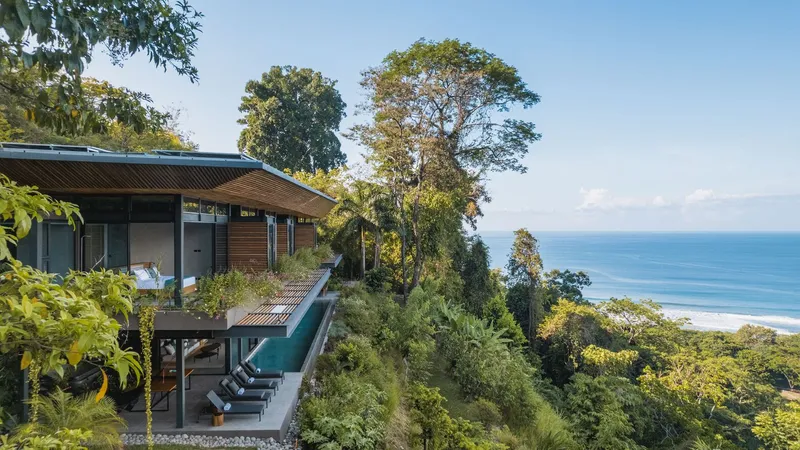
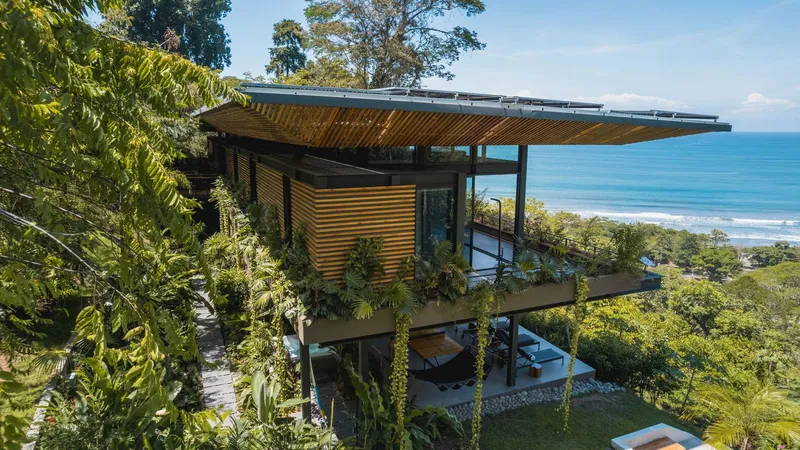
Arrival at Cascada de Luz House is intentionally cinematic. As visitors descend the driveway, framed glimpses of the ocean appear through dense tropical foliage, creating anticipation before the architecture fully reveals itself. The roof canopy, hovering lightly above the structure, is composed of perforated panels subtly tinted blue, visually dissolving into the horizon line of the sea.
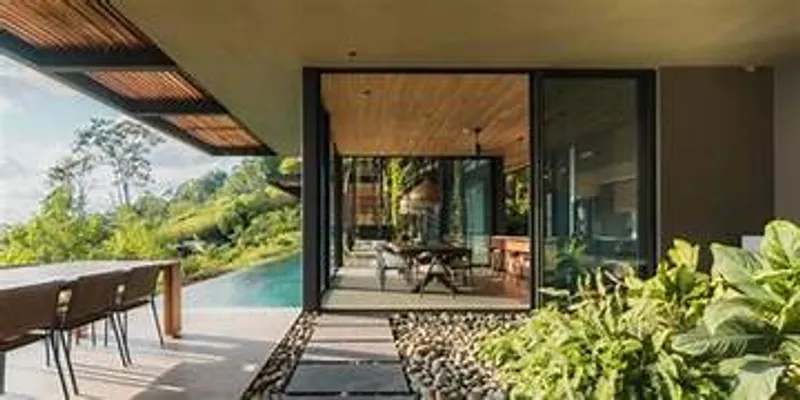
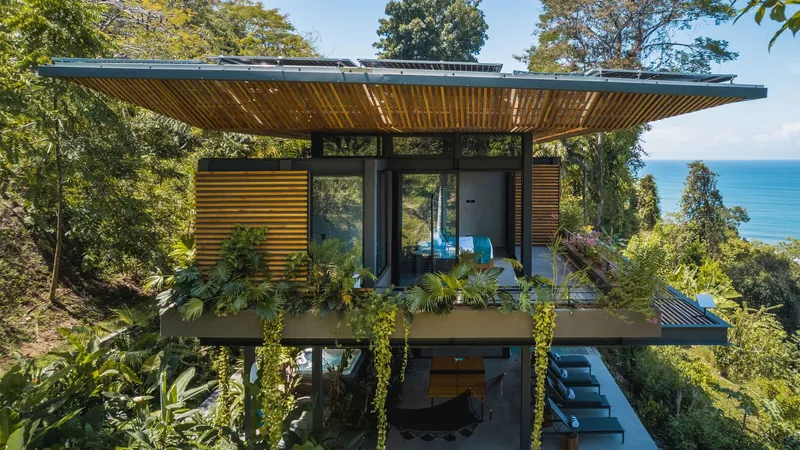
Passing beneath the deep overhang, guests enter a shaded and protected threshold where soft, dappled light filters through perforated metal, translucent sheets, and teak louvers. The resulting atmosphere recalls the sensation of standing within a dense rainforest canopy, blurring distinctions between built and natural environments.
Throughout the day, sunlight animates the interiors, while natural ventilation allows cooling breezes scented with native flora to flow freely through the home. As night falls, the architecture reverses its effect: warm interior light escapes through the perforated roof, evoking moonlight shimmering across ocean waves.
Spatial Organization and Indoor, Outdoor Living
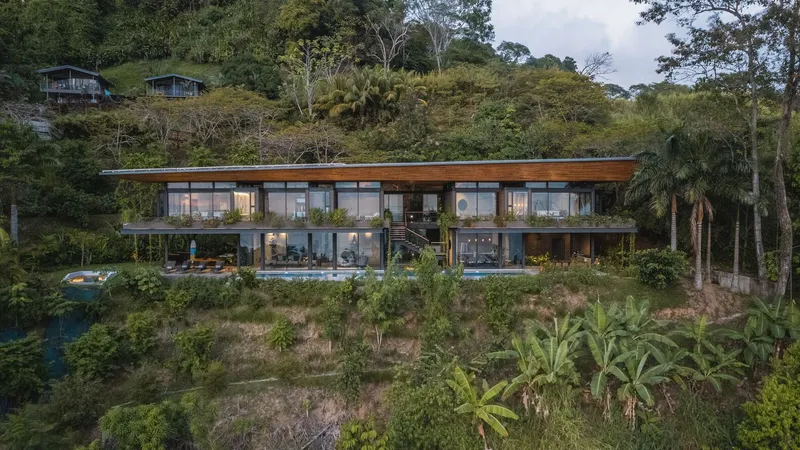
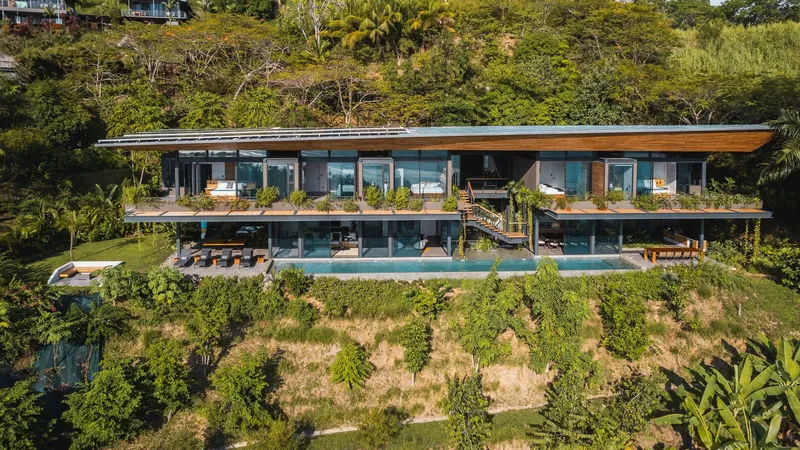
The residence unfolds across two primary levels, connected by an open central atrium and staircase suspended above a shallow extension of the swimming pool. A wooden bridge crossing a bamboo grove leads to the upper level, framing a dramatic sunset view over the Pacific Ocean.
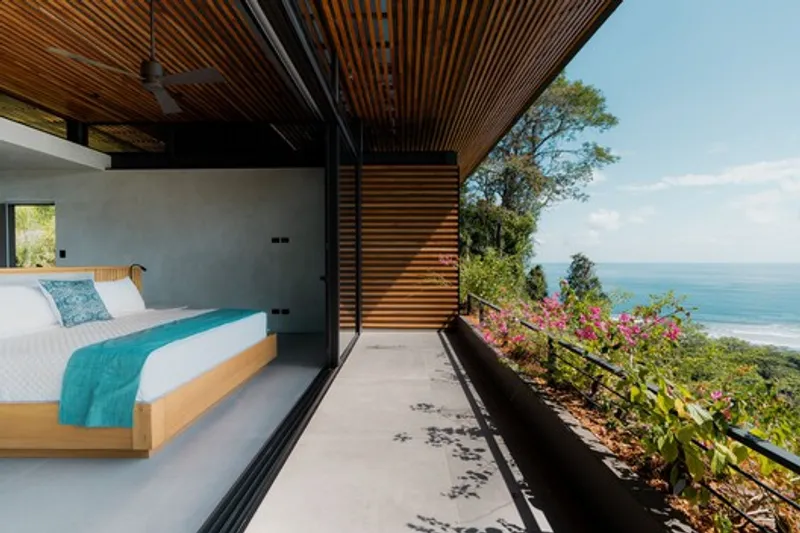
Private bedroom suites occupy this level, including master suites positioned on each wing. Each bedroom features its own balcony, en-suite bathroom, and outdoor shower, reinforcing a constant connection to nature. Elevated windows promote cross-ventilation, reducing reliance on mechanical air conditioning.
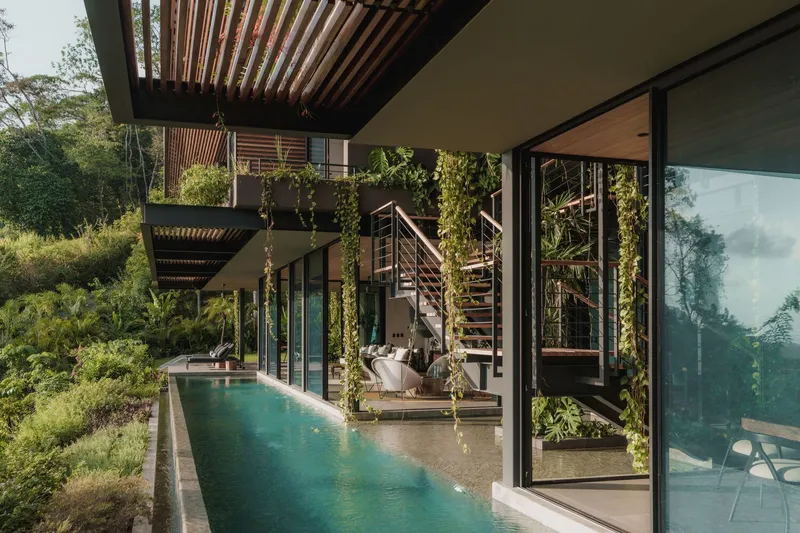
Below, the social spaces are immersed in greenery on three sides and open fully toward a 24-meter infinity lap pool that appears to float above the steep slope. The pool functions as both a visual anchor and a spatial connector, linking the living room, dining area, breakfast terrace, barbecue zone, jacuzzi, garden, and firepit. Movement through the house is fluid and intuitive, allowing residents to transition between indoor and outdoor environments as effortlessly as moving through water.
Sustainable Design and Bioclimatic Performance
Sustainability is not an add-on but a core design driver of Cascada de Luz House. The dynamic roof structure functions as a large-scale rainwater harvesting and filtration system. Its perforated panels naturally filter leaves and debris, channeling rainwater into three substantial storage tanks concealed beneath the carport. These tanks supply all domestic and landscape water needs throughout the year.
Beyond water autonomy, the stored rainwater also acts as thermal mass, stabilizing indoor temperatures on the lower level. Photovoltaic panels integrated between roof elements generate renewable energy, enabling near-autonomous operation of the house.
Passive bioclimatic strategies are evident throughout the architecture. Generous overhangs mitigate solar heat gain, while non-enclosed circulation zones and expansive openings minimize the need for conditioned spaces. Carefully oriented windows and shaded facades ensure thermal comfort while maintaining uninterrupted views of the surrounding rainforest and ocean.
Material selection further reinforces the project’s environmental ethos. All timber used in the house is certified from responsibly managed forests, reducing embodied carbon while enhancing the tactile warmth of the interiors.
Landscape Integration and Biodiversity Regeneration
The architectural and landscape design were developed simultaneously, allowing each discipline to inform and enhance the other. Studio Saxe’s landscape team worked closely with the architects to revive and regenerate the site’s original ecosystem rather than merely decorate its perimeter.
Vegetation is woven directly into the architecture. Planter boxes wrapping the second level support cascading vines that descend along the facades and converge within the central atrium, bringing greenery deep into the heart of the house. Surrounding terraces and gardens are planted with endemic species that restore soil health and promote biodiversity.
Fruit-bearing trees provide nourishment for local wildlife such as macaws and bats, which also serve as natural pest control. Flowering plants attract hummingbirds, butterflies, and bees, transforming the home into a living ecological system. Meandering pathways and stepping-stone trails invite exploration of the property, encouraging daily interaction with Costa Rica’s remarkable biodiversity.
Structural Innovation on a Steep Terrain
Constructing a residence on a steep mountainside posed both challenges and opportunities. The elongated infinity pool doubles as a massive retaining structure, stabilizing the building against the slope while creating a dramatic visual edge overlooking the landscape.
One of the most complex engineering challenges was concealing the large rainwater storage tanks required to endure the dry season. This was resolved by positioning them against the rear of the building pad and using them as a structural base for the upper-level carport.
The roof represents the project’s most structurally ambitious element. Designed to appear light and floating, it nonetheless had to withstand hurricane-force winds while supporting the combined loads of rainwater and solar panels. A system of slender steel trusses distributes these forces efficiently down narrow columns, maintaining visual delicacy without compromising structural resilience. The cavities between trusses also allow for concealed electrical and mechanical systems, ensuring long-term accessibility and maintenance.
A Model for Contemporary Tropical Architecture
Cascada de Luz House stands as a compelling example of contemporary tropical architecture that prioritizes environmental harmony, experiential richness, and technical innovation. Through its seamless integration of architecture, landscape, water, and light, the project demonstrates how luxury residential design can coexist responsibly within fragile ecosystems.
By embracing passive climate strategies, renewable energy, water autonomy, and biodiversity regeneration, Cascada de Luz House sets a benchmark for sustainable housing in Costa Rica and beyond: an architecture that listens carefully to its site and responds with elegance, restraint, and purpose.
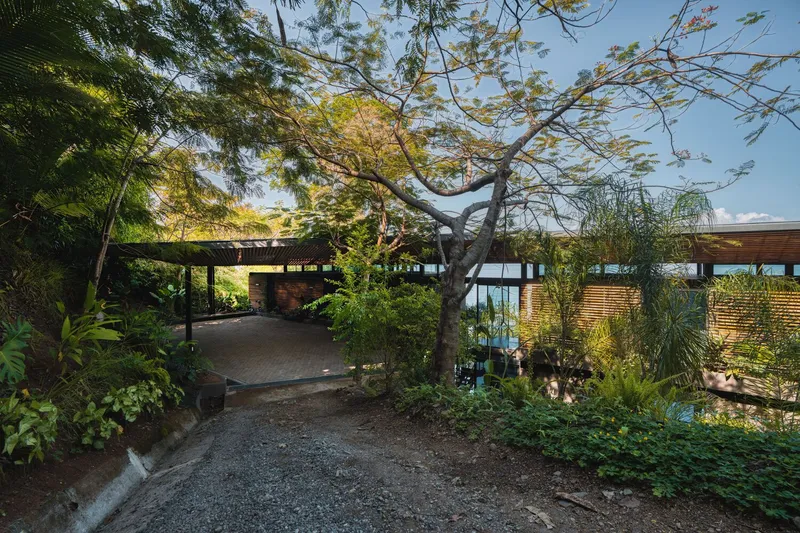
All photographs are works of
Alvaro Fonseca




Popular Articles
Popular articles from the community


Play: Fragments of Their World
Familiar architecture becomes modular playground design, creating safe spaces where displaced children can learn, connect, imagine and play.

Co-Life: Senior Housing Design That Reconnects Older Adults With the City
Co-Life reimagines senior housing design through healing gardens, shared streets, workshops, and a sustainable community across generations.

The Earth Pod: 3D Printed Homes for Resilient Refugee Communities
The Earth Pod reimagines refugee housing through 3D printed homes made from clay, combining resilience, self-sufficiency, and rapid shelter.

Lunar Spiral: Space Architecture Shaped by the Mathematics of the Universe
Lunar Spiral reimagines space architecture through Fibonacci geometry, lunar regolith, levitating habitats, and self-sustaining Moon living.

Similar Reads
You might also enjoy these articles

FAMM Arquitectura Organizes Ten Villas Around Courtyards and Jungle in Nosara, Costa Rica
El Molino pairs two elongated volumes with deep overhangs and timber louvers to build a compact coastal community five minutes from the beach.
Oscar Niemeyer's Ibirapuera Park Pavilions Define São Paulo's Cultural Identity in Concrete and Curve
A constellation of modernist volumes set within São Paulo's most important urban park, conceived for the city's 400th anniversary in 1954.
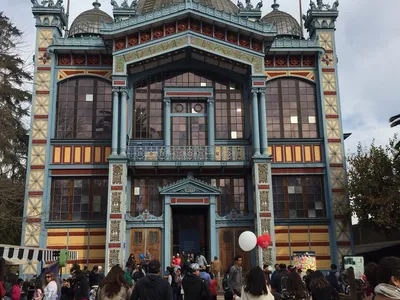
How Henri Picq's 1889 Paris Pavilion Traveled 11,000 Kilometers to Become Santiago's Artequín Museum
A prefabricated iron and glass pavilion built for the Paris Universal Exposition found a second life as a children's art museum in Chile.
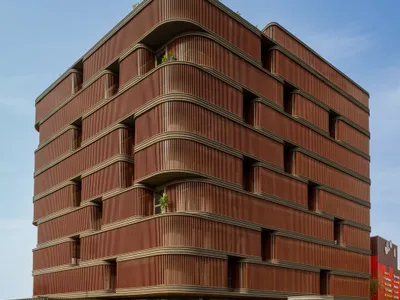
Sanjay Puri Architects Wraps a Jaipur Office Tower in Capsule-Shaped Green Buffers
A nine-level climate-responsive workplace near Jaipur Airport uses stacked planter terraces and aluminium screens to fight 40°C heat.

Explore Residential Building Competitions
Discover active competitions in this discipline


Challenge to design mud housing for contemporary communities


Challenge to reimagine the Iron Throne


Photograph architecture without architects


Illustrate the lost glory of Angkor Wat - Render Challenge
Comments (0)
Please login or sign up to add comments
No comments yet. Be the first to comment!