
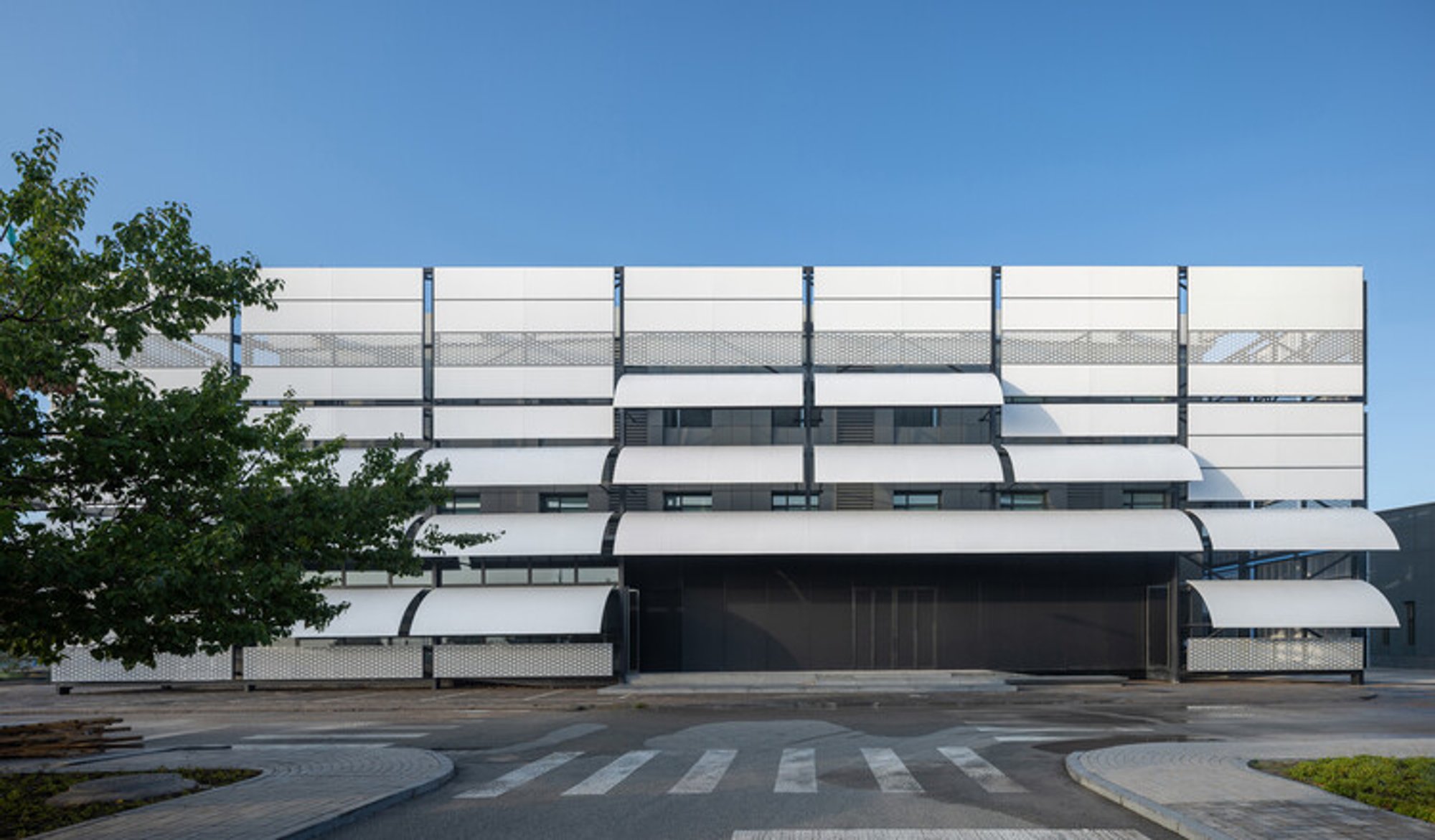
Cashmere Tech Center by waa — Regenerating an Industrial Icon into a Modern Collaborative Hub
waa transforms Ordos’ Cashmere Tech Center into a modern R&D hub blending industrial heritage, collaborative design, and innovative architectural identity.

A Desert Industrial Landmark Reimagined
Set in the vast desert landscape of Ordos, Inner Mongolia, the Cashmere Tech Center by waa (we architect anonymous) stands as a bold example of how architecture can transform aging industrial facilities into vibrant, future-ready creative hubs. Originally built at the turn of the millennium as part of a large, self-contained cashmere factory complex, the building once served as a specialized research and production center for luxury textiles.
The 2025 renovation redefines the center as a collaborative research and development (R&D) community, embracing innovation, communication, and sustainability while preserving the site’s industrial heritage.
Design Vision — From Isolation to Interaction
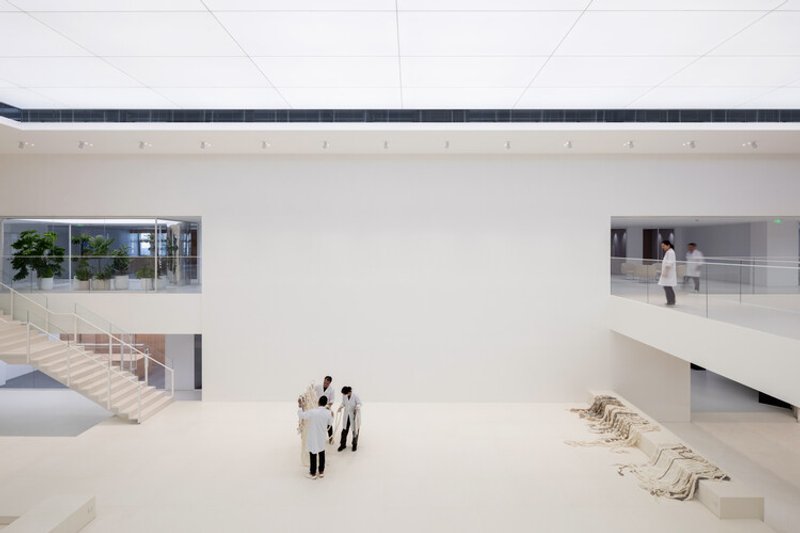
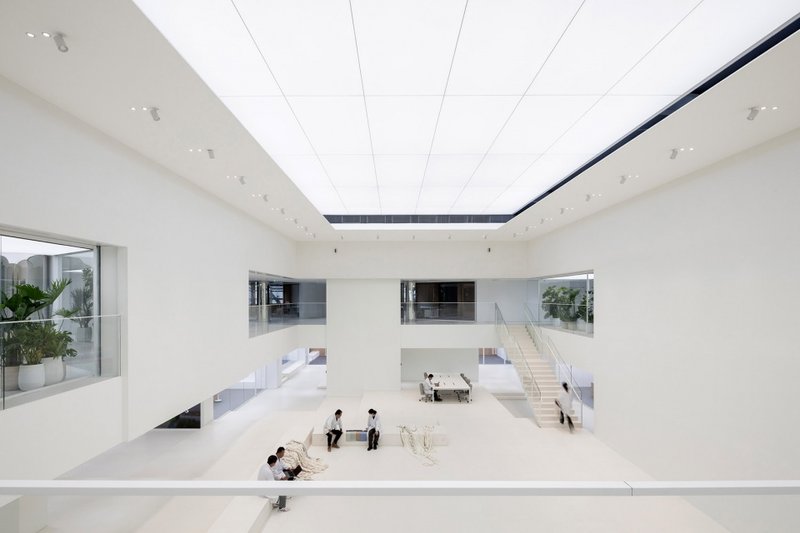
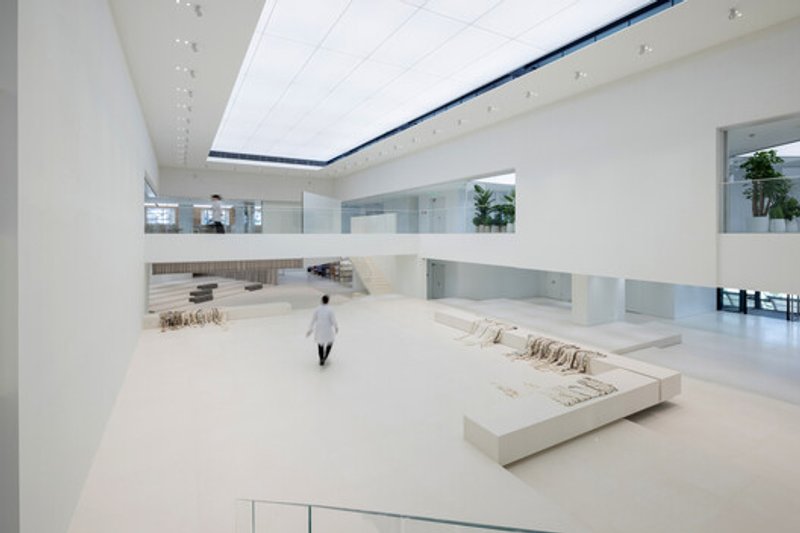
The architects envisioned a new kind of workplace—open, adaptable, and socially connected. In contrast to the original closed “donut” plan, the new design introduces transparency and movement through an open atrium, glass-walled studios, and visual corridors that link spaces across different floors.
A new ramp system and secondary entrance at Level 2 provide independent access, giving the building autonomy and fluid circulation. This approach fosters interaction between researchers, designers, and visitors, symbolizing the brand’s evolution from tradition to modernity.
Spatial Transformation and Community Dynamics
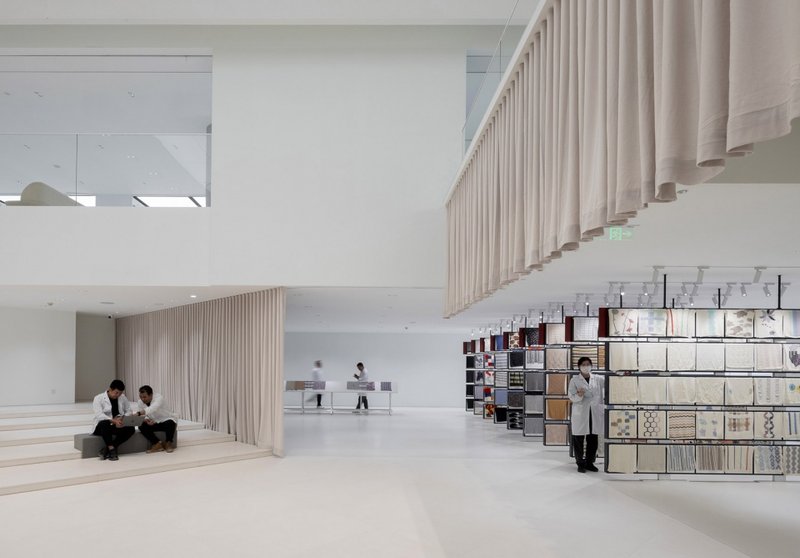
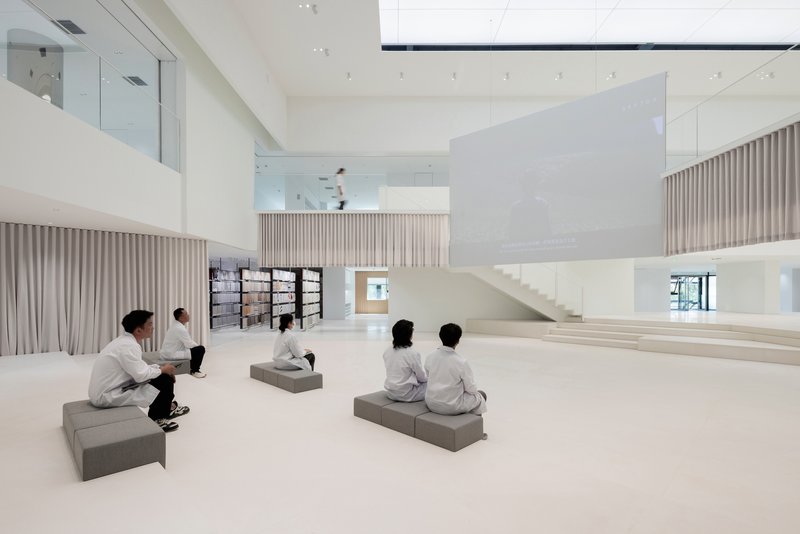
At the heart of the transformation lies a dynamic central atrium, redesigned to serve not as a static display area but as a living workspace. Here, walls and shelves display material samples meant for interactive use—turning the act of research and discussion into a public, collaborative experience.
Flexible spaces allow employees to choose between private focus rooms or open discussion zones. The auditorium, set at a 45-degree angle, links seamlessly to the Material Library and R&D labs via a suspended bridge, promoting dialogue and cross-disciplinary exchange.
A New Façade Identity — The “Industrial Jewel”
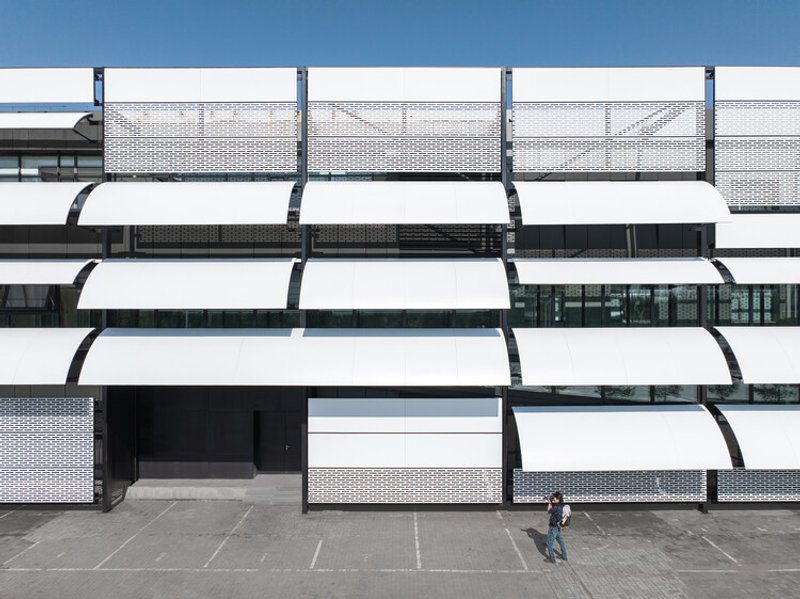
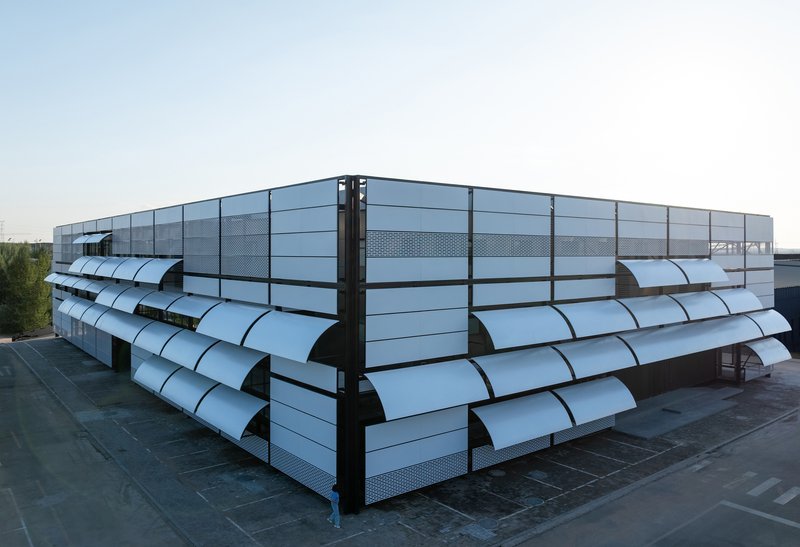
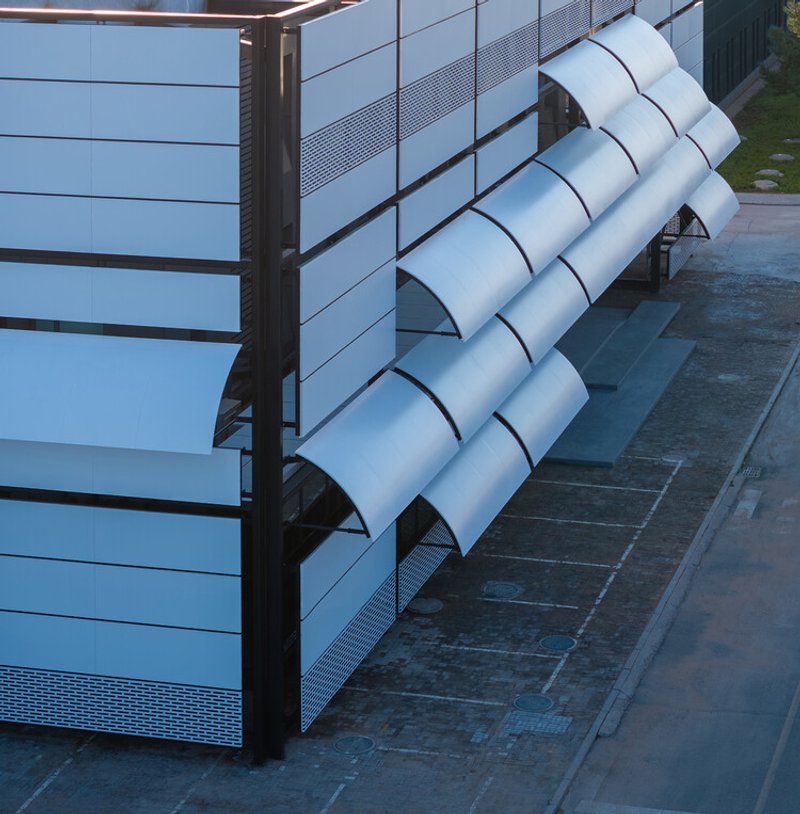
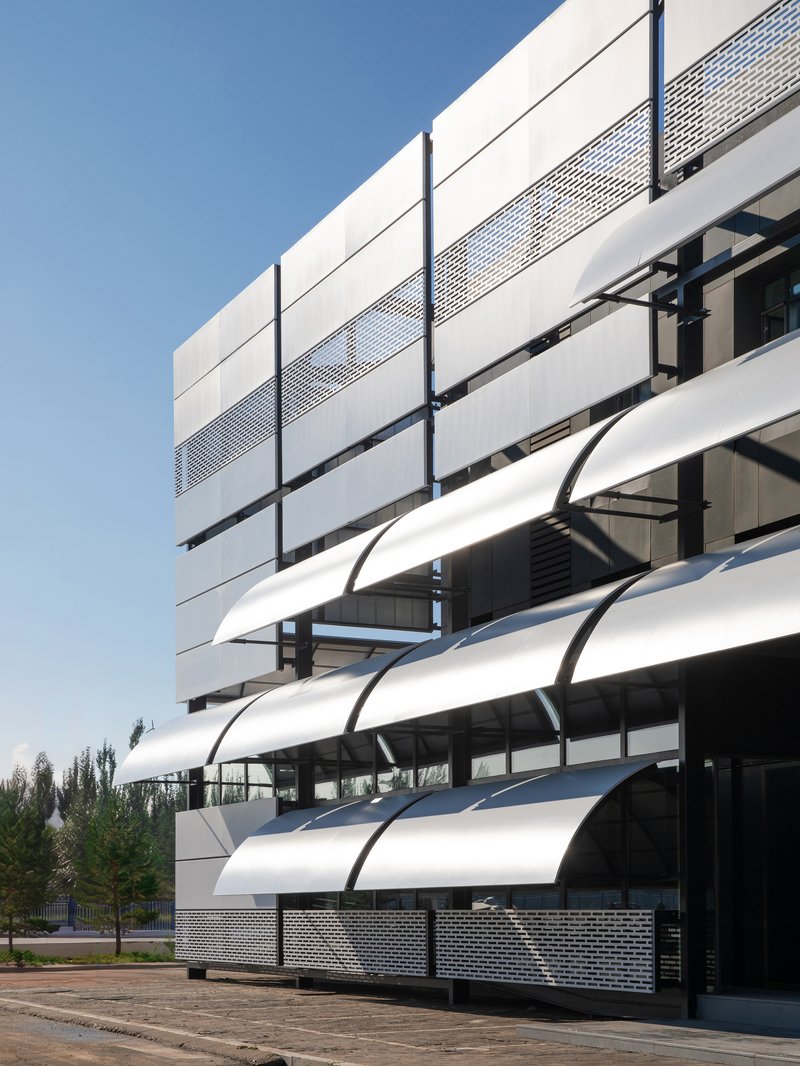
waa introduced a striking new component-driven façade, conceived as an “industrial jeweled cloak.” This metallic skin, composed of perforated and arced aluminum panels, wraps the existing structure and creates a rhythmic, reflective surface that changes with light and perspective.
This new façade not only resizes the visual proportions of the building but also enhances ventilation, shading, and transparency—balancing performance with aesthetics. Behind it, a new access ramp doubles as an architectural feature, linking the exterior to the second-level foyer.
Design Highlights: Open Work, Open Thought
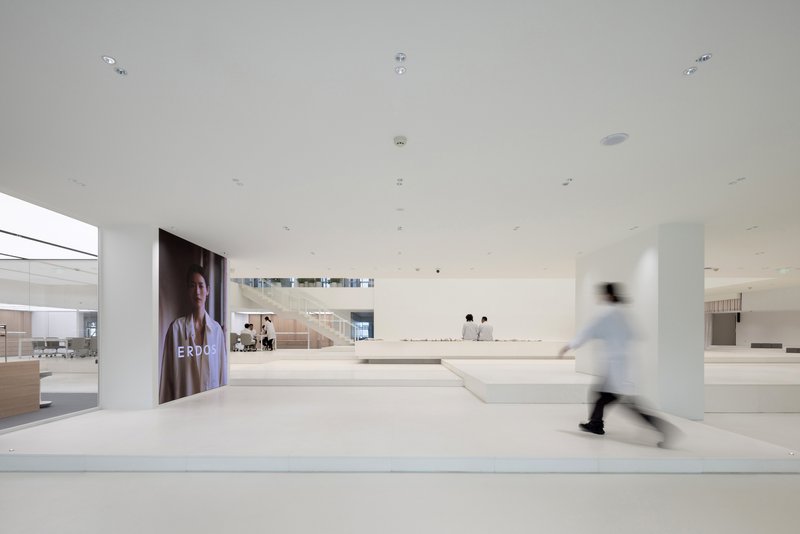
- Open Display – The large reception hall functions as a flexible space for exhibitions, meetings, and temporary material showcases, turning circulation into a creative experience.
- Open Auditorium – Retractable curtains and stepped seating adapt to both intimate and large-scale events, visible from balconies above.
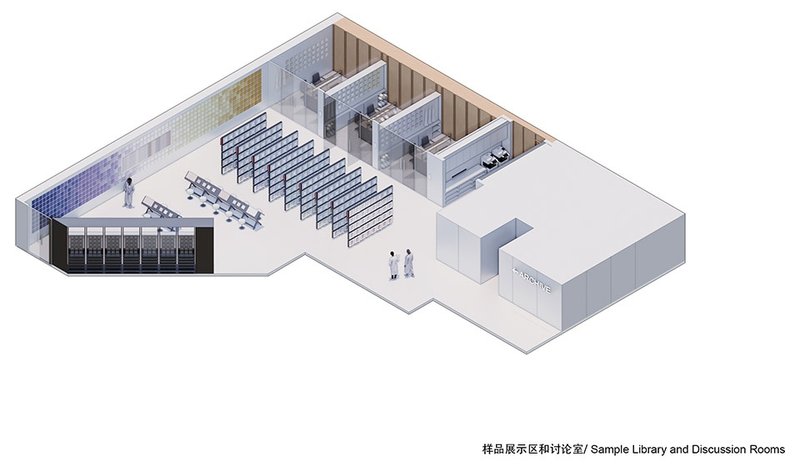
- Open Samples – The R&D zone uses bench-style and vertical displays to keep material development in constant visual conversation.
- Open Offices – A lighting grid creates luminous “membranes” across work zones, encouraging spontaneous collaboration and creative crossovers.
Architectural Meaning — Craft, Material, and Identity
The renovation is a metaphor for cashmere itself — transforming raw natural material into refined luxury. The façade’s shimmering texture and the open, tactile interiors echo this duality of industrial strength and crafted elegance.
Through a careful balance of preservation and innovation, waa redefines the role of industrial architecture for the 21st century: not as isolated production spaces, but as vibrant ecosystems of creativity, research, and collaboration.
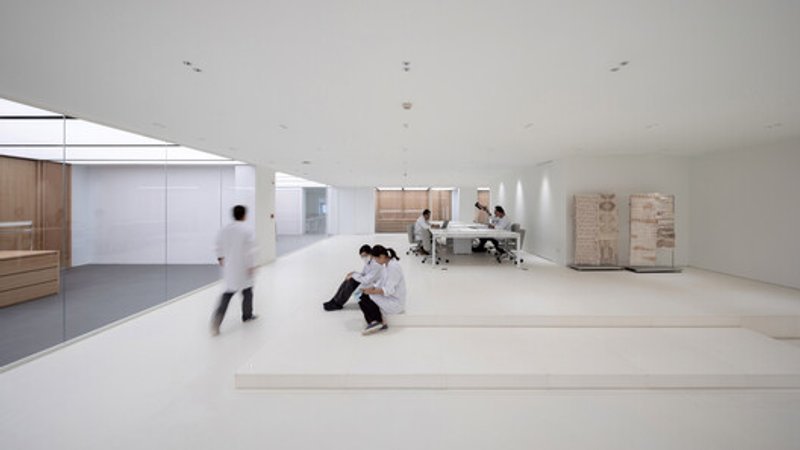
All the photographs are works of whyseeimage



Popular Articles
Popular articles from the community

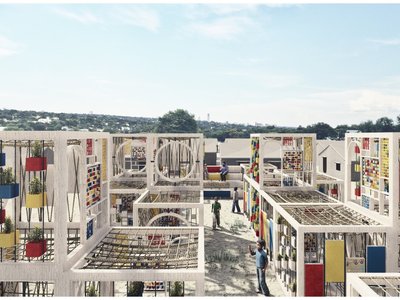
The Faith: Modular Architecture for Play, Learning, and Hope in Kutupalong Refugee Camp
A modular playground architecture project in Bangladesh where play, learning, safety, and hope rebuild childhood inside a refugee camp anew.

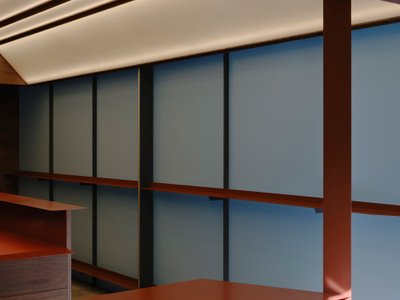
Kerry Kounnapis Packs 800 Daily Coffees into a 43-Square-Metre Melbourne Laneway Bar
Palace Coffee channels Pellegrini's and European standing bars through oxide-red steel and spotted gum timber in a Ridgway Place sliver.
IKC de Geluksvogel: Sustainable School Architecture Designed for Free Movement and Digital Learning
IKC de Geluksvogel turns sustainable school architecture into a flexible Maastricht campus for digital learning, nature, and free movement.
Eco Chapel: A Green Architecture Pavilion Designed in Symbiosis with the Forest
Eco Chapel uses green architecture to weave prayer, learning and reuse into a forest pavilion shaped by modular hexagonal canopies for life.


Similar Reads
You might also enjoy these articles

Olio Towers: A Mid-Rise for Performers That Fuses Housing, Rehearsal, and Stage
Located blocks from Houston's Theater District, this modular tower stacks living units around a central performance atrium.
Oasis: Modular Green Housing Carved into Dhaka's Urban Fabric
A shortlisted Plugin Housing entry reclaims unauthorized settlements in Dhaka with stepped concrete volumes, green roofs, and ventilation-driven design.

Black Hole: A Floating Megastructure for the Post-Physical Era
Emiliano Mazzarotto envisions a spherical, self-scaling arena where e-sports, digital hotels, and holographic stadiums replace traditional public space.
Compact & Sustainable Living in Piraeus: A Four-Level Family Home Built Around Light and Air
A narrow townhouse in one of Greece's densest port cities uses a central atrium and passive strategies to house three generations under one roof.


Explore Office Building Competitions
Discover active competitions in this discipline




The International Standard for Design Portfolios


The Global Benchmark for Architecture Dissertation Awards


The Global Benchmark for Graduation Excellence


Challenge to reimagine the Iron Throne
Comments (0)
Please login or sign up to add comments
No comments yet. Be the first to comment!