
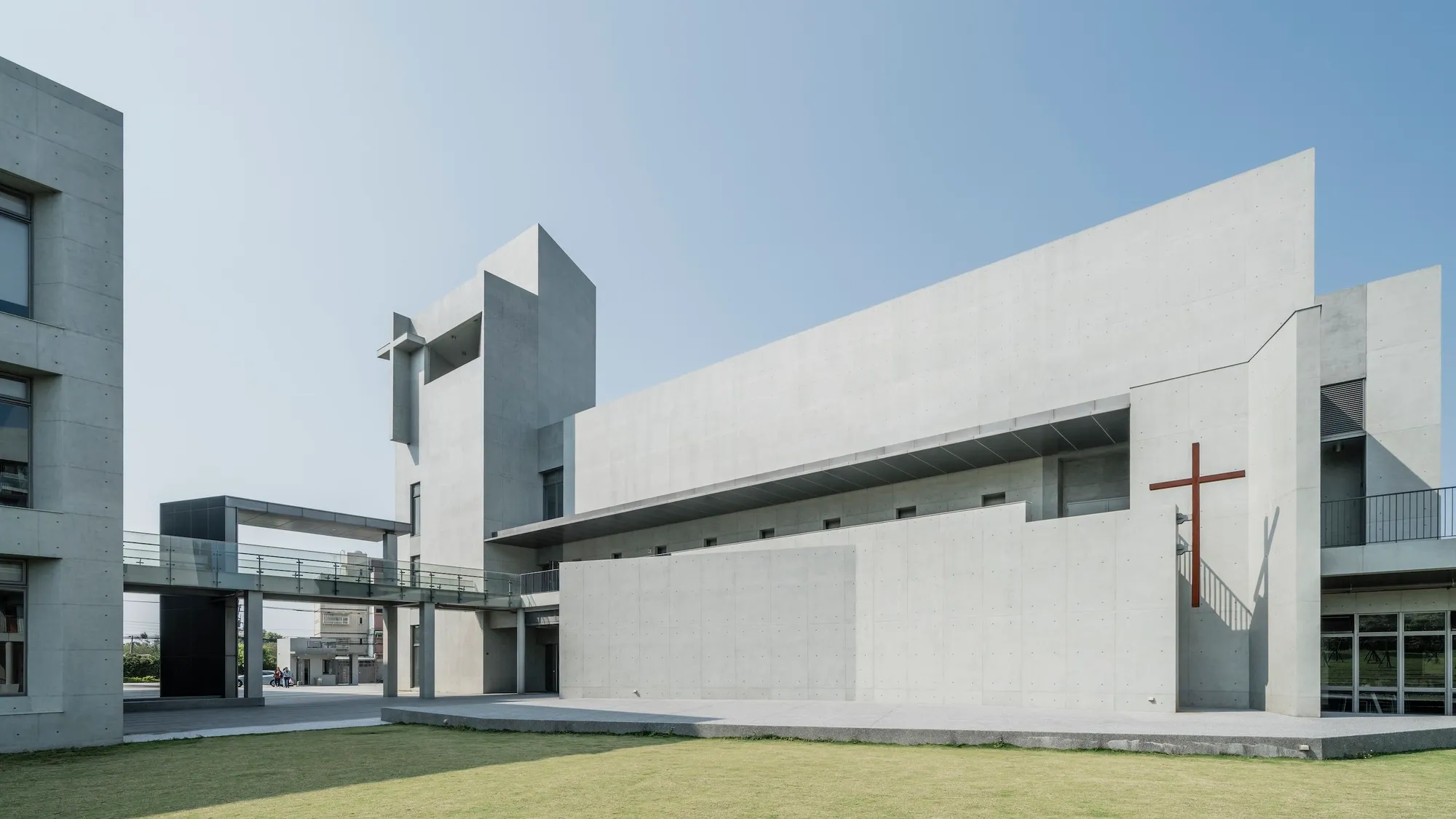
CES Chapel by JJP Architects & Planners
CES Chapel in Taoyuan blends Gothic inspiration with modern design, using light, stone, and soaring arches to create profound spirituality


A Contemporary Chapel Inspired by Tradition
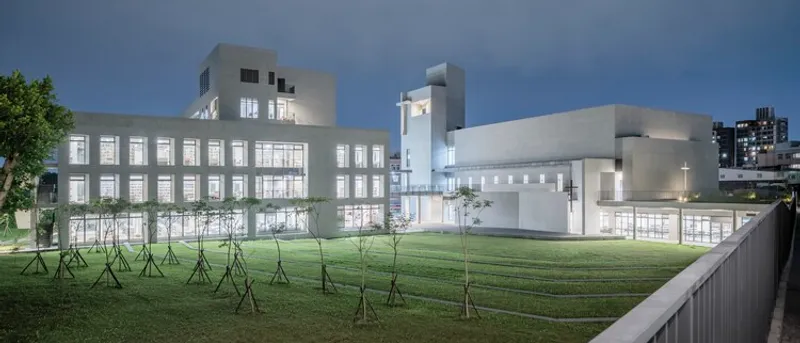
The CES Chapel, designed by JJP Architects & Planners, serves as the spiritual heart of the China Evangelical Graduate School of Theology (CEGST) in Bade, Taoyuan. Completed in 2020, the chapel is conceived not only as a sacred place for worship but also as the circulatory core of the campus, seamlessly connecting the entrance plaza, academic buildings, library, canteen, and dormitories.
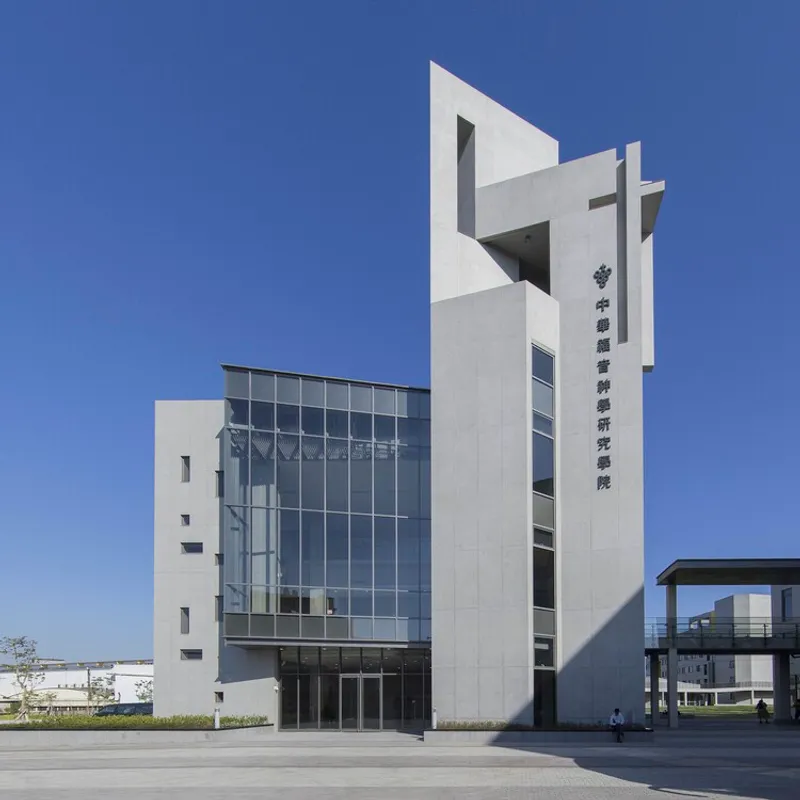
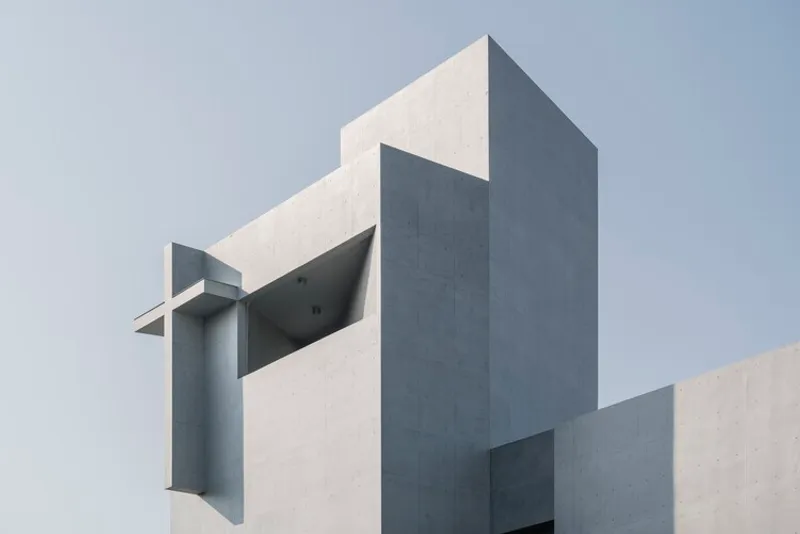
With a seating capacity of 750, expandable to nearly 1,000 through its double-height atrium, the CES Chapel embodies both functionality and symbolism. Its design establishes a dialogue between traditional Gothic cathedral elements and modern architectural innovation, creating an atmosphere of serenity, spirituality, and inclusivity.
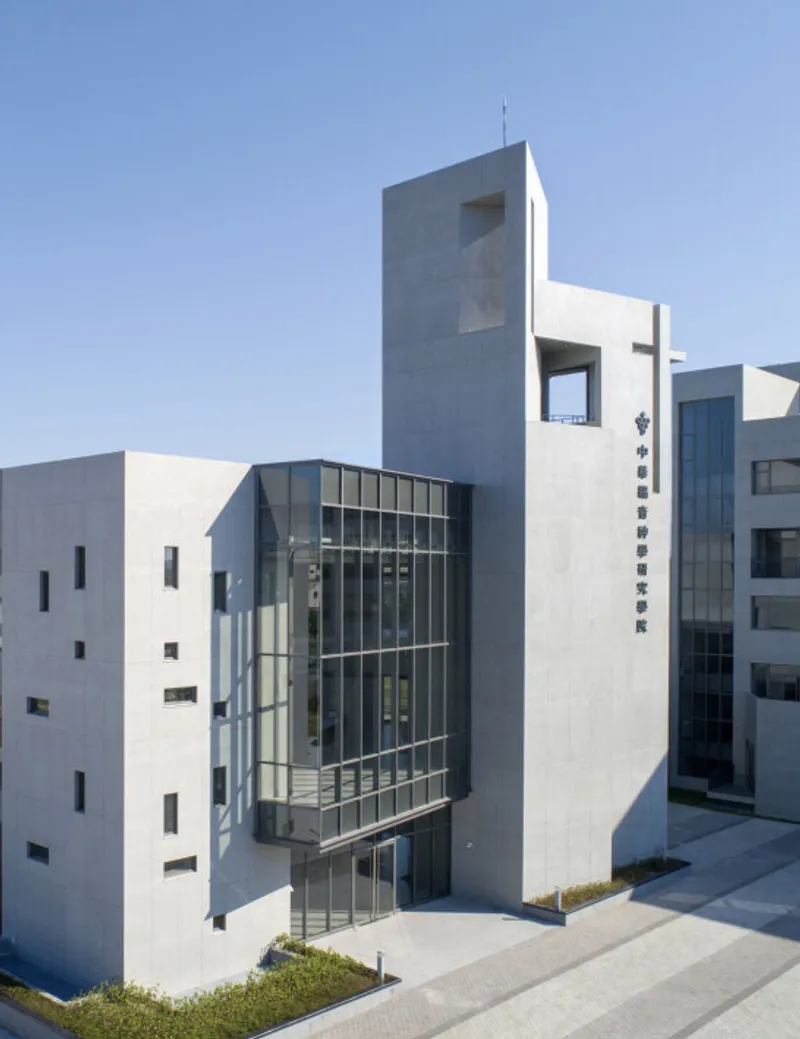
Architectural Composition and Spatial Journey
The chapel’s architecture unfolds as a carefully measured sequence of three interconnected spaces:
- The Lobby – a welcoming gathering space for the community before and after services.
- The Nave – a 20m x 20m column-free worship hall, designed as an intimate and contemplative environment.
- The Apse – a monolithic and spiritual sanctuary, symbolizing sacredness and divine presence.
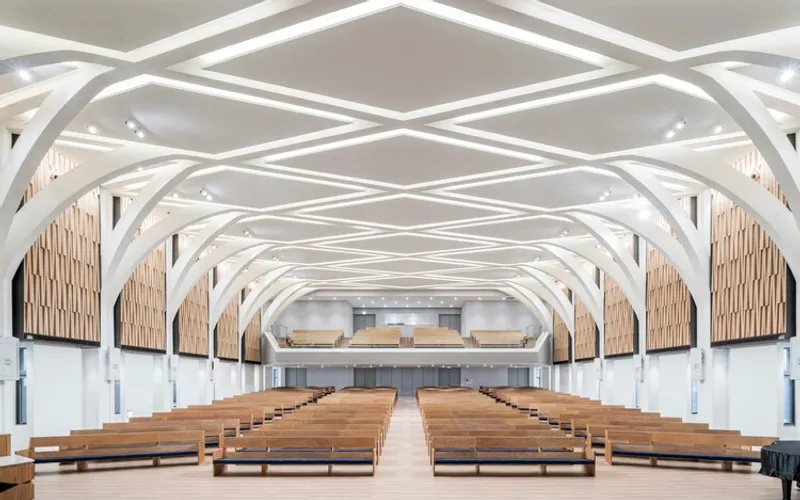
This spatial order creates a progressive ceremonial journey, guiding worshippers from communal interaction to deep spiritual reflection.
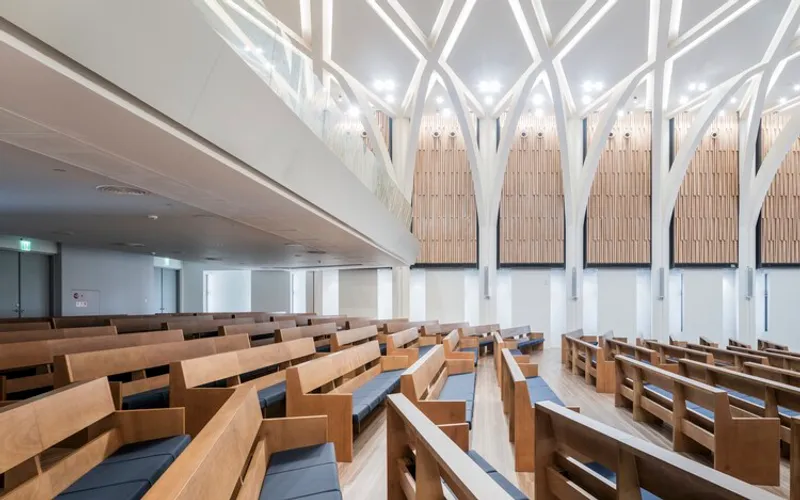
Structural Elegance: Modern Gothic Inspiration
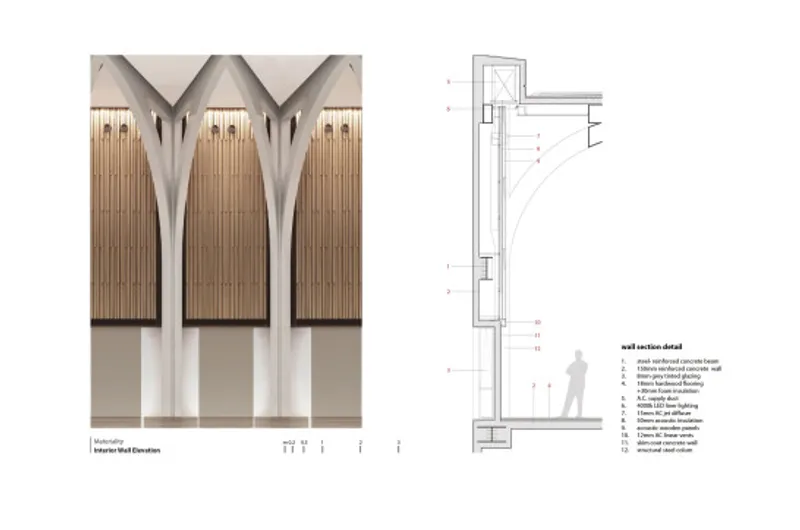
The nave draws inspiration from Gothic ribbed vaults. Utilizing steel columns, long-span diagrid slabs, and soaring arches, the architects created a continuous vaulted ceiling that echoes historical precedents while embracing modern structural techniques.
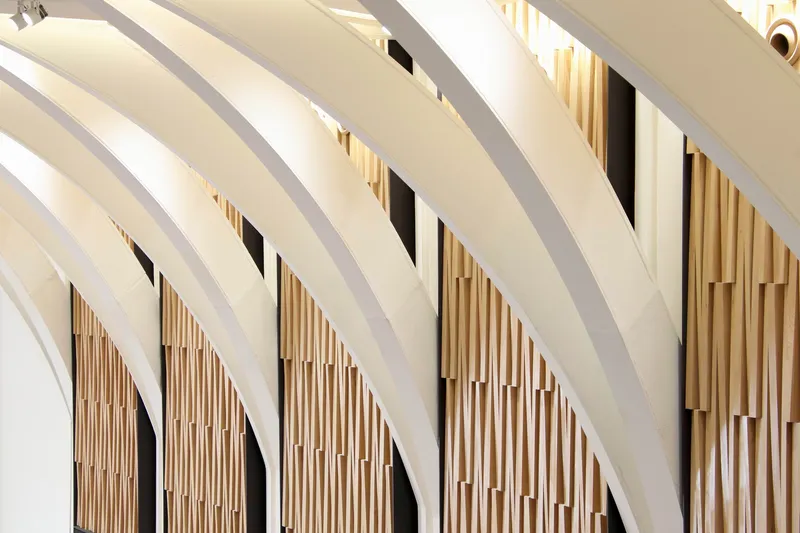
Between the structural ribs, articulated wooden panels integrate acoustic treatment and air-conditioning systems, blending functionality with warmth. The result is a space where engineering, spirituality, and materiality coalesce harmoniously.
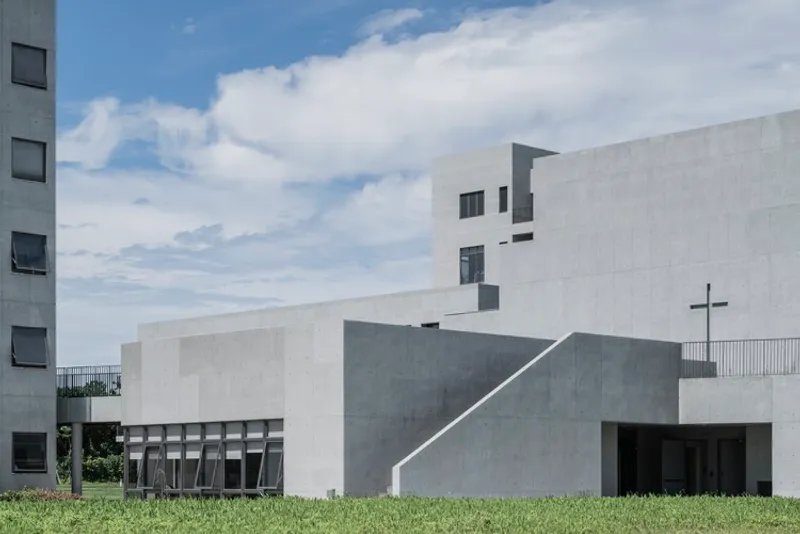
The Apse: A Monumental Symbol
In contrast, the apse is deliberately stark and monumental, clad in warm natural granite. Its defining feature is a cross-shaped opening that allows daylight to pierce the stone wall, creating a powerful visual of light breaking through rock. This gesture embodies the biblical passage: “I am the light of the world.”
The absence of ornamentation emphasizes the cross as the sole religious symbol, reinforcing the purity and sacrednessof the space.
Light as a Spiritual Medium
Daylight is a central element in the CES Chapel’s design. The clerestory windows diffuse light into the nave, while the east-facing façade allows morning light to project a glowing cross deep into the chapel. This interplay of natural illumination and shadow transforms the interior throughout the day, evoking a constantly renewing sense of divinity and transcendence.
A Campus Heart and Community Landmark
Beyond its architectural beauty, the CES Chapel is the spiritual anchor of the CEGST campus. By offering a contemporary interpretation of sacred architecture, JJP Architects & Planners created a chapel that resonates with both tradition and modernity, making it a landmark of worship, culture, and education in northern Taiwan.
All the photographs are works of Shawn Liu, Vesper W.S. Hsieh




Popular Articles
Popular articles from the community


The Ocean Hive: Sustainable Architecture for a Self-Sufficient Civilization at Sea
The Ocean Hive imagines sustainable architecture at sea, where modular habitats, algae, wave power and ocean waste sustain a growing colony.

Hill & Cross Opera: Sculptural Opera House Architecture Shaped by Tallinn’s Landscape and Identity
Hill & Cross Opera reimagines opera house architecture in Tallinn through its sculptural hill, civic plaza, glass wave and a luminous cross.

The Musturak Paradise: Senior Living Architecture for a Connected Future in Temara, Morocco
The Musturak Paradise reimagines senior living architecture in Temara via private homes, social spaces, culture, community, and shared care.

Co-Life: Senior Housing Design That Reconnects Older Adults With the City
Co-Life reimagines senior housing design through healing gardens, shared streets, workshops, and a sustainable community across generations.

Similar Reads
You might also enjoy these articles


Hodi-Mandai Geram
Project Function: Preservation and revitalization of the Intangible heritage and socio-spatial identity of the Hodi by Housing, Cultural Memory Center, Sacred Grove, landscape, local tourism economy


Olio Towers: A Mid-Rise for Performers That Fuses Housing, Rehearsal, and Stage
Located blocks from Houston's Theater District, this modular tower stacks living units around a central performance atrium.

Oasis: Modular Green Housing Carved into Dhaka's Urban Fabric
A shortlisted Plugin Housing entry reclaims unauthorized settlements in Dhaka with stepped concrete volumes, green roofs, and ventilation-driven design.

Black Hole: A Floating Megastructure for the Post-Physical Era
Emiliano Mazzarotto envisions a spherical, self-scaling arena where e-sports, digital hotels, and holographic stadiums replace traditional public space.


Explore Chapel Competitions
Discover active competitions in this discipline



Challenge to reimagine the Iron Throne


Photograph architecture without architects


Illustrate the lost glory of Angkor Wat - Render Challenge


Design challenge to reuse E-waste
Comments (0)
Please login or sign up to add comments
No comments yet. Be the first to comment!