

Chaipathanasilp (The Corner House): A Model for Historic Building Renovation in Bangkok
Chaipathanasilp (The Corner House) showcases historic building renovation in Bangkok, blending heritage preservation with modern community-focused architectural design.


In the heart of Bangkok’s historic Charoen Krung Road stands the Chaipathanasilp building, also known as The Corner House. Recently renovated by IF (Integrated Field), this 1,500 m² project reimagines a structure over 100 years old, turning it into a vibrant mixed-use space that connects the city’s past with its present.
This project is more than an architectural upgrade—it’s a living example of how historic building renovation in Bangkok can enhance community life while preserving heritage character.
The Urban and Cultural Context
Situated at the intersection of the Charoen Krung and Talat Noi communities, The Corner House occupies a prime location in what was once one of Bangkok’s busiest trading districts. Today, this area has evolved into a recognized Creative District, buzzing with art, culture, and street life.


The renovation draws heavily on the building’s context, using it not only as inspiration but as a guide for design decisions. IF’s approach was rooted in harmonizing with the original urban fabric, ensuring that modernization would not erase the building’s history.


Preserving History, Embracing Modernity
The design retains the building’s original façade and color on the second and third floors, protecting its familiar street presence. At street level, however, the transformation is striking.


The ground floor was reconceived as an open, accessible space—like the "basement" of a traditional Thai house—encouraging movement, ventilation, and visual connection between the bustling road and the serene canal at the back.

IF replaced the old solid walls and wrought iron with custom-designed folding doors, inspired by the neighborhood’s traditional designs. When opened, these doors erase the boundaries between inside and outside, inviting people to pass through freely, whether to escape the rain, enjoy a breeze, or simply cross to the other side.

Architecture for the Community
At its core, the project is about creating public connection. The open ground floor acts as a civic passageway—a rare architectural gesture in a commercializing city. It offers shelter without the obligation to buy anything, subtly reinforcing the role of architecture as a shared civic resource.

Inside, IF preserved the original concrete beams, allowing the building’s history to remain visible. The existing ceiling was enhanced with precise, atmospheric lighting, giving the space flexibility for multiple uses, from exhibitions to small gatherings.


Design Philosophy and Sustainability
The renovation exemplifies a low-intervention, high-impact approach to historic building renovation in Bangkok. Rather than demolishing or replacing, the architects worked with what was already there—retaining materials, conserving energy, and preserving the cultural memory embedded in the building’s form.

By adapting traditional Thai architectural elements to a contemporary context, the project demonstrates how cultural heritage can live on in modern urban environments without becoming frozen in time.

The Chaipathanasilp (Corner House) stands as a successful model for historic building renovation in Bangkok, blending architectural conservation with contemporary needs. Through strategic preservation, community-minded design, and respect for heritage, IF (Integrated Field) has turned a century-old landmark into a bridge between eras—one that enriches both the city’s physical landscape and its social fabric.


All the photographs are works of W Workspace


Popular Articles
Popular articles from the community


Opera on the Sea: Driftwood Logic Shapes a Timber Opera House on Estonia's Coast
Trevor Orgill's opera house translates the entangled drift of floating timber into a civic building where wood, water, and music converge.
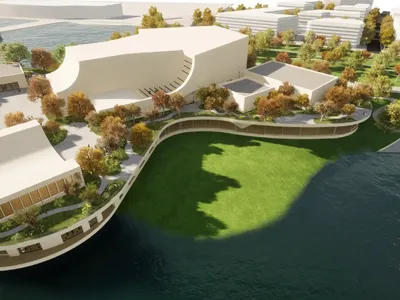
The Amber Palace Opera: A Geological Fiction Surfaces on Tallinn's Baltic Waterfront
Pierre Brillard reimagines a Baltic legend as a public landscape, opera house, and waterfront promenade rooted in Tallinn's coastal identity.
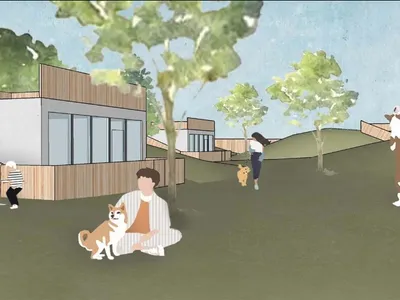
Temporary Home for Dogs: A Reversed Zoo Rethinks Animal Shelter Architecture
In Bucharest, a sinuous corridor and freed landscape flip the logic of containment, designing a shelter that works to make itself unnecessary.
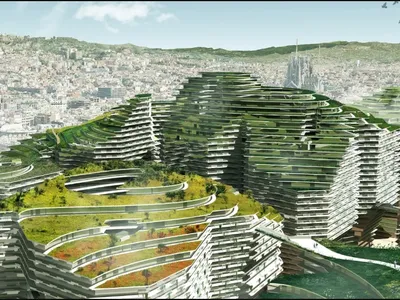
Manzana Morphosis: Stretching Barcelona's Grid into a Living Landscape for 2050
A radical reworking of the Eixample manzana turns density into a tool for generous public space, vertical ecology, and environmental performance.

Similar Reads
You might also enjoy these articles

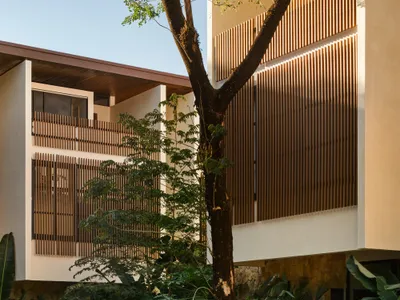
FAMM Arquitectura Organizes Ten Villas Around Courtyards and Jungle in Nosara, Costa Rica
El Molino pairs two elongated volumes with deep overhangs and timber louvers to build a compact coastal community five minutes from the beach.
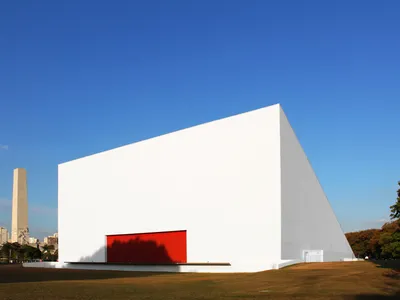
Oscar Niemeyer's Ibirapuera Park Pavilions Define São Paulo's Cultural Identity in Concrete and Curve
A constellation of modernist volumes set within São Paulo's most important urban park, conceived for the city's 400th anniversary in 1954.
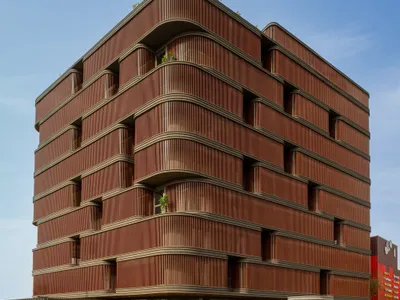
Sanjay Puri Architects Wraps a Jaipur Office Tower in Capsule-Shaped Green Buffers
A nine-level climate-responsive workplace near Jaipur Airport uses stacked planter terraces and aluminium screens to fight 40°C heat.
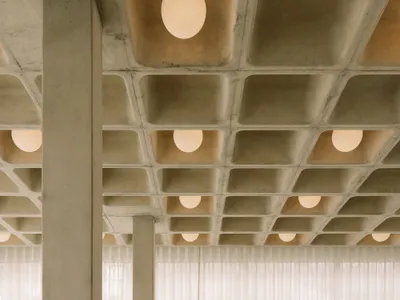
RHO Converts a Berlin Spree-Side Industrial Courtyard into Enkime's 1,000 m² Agency Headquarters
A social media agency's new home in Charlottenburg trades glossy branding for concrete waffle ceilings, glazed tile, and sheer curtains.

Explore Architecture Competitions
Discover active competitions in this discipline

Challenge to reimagine the Iron Throne

Photograph architecture without architects

Illustrate the lost glory of Angkor Wat - Render Challenge

Design challenge to reuse E-waste
Comments (0)
Please login or sign up to add comments
No comments yet. Be the first to comment!