
Chongqing Lijia Smart Hall by Gensler: A Futuristic Exhibition Center Integrating Smart Technology and Organic Architect
Organic exhibition hall in Chongqing integrating parametric design, UHPC façade, natural lighting, and fluid architecture inspired by clouds and mountainous landscapes.


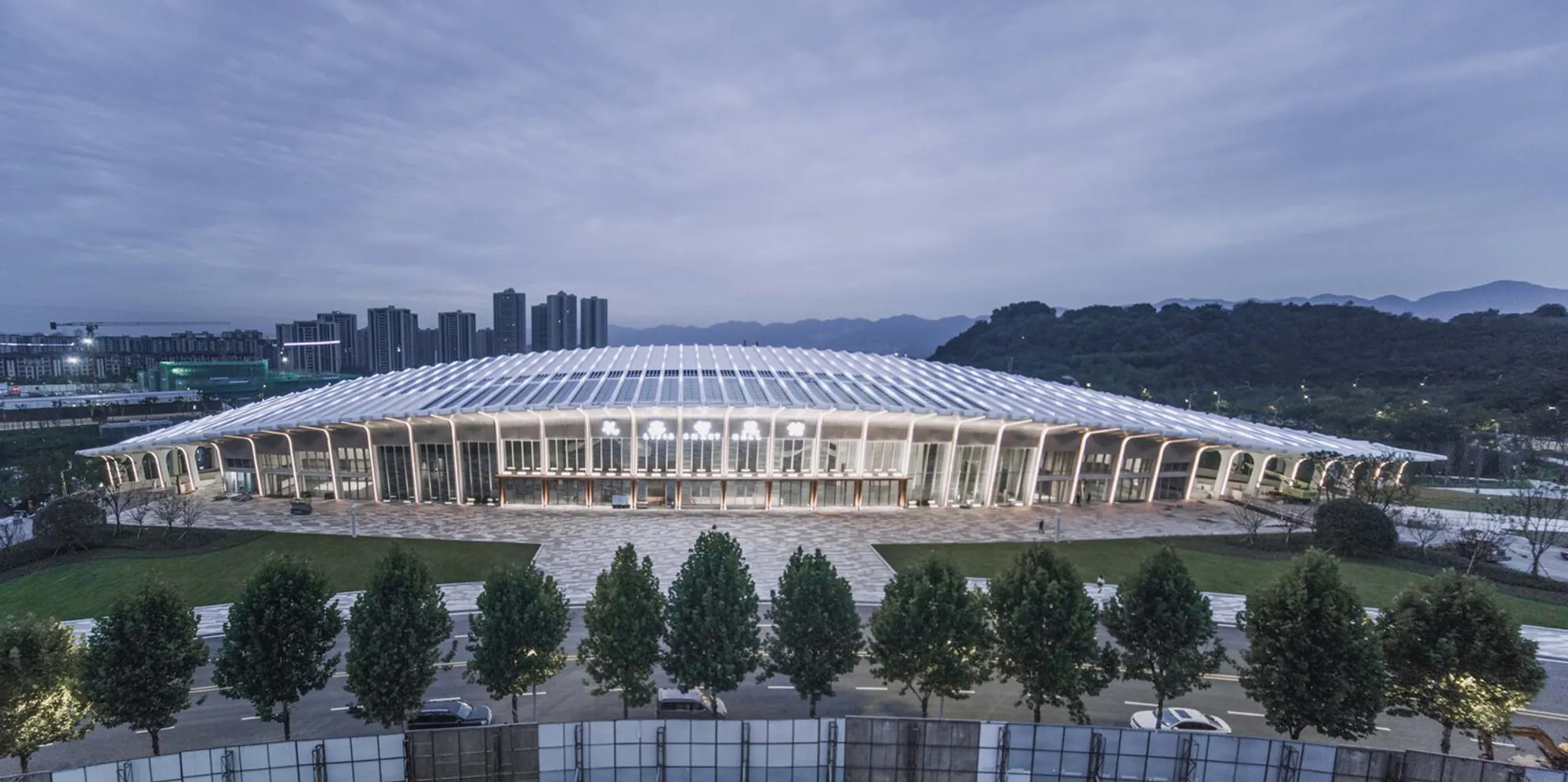
The Chongqing Lijia Smart Hall, designed by Gensler, stands as a landmark exhibition and innovation hub in Chongqing. Located within the dynamic Lijia Intelligent Park, the project functions as a central venue for the globally recognized Smart China Expo. With an architectural vision that merges advanced technology, ecological awareness, and iconic form, the Smart Hall demonstrates how contemporary exhibition architecture can respond to both environmental and technological contexts.
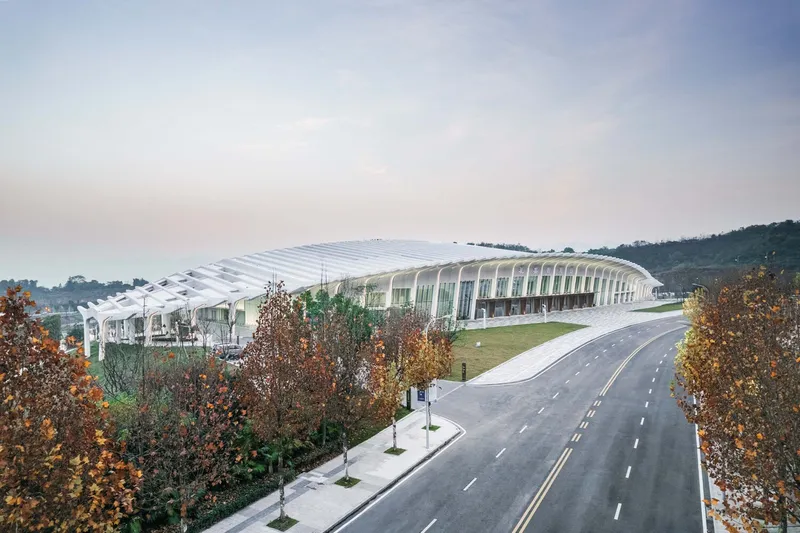
Completed in 2022, the building covers approximately 20,000 square meters and was conceived as a forward-looking platform for international exchanges in artificial intelligence, smart industries, and digital innovation. The architecture embodies a balance between bold technological identity and harmony with the surrounding natural landscape.
Architectural Vision Inspired by Chongqing’s Landscape
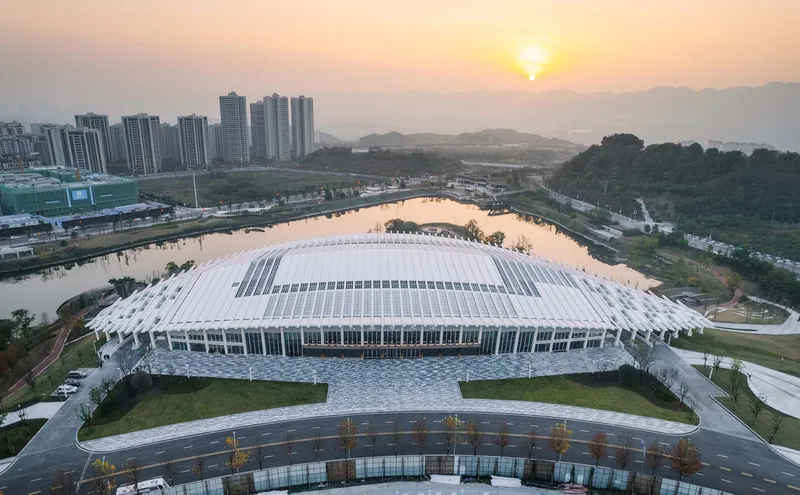
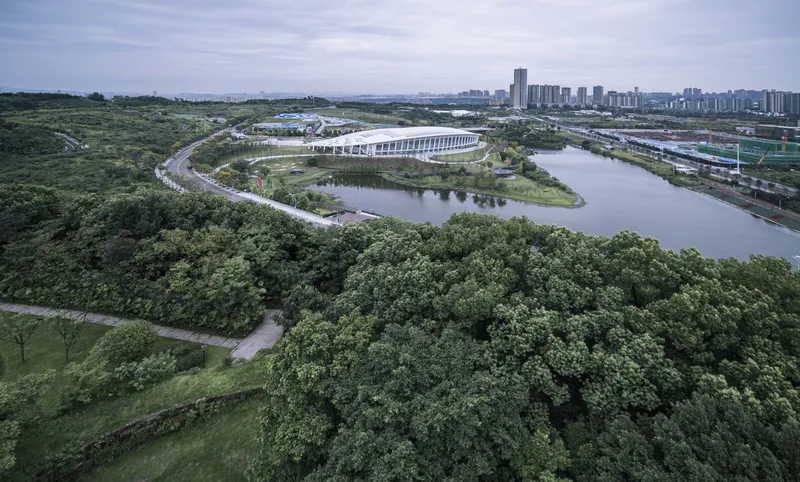
The architectural design of Chongqing Lijia Smart Hall draws inspiration from the unique geographical identity of Chongqing. Known for its mountainous terrain, dramatic foggy atmosphere, and the intersection of two major rivers, the city provides a strong contextual narrative for the building’s form.
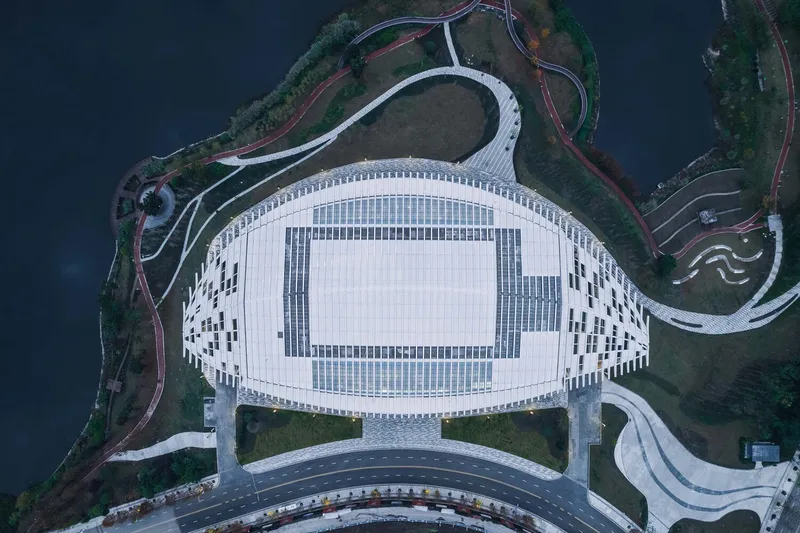
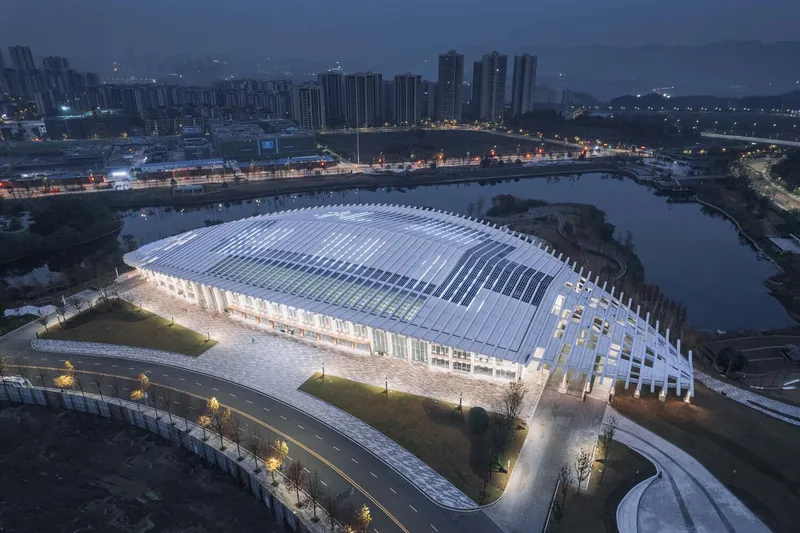
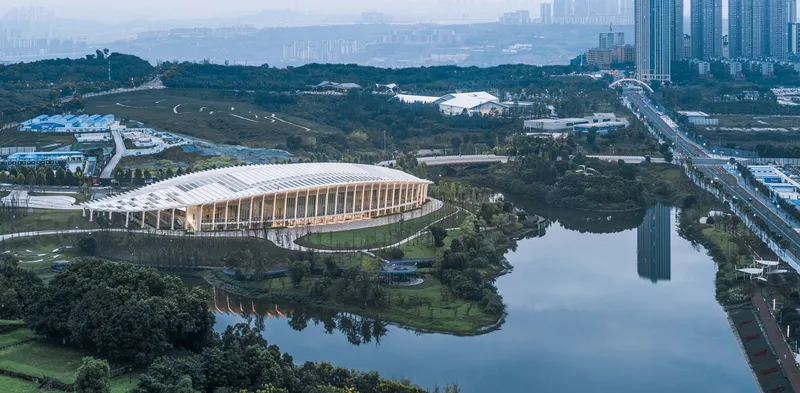
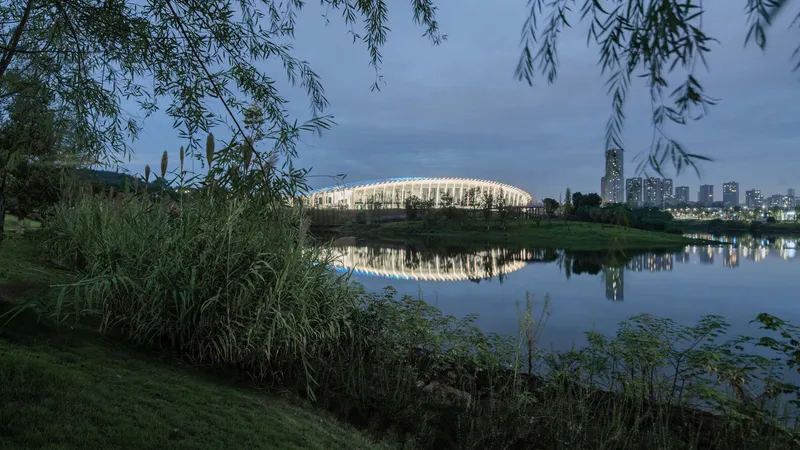
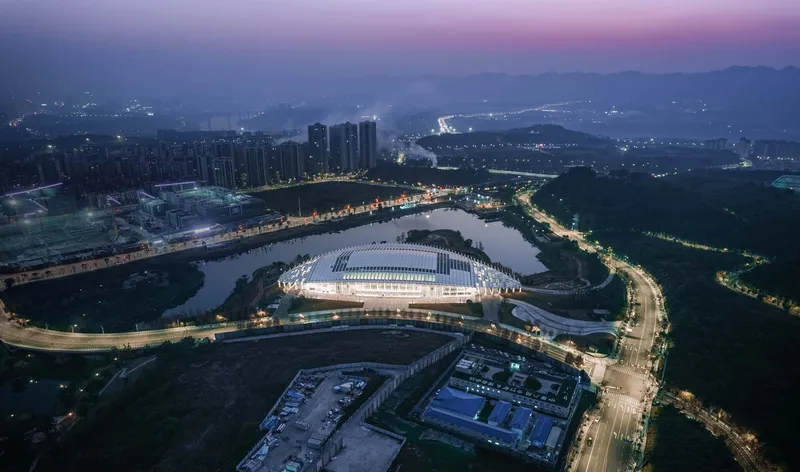
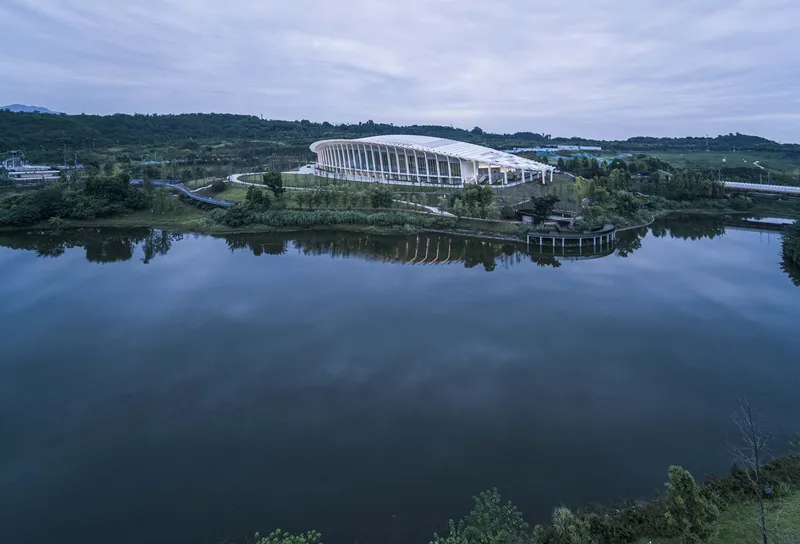
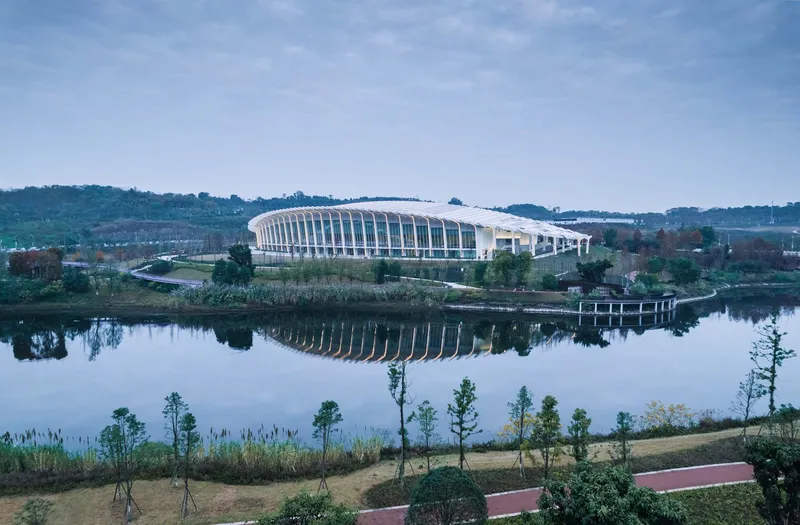
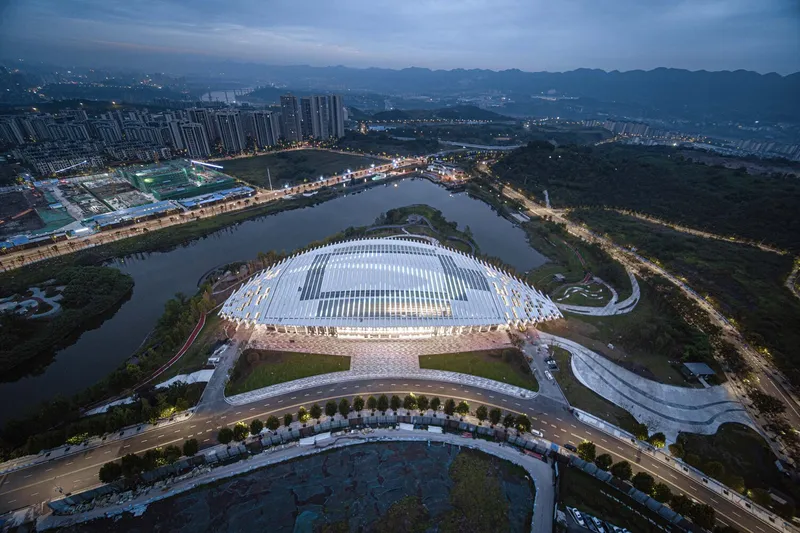
Rather than imposing a rigid or monumental structure onto the site, the design adopts a fluid and organic geometry. The sweeping rooflines and curving surfaces reflect the movement of clouds and mist drifting across Chongqing’s hillsides. This expressive form allows the building to integrate visually with the surrounding greenery and waterfront landscape.
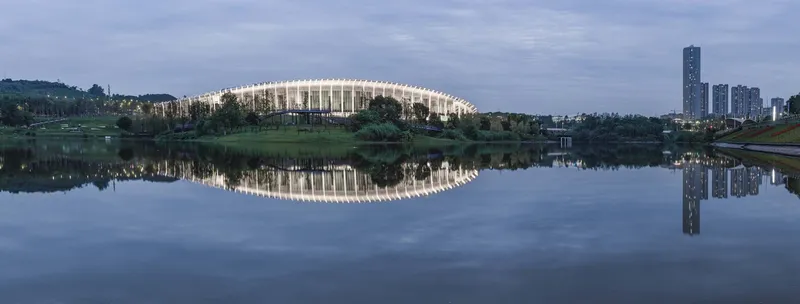
From a distance, the structure appears to float above the terrain like a white cloud resting near the lakeside. Interestingly, the adjacent Baiyun Lake translates to “white cloud” in Chinese, reinforcing the poetic connection between architecture and site.
The Y-Bar Structural System and Parametric Design
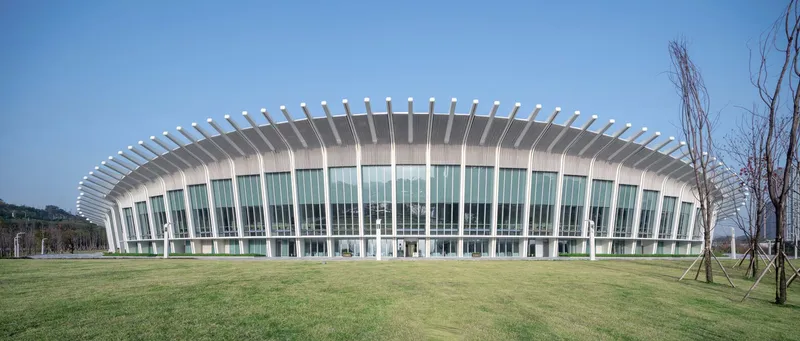
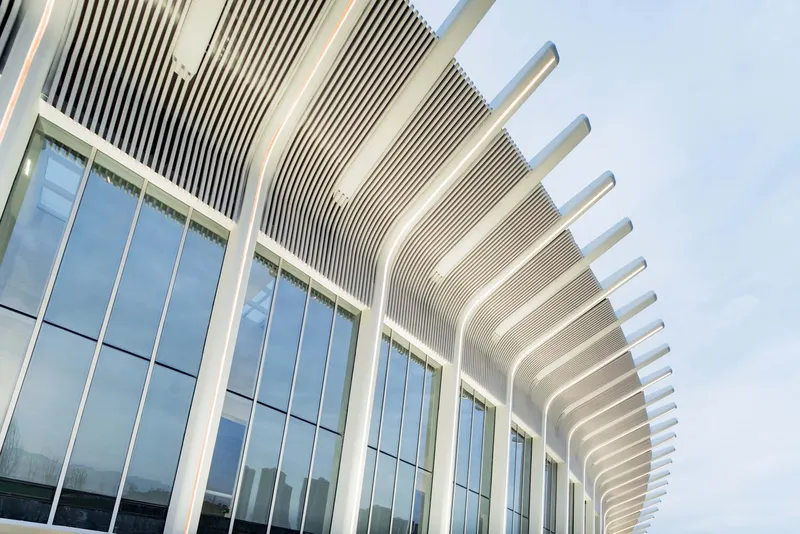
A defining innovation within the project is the Y-bar design system. This modular structural language provides both aesthetic coherence and functional adaptability across multiple architectural components.
The Y-bar system is integrated into:
- Structural frameworks
- Roofing panels
- Ventilation systems
- Facade glazing
- Skylight structures
- Lighting fixtures
- Drainage infrastructure
This flexible architectural system allows the building’s complex geometry to remain visually unified while supporting a wide range of technical requirements.
To achieve the precision necessary for such a complex structure, the design team employed advanced parametric design technology. Through algorithm-based modeling, architectural elements could be automatically updated when design parameters changed. This digital workflow significantly improved design efficiency and ensured accurate coordination between structural, mechanical, and façade systems.
Parametric design also facilitated the standardization of building components, allowing fabrication and construction processes to proceed with greater accuracy and efficiency.
Interior Design Reflecting Chinese Cultural Identity
While the building’s exterior expresses futuristic innovation, the interior design introduces elements rooted in traditional Chinese aesthetics. The interior spaces were also designed by Gensler, ensuring a seamless transition between architectural and spatial experiences.
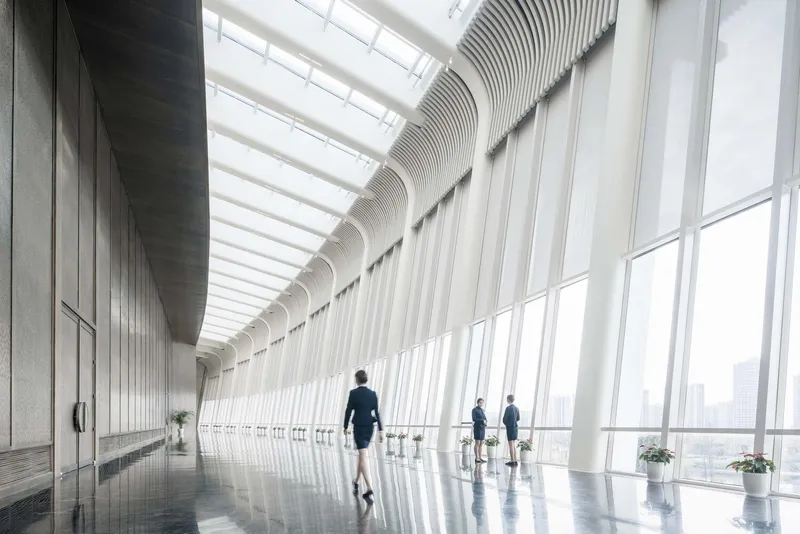
The Y-bar motif continues inside the building, appearing in interior walls and the central circulation core. This approach maintains design continuity while reinforcing the building’s structural identity.
Subtle references to Chongqing’s landscape appear in decorative features such as patterned gates and etched glass panels. These details interpret natural forms and cultural motifs, creating a layered spatial narrative that blends technological sophistication with cultural symbolism.
The interior layout prioritizes large flexible exhibition spaces capable of hosting conferences, technology showcases, and international forums. Circulation areas and pre-function zones are designed to accommodate large crowds while maintaining spatial clarity and comfort.
Sustainable Materials and High-Performance Facade Design
Sustainability and energy efficiency played a crucial role in shaping the Smart Hall’s material strategy. The façade is clad with Ultra-High Performance Concrete (UHPC), a durable and highly adaptable material known for its structural strength and environmental performance.
UHPC allows the façade to achieve a sculptural white finish that reflects sunlight and reduces solar heat absorption. By minimizing heat gain, the building reduces the demand placed on mechanical cooling systems, particularly during Chongqing’s hot summer months.
This material choice supports the project’s long-term sustainability goals while enhancing the building’s sculptural identity.
Natural Light and Transparent Spatial Experience
The building’s architectural envelope incorporates a high glazing ratio and expansive skylights to maximize daylight penetration. These elements allow natural light to illuminate interior spaces throughout the day.
This strategy achieves multiple benefits:
- Reduced energy consumption for artificial lighting
- Strong visual connections between interior spaces and the surrounding park landscape
- Enhanced comfort and orientation for visitors
The pre-function areas, positioned between exhibition halls, are especially notable for their bright and open atmosphere. These transitional zones serve as social spaces where visitors can relax, interact, and prepare for upcoming sessions during conferences and events.
A Landmark for Smart Technology and Urban Innovation
Chongqing Lijia Smart Hall represents a new generation of exhibition architecture that integrates advanced digital design, sustainable construction, and contextual sensitivity. Rather than dominating the landscape, the building gently merges with its natural environment while symbolizing the future of technological development.
As the main venue for the Smart China Expo, the building plays a crucial role in positioning Chongqing as a global center for innovation and digital transformation. Its architecture embodies the intersection of technology, culture, and nature, three forces shaping the cities of tomorrow.
Through its organic form, advanced materials, and intelligent design strategies, Chongqing Lijia Smart Hall stands as a powerful example of how architecture can support global collaboration while respecting local identity.
All photographs are works of
Blackstation




Popular Articles
Popular articles from the community


Conexión: Biophilic Design Reimagines High-Rise Living in Hong Kong
Conexión reimagines high-rise living in Hong Kong through biophilic design, green facades, shared spaces, daylight, water and nature within.

Hill & Cross Opera: Sculptural Opera House Architecture Shaped by Tallinn’s Landscape and Identity
Hill & Cross Opera reimagines opera house architecture in Tallinn through its sculptural hill, civic plaza, glass wave and a luminous cross.

The Ocean Hive: Sustainable Architecture for a Self-Sufficient Civilization at Sea
The Ocean Hive imagines sustainable architecture at sea, where modular habitats, algae, wave power and ocean waste sustain a growing colony.

Co-life: Sustainable Architecture for Age-Friendly Community Living
Co-life reimagines sustainable architecture for seniors through courtyards, rammed earth, shared gardens, and spaces designed for belonging.


Similar Reads
You might also enjoy these articles

FAMM Arquitectura Organizes Ten Villas Around Courtyards and Jungle in Nosara, Costa Rica
El Molino pairs two elongated volumes with deep overhangs and timber louvers to build a compact coastal community five minutes from the beach.
Oscar Niemeyer's Ibirapuera Park Pavilions Define São Paulo's Cultural Identity in Concrete and Curve
A constellation of modernist volumes set within São Paulo's most important urban park, conceived for the city's 400th anniversary in 1954.
How Henri Picq's 1889 Paris Pavilion Traveled 11,000 Kilometers to Become Santiago's Artequín Museum
A prefabricated iron and glass pavilion built for the Paris Universal Exposition found a second life as a children's art museum in Chile.
Sanjay Puri Architects Wraps a Jaipur Office Tower in Capsule-Shaped Green Buffers
A nine-level climate-responsive workplace near Jaipur Airport uses stacked planter terraces and aluminium screens to fight 40°C heat.


Explore Architecture Competitions
Discover active competitions in this discipline



Challenge to reimagine the Iron Throne


Photograph architecture without architects


Illustrate the lost glory of Angkor Wat - Render Challenge


Design challenge to reuse E-waste
Comments (0)
Please login or sign up to add comments
No comments yet. Be the first to comment!