

Church Borderouge by studio.AQUI & Triptyque Architectes: A Modern Sacred Landmark in Toulouse
Church Borderouge in Toulouse blends traditional brick architecture with modern design, creating an open, community-focused sacred space integrated with nature.


Located in the suburban district of Borderouge, Church Borderouge is an inspiring example of contemporary sacred architecture, designed collaboratively by studio.AQUI and Triptyque Architectes. Completed in 2024, the 480 m² church blends traditional forms with modern spatial concepts, creating a welcoming place of worship that integrates seamlessly with its urban context.

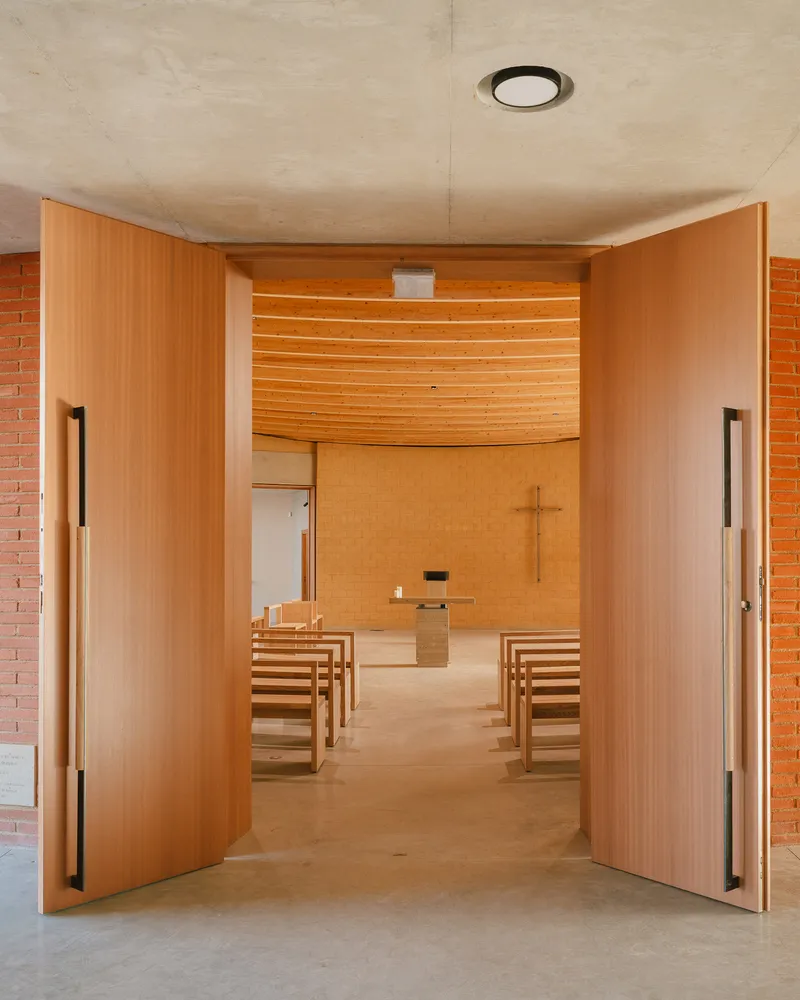
Architectural Concept and Design
The church is conceived as a brick monolith, drawing inspiration from Toulouse's regional sacred architecture, particularly the traditional “borde rouge” or red house typology. Its distinct form—featuring a bell tower, cross, and apse-like structure—signals its religious purpose while remaining deeply connected to the surrounding suburban fabric. Unlike monumental isolated structures, Church Borderouge is designed as a community-centered landmark, reflecting the parish’s everyday life and the dynamic rhythm of its neighborhood.

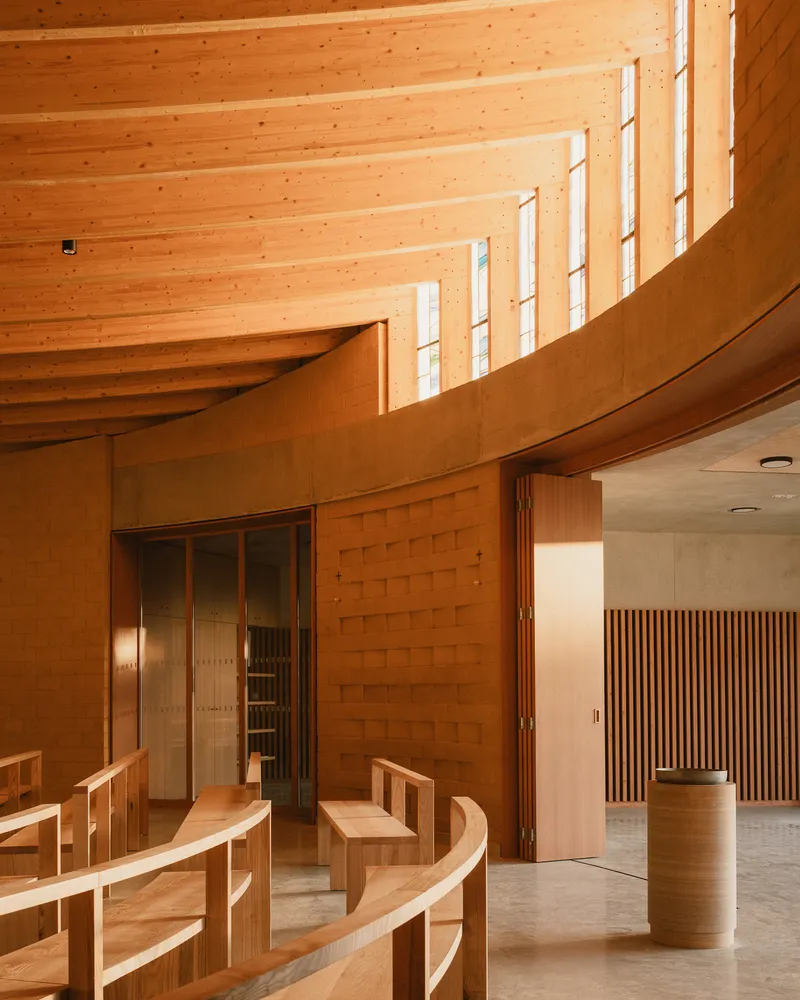
The architects focused on balancing a timeless architectural quality with a contemporary interpretation of liturgical function. By carefully orchestrating light, space, and raw materials, the building evokes spiritual serenity while accommodating the lived experience of parishioners. The forecourt serves as a pedestrian-friendly transition between the city and sacred space, with discreet vehicular access, integrated landscaping, and a sliding entrance gate that emphasizes openness and inclusivity.
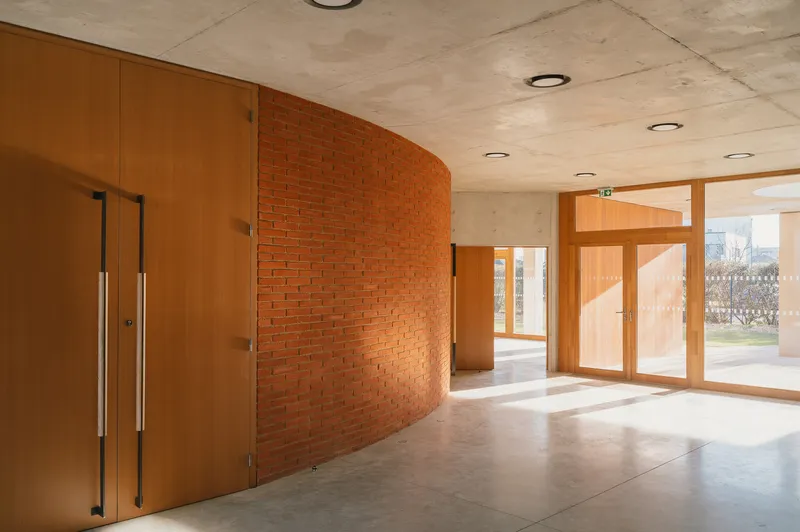

Interior Layout and Spatial Experience
Upon entering, visitors are greeted by a spacious narthex that functions as a transitional area, connecting the liturgical space to communal and service areas. This hall encourages informal encounters, with side canopies enhancing the sense of welcome. Large openings at the hall’s far end provide views of the garden, maintaining a visual connection to nature from multiple vantage points within the church.


The interior layout emphasizes flexibility and communal interaction. A movable partition allows the meeting room to extend into the liturgical space, functioning as a temporary transept. Additional areas, including a reception hall, children’s space, auxiliary rooms, and the garden, form an interconnected network of adaptable spaces suitable for a variety of events and gatherings.
The liturgical hall itself is built from earthen bricks and bathed in diffused natural light filtered through stained-glass windows. Wooden ceiling ribs evoke the archetypal meeting of heaven and earth, while the restrained palette of raw materials fosters peaceful reflection and spiritual calm.


Integration of Nature and Community
A key element of Church Borderouge’s design is its garden, framed by a covered gallery that creates a tranquil space for contemplation and retreat. The church follows a north-south axis, guiding visitors from the street through the forecourt, hall, and into the garden. This sequence establishes a gentle, contemplative journey into the sacred interior.

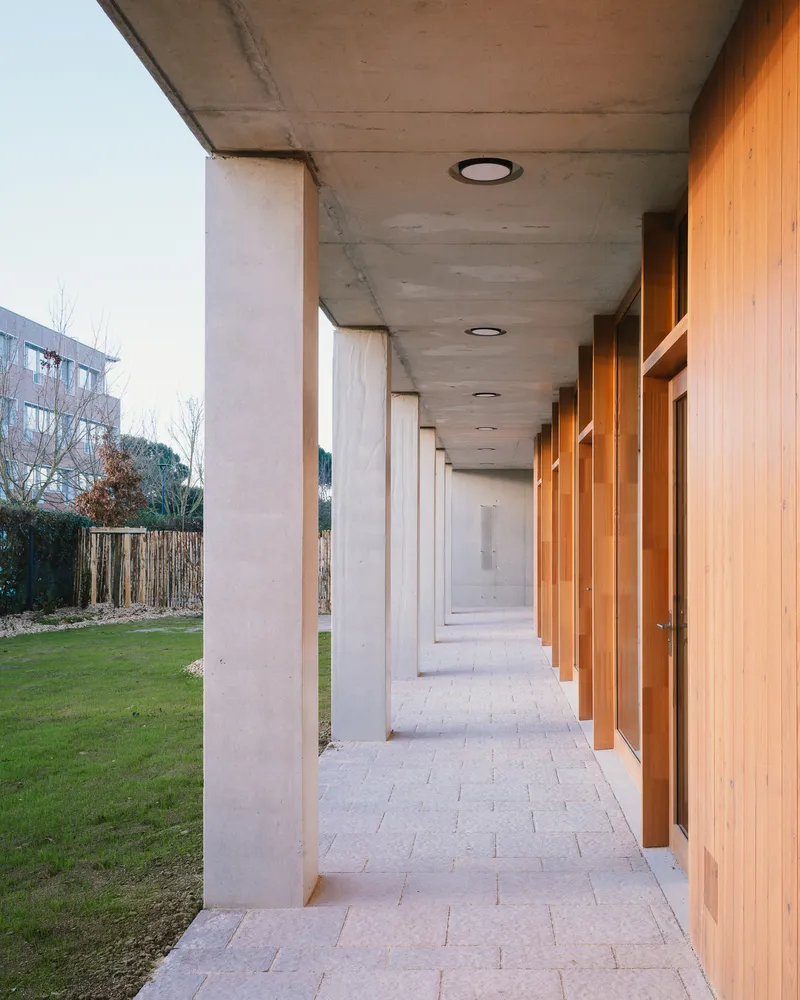
All photographs are works of Bastien Treille



Popular Articles
Popular articles from the community


Co-Life: Senior Housing Design That Reconnects Older Adults With the City
Co-Life reimagines senior housing design through healing gardens, shared streets, workshops, and a sustainable community across generations.

Conexión: Biophilic Design Reimagines High-Rise Living in Hong Kong
Conexión reimagines high-rise living in Hong Kong through biophilic design, green facades, shared spaces, daylight, water and nature within.

Riyadh For All: Intergenerational Urban Design for Active Aging in Rabat
Riyadh For All reimagines urban design in Rabat with intergenerational co-living, adaptive courtyards, and Moroccan cultural exchange today.

EW PARK: Sustainable Architecture Reimagines the Future of Urban Parking
EW PARK reimagines city parking as a modular wooden tower combining automation, solar energy, electric mobility, and adaptable urban design.

Similar Reads
You might also enjoy these articles


Hodi-Mandai Geram
Project Function: Preservation and revitalization of the Intangible heritage and socio-spatial identity of the Hodi by Housing, Cultural Memory Center, Sacred Grove, landscape, local tourism economy


Olio Towers: A Mid-Rise for Performers That Fuses Housing, Rehearsal, and Stage
Located blocks from Houston's Theater District, this modular tower stacks living units around a central performance atrium.

Oasis: Modular Green Housing Carved into Dhaka's Urban Fabric
A shortlisted Plugin Housing entry reclaims unauthorized settlements in Dhaka with stepped concrete volumes, green roofs, and ventilation-driven design.

Black Hole: A Floating Megastructure for the Post-Physical Era
Emiliano Mazzarotto envisions a spherical, self-scaling arena where e-sports, digital hotels, and holographic stadiums replace traditional public space.

Explore Architecture Competitions
Discover active competitions in this discipline



Challenge to reimagine the Iron Throne


Photograph architecture without architects


Illustrate the lost glory of Angkor Wat - Render Challenge


Design challenge to reuse E-waste
Comments (0)
Please login or sign up to add comments
No comments yet. Be the first to comment!