

City Link: A Landmark of Sustainable Urban Design in Copenhagen
A kinetic sustainable bridge redefining Copenhagen’s urban design, where cycling culture, public space, and architecture merge in motion.


In an era where sustainable urban design defines the future of cities, City Link emerges as a visionary architectural proposal that reimagines the bridge as more than infrastructure. Designed by Mikołaj Rożek, the project transforms a simple river crossing into a dynamic public space, a cycling hub, and a kinetic urban landmark for Copenhagen.
Strategically located to connect key areas along the waterfront, City Link responds to Copenhagen’s deep-rooted bicycle culture while elevating the bridge typology into an experiential civic destination. The project merges transportation, architecture, and urban life into a single morphing structure that symbolizes connection: not only between riverbanks, but between movement, community, and sustainability.

A Bridge as Urban Architecture
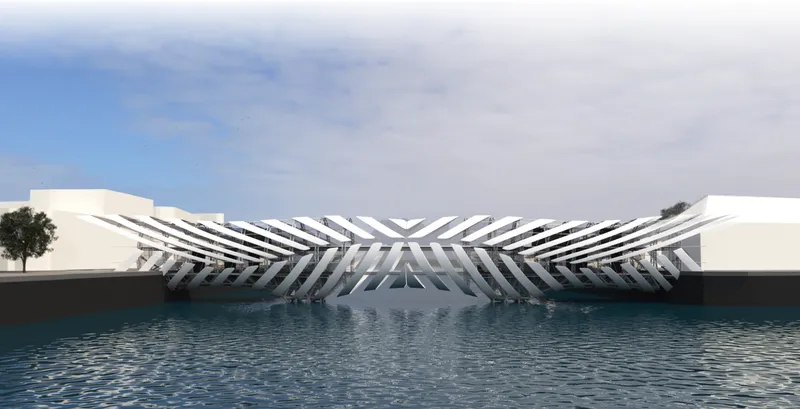
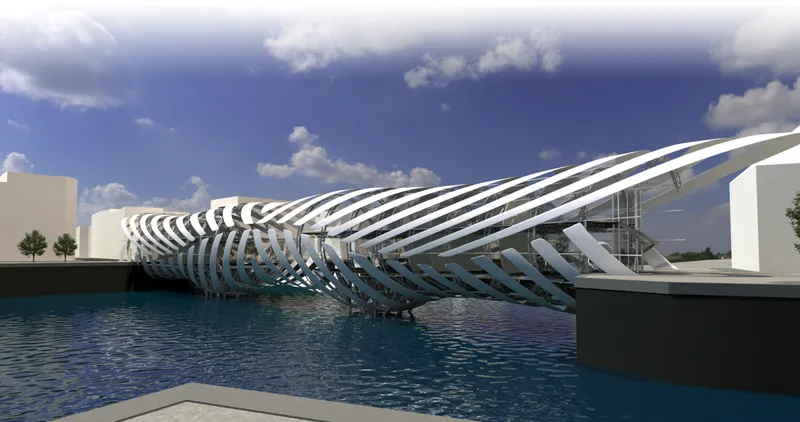
Unlike conventional bridges that function purely as circulation corridors, City Link is conceived as a piece of urban architecture. Its sculptural ribs unfold across the water, forming a rhythmic structural system that appears both lightweight and powerful. The design creates a striking visual identity, ensuring the bridge becomes a new landmark within Copenhagen’s skyline.
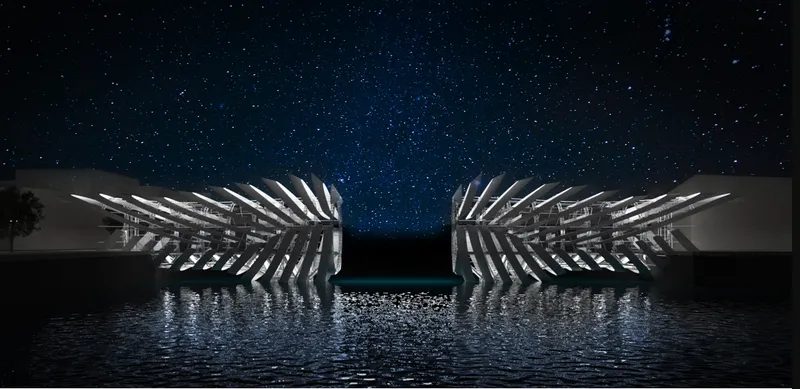
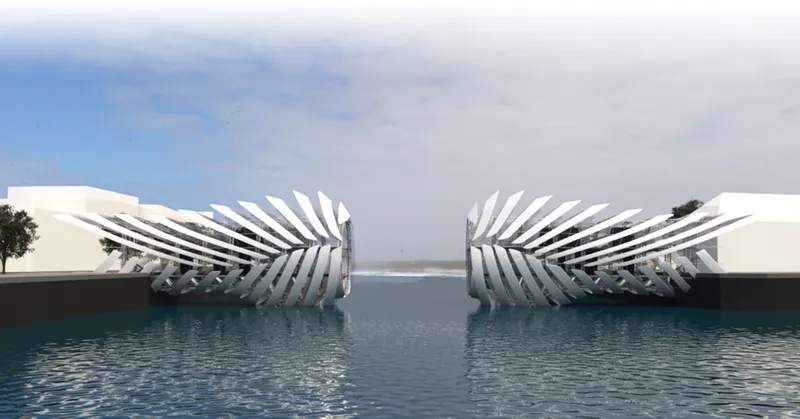
The unique opening mechanism enhances its architectural presence. During operation, the bridge transforms into a kinetic spectacle, a morphing structure that visually dramatizes the act of connection and separation. This movement is not hidden engineering; it becomes an urban performance that reinforces the symbolic act of linking two sides of the river.
Sustainable Urban Design Through Mobility
At the heart of City Link lies a commitment to sustainable urban design. Copenhagen is globally recognized for its cycling infrastructure, and this project strengthens that legacy by embedding cycling culture directly into the architecture.
The bridge is divided into two primary levels:
- Lower Level – Cyclist Infrastructure: Workshops, bicycle parking, a bike shop, and refreshment facilities including showers allow commuters to integrate cycling seamlessly into daily life. The design encourages active transportation while supporting cyclists with practical amenities.
- Upper Level – Public Realm: Pedestrians experience an elevated civic promenade featuring gathering spaces, a café, club facilities, offices, and social zones. This level transforms the bridge into a destination rather than a passage.
By combining infrastructure with social programming, City Link demonstrates how sustainable urban design can merge transportation systems with vibrant public life.

Architecture as Public Space
City Link redefines what a bridge can be: a place for everyone. It accommodates pedestrians and cyclists of all ages and abilities, including elevators for people with reduced mobility. The inclusive design ensures accessibility while maintaining spatial fluidity.
The interior spatial sequence, framed by structural arches and flowing panels, creates a dynamic experience as users move across the water. Transparent and open elements maintain visual contact with the river, reinforcing the connection between architecture and landscape.
Rather than isolating movement from social life, the bridge integrates both. It becomes a space to meet, to pause, to gather, and to observe the city from a new perspective.
Engineering Innovation and Morphing Form
One of the most distinctive aspects of City Link is its mechanical opening system. Moving panels operate through a lever-based mechanism, eliminating the need for additional hydraulic jacks. Sliding construction elements allow the bridge to separate gracefully, freeing the waterway for passing ships.
Foldable platforms and integrated structural systems ensure smooth transformation while maintaining structural integrity. This integration of engineering and architectural expression exemplifies forward-thinking sustainable urban design, where technology enhances both performance and aesthetics.
When fully opened, the bridge’s sculptural ribs create a dramatic symmetrical composition across the water. The morphing geometry becomes an event in itself, reinforcing the bridge’s identity as a living piece of infrastructure.
A New Landmark for Copenhagen
Landmarks are not defined solely by height or monumentality. They are defined by meaning. City Link’s form represents the literal and symbolic connection between riverbanks while celebrating Copenhagen’s cycling heritage.
Its flowing structure, combined with the choreography of its opening sequence, creates an unforgettable urban image. The bridge becomes a daily reminder that infrastructure can be beautiful, adaptive, and socially transformative.
Through its integration of cycling culture, public programming, kinetic engineering, and expressive form, City Link stands as a powerful example of how sustainable urban design can shape the future of cities.
More than a crossing, it is an urban experience: a bridge that moves, connects, and inspires.



Popular Articles
Popular articles from the community


Hill & Cross Opera: Sculptural Opera House Architecture Shaped by Tallinn’s Landscape and Identity
Hill & Cross Opera reimagines opera house architecture in Tallinn through its sculptural hill, civic plaza, glass wave and a luminous cross.

The Musturak Paradise: Senior Living Architecture for a Connected Future in Temara, Morocco
The Musturak Paradise reimagines senior living architecture in Temara via private homes, social spaces, culture, community, and shared care.

The Ocean Hive: Sustainable Architecture for a Self-Sufficient Civilization at Sea
The Ocean Hive imagines sustainable architecture at sea, where modular habitats, algae, wave power and ocean waste sustain a growing colony.

Riyadh For All: Intergenerational Urban Design for Active Aging in Rabat
Riyadh For All reimagines urban design in Rabat with intergenerational co-living, adaptive courtyards, and Moroccan cultural exchange today.


Similar Reads
You might also enjoy these articles

Eco Chapel: A Green Architecture Pavilion Designed in Symbiosis with the Forest
Eco Chapel uses green architecture to weave prayer, learning and reuse into a forest pavilion shaped by modular hexagonal canopies for life.
Kaffeebühnen: Coffee Shop Architecture Designed as a Civic Stage Between Vienna’s City and Park
Kaffeebühnen turns coffee shop architecture into a civic stage, linking Vienna’s park edge, urban life, warm timber yards, and coffee craft.
Healing Façade: Sustainable Architecture for Reforestation, Community, and Sacred Ecology in Ethiopia
Healing Façade reimagines sustainable architecture as a living wall that restores soil, catches water and renews Ethiopia's forest churches.


Urban Forest: A Vertical Ecosystem for 5,000 Workers in Singapore's Changi Business Park
Radially stacked pods and layered green decks turn a 7-acre plot into 47 acres of ecological workspace projected for 2040.

Comments (0)
Please login or sign up to add comments
No comments yet. Be the first to comment!