
Claudine Hermann School by SAM Architecture: A Harmonious Integration of Modern Design and Urban Landscape
Claudine Hermann School by SAM Architecture blends monolithic concrete pavilions with aluminum roofs, fostering community, education, and sustainability.

Architectural Design Rooted in Context
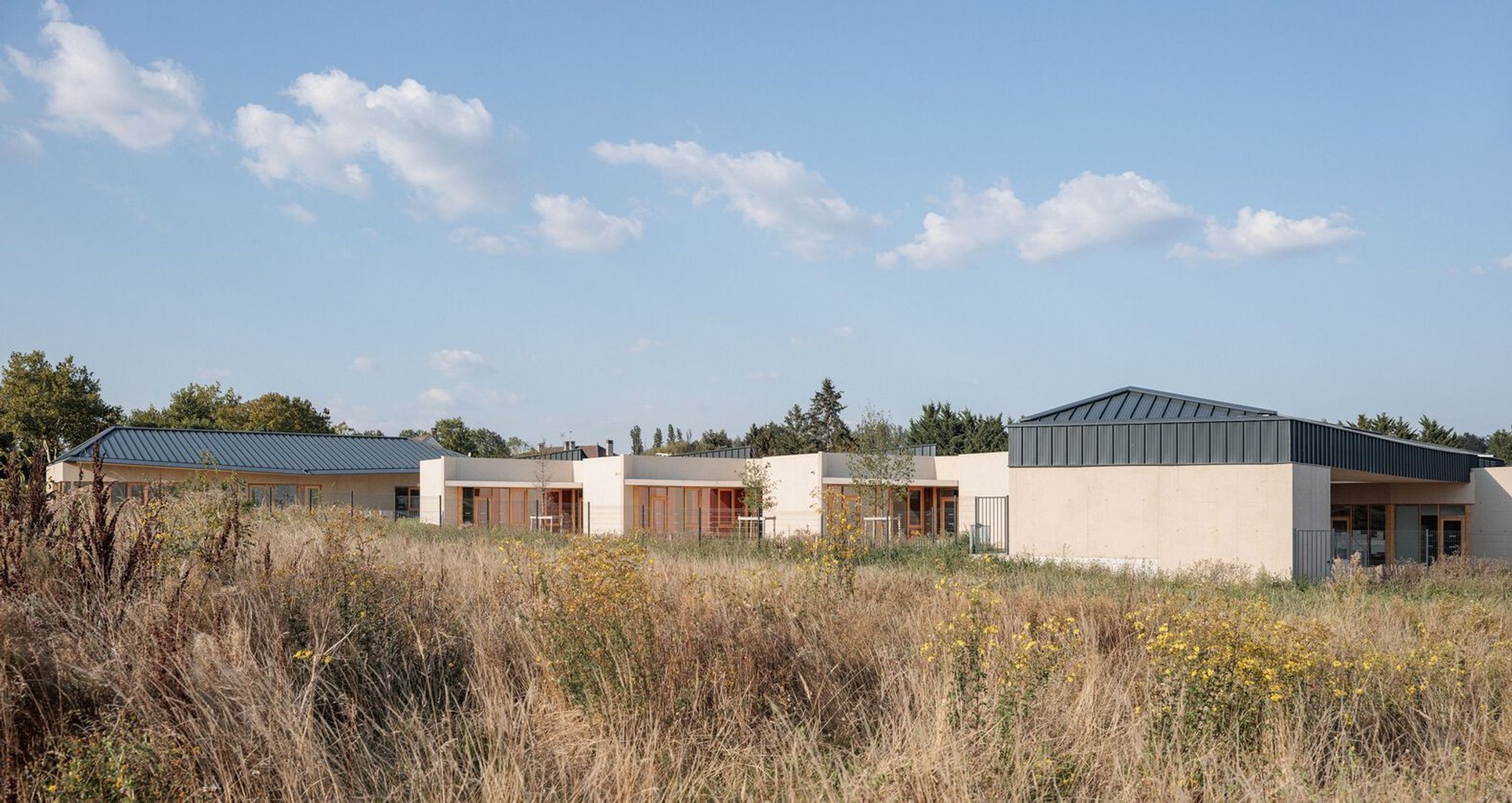
The Claudine Hermann School, designed by SAM Architecture, is a contemporary educational facility located in Arpajon, France. Spanning 2,516 square meters and completed in 2024, the project seamlessly blends with its urban surroundings, achieving a balance between functionality and aesthetic appeal. The design employs a duality in form and materials, ensuring the structure resonates with both the natural environment and the built landscape.
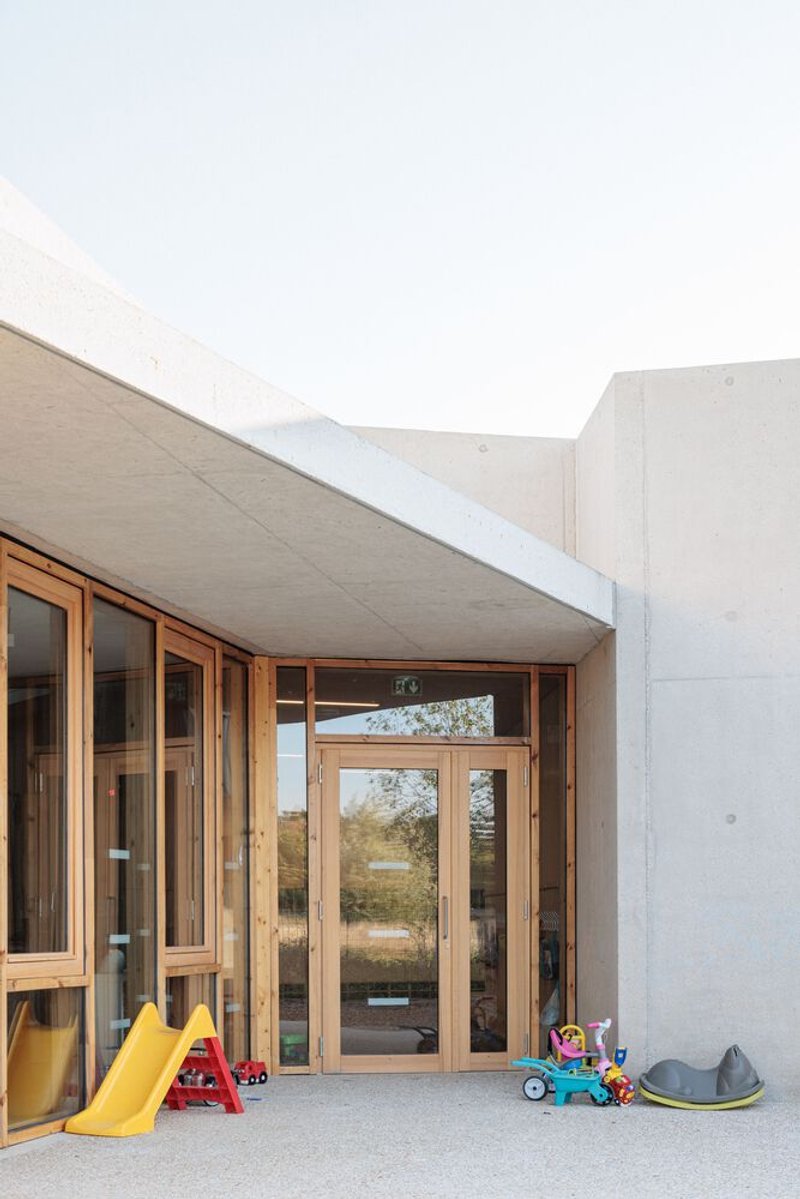
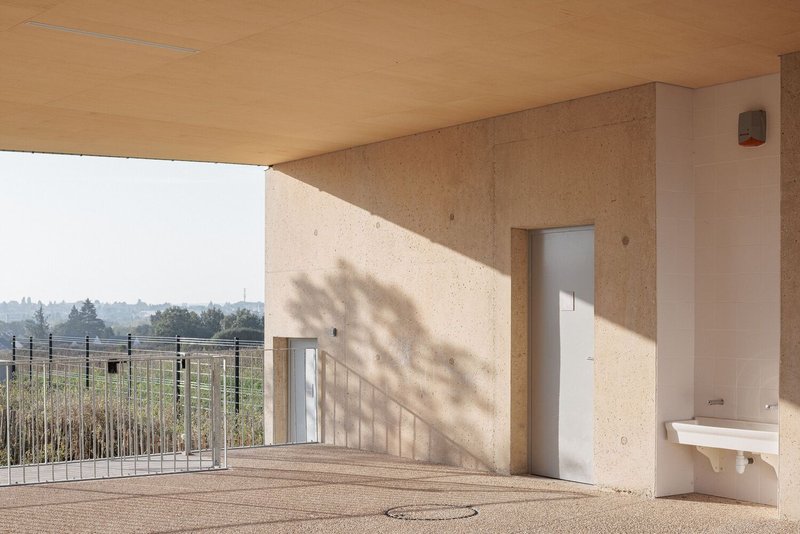
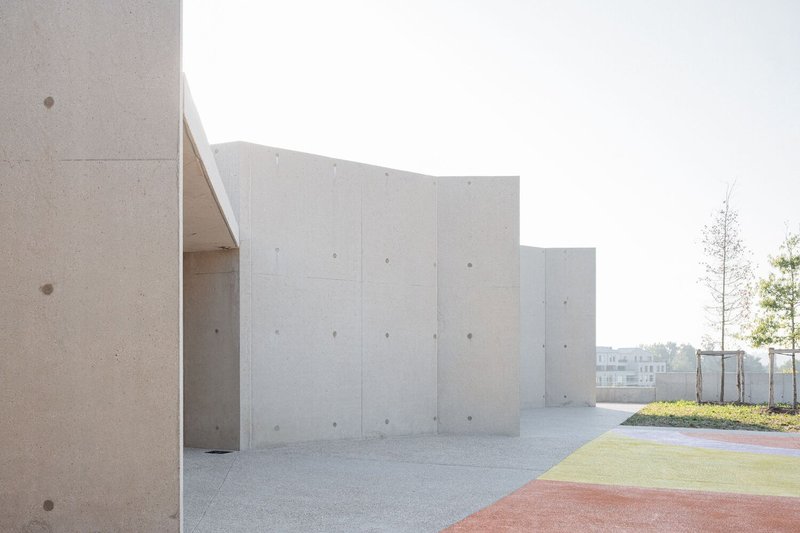
The school's classrooms are expressed as monolithic pavilions that emerge like sculptural elements from the landscape. These pavilions, crafted from in-situ tinted concrete, possess a warm, earthy tone. The concrete surfaces are sandblasted to reveal aggregates in select areas, creating a textural contrast that enhances the tactile quality of the facade. This architectural choice offers a visual rhythm, presenting varying appearances depending on the observer's viewpoint—sometimes solid and robust, at other times transparent and light.
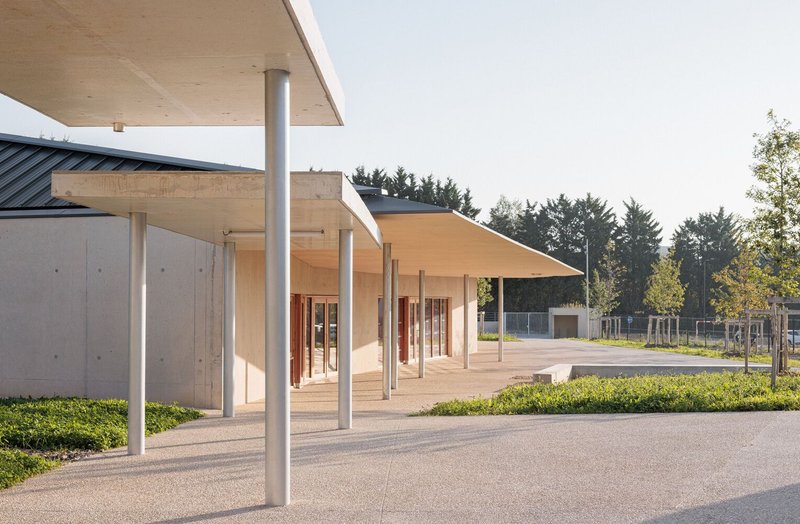
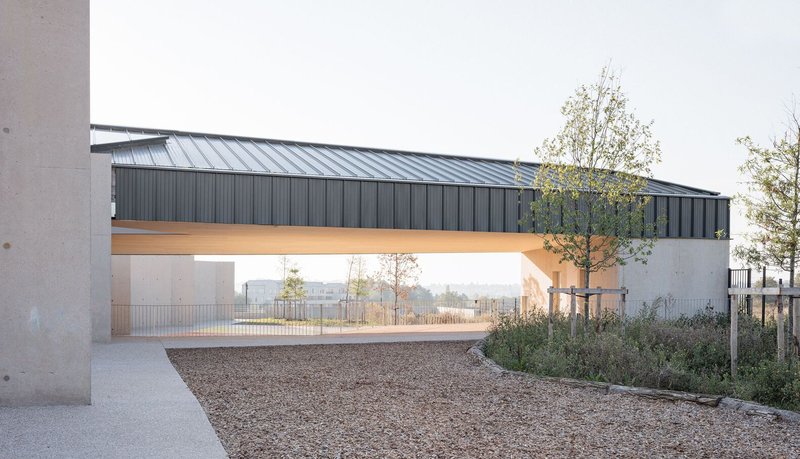
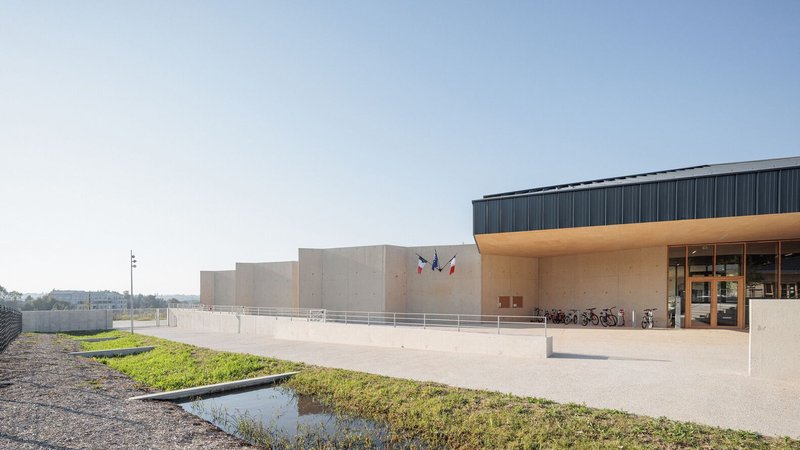
Shared spaces, including the main hall, restaurant, and after-school center, are unified beneath expansive aluminum roofs. These metallic canopies guide visitors toward the entrances and reinforce the visual hierarchy between private learning spaces and public communal areas. The design reflects a clear urban narrative, punctuating the dense residential fabric with a civic landmark.
Material Palette: Durability Meets Timeless Aesthetics
The material selection underscores the project's emphasis on longevity and contextual harmony. Concrete walls, aluminum roofing, and wooden joinery collectively form a robust yet inviting architectural language. These materials were chosen not only for their durability but also for their resonance with local construction traditions.
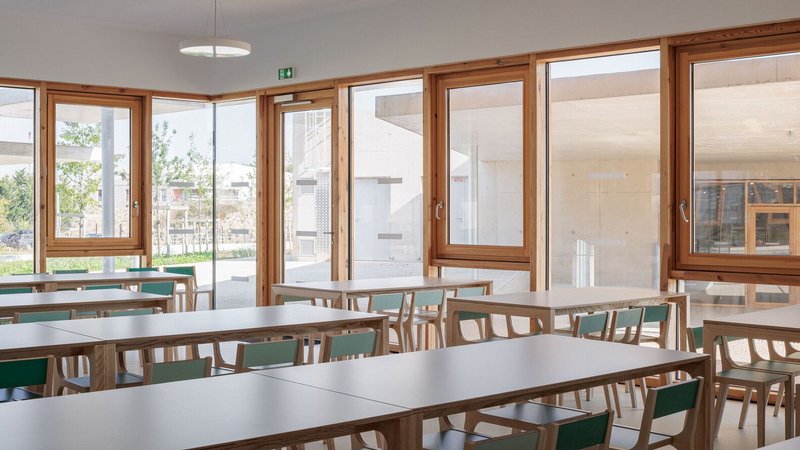
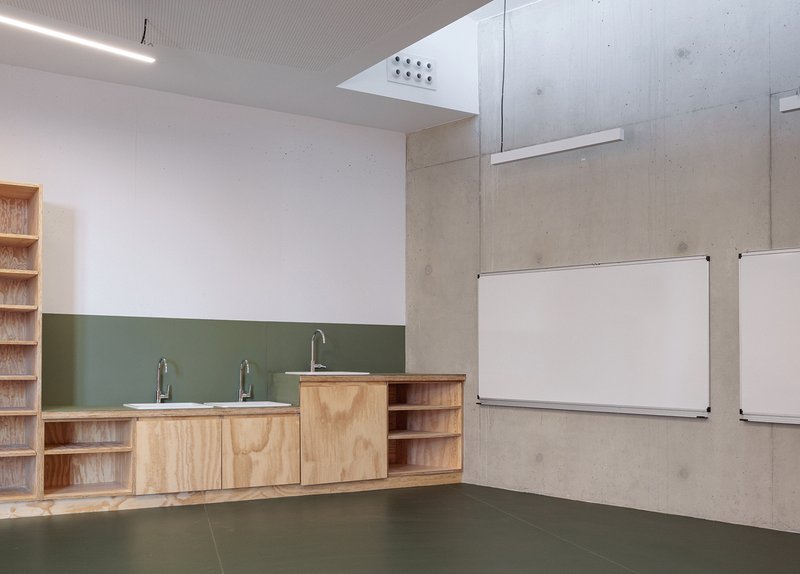
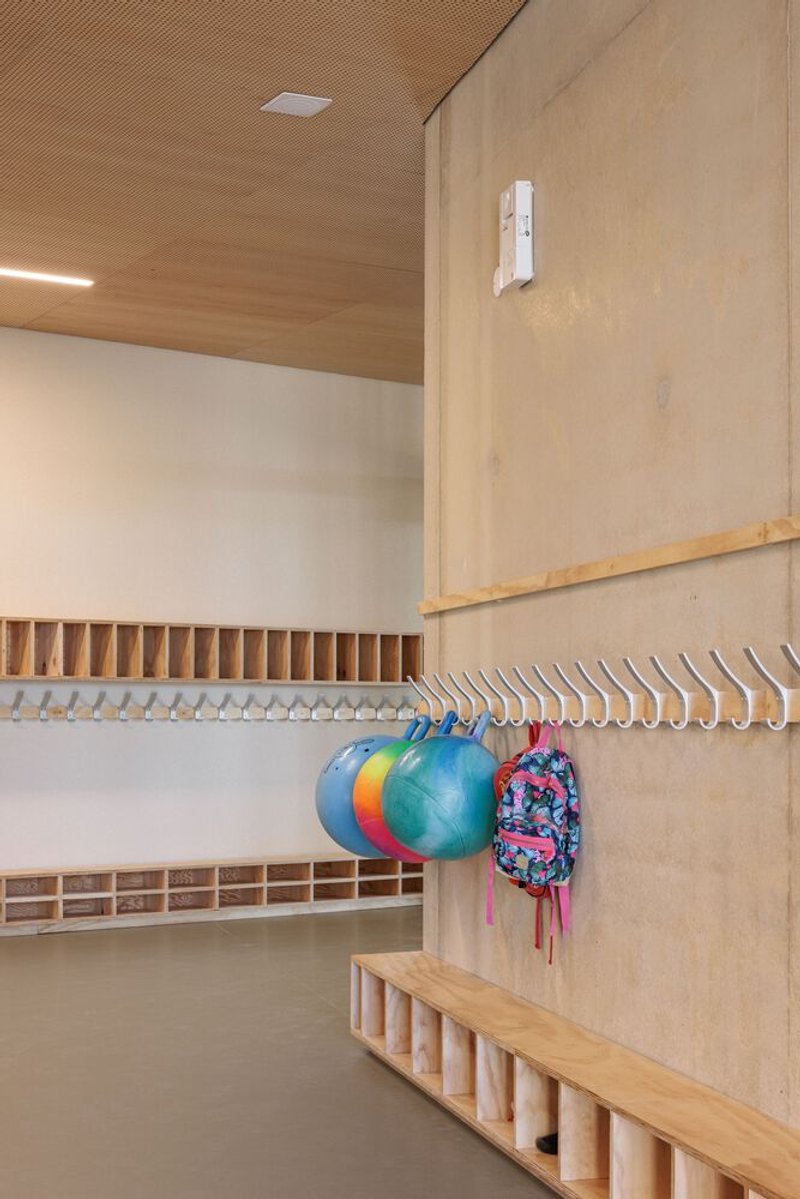
The sandblasted concrete offers resilience and a warm visual tone, aging gracefully over time. Aluminum roofs provide lightweight protection while reflecting natural light, adding to the building's brightness. Wood is introduced in joinery and interior finishes, bringing warmth to the interiors and fostering a sense of comfort for students and staff.
The integration of technical systems is seamlessly executed, ensuring that insulation, HVAC, and electrical systems are incorporated without compromising the building's aesthetic integrity. The design anticipates future upgrades to mechanical systems, ensuring the structure remains adaptable while preserving its architectural identity.
Spatial Composition: Functionality and Accessibility
The spatial organization prioritizes accessibility and user experience. The school is structured around three primary volumes:
- North Building: A linear structure, reminiscent of a traditional rural 'longère,' housing the reception area and after-school activity hub.
- Northwest Building: Dedicated to the school restaurant, positioned strategically between the delivery zone and a landscaped garden.
- Southern Wing: Hosting the preschool and elementary school, with the preschool adjacent to the central public plaza for ease of access.
The buildings frame an L-shaped courtyard, connecting two main entrances at the north and south corners. This courtyard fosters a communal atmosphere, encouraging interaction among students, parents, and residents.
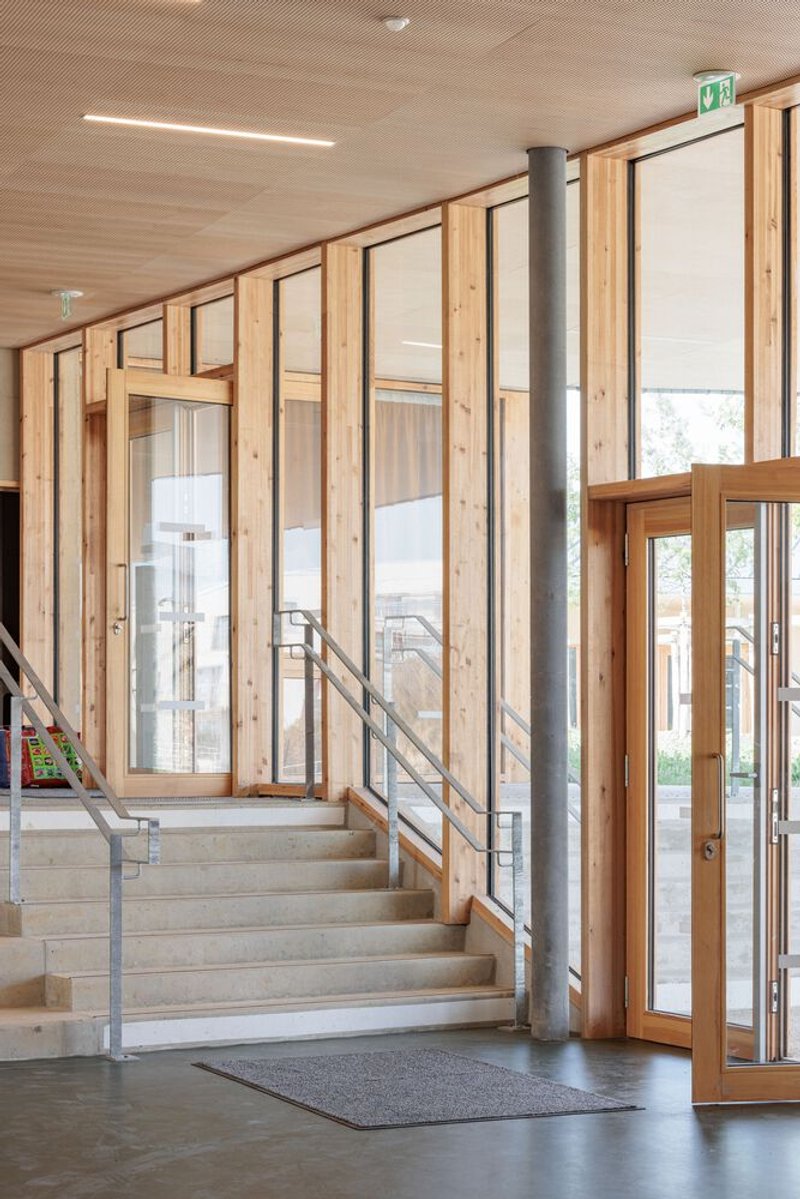
Public and Private Realms: Creating a Child-Centric Village
The design delineates public and private realms with subtle yet effective transitions. Public spaces, such as the courtyard and the public square, serve as gathering points, fostering a sense of community. Private terraces attached to each classroom act as extensions of the learning environment, offering outdoor areas for workshops, play, and nature-based activities.
These terraces ensure privacy while encouraging students to interact with natural elements. The site's gentle 3% slope is skillfully utilized to differentiate levels, creating a dynamic interplay between built forms and open spaces. Staggered levels enhance the spatial experience, offering areas for informal gatherings and relaxation.
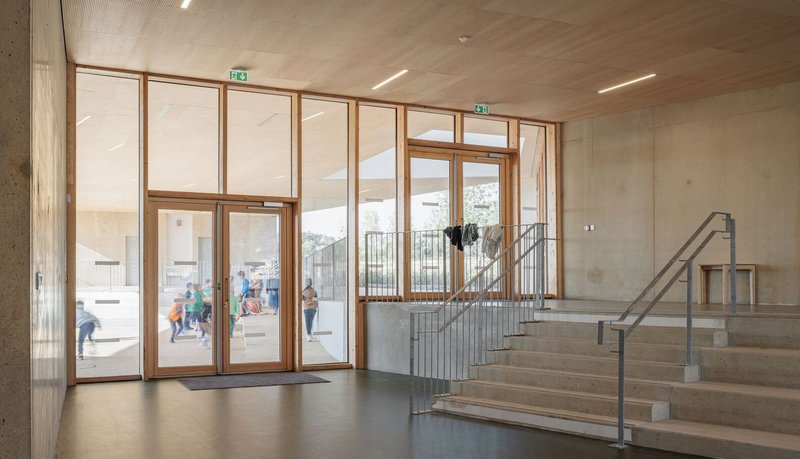
Pedagogical Philosophy: A Village for Learning
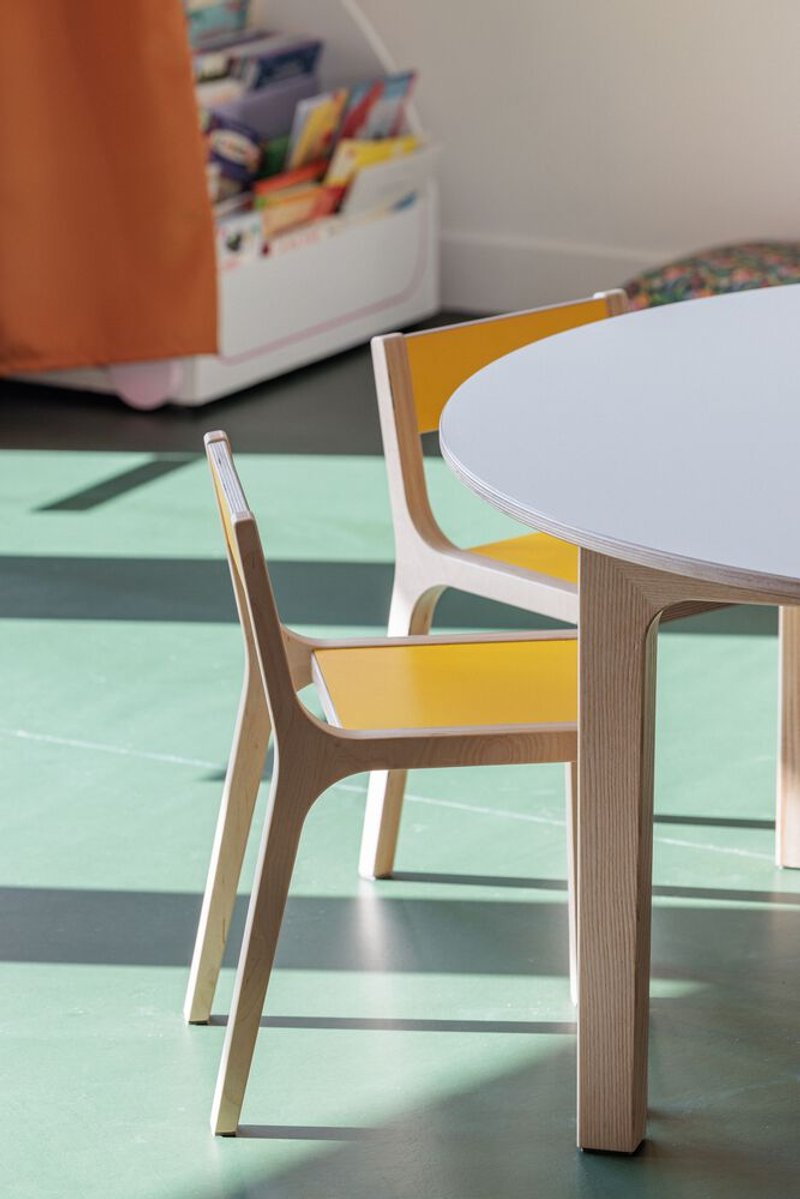
The Claudine Hermann School exemplifies a contemporary approach to education, emphasizing flexible and open learning environments. Circulation spaces double as interactive zones, encouraging spontaneous learning and fostering autonomy among students. Alcoves, bleachers, and terraces extend the classroom experience, blurring the boundaries between indoor and outdoor education.
The architectural vision is rooted in the concept of a 'child-scaled village,' where plazas, multipurpose halls, and fluid indoor-outdoor transitions cultivate a nurturing and stimulating atmosphere. This approach aligns with modern pedagogical practices that prioritize adaptability, creativity, and engagement with nature.
Collaborative Effort: Engineering and Construction Expertise
The successful realization of this project was made possible through the collaboration of industry experts:
- Structural Engineering: Bollinger + Grohmann Ingenieure
- HVAC: EITP
- Electrical: ETRELEC
- Roofing: Sarmates
- Furniture: Bati Inov Concept
- Acoustics: Altia
- Landscaping: idverde
- Structural Works: CRB
- Roads and Networks: Eurovia
- MEP Engineering: Bet Choulet
A Lasting Architectural Legacy
SAM Architecture's design for the Claudine Hermann School transcends conventional educational architecture. It establishes a vibrant, sustainable, and contextually sensitive environment that fosters learning, community engagement, and architectural excellence. The fusion of durable materials, thoughtful spatial organization, and child-centric design principles ensures that the school will serve as a lasting landmark within the Arpajon community for generations to come.
All Photographs are works of Salem Mostefaoui



Popular Articles
Popular articles from the community

Gunawarman 35: Jakarta's Corner of Quiet Complexity
WOFF's mixed-use building in Jakarta pairs translucent glass block walls with a buff brick cylinder to hold coffee, wellness, and work under one roof.
Cafe MADA: A Chiang Rai Pavilion in a Mango Orchard
BodinChapa Architects threaded a 254 m² black-roofed cafe through an existing mango orchard in Chiang Rai, Thailand, built around mature trees.
Guangzhou's Twin Towers Interiors Move Like Water
DuShe Architectural Design shapes the lobbies of a massive Guangzhou transit hub with undulating ceilings and deep geological materiality.
Bood Design Bureau Splits a Gilan Residence in Two to Let the Forest In
Double Side House negotiates privacy and openness through interlocking concrete volumes and planted courtyards in northern Iran's humid Caspian lowlands.


Similar Reads
You might also enjoy these articles

Filtering Space: A Gradual Spatial Experience
From urban intensity to spatial calm.


The Ken Roberts Memorial Delineation Competition (Krob)
As the most senior architectural drawing competition currently in operation anywhere in the world, it draws hundreds of entries each year, awarding the very best submissions in a series of medium-based categories.

Waterfront Redevelopment and Urban Revitalization in Mumbai: Forging a New Dawn for Darukhana
A transformative waterfront redevelopment project reimagining Darukhana’s shipbreaking heritage into an inclusive urban future.

OUT-OF-MAP: A Call for Postcards on Feminist Narratives of Public Space
Rhizoma Design and Research Lab invites artists, designers, architects, researchers, and students to reflect on how feminist perspectives can reshape public space. Selected works will be exhibited in Barcelona, October 2026. Submissions open until 15 April 2026.


Explore Architecture Competitions
Discover active competitions in this discipline




The International Standard for Design Portfolios


The Global Benchmark for Architecture Dissertation Awards


The Global Benchmark for Graduation Excellence


Challenge to design public laboratory
Comments (0)
Please login or sign up to add comments
No comments yet. Be the first to comment!