
Clausura House by Agustín Lozada: A Quiet Architecture Rooted in Landscape and Introspection
Clausura House embraces the landscape with a low, inward-facing design centered on a tranquil courtyard, prioritizing privacy, climate comfort, and quiet living.


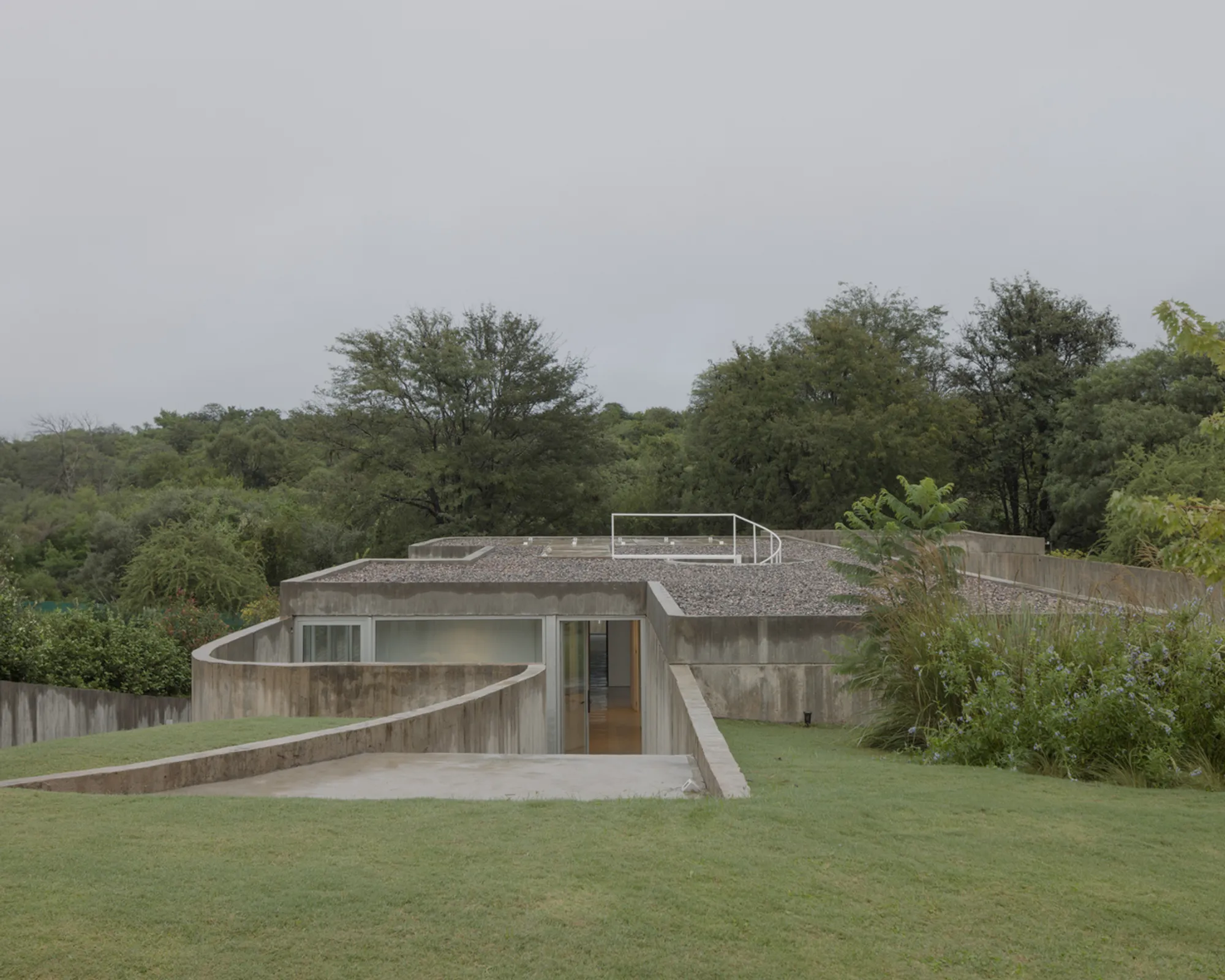
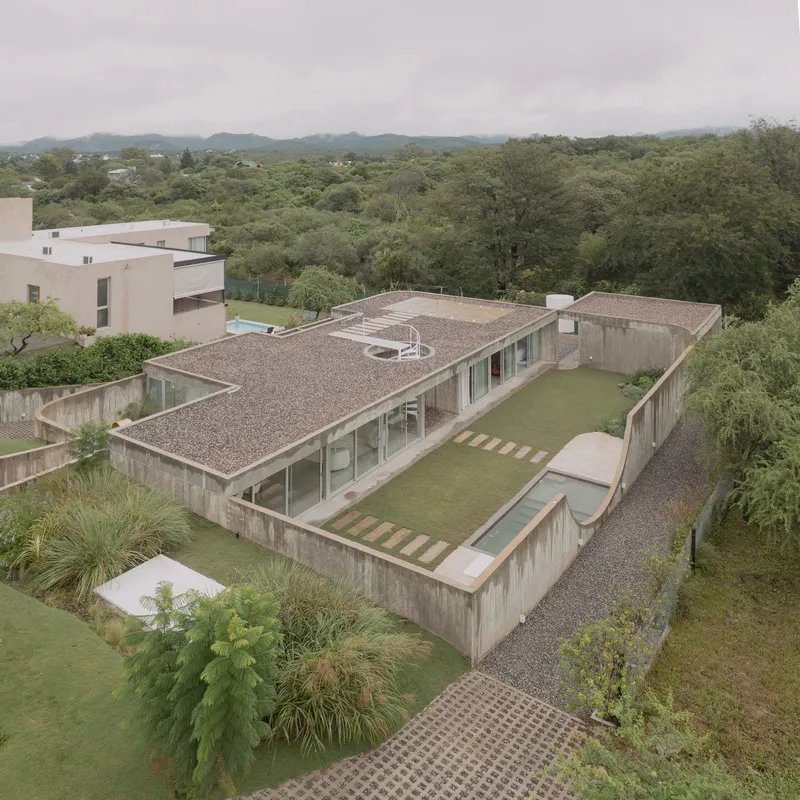
Clausura House, designed by architect Agustín Lozada,is a 290 m² single-family residence located in Mendiolaza, Córdoba. Set within a rapidly expanding suburban development on the outskirts of Greater Córdoba, the project challenges the increasingly standardized language of residential construction in these new neighborhoods. While many contemporary houses heighten their presence through elevated platforms, exaggerated façades, or car-dominated frontages, Clausura House proposes a quieter architectural stance—one grounded in landscape, restraint, and spatial intimacy.
Reframing Suburban Architecture Through Landscape Integration
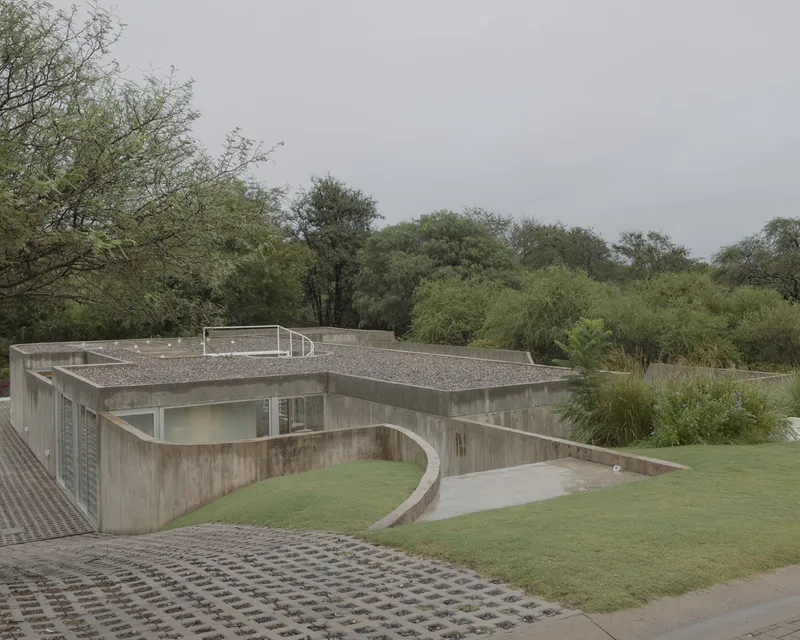
In many emerging residential districts, new homes often resist the natural topography, erasing slopes and contours to establish elevated, visually dominant structures. This tendency to stand above the land leads to landscapes devoid of specificity—spaces unified not by character but by a shared lack of meaning. Clausura House responds to this condition by reversing the gesture. Instead of asserting dominance, it settles into the site, occupying the flattest portion of the plot and allowing an existing mound from road construction to shape its street-facing presence.
From the public side, the house appears modest, even introverted. Often described as “buried,” it is in truth not submerged but attentively aligned with the terrain, avoiding unnecessary elevation. Its low profile allows the roofline to merge with the tree canopy and distant mountains, preserving the natural continuity of the landscape. In this gesture, the architecture chooses belonging over spectacle.
Light, Climate, and the Decision to Look Inward
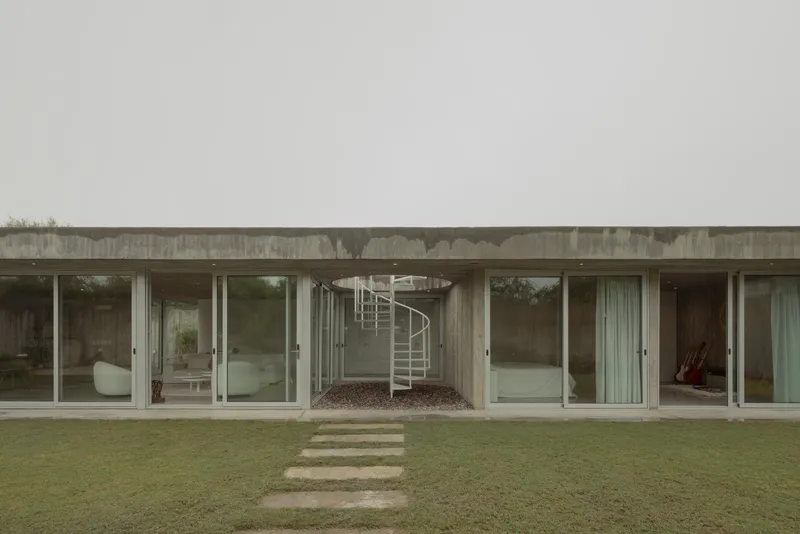
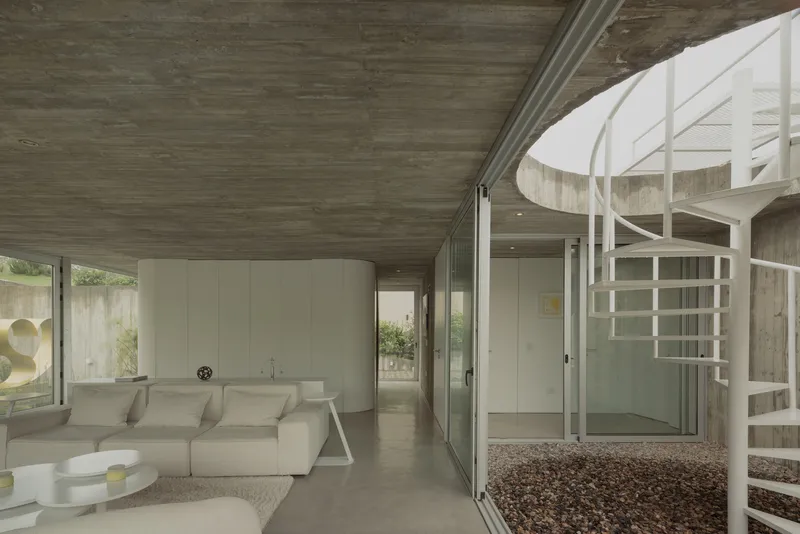
Córdoba’s western exposure offers wide, open views but harsh afternoon sunlight. Rather than orienting the home toward these vistas, the design prioritizes daily comfort by opening the spaces toward the northeast, capturing soft morning light and naturally shaded conditions throughout the day. However, in a neighborhood context, lateral openness often compromises privacy—a challenge addressed through the introduction of a central, inward-facing courtyard.
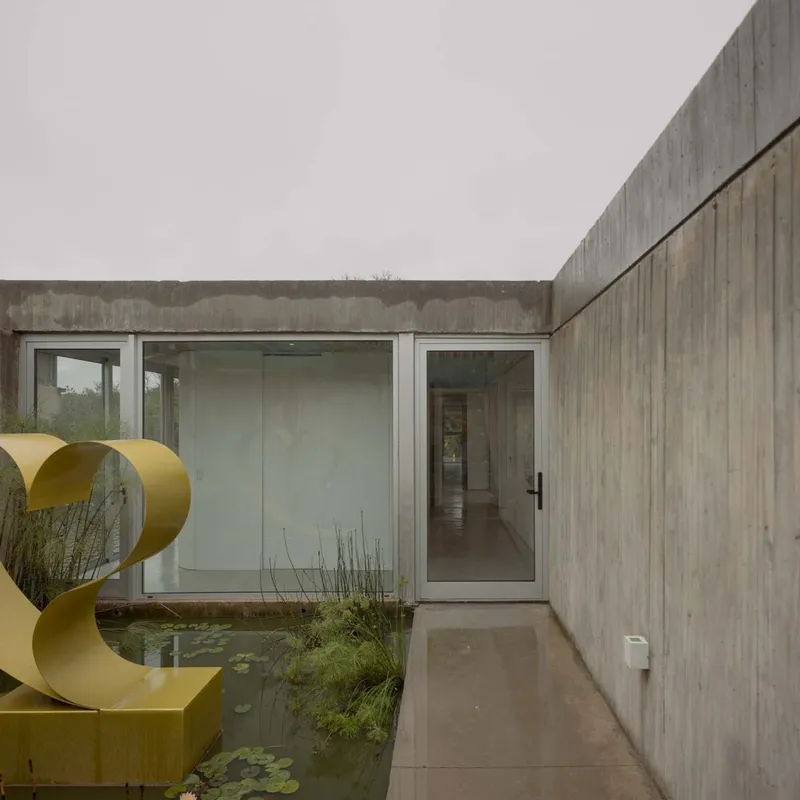
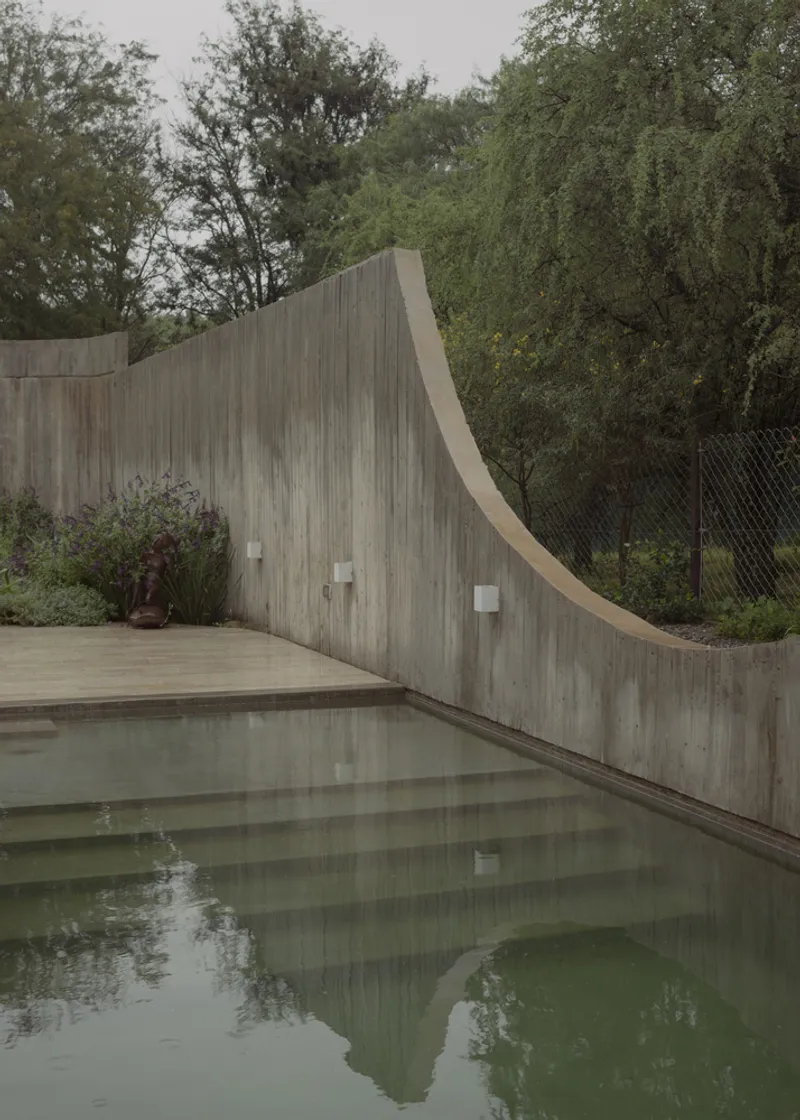
This courtyard becomes the emotional and functional heart of the project. Organized around a pool and sheltered by the building mass, it creates a microclimate that supports outdoor living without exposure to surrounding properties. As in traditional rural homes, the central void—not a room, but an absence—anchors the domestic experience. The architecture unfolds around this peaceful nucleus, crafting a sense of refuge that is increasingly rare in suburban development.
A Reimagined Car Experience: Architecture Beyond Efficiency
Contrary to conventional layouts dominated by front-facing garages, Clausura House repositions vehicular access to the rear of the site. This inversion softens the street elevation while allowing the architecture to maintain its introspective character. The driveway gently wraps around the perimeter, requiring subtle modifications to the building’s geometry. Edges curve, fold, and expand to accommodate turning movements, resulting in a concrete volume that is both grounded and supple, expressing mass while responding to motion.
This move reflects a broader ambition: to question the dominance of cars in shaping domestic space and to prioritize human presence and spatial calm.
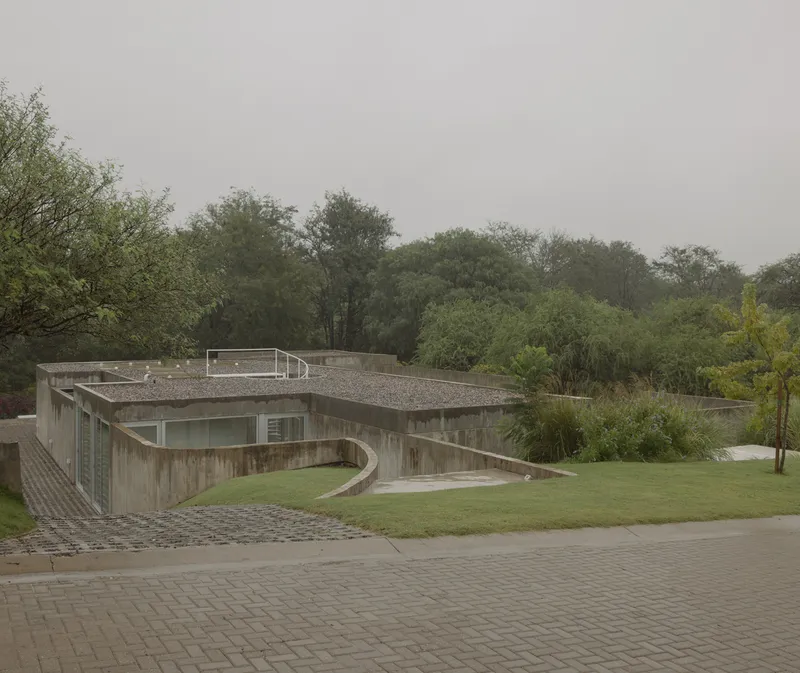
Concrete, Contemplation, and a New Way of Belonging
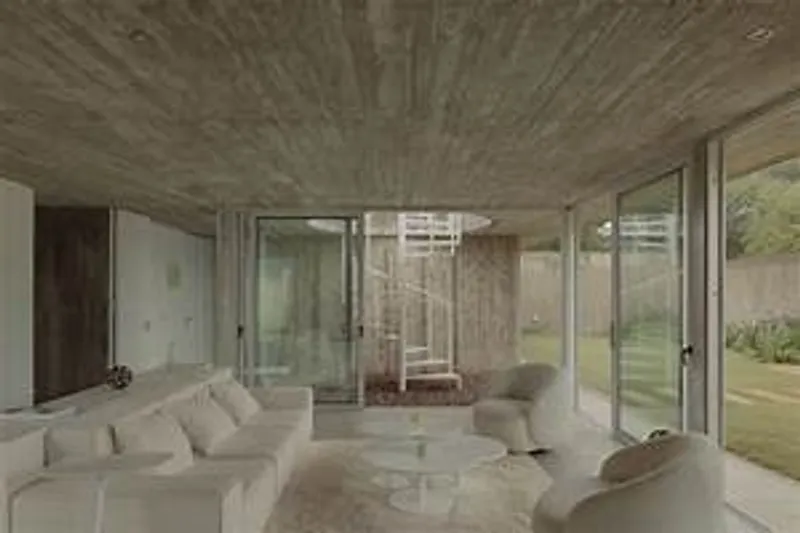
The house’s materiality—solid concrete paired with warm interior wood—reinforces its dual identity as a sheltering enclosure and a quiet retreat. Interiors are minimal yet textured, defined by light, shadow, and the intimate presence of the courtyard. Spaces transition fluidly between interior and exterior, always oriented toward calm rather than spectacle.
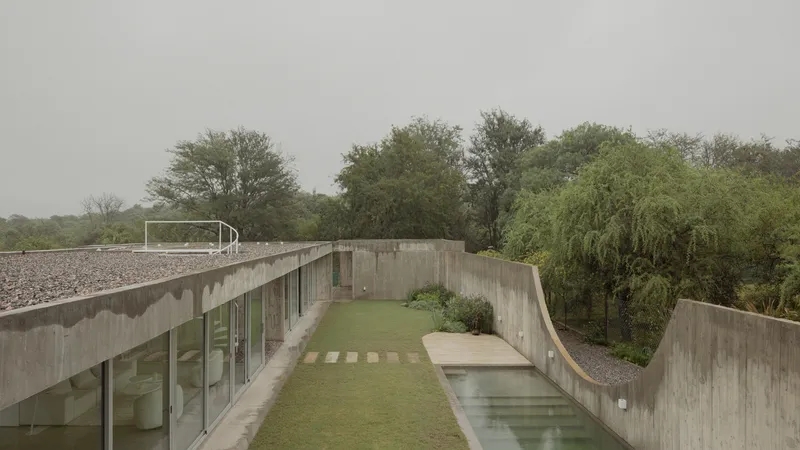
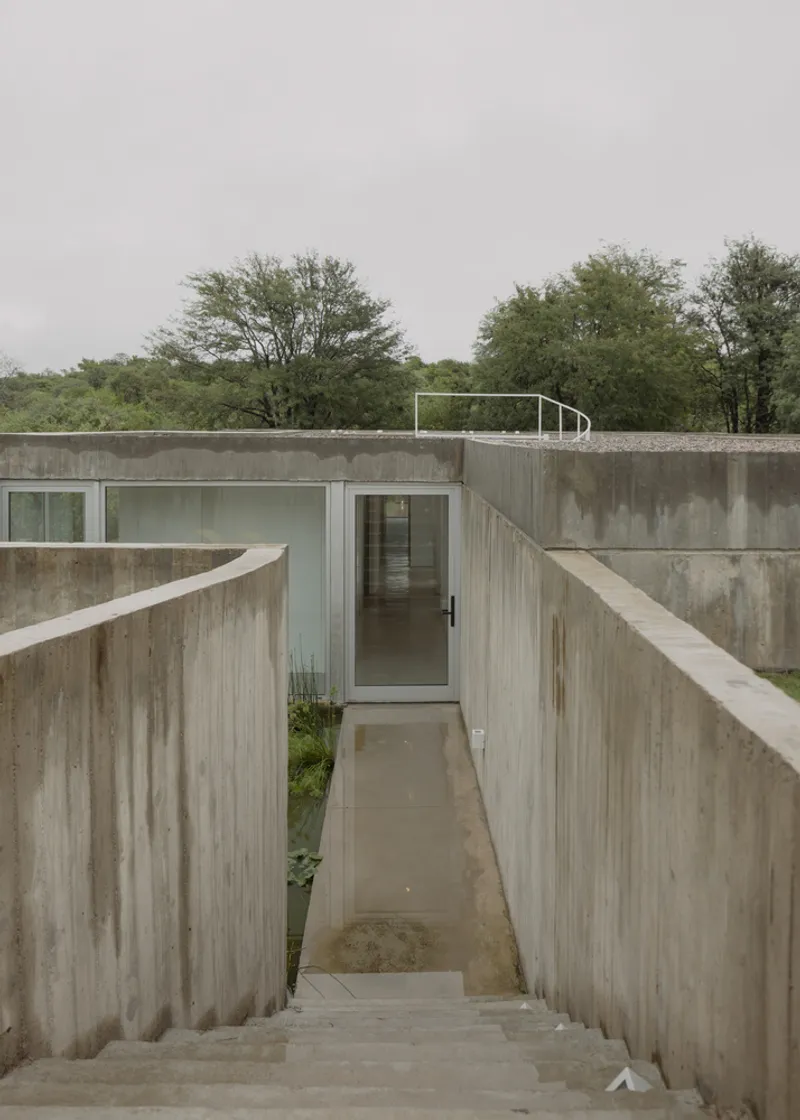
All photographs are works of Federico Cairoli



Popular Articles
Popular articles from the community


The Ocean Hive: Sustainable Architecture for a Self-Sufficient Civilization at Sea
The Ocean Hive imagines sustainable architecture at sea, where modular habitats, algae, wave power and ocean waste sustain a growing colony.

Lunar Spiral: Space Architecture Shaped by the Mathematics of the Universe
Lunar Spiral reimagines space architecture through Fibonacci geometry, lunar regolith, levitating habitats, and self-sustaining Moon living.

The Musturak Paradise: Senior Living Architecture for a Connected Future in Temara, Morocco
The Musturak Paradise reimagines senior living architecture in Temara via private homes, social spaces, culture, community, and shared care.

The Earth Pod: 3D Printed Homes for Resilient Refugee Communities
The Earth Pod reimagines refugee housing through 3D printed homes made from clay, combining resilience, self-sufficiency, and rapid shelter.

Similar Reads
You might also enjoy these articles


Hodi-Mandai Geram
Project Function: Preservation and revitalization of the Intangible heritage and socio-spatial identity of the Hodi by Housing, Cultural Memory Center, Sacred Grove, landscape, local tourism economy


Olio Towers: A Mid-Rise for Performers That Fuses Housing, Rehearsal, and Stage
Located blocks from Houston's Theater District, this modular tower stacks living units around a central performance atrium.

Oasis: Modular Green Housing Carved into Dhaka's Urban Fabric
A shortlisted Plugin Housing entry reclaims unauthorized settlements in Dhaka with stepped concrete volumes, green roofs, and ventilation-driven design.

Black Hole: A Floating Megastructure for the Post-Physical Era
Emiliano Mazzarotto envisions a spherical, self-scaling arena where e-sports, digital hotels, and holographic stadiums replace traditional public space.


Explore Latin American Houses Competitions
Discover active competitions in this discipline



Challenge to reimagine the Iron Throne


Photograph architecture without architects


Illustrate the lost glory of Angkor Wat - Render Challenge


Design challenge to reuse E-waste
Comments (0)
Please login or sign up to add comments
No comments yet. Be the first to comment!