
Cli_Ma: Reimagining Marché de Clignancourt Through Urban Regeneration Architecture
Urban regeneration architecture reconnects Paris’ Petite Ceinture, transforming infrastructure into a layered public market and civic landscape.


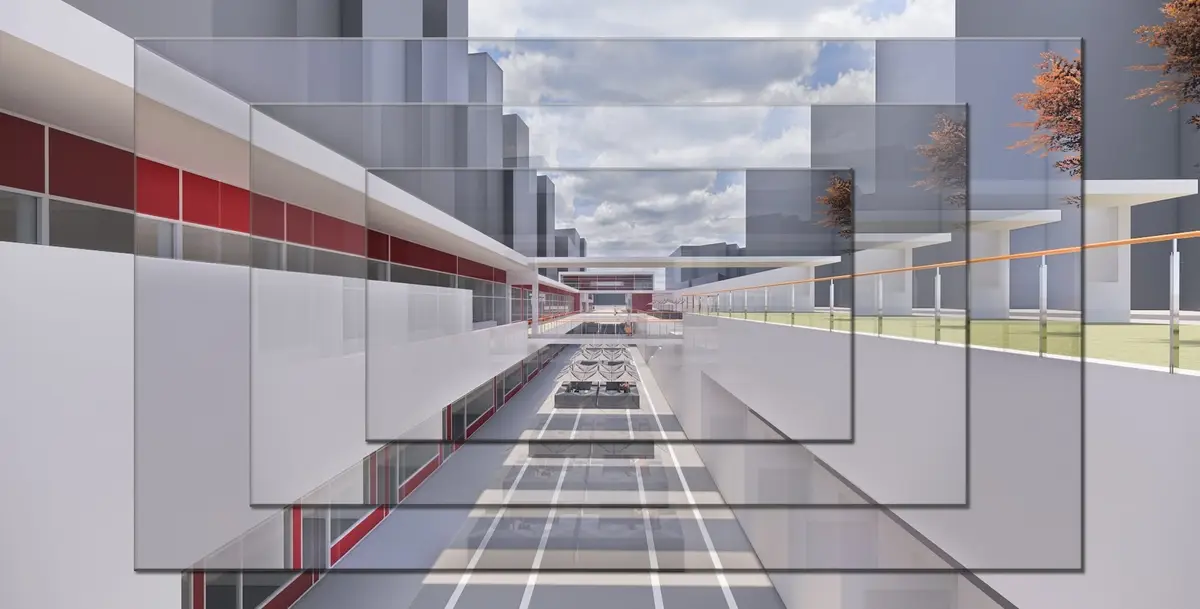
The project Cli_Ma, Marché de Clignancourt by CZ architectes and Pascal Andrea Cocozza proposes a compelling model of urban regeneration architecture, transforming the underutilized infrastructure of Paris’ Petite Ceinture into a dynamic, multi-layered public space. As a shortlisted entry in Salut Paris, the project demonstrates how architecture can mediate between past and present, infrastructure and community, void and occupation.
Reclaiming the Urban Void
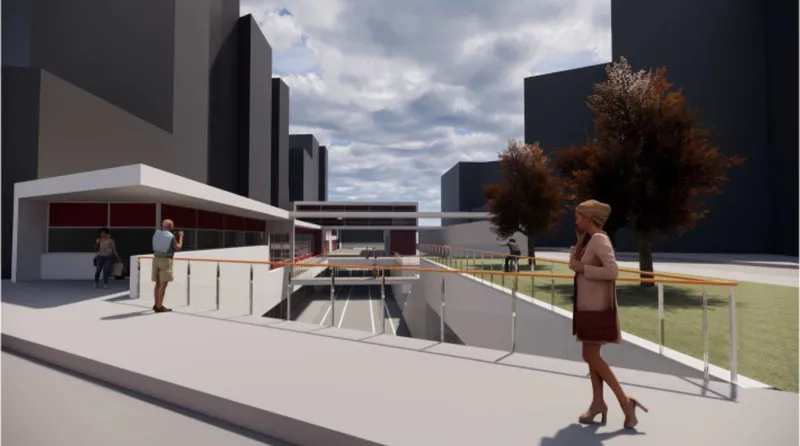
At its core, the project addresses a familiar contemporary condition: the fragmented residual spaces left behind by obsolete infrastructure. The Petite Ceinture, once a vital railway loop, now exists as a discontinuous urban void cutting through dense Parisian fabric.
Rather than treating this void as a constraint, the proposal reframes it as an opportunity. Through urban regeneration architecture, the design stitches together two critical layers of the city:
- The platform level, aligned with the existing railway tracks
- The city level, embedded within the surrounding urban fabric
This dual-layer strategy enables the site to operate simultaneously as infrastructure and public realm, reinforcing continuity rather than division.
Two-Level Strategy: Infrastructure Meets Public Life
The intervention introduces a clear spatial logic based on vertical layering.
Platform Level
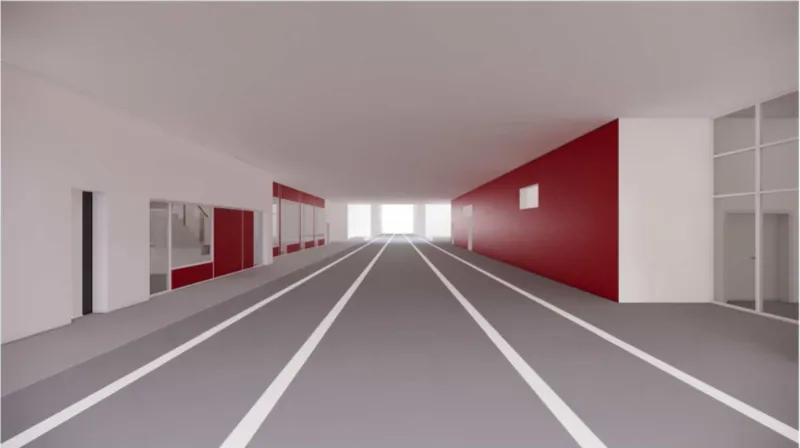
The platform level is rationalized and cleared of redundant slopes and docks, allowing new functions to occupy the same datum as the railway tracks. This level connects directly to the metro line 4 via a newly introduced pedestrian tunnel, reinforcing accessibility and mobility.
Programmatically, this layer accommodates:
- Weekend markets
- Storage and service spaces
- Flexible commercial stands
It operates as an infrastructural spine, supporting both movement and commerce.
Ground Level
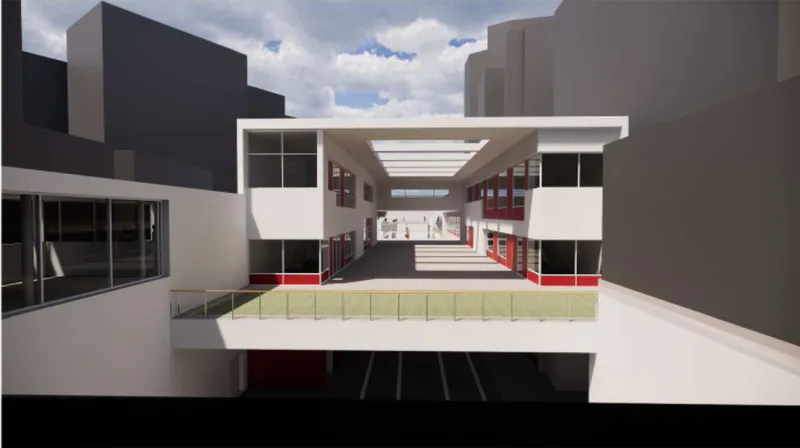
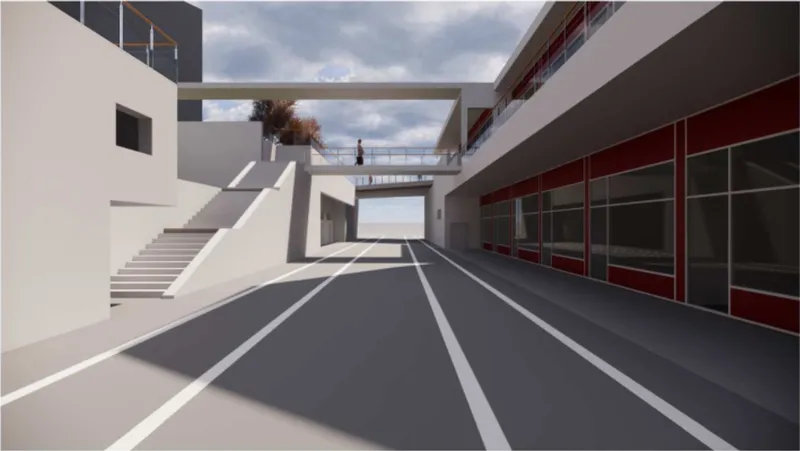
At the city level, the design establishes a continuous architectural promenade. This promenade acts as a mediator between existing urban access points and the new intervention.
A suspended slab becomes the defining gesture, enabling:
- Universal accessibility through ramps and gentle slopes
- Visual and physical continuity across the site
- Activation of previously disconnected edges
The Recylerie (old station) is reinterpreted as a focal landmark, anchoring the spatial sequence and reinforcing the narrative of reuse.
The Canopy: Ordering the Urban Context
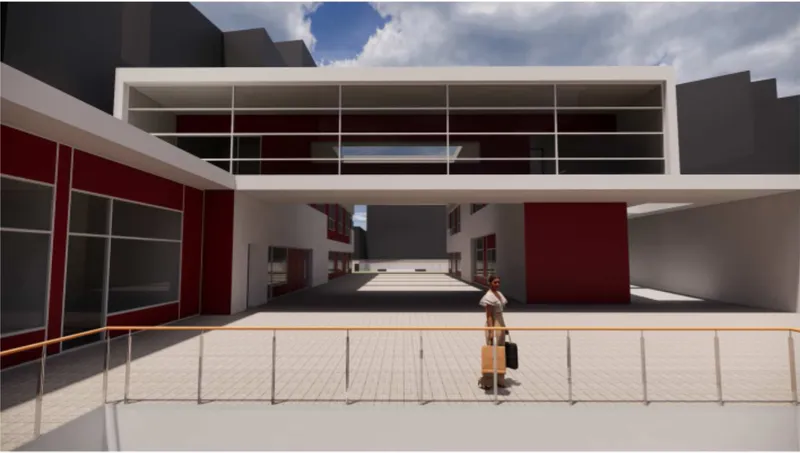
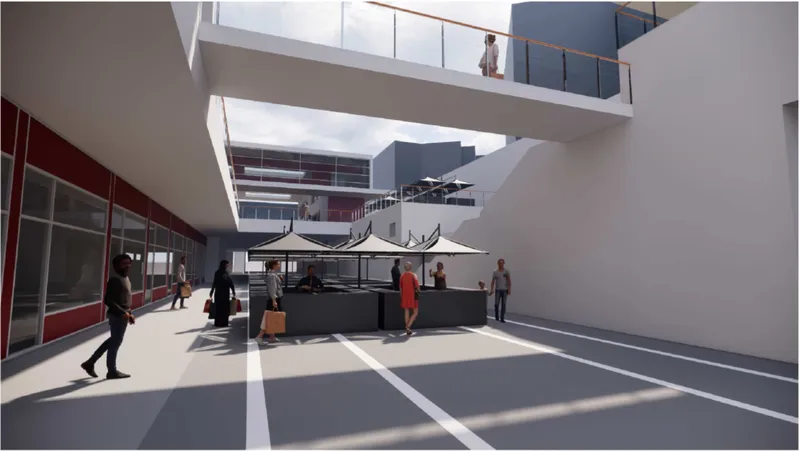
A defining element of the project is the introduction of a "Canopy", a typological reference rooted in French market architecture.
This canopy performs multiple roles:
- Organizes the surrounding volumes
- Frames circulation and views
- Establishes a recognizable architectural identity
More importantly, it acts as an ordering device within the broader urban regeneration architecture strategy, bringing coherence to an otherwise fragmented context.
Programmatic Diversity and Social Inclusivity
The project is conceived as a catalyst for social interaction within a multiethnic urban environment. Its program reflects this ambition through a diverse mix of uses:
- Marché couvert with flexible stands
- Permanent retail units
- Weekend markets
- Community spaces such as the "Comité de quartier"
This layered program ensures adaptability across different user groups, including tourists, local residents, and immigrant communities. The architecture supports both everyday routines and episodic events, reinforcing its role as a civic condenser.
Movement as Spatial Narrative
Circulation is treated not merely as functional necessity but as an experiential sequence. The project develops a "movement continu", a continuous spatial journey that unfolds across levels.
From Rue du Ruisseau to the architectural framework and into the canopy, users experience:
- Compression and expansion of space
- Framed views and axial alignments
- Gradual transitions between open and enclosed environments
This approach transforms movement into a narrative device, guiding perception and reinforcing spatial hierarchy.
Economic and Constructive Logic
The proposal integrates pragmatic strategies to ensure feasibility. The economic model is supported by:
- Sale and rental of permanent retail units
- Leasing of market stands
- Integration with existing transport infrastructure through collaboration with RATP
By embedding revenue-generating programs within the architectural framework, the project aligns urban regeneration with economic sustainability.
Architecture as Catalyst
Ultimately, Cli_Ma exemplifies how urban regeneration architecture can move beyond formal intervention to become a catalyst for broader urban transformation.
The project does not simply fill a void. It redefines it. By integrating infrastructure, public space, and programmatic diversity, it constructs a new urban condition: one that is continuous, inclusive, and adaptable.
In doing so, it offers a replicable model for cities worldwide facing similar challenges of obsolete infrastructure and fragmented urban landscapes.


Popular Articles
Popular articles from the community


Temporary Home for Dogs: A Reversed Zoo Rethinks Animal Shelter Architecture
In Bucharest, a sinuous corridor and freed landscape flip the logic of containment, designing a shelter that works to make itself unnecessary.

Extended Shell: Retrofitting Kolkata's Balconies as Living Urban Thresholds
A modular retrofit system recovers the social and environmental intelligence of Kolkata's historic verandas for contemporary Park Street residents.

The Amber Palace Opera: A Geological Fiction Surfaces on Tallinn's Baltic Waterfront
Pierre Brillard reimagines a Baltic legend as a public landscape, opera house, and waterfront promenade rooted in Tallinn's coastal identity.

Faces of the Soviet Avant-Garde: Turning Moscow's Street Names into an Open-Air Museum
A network of sculptural installations across a Moscow residential district transforms forgotten architect names into spatial encounters with cultural memor

Similar Reads
You might also enjoy these articles

Eco Chapel: A Green Architecture Pavilion Designed in Symbiosis with the Forest
Eco Chapel uses green architecture to weave prayer, learning and reuse into a forest pavilion shaped by modular hexagonal canopies for life.
Kaffeebühnen: Coffee Shop Architecture Designed as a Civic Stage Between Vienna’s City and Park
Kaffeebühnen turns coffee shop architecture into a civic stage, linking Vienna’s park edge, urban life, warm timber yards, and coffee craft.
Healing Façade: Sustainable Architecture for Reforestation, Community, and Sacred Ecology in Ethiopia
Healing Façade reimagines sustainable architecture as a living wall that restores soil, catches water and renews Ethiopia's forest churches.


Urban Forest: A Vertical Ecosystem for 5,000 Workers in Singapore's Changi Business Park
Radially stacked pods and layered green decks turn a 7-acre plot into 47 acres of ecological workspace projected for 2040.

Comments (0)
Please login or sign up to add comments
No comments yet. Be the first to comment!