

Climate Adaptation Kokkedal Urban Playground by Schønherr
Climate-adaptive urban landscape in Kokkedal transforms flood management into social, ecological public spaces, enhancing resilience, biodiversity, safety, and everyday community life.


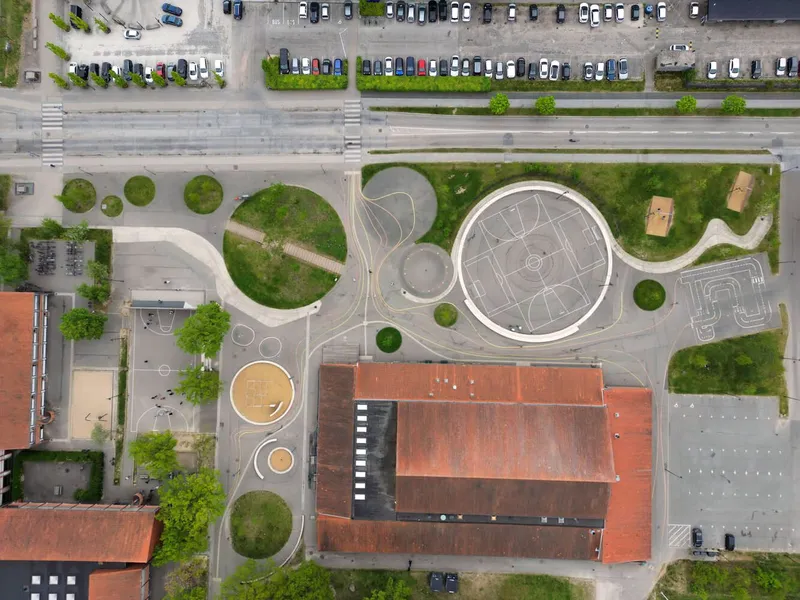
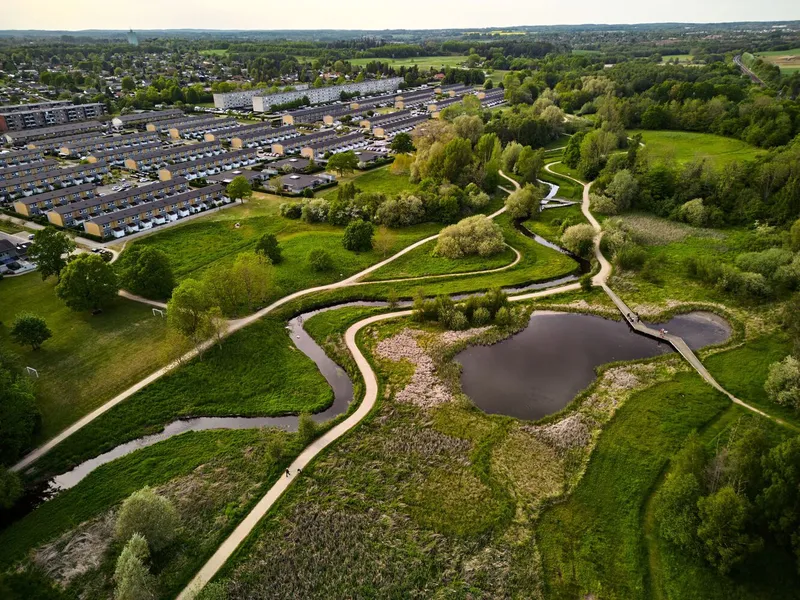
Climate Adaptation Kokkedal Urban Playground, designed by Schønherr, is a landmark large-scale urban resilience project in Kokkedal, Denmark, addressing the intertwined challenges of climate change, flooding, and social fragmentation. Covering an expansive 69-hectare site, the project redefines climate adaptation as a social, ecological, and spatial opportunity, transforming technical infrastructure into an inclusive public landscape.
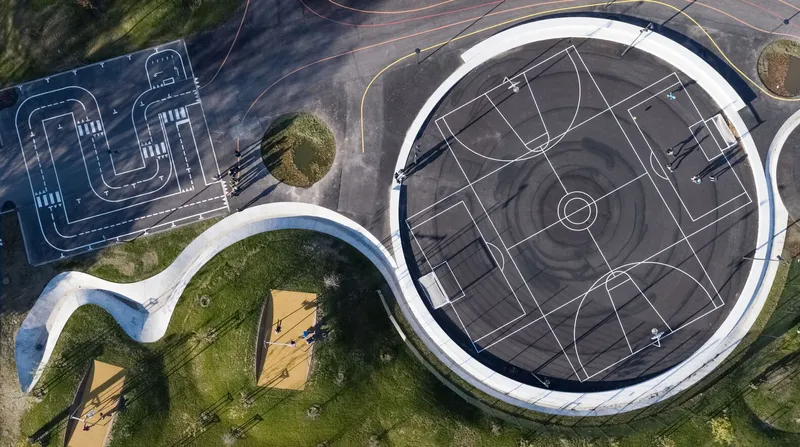
Situated along the Usserød River, Kokkedal had long struggled with recurring floods caused by heavy rainfall and rising water levels. At the same time, the neighborhood faced social challenges, including insecurity, fragmented public spaces, and underutilized outdoor areas. The ambition of the project was therefore twofold: to future-proof the district against climate-related flooding while simultaneously improving everyday urban life for residents.
Climate-Responsive Urban Infrastructure
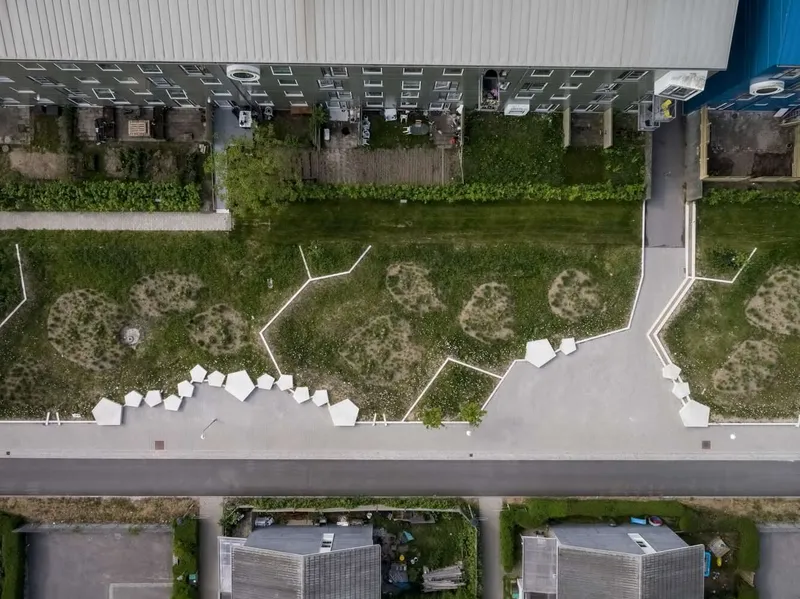
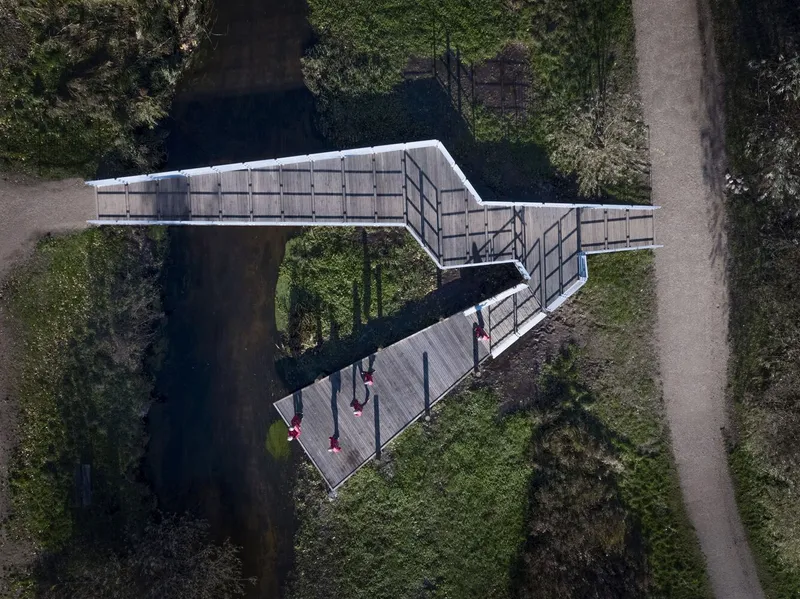
At the core of the masterplan is an extensive climate adaptation strategy comprising approximately 35 targeted interventions. Rainwater, once concealed in underground pipe systems, is now managed through a visible, surface-based network of basins, channels, soakaways, and trenches. These elements are designed to retain and delay stormwater from rainfall events with up to a five-year recurrence, while larger cloudbursts can be safely absorbed without causing damage to buildings or infrastructure.
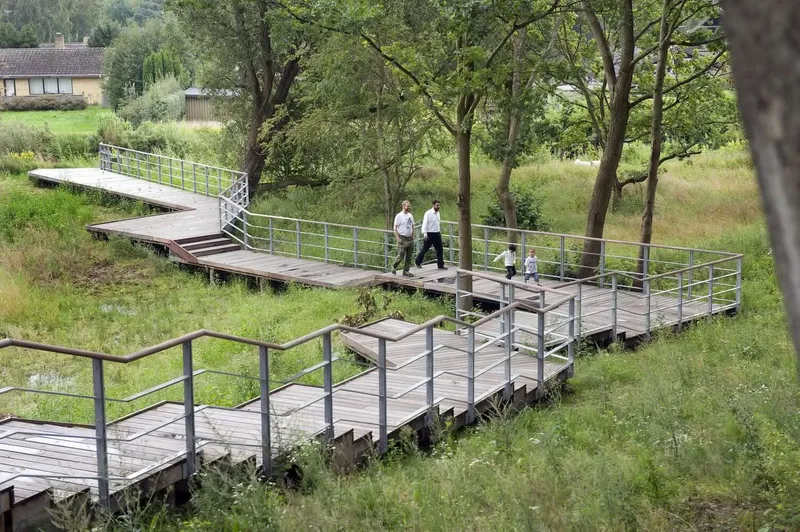
As a result, the project has eliminated the risk of flooding for the next 30 to 40 years, demonstrating how landscape-based solutions can outperform conventional engineering systems. All rainwater is filtered through natural cleansing elements, such as planted rain gardens and retention basins, before being released into the Usserød River, significantly improving water quality and aquatic ecology.
Blue-Green Landscapes and Biodiversity
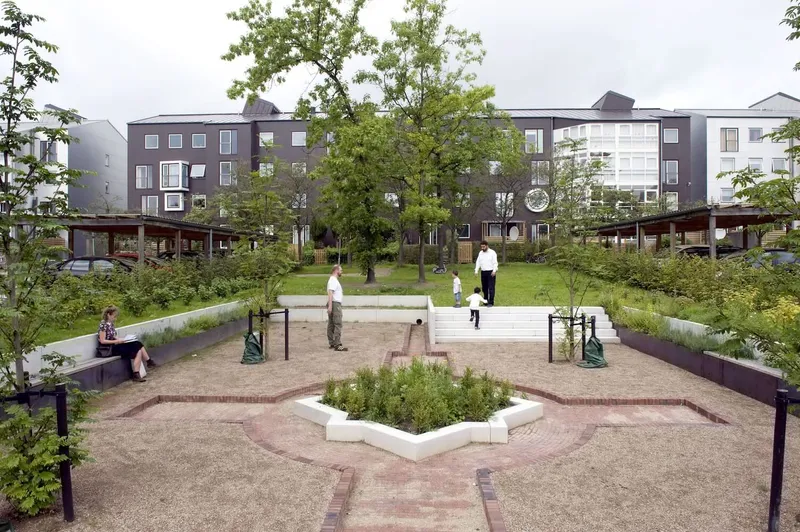
The integration of blue and green infrastructure is central to the project’s identity. A series of green detention basins, dry ponds, and wetlands are distributed throughout the neighborhood, doubling as recreational spaces during dry periods and flood reservoirs during heavy rain. This multifunctional landscape approach increases biodiversity, enhances ecological balance, and introduces a rich variation of vegetation and planting.
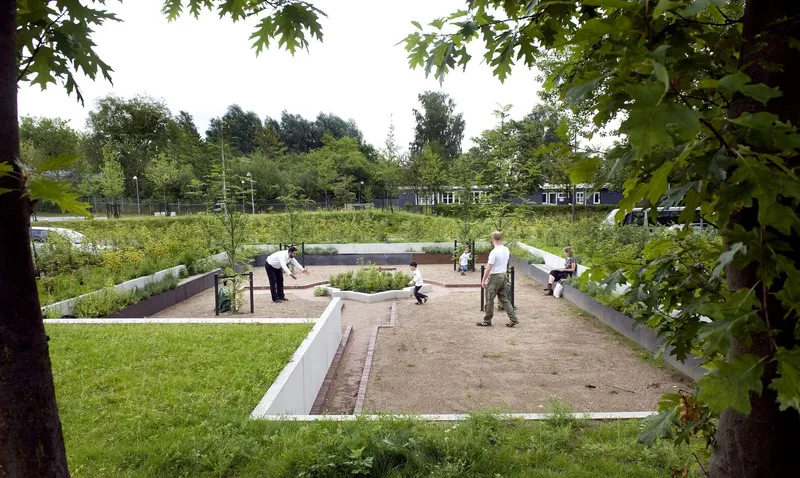
One notable example is the network of themed community gardens, including the Moroccan Garden, where rainwater retention basins are seamlessly integrated into the landscape design. These spaces can be temporarily flooded when necessary, without compromising their everyday social and cultural function.
Social Activation and Urban Life
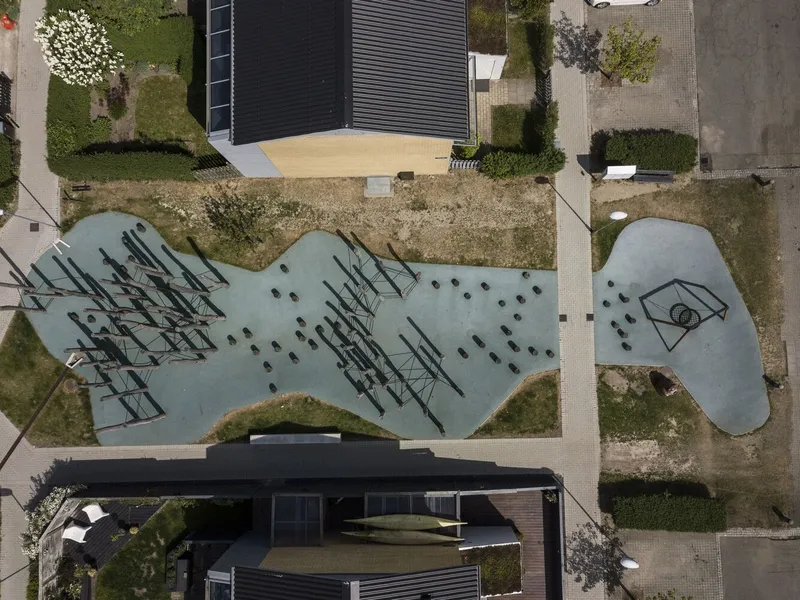
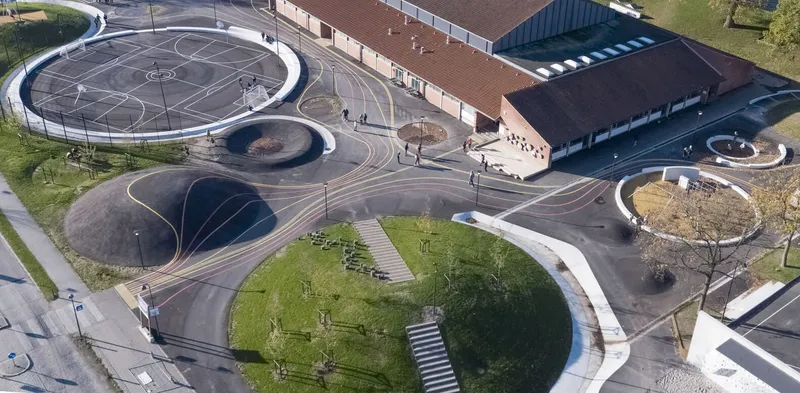
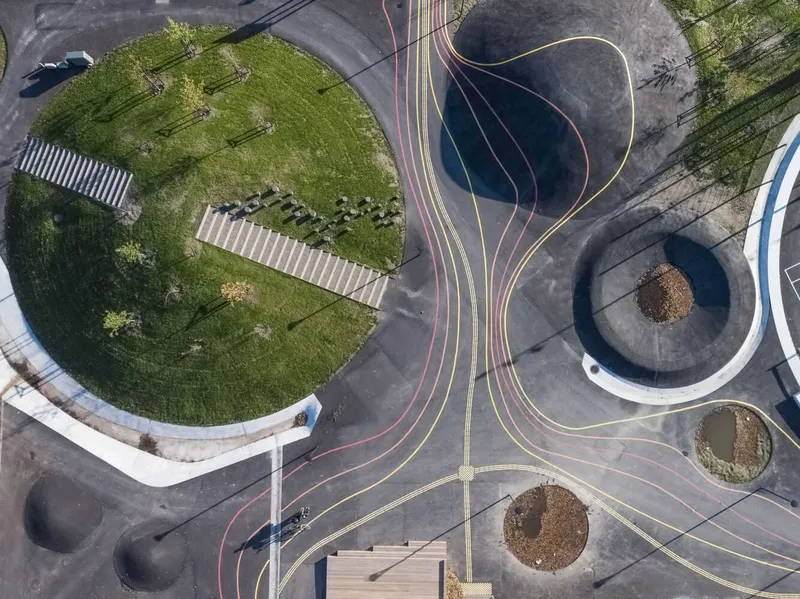
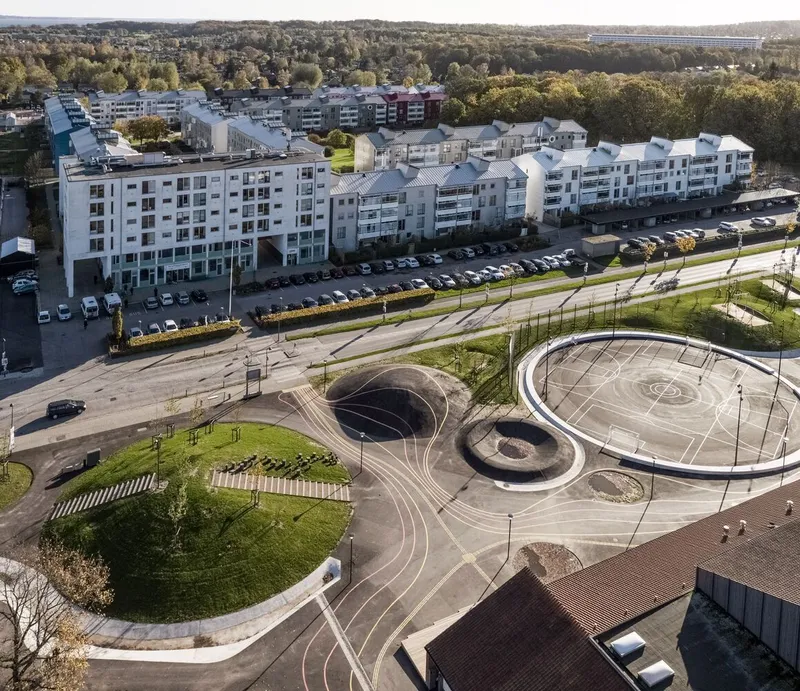
Beyond its technical performance, Climate Adaptation Kokkedal Urban Playground is fundamentally a social project. The climate infrastructure is carefully shaped into playgrounds, sports areas, exercise paths, meeting squares, and educational landscapes, encouraging daily use by residents of all ages. Schools and daycare centers use the outdoor spaces for science education and environmental learning, fostering a closer relationship between children and natural processes.
By reconnecting previously fragmented areas and creating safe, attractive routes through the neighborhood, the project has strengthened local identity, safety, and social cohesion. New public spaces support informal encounters, cultural activities, and large community gatherings, helping to shift the perception of Kokkedal from a vulnerable district to a resilient and welcoming urban environment.
Measurable Social Impact
Research conducted after the project’s completion highlights its broader impact beyond climate adaptation. The new urban spaces have delivered a significant cultural, social, and aesthetic uplift, increasing the sense of belonging and security among residents. Notably, studies show a marked increase in the use of public spaces by women and girls, indicating improved inclusivity and perceived safety.
All photographs are works of Thøger Sørensen, Steffen Stampe for Realdania, Leif Tuxen, Carsten Ingemann, Ole Fryd


Popular Articles
Popular articles from the community


Opera on the Sea: Driftwood Logic Shapes a Timber Opera House on Estonia's Coast
Trevor Orgill's opera house translates the entangled drift of floating timber into a civic building where wood, water, and music converge.


Cube Design Draws an Ecological Corridor Between Two Shenzhen Hills with the Nankai Building
Beside Shenzhen's container docks, the Nankai Building pairs stacked balconies with a climbing green screen to connect two hillsides across its height.

ETEH Reworks the Shared Spaces of São Domingos School in Brazil Around Timber, Color and Hanging Plants
At São Domingos School in Brazil, 436 m² of hall, refectory and library are recast with timber joinery, a yellow and blue code and trailing greenery.

David Ortega Stacks a Two-Story Mexico City Penthouse Around a Steel Stair and a Pergola-Shaded Roof Terrace
In Colonia Roma, a 300 m² penthouse uses oak joinery, a planted steel stair and a slatted roof pergola to make a new-build apartment feel like a house.

Similar Reads
You might also enjoy these articles


Hodi-Mandai Geram
Project Function: Preservation and revitalization of the Intangible heritage and socio-spatial identity of the Hodi by Housing, Cultural Memory Center, Sacred Grove, landscape, local tourism economy


Olio Towers: A Mid-Rise for Performers That Fuses Housing, Rehearsal, and Stage
Located blocks from Houston's Theater District, this modular tower stacks living units around a central performance atrium.

Oasis: Modular Green Housing Carved into Dhaka's Urban Fabric
A shortlisted Plugin Housing entry reclaims unauthorized settlements in Dhaka with stepped concrete volumes, green roofs, and ventilation-driven design.

Black Hole: A Floating Megastructure for the Post-Physical Era
Emiliano Mazzarotto envisions a spherical, self-scaling arena where e-sports, digital hotels, and holographic stadiums replace traditional public space.

Explore Climate Responsive Competitions
Discover active competitions in this discipline

Challenge to reimagine the Iron Throne

Photograph architecture without architects

Illustrate the lost glory of Angkor Wat - Render Challenge

Design challenge to reuse E-waste
Comments (0)
Please login or sign up to add comments
No comments yet. Be the first to comment!