
Clip-on Houses: Adaptive Reuse Architecture Reimagines Industrial Bridges as Sustainable Urban Housing
Adaptive reuse architecture transforms abandoned industrial bridges into compact homes, creating sustainable urban living above the city.

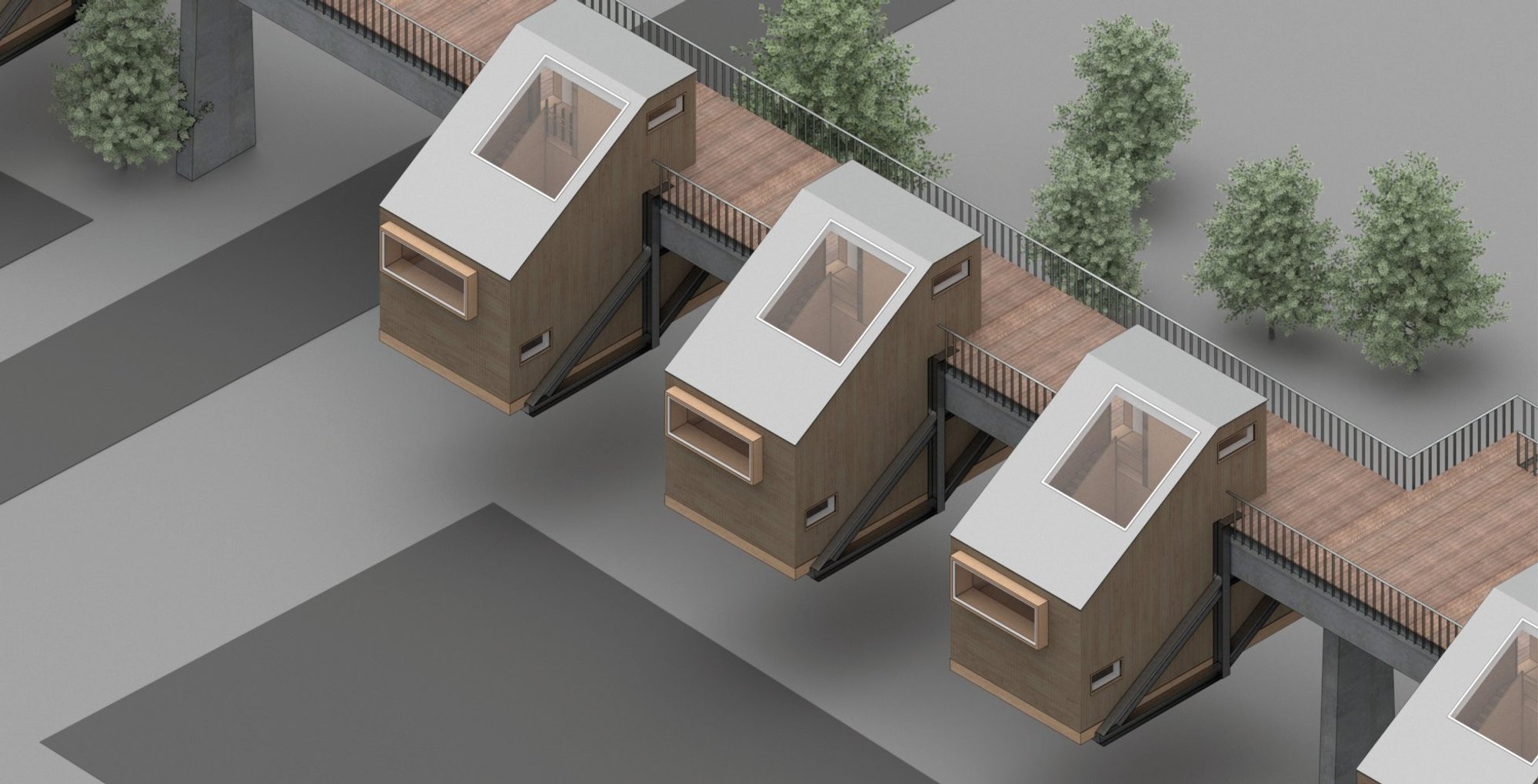
As cities continue to expand, former industrial districts often become stranded landscapes caught between their manufacturing past and urban future. The project Clip-on Houses, designed by Caroline Høgild, presents an innovative approach to adaptive reuse architecture by transforming obsolete industrial bridge infrastructure into compact residential units that activate underutilized urban spaces.
Recognized as an Editor's Choice entry in Parasitic Architecture 2020, the proposal demonstrates how architecture can reclaim neglected industrial structures and convert them into vibrant living environments without consuming valuable urban land. Rather than demolishing aging infrastructure, the project celebrates its existing character and structural potential, creating a new relationship between housing, mobility, and public life.
Transforming Industrial Heritage into Urban Living
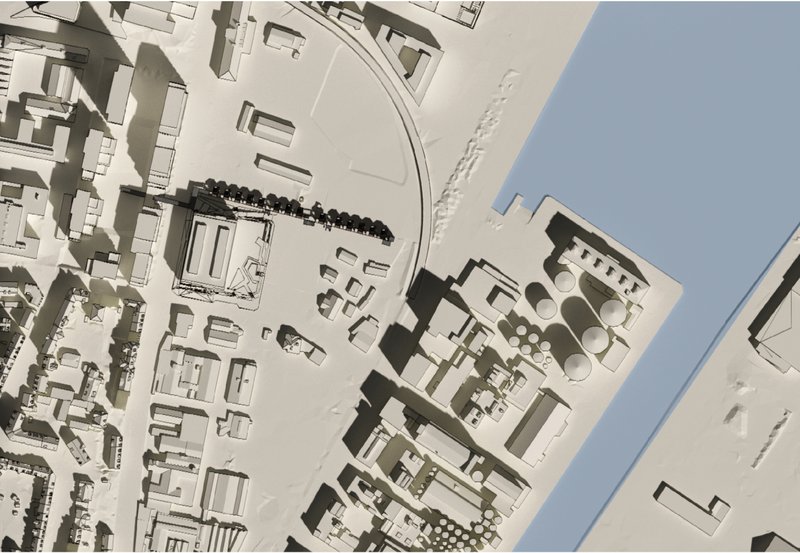
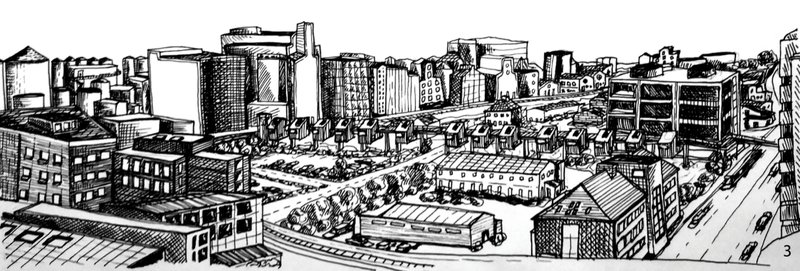
Located in Aarhus, Denmark, the concept was developed with the understanding that many industrial districts in growing cities eventually lose their original purpose. While these areas often occupy strategic urban locations, their transformation into residential neighborhoods is typically expensive and time-consuming.
Clip-on Houses offers an alternative strategy. Instead of redeveloping entire sites, the project introduces compact residential modules that attach directly to existing industrial bridges. This intervention creates immediate housing opportunities while preserving the industrial identity of the site.
The proposal recognizes the architectural value of industrial infrastructure. Bridges, elevated pathways, and logistical systems become hosts for new forms of habitation, extending their lifespan while contributing to the evolving urban fabric.
Housing That Occupies Forgotten Space
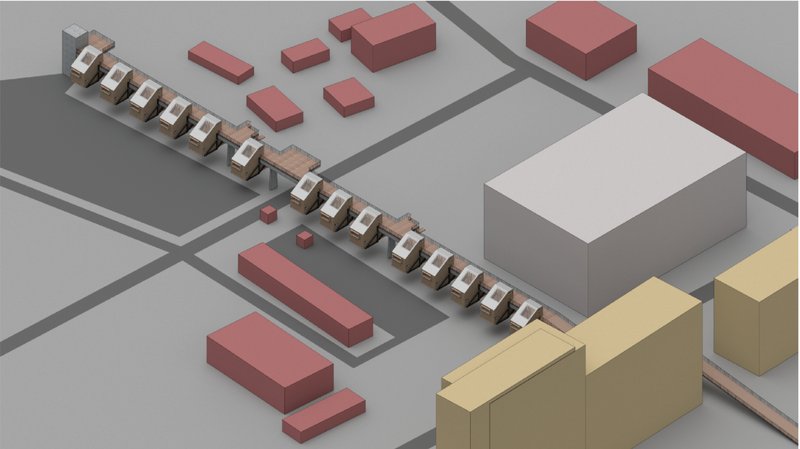
One of the most compelling aspects of the project is its minimal footprint. Rather than consuming land beneath the bridge, the housing units wrap around and beneath the existing structure. This allows circulation routes below to remain open while creating a new layer of inhabitation above.
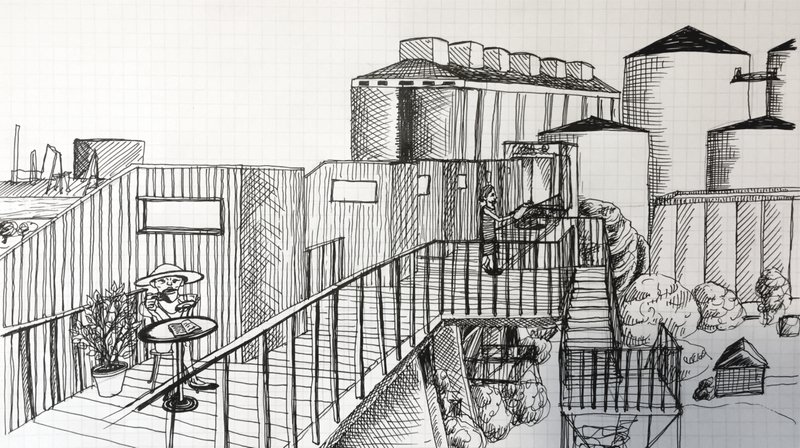
The bridge itself becomes more than infrastructure. It transforms into a public street, shared pathway, and social platform connecting multiple residences. In this way, the intervention generates both private and public value.
The housing units are designed to accommodate one to three occupants, making them suitable for students, artists, young professionals, tourists, or small families. Their compact nature responds directly to increasing urban housing pressures while promoting efficient use of existing resources.
A New Typology for Sustainable Urban Housing
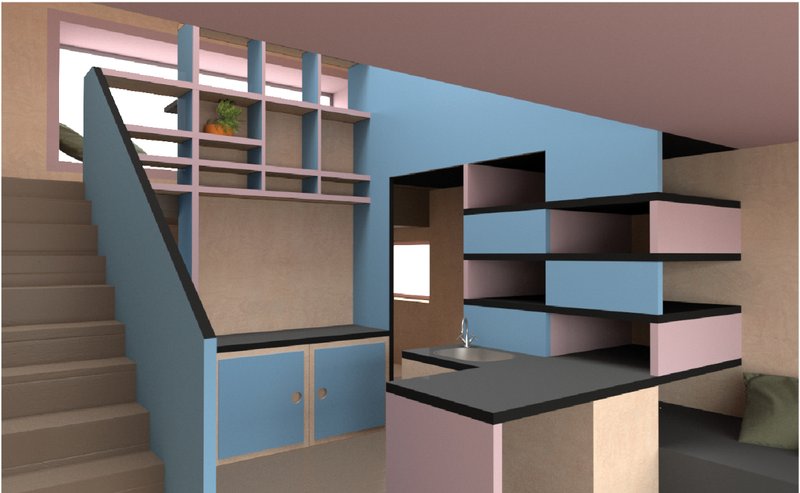
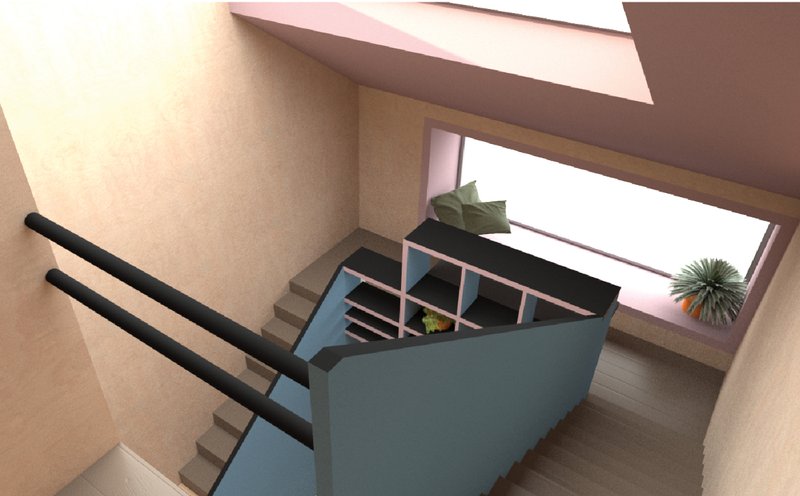
The project introduces a distinctive housing typology inspired by the spatial efficiency of sailing boats. Every square meter is carefully optimized through integrated furniture systems and multifunctional spaces.
Bedrooms are intentionally minimal, containing only essential elements such as sleeping areas and windows. Shared living functions are concentrated within highly organized interiors featuring built-in storage, compact kitchens, and adaptable furniture.
This approach allows the homes to remain small without sacrificing usability. The result is a form of sustainable urban housing that prioritizes intelligent design over excessive floor area.
At the same time, the architecture maintains privacy despite its highly public setting. While entrances and circulation remain visible from the bridge, private living spaces are positioned beneath the bridge deck, creating separation between public activity and domestic life.
Architecture That Creates Community
Unlike conventional residential developments that privatize urban space, Clip-on Houses seeks to contribute positively to its surroundings.
The bridge remains publicly accessible, encouraging movement and interaction. Residents become part of a larger urban ecosystem rather than isolated occupants. The project creates opportunities for social exchange, small businesses, recreational activities, and neighborhood development.
This dual function transforms dormant industrial infrastructure into a productive social asset. The architecture gives back at least as much space as it occupies, preserving public access while introducing new residential opportunities.
Such an approach reflects broader conversations within adaptive reuse architecture about balancing private occupation with public benefit.
Innovative Structural Strategy
The feasibility of the proposal is strengthened through a straightforward construction methodology.
The housing system consists of two primary components:
- A lightweight steel framework attached to the bridge structure
- A prefabricated CLT residential module inserted into the frame
The steel framework is engineered to utilize the building's own weight to maintain structural stability. This minimizes intervention into the host infrastructure while creating a secure attachment system.
The residential units are constructed from Cross-Laminated Timber (CLT), a sustainable engineered wood product known for its structural performance and environmental benefits. CLT offers strength comparable to traditional concrete systems while significantly reducing weight.
Because the modules can be prefabricated in controlled environments, construction quality is improved and installation time is reduced. Once completed, the housing units can be transported to site and mounted onto the bridge structure efficiently.
Materiality and Environmental Performance
Material selection plays a critical role in the project's sustainability strategy.
The primary structure combines steel and CLT to achieve durability, efficiency, and reduced environmental impact. The CLT interiors remain largely exposed, creating warm living environments characterized by natural textures and renewable materials.
Externally, vertically mounted timber cladding provides protection while establishing a strong visual identity. The wooden exterior also supports vegetation growth, allowing residents to introduce planting systems that soften the industrial character of the host structure.
This combination of industrial steel and renewable timber creates a compelling architectural contrast between old and new, infrastructure and habitation, permanence and adaptability.
Reimagining the Future of Industrial Cities
Clip-on Houses demonstrates how adaptive reuse architecture can provide innovative solutions to contemporary urban challenges. Rather than viewing industrial infrastructure as obsolete, the project reveals its potential as a framework for future housing.
The proposal combines sustainable construction, compact living, social activation, and urban regeneration within a single intervention. It challenges conventional ideas of residential development by occupying spaces that would otherwise remain unused.
By transforming industrial bridges into vibrant residential environments, Caroline Høgild's design offers a vision of cities where architecture grows from existing conditions rather than replacing them. The project illustrates how forgotten infrastructure can become a catalyst for sustainable urban living, creating new opportunities for habitation while preserving the character and memory of the industrial city.
As urban populations continue to increase and land becomes increasingly scarce, projects such as Clip-on Houses highlight the growing importance of adaptive reuse architecture as a tool for creating resilient, efficient, and socially connected communities.



Popular Articles
Popular articles from the community

Constanti Architects Builds a Fortress of Privacy in Nicosia with House 345
A concrete and timber residence in Cyprus reinterprets the traditional introverted courtyard house for a new urban landscape.

Cyber Oyster: A Visionary Adaptive Reuse Architecture Project Transforming Abandoned Oil Rigs Through Oyster Bionics
An adaptive reuse architecture concept transforming abandoned offshore oil platforms into self-healing marine ecosystems inspired by oyster bionics.
Three Studios Build 200 Affordable Units for Tulum's Displaced Hospitality Workers
Casa Selva embeds dark concrete housing blocks into Yucatán rainforest, offering dignified shelter to those priced out by the tourism they serve.
Ippolito Fleitz Group Identity Architects Turn Eight Floors in Shanghai into a Vertical Creative City
Publicis Groupe's new headquarters in Xintiandi reimagines the office as a courtyard-driven urban landscape stacked across eight floors.


Similar Reads
You might also enjoy these articles


Urban Forest: A Vertical Ecosystem for 5,000 Workers in Singapore's Changi Business Park
Radially stacked pods and layered green decks turn a 7-acre plot into 47 acres of ecological workspace projected for 2040.
interACT: A Wearable Transit Object That Turns Commuting Into Social Infrastructure
A backpack-mounted foldable device transforms walking, waiting, and riding into moments of shared comfort across Jakarta's transit network.
Lean On Barrier System: Where Traffic Safety Meets Chai Culture in Ahmedabad
A modular steel barrier doubles as informal seating and lean-on furniture at one of Ahmedabad's busiest intersections, keeping vendors in place.

The Black Bagh: A Living Monument Built from Water, Light, and Memory
On the banks of the Yamuna, two designers replace the myth of a marble mausoleum with a regenerative landscape of reflection and ritual.

Explore Sustainable Design Competitions
Discover active competitions in this discipline




The Global Benchmark for Architecture Dissertation Awards


Design challenge to reuse E-waste
Comments (0)
Please login or sign up to add comments
No comments yet. Be the first to comment!