

Co-Housing Munich: A New Urban Village Blending Community, Nature & Adaptive Architecture
A vibrant co-housing community blending diverse apartment types, shared spaces, and nature-rich landscapes to create a social, sustainable urban village in Munich.


AllesWirdGut Architektur has realized an ambitious and forward-thinking residential model in Munich’s Freiham district—a co-housing project that redefines what it means to live together in the transition between urban density and rural landscape. With 21,691 m² of flexible dwellings, shared amenities, and socially driven spatial design, the development showcases a pioneering blueprint for next-generation communal living.
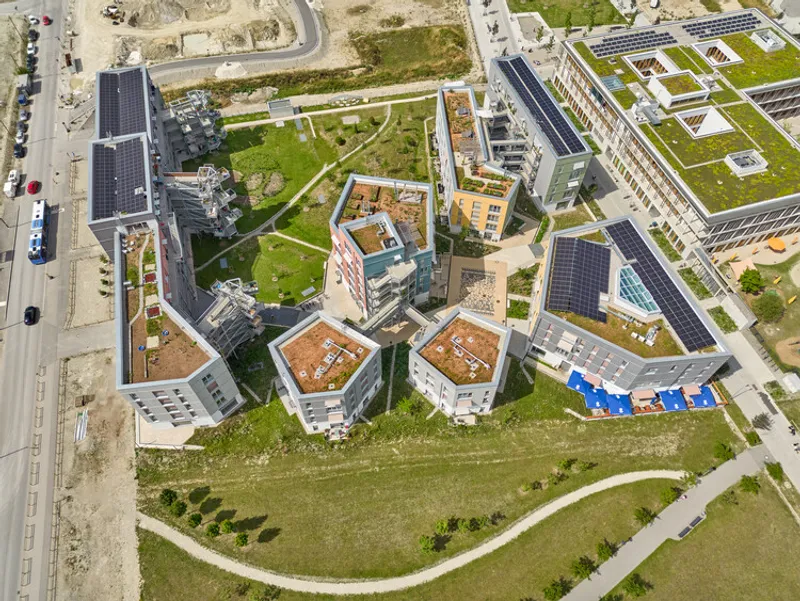

A Hybrid Between City and Countryside
Set at the threshold between Munich’s expanding urban grid and the open countryside, Co-Housing Munich forms a unique typology that merges the comforts of individual living with the benefits of collective life. The project offers a spectrum of residential formats—from single apartments to shared cluster units with common living rooms—ensuring that people with different lifestyles, ages, and household structures can thrive under one architectural ecosystem.
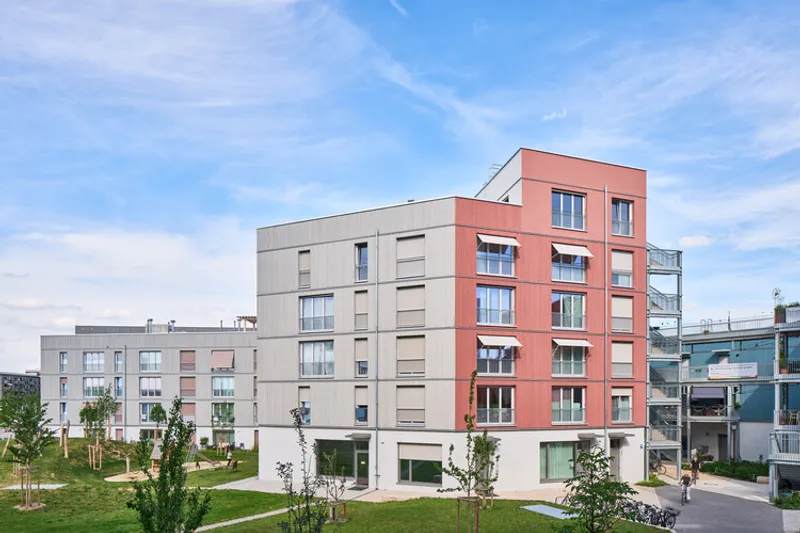
Five Buildings, One Cohesive Community
The masterplan consists of five distinct volumes, each with its own character yet unified through subtle architectural language. This ensemble creates a dynamic micro-neighborhood capable of adapting to its surroundings while maintaining a strong identity. The variations in façade expression, form, and orientation create a lively, village-like atmosphere.
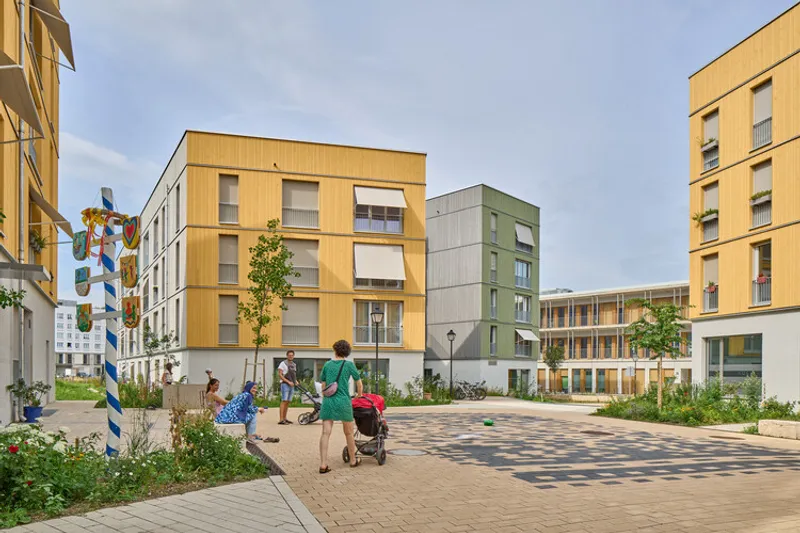

A signature feature across all buildings is the elevated circulation system. Access balconies, bridges, and interior pathways form a network of vibrant movement spaces that double as informal meeting zones. These connective routes encourage spontaneous interactions and create elevated viewpoints across the estate, reinforcing community engagement.

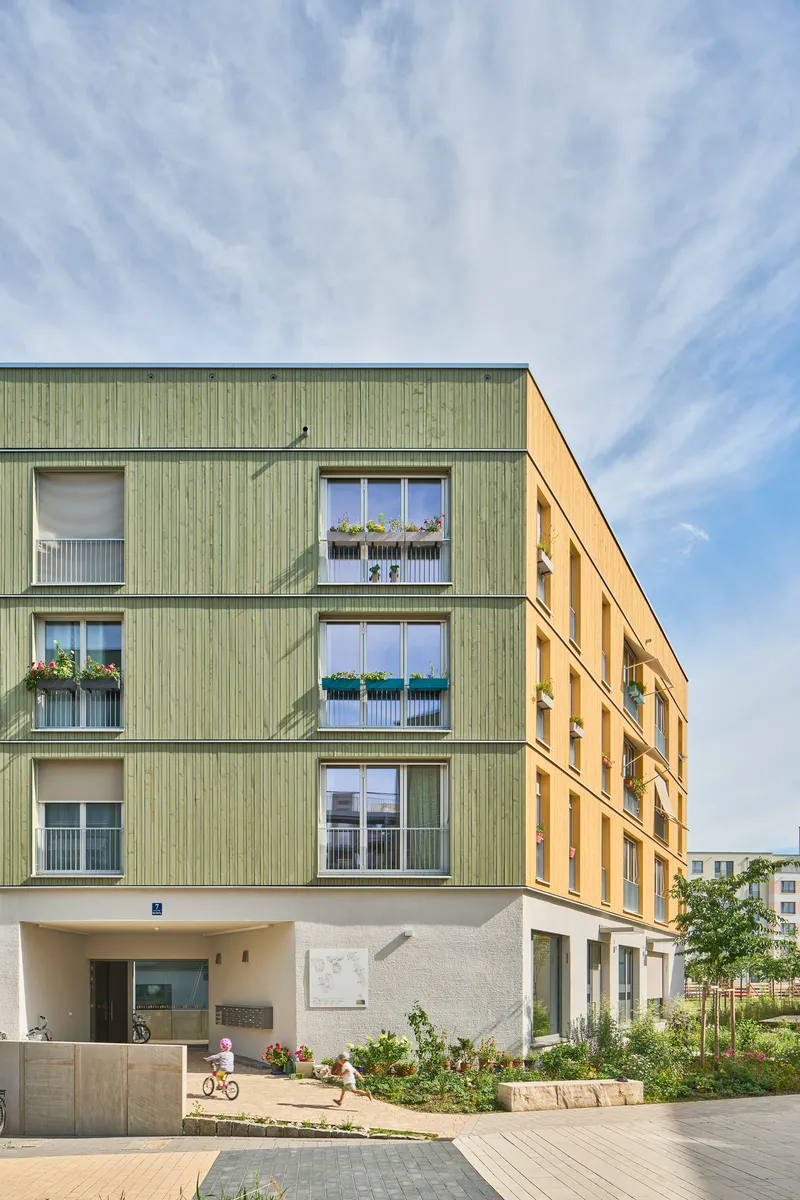
Designed Around People & Shared Values
AllesWirdGut Architektur emphasized social sustainability as the backbone of the design. Smaller individual units are intentionally balanced with generous shared spaces—common rooms, outdoor terraces, orchards, and public squares—maximizing communal living without sacrificing privacy. Residents enjoy a variety of landscaped spaces ranging from a wide orchard meadow to a more urban, enclosed square, offering diverse atmospheres for gathering, relaxation, and play.
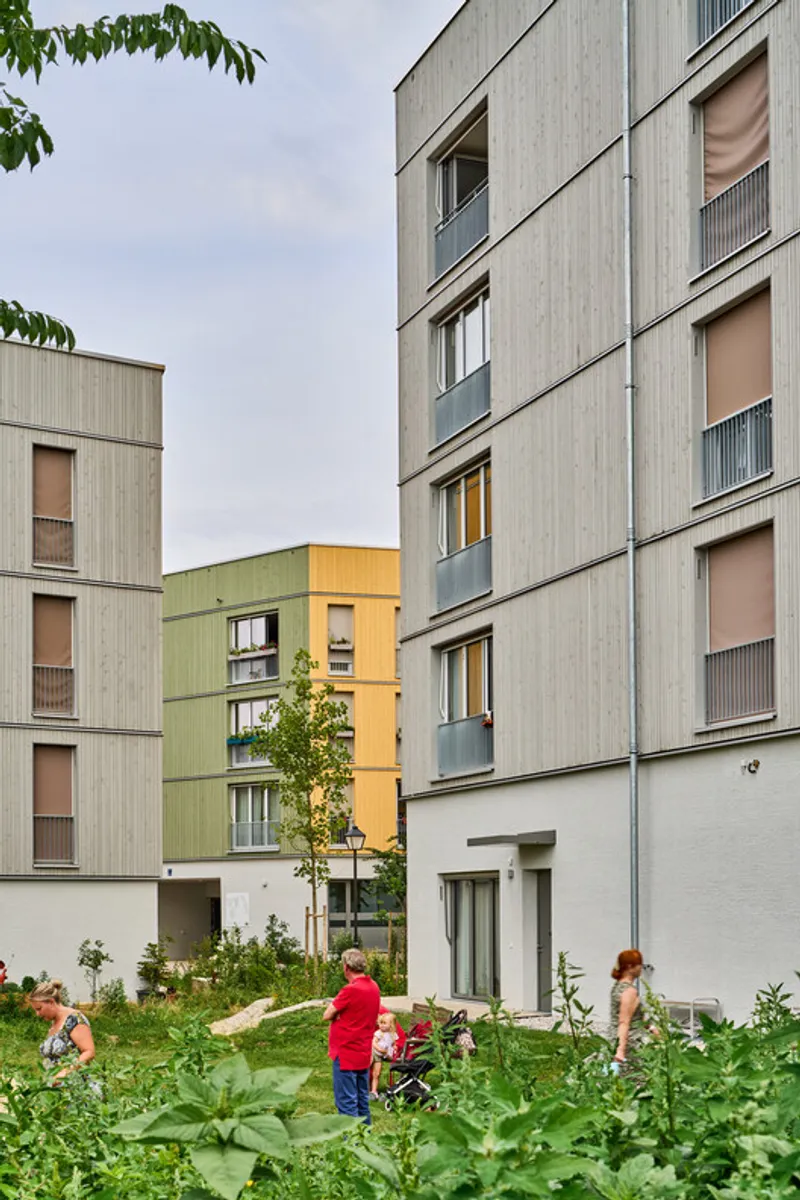
This approach aligns with the project’s philosophy: “We adapted the development plan to the community—not the other way around.” Designed around actual future residents, the architecture supports everyday life that is inclusive, accessible, and adaptable.

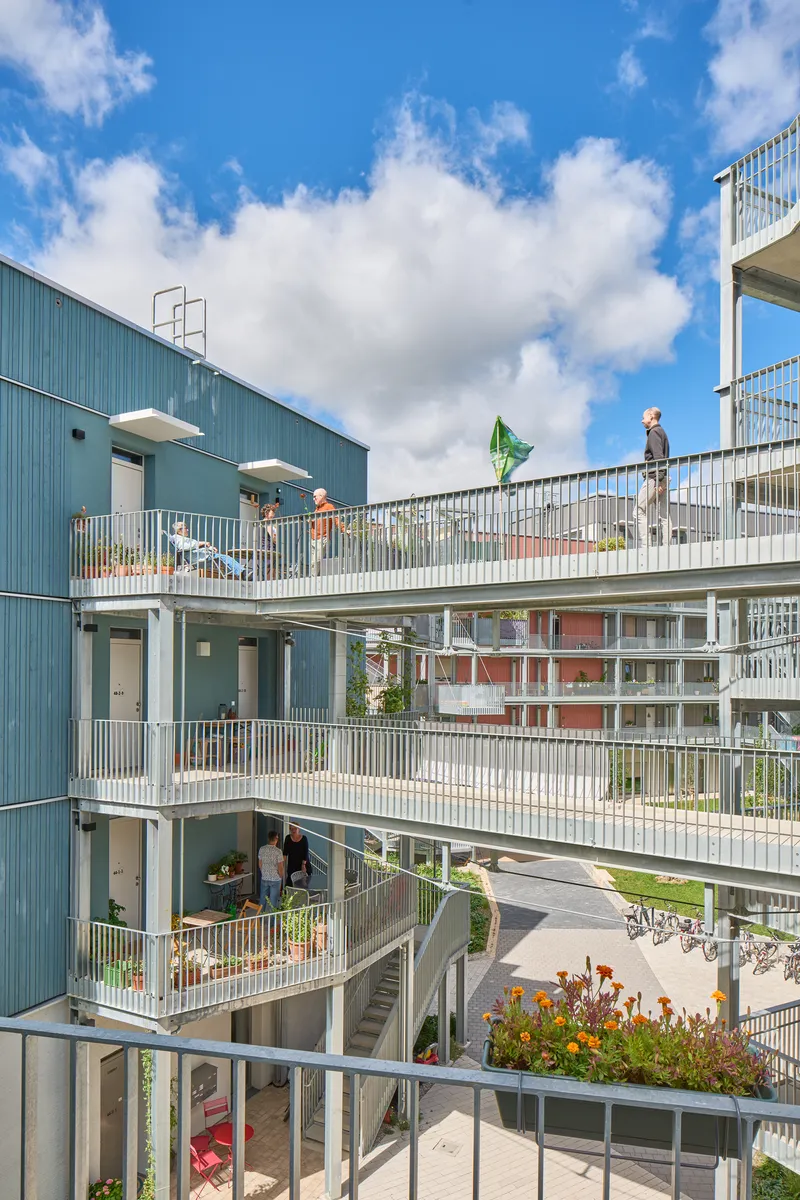
A “Town Within the City”
Co-Housing Munich operates as a self-sustaining microcosm, seamlessly connected to nature while grounded in urban convenience. The interwoven buildings and open spaces create an environment where residents can form strong social bonds and live sustainably. By reducing private living areas and prioritizing shared amenities, the project fosters mindful resource use and a more connected lifestyle.
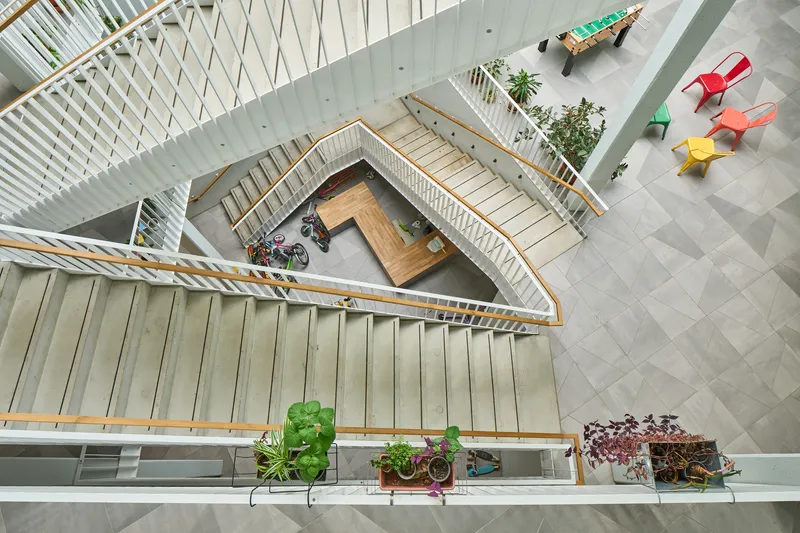
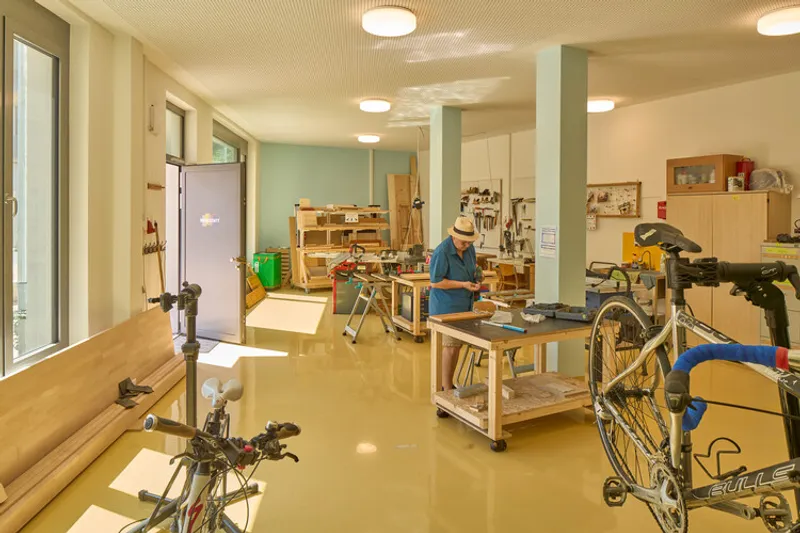
The result is a contemporary village model—a place where diversity thrives, community is central, and architecture becomes a tool for social cohesion.
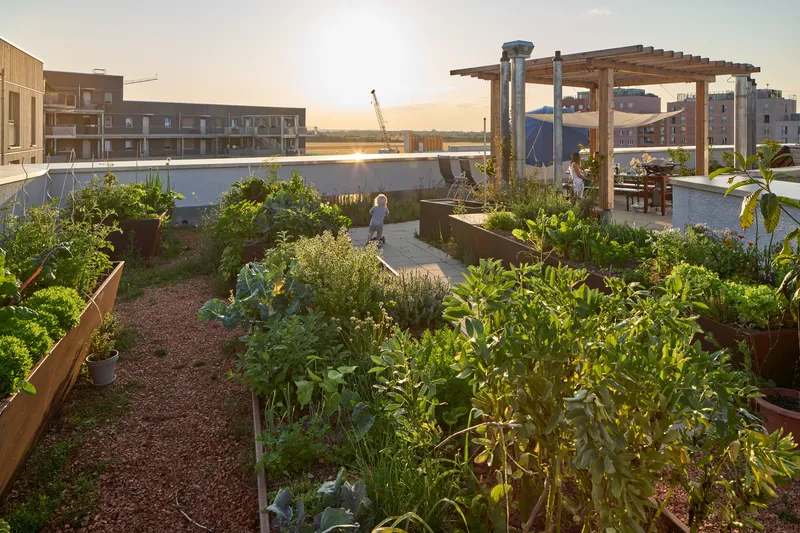
All the Photographs are works of Connolly Weber Photography



Popular Articles
Popular articles from the community


Hill & Cross Opera: Sculptural Opera House Architecture Shaped by Tallinn’s Landscape and Identity
Hill & Cross Opera reimagines opera house architecture in Tallinn through its sculptural hill, civic plaza, glass wave and a luminous cross.

Co-life: Sustainable Architecture for Age-Friendly Community Living
Co-life reimagines sustainable architecture for seniors through courtyards, rammed earth, shared gardens, and spaces designed for belonging.

The Musturak Paradise: Senior Living Architecture for a Connected Future in Temara, Morocco
The Musturak Paradise reimagines senior living architecture in Temara via private homes, social spaces, culture, community, and shared care.

The Earth Pod: 3D Printed Homes for Resilient Refugee Communities
The Earth Pod reimagines refugee housing through 3D printed homes made from clay, combining resilience, self-sufficiency, and rapid shelter.

Similar Reads
You might also enjoy these articles


Hodi-Mandai Geram
Project Function: Preservation and revitalization of the Intangible heritage and socio-spatial identity of the Hodi by Housing, Cultural Memory Center, Sacred Grove, landscape, local tourism economy


Olio Towers: A Mid-Rise for Performers That Fuses Housing, Rehearsal, and Stage
Located blocks from Houston's Theater District, this modular tower stacks living units around a central performance atrium.

Oasis: Modular Green Housing Carved into Dhaka's Urban Fabric
A shortlisted Plugin Housing entry reclaims unauthorized settlements in Dhaka with stepped concrete volumes, green roofs, and ventilation-driven design.

Black Hole: A Floating Megastructure for the Post-Physical Era
Emiliano Mazzarotto envisions a spherical, self-scaling arena where e-sports, digital hotels, and holographic stadiums replace traditional public space.

Explore Co-Housing Competitions
Discover active competitions in this discipline



Challenge to reimagine the Iron Throne


Photograph architecture without architects


Illustrate the lost glory of Angkor Wat - Render Challenge


Design challenge to reuse E-waste
Comments (0)
Please login or sign up to add comments
No comments yet. Be the first to comment!