

Co-Hub: Hexagonal Modules and Token Economies Reimagine Collective Urban Living
A modular co-living system built on hexagonal geometry, shared services, and a token economy that lets residents choose their level of community life.


What if your rent could be partially paid by tutoring a neighbor's child, tending a rooftop garden, or sharing your car? Co-Hub proposes exactly that: a housing model where architecture and social infrastructure are inseparable, where hexagonal modules stack into a vertical neighborhood and a token-based economy turns everyday acts of participation into a functioning currency. It is less a building than an urban organism, one that absorbs the complexity of contemporary city life and channels it into something productive.
Designed by Sena Neşem Uysal, Serdar Uslubaş, Merih Feza Yıldırım, Duygu Görgün Şenoğlu, and Not Mimarlık, Co-Hub addresses the overlapping pressures of rapid migration, economic inequality, and shifting household structures by offering a replicable, globally adaptable co-living framework. The project's hexagonal module geometry allows deployment on lots of varied shapes and constraints, while a spectrum of unit types, from compact capsules to suites with private gardens, lets residents calibrate their own balance between solitude and community.
A Stacked Hexagonal Skyline Built from Capsules, Rooms, and Suites


The aerial view reveals Co-Hub's defining formal move: hexagonal modules clustered and stacked into an irregular, terrain-like silhouette punctuated by green courtyards at multiple levels. The geometry is not arbitrary. Hexagons tile efficiently, minimize wasted perimeter, and create natural pockets of outdoor space between units. Each module corresponds to a specific program and occupancy type, meaning the overall massing is a direct expression of the social mix inside. Young migrants arriving with ambition sit alongside families seeking affordable comfort and professionals starting new chapters.
At ground level, the character shifts. Mesh-clad structures and timber pergolas define a central plaza that serves as the project's social spine. Exhibition and workshop areas, dining halls, game rooms, libraries, co-working clusters, and childcare centers all open onto this shared ground plane. The design team treats this not as leftover space between buildings but as the primary architectural gesture: a place where living, working, dining, and leisure blend without friction. Residents determine their own social rhythm, and the architecture supports movement between highly individualistic and deeply collective modes of daily life.
Siting the System: Riverfront Context and Replicable Logic


The drone view positions Co-Hub on a vacant riverfront lot beside an established urban skyline, underscoring the project's ambition to operate as infill on underused land rather than as a greenfield fantasy. The clustered hexagonal volumes read as a coherent neighborhood from a distance, their staggered heights preventing the monolithic wall effect common in large-scale housing. A tree-lined promenade along the water's edge connects the development to the city, offering a public interface that benefits residents and passersby alike.
The siting also highlights adaptability. Because the hexagonal module can be reconfigured to fit different parcel geometries, Co-Hub is conceived as a system rather than a singular building. The design team frames it as a replicable housing model: drop the modules onto a constrained urban lot, a suburban edge, or a post-industrial waterfront, and the underlying logic of shared services, modular construction, and graduated privacy holds. That portability is what elevates the project beyond a one-off proposal.
Token Economy and Programmatic Organization by Hexagon

The diagrammatic breakdown of hexagonal floor plans, organized by program type and occupancy capacity, makes the system legible. Living, working, and dining functions each occupy distinct module configurations, and the diagram shows how these can be combined at scale. Compact capsule units serve residents who prioritize affordability and minimal footprint; larger suite modules with private gardens cater to those seeking more conventional domestic space. The critical insight is that all of these options coexist within a single structural and social framework.
Underpinning the spatial variety is the token economy. Residents earn tokens through participation: childcare, tutoring, gardening, cleaning, sharing mobility tools. Those tokens offset monthly payments or purchase services from other members. The system aims to reduce reliance on traditional payment models, increase social cohesion, and democratize access to amenities that would otherwise require commercial management. It is an economic layer woven directly into the architecture, making the daily loop of contribution and benefit as tangible as the hexagonal walls that frame it.
Why This Project Matters
Co-Hub matters because it refuses to separate the social question from the architectural one. Too many modular housing proposals stop at the structural diagram: clever connections, efficient spans, repeatable units. Here, the module is only the beginning. The real design work lies in calibrating how capsules, suites, workshops, dining halls, gardens, and childcare centers relate to one another, and in building an economic mechanism that rewards residents for making the community function. That layered ambition is rare in student-level work.
The hexagonal geometry gives Co-Hub a distinctive formal identity, but it also serves a practical argument about adaptability and site independence. If this system can be dropped onto a riverfront lot, a narrow urban infill site, or a suburban parcel with equal coherence, then it starts to function less as a design object and more as a policy tool. For Uysal, Uslubaş, Yıldırım, Görgün Şenoğlu, and Not Mimarlık, that shift from building to framework is where the real provocation lies.
View the Full Project
About the Designers
Designers: Sena Neşem Uysal, Serdar Uslubaş, Merih Feza Yıldırım, Duygu Görgün Şenoğlu, Not Mimarlık
Enter a Design Competition on uni.xyz
uni.xyz runs architecture and design competitions year-round that reward proposals with spatial conviction and real site intelligence.
Project credits: Co-Hub by Sena Neşem Uysal, Serdar Uslubaş, Merih Feza Yıldırım, Duygu Görgün Şenoğlu, Not Mimarlık.


Popular Articles
Popular articles from the community


Opera by the Sea Estonia: Three Shells Dissolving Architecture into Tallinn's Coastline
A winning opera house proposal replaces monumental form with interconnected shells that blur the boundary between building, park and Baltic Sea.
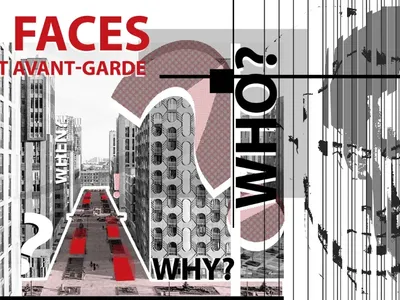
Faces of the Soviet Avant-Garde: Turning Moscow's Street Names into an Open-Air Museum
A network of sculptural installations across a Moscow residential district transforms forgotten architect names into spatial encounters with cultural memor
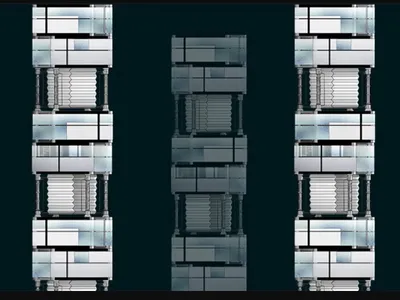
Tsunami Convergenics: Turning Catastrophic Ocean Forces into Underwater Housing Infrastructure
A speculative underwater settlement off the coast of Onagawa, Japan, treats tsunamis and typhoons as energy sources rather than threats.

Cloaked Colonization: A Mobile Underwater Habitat That Moves Like a Fish
Micah Abaya's shortlisted EHC Pacific entry reimagines ocean settlement as a dispersed network of self-sustaining architectural organisms.

Similar Reads
You might also enjoy these articles

Play: Fragments of Their World: Remembered Architecture Rebuilt as a Modular Playground for Refugee Camps
Tom Gardner abstracts domes, arches and towers from the homelands of displaced families into a kit of child-scaled play parts for camp settlements.
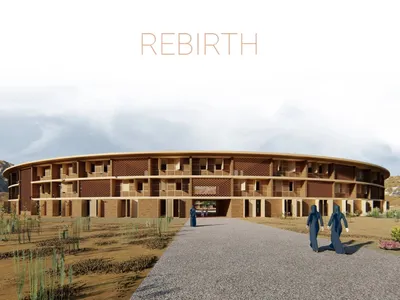
REBIRTH: A Circular Settlement Where Afghan Widows and Their Children Rebuild Life Together
A shortlisted Resile entry turns the circle into a protective ring of timber and brick, gathering homes, classrooms and gardens around a shared landscape.
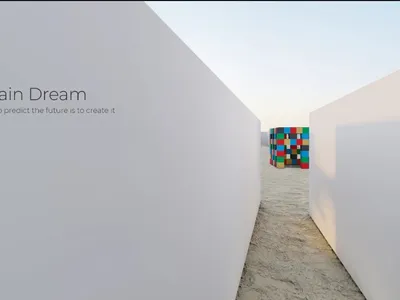
The Main Dream: A Recycled Plastic Kit That Lets Refugee Children Build Their Own Playground
Thirty-centimetre interlocking cubes that connect on three axes turn play into construction, letting children author the spaces they occupy.

Lunar Spiral: A Fibonacci-Driven Moon Settlement Rising from Shackleton Crater
Golden-spiral geometry organises buried infrastructure and orbiting habitable spheres into a lunar base designed to grow as life on the Moon expands.

Explore Co-Housing Competitions
Discover active competitions in this discipline

Challenge to reimagine the Iron Throne

Photograph architecture without architects

Illustrate the lost glory of Angkor Wat - Render Challenge

Design challenge to reuse E-waste
Comments (0)
Please login or sign up to add comments
No comments yet. Be the first to comment!