
COASTAL CONFLUEENCE SUBSTITING STORY OF SALT SILENCE AND SURVIVAL
Meandering through Mangroves and Memories

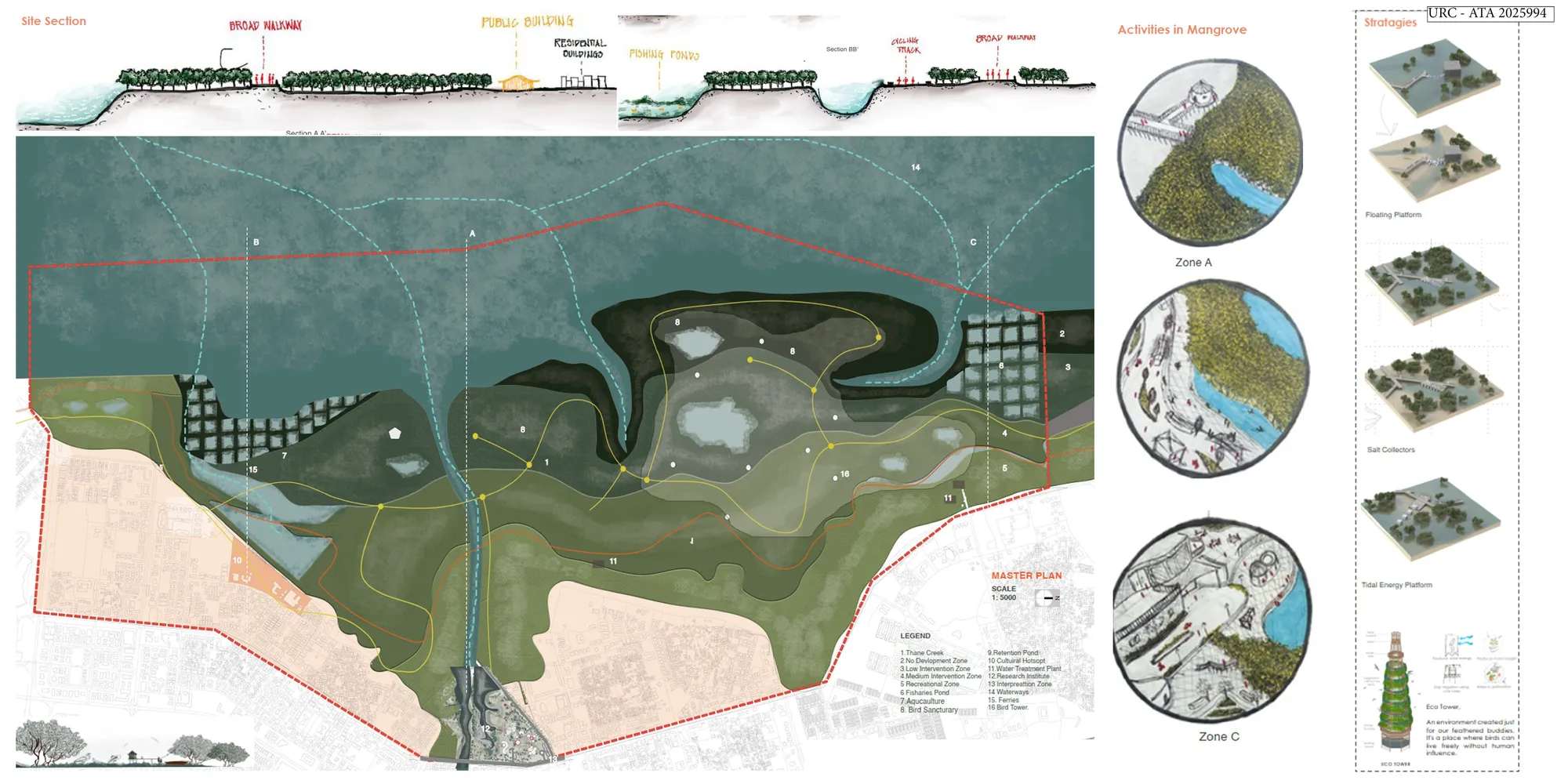
Coastal Confluence unfolds as an architectural journey shaped by tide, root, and human memory. Situated within the sensitive landscape of Thane Creek, the thesis envisions an ecologically attuned design that binds sustainable architecture with the living intelligence of mangrove ecosystems and the cultural rhythms of the communities who depend upon them.
The project begins with a recognition: mangroves are not merely trees; they are architects of resilience. Their stilt roots sculpt coastlines, choreograph sediment, soften tidal aggression, and cradle entire webs of life. Yet these natural infrastructures are continually erased by industrial growth, pollution, and urban encroachment. In this context, Coastal Confluence emerges as an architectural counter-narrative—one that positions ecological restoration and community well-being as the foundation of design rather than its byproducts.
The site strategy is guided by the principle of learning from the mangrove, allowing its adaptive geometries and porous boundaries to shape the spatial experience. Elevated walkways trace the meandering logic of tidal channels, offering an architecture that hovers lightly above ground, minimizing disturbance while maximizing accessibility. These pathways stitch together a sequence of zones—Interpretation Hub, Community Hub, Research Facilities, Eco-Tourism Spaces, Aquaculture Farms, Shrimp Ponds, Floating Pods, and an Amphitheater—each programmed to nurture both ecological regeneration and socio-economic empowerment.
The Mangrove Interpretation & Discovery Hub becomes the intellectual heart of the site. Conceived as a living classroom, its architecture blends environmental science with spatial storytelling. Light-filtering façades mimic the dappled textures of mangrove canopies; roof forms are shaped to collect rainwater and channel breezes; courtyards act as micro-ecosystems, demonstrating species diversity and tidal fluctuation. Here, architecture becomes a medium through which visitors learn to read the landscape—not as a backdrop, but as a dynamic, breathing organism.
Across the site, materiality becomes a language of sustainability. Locally sourced bamboo, reclaimed timber, ferrocement shells, modular precast elements, and stabilized earth constructions reflect low-carbon choices aligned with coastal climates. These materials are chosen not only for performance but for narrative value—embodying the project’s ethos of regeneration. Renewable energy strategies further reinforce this ethos: solar fields power community training centers, biogas units channel organic waste, and micro-wind turbines harness coastal breezes. Water-sensitive systems—including constructed wetlands, saline-tolerant plantings, tidal flushing mechanisms, and natural wastewater purification—rebuild the hydrological health of the creek.
The Community Hub anchors the social dimension of the project. Designed as a place for exchange, celebration, and livelihood development, it supports training programs on mangrove restoration, sustainable aquaculture, composting, handicrafts, and eco-tourism services. Small outdoor markets offer platforms for local families to sell fish, produce, and handmade crafts, embedding economic resilience directly into the site fabric. Architecture, in this sense, becomes a catalyst for empowerment—ensuring that conservation does not exclude people, but thrives through their stewardship.
Beyond static functions, the project embraces the fluidity of the estuarine landscape. Floating research pods drift with the tide, embedding scientists directly within the ecosystems they study. A Marine Life Sanctuary Pond provides a safe haven for rehabilitation of species affected by pollution. The Avpelin (airship) station for coastal ranger monitoring symbolizes the project’s forward-looking integration of innovation with ecology. Each element contributes to an evolving infrastructure that responds, adapts, and learns from the site.
Ultimately, Coastal Confluence is not an isolated intervention but an ecological prototype—a framework that can extend to other vulnerable coastal zones. It argues that sustainability is not a technocratic checklist but a relationship, cultivated through spatial empathy and long-term stewardship. It reframes architecture as a mediator between land and water, knowledge and intuition, human livelihood and natural resilience.
The project’s narrative concludes with a vision of healing: as mangrove roots anchor the soil, community roots anchor culture. As ecosystems regain strength, people regain belonging. Coastal Confluence seeks to restore both—revealing a future where cities grow not by overpowering nature, but by learning from its wisdom and honoring its guardianship.



Popular Articles
Popular articles from the community


Hill & Cross Opera: Sculptural Opera House Architecture Shaped by Tallinn’s Landscape and Identity
Hill & Cross Opera reimagines opera house architecture in Tallinn through its sculptural hill, civic plaza, glass wave and a luminous cross.

Play: Fragments of Their World
Familiar architecture becomes modular playground design, creating safe spaces where displaced children can learn, connect, imagine and play.

The Musturak Paradise: Senior Living Architecture for a Connected Future in Temara, Morocco
The Musturak Paradise reimagines senior living architecture in Temara via private homes, social spaces, culture, community, and shared care.

Conexión: Biophilic Design Reimagines High-Rise Living in Hong Kong
Conexión reimagines high-rise living in Hong Kong through biophilic design, green facades, shared spaces, daylight, water and nature within.


Similar Reads
You might also enjoy these articles

The Rhythm of Seasons
A Farmers' Market Connecting Nature and the City

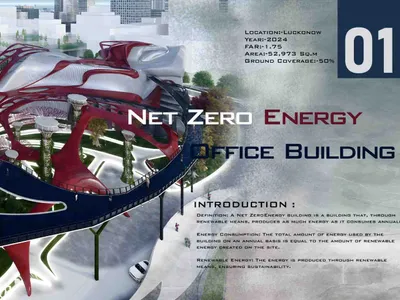
More Than a Building-Designing a Living System
More Than a Building-Designing a Living System
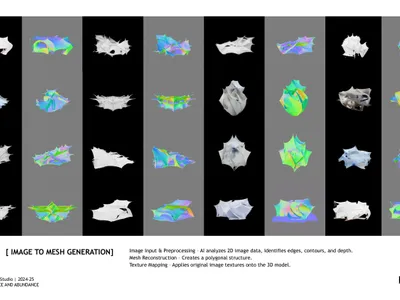
Base Beyond
DESERT COMPOUND ARID: TOURISM OF ABSENCE AND ABUNDANCE
Explore Architecture Competitions
Discover active competitions in this discipline




Challenge to reimagine the Iron Throne


Photograph architecture without architects


Illustrate the lost glory of Angkor Wat - Render Challenge


Design challenge to reuse E-waste
Comments (0)
Please login or sign up to add comments
No comments yet. Be the first to comment!