
Collage Architecture Studio Builds a Tribute to Mothers in the Goan Countryside
Three skylit courtyards and pastel interiors channel the warmth of a traditional Goan home on a palm-fringed corner plot in Sao Jose de Areal.

Aayi is the Marathi word for mother, and this house in Sao Jose de Areal, Goa, wears that name with quiet sincerity. Designed by Collage Architecture Studio, led by architects Swapnil Valvatkar and Rohit Mohite, the 280 square meter residence was built as a tribute to the client's parents on a plot their grandmother purchased in 1977. The original family home once stood here. What replaces it is not a nostalgic replica but a contemporary reading of the traditional Goan house, one that understands the region's courtyard typology, its Portuguese-inflected color palette, and its negotiation with tropical heat.
What makes AAYI House genuinely interesting is how it treats the courtyard not as a singular focal point but as a sequence. Three skylit courtyards run along a single axis on the ground floor, each with a distinct character: a Tulsi court at the entrance, a double-height central void spanned by a bridge, and a private garden with a water body. This sequential unfolding creates an interior microclimate that is both functional and emotionally calibrated, moving from public formality to intimate retreat. The house occupies only one quarter of the 1440 square meter corner plot, nestling itself among coconut palms in a gesture that is as much about what it leaves untouched as what it builds.
White Volumes Among the Palms
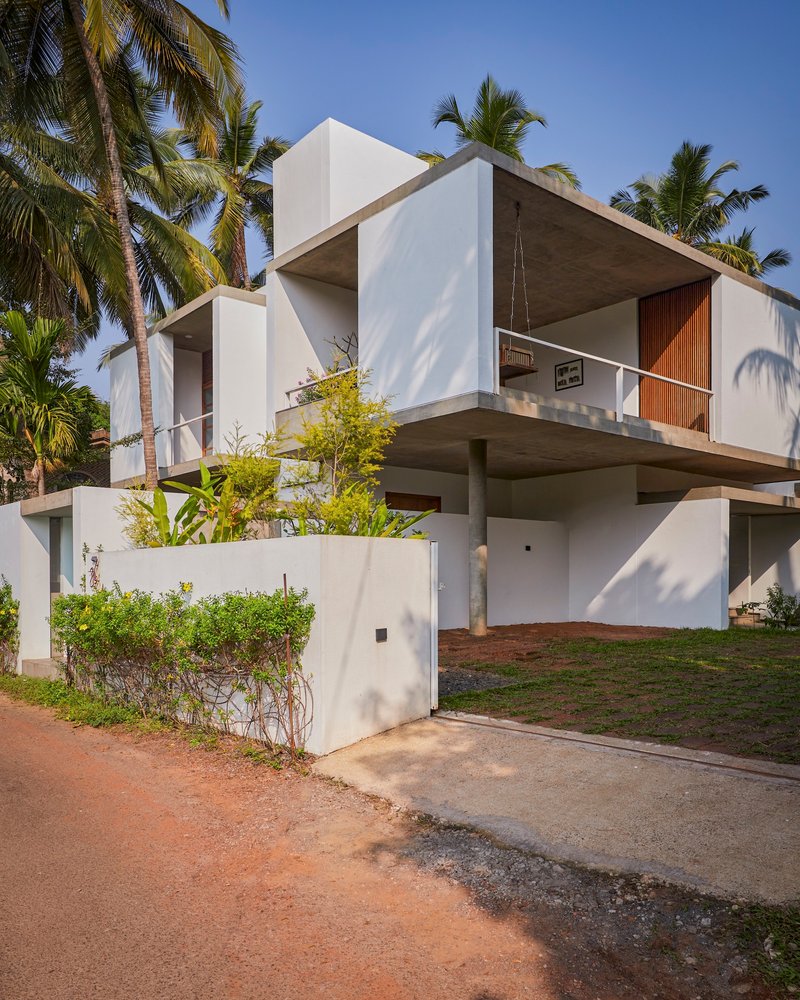
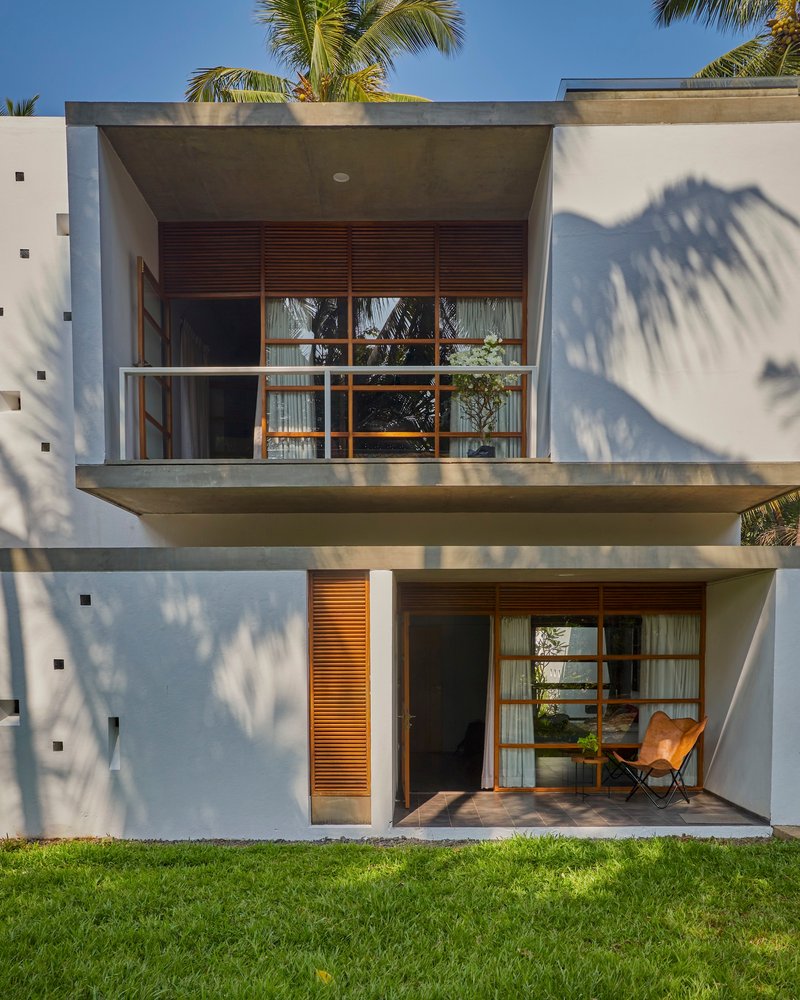
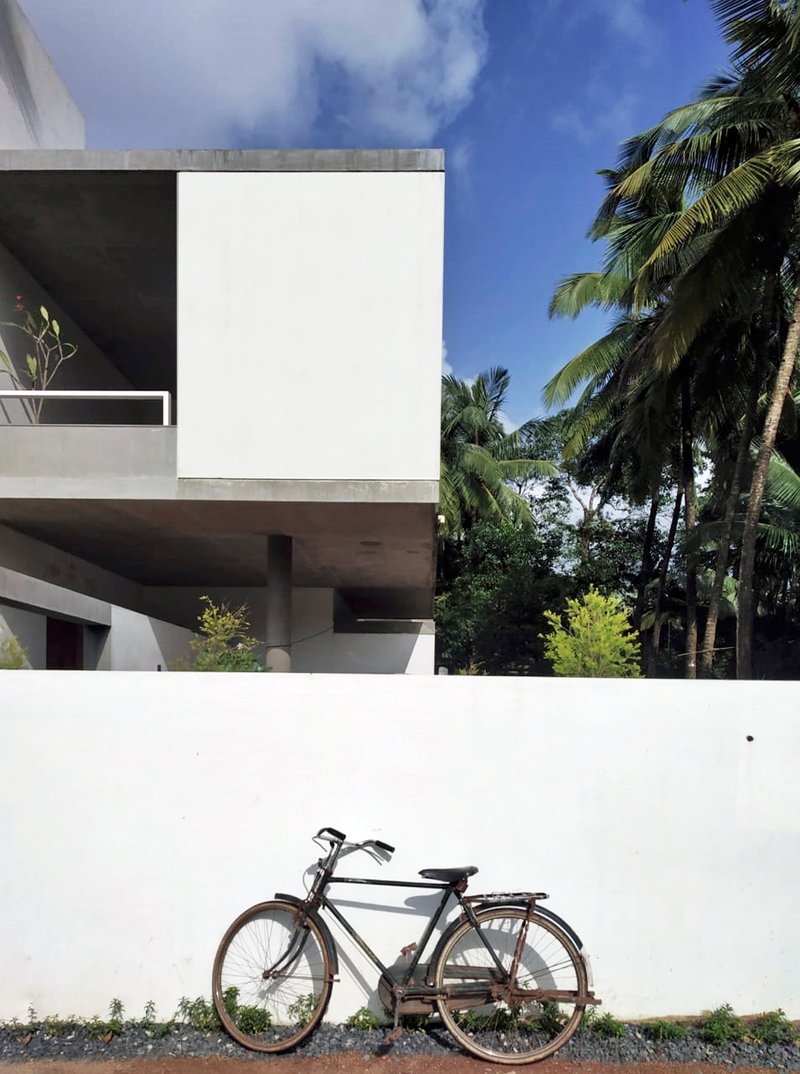
From the street, AAYI House reads as a collection of punctured cuboidal masses, white-rendered and cantilevered, rising through a canopy of coconut palms. The formal language is deliberately restrained: clean stucco planes, timber-louvered panels, and balconies that project over the boundary wall with structural confidence. It could be austere, but the palm shadows dappling across those surfaces, and the timber screens that warm every facade, keep the composition grounded in place rather than floating in abstraction.
The corner plot condition is handled deftly. Bounded by a village road on one side and a main road on the other, the house turns its most composed face to the intersection while tucking into the top corner of the site. This leaves the majority of the plot open as a south-facing yard dotted with existing palms, a landscape strategy that doubles as the building's primary sun buffer.
A Sequence of Three Courts
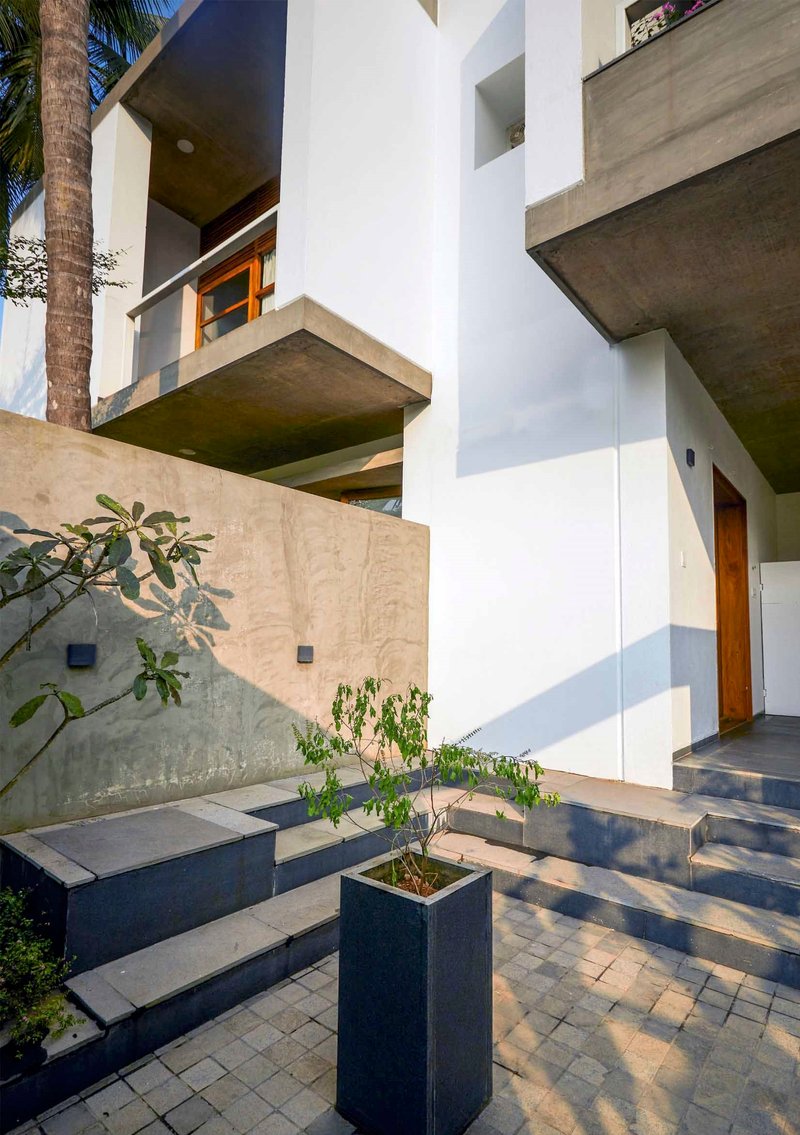
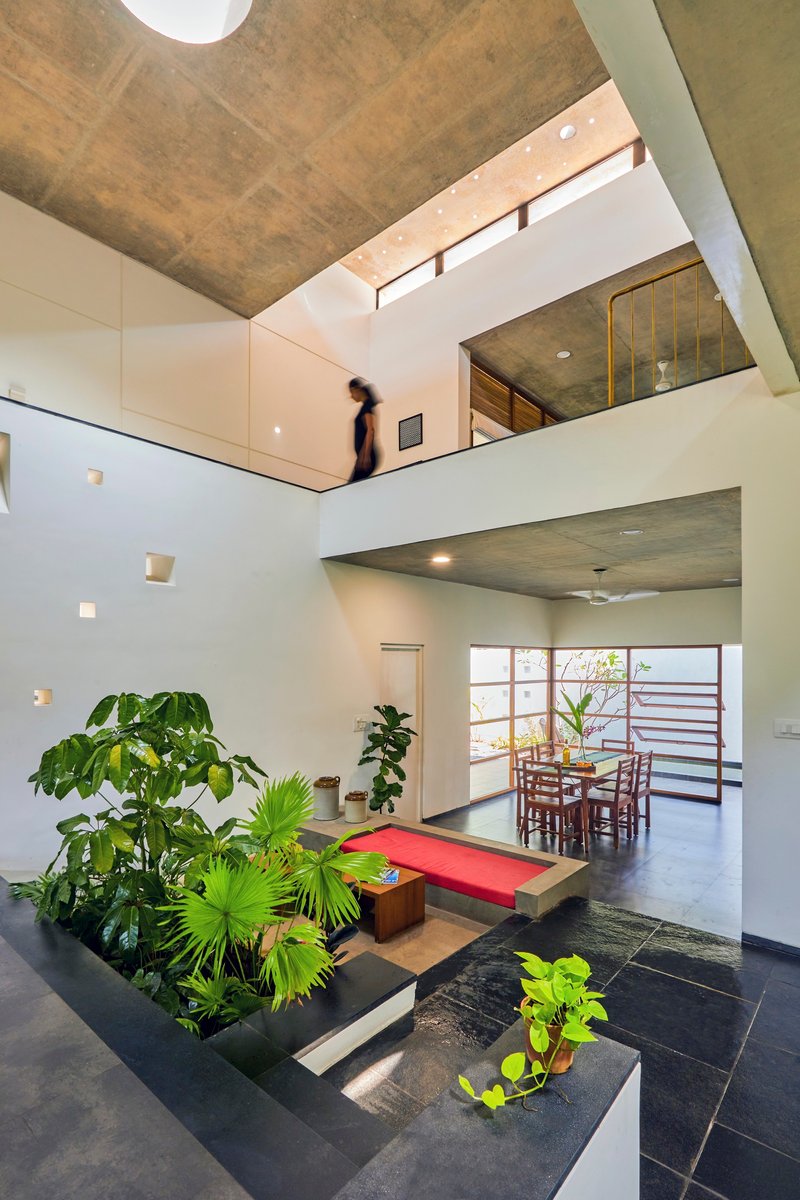
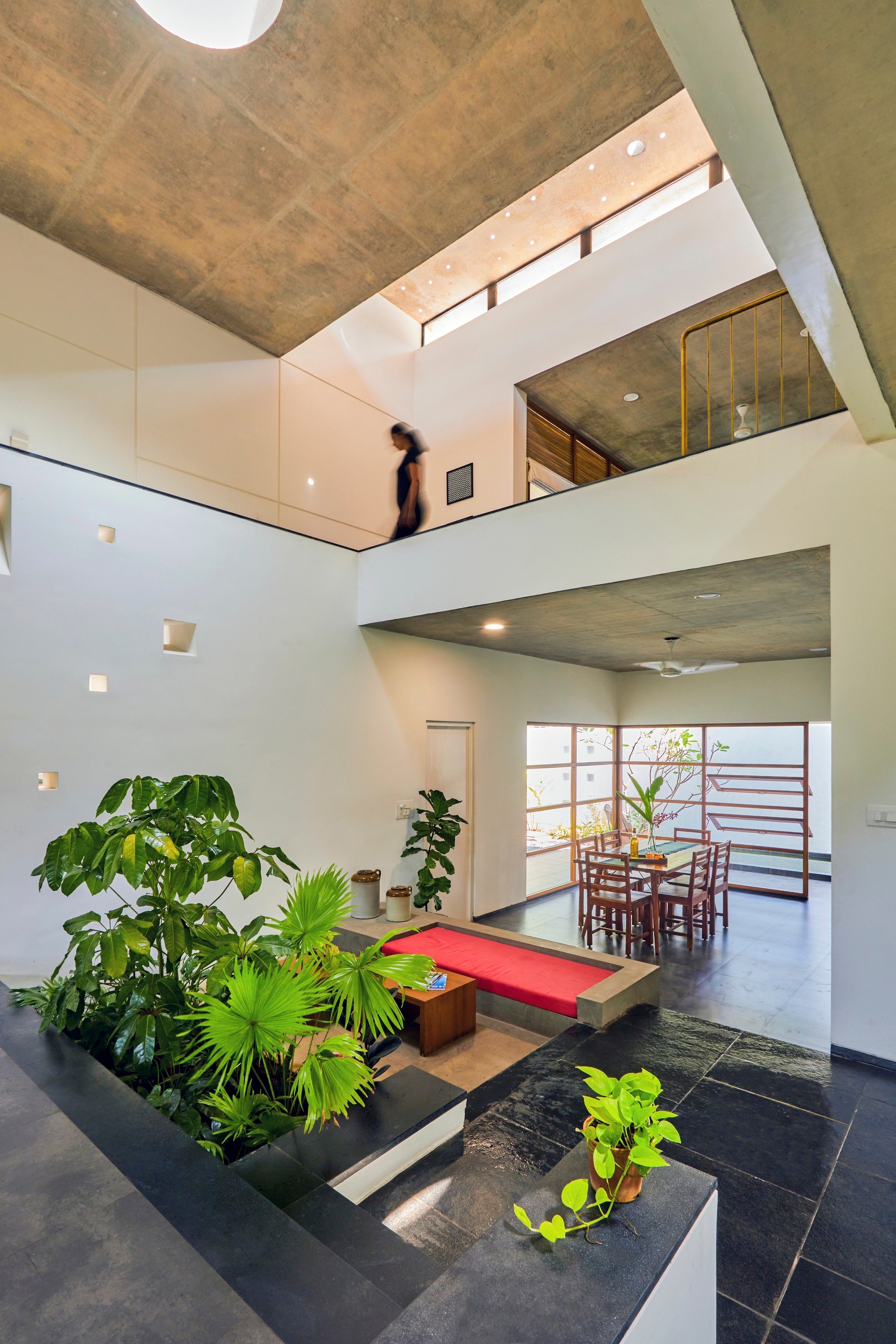
The three interconnected courtyards are the project's organizing spine. The entry court (image above, left) announces the logic immediately: stone steps, planters, and a cantilevered concrete balcony overhead establish the house's material vocabulary while pulling you inward. The central court (center) is the heart of the home, a double-height void ringed by mezzanine balconies, planted beds, and a red bench that injects a jolt of color against the exposed concrete and white plaster. It is a room that borrows from both the traditional Goan courtyard and the modernist atrium, landing somewhere productive between the two.
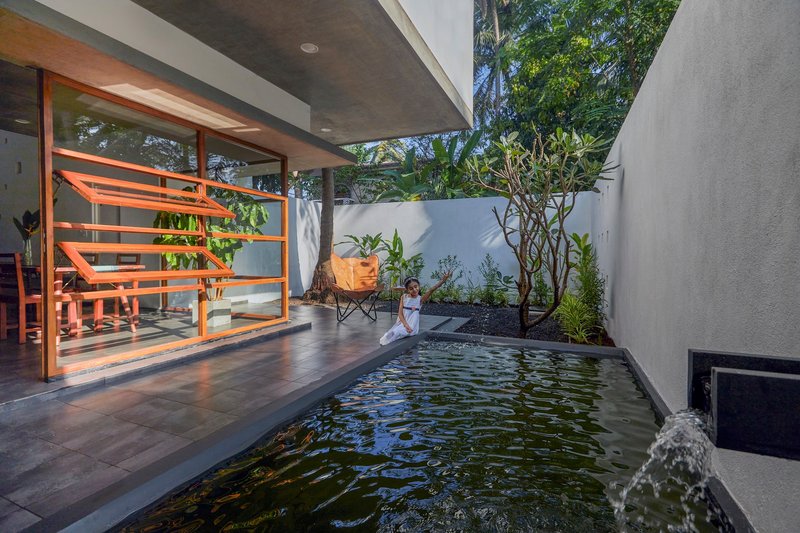
The third court (right) is the most private: a timber deck, a water body, and a louvered screen that filters light and view in equal measure. Together, the three courts monitor the house's internal microclimate, drawing breezes through the plan and skylighting spaces that would otherwise depend on artificial light. The strategy is not decorative. It is the climate engine of the building.
The Double-Height Living Core
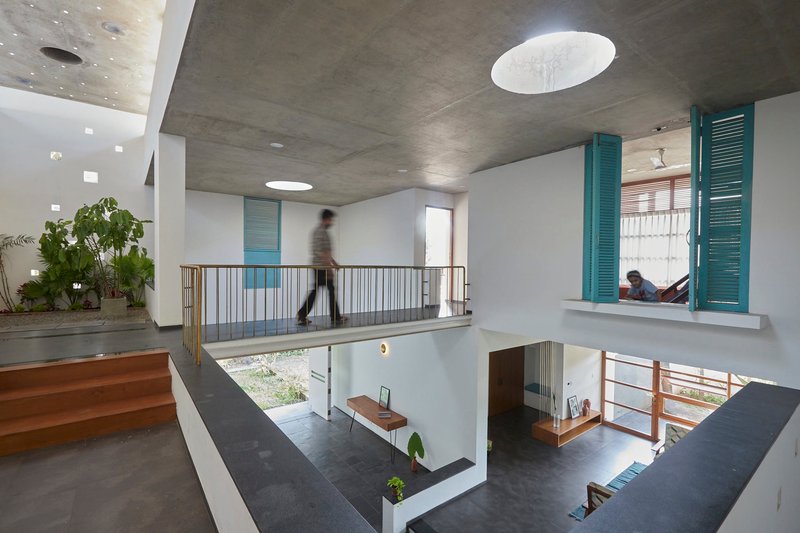
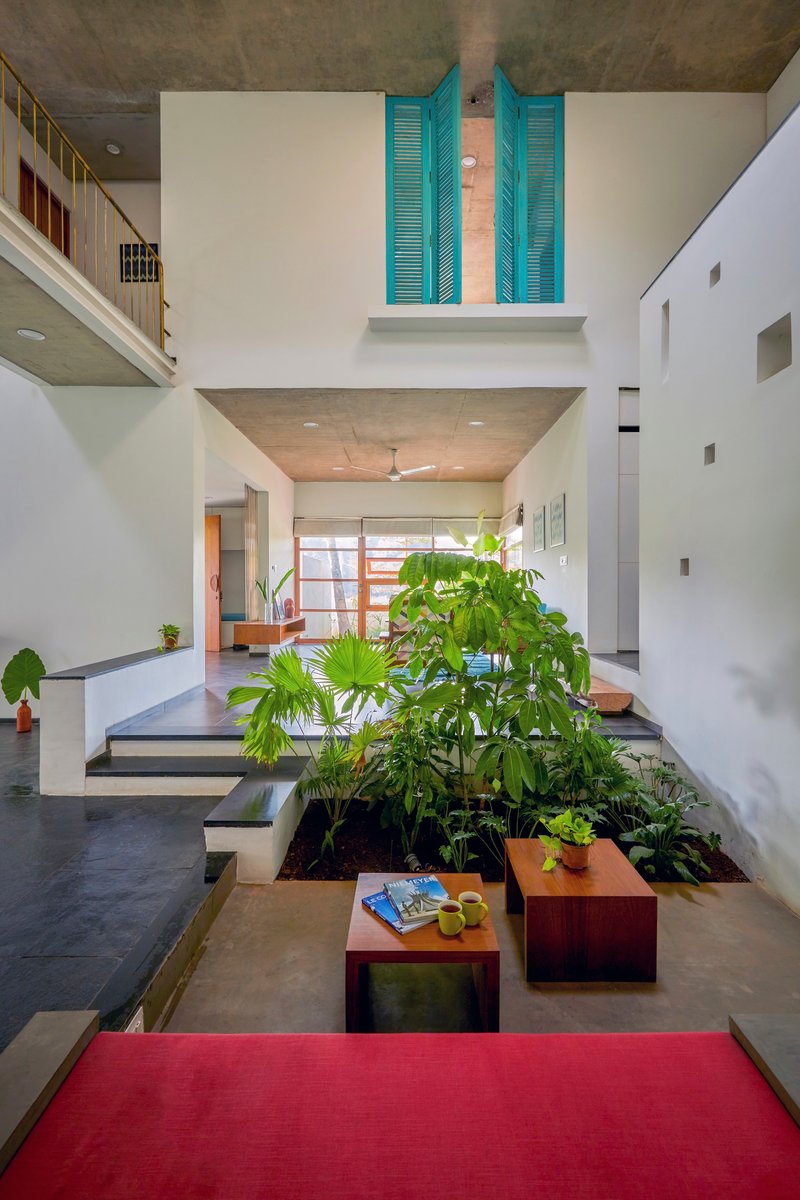
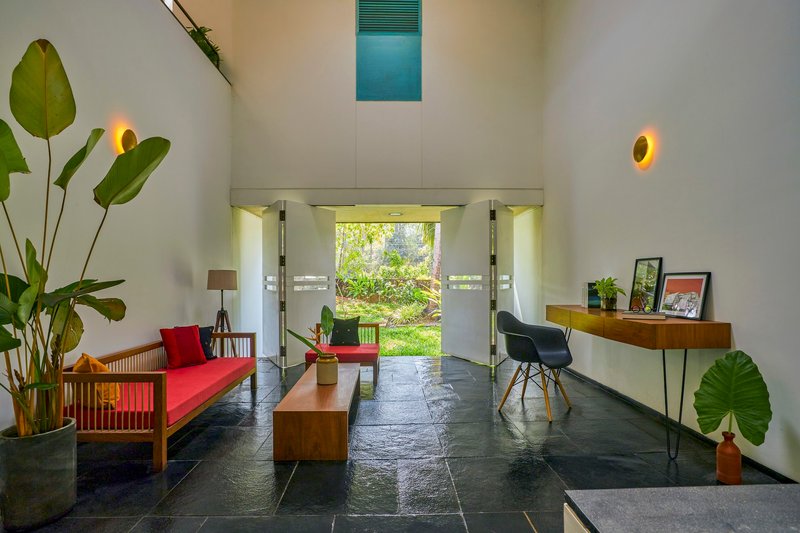
The central courtyard flows directly into a double-height informal living space, and this transition is where the house becomes spatially generous. The living area (left) is crossed at the upper level by a bridge with brass railings, its exposed concrete ceiling embedded with acrylic tubes that admit perforated, dappled light. The effect is controlled and atmospheric, somewhere between a filtered forest canopy and an intentional ceiling pattern.
At ground level, the living room splits into a sunken planted bed and a timber-furnished sitting area beneath turquoise shutters (center), a detail that channels Goa's Portuguese-era color sensibility without leaning into pastiche. The entry hall (right), with its black stone flooring and circular wall sconces, establishes a tone of quiet formality before releasing you into the more relaxed courtyard sequence. A perpendicular axis runs from the stairwell through this double-height space and out to a deck and garden, ensuring the plan never feels like a corridor.
Materials and the Language of Softness
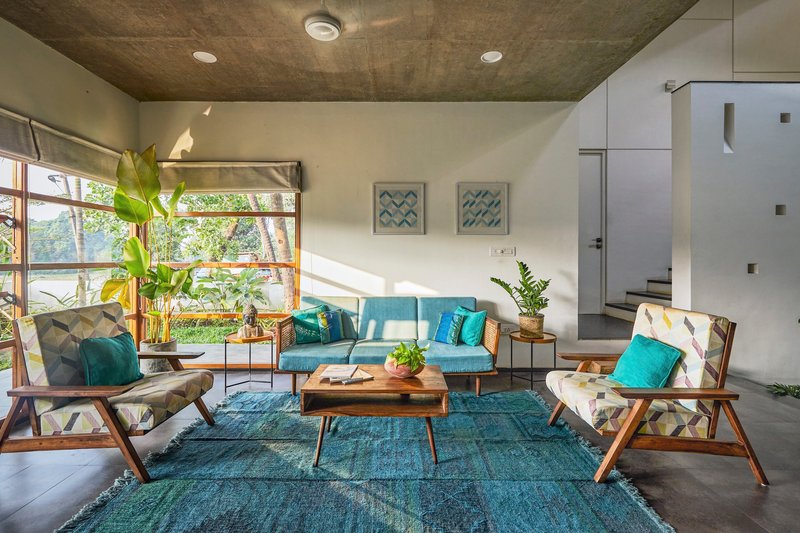
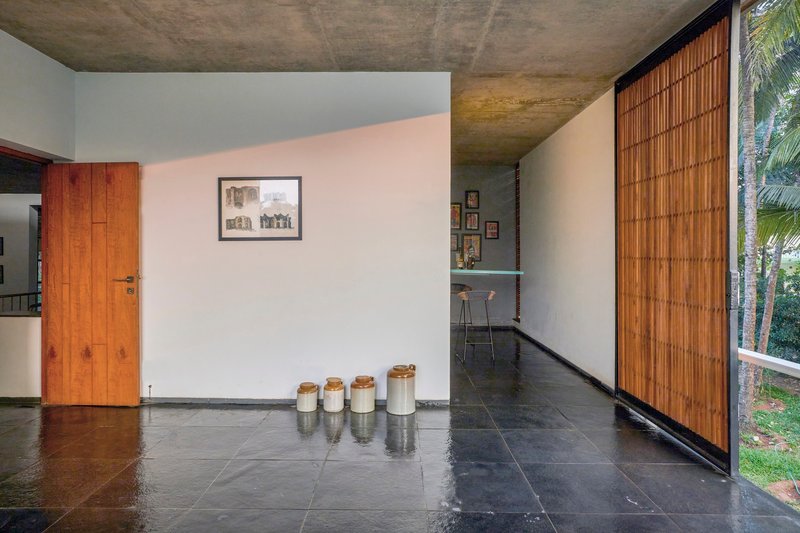
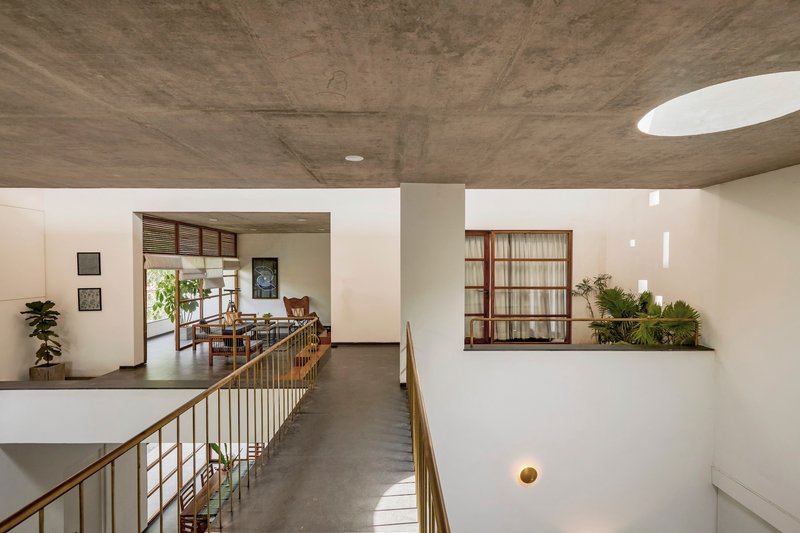
The palette reads as a deliberate personification: soft pastels, warm timber furniture, whites and greys. The architects describe this as referencing mothers, and while that reading is personal and untestable, the material choices do produce a domestic atmosphere that resists the severity typical of exposed concrete houses. Gridded windows (left) frame garden views through fine timber mullions. Sliding bamboo screens (center) modulate hallway light against black stone floors. Upper corridors (right) are lined with potted plants in window niches, their brass railings catching daylight against the board-marked concrete soffit.
The interplay between stone flooring, concrete ceilings, and wooden accents keeps each room texturally distinct without breaking the material continuity of the house. It is a restrained kit of parts, but deployed with enough variation to avoid monotony.
Thresholds, Porches, and In-Between Spaces
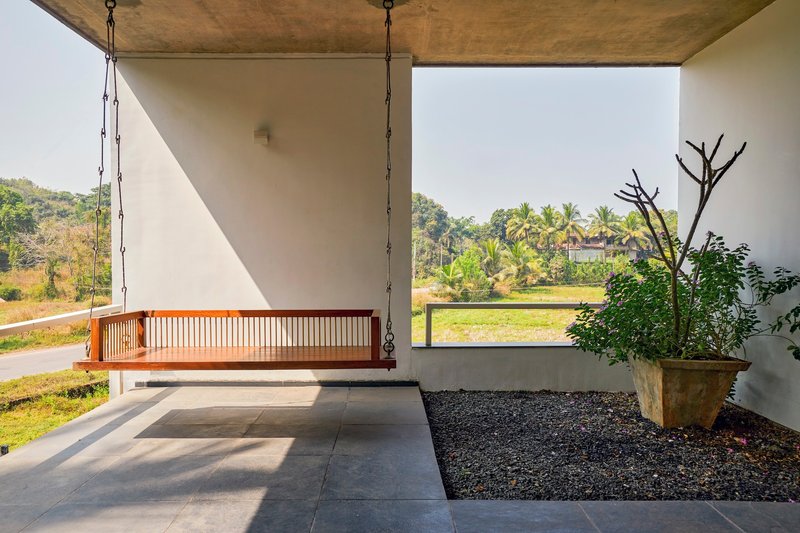
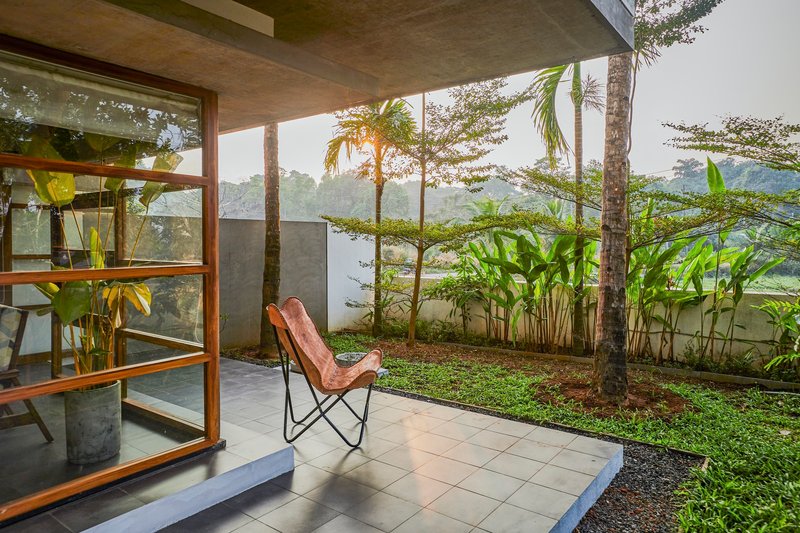
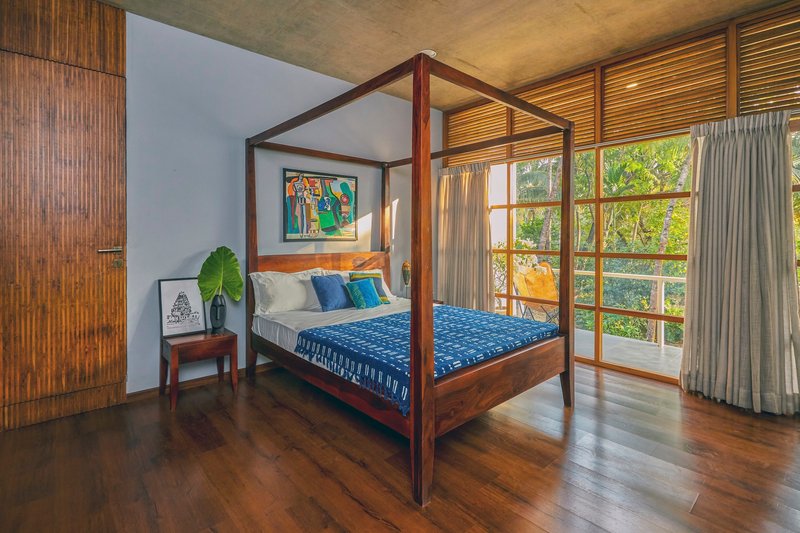
Some of AAYI House's best spaces are neither fully inside nor fully outside. A covered porch (left) suspends a timber daybed above planted beds, offering a shaded vantage point over the garden and distant palms. This is a verandah in the truest Goan sense, a social room with no walls. A private terrace (center) opens through timber-framed glass doors to planted garden at dawn, blurring the bedroom's edge. The bedrooms themselves (right) are generous and calm, with four-poster timber beds and grid-paned sliding doors that open to private balconies.
These in-between zones are critical to the passive climate strategy. Verandahs, terraces, and overhangs protect interior spaces from direct sun while facilitating cross breezes. Exterior landscaping and interjecting landscape pockets do the rest. The house does not need to rely heavily on mechanical cooling because its section is, in effect, a ventilation diagram.
Dusk and the Inhabited Landscape
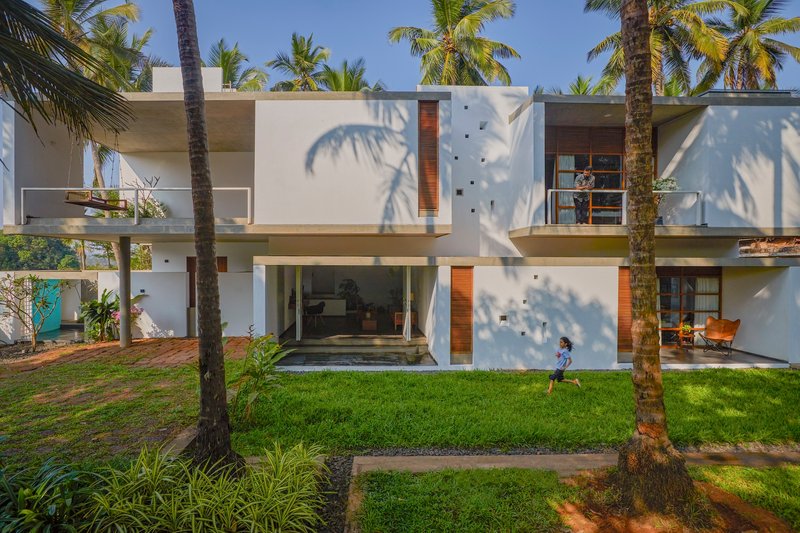
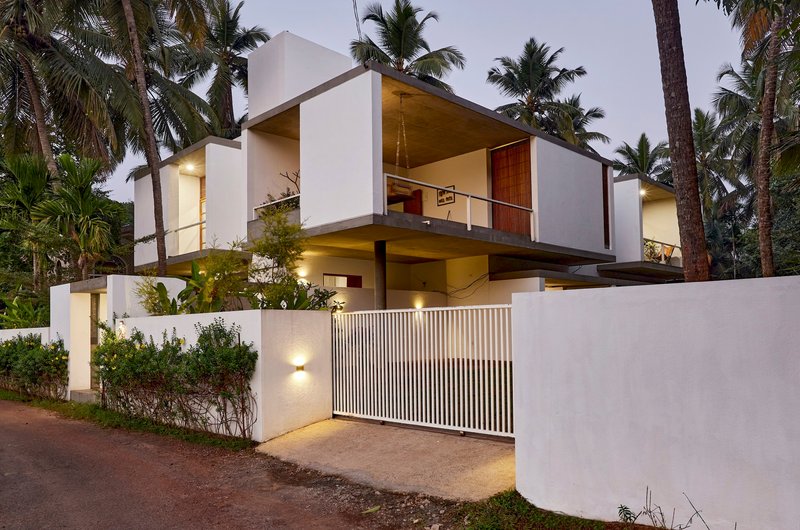
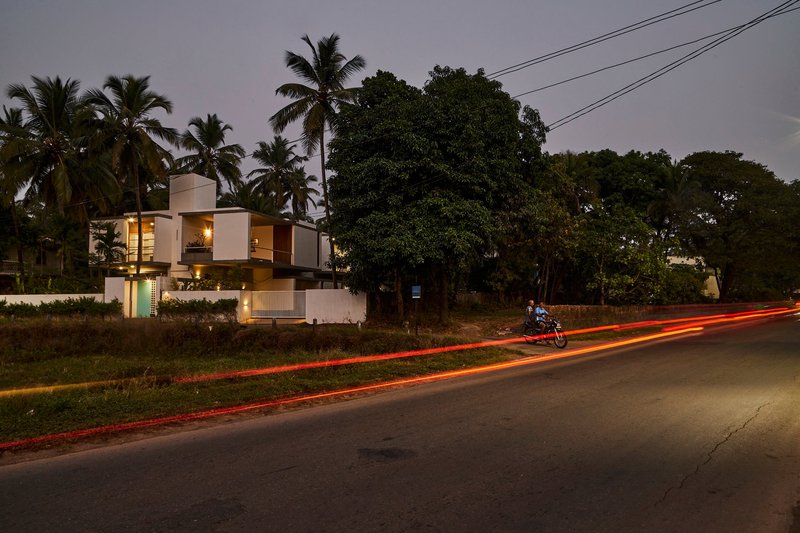
At dusk, AAYI House reveals a second character. Uplighting washes the stacked white volumes, the timber screen gate glows warmly, and the building becomes a lantern set among palms. The long-exposure street view (right) captures vehicle light trails against the stillness of the house, underscoring the contrast between this domestic retreat and the road life around it. Even the garden facade (left), with its palm shadows and afternoon light, reads as a composed landscape elevation rather than a backyard wall.
The house is conscious of its presence in the broader Goan countryside. It does not fence itself off or turn inward entirely. Instead, it calibrates openness and enclosure depending on orientation: more porous to the south-facing yard, more guarded toward the roads.
Plans and Drawings
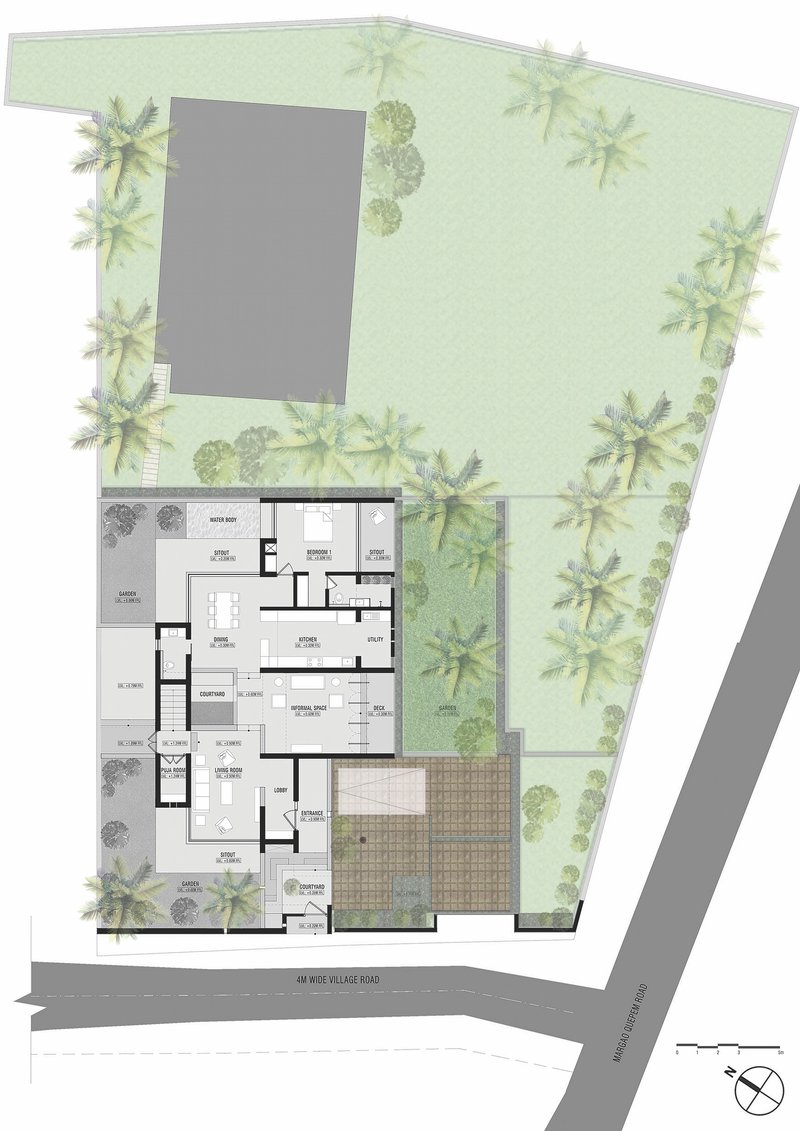
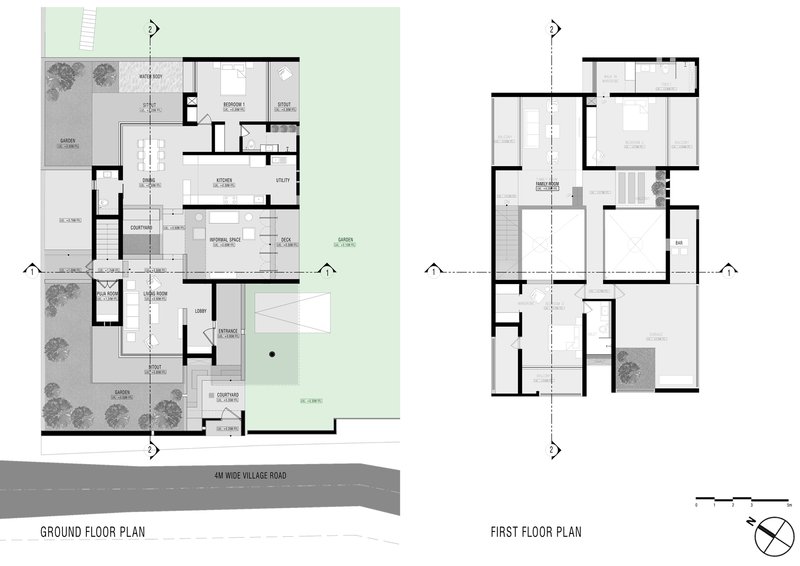
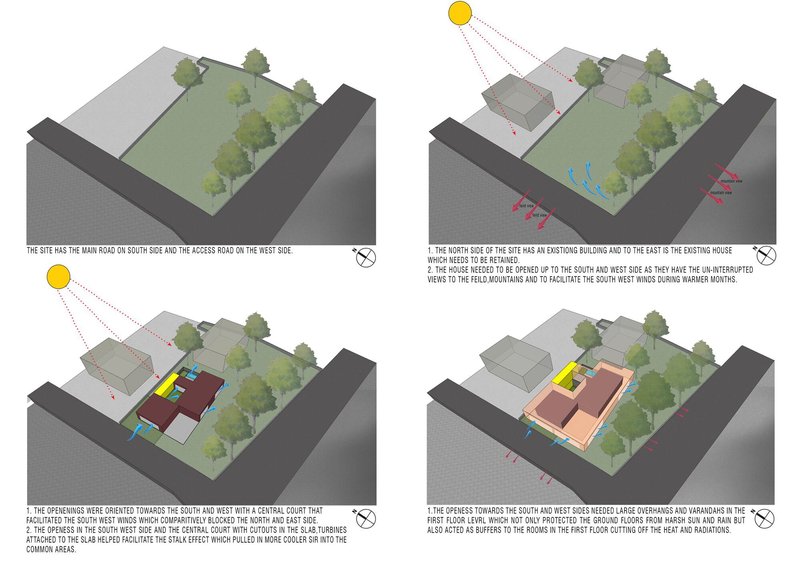
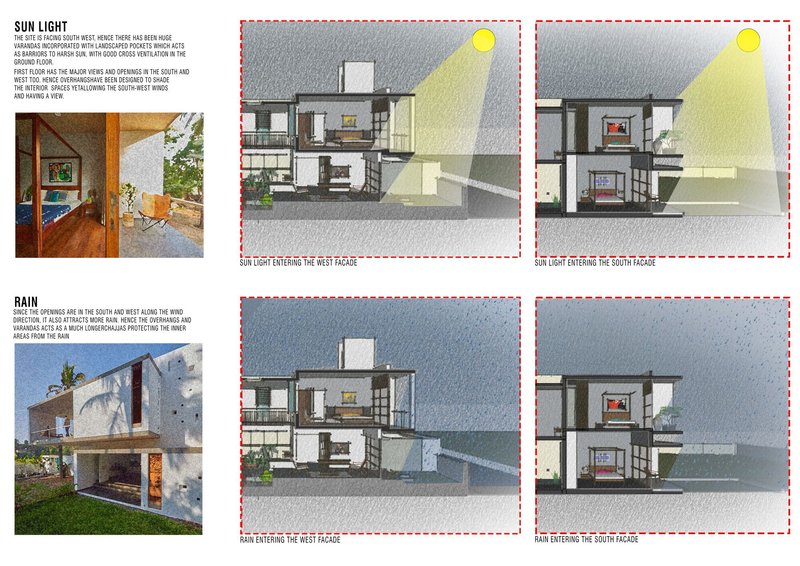
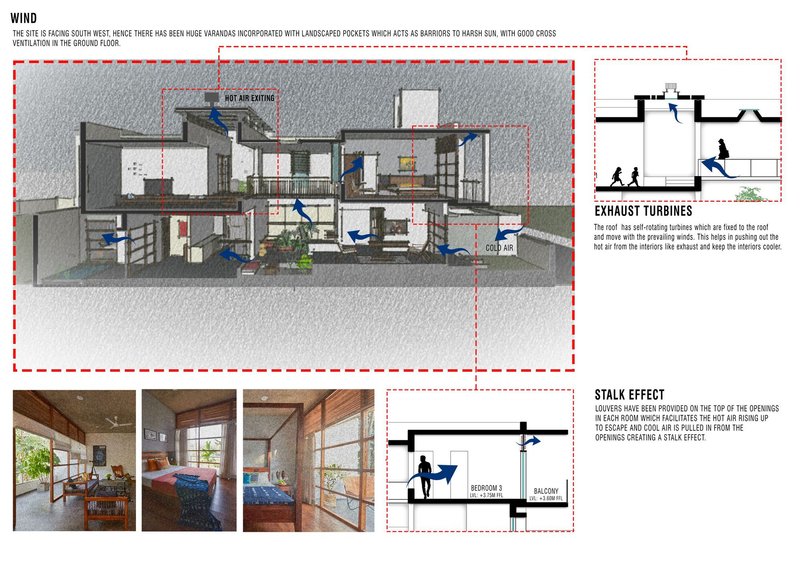
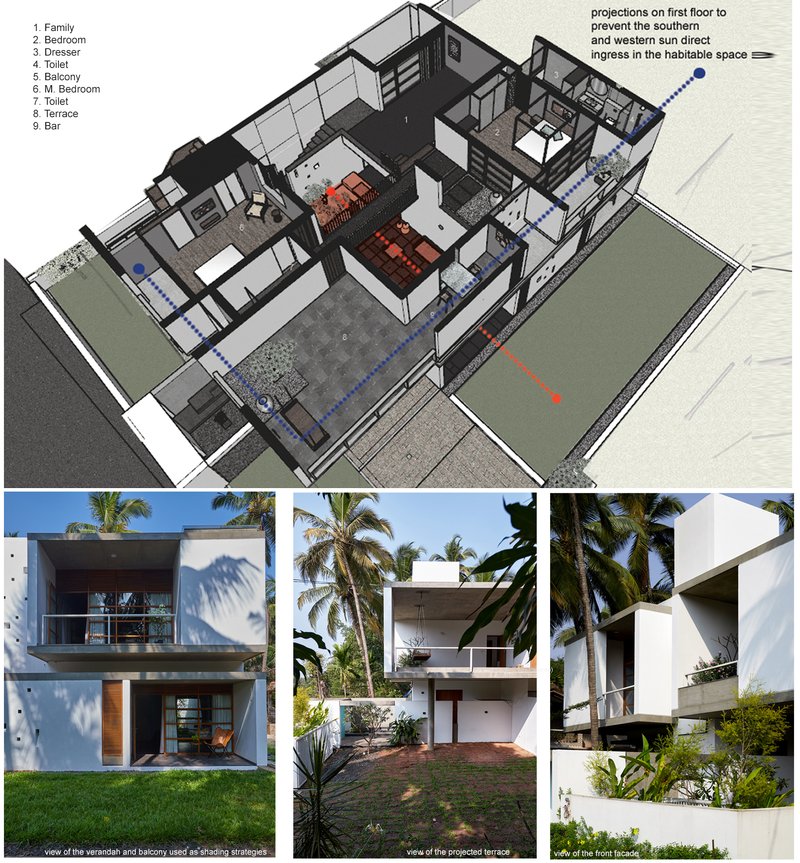
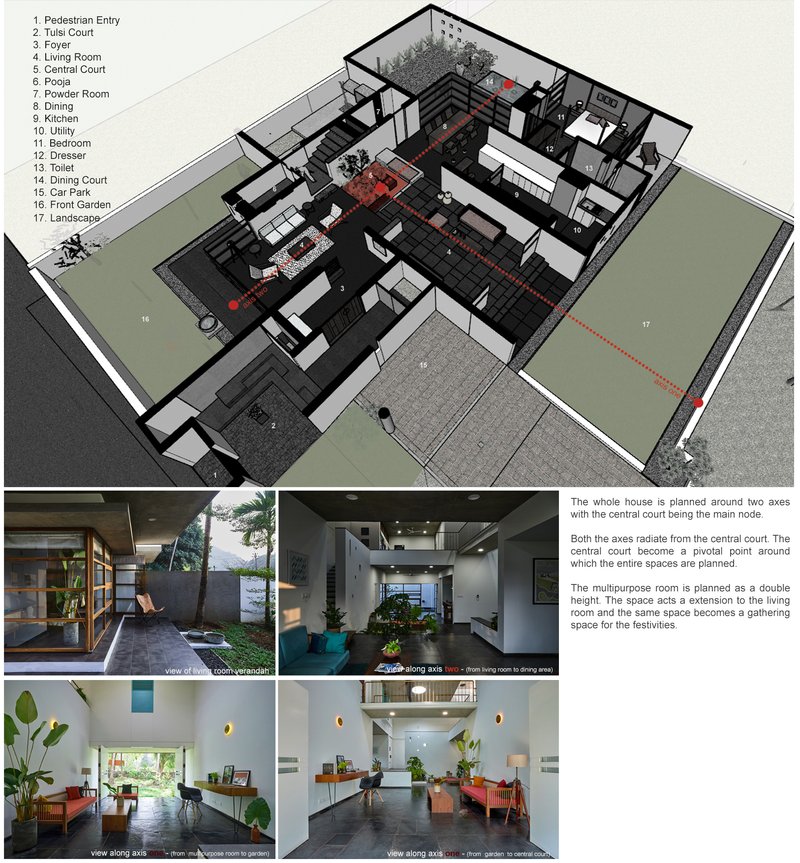
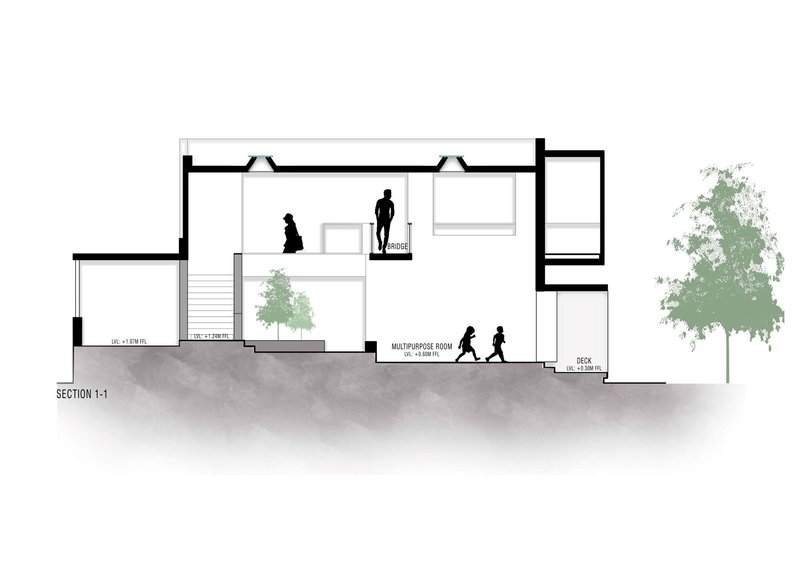
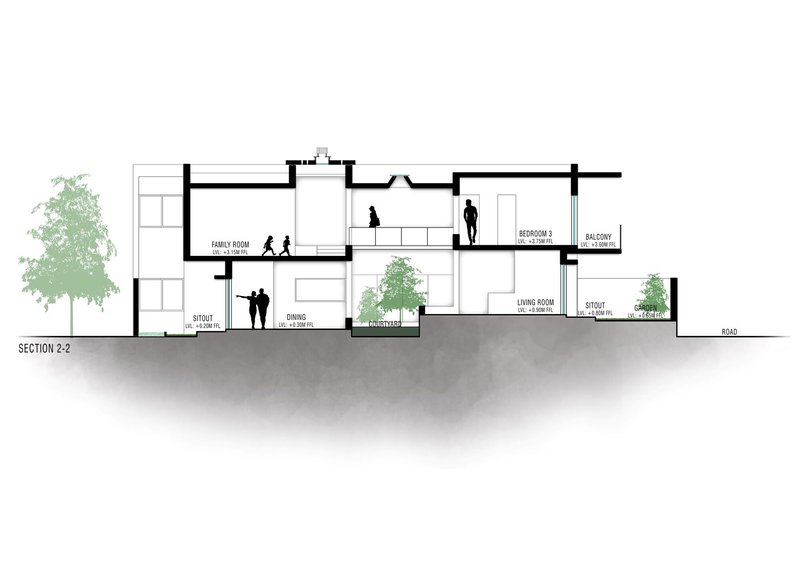
The site plan confirms what the photographs suggest: the house occupies the northwest corner of the plot, leaving the majority of the 1440 square meter site as open landscape. The floor plans reveal the three-courtyard spine running along the ground level, with rooms arraying off it on both sides. Section drawings illustrate how sunlight, rain, and wind penetrate through facade openings, making the passive climate strategy legible as architecture rather than engineering afterthought. The axonometric cutaways are particularly revealing, showing how the double-height central court organizes circulation on both levels and how the perpendicular axis from stairwell to garden deck gives the plan its cross-ventilation backbone.
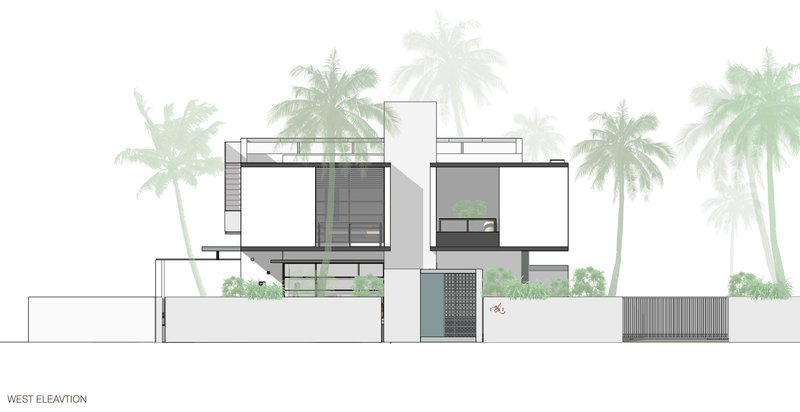
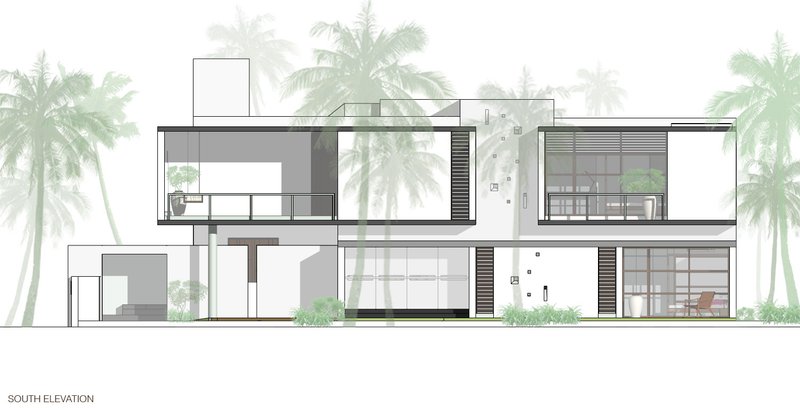
The elevations depict the stacking and cantilever strategy with precision. The west and south elevations (above) show how timber screens and balconies break down the massing, preventing the white volumes from reading as monolithic. Palm tree silhouettes are drawn into every elevation, a detail that acknowledges the landscape as a co-author of the building's character.
Why This Project Matters
AAYI House matters because it demonstrates that a contemporary house in Goa does not have to choose between vernacular nostalgia and imported minimalism. Collage Architecture Studio has found a way to work with the courtyard typology, the verandah, and the pastel palette of traditional Goan architecture while producing a building that is formally clear and climatically rigorous. The three-courtyard sequence is not an ornamental gesture. It is the plan's organizing logic, its ventilation system, and its emotional narrative, all at once.
More broadly, the project offers a model for how to build on family land with generational weight. The grandmother's plot, the parents' tribute, the contemporary house: there is a lineage here that the architecture neither ignores nor sentimentalizes. It simply builds forward, leaving room for the palms and the breeze to do what they have always done.
AAYI House by Collage Architecture Studio (Ar. Swapnil Valvatkar, Ar. Rohit Mohite), Sao Jose de Areal, Goa, India. 280 m², completed 2019. Photography by Harsh Kamat.
About the Studio
Share Your Own Work on uni.xyz
If projects like this are the kind of work you want to make, uni.xyz is a place to publish your own, find collaborators, and enter design competitions.




Popular Articles
Popular articles from the community

Indiesalon Carves a Plywood Cave into a Seoul Bistro's Second Floor
Munhwa Bistro's second Seongsu branch wraps diners in a laminated timber vault laced with colored light and mirror illusions.
Ippolito Fleitz Group Identity Architects Turn Eight Floors in Shanghai into a Vertical Creative City
Publicis Groupe's new headquarters in Xintiandi reimagines the office as a courtyard-driven urban landscape stacked across eight floors.
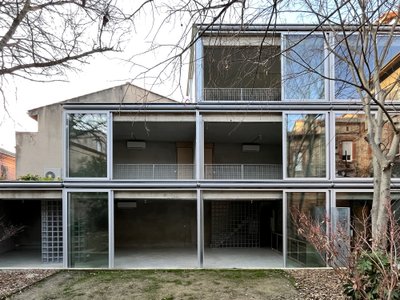
BAST Slots a Four-Story Glass House into a Narrow Gap Between Toulouse Townhouses
In the dense Bonnefoy district, a stepped infill building merges home and office while preserving a majestic hackberry tree.
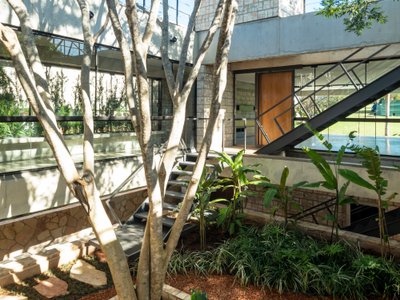
OMCM arquitectos Builds a Summer House in Paraguay from Quarry Waste Blocks and Three Sacred Trees
In the young hillside neighborhood of Altos, a 696-square-meter concrete volume hovers on six pillars around three preserved native Yvyraju trees.

Similar Reads
You might also enjoy these articles

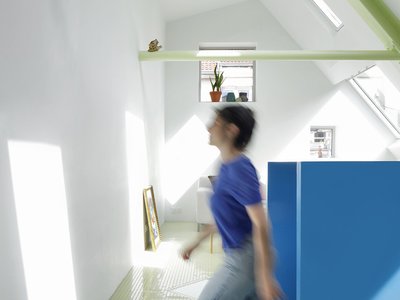
127af Flips a Tiny Bagnolet Rowhouse Upside Down with a Handcrafted Roof Extension
A 55-square-meter terraced house on the edge of Paris gains a luminous upper living floor through lightweight timber and steel.
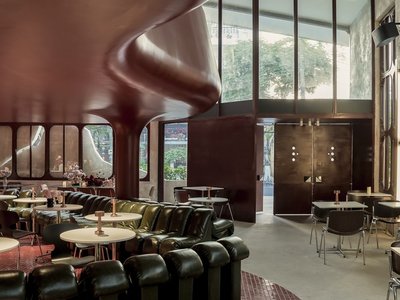
1.61 Design Workshop Wraps a 600-Square-Meter Café in Vietnam in Sculptural Burgundy Drama
Reden Café & Bistro pairs a helical staircase, mosaic floors, and deep red interiors to rethink Vietnamese hospitality space.

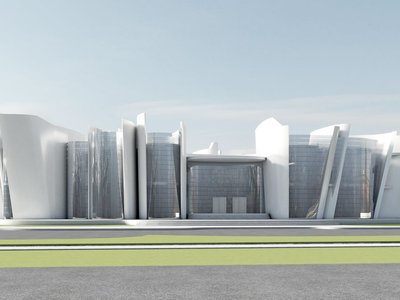
The Unbound Brain: A School Shaped by Cognitive Architecture
Cylindrical learning pods radiate like neurons from a central cortex, turning the floor plan into a spatial model of human thought.
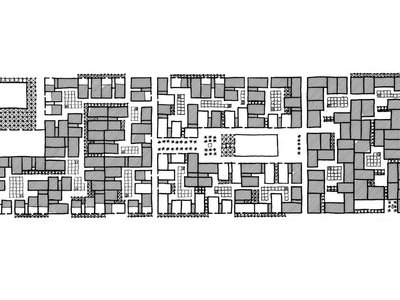
Revival Vernacular Architecture: Rammed Earth Settlements for the Sahara
A modular desert community in Mauritania that fuses passive cooling techniques with earthen construction and local craftsmanship.


Explore Landscape Design Competitions
Discover active competitions in this discipline




The Global Benchmark for Architecture Dissertation Awards


Challenge to design mud housing for contemporary communities
Comments (0)
Please login or sign up to add comments
No comments yet. Be the first to comment!