

Community Center Pilares Valentín Gómez Farías by a|911 – Rebuilding Community Through Architecture
Community Center Pilares Valentín Gómez Farías by a|911 in Mexico City blends inclusive educational spaces, natural light, gardens, and civic-focused sustainable architecture.


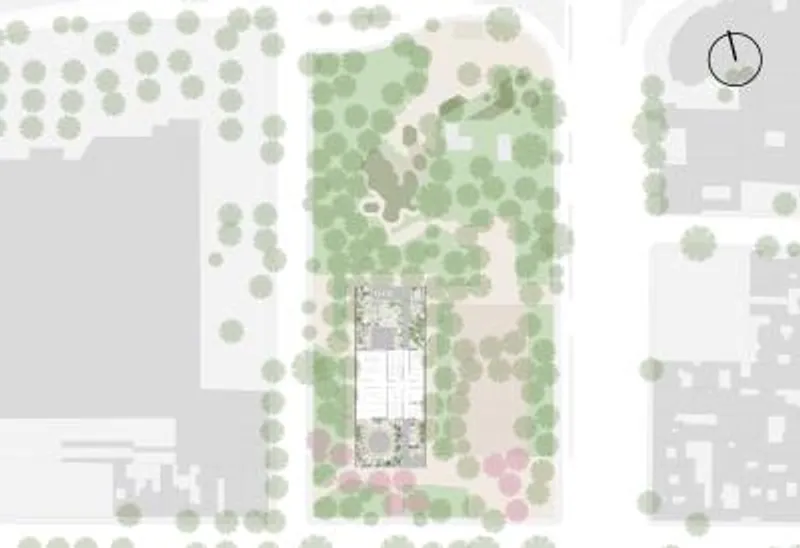
Located in the heart of Mexico City’s Benito Juárez neighborhood, the Community Center Pilares Valentín Gómez Farías is a transformative project designed by a|911 architects. Completed in 2022, this 650 m² public facility serves as a vital hub for education, culture, and social engagement, contributing directly to the regeneration of the district. Positioned strategically within Rosendo Arnaiz Park and adjacent to the San Antonio metro station, the center replaces deteriorated structures and former frontons, addressing past urban neglect while fostering a safer and more inclusive community.
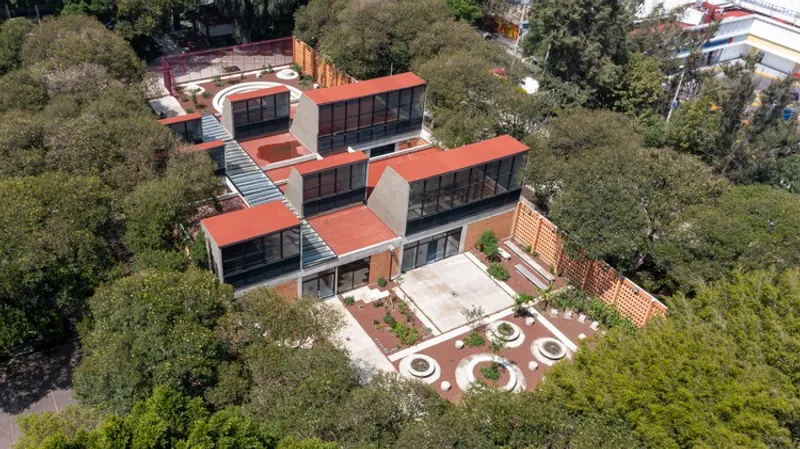
The architectural concept prioritizes accessibility and inclusivity, focusing on youth who have abandoned formal education, women seeking economic empowerment, and local communities without cultural or sports infrastructure. The design emphasizes social cohesion and civic engagement, blending seamlessly with the park through a sensitive balance of permeability and presence. The building's low-impact footprint respects the historical pediments of the park while creating a new landscape horizon with a civic dimension.
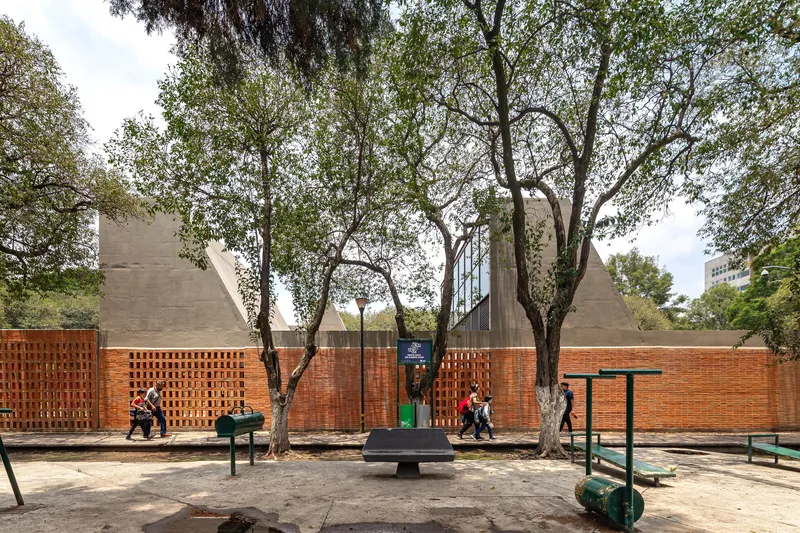
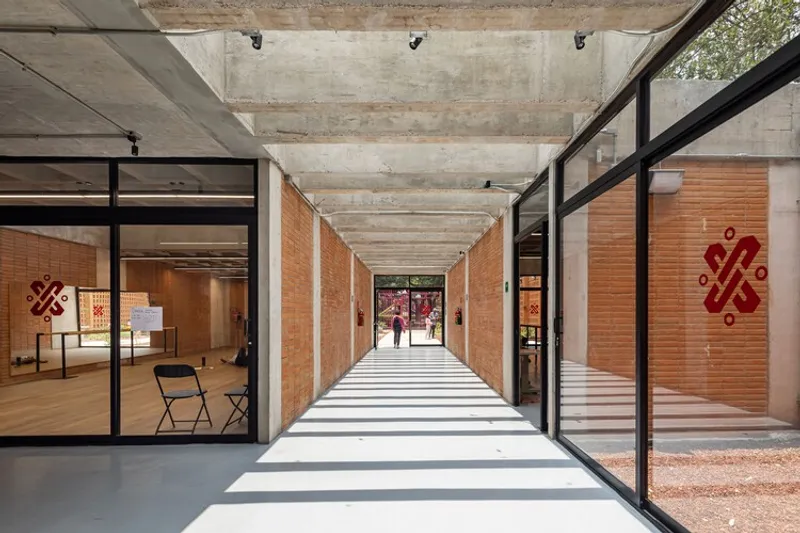
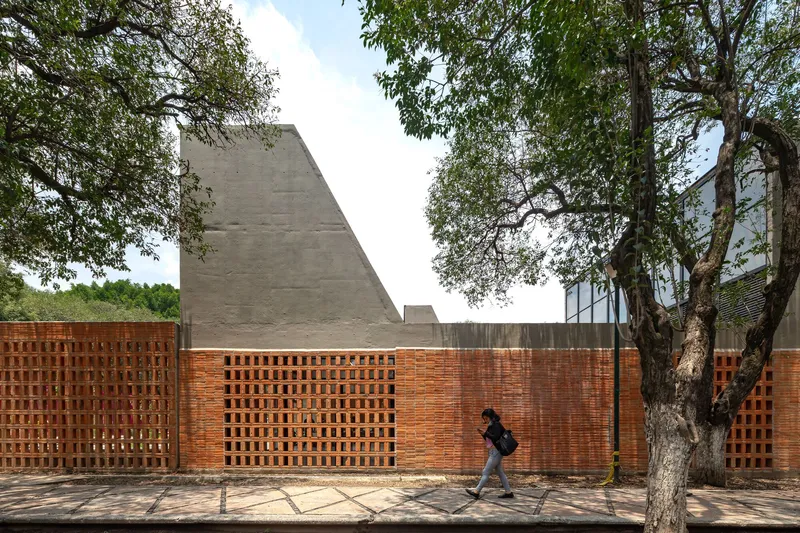
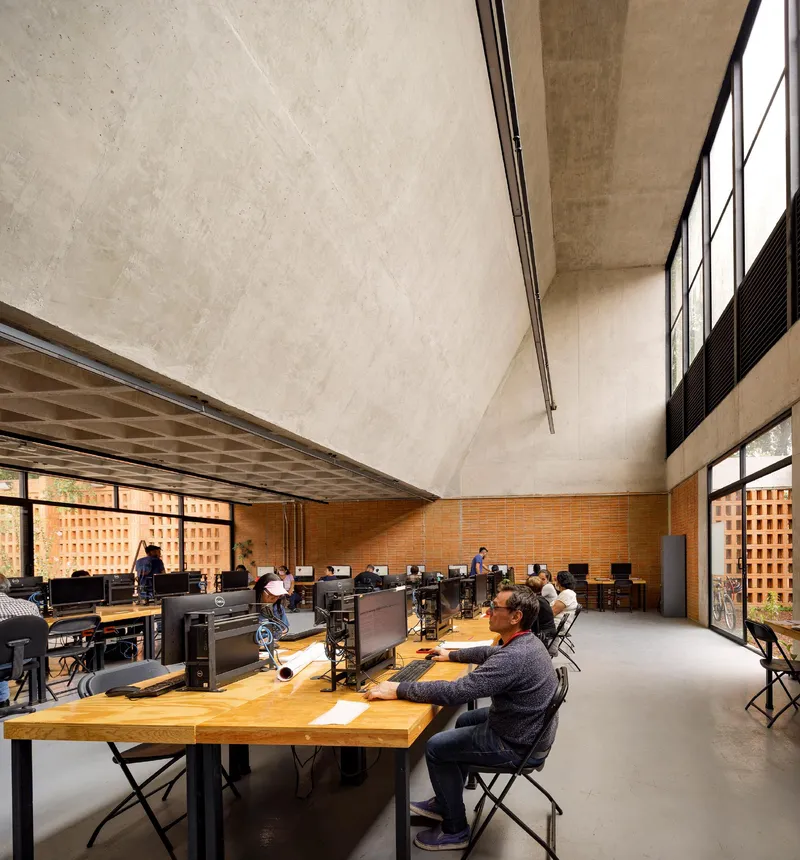
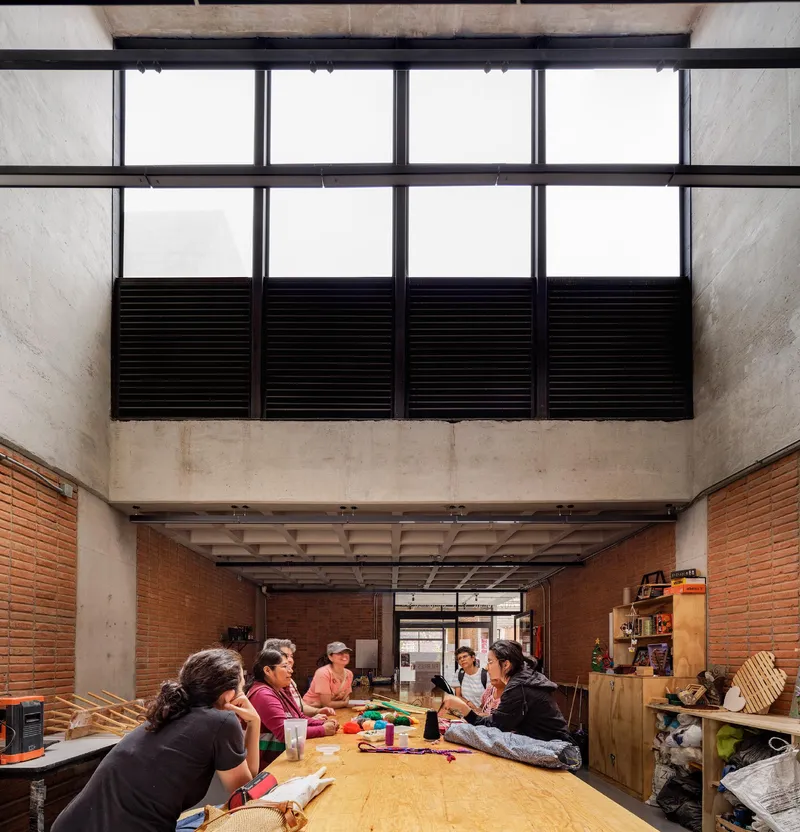
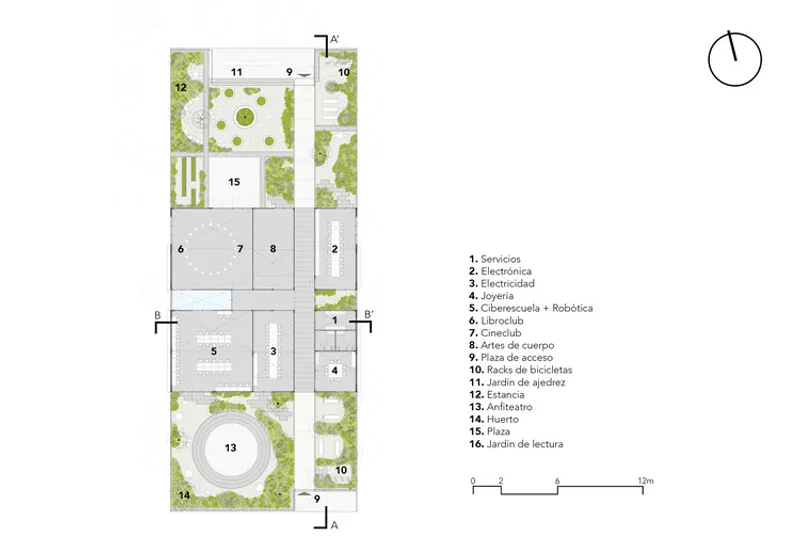
Structurally, the center features two lattice walls on its eastern and western edges, enclosing a modular, pavilion-like layout that houses classrooms, workshops, and multipurpose educational spaces. The interiors are illuminated and naturally ventilated through north-facing skylights of varying heights, while a longitudinal walkway connects all spaces, encouraging interaction and movement. The design allows for an educational ecosystem that extends outdoors, integrating two lush gardens at the north and south ends of the site. These outdoor spaces serve as extensions of the park, providing seating, reading areas, and an outdoor forum for public gatherings.
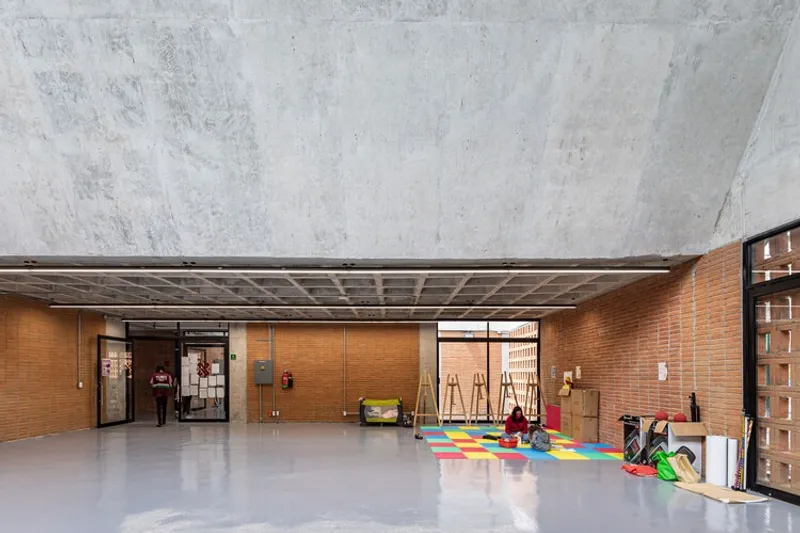
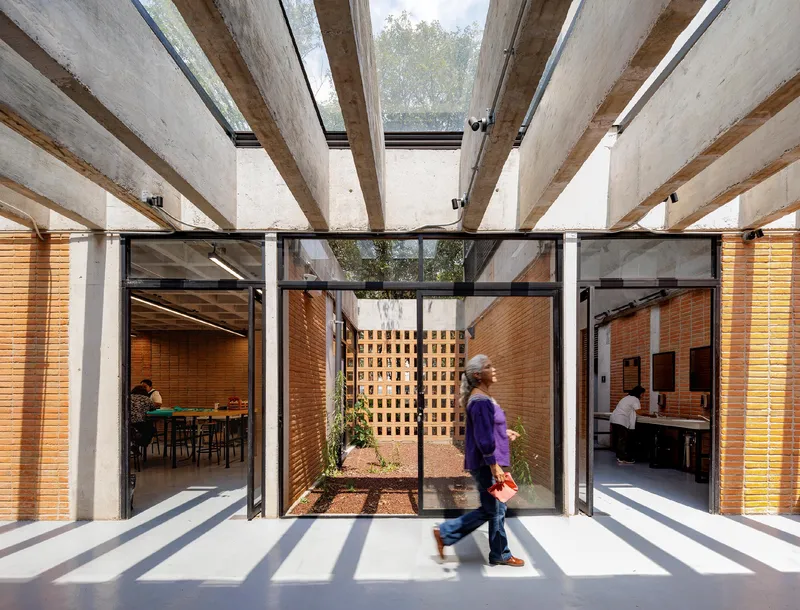
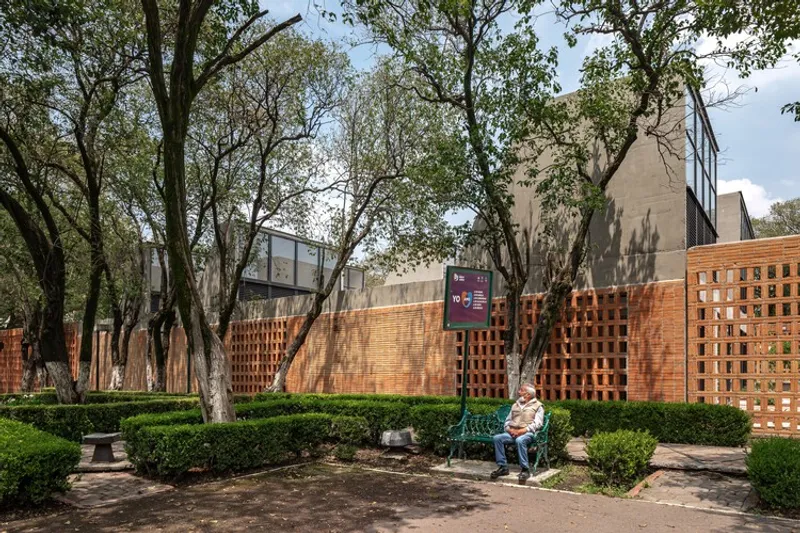
Materiality plays a critical role in linking the center to the region’s historical social infrastructure. The combination of reinforced concrete columns and brick partition walls evokes traditional civic and educational architecture while reinterpreting it in a contemporary form. Vertical skylights punctuate the horizontal lattice walls, introducing natural light and creating visual expressions that connect the interior to the surrounding environment. This interplay of horizontal and vertical forms reinforces the architectural identity and civic presence of the center.
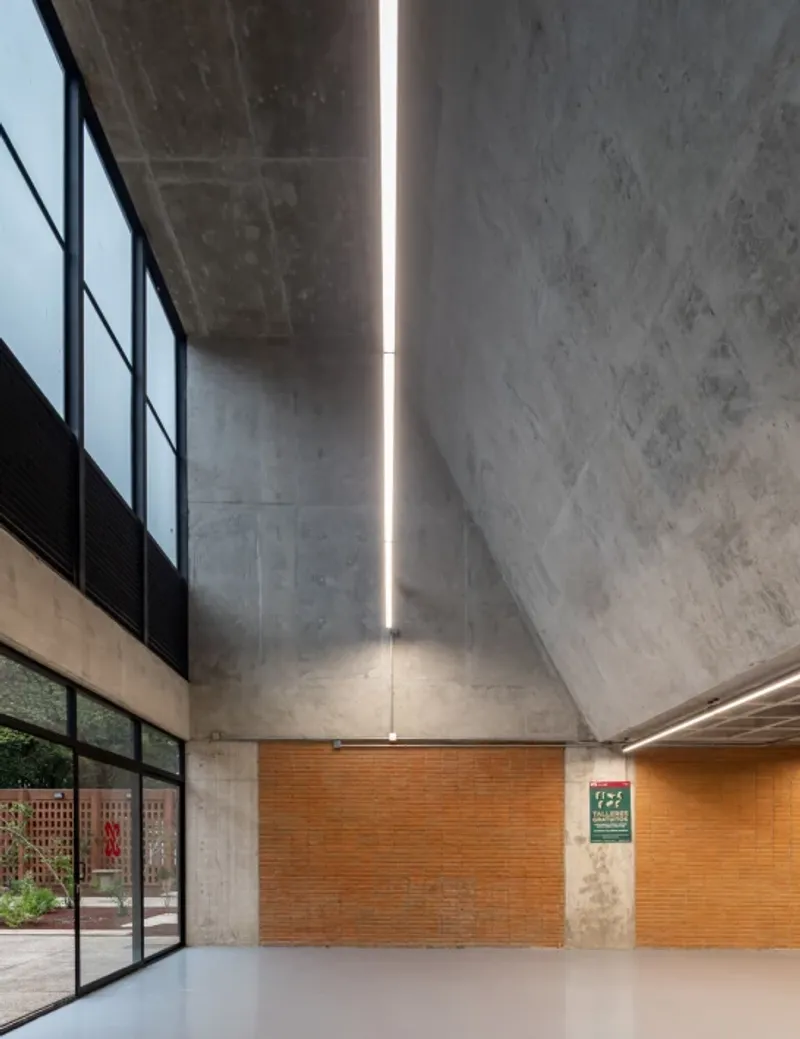
Ultimately, the Community Center Pilares Valentín Gómez Farías is more than a building—it is a catalyst for social change, blending functionality, beauty, and civic responsibility. It creates a space where learning, cultural activities, and community engagement coexist harmoniously, supporting the social and educational development of Mexico City’s residents.
All the photographs are works of Onnis Luque


Popular Articles
Popular articles from the community

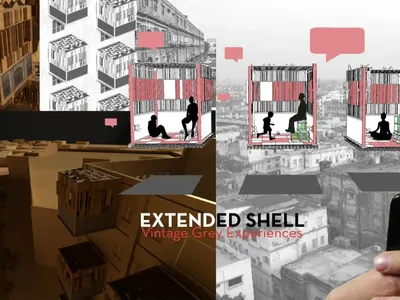
Extended Shell: Retrofitting Kolkata's Balconies as Living Urban Thresholds
A modular retrofit system recovers the social and environmental intelligence of Kolkata's historic verandas for contemporary Park Street residents.

Opera by the Sea Estonia: Three Shells Dissolving Architecture into Tallinn's Coastline
A winning opera house proposal replaces monumental form with interconnected shells that blur the boundary between building, park and Baltic Sea.

Manzana Morphosis: Stretching Barcelona's Grid into a Living Landscape for 2050
A radical reworking of the Eixample manzana turns density into a tool for generous public space, vertical ecology, and environmental performance.

Temporary Home for Dogs: A Reversed Zoo Rethinks Animal Shelter Architecture
In Bucharest, a sinuous corridor and freed landscape flip the logic of containment, designing a shelter that works to make itself unnecessary.

Similar Reads
You might also enjoy these articles


Hodi-Mandai Geram
Project Function: Preservation and revitalization of the Intangible heritage and socio-spatial identity of the Hodi by Housing, Cultural Memory Center, Sacred Grove, landscape, local tourism economy


Olio Towers: A Mid-Rise for Performers That Fuses Housing, Rehearsal, and Stage
Located blocks from Houston's Theater District, this modular tower stacks living units around a central performance atrium.

Oasis: Modular Green Housing Carved into Dhaka's Urban Fabric
A shortlisted Plugin Housing entry reclaims unauthorized settlements in Dhaka with stepped concrete volumes, green roofs, and ventilation-driven design.

Black Hole: A Floating Megastructure for the Post-Physical Era
Emiliano Mazzarotto envisions a spherical, self-scaling arena where e-sports, digital hotels, and holographic stadiums replace traditional public space.

Explore Community Center Competitions
Discover active competitions in this discipline

Challenge to design locus for the upliftment of human rights

Challenge to reimagine the Iron Throne

Photograph architecture without architects

Illustrate the lost glory of Angkor Wat - Render Challenge
Comments (0)
Please login or sign up to add comments
No comments yet. Be the first to comment!