
Concéntrico Turns Baking Trays and Pinewood into a Love Letter to Mexico's Corner Bakeries
Mi Pan Bakery in Mexico City distills 40 years of bread-making tradition into a self-serve ritual framed by craft and community.

Every Mexican carries a bakery memory: the tinkling door chime, the warm blast of yeast-laced air, the communal shuffle past racks of conchas and cuernos. When Concéntrico, led by Alejandro Peña Villarreal, was tasked with redesigning Mi Pan, a Mexico City institution operating for more than 40 years, the studio did not reach for novelty. Instead, they sat down with each baker, studied the tools of the trade, and distilled the entire spatial language of the project from what they found in the kitchen.
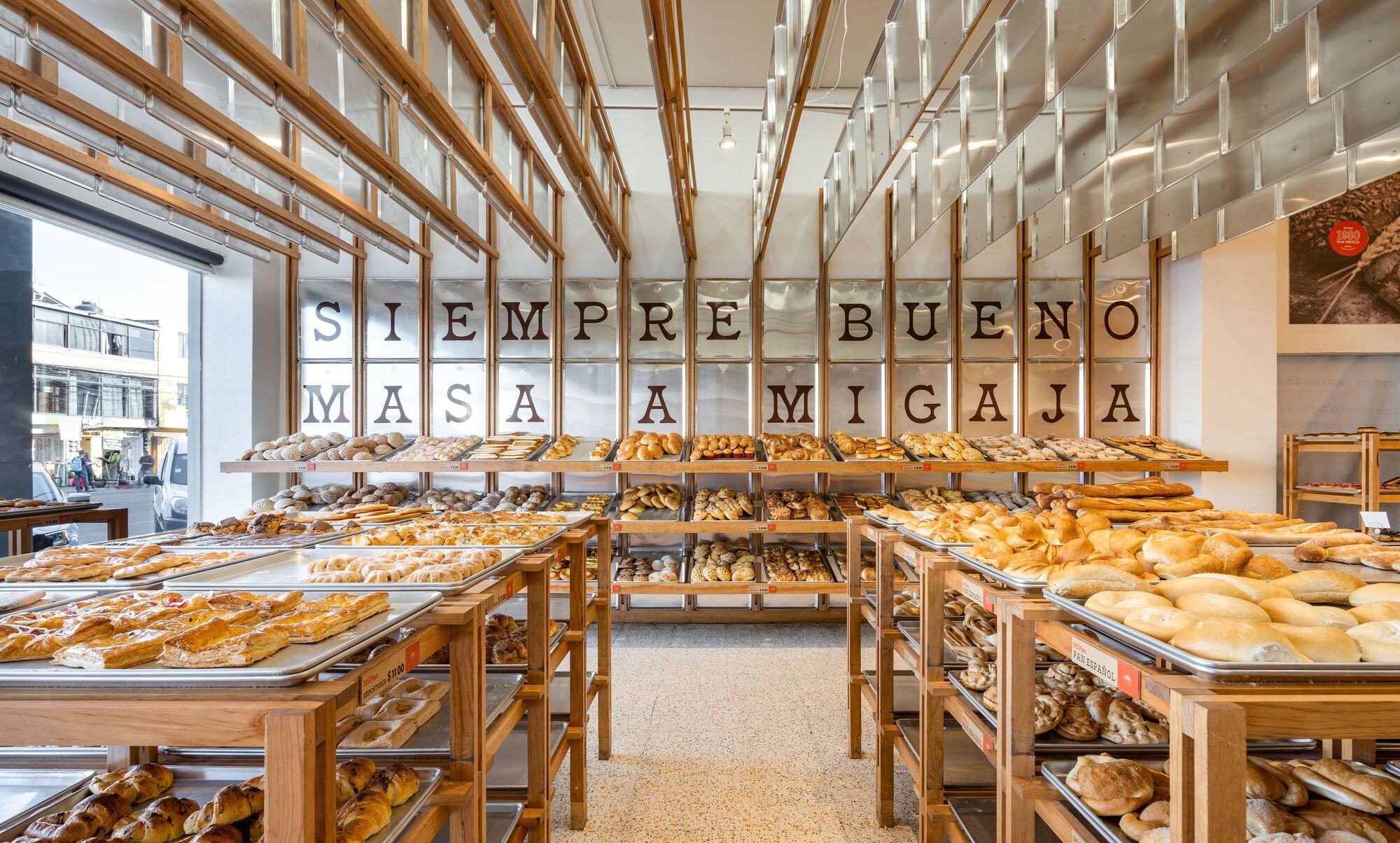
The result is a bakery where the architecture is the process. Metallic baking trays become ceiling panels, suspended overhead to diffuse light and carry hand-lettered signs. Pinewood, the material of bread racks and proofing shelves, forms a structural grid that organizes display, circulation, and threshold alike. A terrazzo floor shot through with the brand's orange pigment ties the shop to the local supermarket vernacular. Nothing here is arbitrary; every surface connects back to the act of making bread.
The Storefront as Threshold
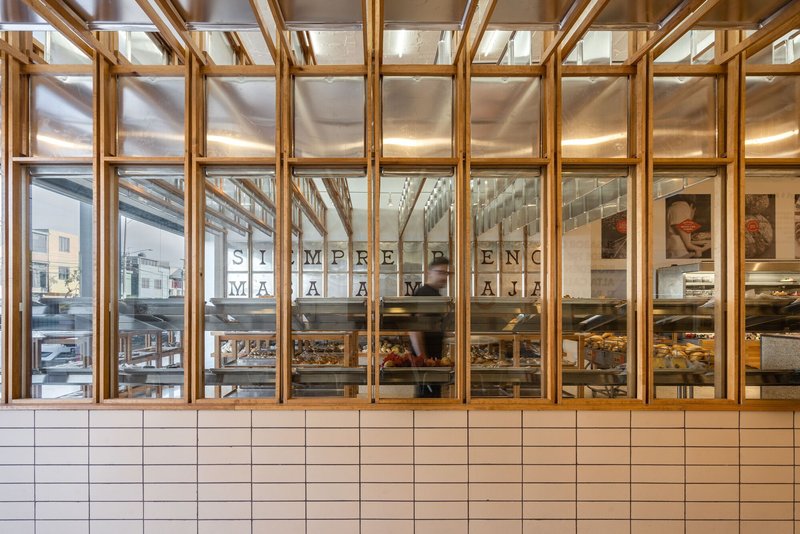
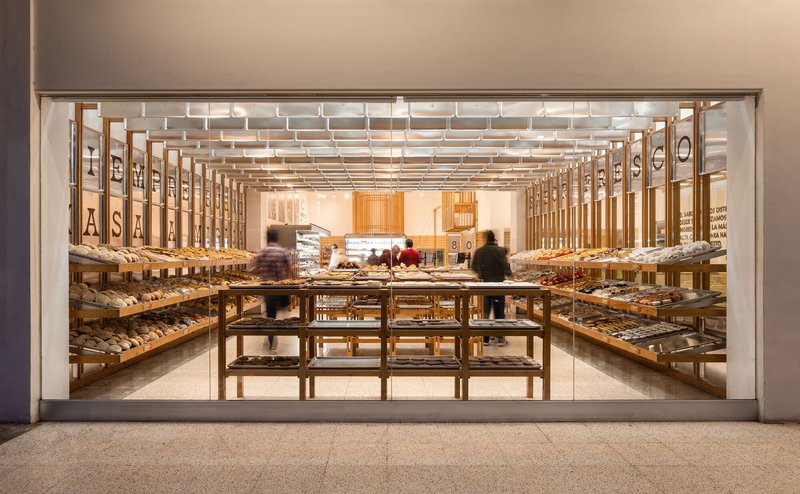
Glass walls on four sides dissolve the boundary between sidewalk and shop, a deliberate move that mirrors the open-door culture of traditional Mexican bakeries. White ceramic tile shingles line the base of the facade, grounding the transparency with a familiar material that reads as both protective and inviting. From the street, you see the bread before you smell it, and the timber canopy visible through the glass pulls you inside like a porch.
The entrance sequence drops you into the center of the space, where the self-serve route begins. This is a break from typical linear retail layouts. Rather than funneling traffic along one wall, the plan radiates outward, encouraging browsing and chance encounters. Lateral access connects the bakery to an adjacent coffee shop, extending the social life of the space without diluting its identity.
A Ceiling Made of Process
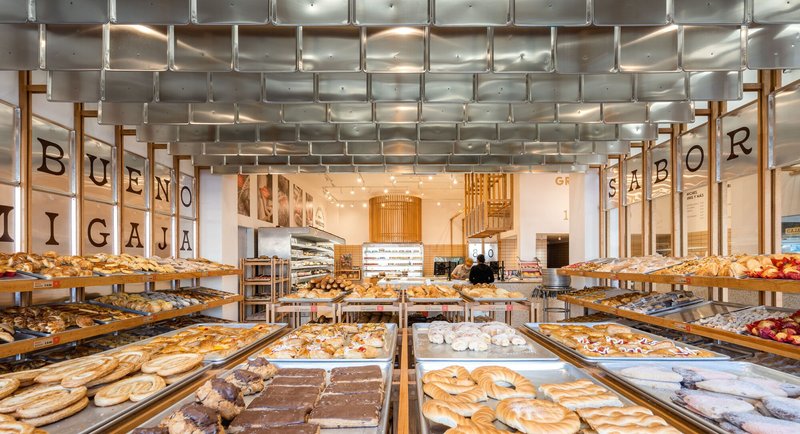
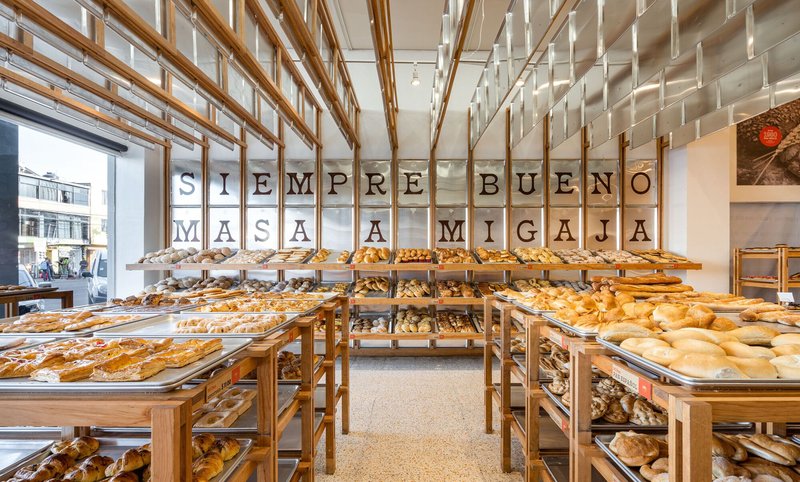
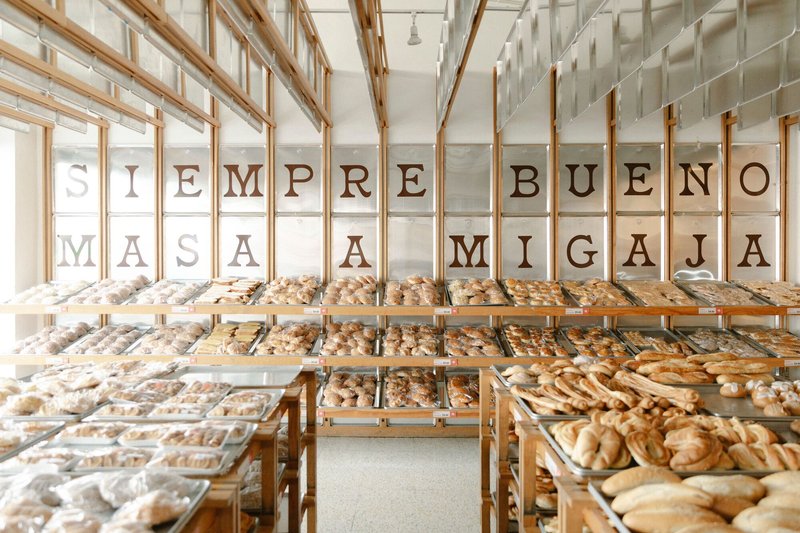
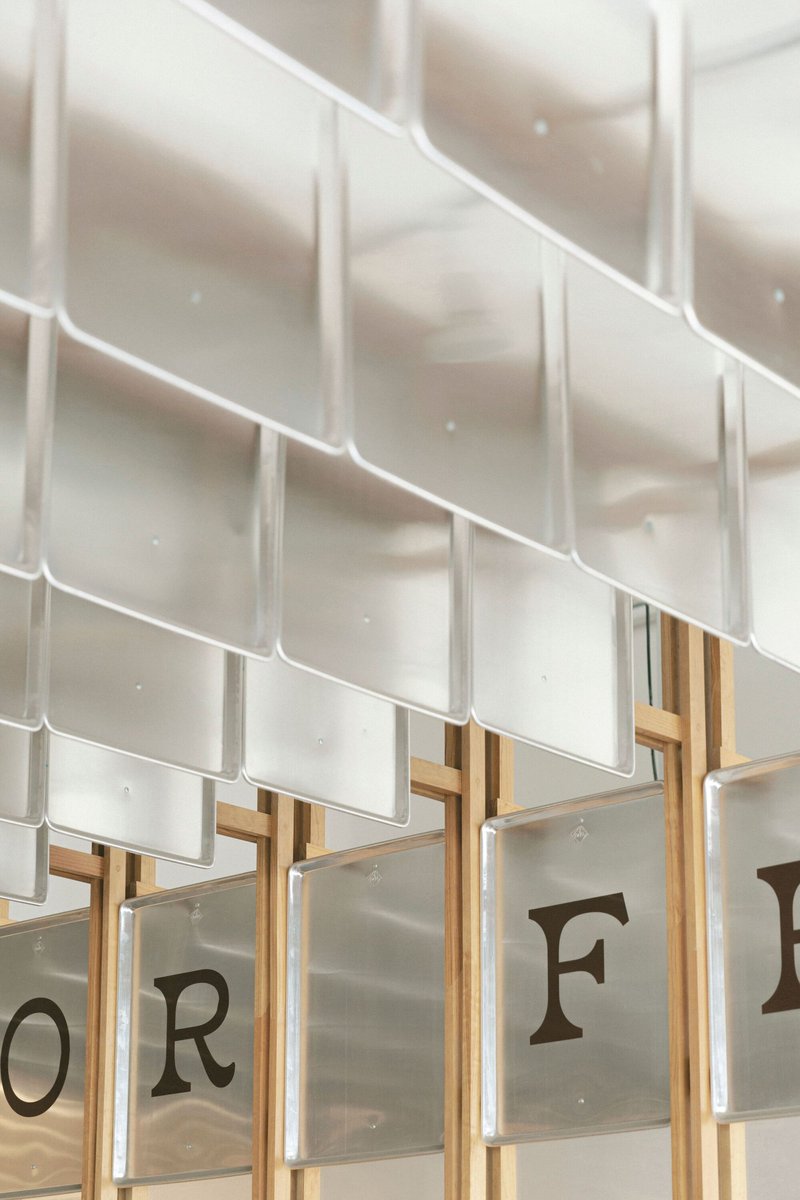
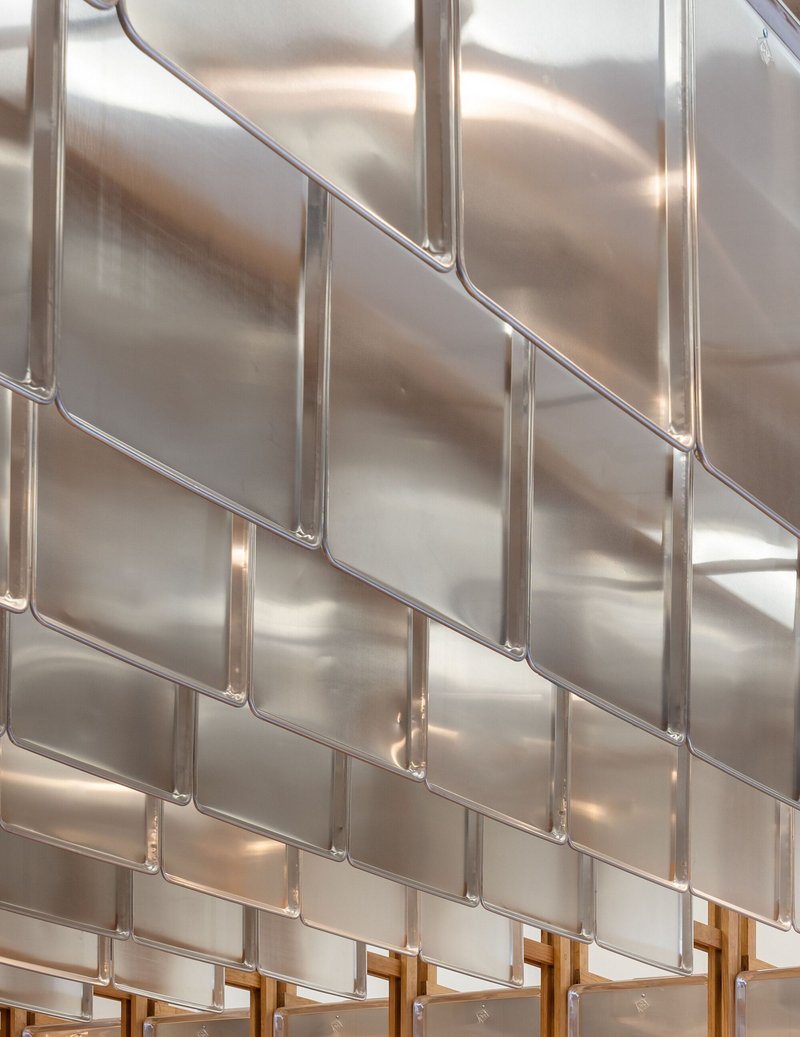
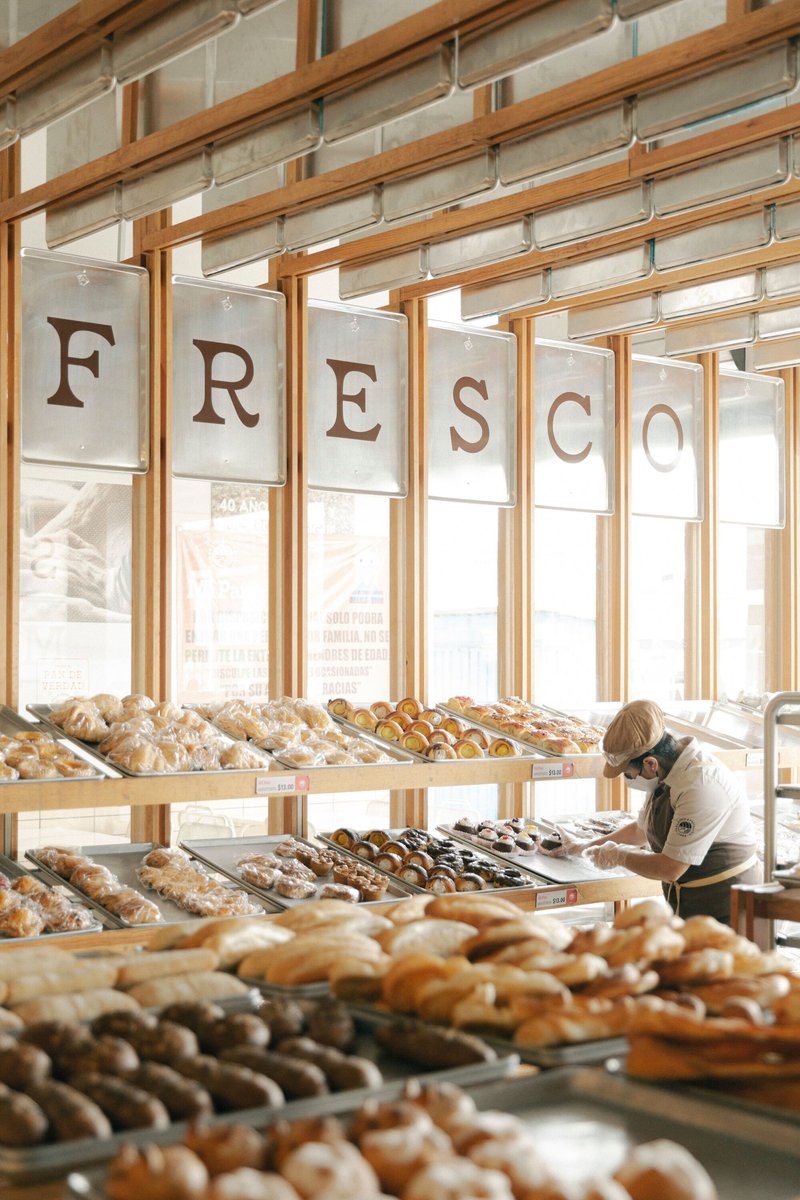
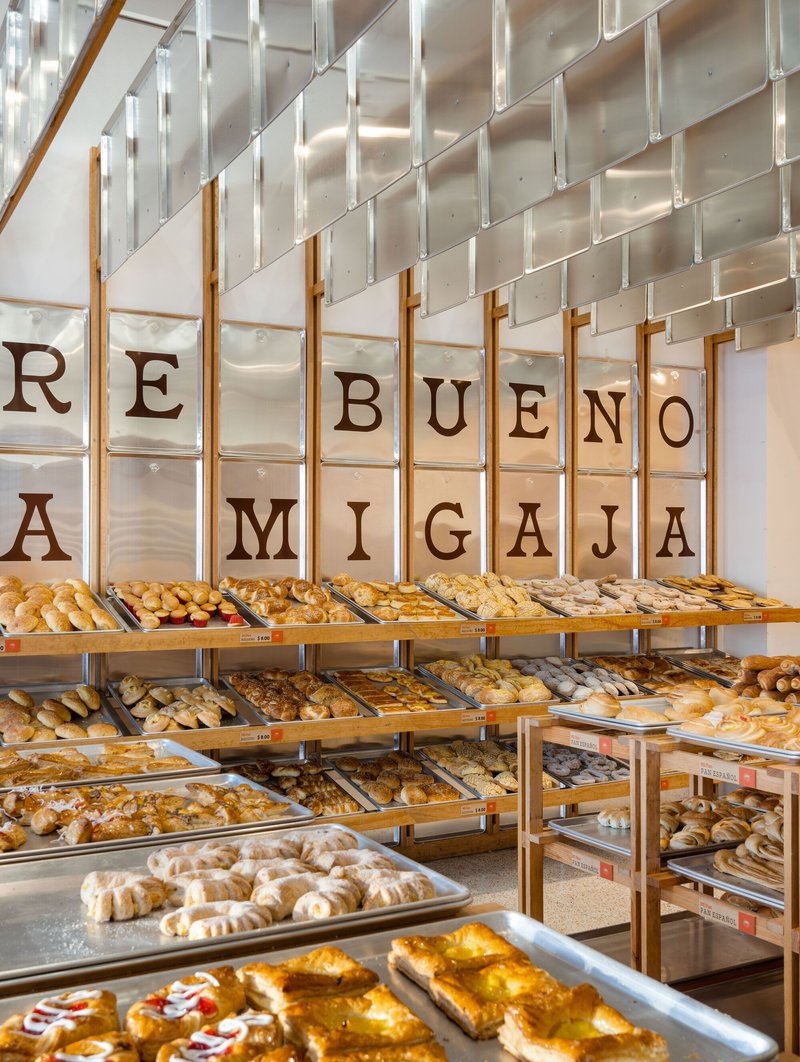
The most striking gesture is overhead. Metallic baking trays, pulled directly from the production line, are suspended in a woven pattern across the ceiling. Each tray bears a hand-painted letter, number, or sign, continuing the tradition of the handmade signage that covers storefronts throughout Mexico City. The trays serve a practical purpose as well: they lower the perceived scale of the interior and bounce ceiling-mounted light into a warm, diffused glow that flatters both the bread and the shoppers.
It is an ode to the bakers themselves, foregrounding the tools of their labor as ornament. The effect is celebratory without being kitsch. You look up and see process, not decoration.
Pinewood Grid and Display Logic
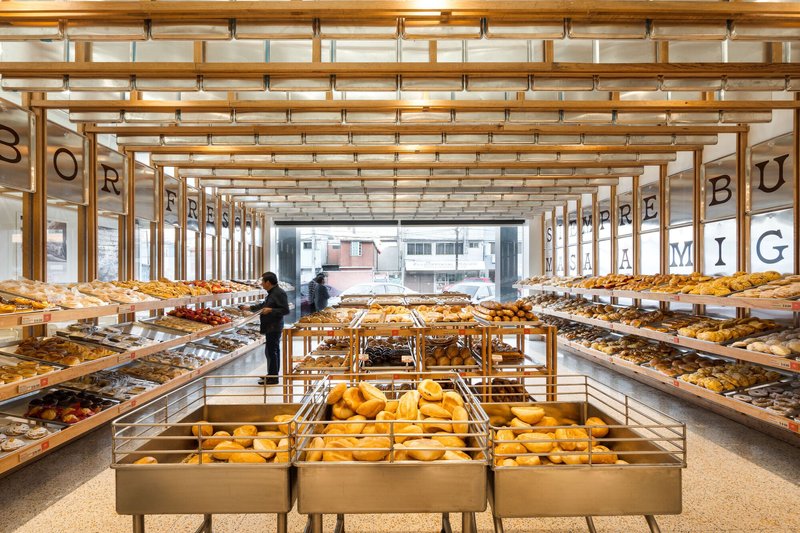
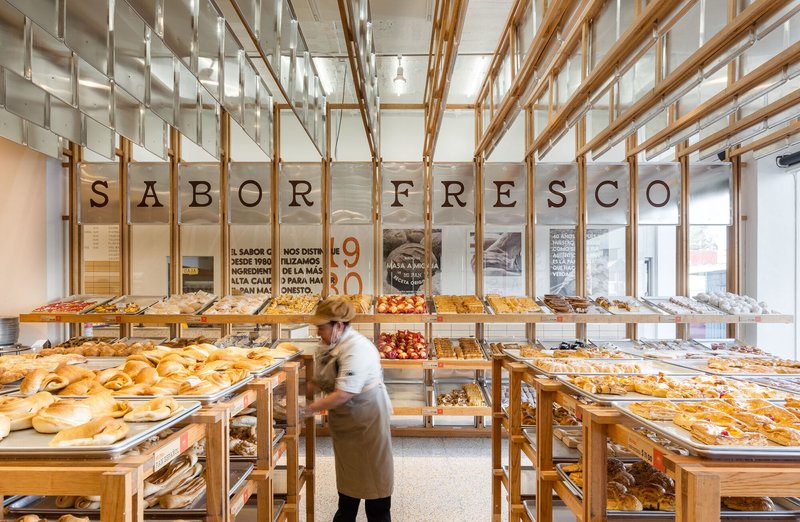
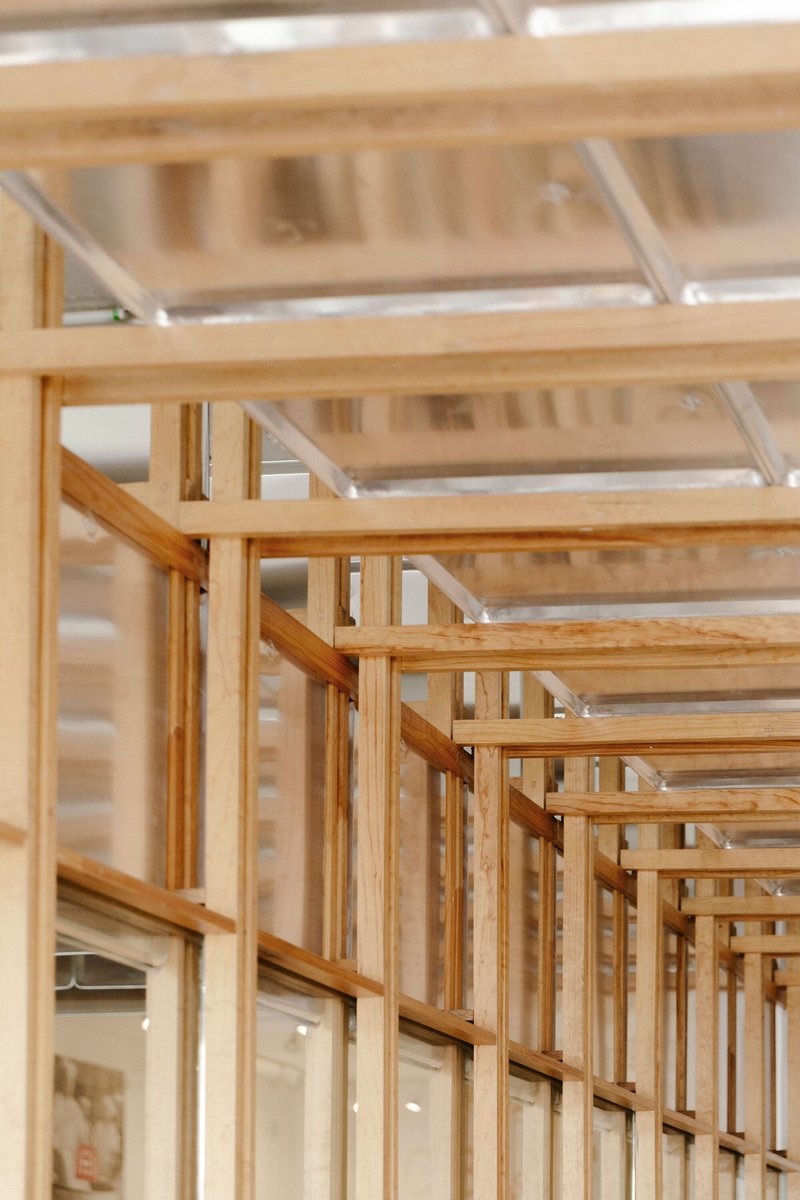
Pinewood boards and shelves do all the heavy lifting in the display system. A structural grid of timber joinery organizes tiered shelves, canopy frames, and translucent screening panels into a single continuous language. The wood is left unfinished and warm, deliberately evoking the back-of-house racks where loaves cool after baking.
Close-up, the joinery reveals a careful layering of boards that allows the framework to accept trays, shelves, and glass panels interchangeably. The system is modular without looking industrial. It reads as furniture scaled up to architecture, which is exactly the point: Concéntrico designed custom metallic furniture inspired by the 1980s-era fittings of local restaurants, the year Mi Pan first opened.
Materiality and Vernacular Detail
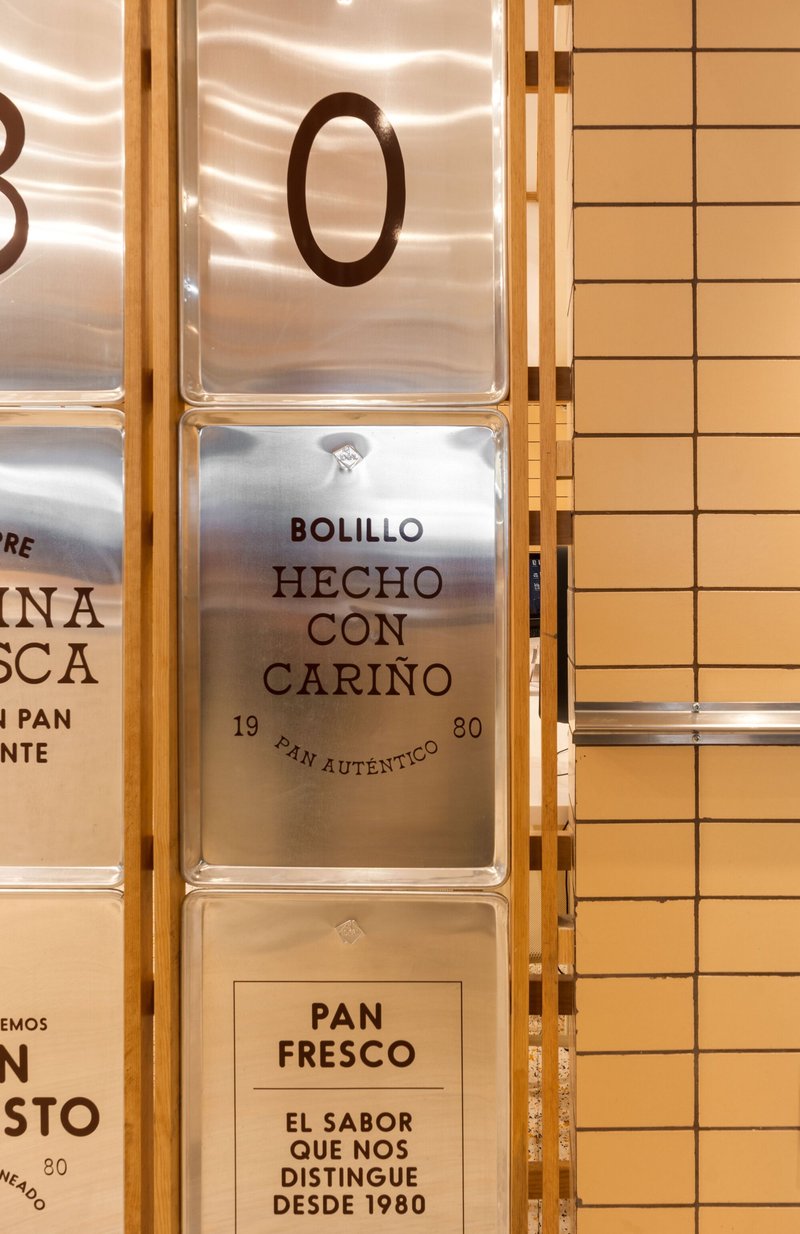
Two material moves ground the project in its neighborhood. First, ceramic tiles laid in an overlapping shingle pattern clad the facade base and interior partitions, threading Mi Pan into the visual language of local shops and supermarkets that use the same material. Second, the terrazzo floor incorporates the brand's signature orange into its aggregate mix, turning the ground plane into a quiet act of identity without a single logo in sight.
Translucent glass panels framed in timber serve as menu boards and spatial dividers. Their herringbone edge channels pick up the geometry of the tile shingles, creating a visual rhyme between opaque and translucent surfaces. These are small details, but they accumulate into a coherent atmosphere where every material choice refers back to the street context or the baking process.
The Dining Side
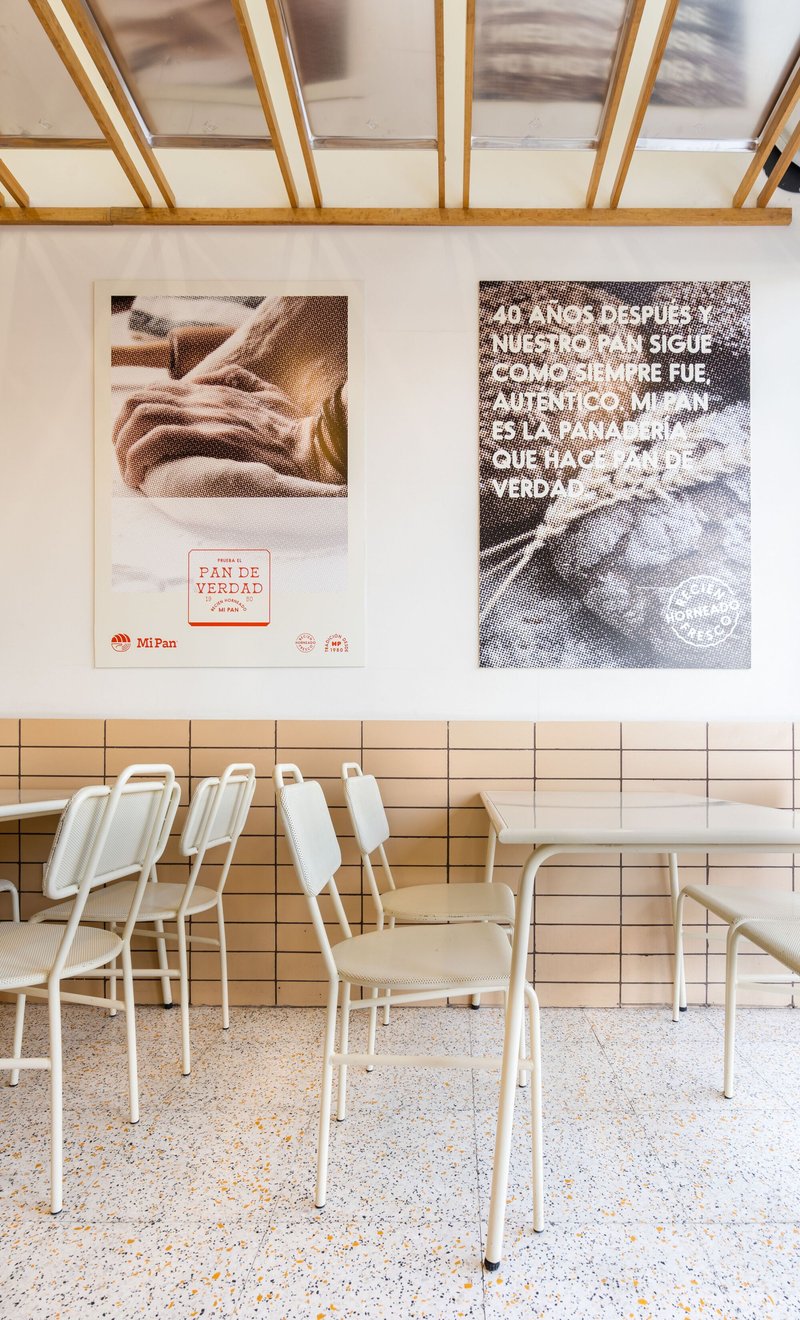
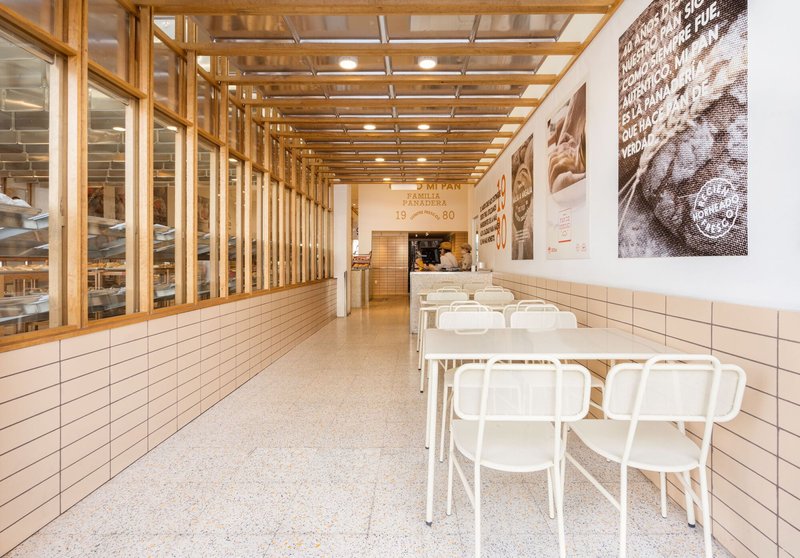
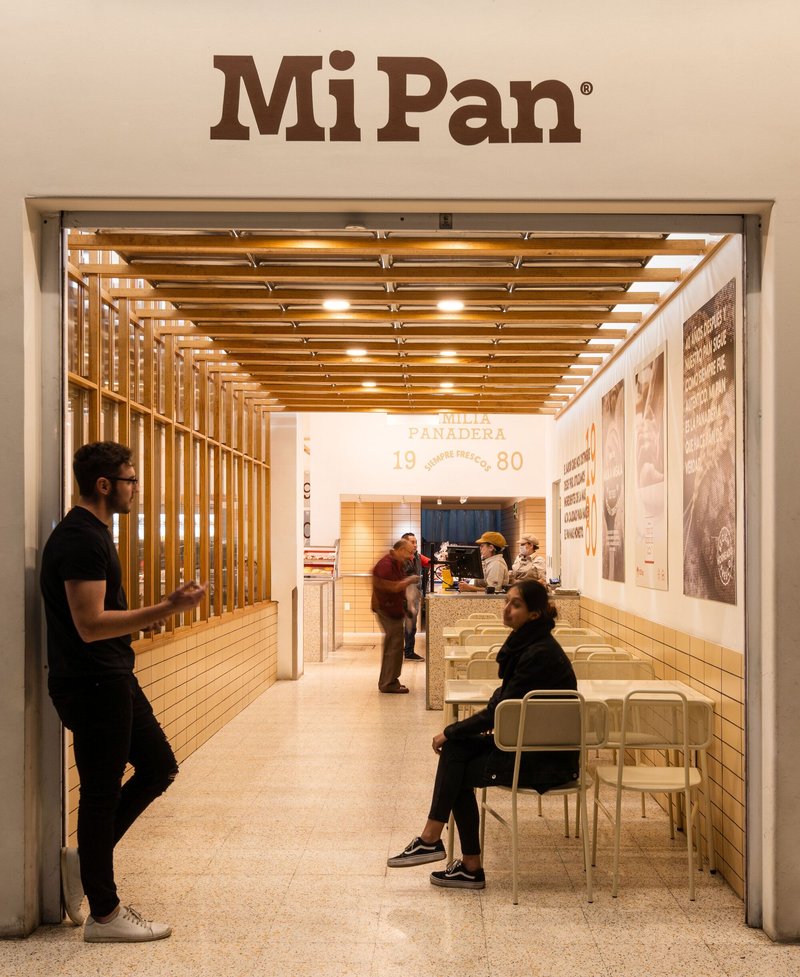
A timber slat partition wall separates the bakery's self-serve area from a small dining zone where white metal chairs and tables sit beneath the same gridded wood ceiling. Promotional posters on the wall lean into a graphic sensibility drawn from the hand-lettered signage tradition that Concéntrico studied across Mexico City's commercial corridors. The dining area is modest, but its inclusion is significant: it extends dwell time and converts a transactional space into a social one.
The terrazzo floor runs uninterrupted between the two zones, reinforcing their connection. Afternoon light rakes across the display tables and into the seating area, collapsing any sense of hierarchy between buying bread and eating it.
Counter and Canopy
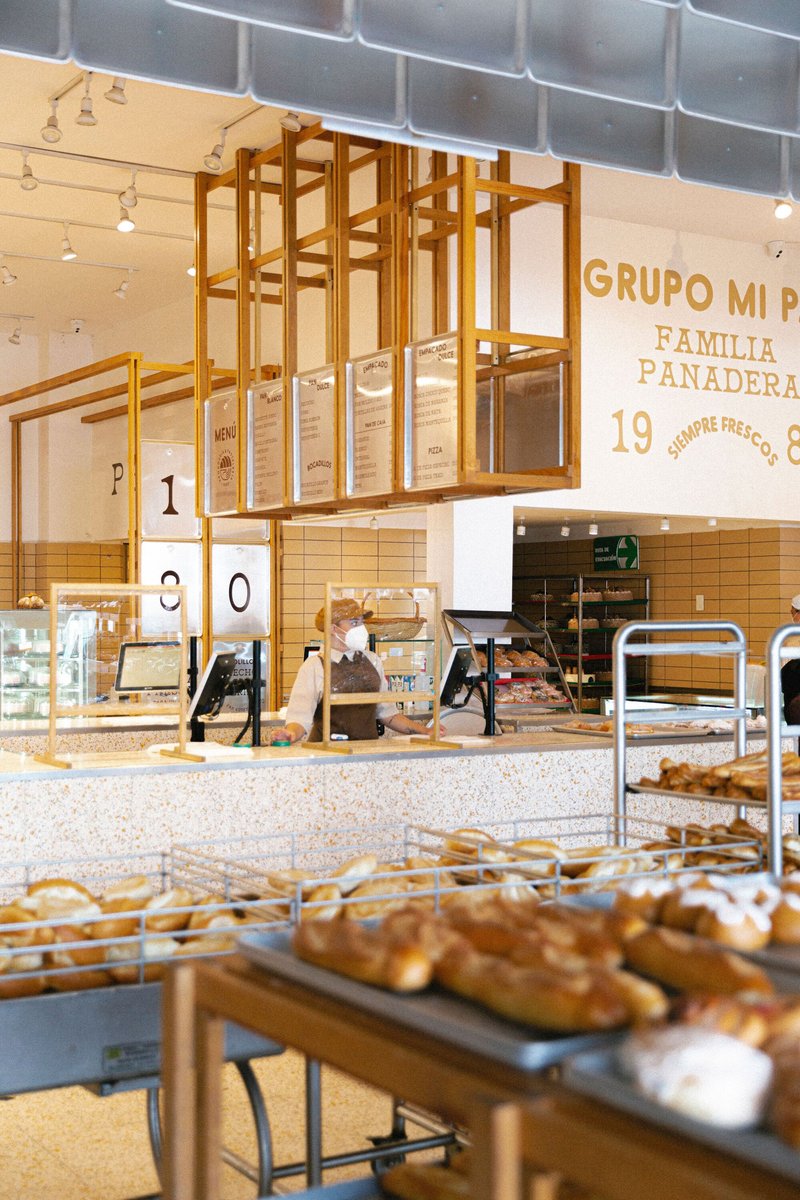
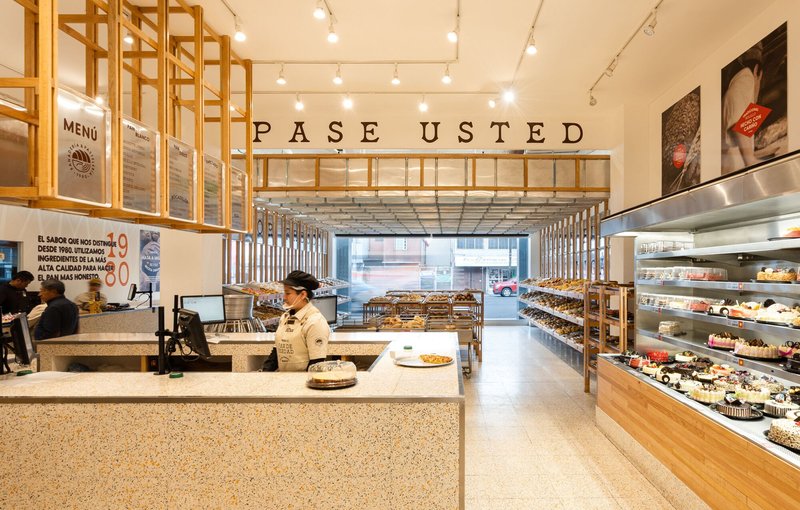
The self-serve route terminates at a checkout counter sheltered by a timber pergola structure that extends toward the street window. The canopy lowers the ceiling over the transaction point, compressing the space just enough to create a sense of arrival. From behind the counter, staff look out through the timber frame toward the street, maintaining a visual connection to the neighborhood even while working.
Tiered shelves along the perimeter stack pastries to eye level, ensuring the full product range is visible from multiple angles. The route from center to counter is intuitive and unhurried, a spatial quality that Concéntrico derived directly from observing how customers navigate traditional bakeries.
Plans and Drawings
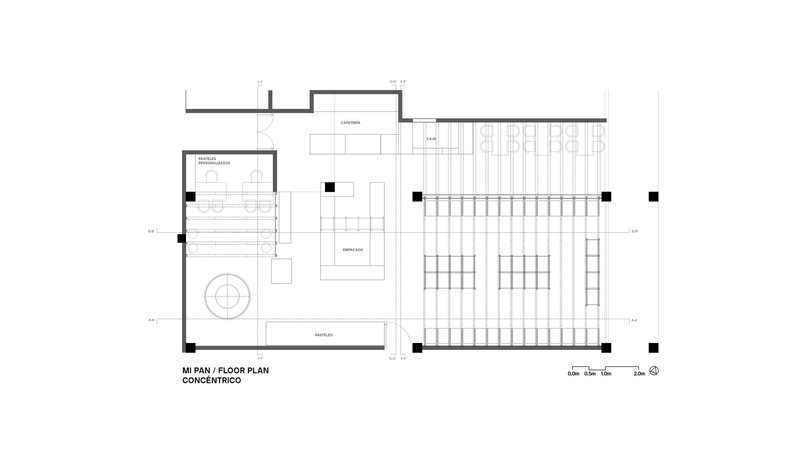
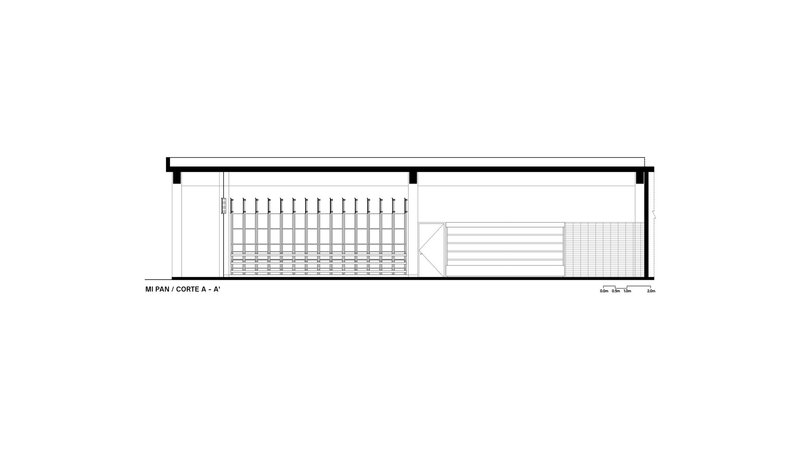
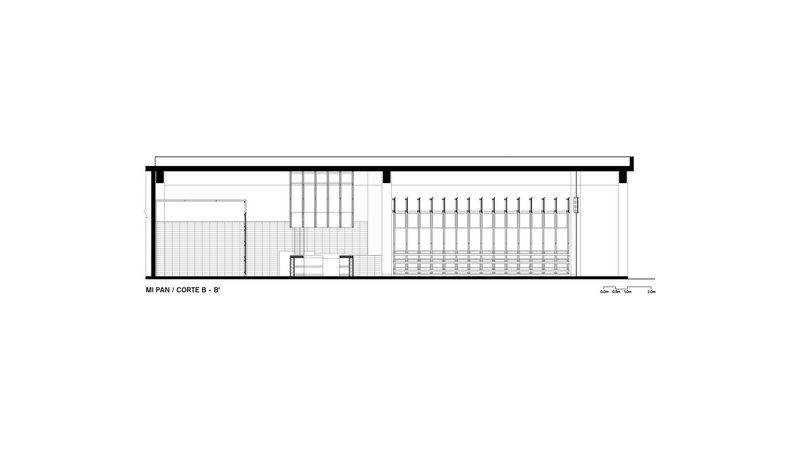
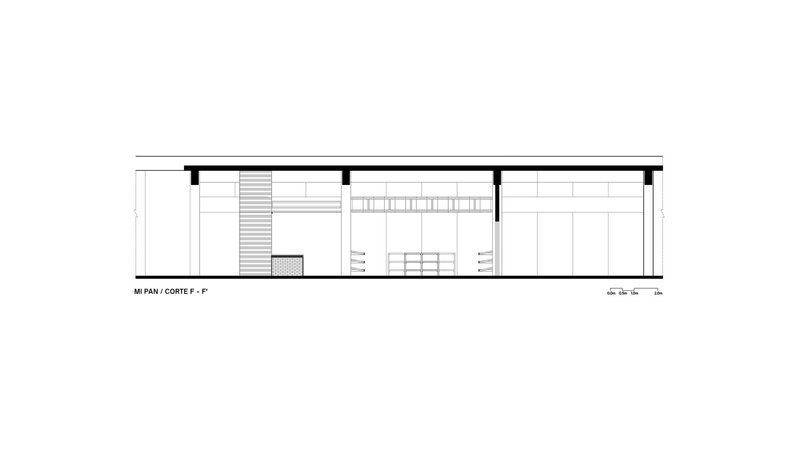
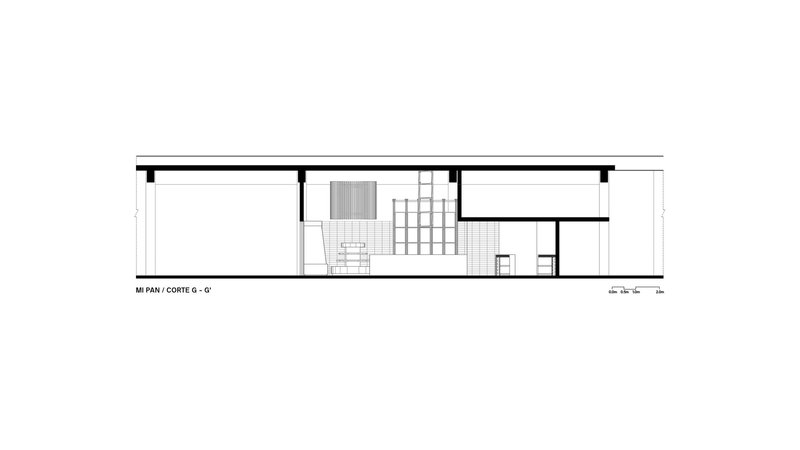
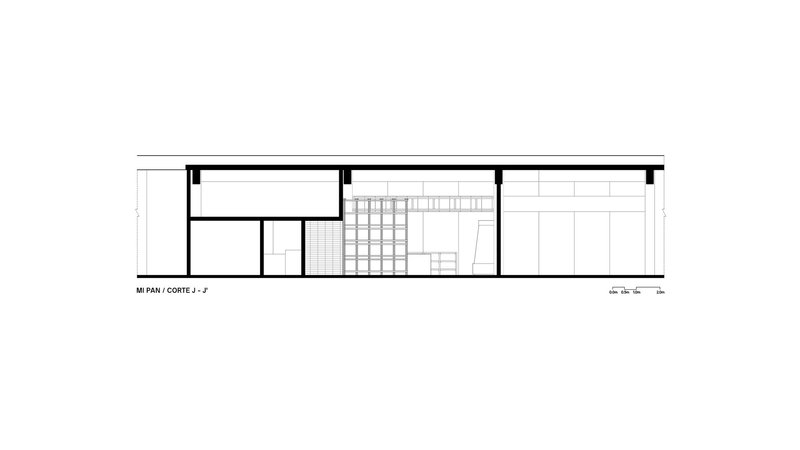
The floor plan confirms the radial logic: a rectangular footprint with an open workspace, central service core, and staircase tucked to one side. Section drawings reveal how the slatted screening elements and varied ceiling heights choreograph the interior. Clerestory openings above partition walls allow borrowed light to pass between zones, while the exposed structural beam reads as an honest spine through the composition.
What the drawings make clear is the project's restraint. The plan is essentially one room with layered subdivisions achieved through furniture-scale interventions rather than full-height walls. The sections show how the timber grid, the suspended trays, and the translucent panels work together to modulate scale without enclosing space.
Why This Project Matters
Retail architecture often operates on the assumption that a brand needs to look different from its surroundings. Mi Pan inverts that logic entirely. Concéntrico studied the visual culture of Mexico City's commercial streets, catalogued the handmade signage, the ceramic tile bases, the metallic furniture of neighborhood restaurants, and then folded all of it back into a design that belongs to its context while elevating it. The bakery does not stand apart from the block; it concentrates the block's identity into a single storefront.
More critically, the project demonstrates that honoring vernacular tradition does not require nostalgia. The baking trays overhead, the orange terrazzo underfoot, and the pinewood grid in between are all drawn from existing processes and materials, but they are assembled with a spatial rigor that makes them feel newly legible. For a bakery with more than four decades of community life behind it, that is exactly the right posture: not reinvention, but recognition.
Mi Pan Bakery, designed by Concéntrico (lead architect Alejandro Peña Villarreal), Mexico City, Mexico. Completed in 2021. Photography by Apertura Arquitectónica.
About the Studio
Share Your Own Work on uni.xyz
If projects like this are the kind of work you want to make, uni.xyz is a place to publish your own, find collaborators, and enter design competitions.




Popular Articles
Popular articles from the community

Stanton Architects Sculpts a Curving Family Home into Sydney's Inner West Fabric
Five Dock House uses cantilevers, curved concrete, and layered courtyards to carve out privacy on a tight suburban lot in Sydney.
Inside a Timeless Mumbai Residence by Aether Studio
Aether Studio's 2,250 sq ft apartment in Malad, Mumbai uses marble, brass, boucle, and disciplined restraint to build a quiet retreat from the city.
Kaffeebühnen: Coffee Shop Architecture Designed as a Civic Stage Between Vienna’s City and Park
Kaffeebühnen turns coffee shop architecture into a civic stage, linking Vienna’s park edge, urban life, warm timber yards, and coffee craft.
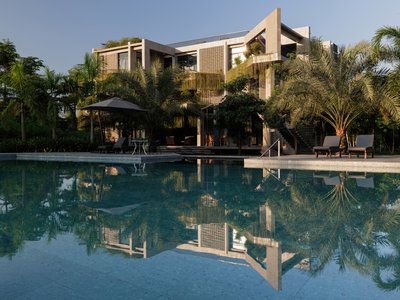
Reincarnation Weaves a Three-Story Retreat into the Green Landscape of Rural Bangladesh
Ara Manor in Narsingdi dissolves the line between domestic architecture and its lush surroundings through screens, courtyards, and planted rooftops.

Similar Reads
You might also enjoy these articles

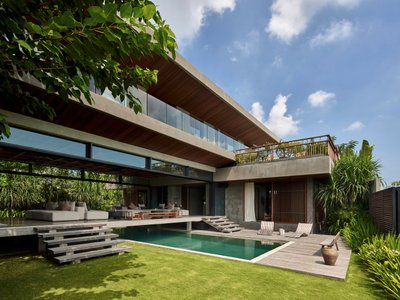
Freebird Residence by Alexis Dornier: A Tropical Modernist Sanctuary in Bali
Floating living pavilion above pool anchors H-shaped tropical villa, blending Japanese minimalism, sustainable strategies, lush landscape, and sculptural interiors.
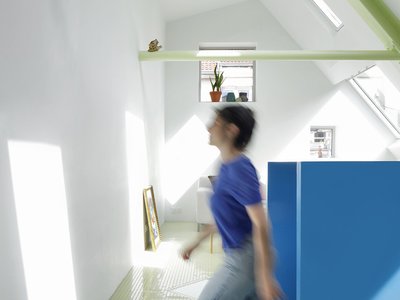
127af Flips a Tiny Bagnolet Rowhouse Upside Down with a Handcrafted Roof Extension
A 55-square-meter terraced house on the edge of Paris gains a luminous upper living floor through lightweight timber and steel.
1.61 Design Workshop Wraps a 600-Square-Meter Café in Vietnam in Sculptural Burgundy Drama
Reden Café & Bistro pairs a helical staircase, mosaic floors, and deep red interiors to rethink Vietnamese hospitality space.

The Unbound Brain: A School Shaped by Cognitive Architecture
Cylindrical learning pods radiate like neurons from a central cortex, turning the floor plan into a spatial model of human thought.


Explore Interior Design Competitions
Discover active competitions in this discipline




The Global Benchmark for Architecture Dissertation Awards


Challenge to design luxury tourism on rails


VR headsets Storefront design competition

Designing a staircase for a client
Comments (0)
Please login or sign up to add comments
No comments yet. Be the first to comment!