
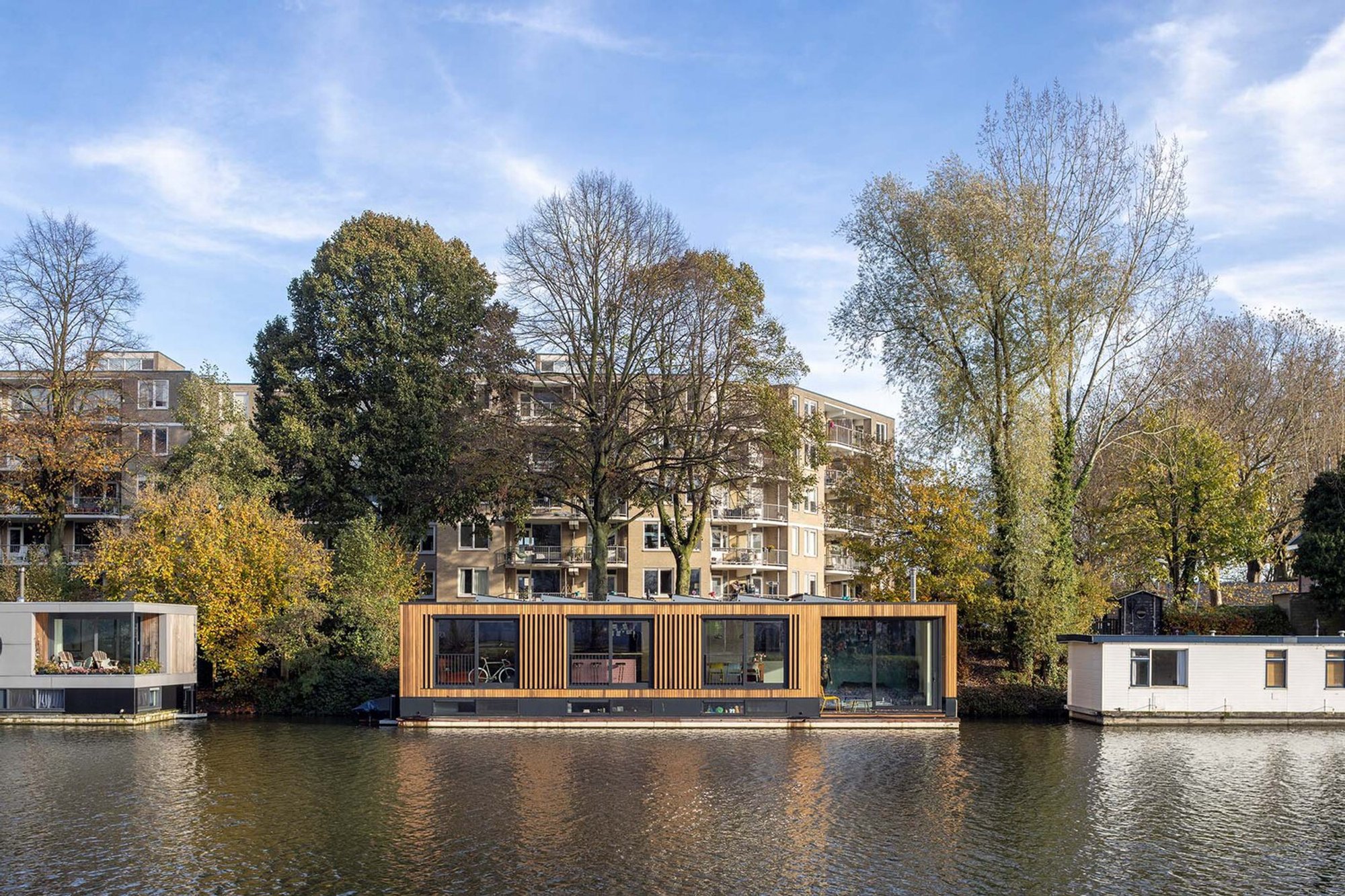
Contemporary Houseboat Living in Utrecht by EVA architecten
Contemporary Utrecht houseboat blends open-plan living, sustainable design, warm interiors, and strong indoor-outdoor connection with water and greenery.

Designed by EVA architecten, this contemporary houseboat in Utrecht redefines sustainable waterfront living through innovative spatial design and a strong indoor-outdoor connection. Located along the Merwedekanaal in Rivierenwijk, the project blends modern architecture with natural surroundings, creating a serene residential experience on water.
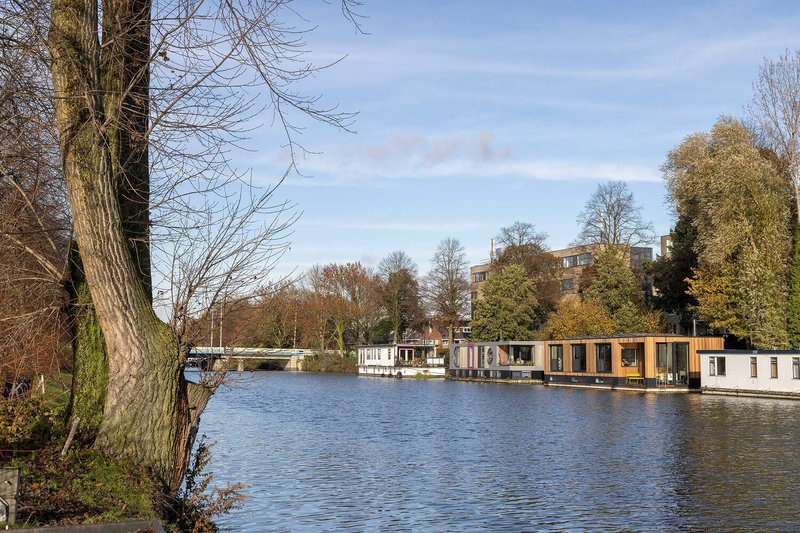
Architectural Concept: Openness and Connection to Nature
The design emphasizes openness toward the canal while maintaining a more private and intimate relationship with the green shoreline. Large openings and expansive glazing maximize views and natural light, reinforcing the connection between water, architecture, and landscape. The houseboat’s bold visual identity is defined by a dark aluminum base, vertical wooden slats, and sleek black window frames, creating a refined yet robust exterior aesthetic.
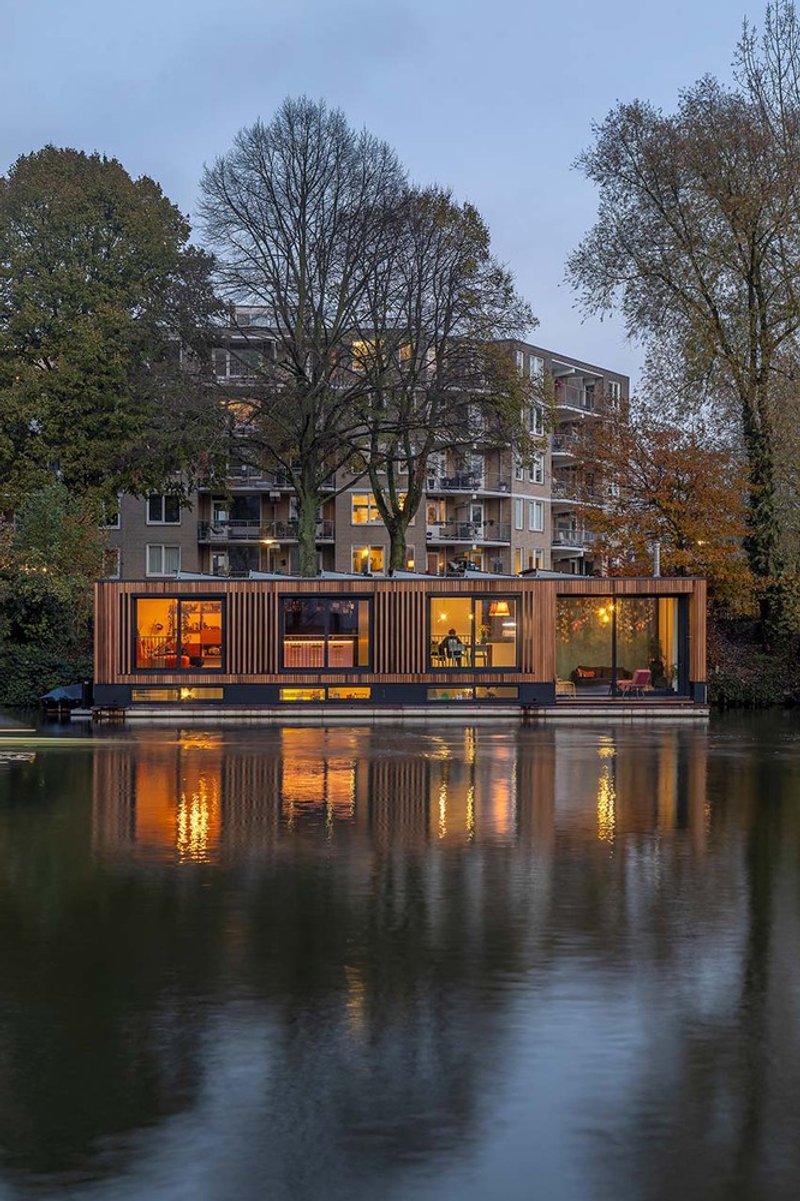
Spatial Organization and Interior Design
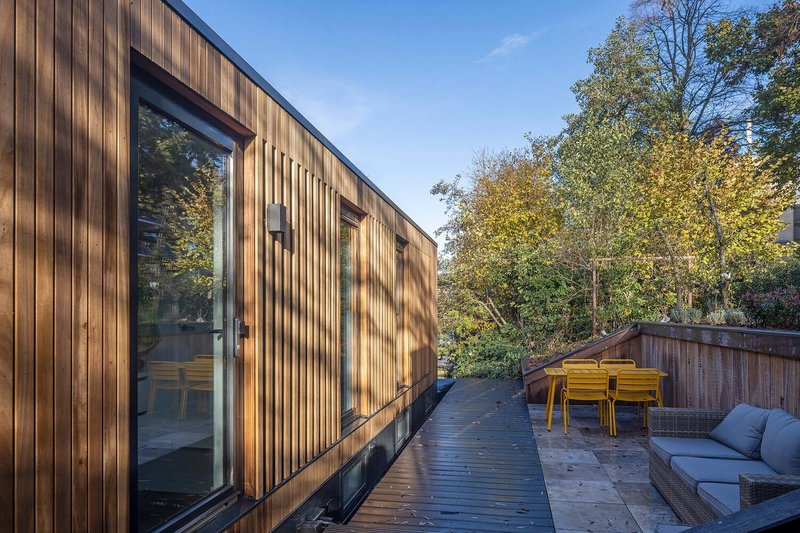
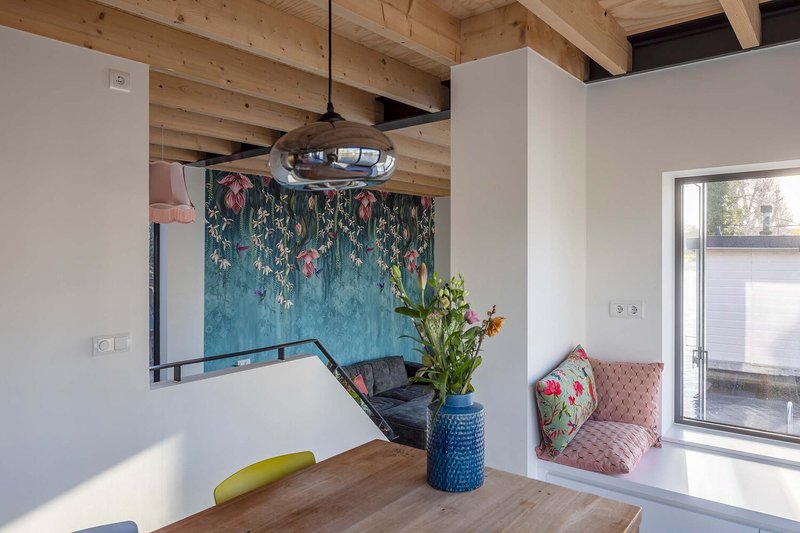
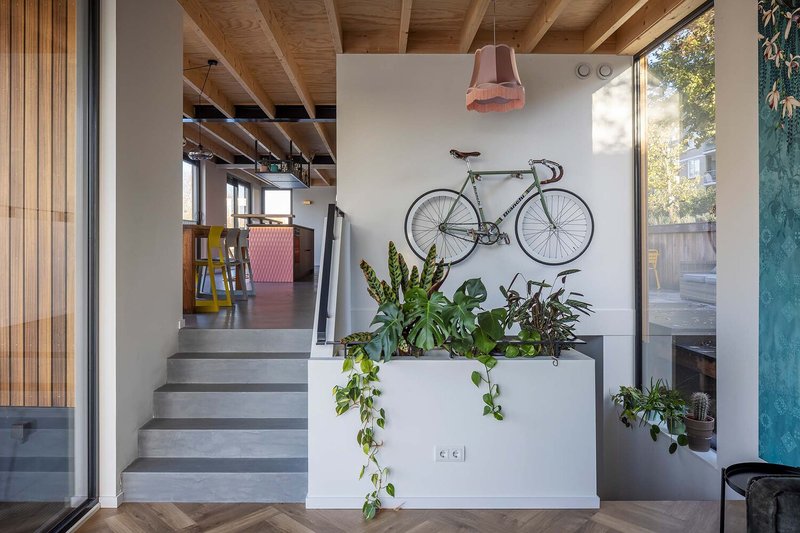
The first floor features an open-plan layout that seamlessly connects living, dining, and kitchen spaces. Large sliding doors open onto a waterside terrace, extending the living area outward. Subtle level differences and a central core help define functional zones while maintaining spatial fluidity. Sliding partitions allow flexibility, transforming open areas into more intimate spaces when needed.
A deep seating niche integrated into the façade enhances interaction with the outdoors, offering a cozy space that frames canal views. The interior palette is characterized by light tones and natural materials, complemented by an exposed wooden ceiling that adds warmth and texture to the minimalist design.
Lower Level: Light-Filled Living Below Water
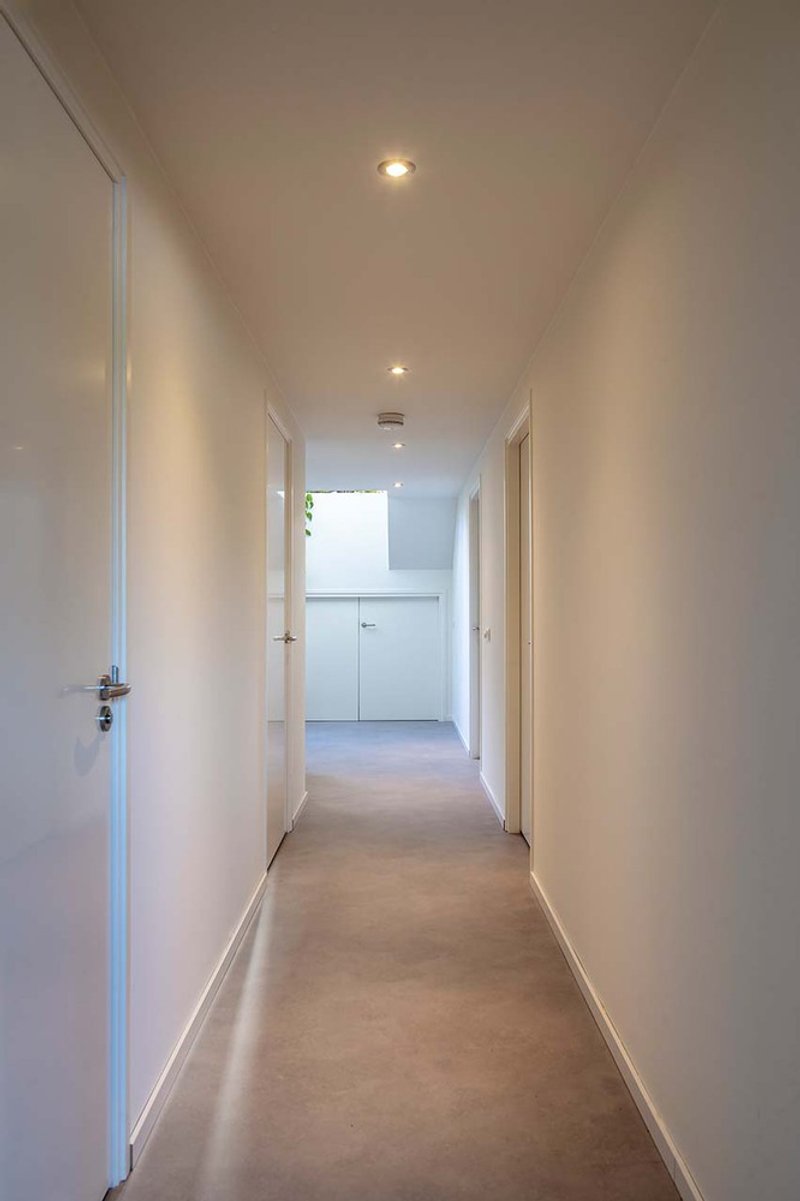
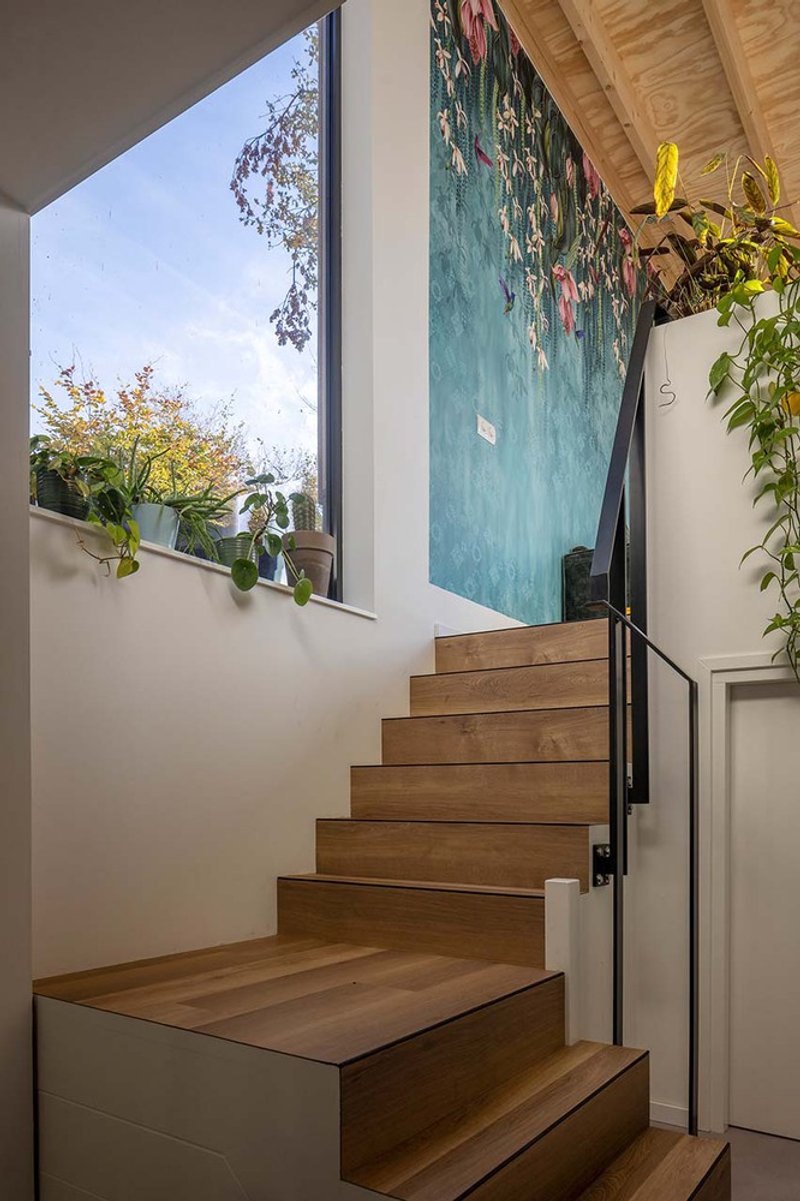
Below the waterline, the lower level is designed to maximize natural light through a large window adjacent to the stair void. This level accommodates three bedrooms, two bathrooms, a technical room, and generous storage space. An integrated architectural planter within the void introduces greenery into the interior, enriching the living environment and reinforcing biophilic design principles.
Sustainability and Energy Efficiency
Sustainability is central to the project’s design strategy. Solar panels installed on the roof generate renewable energy, reducing the home’s environmental footprint. The white roofing material minimizes heat absorption, improving thermal comfort. Underfloor heating on the main level and energy-efficient electric heaters below ensure a comfortable indoor climate year-round.
Materiality and Atmosphere
The combination of natural wood, neutral tones, and clean architectural lines creates a calm and inviting atmosphere. The interplay between robust exterior materials and soft interior finishes reflects a balanced approach to modern residential design, where durability meets comfort.
A Model for Modern Floating Homes
This houseboat by EVA architecten exemplifies contemporary floating architecture, integrating sustainability, spatial flexibility, and strong environmental connections. It stands as a forward-thinking model for modern houseboat living in urban waterfront contexts.
All photographs are works of
Luuk Kramer




Popular Articles
Popular articles from the community

Paco Oria Estudio Rebuilds a 1949 Valencian Town House Around Timber, Terracotta, and a New Interior Patio
In Godella, Spain, a semi-detached house from the postwar era is stripped to its party walls and rebuilt with wood and ceramics.
Goldstein Heather Doubles a Victorian Terrace in West London with a Four-Storey Lateral Extension
A 244 square metre addition in Stamford Brook transforms a narrow end-of-terrace house into a 500 square metre family home of sculpted arches and daylight.
Studio Gram Unfurls a Concrete Curve Through an Adelaide Queen Anne Villa
In Rose Park, a billowing concrete threshold stitches a century-old house to a sun-chasing pavilion organized around an existing pool.

Biophilic Architecture and Regenerative Stadium Design: Biophilia Lagos by Rachel George
A regenerative stadium in Lagos transforms landfill into a living ecosystem through biophilic architecture, waste reuse, and environmental healing.


Similar Reads
You might also enjoy these articles
Studio Gram Unfurls a Concrete Curve Through an Adelaide Queen Anne Villa
In Rose Park, a billowing concrete threshold stitches a century-old house to a sun-chasing pavilion organized around an existing pool.
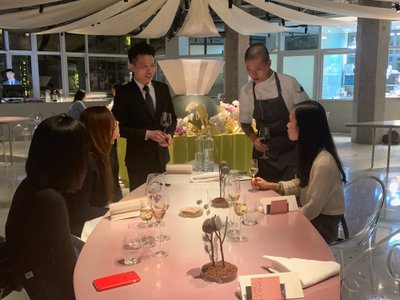
Meyer-Grohbrügge Designs a Beijing Restaurant That Doubles as a Flower Studio by Day
Nine petal-shaped tables orbit a central fountain inside a hotel atrium in Beijing's Chaoyang district, shifting from florist to fine dining.
Paco Oria Estudio Rebuilds a 1949 Valencian Town House Around Timber, Terracotta, and a New Interior Patio
In Godella, Spain, a semi-detached house from the postwar era is stripped to its party walls and rebuilt with wood and ceramics.
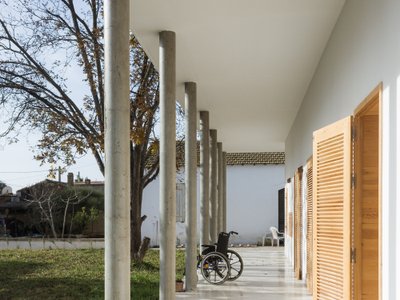
Atelier Messaoudi Architects Builds a Colonnaded House in Algeria for Aging Parents
A single-storey concrete home in Tipasa wraps accessibility, climate control, and Algerian family life into one quiet colonnade.

Explore Architecture Competitions
Discover active competitions in this discipline




The International Standard for Design Portfolios


The Global Benchmark for Architecture Dissertation Awards


The Global Benchmark for Graduation Excellence


Challenge to reimagine the Iron Throne
Comments (0)
Please login or sign up to add comments
No comments yet. Be the first to comment!