

CRATE MART
Rehabilitating Retail Post Covid

● What was the concept behind the project?
The concept behind our design revolves around REHABILITATION of the supermarket retail post pandemic. The regular shoppers now are wary of going to markets due to the highly contact based nature and largely enclosed environment of retail. The design is an architectural and technological exploration that enables a safer environment for the customers while also redefining one’s supermarket experience, welcoming them back to shop. The design is conceived to be modular in nature which further enables flexible construction and arrangements.
● What was the intent behind the organization of elements across various levels (Architectural, Site, Urban)?
The design scheme is located in a neighbourhood market in South Delhi, India. This is to ensure that the local shoppers have greater access to groceries and other day-to-day goods in a safer retail setting.
The internal circulation design focuses on two key phrases, firstly, “Mind the Gap” and, secondly, “Keep to the Left”. The customers are further provided with intermediate circulation options between aisles that decreases the chance of them backtracking through the same aisle and hence maintaining a One-way circulation which reduces the risk of infection.
The various departments within the supermarket are organised internally on the existing principles of retail which maximises sales. The public terrace functions as an outdoor eatery experience that acts as a ‘break’ for the shoppers further enhancing their retail experience.
The entrance and exit to the design are differentiated to ensure minimum overlapping foot traffic which further reduces the risk of infection. The service area and the loading/ unloading docks are located towards the back, hidden from customers’ sight.
● How many iterations were tried to arrive at the final outcome?
A number of iterations were explored that investigated and led to the final outcome. Each iteration resolved issues of circulation, zoning and services.
● Which methods of design investigation?
Virtual 3D models, online research and physical case study of local stores were methods adopted for design investigation.
● How was the programme condensed into final?
The final design was worked out after extensively researching supermarket retail and also the COVID-19 practices that would be essential in creating a safe and efficient retail experience. The idea of a supermarket was expanded with the creation of open spaces at the ground and the terrace levels that provided interaction with nature which expands the idea of supermarkets from a simple “shelf and aisle” system to a more diverse experience. The leftover site area other than the footprint of the design was also incorporated within the retail space by creating temporary stall-like areas for payment, sales, et cetera.
● What/How were the materials chosen?
Steel and Engineered timber have been undertaken as the primary construction materials. The materials chosen are all prefabricated and enable a modular construction. The lightweight nature of these materials also enables larger cantilevers as demonstrated in the design.
● How was a specific objective attempted to be met?
SAFETY
The concept of “REHABILITATION of the supermarket” places major emphasis on safety. Practices including “Mind the Gap” and, “Keep to the Left” are part of ensuring a safe, one-way circulation with separately designed entry and exit points which in turn reduce the risk of infection.
The supermarket design also incorporates contactless payment options for customers along with assisted payment and self checkout options.
The shopping carts are also technically equipped with a display that automatically shows product details as one passes through an aisle which is possible via the RFID chips programmed within the shelves. This practice further reduces contact as customers are not needed to pick up items to investigate product details. After usage, all customers drop their carts at the sanitisation station at the exit where then the cart can be reused by other customers. For customers who do not require carts, they can use their phones for obtaining the product details.
The carts also have a proximity tracker with respect to other carts that informs the customers’ if they are closer to others than the two meter mandate.
CUSTOMISE
The design is handicap friendly with ramps and lifts installed within. The modular nature of the design elements from the interior elements to the structural elements ensures customizability to a great extent which also increases the future adaptability intent of the design.
OPTIMISE
The design scheme is internally modular which enables us to manage shelf distances and proximities. Also, the technology deployed not only aids in ensuring safety, but also ensures a smoother retail experience overall hence making it timeless.
● What is the expansion plan of the project?
Being modular in nature, the project can be expanded in the horizontal dimension. The site chosen is also such that the plot behind the current plot is vacant and can be utilised for future expansion.
● How will the project transform with the passing time?
COVID-19 as a pandemic might end in a few years with the current pace of vaccine rollout but as stated by the WHO, COVID breakouts will still occur in smaller pockets. Keeping these factors in mind, the design scheme is internally modular which enables us to manage shelf distances and proximities. Also, the technology deployed not only aids in ensuring safety, but also ensures a smoother retail experience overall hence making it timeless.



Popular Articles
Popular articles from the community


AL-JANNAH: Sustainable Architecture and Permaculture for Afghan Widows
AL-JANNAH uses sustainable architecture and permaculture to create resilient oasis of housing, learning, work and renewal for Afghan widows.

The Musturak Paradise: Senior Living Architecture for a Connected Future in Temara, Morocco
The Musturak Paradise reimagines senior living architecture in Temara via private homes, social spaces, culture, community, and shared care.

Co-Life: Senior Housing Design That Reconnects Older Adults With the City
Co-Life reimagines senior housing design through healing gardens, shared streets, workshops, and a sustainable community across generations.

The Ocean Hive: Sustainable Architecture for a Self-Sufficient Civilization at Sea
The Ocean Hive imagines sustainable architecture at sea, where modular habitats, algae, wave power and ocean waste sustain a growing colony.
Similar Reads
You might also enjoy these articles

Day and Night Park: A Time-Based Urban Newsstand in Beijing
A temporary urban newsstand in Beijing blending travel, light, and reading through poetic colors, compact form, and community-focused design.

Modernist Patio Renovation in El Masnou, Barcelona by Oliver Segura Arquitectura + Cebrià Arquitectura
Modernist patio renovation blending tradition and innovation with a movable pool, leveled floors, and Catalan materials in El Masnou.

Alto Residencial Coop: Cooperative Housing Development in Santiago de Compostela by Carbajo Barrios Arquitectos
A linear cooperative housing complex blending white volumes and perforated metal façades, enhancing community living, natural light, privacy, and urban integration.
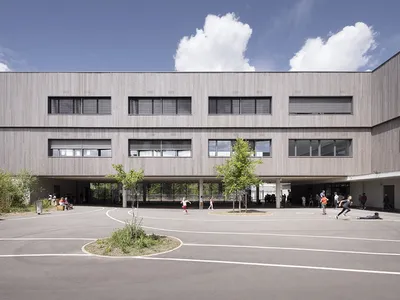
Vil Genis School by BPA ARCHITECTURE – Massy, France
Vil Genis School in Massy, France, features sustainable design, south-facing classrooms, community integration, accessible spaces, and modern educational architecture.

Explore Reclaimed Space Competitions
Discover active competitions in this discipline




Challenge to reimagine the Iron Throne


Photograph architecture without architects


Illustrate the lost glory of Angkor Wat - Render Challenge


Design challenge to reuse E-waste
Comments (0)
Please login or sign up to add comments
No comments yet. Be the first to comment!