
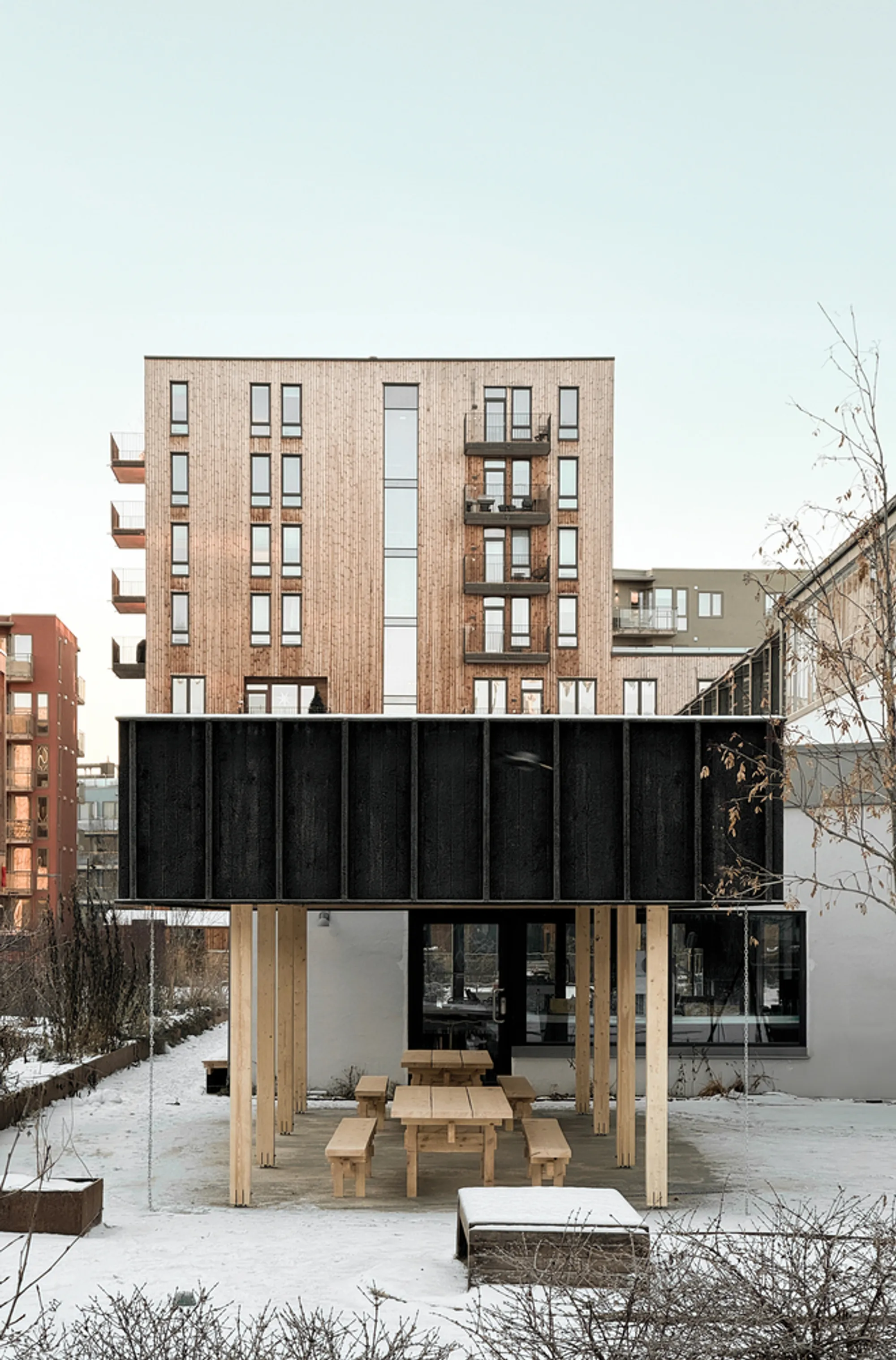
Credo Pavilion by Fuse Arkitekter: NTNU: A Sustainable Timber Landmark in Trondheim
A sustainable timber pavilion blending Norwegian and Japanese craftsmanship, enhancing Credo’s backyard with open communal space, durable Yakisugi wood, and elegant structural clarity.


The Credo Pavilion, designed by Fuse Arkitekter in collaboration with NTNU, stands as a compact yet expressive architectural addition to the backyard of Trondheim’s famed Credo restaurant. Known as the first restaurant in the world to receive the Michelin Guide’s Green Star for exceptional sustainable practices, Credo’s environmental ethos forms the foundation for this project. The new 40-square-meter pavilion transforms a previously unused backyard into a welcoming communal space, enhancing social, educational, and culinary activities while reinforcing the restaurant’s ongoing dedication to sustainability, local materials, and traditional craftsmanship.
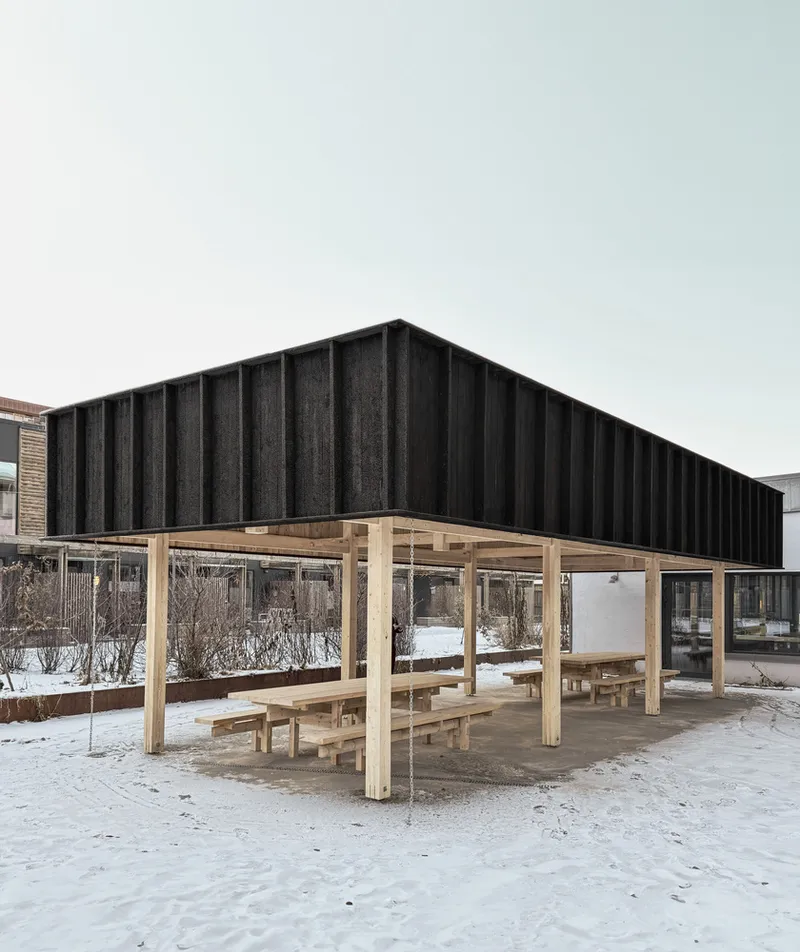
Redefining an Urban Backyard into an Open, Inclusive Public Realm
The main intention behind the Credo Pavilion was to create a more open and inclusive environment for neighbors, guests, and visitors. Through subtle spatial interventions, the design reshapes the outdoor dining and service area into a warm enclave that visually and physically opens to its surroundings. Clear structural lines and meticulous detailing allow the pavilion to blend effortlessly into its context, creating a fluid transition between the restaurant’s interior atmosphere and the newly activated outdoor courtyard.
The design supports multiple uses, from intimate dinners to large events and educational gatherings, positioning the pavilion as a flexible and community-oriented extension of the Credo philosophy.
Architectural Concept and Sustainable Design Approach
The Credo Pavilion responds to its setting through four core design strategies that guide the architectural expression. First, the pavilion frames the backyard, creating defined yet permeable edges for social use. Second, the spatial configuration ensures unobstructed movement across the site, maintaining the backyard as a dynamic circulation zone. Third, the structural rhythm harmonizes with the proportions and façade cadence of the existing restaurant building. Finally, the project emphasizes design for disassembly, allowing the structure to be relocated, repurposed, or adapted as future needs evolve, a key principle in circular construction.
These strategies collectively support an architecture that is lightweight, adaptable, and environmentally responsible, enhancing the experiential qualities of the courtyard while minimizing long-term material footprint.
Craftsmanship Rooted in Norwegian and Japanese Timber Traditions
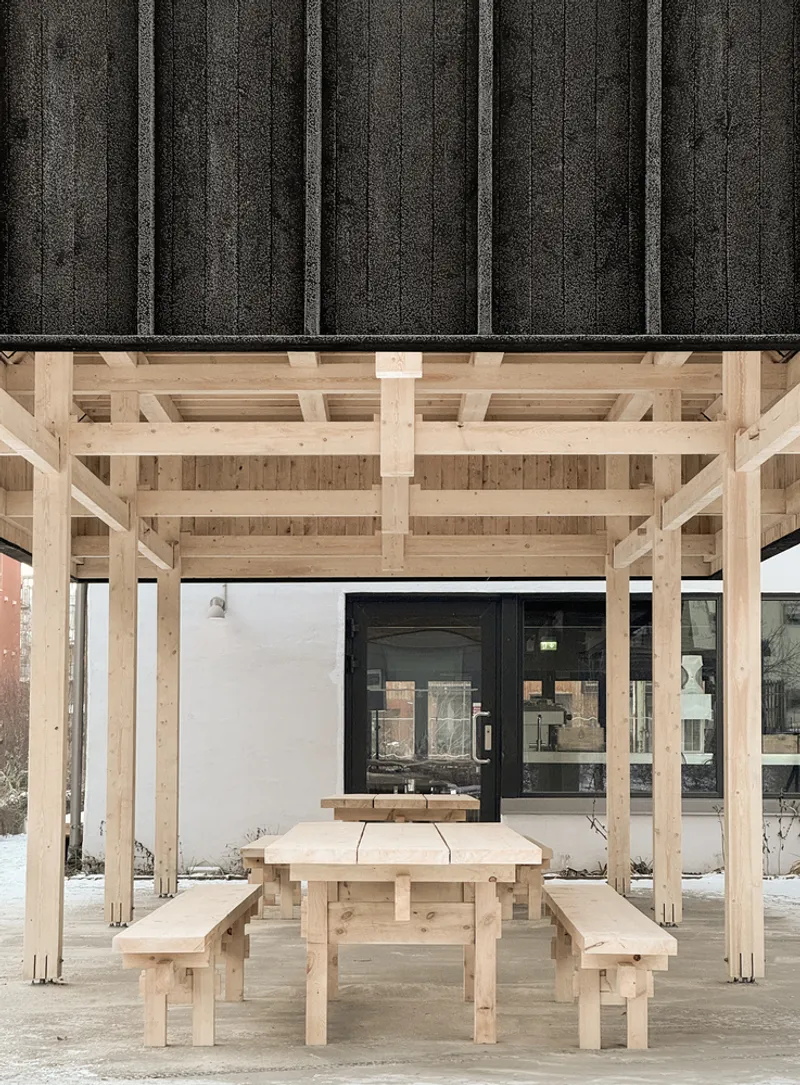
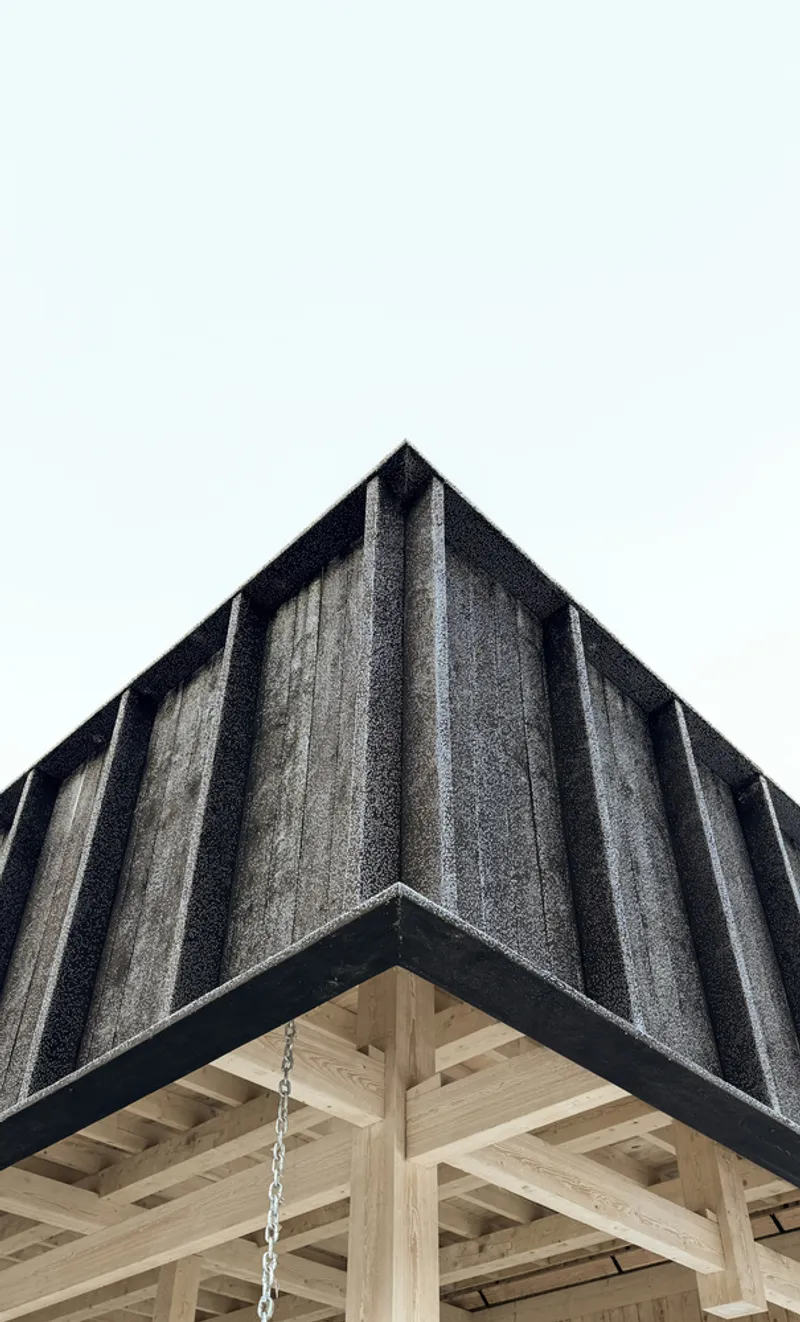
Constructed exclusively from locally sourced spruce and pine, the pavilion celebrates regional timber culture while drawing from centuries-old building knowledge. The structural system is based on the traditional Norwegian "Grindbygg" method, where “grind” and “stavlægje” components form a robust yet elegant timber grid. The design also references Japanese carpentry; each grind is assembled using nuki joints secured by hardwood wedges, echoing the construction techniques of Torii gates.
By placing the bracing within the roof, the architects maintain a fully open and transparent structural expression below, enhancing visual continuity across the courtyard. This clarity reveals both the logic of the construction and the beauty of the exposed wood elements.
To protect the timber from Trondheim’s harsh and fluctuating climate, the architects employed the traditional Japanese Yakisugi method. A gentle charring of the wood surface increases durability while imparting a textured, rustic aesthetic that complements Credo’s material palette and the site’s historic culinary atmosphere.
Holistic Material Expression Through Custom-Designed Furniture
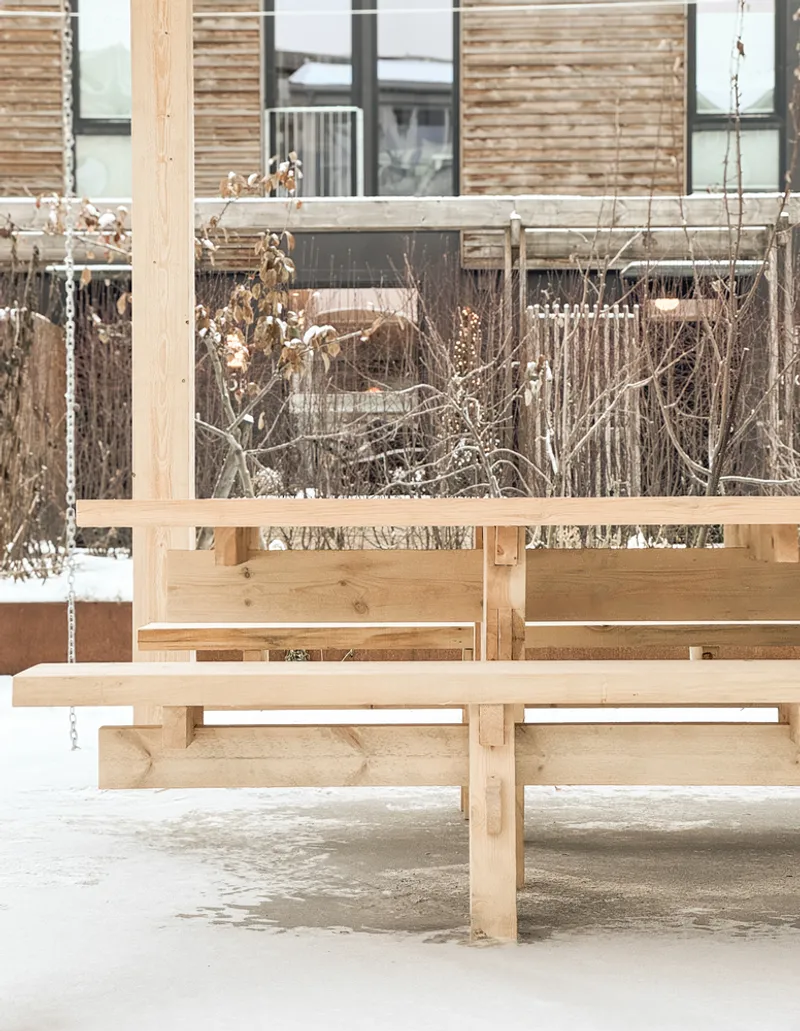
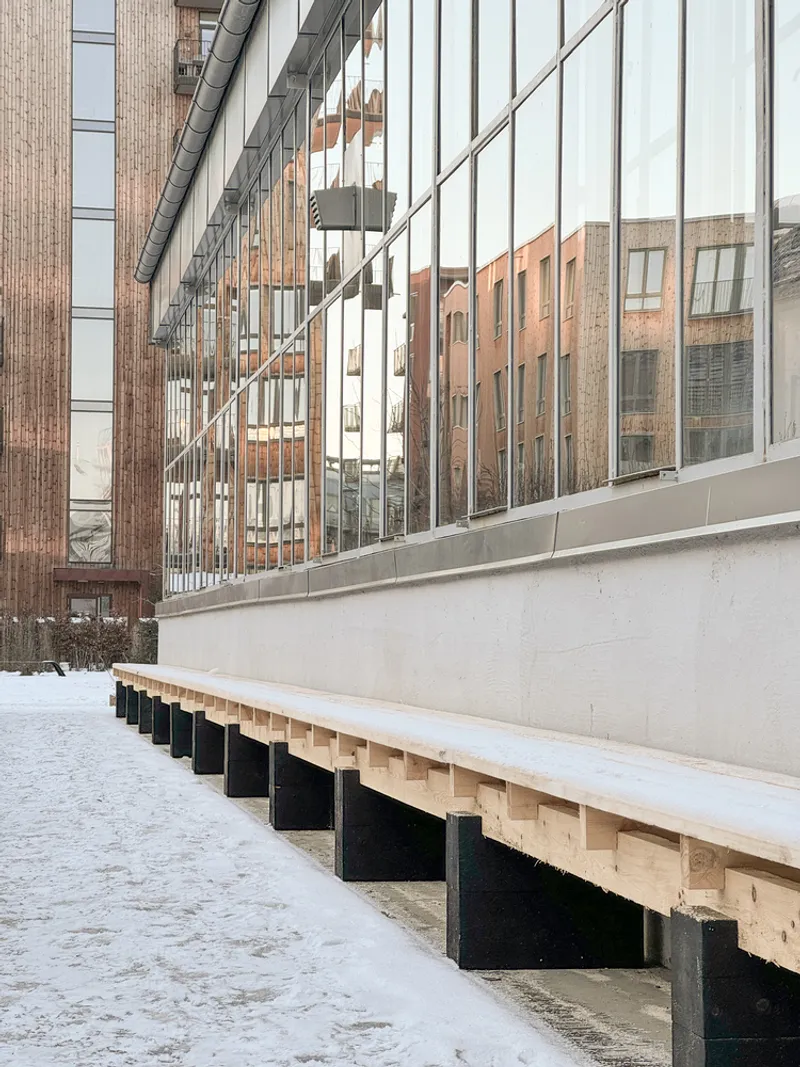
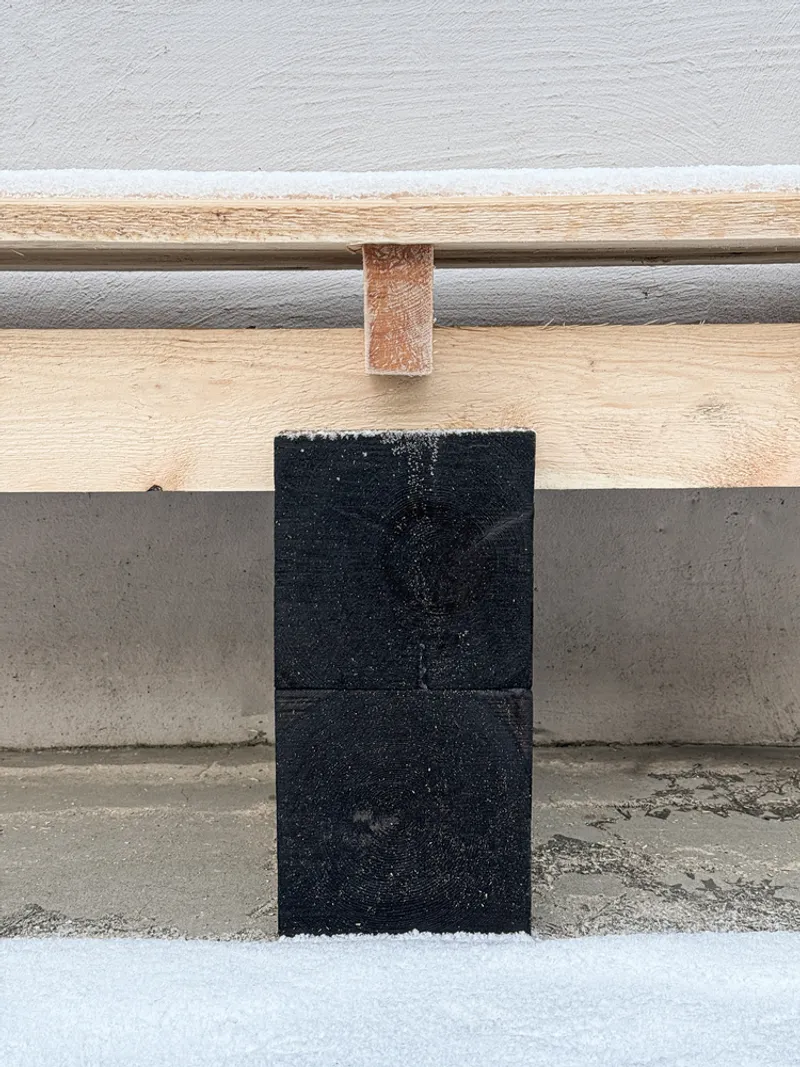
The project extends beyond the architectural structure to include bespoke outdoor furniture designed in harmony with the pavilion. Constructed using similar joinery techniques and treated with the same Yakisugi burning method, the furniture reinforces the project’s cohesive material language. These elements deepen the sense of craftsmanship and ensure that the entire backyard environment, from structure to seating, reads as a unified and intentionally crafted space.
A Sustainable Pavilion Rooted in Culture, Craft, and Community
The Credo Pavilion is both modest in scale and ambitious in environmental and cultural purpose. Through local materials, traditional building techniques, and principles of circular architecture, Fuse Arkitekter and NTNU have created a small but powerful example of contemporary sustainable design. The pavilion not only expands the spatial opportunities for the restaurant and its community, but also embodies Credo’s legacy of ecological responsibility, craft excellence, and place-based design.
All photographs are works of Simen Arnekleiv




Popular Articles
Popular articles from the community


The Ocean Hive: Sustainable Architecture for a Self-Sufficient Civilization at Sea
The Ocean Hive imagines sustainable architecture at sea, where modular habitats, algae, wave power and ocean waste sustain a growing colony.

The Musturak Paradise: Senior Living Architecture for a Connected Future in Temara, Morocco
The Musturak Paradise reimagines senior living architecture in Temara via private homes, social spaces, culture, community, and shared care.

Co-Life: Senior Housing Design That Reconnects Older Adults With the City
Co-Life reimagines senior housing design through healing gardens, shared streets, workshops, and a sustainable community across generations.

Co-life: Sustainable Architecture for Age-Friendly Community Living
Co-life reimagines sustainable architecture for seniors through courtyards, rammed earth, shared gardens, and spaces designed for belonging.


Similar Reads
You might also enjoy these articles


Hodi-Mandai Geram
Project Function: Preservation and revitalization of the Intangible heritage and socio-spatial identity of the Hodi by Housing, Cultural Memory Center, Sacred Grove, landscape, local tourism economy


Olio Towers: A Mid-Rise for Performers That Fuses Housing, Rehearsal, and Stage
Located blocks from Houston's Theater District, this modular tower stacks living units around a central performance atrium.

Oasis: Modular Green Housing Carved into Dhaka's Urban Fabric
A shortlisted Plugin Housing entry reclaims unauthorized settlements in Dhaka with stepped concrete volumes, green roofs, and ventilation-driven design.

Black Hole: A Floating Megastructure for the Post-Physical Era
Emiliano Mazzarotto envisions a spherical, self-scaling arena where e-sports, digital hotels, and holographic stadiums replace traditional public space.

Explore Hospitality Building Competitions
Discover active competitions in this discipline



Challenge to reimagine the Iron Throne


Photograph architecture without architects


Illustrate the lost glory of Angkor Wat - Render Challenge


Design challenge to reuse E-waste
Comments (0)
Please login or sign up to add comments
No comments yet. Be the first to comment!