

Cultural and Musical Space by TRACKS, Sèvres, France
A modular cultural building with acoustic precision, blending gabled volumes, wood structure, and urban sensitivity to support music and community interaction.


The Cultural and Musical Space designed by TRACKS in Sèvres, France, is a compact yet thoughtfully articulated public building that integrates music, performance, and community within a cohesive architectural framework. Conceived as a local cultural facility, the project seeks to establish a strong connection with its urban surroundings while addressing the technical demands of acoustic performance.
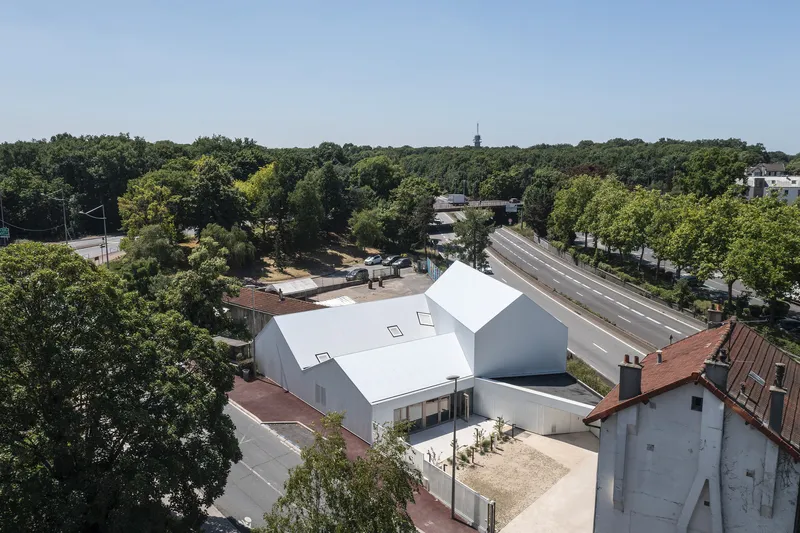
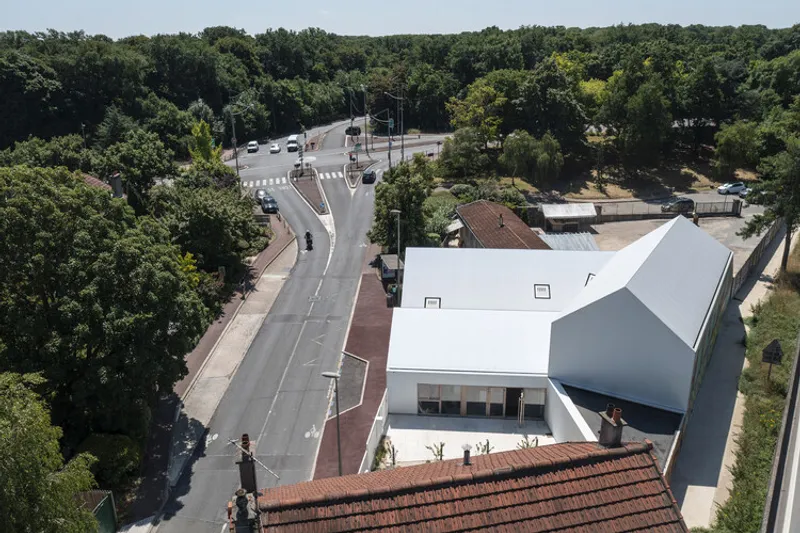
The design originates from a careful reading of the site’s context, particularly the morphology of neighboring townhouses. Rather than introducing a singular dominant form, the project is composed of multiple archetypal volumes that echo the scale and proportions of the surrounding built fabric. This fragmented composition allows the building to integrate naturally into the neighborhood while maintaining a clear contemporary identity.
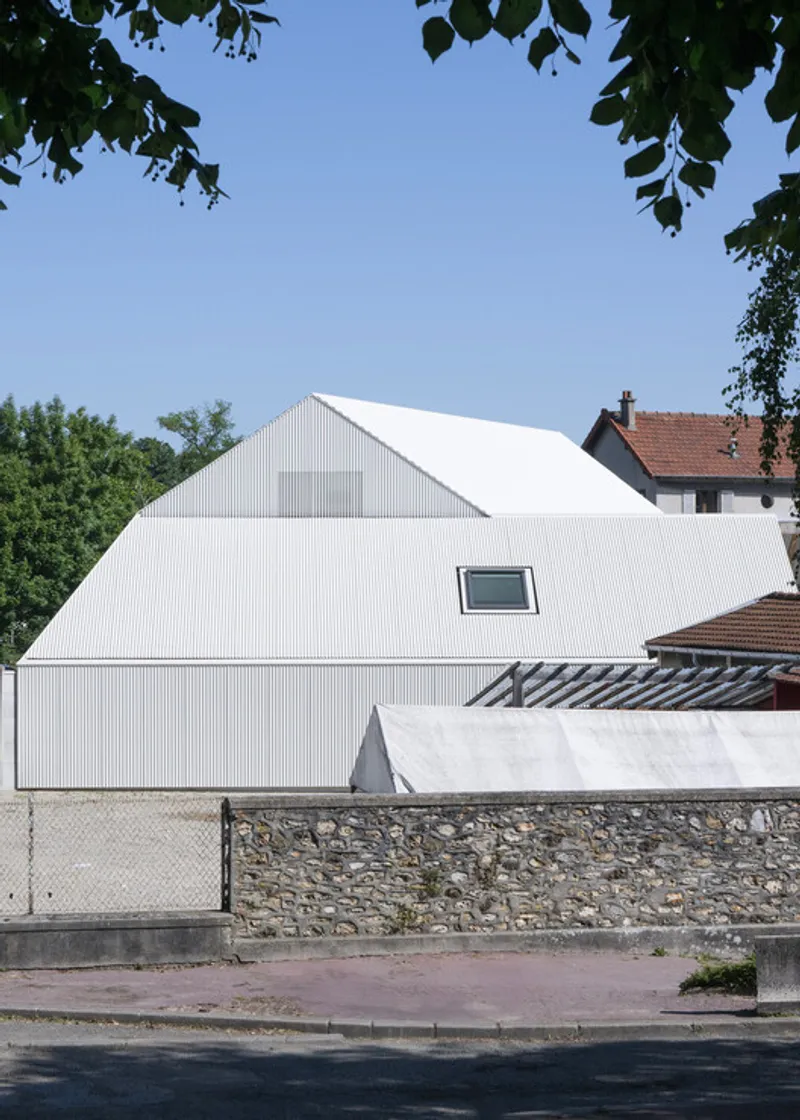

At the heart of the project lies the concert hall (Studio-Scène), positioned along the eastern edge of the site adjacent to a busy national road. This placement is strategic: the hall’s volume, with a generous height of six meters, acts as an acoustic buffer, shielding the rest of the facility from external noise. The gabled form of this volume establishes a dialogue with the preserved existing house on the site, reinforcing continuity between old and new.
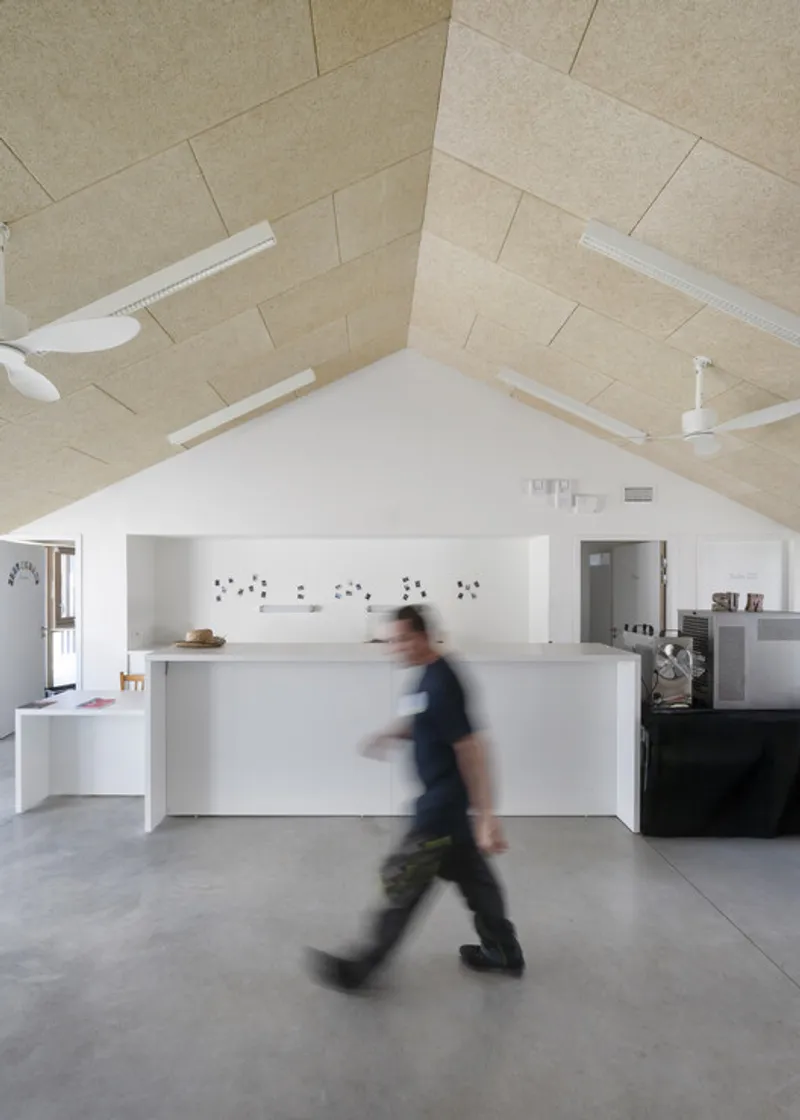
Complementing the main hall are additional volumes that house supporting functions. A lower structure to the south accommodates music studios, storage, and maintenance areas, while another volume facing the entrance square contains the reception, office, and bar. These elements are arranged to create a clear spatial hierarchy and intuitive circulation, guiding visitors through the building.
Internally, the architecture is shaped by the requirements of sound production and performance. Spaces are designed with non-parallel geometries and varied surfaces to optimize acoustics, enhancing sound quality within the studios and performance areas. The interplay of angles and materials ensures effective sound absorption and diffusion, creating environments suited for both practice and live events.
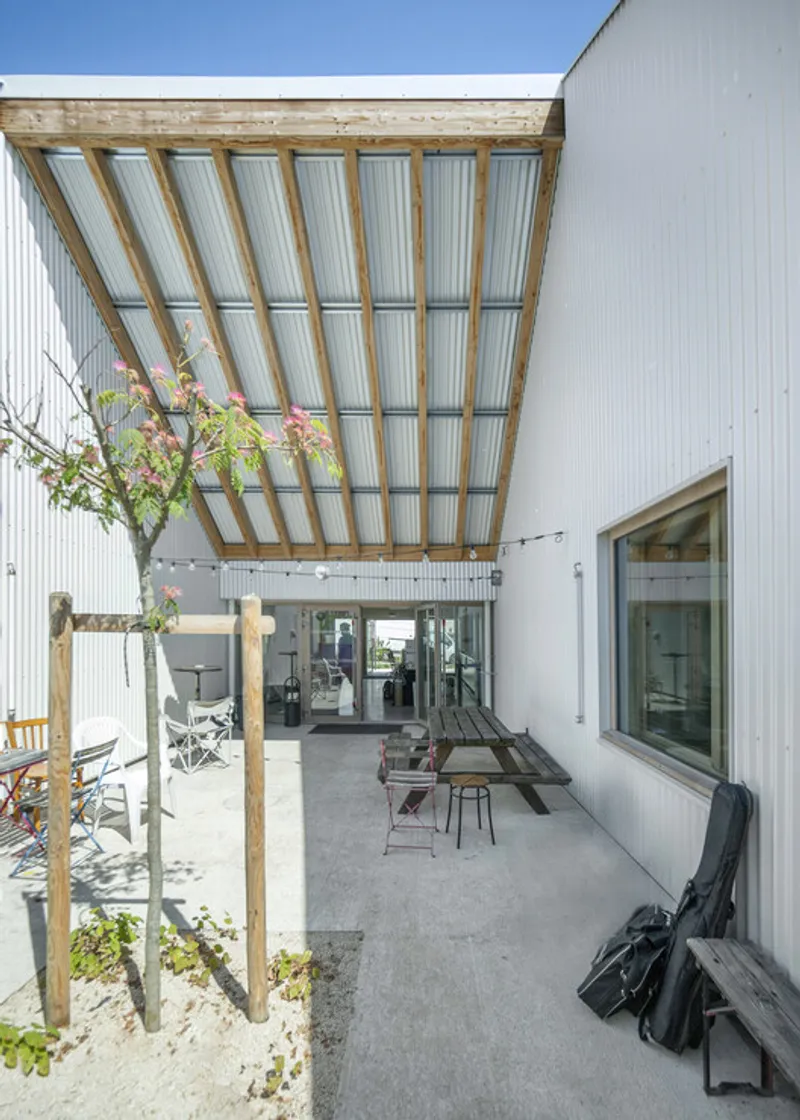
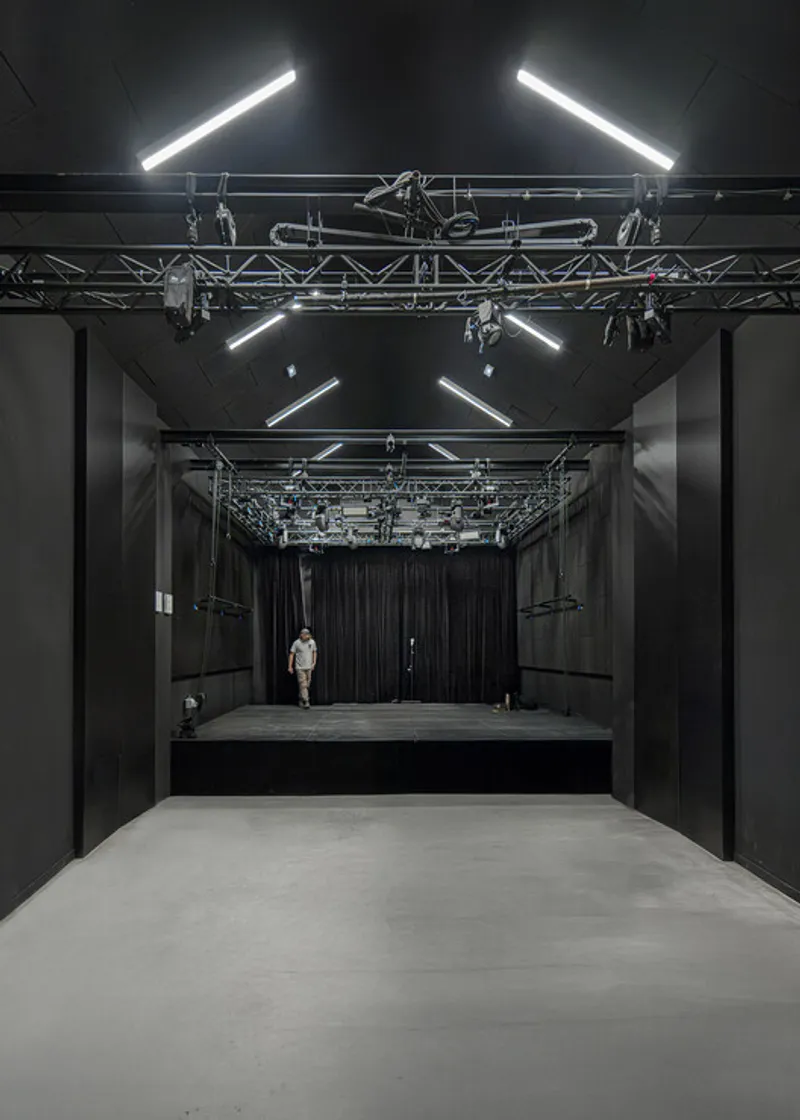
Materiality reflects both functional and aesthetic considerations. The building employs a wood frame structure, an uncommon choice for acoustic facilities, demonstrating innovation in construction techniques. This approach contributes to sustainability while providing flexibility in shaping interior spaces.
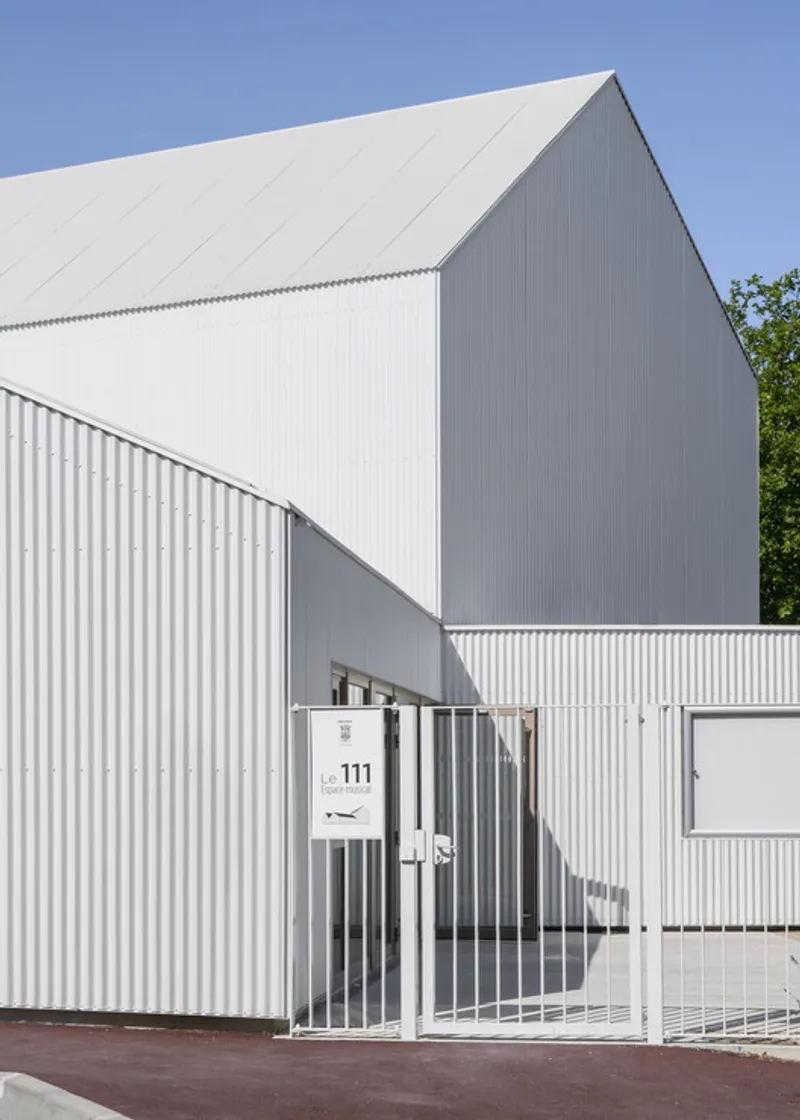
Externally, the volumes are clad in powder-coated micro-corrugated metal sheets, giving the building a subtle industrial character. The texture of the façade interacts with light, adding depth and variation while maintaining a restrained visual language that aligns with the surrounding context.
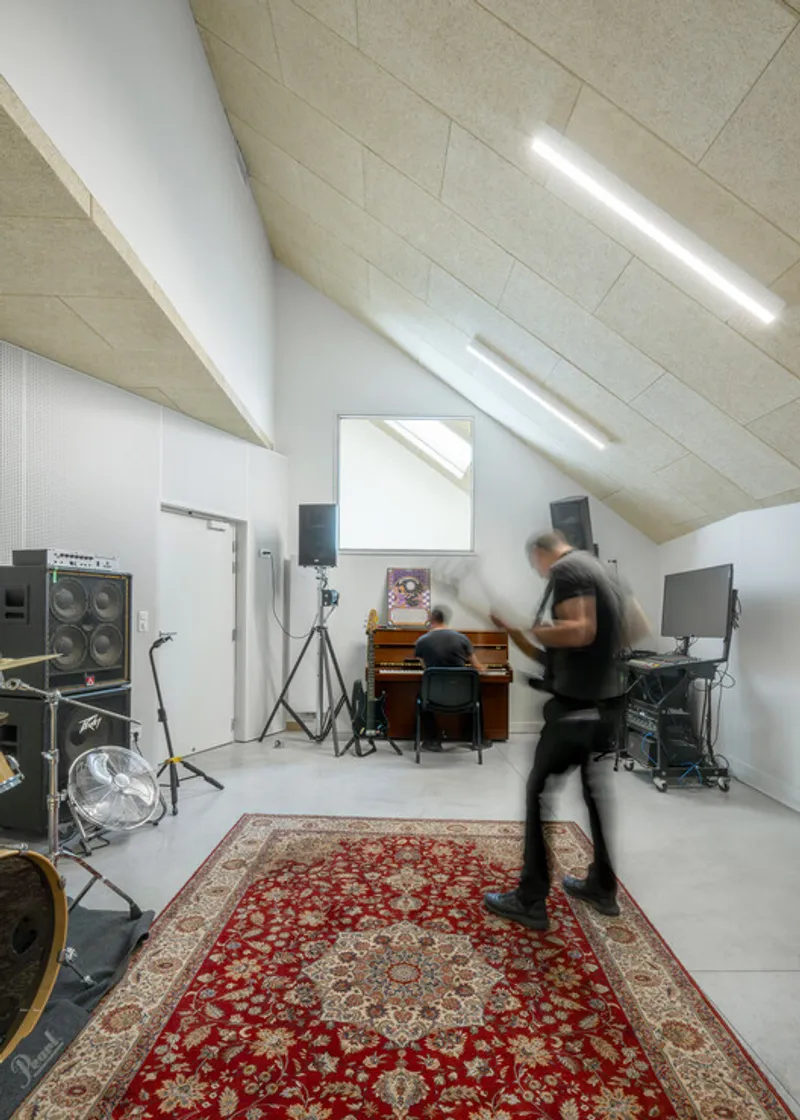

The project also emphasizes the role of architecture as a social and cultural connector. The entrance hall, opening onto a public square, serves as a welcoming interface between the building and the community. This space fosters interaction, supporting not only performances but also informal gatherings and everyday use.
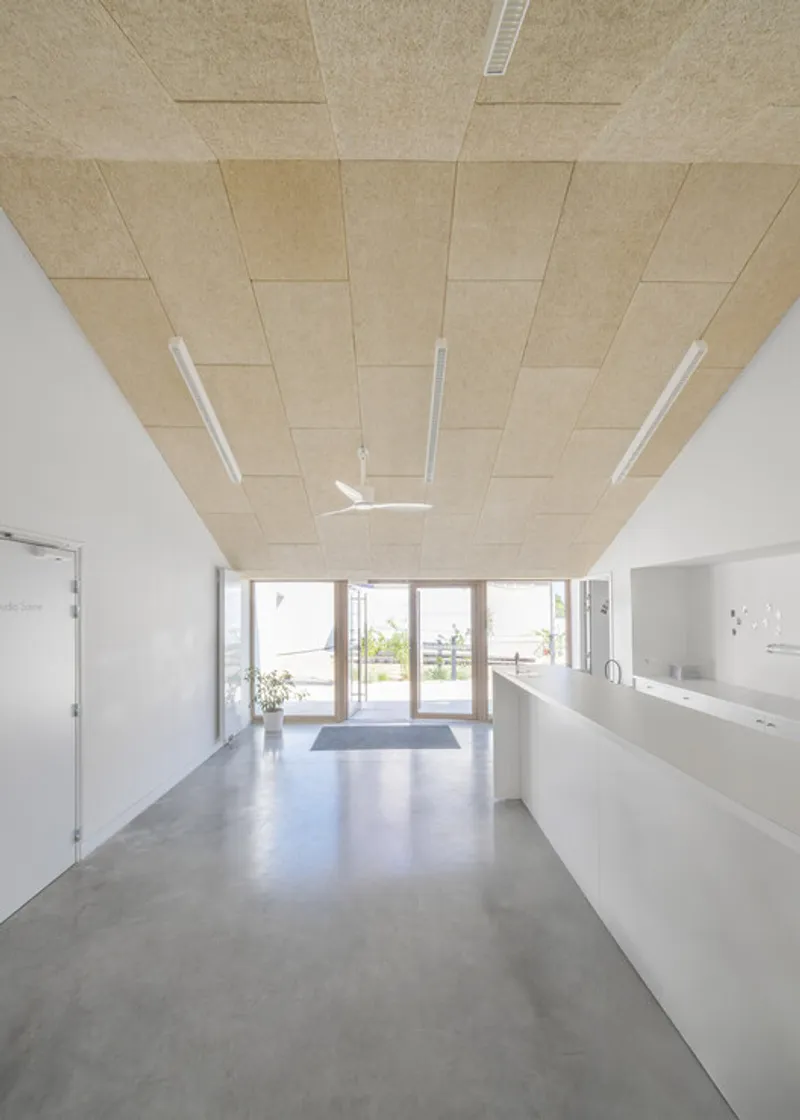

Ultimately, the Cultural and Musical Space in Sèvres is an example of how small-scale cultural infrastructure can achieve both technical precision and contextual sensitivity. By combining acoustic performance, modular composition, and urban integration, TRACKS delivers a building that enriches its environment while supporting artistic expression.

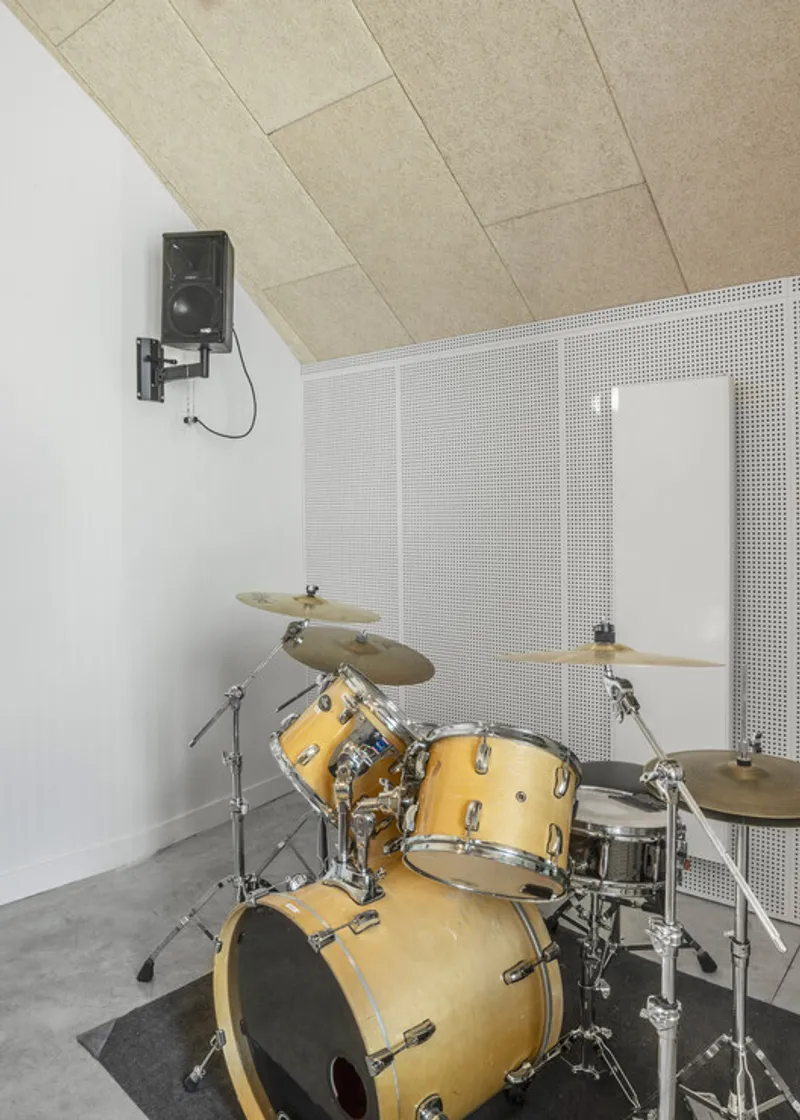
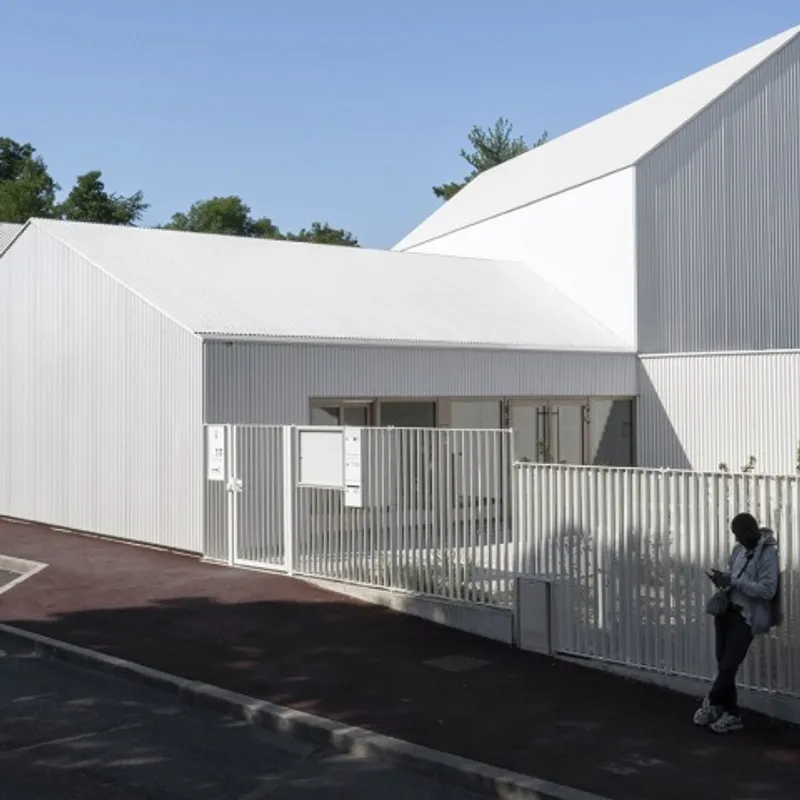
All the Photographs are works of Guillaume Amat




Popular Articles
Popular articles from the community


EW PARK: Sustainable Architecture Reimagines the Future of Urban Parking
EW PARK reimagines city parking as a modular wooden tower combining automation, solar energy, electric mobility, and adaptable urban design.

The Ocean Hive: Sustainable Architecture for a Self-Sufficient Civilization at Sea
The Ocean Hive imagines sustainable architecture at sea, where modular habitats, algae, wave power and ocean waste sustain a growing colony.

Hill & Cross Opera: Sculptural Opera House Architecture Shaped by Tallinn’s Landscape and Identity
Hill & Cross Opera reimagines opera house architecture in Tallinn through its sculptural hill, civic plaza, glass wave and a luminous cross.

Riyadh For All: Intergenerational Urban Design for Active Aging in Rabat
Riyadh For All reimagines urban design in Rabat with intergenerational co-living, adaptive courtyards, and Moroccan cultural exchange today.

Similar Reads
You might also enjoy these articles

FAMM Arquitectura Organizes Ten Villas Around Courtyards and Jungle in Nosara, Costa Rica
El Molino pairs two elongated volumes with deep overhangs and timber louvers to build a compact coastal community five minutes from the beach.
Oscar Niemeyer's Ibirapuera Park Pavilions Define São Paulo's Cultural Identity in Concrete and Curve
A constellation of modernist volumes set within São Paulo's most important urban park, conceived for the city's 400th anniversary in 1954.
How Henri Picq's 1889 Paris Pavilion Traveled 11,000 Kilometers to Become Santiago's Artequín Museum
A prefabricated iron and glass pavilion built for the Paris Universal Exposition found a second life as a children's art museum in Chile.
Sanjay Puri Architects Wraps a Jaipur Office Tower in Capsule-Shaped Green Buffers
A nine-level climate-responsive workplace near Jaipur Airport uses stacked planter terraces and aluminium screens to fight 40°C heat.

Explore Architecture Competitions
Discover active competitions in this discipline



Challenge to reimagine the Iron Throne


Photograph architecture without architects


Illustrate the lost glory of Angkor Wat - Render Challenge

Bring back Drive In's
Comments (0)
Please login or sign up to add comments
No comments yet. Be the first to comment!