
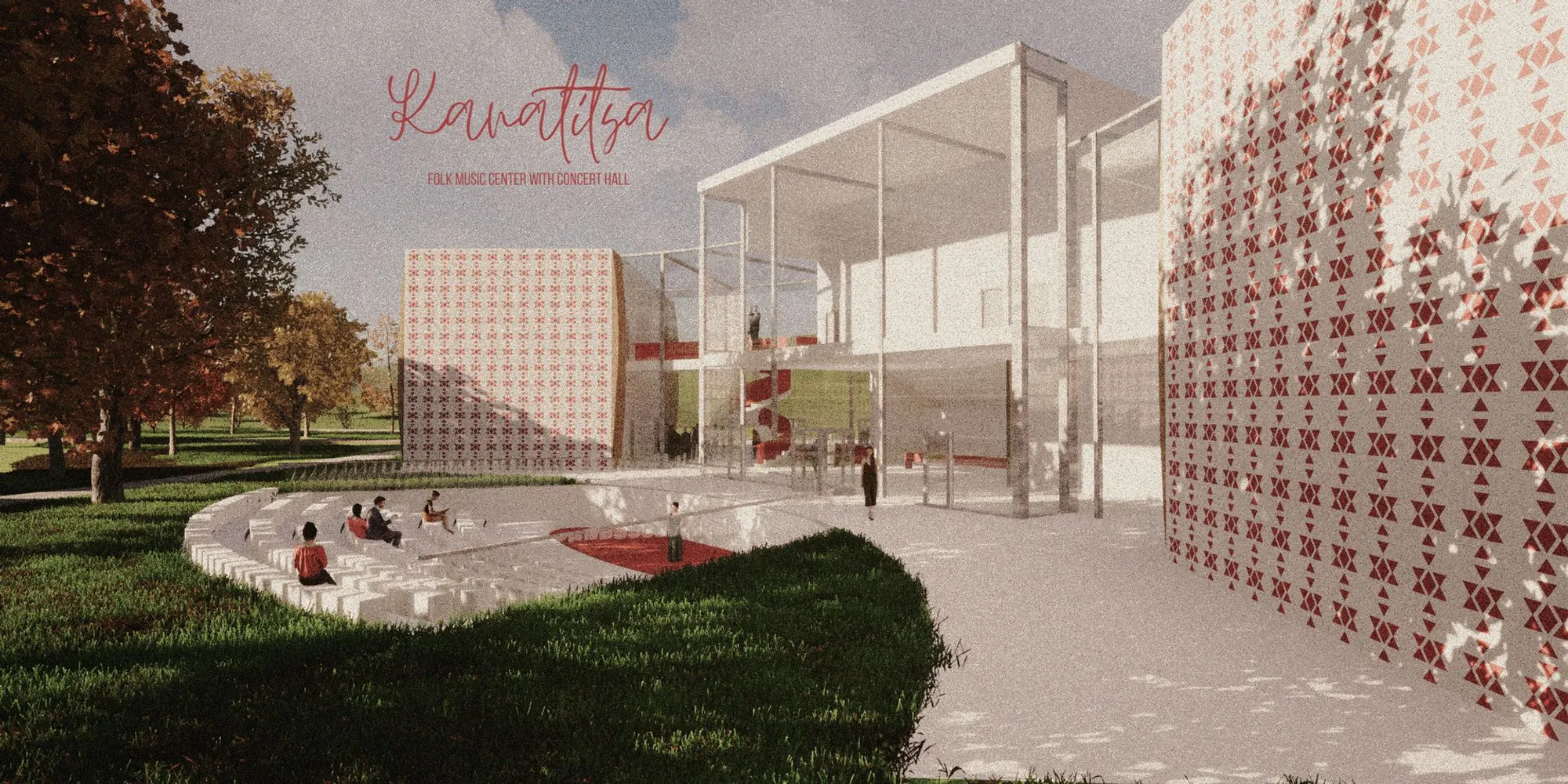
Cultural Architecture Design: A Deep Dive into Kanatitsa Folk Music Center
This article delves into the Kanatitsa Folk Music Center, showcasing the seamless integration of Bulgarian cultural elements into modern architectural design.


Introduction to Kanatitsa: Merging Bulgarian Culture with Modern Architecture
The Kanatitsa project stands as a testament to the seamless integration of local culture into contemporary architectural practice. Designed by Aleksandra Michalik winner of Chord, this cultural architecture design not only serves as a folk music center with a concert hall but also as a beacon of Bulgarian tradition, reinterpreted for the modern age.
Urban Scheme and Design Philosophy
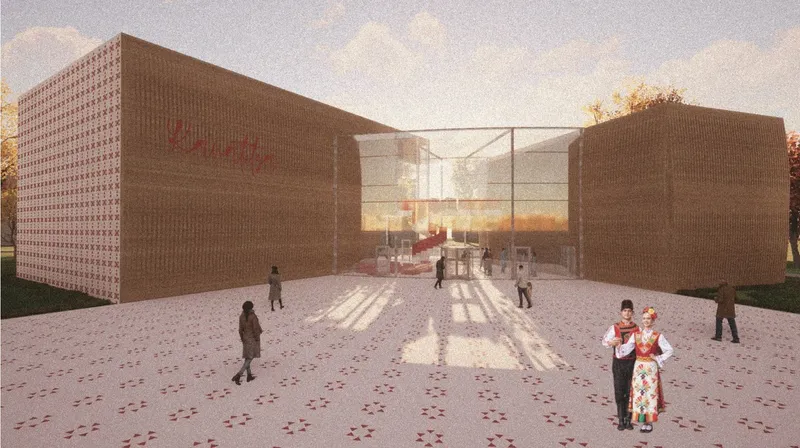
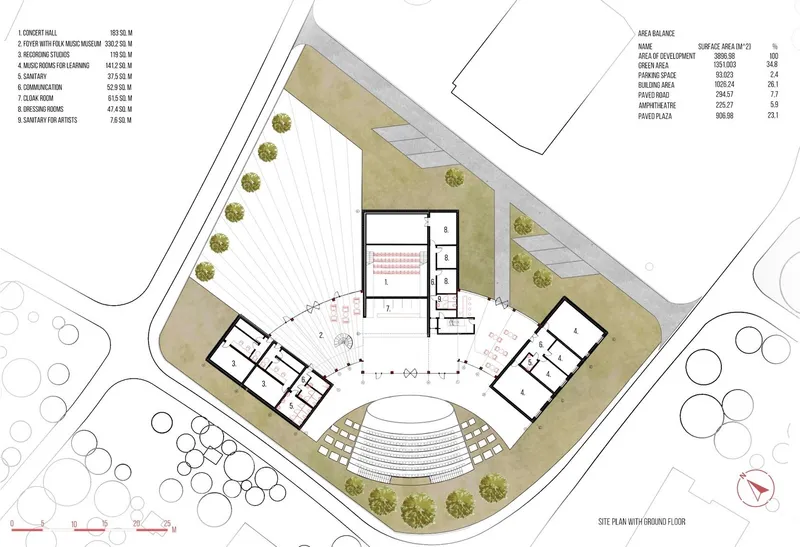
At the heart of Kanatitsa lies a profound urban scheme titled "Inner Folk World". The design aims to segregate the chaotic exterior world from a tranquil interior, fostering a peaceful environment for art and performance. This architectural philosophy creates a serene space where art and community intertwine, encapsulating the essence of cultural architecture design.
The Symbolism of Kanatitsa
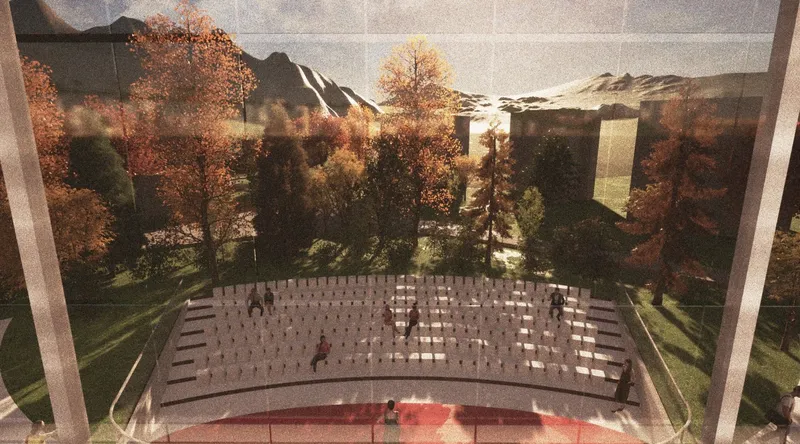
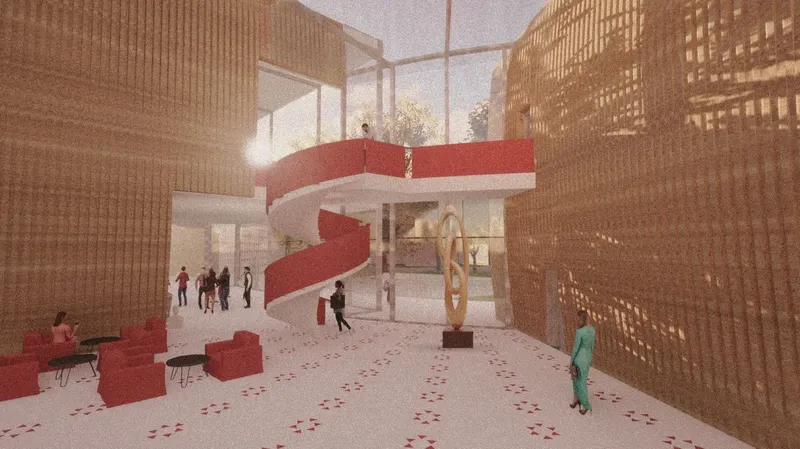
Kanatitsa's design is deeply rooted in Bulgarian culture, symbolized by the interlocking pairs of triangles representing the masculine and feminine beginnings. This simplified pattern, prevalent throughout the center, serves as a modern interpretation of traditional Bulgarian folk elements, thereby bridging the gap between the past and present in architectural terms.

Multifunctional Spaces: Blending Form with Function
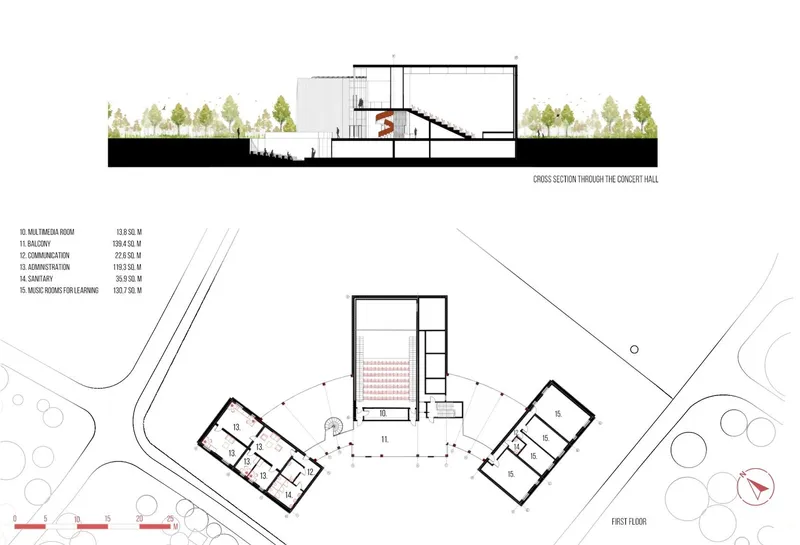
The project exemplifies multifunctional design, offering versatile performance spaces both outdoors and indoors. The layout caters to various events and activities, providing different levels and views, and demonstrating a thoughtful balance between functionality and aesthetic appeal in cultural architecture design.
The Functional Program and Zoning
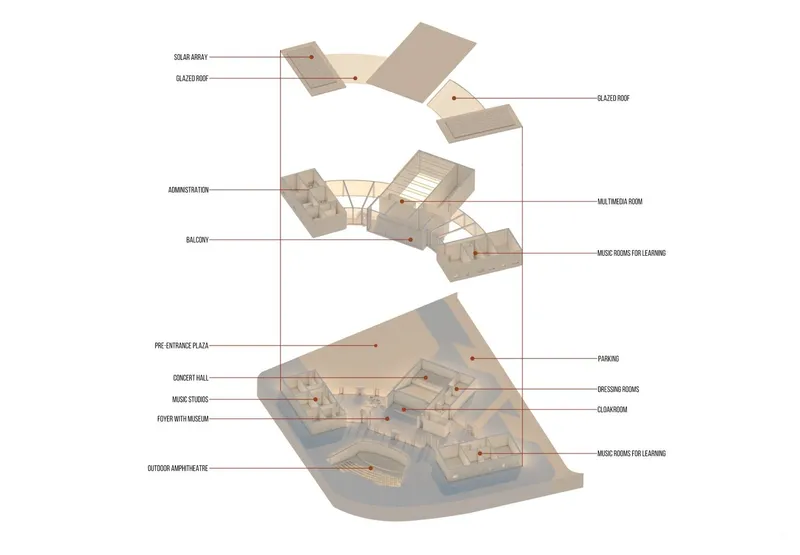
Kanatitsa is not just a building; it's a comprehensive cultural hub. The center includes a concert hall, folk music museum, recording studios, and learning rooms, all designed with optimal acoustics and user experience in mind. Each area is thoughtfully placed to enhance learning, performing, and social interactions, reflecting the societal values and cultural heritage of Bulgaria.
Material Selection and Environmental Consideration
The materials chosen for Kanatitsa are a nod to Bulgarian folklore, combined with modern sustainability practices. The facade features red concrete plates and wood-like panels, creating a warm ambiance while paying homage to the local culture. This choice reflects a broader trend in cultural architecture design towards eco-friendly and culturally relevant materials.
Landscape and Surroundings: A Harmonious Integration
Set against the picturesque backdrop of the Vitosha mountain massif, Kanatitsa is a landmark that complements its surroundings. The design takes into account the existing flora, weather conditions, and landscape, ensuring that the center is not only a place for cultural gathering but also an integral part of the local ecosystem.
Future Directions and Community Impact
Kanatitsa is envisioned as a cornerstone for future cultural and educational development in Sofia. The project underscores the potential of cultural architecture design to influence community life positively, promote cultural exchange, and foster a sense of identity among local inhabitants.
The Kanatitsa Folk Music Center exemplifies how cultural architecture design can encapsulate and celebrate local traditions while meeting modern needs and environmental considerations. It stands as a model for future projects worldwide, demonstrating that architecture can transcend mere construction to become a vessel for cultural heritage and communal unity.
By showcasing the Kanatitsa project, this article aims to inspire architects, city planners, and cultural institutions to embrace cultural architecture design as a means to preserve and innovate within the rich tapestry of local traditions and community identity.




Popular Articles
Popular articles from the community


Co-life: Sustainable Architecture for Age-Friendly Community Living
Co-life reimagines sustainable architecture for seniors through courtyards, rammed earth, shared gardens, and spaces designed for belonging.

The Musturak Paradise: Senior Living Architecture for a Connected Future in Temara, Morocco
The Musturak Paradise reimagines senior living architecture in Temara via private homes, social spaces, culture, community, and shared care.

Riyadh For All: Intergenerational Urban Design for Active Aging in Rabat
Riyadh For All reimagines urban design in Rabat with intergenerational co-living, adaptive courtyards, and Moroccan cultural exchange today.

The Earth Pod: 3D Printed Homes for Resilient Refugee Communities
The Earth Pod reimagines refugee housing through 3D printed homes made from clay, combining resilience, self-sufficiency, and rapid shelter.


Similar Reads
You might also enjoy these articles

Day and Night Park: A Time-Based Urban Newsstand in Beijing
A temporary urban newsstand in Beijing blending travel, light, and reading through poetic colors, compact form, and community-focused design.

Modernist Patio Renovation in El Masnou, Barcelona by Oliver Segura Arquitectura + Cebrià Arquitectura
Modernist patio renovation blending tradition and innovation with a movable pool, leveled floors, and Catalan materials in El Masnou.

Alto Residencial Coop: Cooperative Housing Development in Santiago de Compostela by Carbajo Barrios Arquitectos
A linear cooperative housing complex blending white volumes and perforated metal façades, enhancing community living, natural light, privacy, and urban integration.
Vil Genis School by BPA ARCHITECTURE – Massy, France
Vil Genis School in Massy, France, features sustainable design, south-facing classrooms, community integration, accessible spaces, and modern educational architecture.


Explore Landscape Design Competitions
Discover active competitions in this discipline



Challenge to reimagine the Iron Throne


Photograph architecture without architects


Illustrate the lost glory of Angkor Wat - Render Challenge


Design challenge to reuse E-waste
Comments (0)
Please login or sign up to add comments
No comments yet. Be the first to comment!