
Cúlú – guesthouse in Ireland
A space of isolation, connecting man with nature, offering relaxation.
"Looking at the beauty of nature is the first step to clearing your mind."
Amit Ray
The above quote literally shows what we really need in this rush of life to feel happy.
The main inspiration in terms of the functional and spatial arrangement is biophilic design. It is based on the human relationship with the natural environment. Literally translated, it is love for nature. Biophilic design uses knowledge about people to improve their well-being, concentration and creativity. Tries to maintain the balance necessary to maintain health and mental balance. Biophilia researchers have noticed that human interaction with the world depends on its natural features: light, sound, smell, vegetation and the geometry of nature positively influence human perception of the world. An architect should never forget that. He should analyze the impact of the building on the natural environment each time, therefore the design involves the use of motifs and symbols inspired by nature, natural, local materials and introducing as much natural light as possible into the interior.
Cúlú - a word in Irish means seclusion.
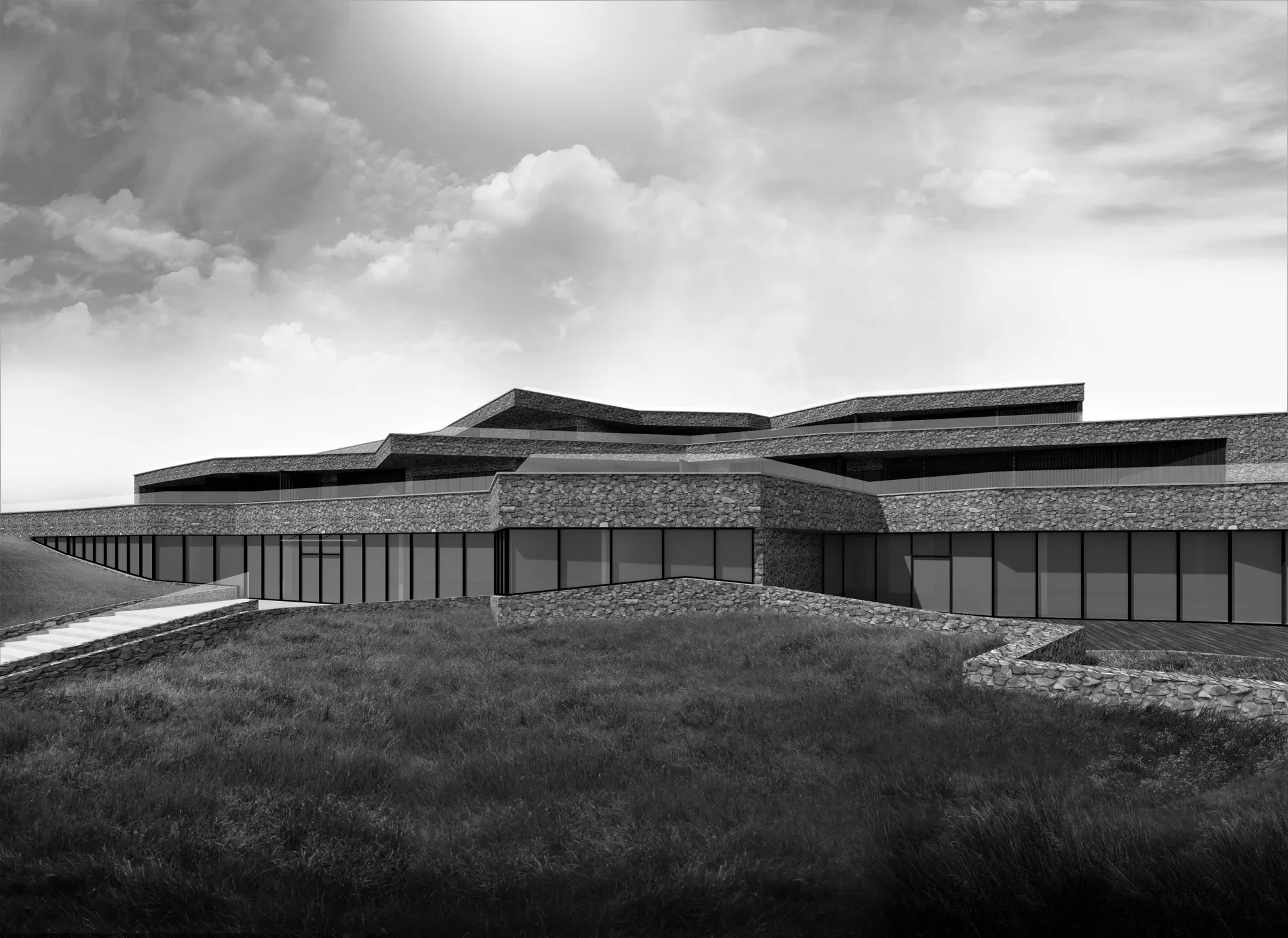
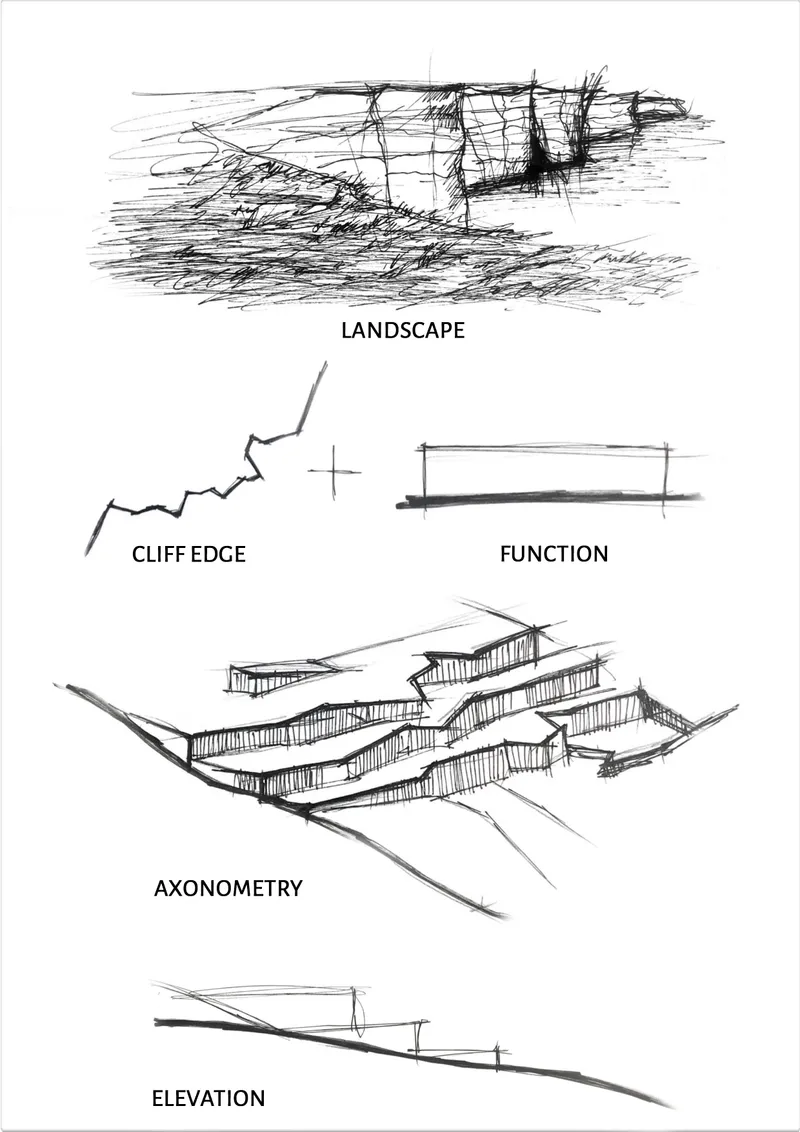
The building is located in Ireland in the west of County Clare in the village of Ballyherragh on the edge of the Atlantic Ocean cliff, surrounded by extensive meadows. Due to the nature of this place, the key design aspect was not to interfere with the surrounding landscape. The main inspiration in the design of the building were the natural views of the landscape, in particular the biggest tourist attraction of this place, the Moher cliff. The cliff-inspired outline of the building follows the edge of the cliff, giving the viewer the impression of being on a cliff.
The architectural form is created by 4 cuboidal solids in which the building's cubature is placed. One is completely underground and three lumps are partially recessed into the ground, giving them the shape of a cliff. The roof of the guesthouse is planted with vegetation, thanks to which the building is invisible outside the walls. Hiding the guesthouse underground shows respect for the local architecture and landscape. The facility has a terrace character. Entrances to the observation deck are designed by pulling one edge upwards, giving the shape of a protruding cliff. A viewing axis has been marked out in the study area. It runs from the central part of the end of the plot to the south overlooking the Atlantic Ocean, so the main entrance to the building is on the viewing axis. Stairs carved in the rock lead to the building.
The designed building consists of 8 parts. The first part is a technical zone with a completely underground car park. There are 34 parking spaces in the garage, including 2 for disabled people. The main entrance to the property is on the ground floor, which is divided into 5 parts; a restaurant section with kitchen facilities, a swimming pool with a spa and an entrance area with a botanical garden with a waiting room, an administrative and communication section with a staircase and two elevators connecting all floors of the building. The residential part, which consists of 25 hotel rooms, is located on two floors. Each room has access to a green south facing terrace overlooking the Atlantic Ocean. On the top floor there is a silence zone, i.e. a meditation room and access to the observation deck on the roof of the building.
The building structure consists of prefabricated columns and reinforced concrete beams. The system is based on a foundation plate. Walls made of natural stone. The roof of the building is designed as a green flat roof. The terrace is made of wooden impregnated boards. The building uses natural thermal insulation, which is an expanded cork.
The facility will be finished with natural stone from the excavation for the building. Wooden shutters were used to make the façade more attractive and to add more intimacy to the guesthouse users.
The idea behind safe shutters is to create an outer space of seclusion for each hotel room. The roller shutters have 4 different functions: fully closed, partially closed, partially open and fully open. Fully closed roller shutters ensure full safety for people staying in the room. Partially closed, they bring light rays into the room.
Partially open shutters provide access to the garden terrace. Fully open shutters create a separate loggia, thus creating a safe space for relaxation.
The roller shutters are made of wooden mobile profiles that can change their function according to the users' preferences.



Popular Articles
Popular articles from the community


Riyadh For All: Intergenerational Urban Design for Active Aging in Rabat
Riyadh For All reimagines urban design in Rabat with intergenerational co-living, adaptive courtyards, and Moroccan cultural exchange today.

Lunar Spiral: Space Architecture Shaped by the Mathematics of the Universe
Lunar Spiral reimagines space architecture through Fibonacci geometry, lunar regolith, levitating habitats, and self-sustaining Moon living.

The Ocean Hive: Sustainable Architecture for a Self-Sufficient Civilization at Sea
The Ocean Hive imagines sustainable architecture at sea, where modular habitats, algae, wave power and ocean waste sustain a growing colony.

Hill & Cross Opera: Sculptural Opera House Architecture Shaped by Tallinn’s Landscape and Identity
Hill & Cross Opera reimagines opera house architecture in Tallinn through its sculptural hill, civic plaza, glass wave and a luminous cross.

Similar Reads
You might also enjoy these articles

Day and Night Park: A Time-Based Urban Newsstand in Beijing
A temporary urban newsstand in Beijing blending travel, light, and reading through poetic colors, compact form, and community-focused design.

Modernist Patio Renovation in El Masnou, Barcelona by Oliver Segura Arquitectura + Cebrià Arquitectura
Modernist patio renovation blending tradition and innovation with a movable pool, leveled floors, and Catalan materials in El Masnou.

Alto Residencial Coop: Cooperative Housing Development in Santiago de Compostela by Carbajo Barrios Arquitectos
A linear cooperative housing complex blending white volumes and perforated metal façades, enhancing community living, natural light, privacy, and urban integration.
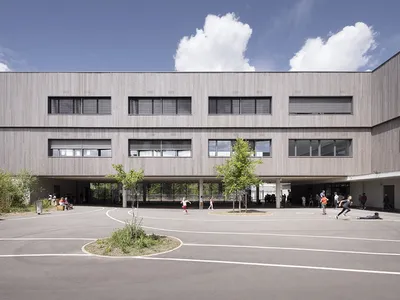
Vil Genis School by BPA ARCHITECTURE – Massy, France
Vil Genis School in Massy, France, features sustainable design, south-facing classrooms, community integration, accessible spaces, and modern educational architecture.


Comments (0)
Please login or sign up to add comments
No comments yet. Be the first to comment!