
D House by Lavan Architects: A Narrow Plot Transformed into a Lush Urban Oasis in Tel Aviv
Urban oasis in Tel Aviv blending concrete, glass, and greenery, with a 19-meter pool, Bauhaus details, and indoor-outdoor harmony.


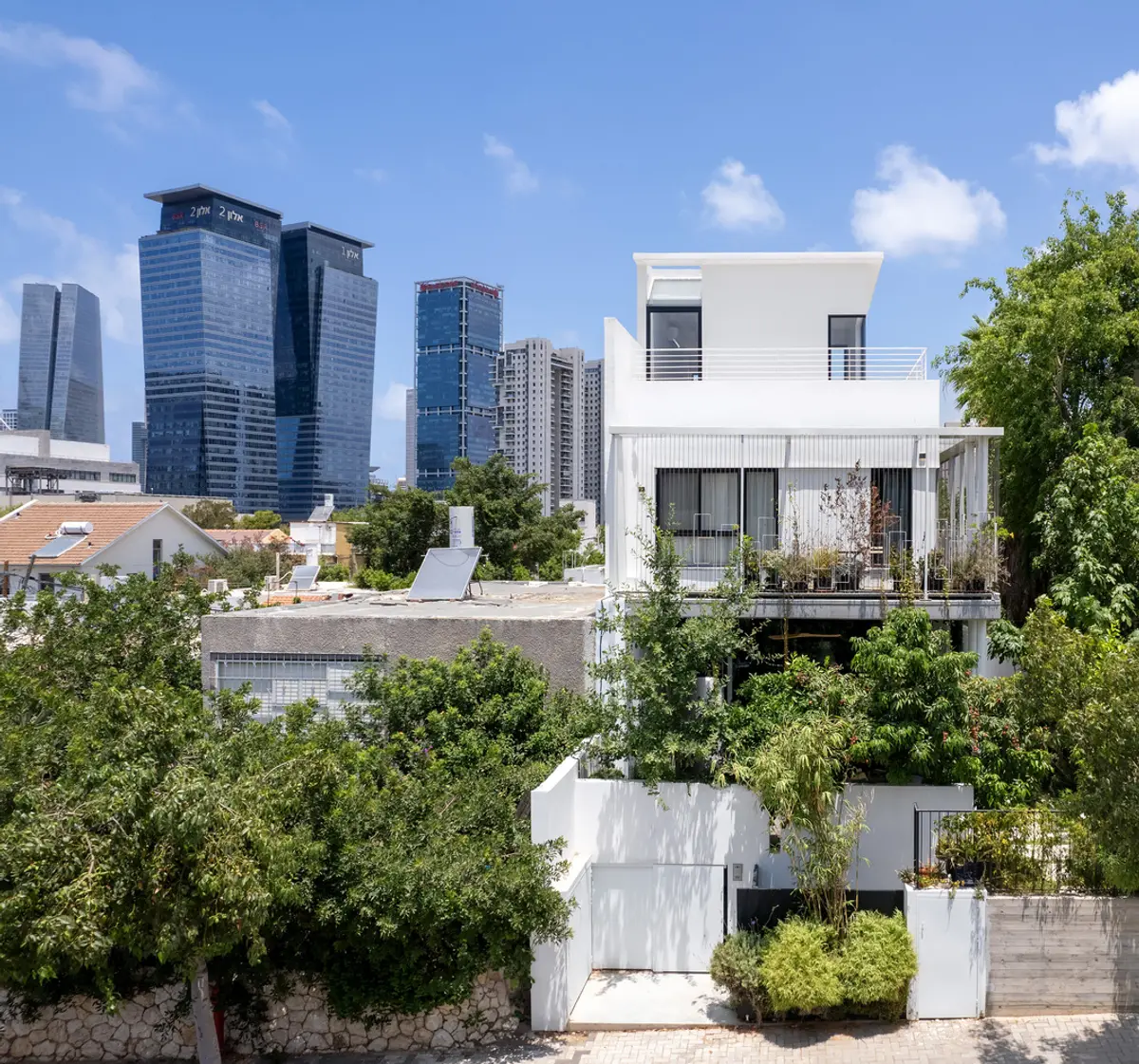
In the vibrant heart of Tel Aviv-Jaffa, where density, sun, and urban life converge, Lavan Architects have designed D House—a striking urban green retreat for a family of five. Situated on a tight 225-square-meter plot only 9 meters wide, this 250-square-meter residence creatively redefines how modern architecture in Israel can integrate nature, family needs, and spatial ingenuity within a narrow urban footprint.
A Vision Rooted in Togetherness and Nature
Each family member came to the project with distinct dreams: one longed for a swimming pool to surf in, another envisioned a lush natural garden, while the grown-up children sought private yet connected living quarters. At the core of these aspirations was a shared desire—to create a home that feels open, cohesive, and alive with nature.
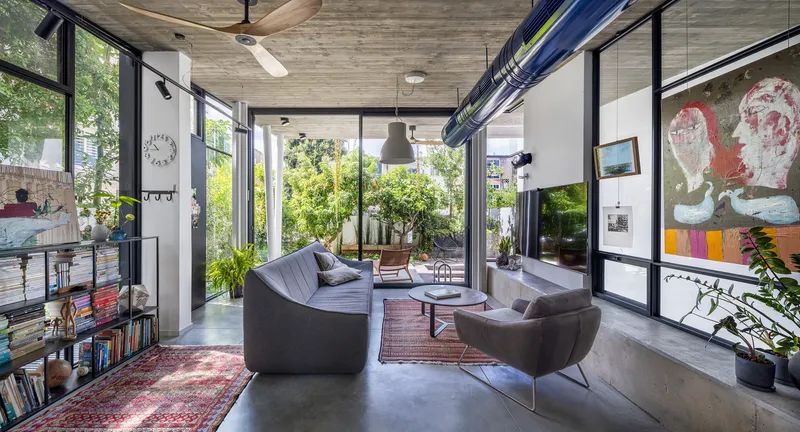
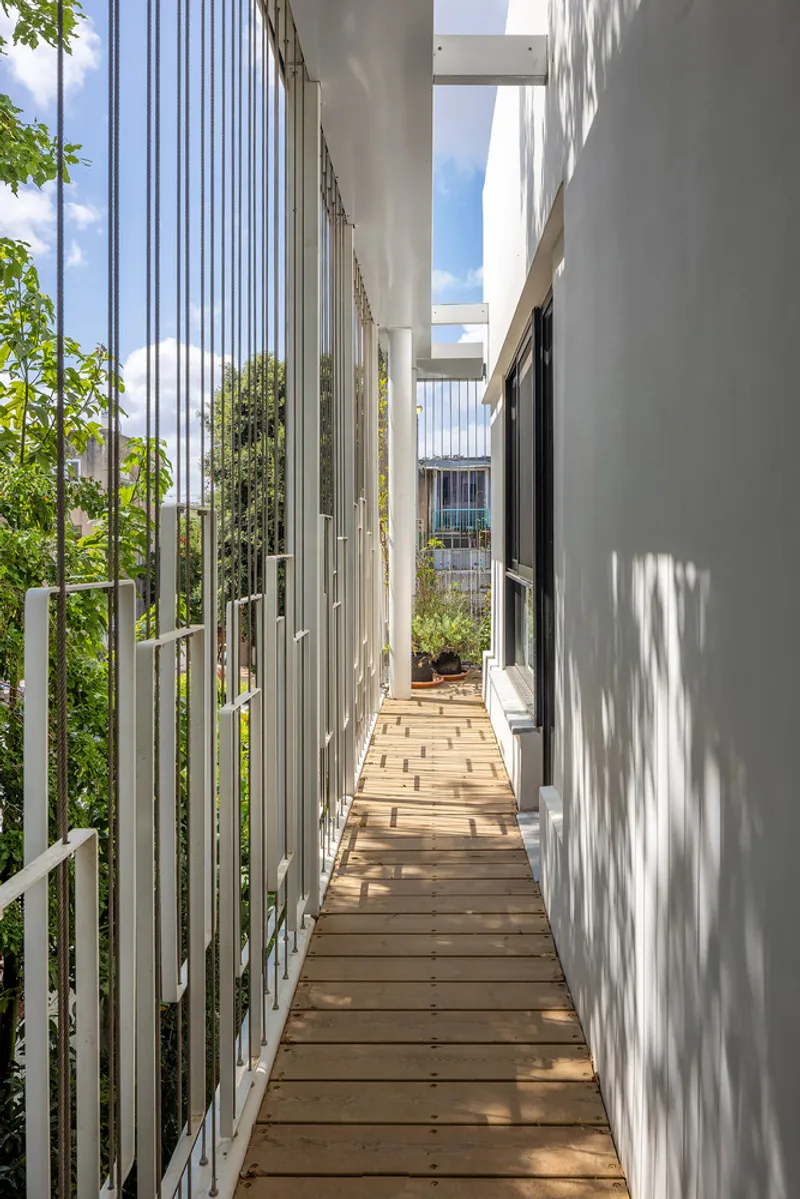
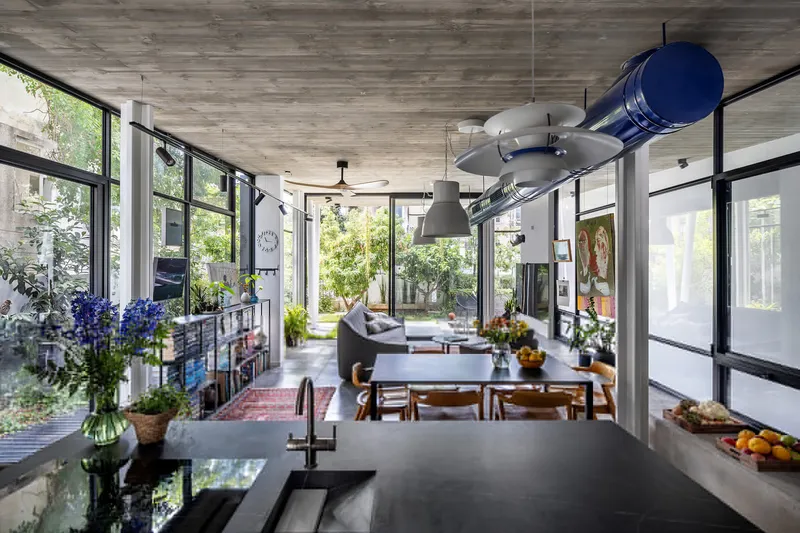
Lavan Architects approached the project by blurring the line between interior and exterior. The plot’s perimeter walls were treated as the outer boundaries of the home itself, a concept that allows the architecture to embrace the entire site. This decision enabled the creation of a glass-enclosed main living space that opens fully to the surrounding garden, transforming the boundary fence into a living green wall of fruit trees and climbing plants. These garden elements are not merely decorative—they function as a natural privacy screen, shielding the home from neighboring buildings and establishing a unique material dialogue between vegetation and architecture.
Seamless Indoor-Outdoor Living with a 19-Meter Pool
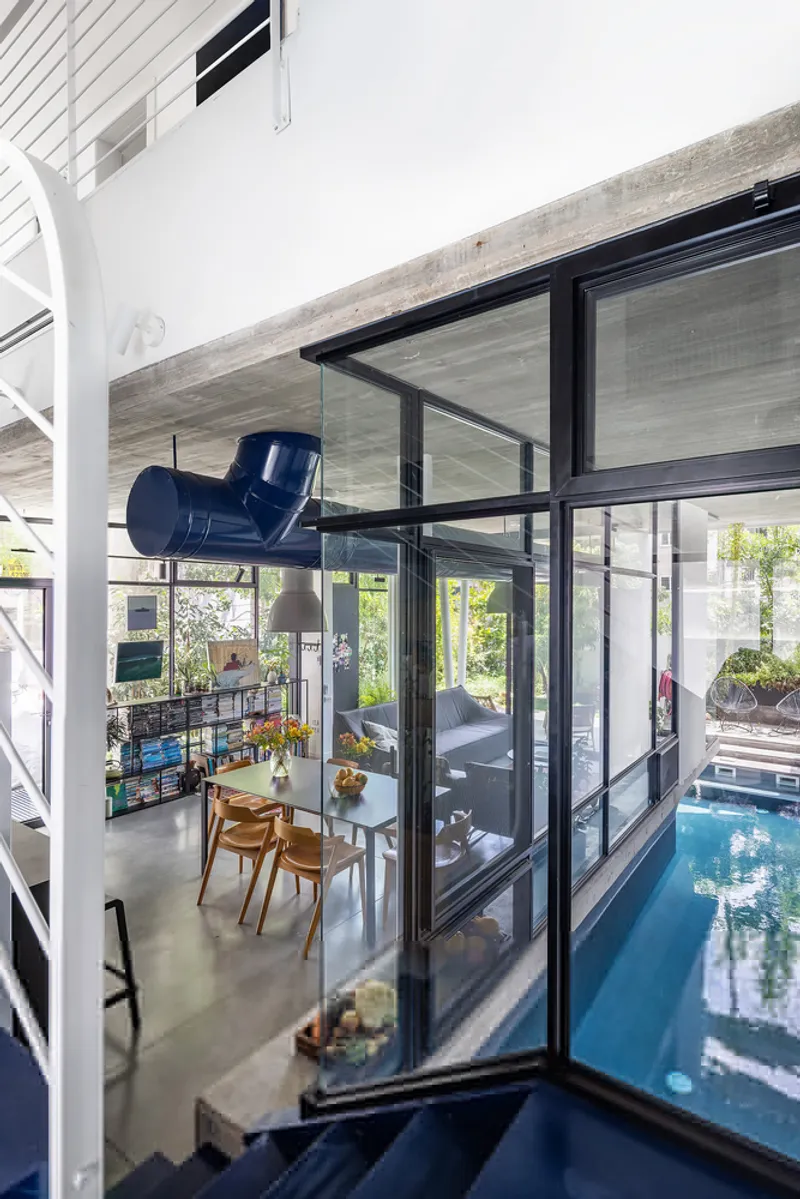
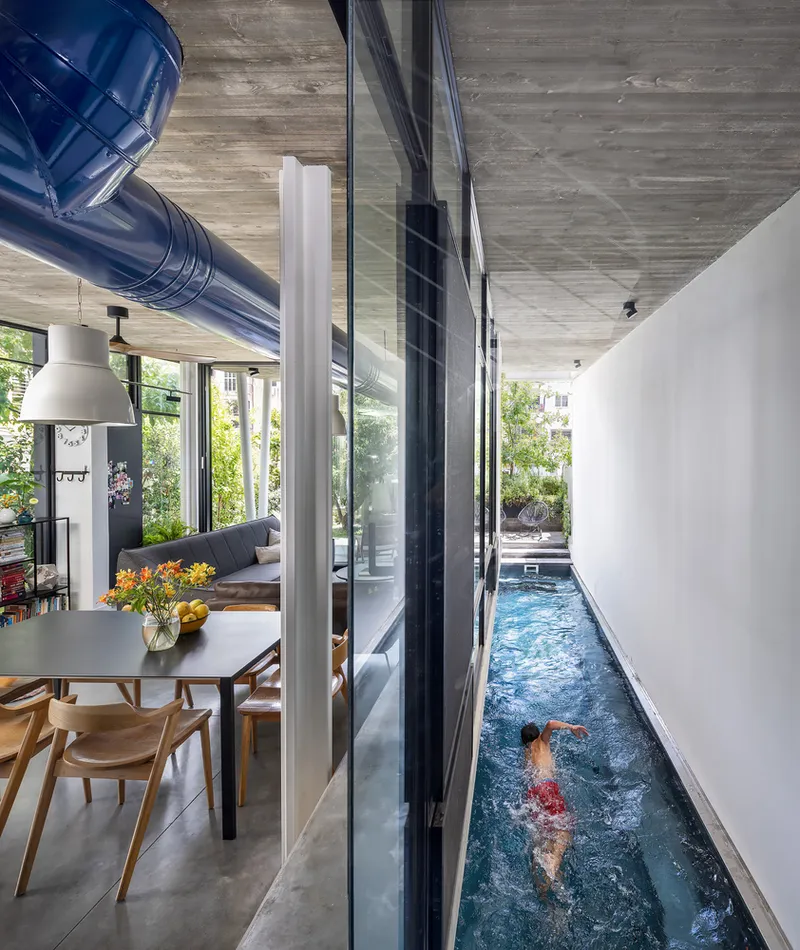
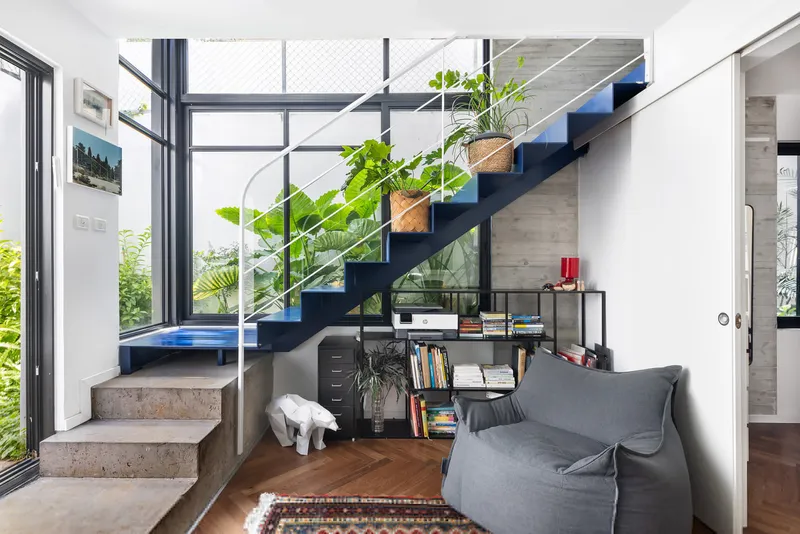
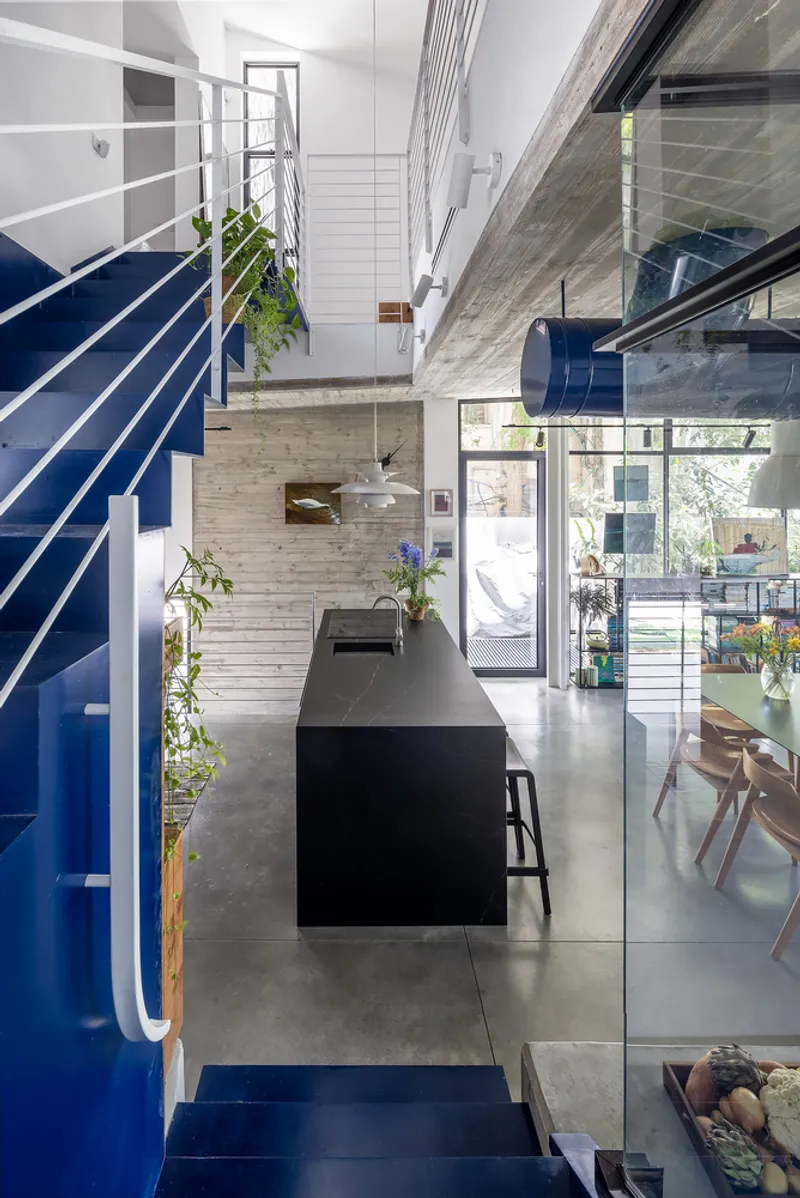
A central element of the design is the 19-meter-long swimming pool, which runs parallel to the main living area and is partially shaded by the cantilevered second floor. The pool is not only a recreational feature but also a visual connector—fully visible from the living spaces and even from the hovering, blue-painted stair structure that crosses above it. This clever interplay between water, light, and structure reinforces the home’s indoor-outdoor continuity.
Bauhaus-Inspired Detailing and Passive Climate Design
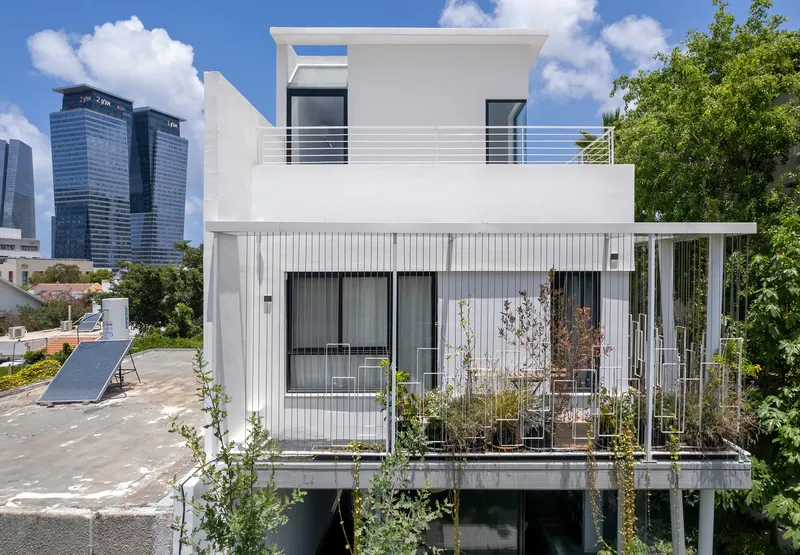
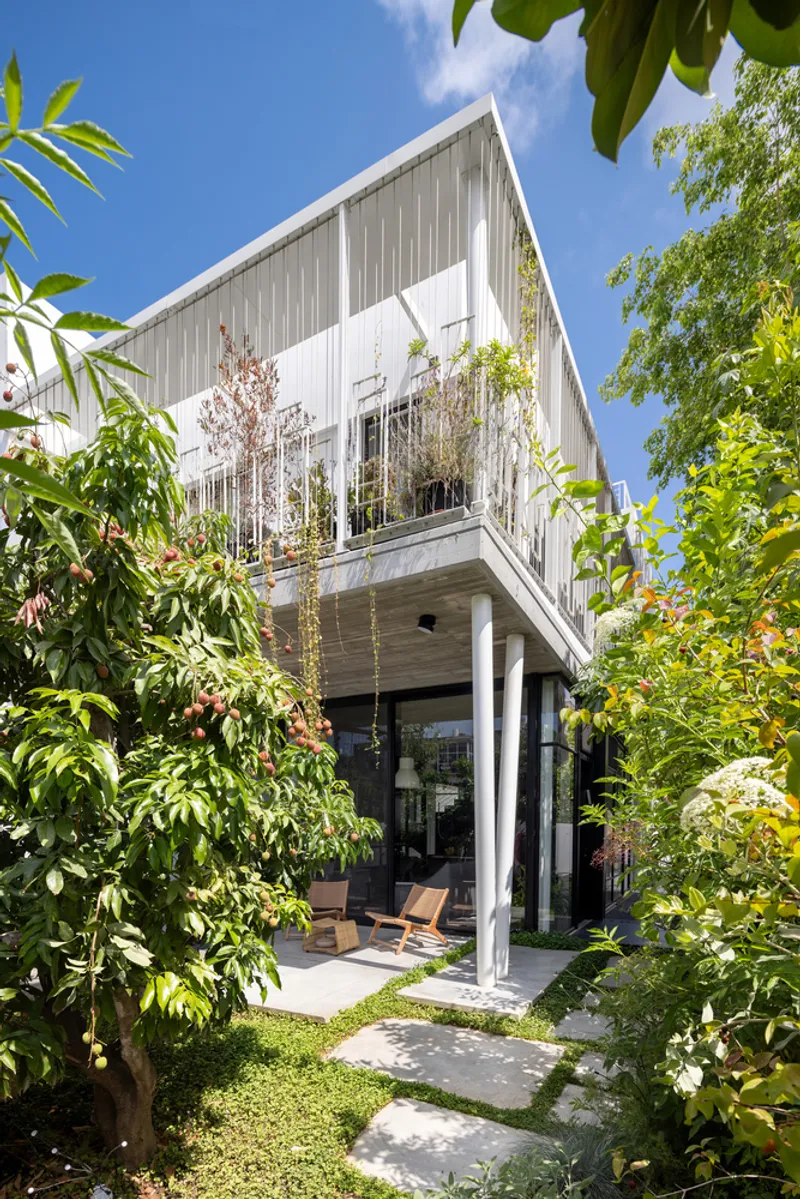
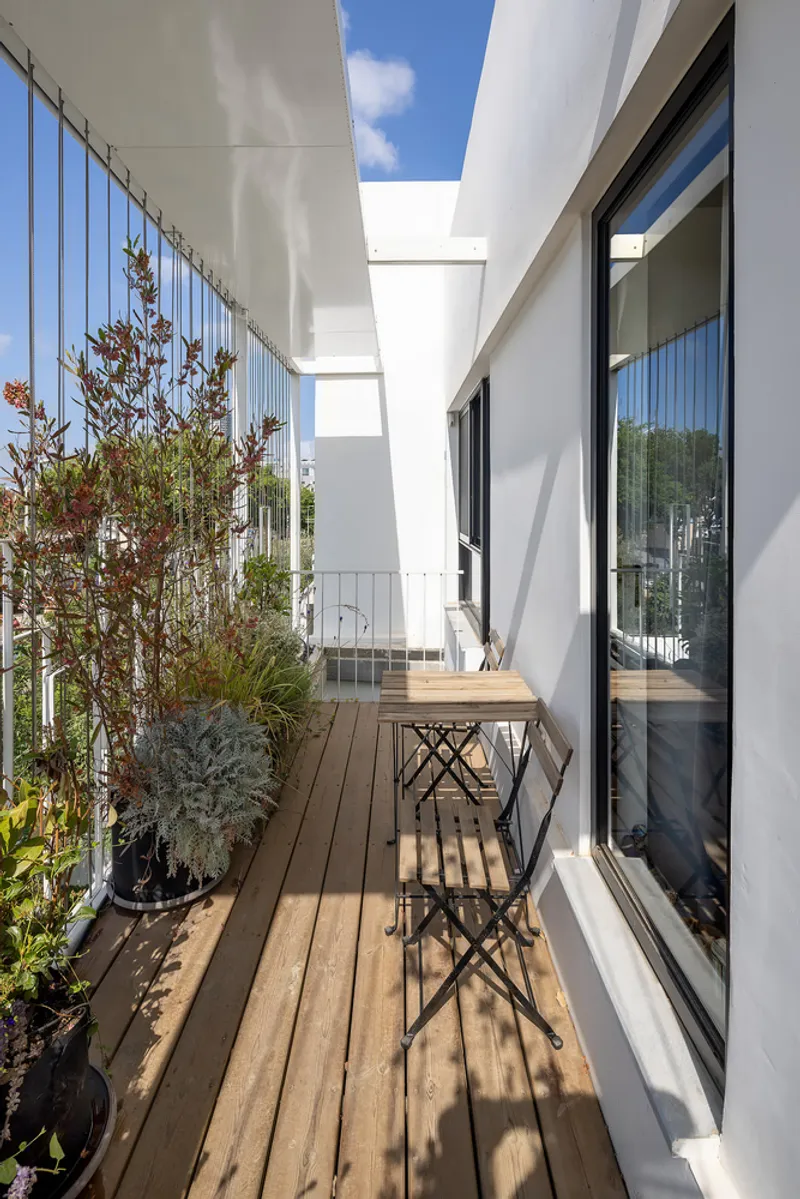
Upstairs, the children’s bedrooms are anchored by a front-facing terrace, fitted with a custom railing system made of steel frames and tensioned cables. This geometric pattern is a subtle homage to Tel Aviv’s Bauhaus and Art Deco heritage, while also functioning as a trellis for climbing plants—merging privacy, ventilation, and greenery in one smart design move.
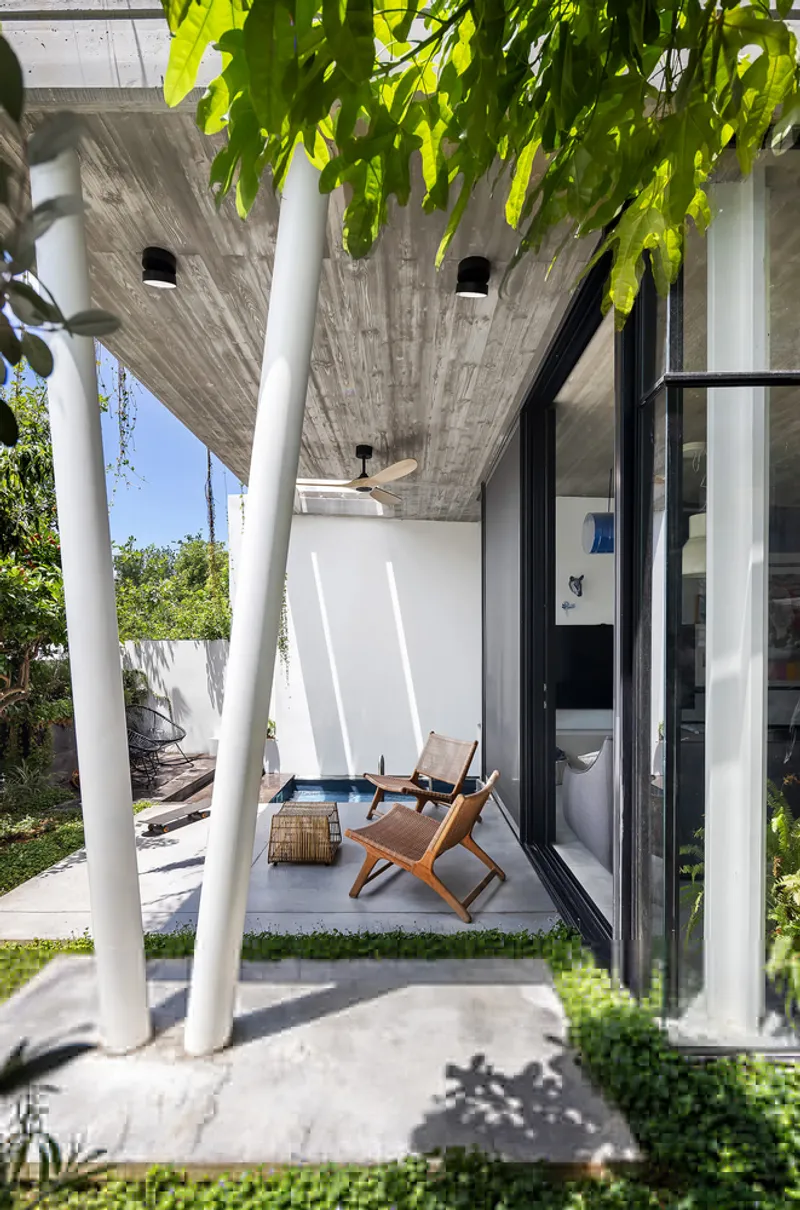
The second floor overhang serves a dual environmental purpose: it creates a shaded seating area below and mitigates overheating from Tel Aviv’s intense southern sun. At the same time, the generous glazing allows ample daylight to filter through, creating a bright yet thermally balanced home.
Material Honesty and Earthy Tranquility
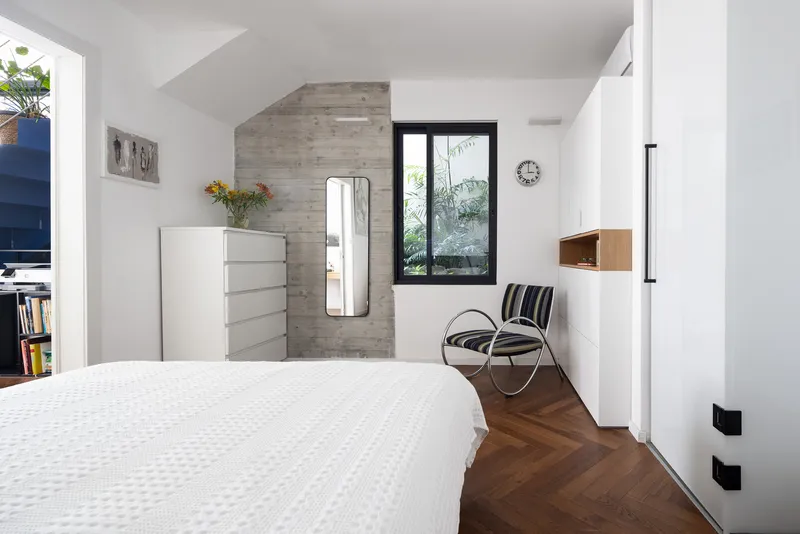
Material expression plays a defining role throughout the home. The architects chose to leave elements raw and honest—including a bare concrete ceiling, an architectural concrete floor, and cross-shaped steel columns that are left exposed in parallel to glass walls. These materials add a tactile authenticity and industrial contrast to the lush greenery and fluid layout.
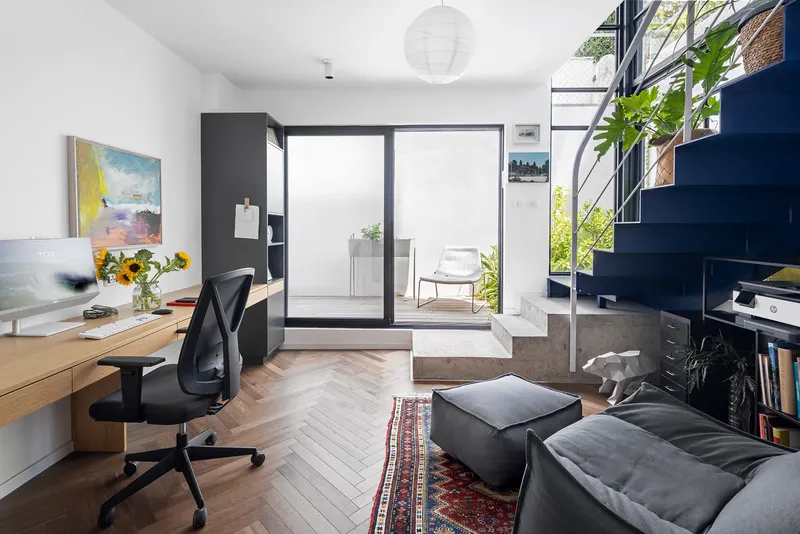
In a move that redefines conventional floor hierarchies, the parents’ master suite is located on the basement level, alongside a secondary living area and home office. Despite its subterranean location, the space feels bright and connected to nature thanks to large windows opening directly onto a lower sunken garden, complete with an outdoor shower—a private retreat within the urban chaos.
Smart Planning in a Narrow Urban Plot
Despite the plot’s narrow dimensions, the home feels expansive and flexible. Every centimeter was strategically utilized: the pool was constructed using a PVC lining to optimize cost and efficiency, and the house blends traditional cast-in-place construction with Light Gauge Metal Framing (LGMF) to allow for precision, sustainability, and ease of construction. Even the neighboring old house—attached during the build—was carefully protected and preserved during the process.


Popular Articles
Popular articles from the community


The Ocean Hive: Sustainable Architecture for a Self-Sufficient Civilization at Sea
The Ocean Hive imagines sustainable architecture at sea, where modular habitats, algae, wave power and ocean waste sustain a growing colony.

Conexión: Biophilic Design Reimagines High-Rise Living in Hong Kong
Conexión reimagines high-rise living in Hong Kong through biophilic design, green facades, shared spaces, daylight, water and nature within.

ALGAL REALM: A Bio-Integrated Lunar Habitat Design for Life Beyond Earth
ALGAL REALM reimagines lunar habitat design with algae-powered life support, 3D-printed regolith, and vertical living for a lunar future.

Co-Life: Senior Housing Design That Reconnects Older Adults With the City
Co-Life reimagines senior housing design through healing gardens, shared streets, workshops, and a sustainable community across generations.

Similar Reads
You might also enjoy these articles


Hodi-Mandai Geram
Project Function: Preservation and revitalization of the Intangible heritage and socio-spatial identity of the Hodi by Housing, Cultural Memory Center, Sacred Grove, landscape, local tourism economy


Olio Towers: A Mid-Rise for Performers That Fuses Housing, Rehearsal, and Stage
Located blocks from Houston's Theater District, this modular tower stacks living units around a central performance atrium.

Oasis: Modular Green Housing Carved into Dhaka's Urban Fabric
A shortlisted Plugin Housing entry reclaims unauthorized settlements in Dhaka with stepped concrete volumes, green roofs, and ventilation-driven design.

Black Hole: A Floating Megastructure for the Post-Physical Era
Emiliano Mazzarotto envisions a spherical, self-scaling arena where e-sports, digital hotels, and holographic stadiums replace traditional public space.

Explore Housing Competitions
Discover active competitions in this discipline

Challenge to reimagine the Iron Throne

Photograph architecture without architects

Illustrate the lost glory of Angkor Wat - Render Challenge

Design challenge to reuse E-waste
Comments (0)
Please login or sign up to add comments
No comments yet. Be the first to comment!