

Daniël: A Mid-Century Bungalow Renovation By FELT architecture & design
A mid-century bungalow reimagined with a slender blue-tiled tower, improving circulation, light, and spatial clarity for contemporary family living.


Daniël, A Mid-Century Bungalow is a sensitive yet confident renovation of a mid-20th-century modernist home in Ghent, Belgium, carried out by FELT architecture & design. The project carefully balances preservation and transformation, maintaining the original architectural identity while introducing a precise contemporary intervention that adapts the house to modern family life.
Reinterpreting Mid-Century Modernism for Contemporary Living
Rather than altering the bungalow’s horizontal character, the architects chose to enhance it through a single, strategic vertical addition, a slender tower clad in deep-blue ceramic tiles. This new element becomes both a spatial and symbolic anchor, reconfiguring circulation while offering a fresh architectural dialogue with the existing modernist structure.


A Vertical Solution to a Horizontal Plan
At the heart of the renovation lies the tower, which houses a new split-level staircase connecting the home’s two primary levels. This vertical insertion resolves a long-standing circulation challenge within the original plan, where offset horizontal slabs previously created spatial disjunctions.
By introducing light, height, and clarity, the tower allows these staggered floor plates to meet harmoniously. Natural daylight filters deep into the interior, transforming what was once a closed and compressed zone into a luminous, spatially rich core. The intervention demonstrates how a minimal architectural gesture can unlock new spatial relationships without overpowering the original design.


Clear Zoning and Functional Adaptation
The reorganization of levels brings a clear functional logic to the house. Upper floors are dedicated to private sleeping areas, while living spaces occupy the main horizontal planes, maintaining visual and physical connections to the surrounding garden. A semi-underground level accommodates practical functions and additional living spaces, expanding the usable area without disrupting the bungalow’s low-profile presence within the landscape.
This layered spatial strategy respects the modernist emphasis on clarity and order while responding to contemporary expectations of flexibility and comfort.


Material Continuity and Subtle Contrast
Material choices play a crucial role in bridging past and present. The windows were replaced with rust-colored aluminum frames, a deliberate reference to the original timber joinery. This warm tone complements both the deep-blue ceramic tiles of the tower and the lush greenery surrounding the house, creating a cohesive exterior palette that feels rooted in its context.
Inside, the bungalow was entirely re-dressed, drawing inspiration from the warmth, restraint, and precision of mid-century interiors. Natural wood surfaces, clean lines, and a carefully calibrated color scheme reinforce the home’s original spatial qualities, while contemporary detailing ensures a fresh, refined atmosphere.


Preserving Identity Through Contemporary Precision
Throughout the renovation, FELT architecture & design maintained a deep respect for the bungalow’s original character. The project does not imitate mid-century modernism but instead reinterprets its principles: clarity, proportion, and material honesty, through a contemporary lens.
The result is a home that feels both timeless and current. The original modernist spirit remains intact, yet the precise architectural addition enables a renewed appreciation of its ideas, proving that thoughtful renovation can strengthen, rather than dilute, architectural heritage.


All the photographs are works of Stijn Bollaert


Popular Articles
Popular articles from the community

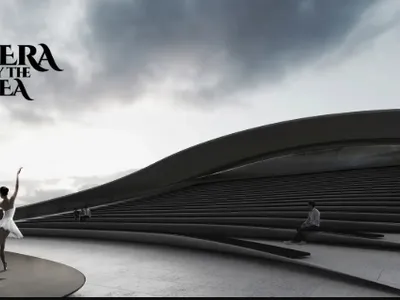
Opera by the Sea Estonia: Three Shells Dissolving Architecture into Tallinn's Coastline
A winning opera house proposal replaces monumental form with interconnected shells that blur the boundary between building, park and Baltic Sea.
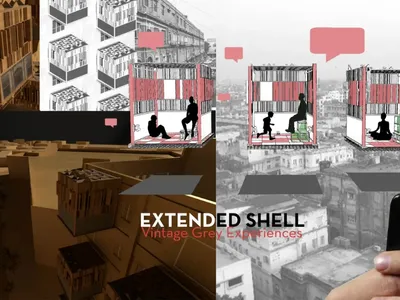
Extended Shell: Retrofitting Kolkata's Balconies as Living Urban Thresholds
A modular retrofit system recovers the social and environmental intelligence of Kolkata's historic verandas for contemporary Park Street residents.
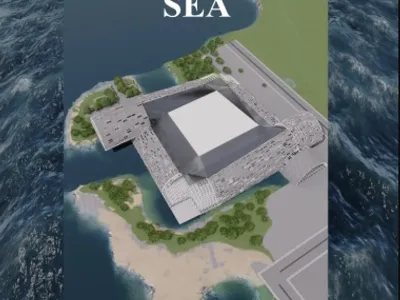
Opera on the Sea: Driftwood Logic Shapes a Timber Opera House on Estonia's Coast
Trevor Orgill's opera house translates the entangled drift of floating timber into a civic building where wood, water, and music converge.
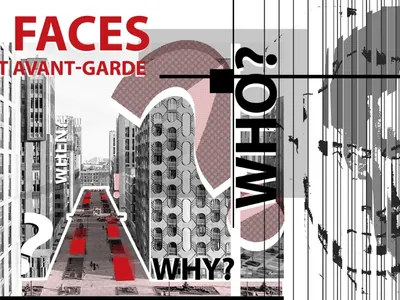
Faces of the Soviet Avant-Garde: Turning Moscow's Street Names into an Open-Air Museum
A network of sculptural installations across a Moscow residential district transforms forgotten architect names into spatial encounters with cultural memor

Similar Reads
You might also enjoy these articles


Hodi-Mandai Geram
Project Function: Preservation and revitalization of the Intangible heritage and socio-spatial identity of the Hodi by Housing, Cultural Memory Center, Sacred Grove, landscape, local tourism economy


Olio Towers: A Mid-Rise for Performers That Fuses Housing, Rehearsal, and Stage
Located blocks from Houston's Theater District, this modular tower stacks living units around a central performance atrium.

Oasis: Modular Green Housing Carved into Dhaka's Urban Fabric
A shortlisted Plugin Housing entry reclaims unauthorized settlements in Dhaka with stepped concrete volumes, green roofs, and ventilation-driven design.

Black Hole: A Floating Megastructure for the Post-Physical Era
Emiliano Mazzarotto envisions a spherical, self-scaling arena where e-sports, digital hotels, and holographic stadiums replace traditional public space.

Explore Architecture Competitions
Discover active competitions in this discipline

Challenge to reimagine the Iron Throne

Photograph architecture without architects

Illustrate the lost glory of Angkor Wat - Render Challenge

Design challenge to reuse E-waste
Comments (0)
Please login or sign up to add comments
No comments yet. Be the first to comment!