

Dehkadeh Iwan House by Super Void Space: A Contemporary Revival of Iran’s Architectural Heritage
A restored Iranian villa reimagines the traditional Iwan with bold brick arches, enhanced height, courtyards, and luminous details connecting past and present.


The Dehkadeh Iwan House, designed by Super Void Space, reinterprets one of Iran’s most iconic architectural archetypes, the Iwan, through a sensitive restoration and renovation of a 50-year-old villa in Karaj, Iran. The project spans 400 m² and transforms a modest, dilapidated residence into a striking dialogue between historical Iranian architecture and contemporary spatial design.
Reimagining the Iwan: A Timeless Architectural Archetype
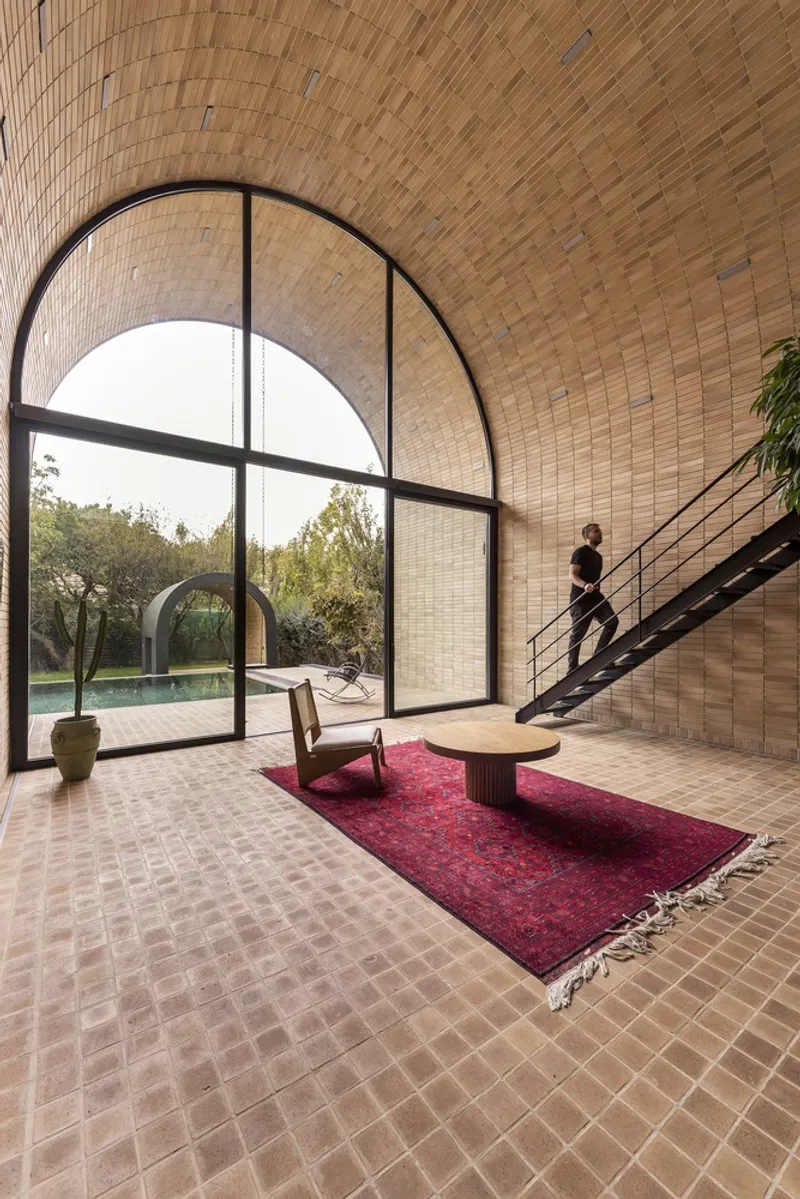
At the core of the project is the Iwan, a traditional semi-open vaulted space elevated above its surroundings. Historically celebrated in structures such as Taq Kasra, the Iwan served as a climatic and social mediator: offering shade, openness, and a symbolic threshold between interior and exterior.
Super Void Space reinterprets this archetype to bridge Iran’s architectural past with the post-modern era, transforming the outdated villa into a meaningful continuation of architectural lineage. The design honors the charismatic geometry of the Iwan while embedding it within a renewed domestic program.
Restoring a Forgotten Villa Through Light and Height
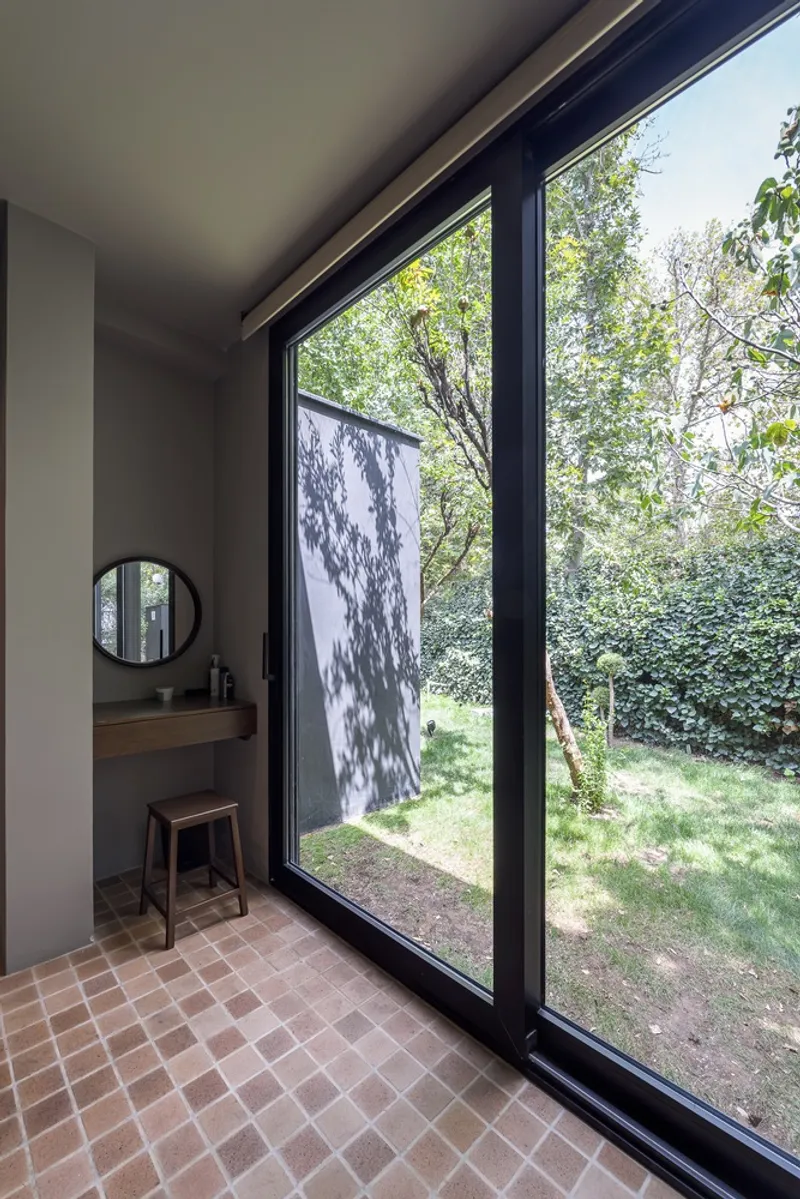
During the architects’ initial visit, the villa resembled a “depressing shelter”:, a low, oppressive roofline, thick walls and small windows, minimal connection to the surrounding garden
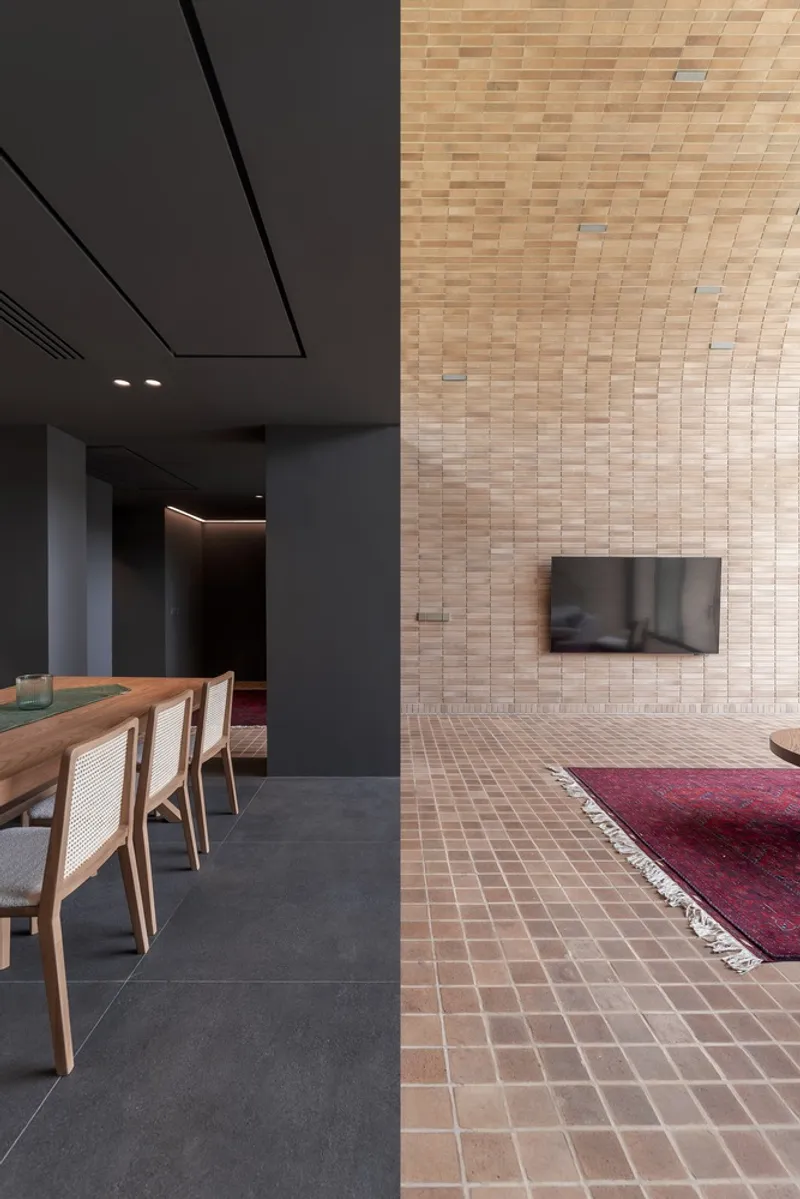
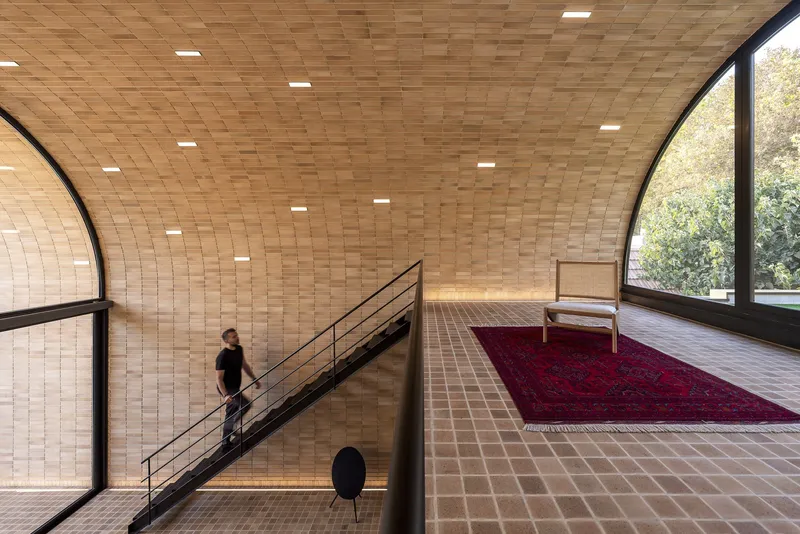
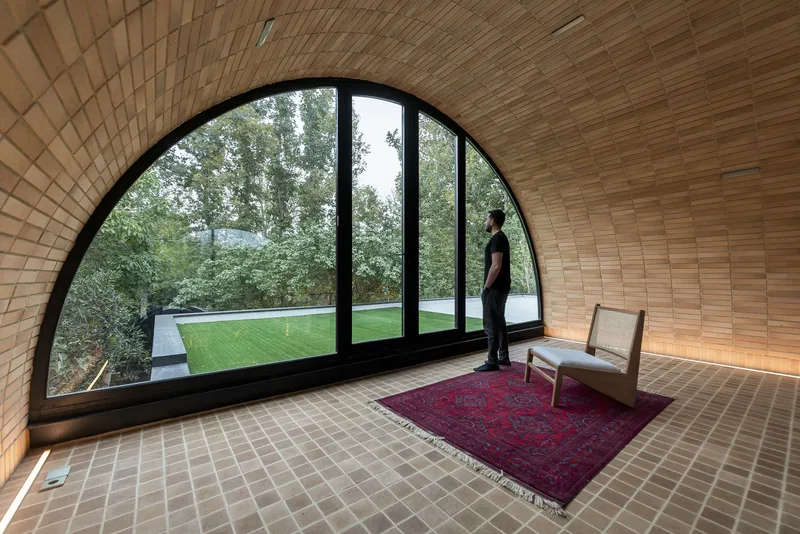
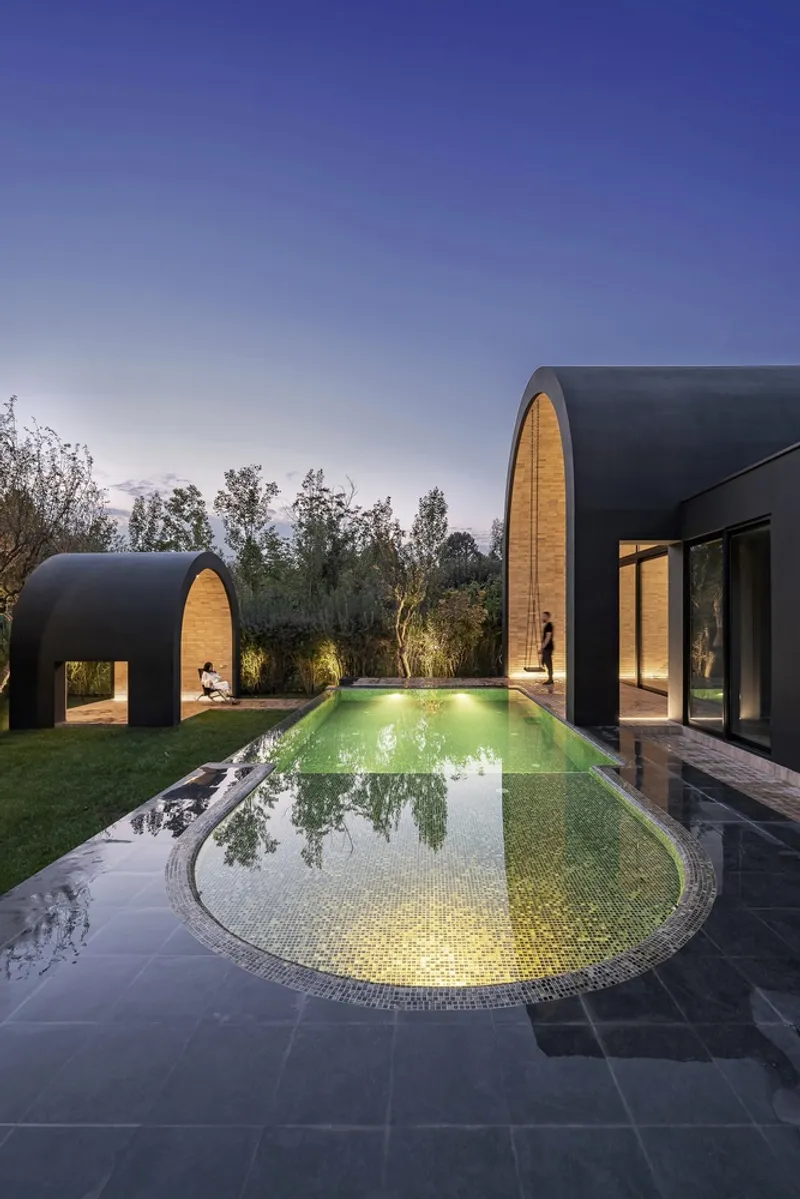
Recognizing the living room as the emotional core of the home, the team proposed raising its ceiling height as the key spatial intervention. Since the entire roof structure could not be elevated, a 7-meter-span brick arch, the new Iwan, was constructed on the south side, opening the living area toward the courtyard.
This new soaring volume creates a roof-level sitting space, strengthening the connection between architecture, landscape, and daylight.
Dual Arches and a New Courtyard Experience
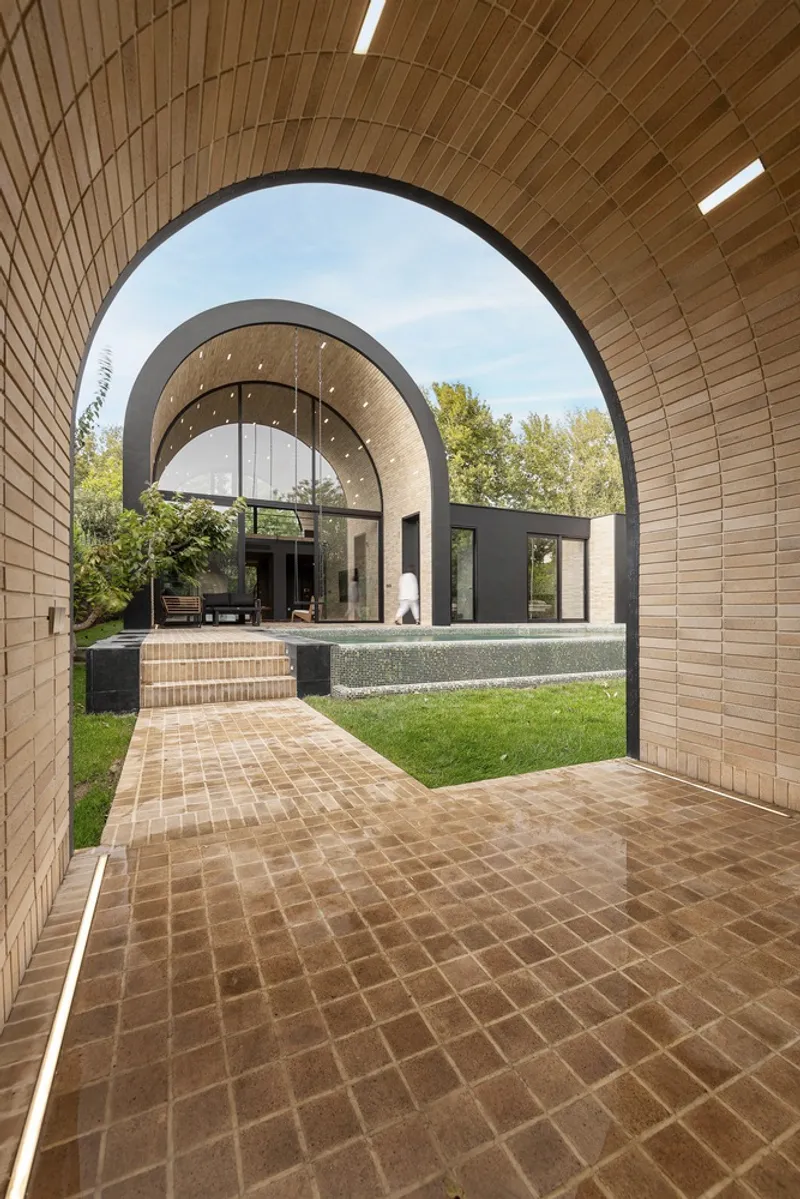
In a bold design gesture, the architects introduced a second, smaller arch within the courtyard, an interpretation of the historic Kooshk, a pavilion-like structure rooted in Persian garden design.
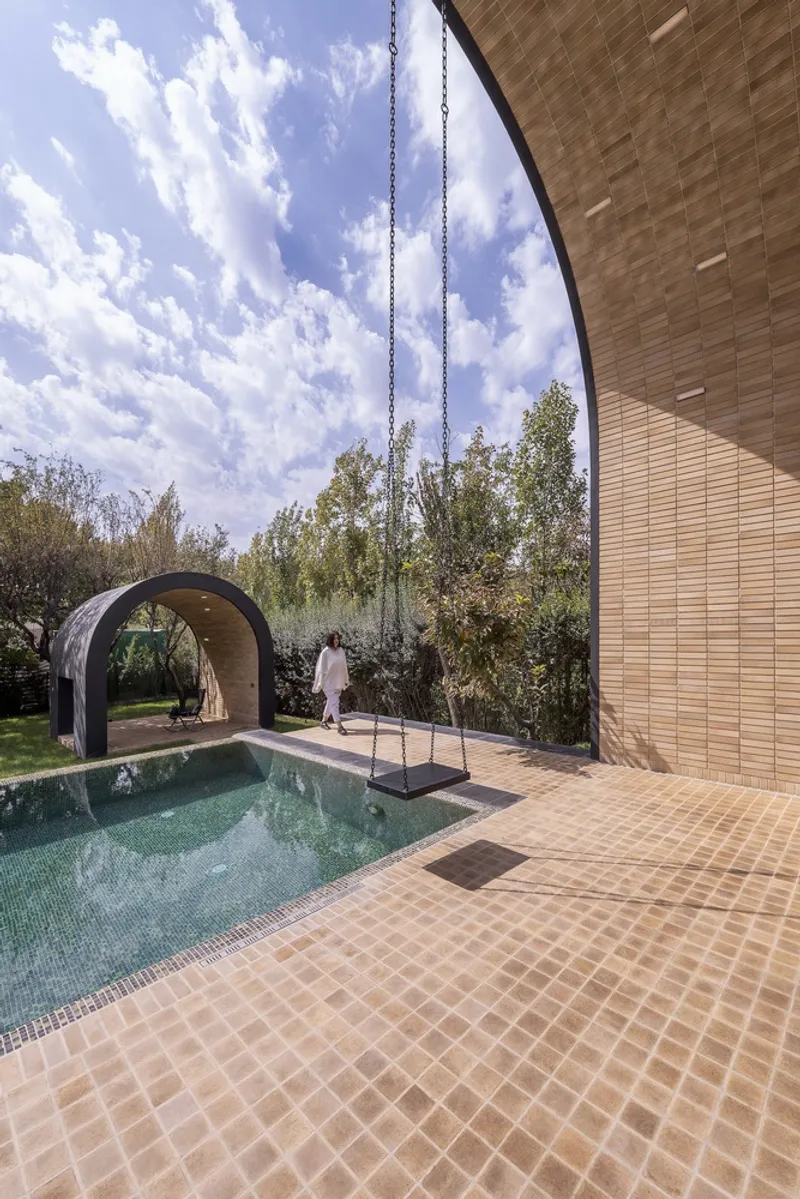
A pathway links the large Iwan arch and the smaller Kooshk arch, forming a fluid circulation spine that enhances outdoor living. Between these two structures, the team placed a reflective pool, extending coolness, freshness, and sensory depth throughout the space. This creates a courtyard experience that feels both contemporary and deeply rooted in Iranian cultural landscapes.
Materiality, Craft, and Playful Elements
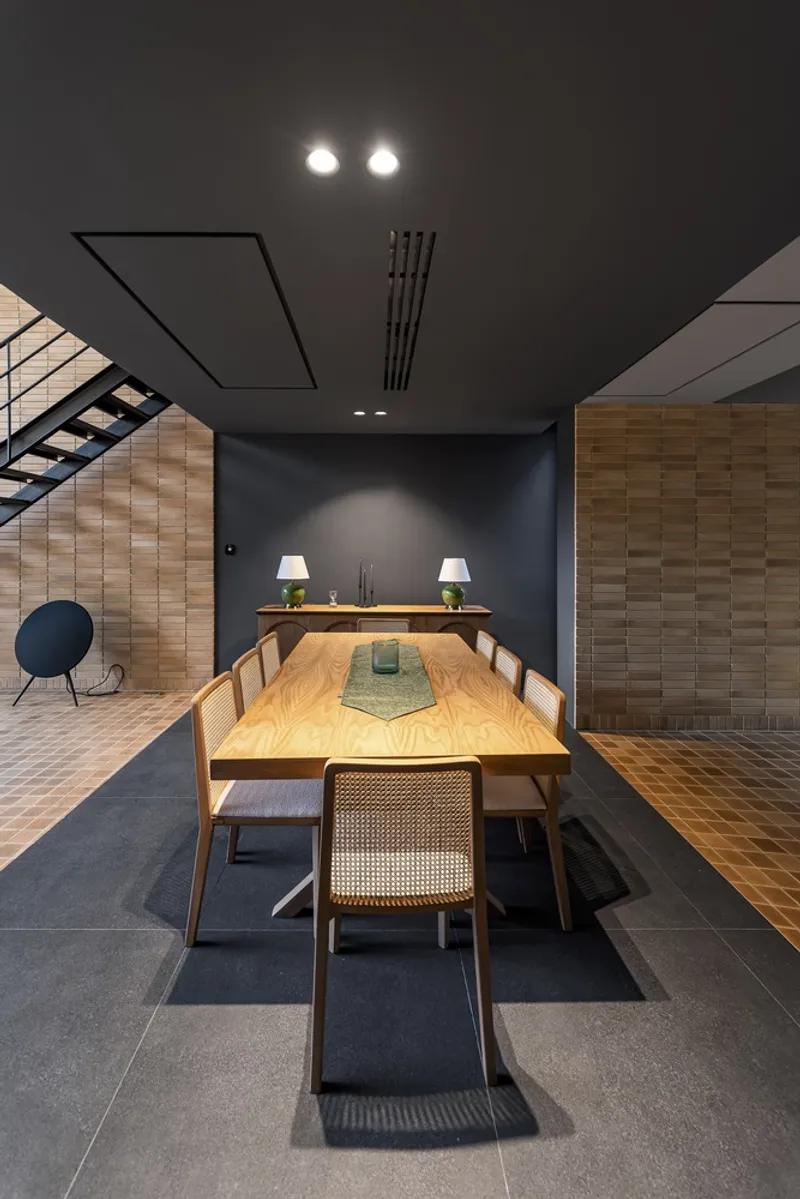
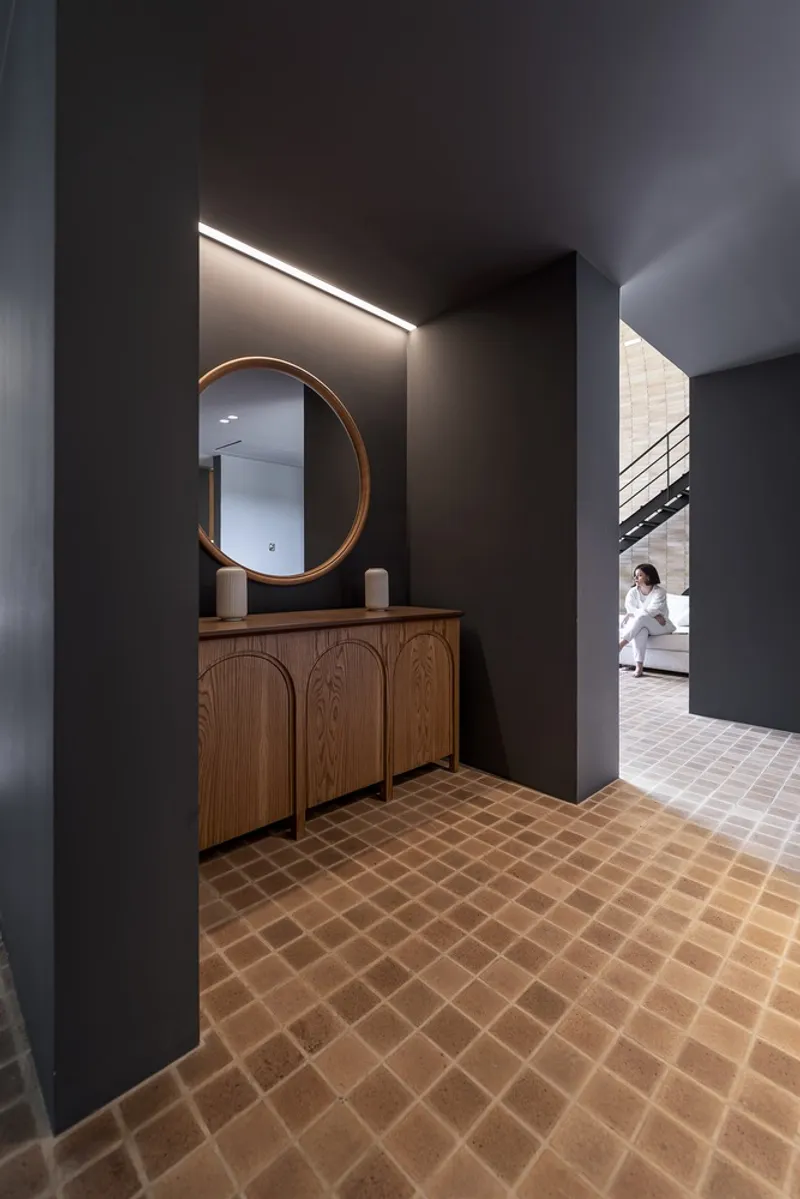
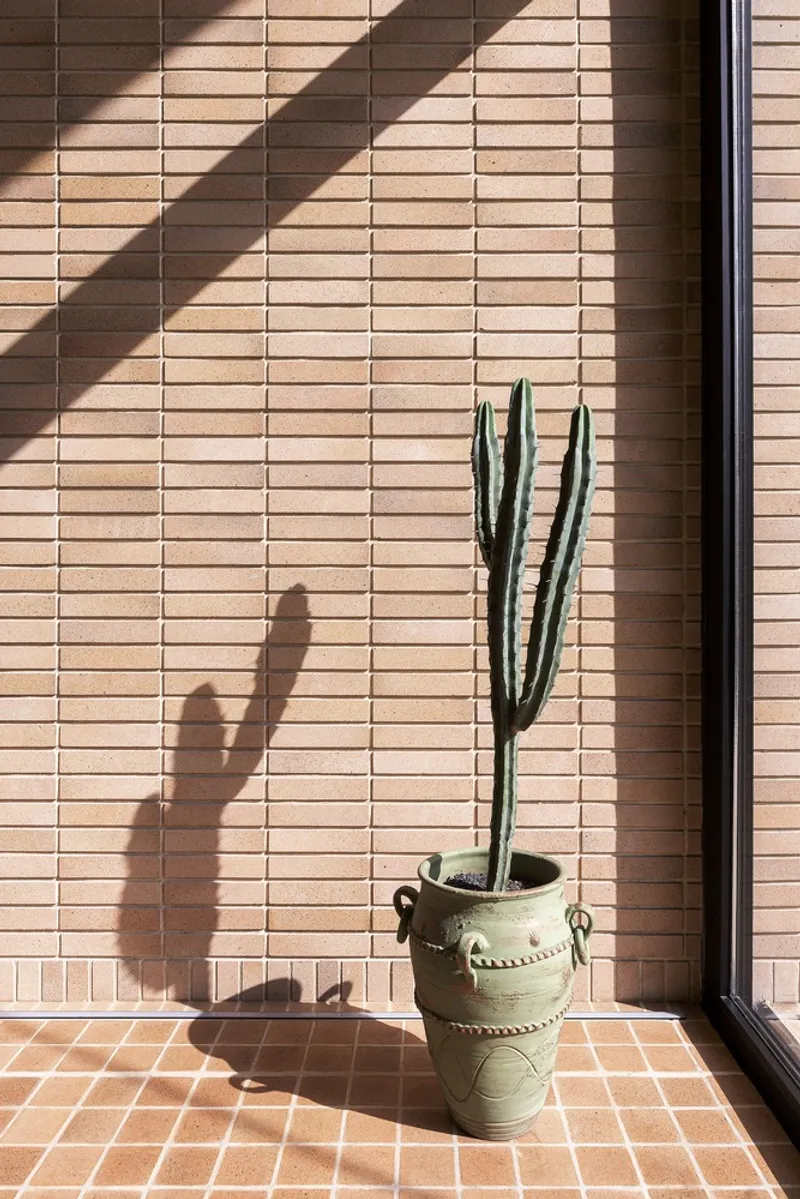
Brick, an essential material in Iran’s architectural identity, is celebrated throughout the project. Instead of replicating traditional detailing, Super Void Space introduces a modern interpretation of brickwork: layered, tactile, and expressive.
To introduce a sense of play and cultural nostalgia, the architects incorporated a swing, referencing one of the oldest recreational elements in Iranian tradition. The presence of custom luminous bricks, integrated into the arches and glowing softly at night, further merges past craftsmanship with present-day design innovation.
Light, Geometry, and Contemporary Expression
Light becomes a defining architectural element. By combining arched geometry with integrated lighting, the project elevates the ambiance of both interior and exterior spaces. The luminous brick infills softly illuminate the Iwan and Kooshk structures, creating an atmosphere that is tranquil, ceremonial, and timeless.
All photographs are works of Mohammad Hosein Hamzehlouei



Popular Articles
Popular articles from the community


Conexión: Biophilic Design Reimagines High-Rise Living in Hong Kong
Conexión reimagines high-rise living in Hong Kong through biophilic design, green facades, shared spaces, daylight, water and nature within.

Play: Fragments of Their World
Familiar architecture becomes modular playground design, creating safe spaces where displaced children can learn, connect, imagine and play.

Hill & Cross Opera: Sculptural Opera House Architecture Shaped by Tallinn’s Landscape and Identity
Hill & Cross Opera reimagines opera house architecture in Tallinn through its sculptural hill, civic plaza, glass wave and a luminous cross.

The Musturak Paradise: Senior Living Architecture for a Connected Future in Temara, Morocco
The Musturak Paradise reimagines senior living architecture in Temara via private homes, social spaces, culture, community, and shared care.

Similar Reads
You might also enjoy these articles


Hodi-Mandai Geram
Project Function: Preservation and revitalization of the Intangible heritage and socio-spatial identity of the Hodi by Housing, Cultural Memory Center, Sacred Grove, landscape, local tourism economy


Olio Towers: A Mid-Rise for Performers That Fuses Housing, Rehearsal, and Stage
Located blocks from Houston's Theater District, this modular tower stacks living units around a central performance atrium.

Oasis: Modular Green Housing Carved into Dhaka's Urban Fabric
A shortlisted Plugin Housing entry reclaims unauthorized settlements in Dhaka with stepped concrete volumes, green roofs, and ventilation-driven design.

Black Hole: A Floating Megastructure for the Post-Physical Era
Emiliano Mazzarotto envisions a spherical, self-scaling arena where e-sports, digital hotels, and holographic stadiums replace traditional public space.


Explore Persian Architecture Competitions
Discover active competitions in this discipline



Challenge to reimagine the Iron Throne


Photograph architecture without architects


Illustrate the lost glory of Angkor Wat - Render Challenge


Design challenge to reuse E-waste
Comments (0)
Please login or sign up to add comments
No comments yet. Be the first to comment!