

Deja Vu: Pioneering Lunar Base Architecture in 2124
This article explores the innovative architectural design and construction of the Deja Vu lunar base.


"The sense of déjà vu," originally called "Deja Vu" in French, translates to 'seems like a previous encounter'. This familiar yet awe-inspiring sensation encapsulates the essence of humanity's perpetual curiosity and exploration of the unknown. As we stand on the cusp of 2124, humans find themselves gazing upon the sky from their lunar base, experiencing a profound sense of connection to our ancient ancestors who once marveled at the moon from Earth. This article delves into the innovative architectural design and construction of the Deja Vu lunar base, a shortlisted entry in the Moon Base 2124 Competition, created by Hongyang Deng and Hongyang Zhang.
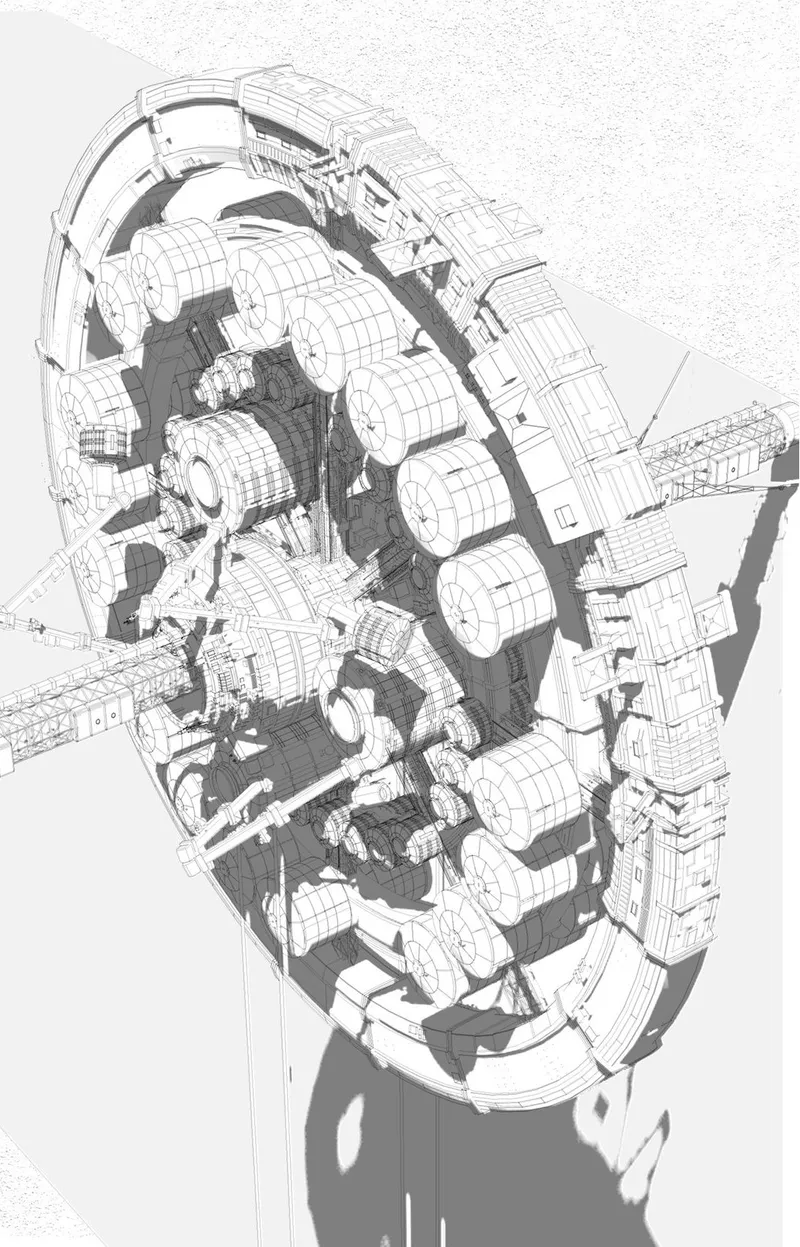
The Vision of Deja Vu
In 2124, sustained, self-sufficient life on the moon has become a reality. The Deja Vu lunar base harmonizes with humanity's enduring fascination with the moon, echoing a shared sentiment of exploration and wonder. This pioneering project aims to address the imminent energy crisis on Earth by leveraging lunar resources to fuel future advancements in human civilization.
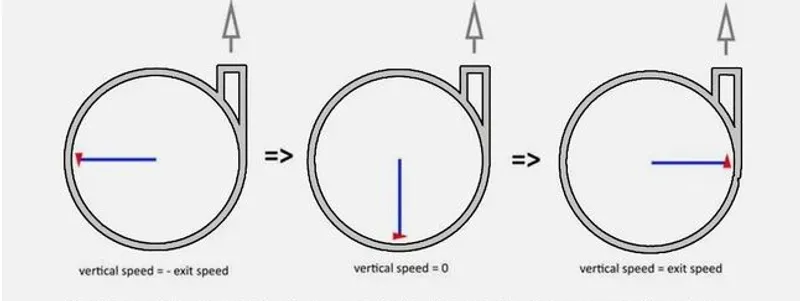
Architectural Design and Construction Phases
The Deja Vu lunar base is an architectural marvel, constructed in six meticulously planned phases:
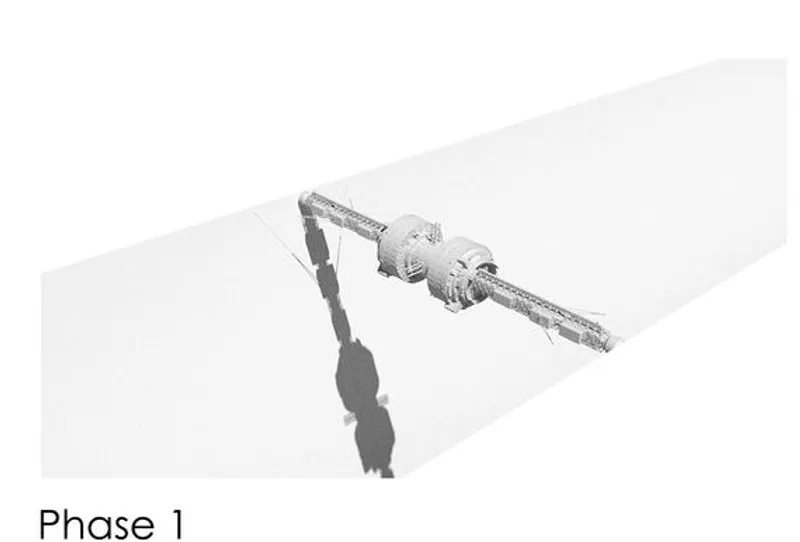
Phase 1: Foundation and Initial Setup
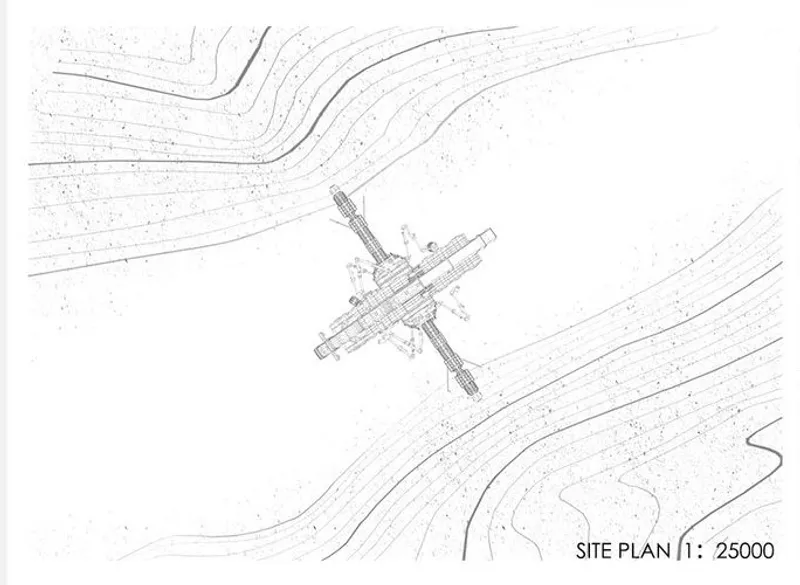
The construction begins with the launch of engineering robots and modular components around the lunar rift. Long span rods, assembled by robots, connect the two sides of the canyon, creating a robust foundation. The kernel module, a temporary 3D production base, is strategically placed in the middle to assist in the construction process.
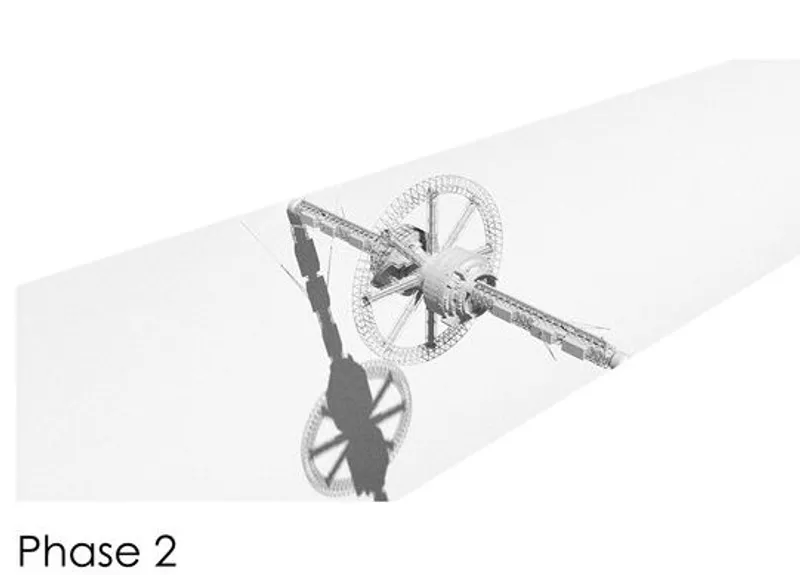
Phase 2: Ring Structure and Module Integration
Industrial robots build a ring structure through the axial module. Essential modules, including mining, communication, and scientific research centers, are constructed using 3D printing technology and attached to the ring's periphery. The axial module is then upgraded to serve as the main energy module, powering the surrounding structures.
Phase 3: Channel Formation and Habitat Development
The ring structure is perfected to form a channel that serves as the primary traffic artery. Modular four-person living cabins, assembled through robotic arms, provide an enhanced living experience for the space station crew. Industrial robots continue to build larger ring structures to accommodate expanding needs.
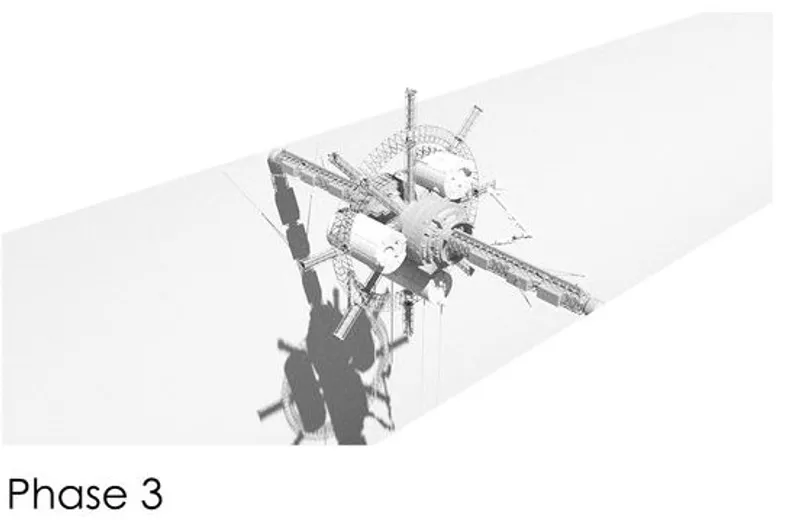
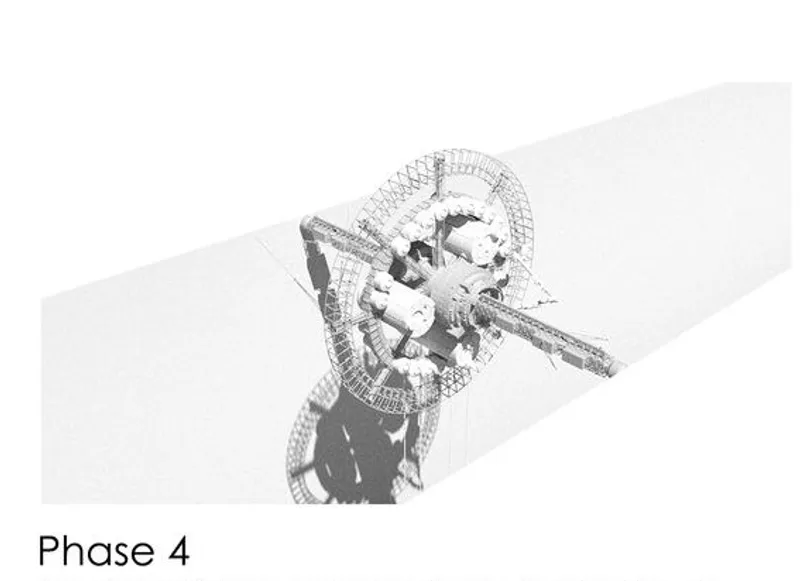
Phase 4: Expansion and Multifunctional Modules
A larger-scale modular multifunctional module is formed through 3D printing and assembled on the outer ring channel. This phase focuses on creating additional living and research spaces, leveraging mechanical arms and robots for precise construction.
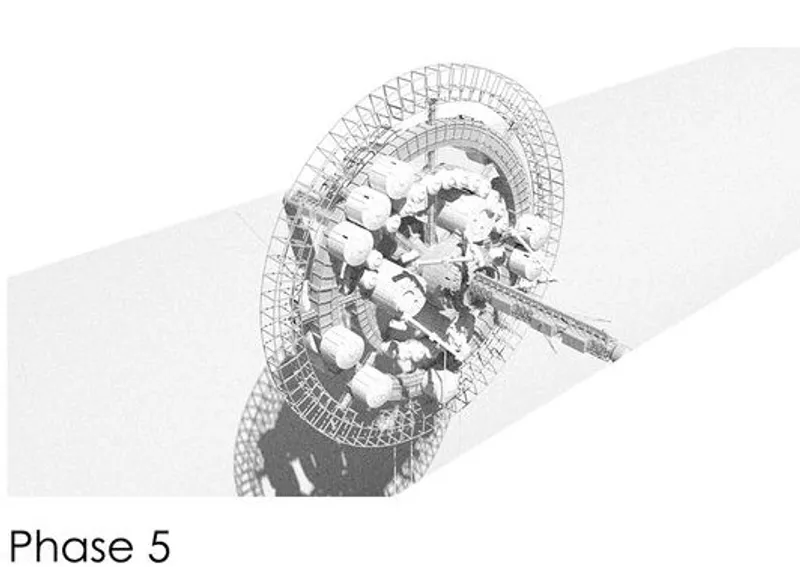
Phase 5: Supporting Facilities and Calibration
The construction of rocket annular acceleration orbits and supporting facilities, including track calibration settings and electromagnetic control rooms, is improved. This phase also involves the calibration, inspection, and testing of launch device parameters to ensure optimal performance.
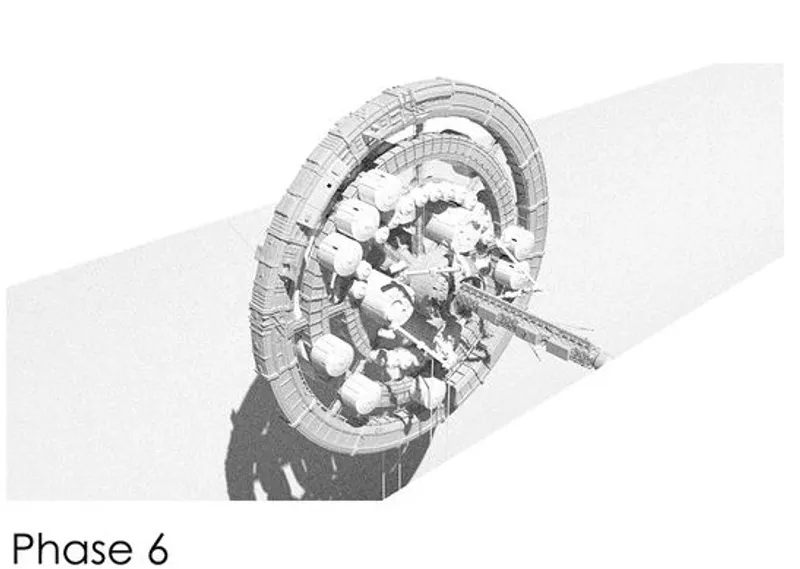
Phase 6: Advanced Rocket Launch Systems
Circular rocket launchers replace traditional fuel rockets, enabling efficient material exchange between Earth and the moon. This advanced launch system not only delivers lunar resources to Earth but also facilitates the transport of essential supplies and equipment from Earth to the lunar base.
Key Architectural Features
The Deja Vu lunar base boasts several innovative features that set it apart:
Ring Rocket Accelerator
The ring rocket accelerator is vital for material exchange with Earth. It utilizes a circular acceleration mechanism to launch rockets with minimal energy consumption, taking advantage of the moon's low gravity and vacuum environment. This breakthrough technology promises to revolutionize space travel and resource transport.
Modular Construction
The base's construction is based on a modular approach, allowing for flexibility and rapid assembly. Each module serves a specific function, from habitat and commercial modules to mining and multifunctional research units. This modularity ensures the base can adapt to changing needs and technological advancements.
Robotic Arms and 3D Printing
Robotic arms and 3D printing technology are integral to the construction and maintenance of the lunar base. These advanced tools enable precise assembly of complex structures, ensuring the base remains functional and up-to-date with minimal human intervention.
Sustainable Living Environments
The habitat modules provide comfortable living conditions for base personnel and visitors. Each module includes bedrooms, communal gardens, and essential life support systems, creating a self-sustaining environment that mitigates the mental and physical challenges of long-term space habitation.
Addressing Earth's Energy Crisis
One of the primary motivations behind the Deja Vu lunar base is to address the looming energy crisis on Earth. By 2124, the depletion of non-renewable resources and the rising cost of energy will have reached critical levels. The lunar base aims to mitigate these challenges by providing a sustainable source of energy and resources.
Benefits of Lunar Bases
Lunar bases offer several advantages in alleviating Earth's resource crisis:
Rich Resource Deposits: The moon is abundant in valuable minerals and elements, including helium-3, which can be used for nuclear fusion.
Energy Efficiency: The low gravity and vacuum environment of the moon make energy-efficient rocket launches possible, reducing the cost and environmental impact of space travel.
Sustainable Development: The modular construction and advanced technology used in lunar bases promote sustainable living and resource management.
The Future of Lunar Colonization
The Deja Vu lunar base is not just a solution to Earth's energy crisis; it is a stepping stone toward humanity's future in space. As the first of its kind, this base will serve as a model for subsequent lunar colonies and space exploration initiatives. The advanced launch systems and modular construction techniques developed here will enable humans to establish larger, more sophisticated bases on the moon and beyond.
Long-Term Vision
The ultimate goal of the Deja Vu project is to facilitate space colonization. By serving as a transit station, the lunar base will enable efficient travel between Earth and other extraterrestrial destinations, such as Mars. This vision includes the creation of a network of interconnected lunar bases, each specializing in different resources and research areas, to support humanity's expansion into the cosmos.
The Deja Vu lunar base represents a monumental achievement in architectural design and space exploration. By combining innovative construction techniques with sustainable living solutions, this project addresses critical challenges facing humanity and paves the way for a future where space colonization is not just a dream but a reality. As we look to the stars, the Deja Vu lunar base stands as a testament to human ingenuity and our unyielding desire to explore the unknown.


Popular Articles
Popular articles from the community


Architekt Andreas Gruber Scatters 23 Dark Timber Chalets Across a South Tyrolean Forest Edge
In Molini di Tures, Amonti Chalets breaks a resort into a hamlet of gabled timber houses, with parking, storage and services pushed into the slope.

longwave studio Reorganizes a 112 m² Tainan Apartment Around the Daily Routines of a Family and Two Cats
In Tainan, Taiwan, birch plywood, rust-red furniture and a freestanding plaster wall link arrival, storage, work and family life in one apartment.

David Macias Steps a Doorless Stone and Plaster House Down a Tropical Colombian Hillside
In the humid hills of Colombia, Threshold House replaces the front door with an open void and terraces its 850 m² down the slope instead of fighting it.

U.GA Architects Wraps an Oval Rooftop Pool in Curved Board-Formed Concrete on Busan's Jeollidan-gil
In Busan's Jeonpo-dong, a 454 m² mixed-use block stacks a neighborhood facility, guest rooms and an oval rooftop pool inside spiraling concrete walls.

Similar Reads
You might also enjoy these articles


Vereda Arquitetos Renovates a 40-Square-Meter Apartment Inside Niemeyer's Copan Building
A compact unit in São Paulo's most iconic residential tower gets a material overhaul that pairs exposed concrete with bold blue Formica.

Shakur's House: Exposed Brick as an Interior Organiser in a 168 m² Mashhad Residence
Brick moves indoors in this Mashhad residence, where masonry walls, glass partitions and teal planes sequence a compact home without closing it off.

Day and Night Park: A Time-Based Urban Newsstand in Beijing
A temporary urban newsstand in Beijing blending travel, light, and reading through poetic colors, compact form, and community-focused design.

Modernist Patio Renovation in El Masnou, Barcelona by Oliver Segura Arquitectura + Cebrià Arquitectura
Modernist patio renovation blending tradition and innovation with a movable pool, leveled floors, and Catalan materials in El Masnou.

Explore Extreme Architecture Competitions
Discover active competitions in this discipline

Challenge to design a shop stop sunk in the city

Challenge to reimagine the Iron Throne

Photograph architecture without architects

Illustrate the lost glory of Angkor Wat - Render Challenge
Comments (0)
Please login or sign up to add comments
No comments yet. Be the first to comment!