

design process
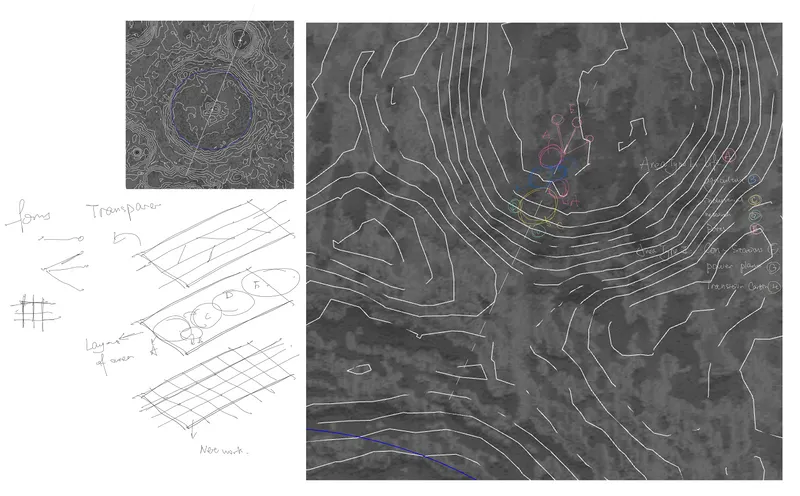
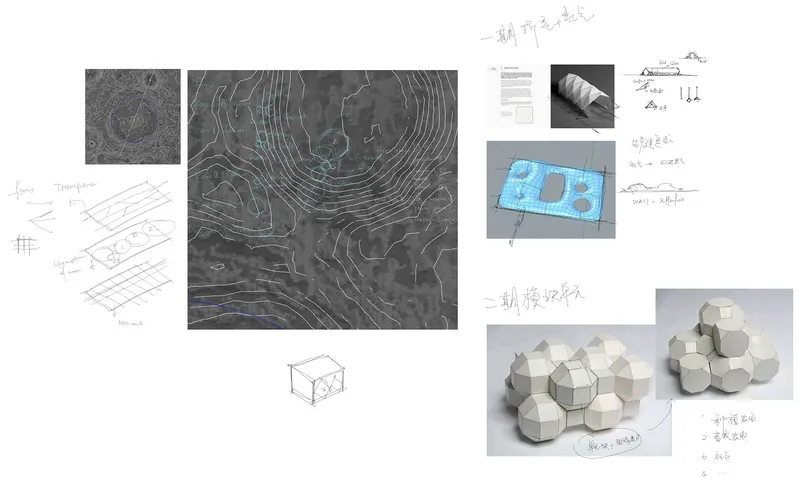
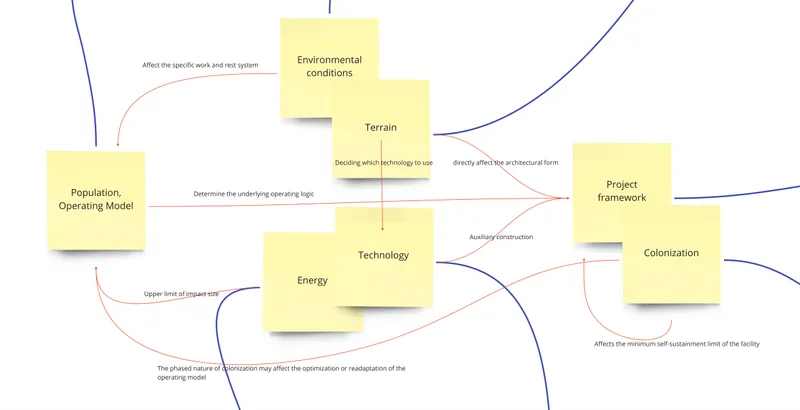
Shows the entire planning outline of the lunar program,and some thoughts
Before doing this project, my concept of extraterrestrial buildings has always been on the appearance level, and this competition opportunity allowed me to understand many additional concepts, from extraterrestrial environment to population structure, what conditions are suitable Is it habitable? And the deeper question is: What conditions are suitable for long-term living?
After all, this is quite a lunar base, not just an outpost. For this reason, I investigated many theories to support the basis of the design, such as the lunar surface environment, the distribution of lunar resources, and how people live and work in extraterrestrial environments. Conceiving a utopia is easier than imagining a truly achievable utopia.
Due to the intense solar wind and the temperature difference between day and night on the lunar surface, I set the site at the bottom of a crater, which can meet most of the development needs and guarantee that there will be no harvesting. to the intense warming effects of sunlight (because the terrain is low enough to remain in shadow for a long period of time). In the future development plan, the entire ring wall with craters will provide land for solar panels. At the same time, after the population size increases, appropriate consideration can be given to using the abundant helium 3 on the moon to build a tokamak device to meet more energy needs.
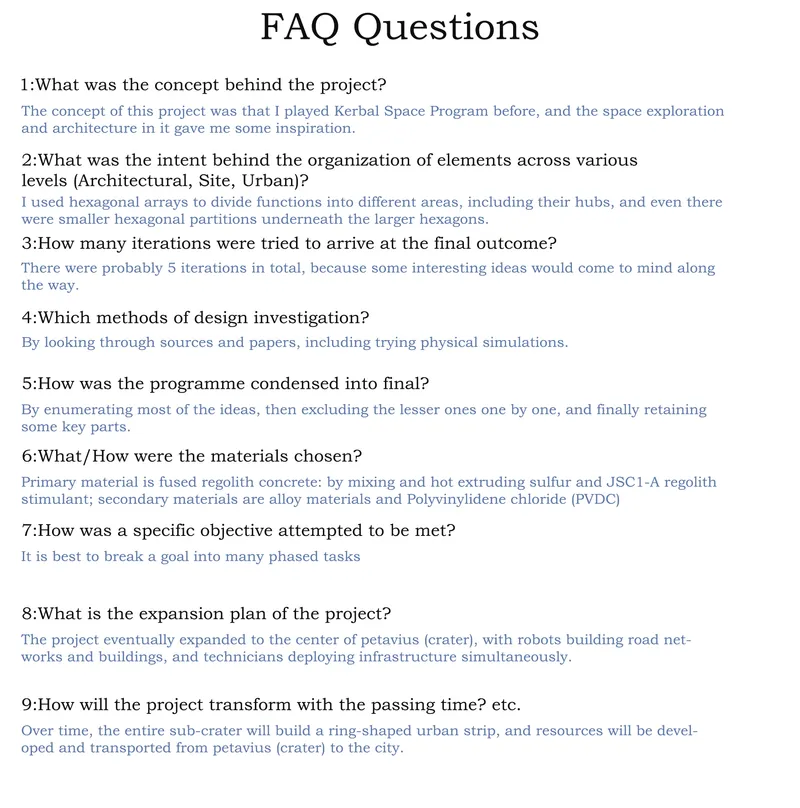
The above are some of the things I want to express. For more targeted answers, please see FAQ Questions.


Popular Articles
Popular articles from the community


Opera on the Sea: Driftwood Logic Shapes a Timber Opera House on Estonia's Coast
Trevor Orgill's opera house translates the entangled drift of floating timber into a civic building where wood, water, and music converge.

Opera by the Sea Estonia: Three Shells Dissolving Architecture into Tallinn's Coastline
A winning opera house proposal replaces monumental form with interconnected shells that blur the boundary between building, park and Baltic Sea.

Cloaked Colonization: A Mobile Underwater Habitat That Moves Like a Fish
Micah Abaya's shortlisted EHC Pacific entry reimagines ocean settlement as a dispersed network of self-sustaining architectural organisms.

Manzana Morphosis: Stretching Barcelona's Grid into a Living Landscape for 2050
A radical reworking of the Eixample manzana turns density into a tool for generous public space, vertical ecology, and environmental performance.

Similar Reads
You might also enjoy these articles

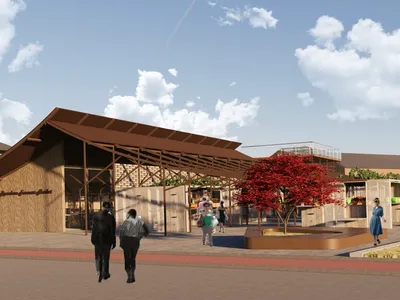
The Rhythm of Seasons
A Farmers' Market Connecting Nature and the City
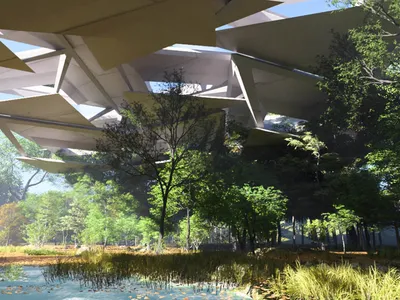

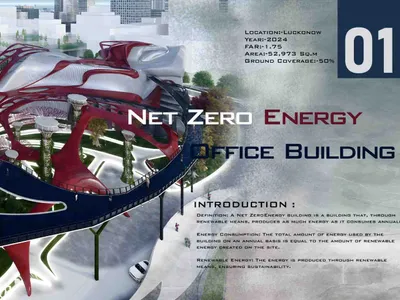
More Than a Building-Designing a Living System
More Than a Building-Designing a Living System
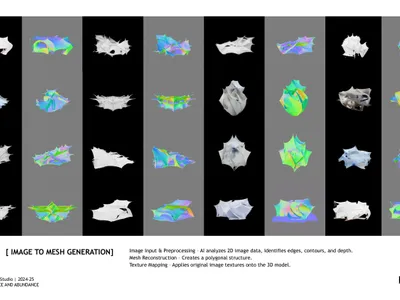
Base Beyond
DESERT COMPOUND ARID: TOURISM OF ABSENCE AND ABUNDANCE

Explore Lunar Competitions
Discover active competitions in this discipline


Challenge to reimagine the Iron Throne

Photograph architecture without architects

Illustrate the lost glory of Angkor Wat - Render Challenge

Design challenge to reuse E-waste
Comments (0)
Please login or sign up to add comments
No comments yet. Be the first to comment!