

Vita Beatha Center: Circular Architecture as a Framework for Mental Healing
A shortlisted mental wellness center composed of interlocking circular volumes, sensory courtyards, and sustainable systems rooted in care.


What if the geometry of a building could reduce emotional distress? The Vita Beatha Center takes that question seriously, constructing an entire mental health facility from interlocking circular volumes that echo the protective towers of ancient fortified cities. The logic is both symbolic and perceptual: circles align with the human eye's natural field of vision, and research cited in the project links round forms to higher reported levels of happiness. Every curved wall, domed enclosure, and radial pathway in this proposal is calibrated to make vulnerable people feel safe.
Designed by Hosein Daryabari, the project was shortlisted in the Live Laugh Love 2020 competition, which challenged participants to envision architecture for mental wellness. Juror Eleena Jamil noted a "vernacular feel (castle-like) internally and externally," while Juanjo Otero praised the "care functional analysis and implantation in place." The center sits among cherry trees and soft grass hills, a landscape setting that reinforces the therapeutic ambition of the architecture itself.
Clustered Domes and the Logic of Interlocking Plans
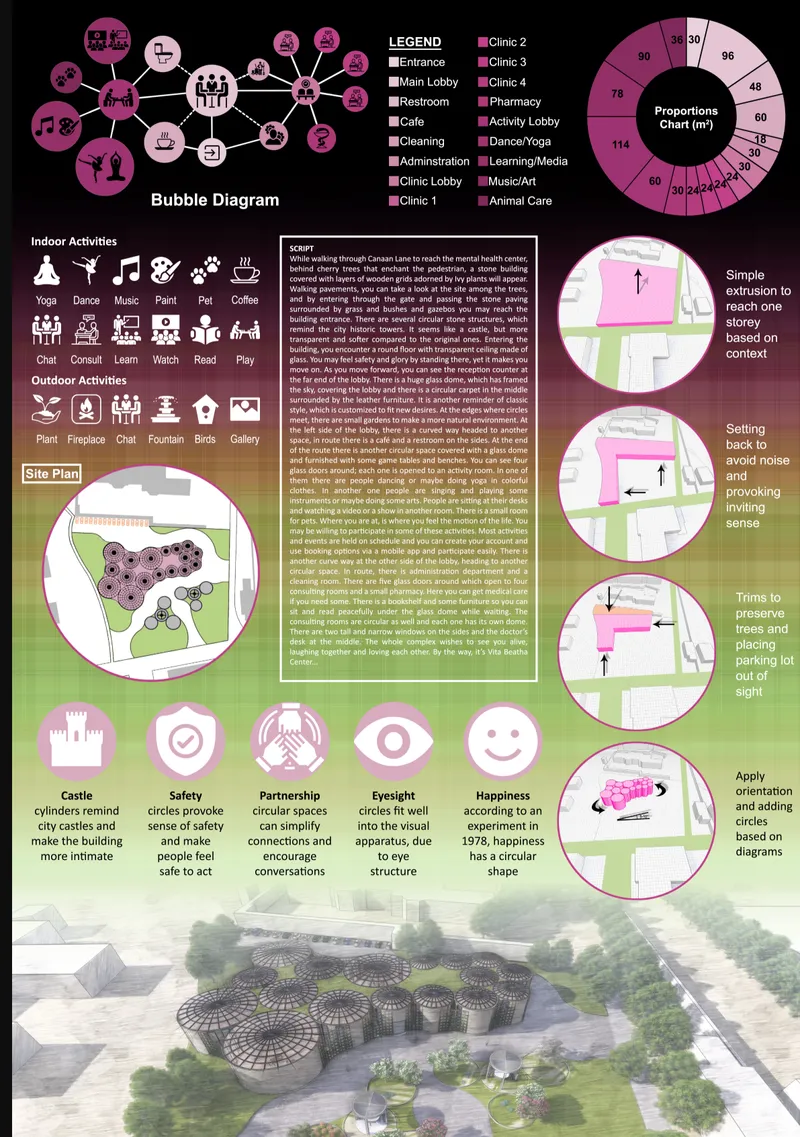
The diagram board reveals how the building is organized: a network of circular footprints that cluster and overlap like cells in a living organism. Bubble plans map distinct programmatic zones, from clinics and lobbies to spaces dedicated to dance, music, yoga, and painting. Each zone is strategically positioned to support a different modality of healing, whether through physical activity, quiet reflection, or social interaction. The aerial rendering shows these volumes reading as a small settlement rather than a single institutional block, breaking down the scale of a mental health facility into something approachable and intimate.
The site layout uses layered pathways and circular extrusions to create an orientation logic that feels intuitive rather than prescribed. Users are not funneled through corridors; they wander through a landscape of interconnected rooms and courtyards, encountering different atmospheres as they move. The activity icons scattered across the board reinforce the programmatic diversity: this is a place where healing happens through doing, not just through clinical treatment.
Curved Brick Walls and Courtyards That Breathe
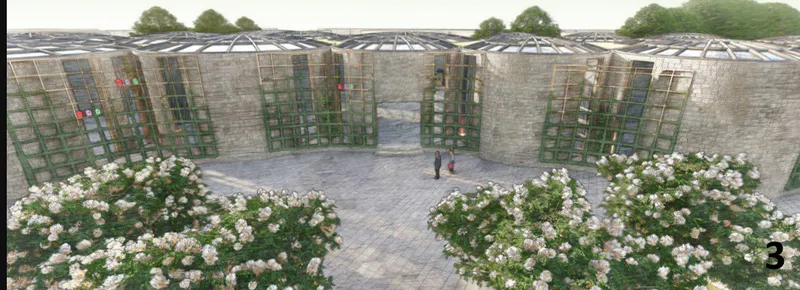
The courtyard rendering is the emotional center of the presentation. Curved brick walls rise around a garden of flowering rose beds, with vertical green trellises softening the masonry and filtering light. A solitary figure stands in the space, reinforcing the sense that these courtyards are designed for pause and contemplation rather than programmed activity. The fluid transition between interior and exterior is visible in the way the walls curve open, dissolving the boundary between building and landscape.
Transparency plays a critical role here. Open courtyards and generous apertures prevent the circular enclosures from feeling claustrophobic, a risk with any architecture that prioritizes shelter and enclosure. The cherry trees and grass hills visible beyond the walls connect users to the broader landscape, offering long views that complement the intimate scale of the immediate surroundings. It is a careful balance: protection without confinement, intimacy without isolation.
Sustainable Systems Embedded in Dome Geometry
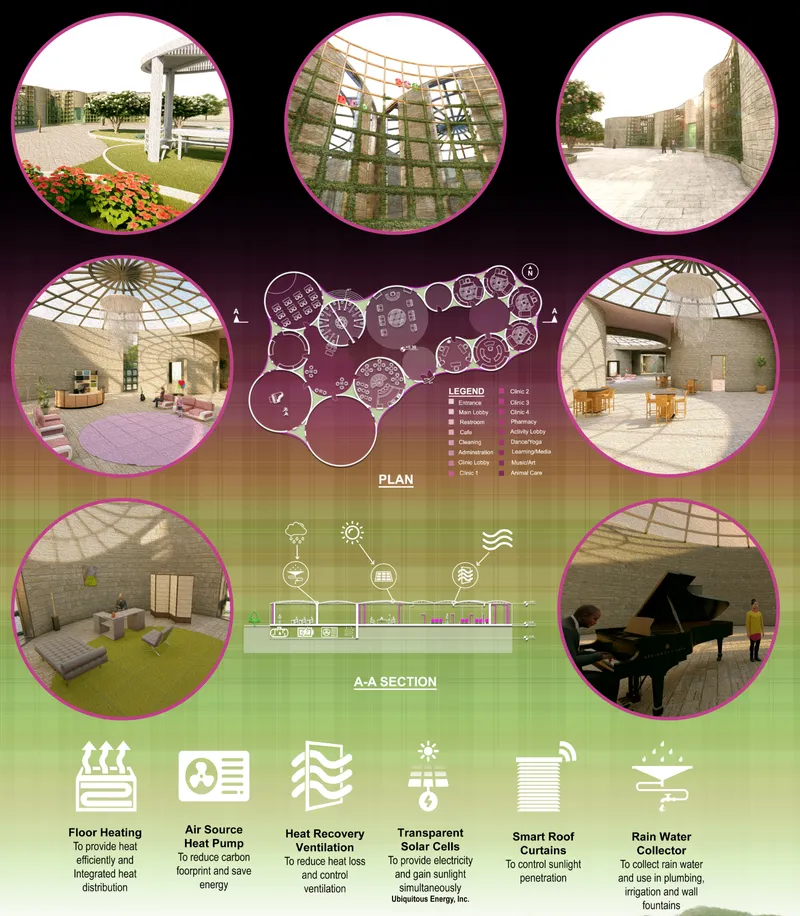
The final presentation board unpacks the technical systems that support the center's therapeutic mission. Circular vignettes detail dome interiors alongside plan and section drawings that reveal how the curved geometries accommodate sustainable strategies: transparent solar cells for energy generation, heat recovery ventilation to minimize energy loss, smart roof curtains that modulate light penetration, and rainwater harvesting systems for irrigation and reuse. These are not afterthoughts bolted onto a sculptural form; they are integrated into the dome geometry itself, where curvature offers structural efficiency and the roof surfaces become active energy and water management surfaces.
The section drawings are particularly revealing, showing how natural light enters the domed spaces and how the smart curtain systems can shift the atmosphere of a room from bright and energizing to dim and calming. For a mental health facility, that degree of environmental control matters enormously. The architecture does not impose a single mood; it offers a range of sensory conditions that users and therapists can adapt to the needs of the moment.
Why This Project Matters
Mental health architecture too often defaults to the visual language of clinical efficiency: rectilinear rooms, fluorescent corridors, institutional finishes. The Vita Beatha Center pushes back against that convention with a formal vocabulary rooted in protection, perception, and sensory richness. The circular plan is not a gimmick; it is a coherent spatial strategy that addresses how people experiencing emotional distress move through, perceive, and find comfort in built environments.
As juror Jamil suggested, the building could benefit from more intimate, smaller-scale spaces for individual visitors. That critique points to a productive tension in the project: the desire for communal, village-like openness sometimes competes with the need for private, sheltered retreat. But the core proposition is sound and urgent. Architecture for mental wellness must do more than house programs. It must actively participate in healing. Daryabari's circular volumes, sensory courtyards, and integrated sustainable systems offer a credible model for what that participation looks like.
View the Full Project
About the Designers
Designer: Hosein Daryabari
Enter a Design Competition on uni.xyz
uni.xyz runs architecture and design competitions year-round that reward proposals with spatial conviction and real site intelligence.
Project credits: Live Laugh Love by Hosein Daryabari Live Laugh Love 2020 (uni.xyz).


Popular Articles
Popular articles from the community


Faces of the Soviet Avant-Garde: Turning Moscow's Street Names into an Open-Air Museum
A network of sculptural installations across a Moscow residential district transforms forgotten architect names into spatial encounters with cultural memor

Tsunami Convergenics: Turning Catastrophic Ocean Forces into Underwater Housing Infrastructure
A speculative underwater settlement off the coast of Onagawa, Japan, treats tsunamis and typhoons as energy sources rather than threats.

Cloaked Colonization: A Mobile Underwater Habitat That Moves Like a Fish
Micah Abaya's shortlisted EHC Pacific entry reimagines ocean settlement as a dispersed network of self-sustaining architectural organisms.
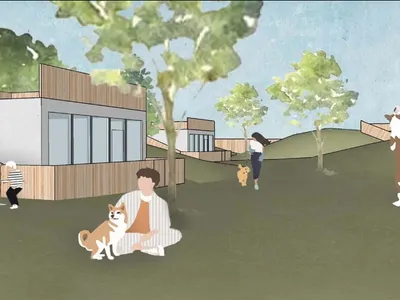
Temporary Home for Dogs: A Reversed Zoo Rethinks Animal Shelter Architecture
In Bucharest, a sinuous corridor and freed landscape flip the logic of containment, designing a shelter that works to make itself unnecessary.

Similar Reads
You might also enjoy these articles

Day and Night Park: A Time-Based Urban Newsstand in Beijing
A temporary urban newsstand in Beijing blending travel, light, and reading through poetic colors, compact form, and community-focused design.

Modernist Patio Renovation in El Masnou, Barcelona by Oliver Segura Arquitectura + Cebrià Arquitectura
Modernist patio renovation blending tradition and innovation with a movable pool, leveled floors, and Catalan materials in El Masnou.

Alto Residencial Coop: Cooperative Housing Development in Santiago de Compostela by Carbajo Barrios Arquitectos
A linear cooperative housing complex blending white volumes and perforated metal façades, enhancing community living, natural light, privacy, and urban integration.
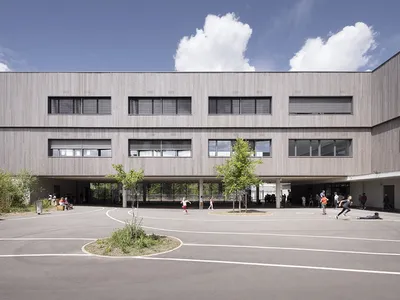
Vil Genis School by BPA ARCHITECTURE – Massy, France
Vil Genis School in Massy, France, features sustainable design, south-facing classrooms, community integration, accessible spaces, and modern educational architecture.

Explore Holistic Design Competitions
Discover active competitions in this discipline

Challenge to reimagine the Iron Throne

Photograph architecture without architects

Illustrate the lost glory of Angkor Wat - Render Challenge

Design challenge to reuse E-waste
Comments (0)
Please login or sign up to add comments
No comments yet. Be the first to comment!