
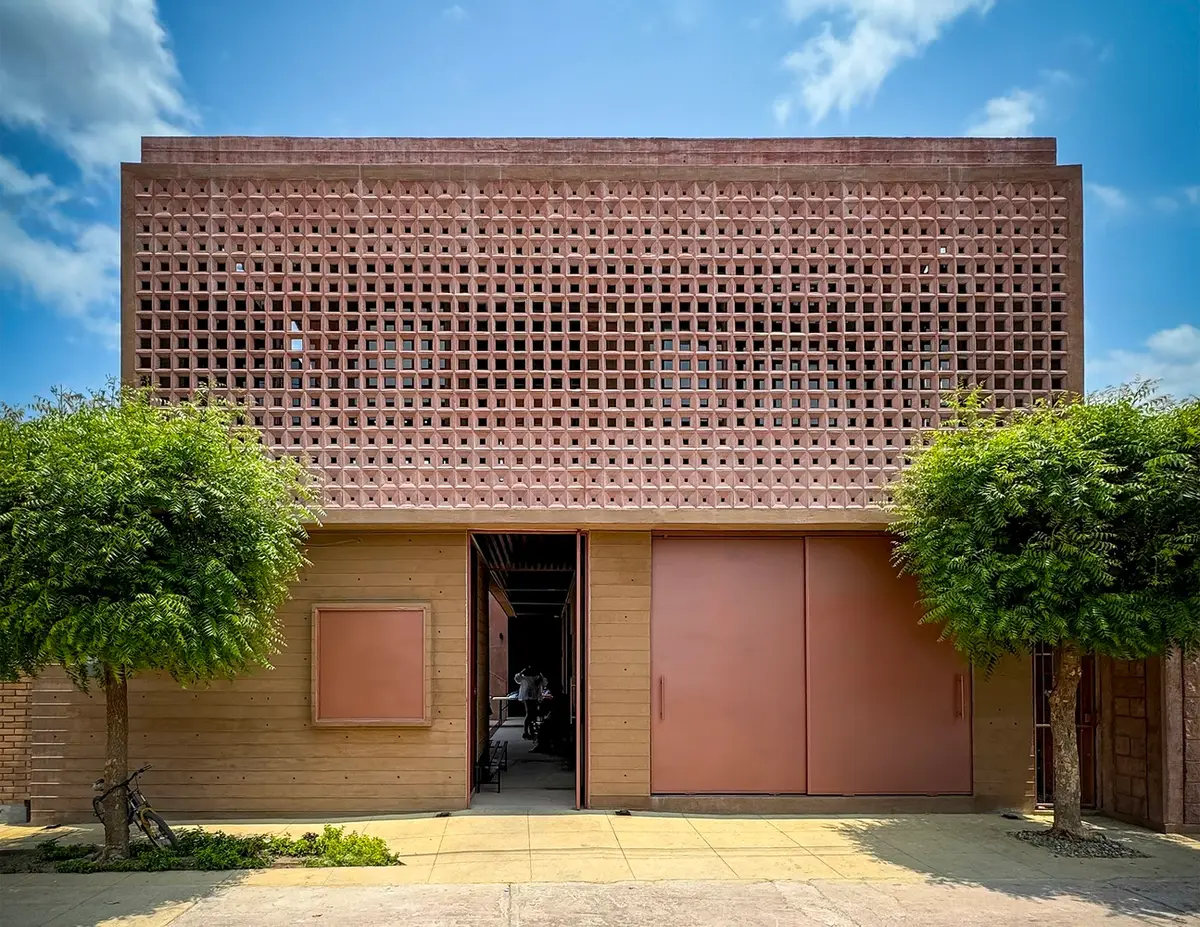
DIF Comitancillo Center: A Community Architecture Project in Oaxaca
Community center in Oaxaca uses vaulted concrete, lattice facades, patios, and flexible spaces to deliver dignified, climate-responsive social infrastructure community.


Architects: AIDIA STUDIO
Built on a compact 212-square-meter plot, the 2023 intervention rethinks how a public community center can operate efficiently within tight urban constraints. The architects addressed these limitations by organizing the program across two levels, easing congestion on the ground floor and allowing generous communal spaces to emerge. An L-shaped layout became the key spatial strategy, enabling circulation, ventilation, and daylight to work together as organizing principles rather than afterthoughts.
Spatial Organization and Community-Centered Design
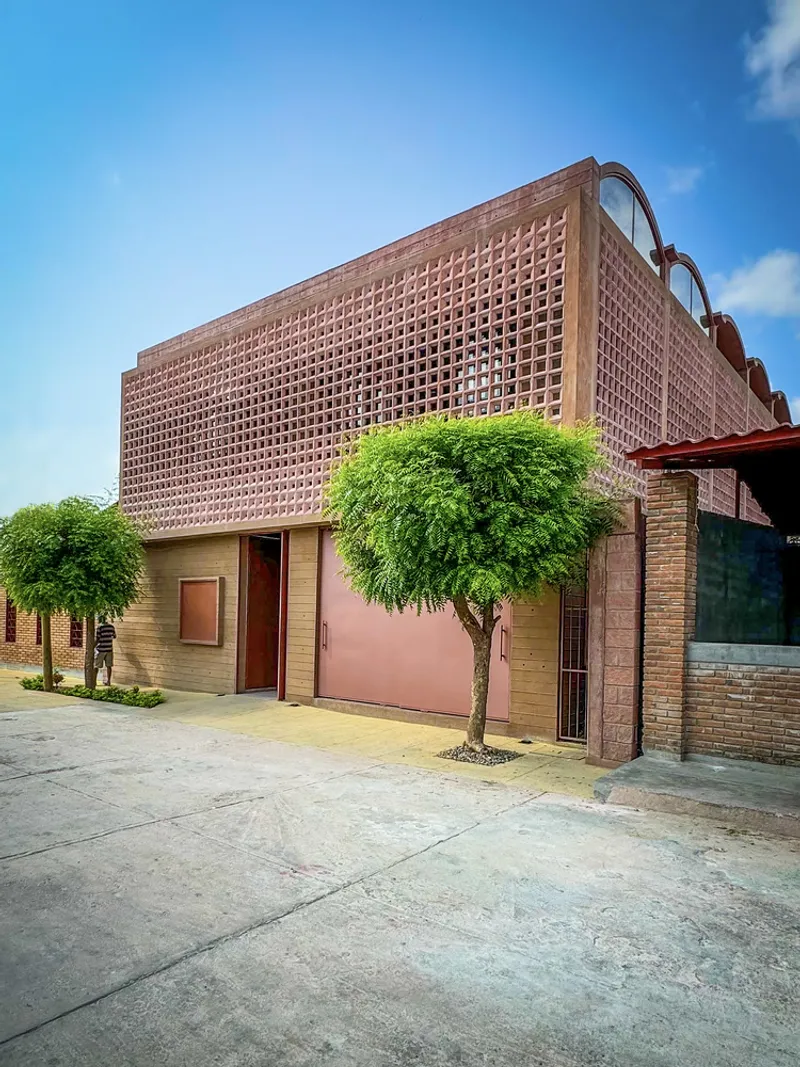
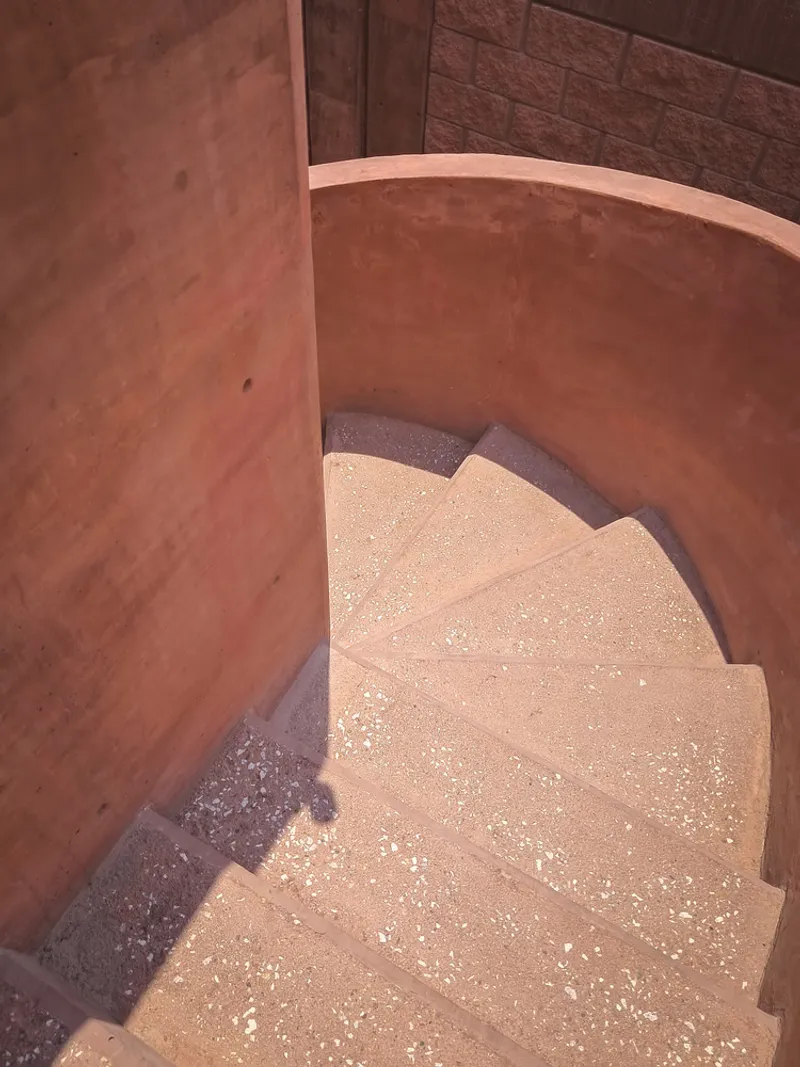
Access from the street is intentionally understated, marked by a discreet pedestrian entrance that leads into a narrow corridor before opening dramatically into a central patio. This transitional sequence establishes a sense of calm and privacy while guiding visitors toward the heart of the building. The patio, flanked by a sculptural staircase, acts as the project’s social condenser and visual anchor.
Adjacent to the patio is a double-height, semi-open covered space designed as a flexible community hall. While primarily functioning as a public dining room, this area also accommodates workshops, assemblies, and community events. The kitchen connects directly to this space and is supported by storage rooms and pantries used for food distribution during emergency situations, reinforcing the building’s essential social role.
The upper level houses more private and administrative functions, including meeting rooms, offices, and the management area. By lifting these spaces above ground level, the architects preserved openness and adaptability at the base of the building while maintaining clear functional zoning.

Climate-Responsive Structure and Natural Light
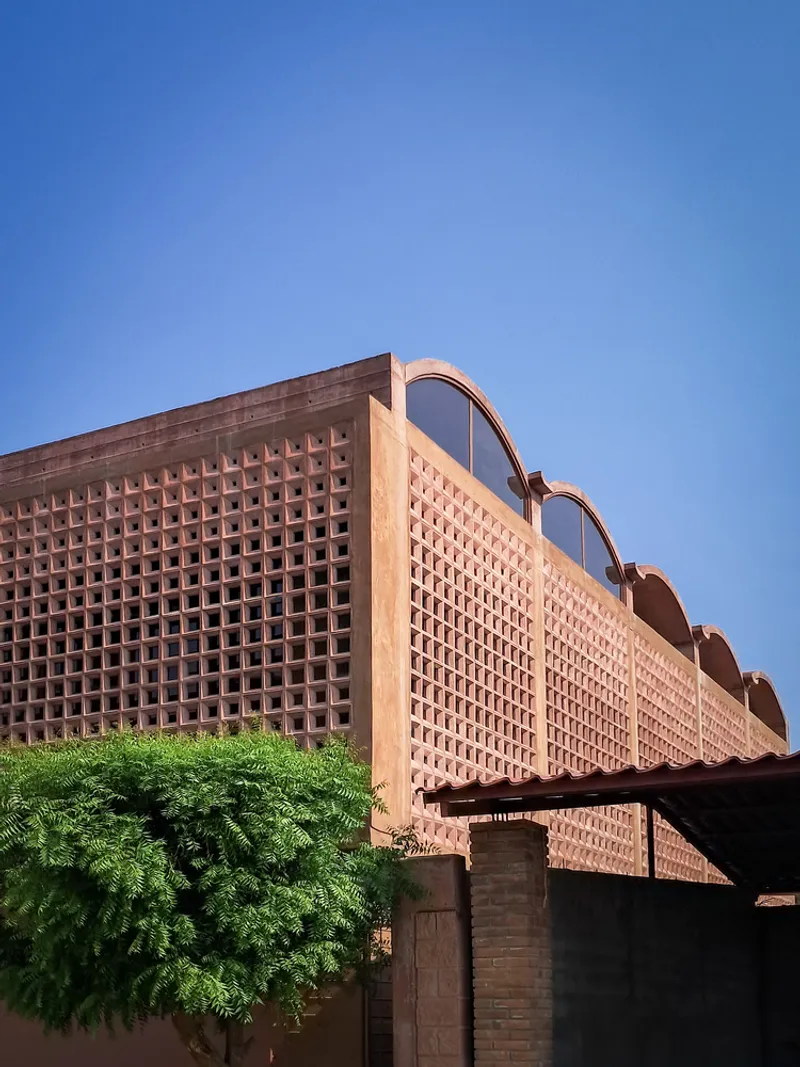
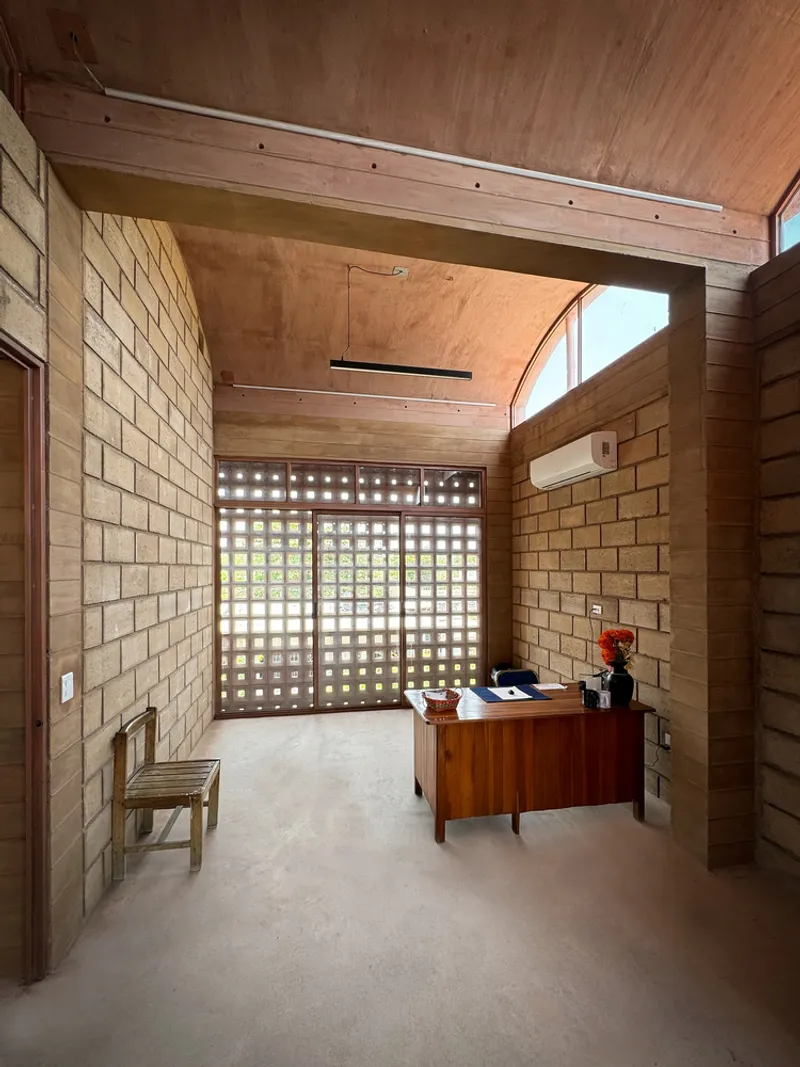
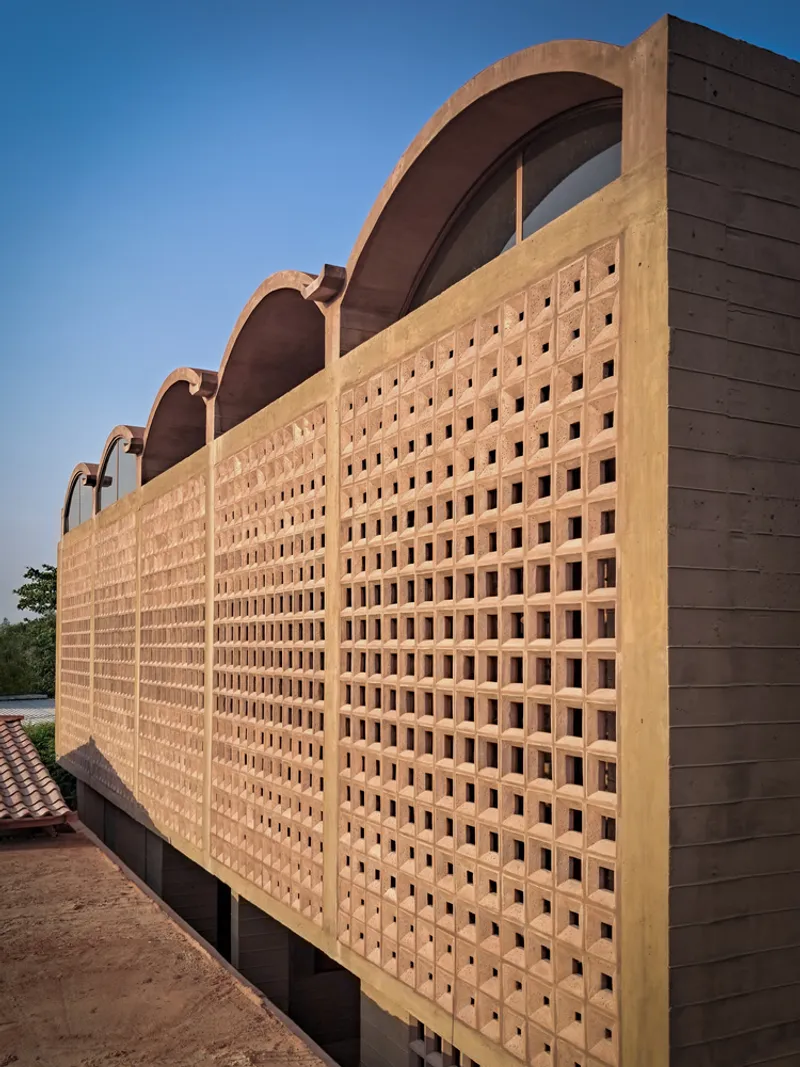
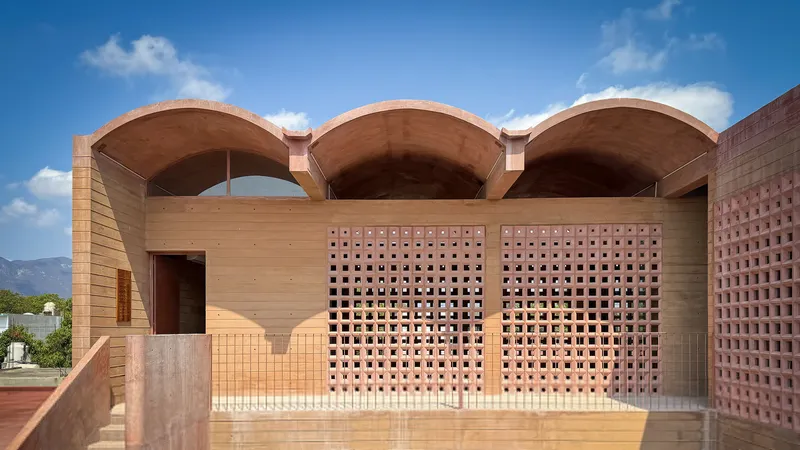
The architectural concept is defined by five transverse structural bays running along the site, each topped with a concrete vault. These vaults are not only structural elements but also environmental devices, allowing soft, indirect daylight to enter from above. This strategy significantly reduces reliance on artificial lighting while enhancing spatial quality throughout the interior.
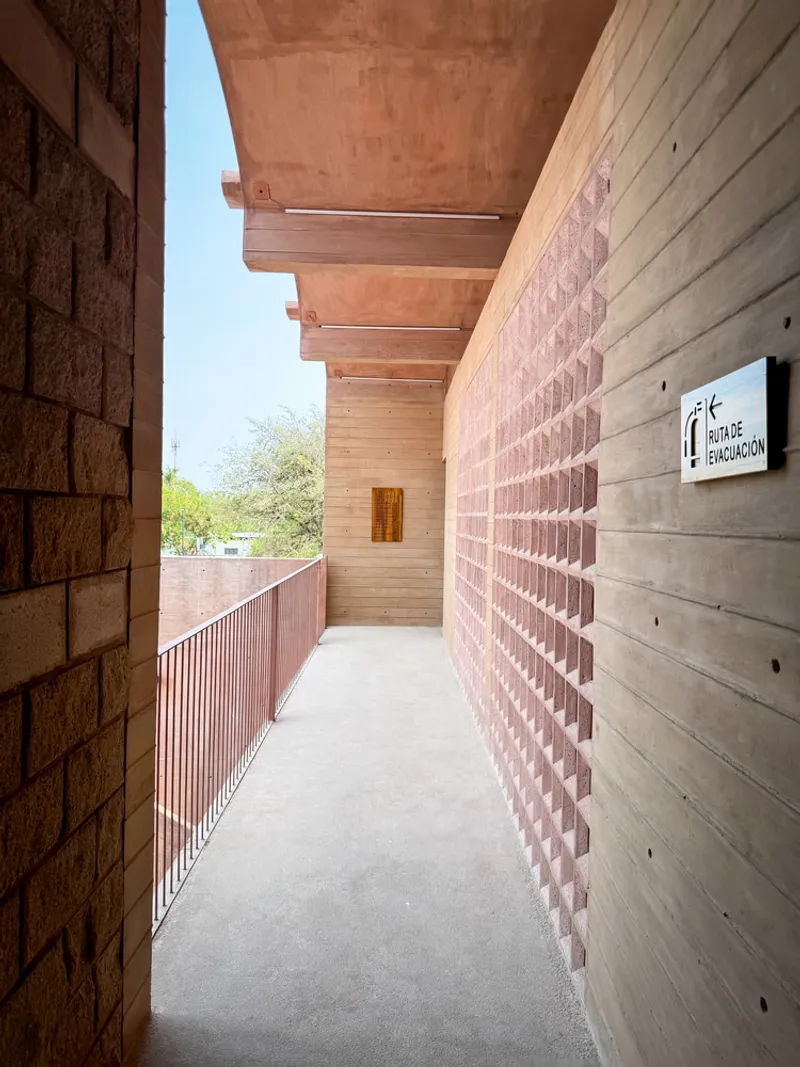
The façades are wrapped in pigmented concrete lattice screens with varying apertures. These lattices filter sunlight, reduce heat gain, and provide privacy for offices and consultation rooms without disconnecting them from the outdoors. As daylight passes through the patterned screens, shifting shadows animate walls, floors, and circulation spaces, turning time and light into integral design materials.


Materiality, Texture, and Local Expression
Material expression plays a central role in defining the identity of the DIF Comitancillo Center. The project explores contrasts between smooth and textured concrete finishes. Curvilinear elements such as the vaults and staircase are finished in semi-polished concrete with warm terracotta tones, while orthogonal volumes feature fluted formwork in earthy hues. Perimeter walls are constructed from pigmented concrete blocks with a rustic texture, forming a tactile backdrop for vegetation.
These mineral surfaces are complemented by carpentry in parota wood and rustic ironwork used in railings and window frames. Together, these materials create a grounded, tactile architecture that resonates with local construction traditions while remaining unmistakably contemporary.

Architecture as Social Infrastructure
Beyond its formal and material qualities, the DIF Comitancillo Center stands as an example of architecture conceived as social infrastructure. Through careful program distribution, climate-sensitive strategies, and an expressive yet restrained material palette, the building provides dignity, functionality, and adaptability for community care services. Its play of light, shadow, texture, and geometry transforms a modest site into a civic space that reflects both collective identity and everyday resilience.

All photographs are works of
Rolando Rodriguez Leal


Popular Articles
Popular articles from the community


David Macias Steps a Doorless Stone and Plaster House Down a Tropical Colombian Hillside
In the humid hills of Colombia, Threshold House replaces the front door with an open void and terraces its 850 m² down the slope instead of fighting it.

GROUP A Strips a 1969 Rotterdam Harbor Headquarters to Its Frame and Wraps It in Timber Louvers
In Rotterdam's M4H harbor district, Ferro Offices reuses a 1969 frame, adds one timber storey and reaches BREEAM-NL Outstanding.

longwave studio Reorganizes a 112 m² Tainan Apartment Around the Daily Routines of a Family and Two Cats
In Tainan, Taiwan, birch plywood, rust-red furniture and a freestanding plaster wall link arrival, storage, work and family life in one apartment.

U.GA Architects Wraps an Oval Rooftop Pool in Curved Board-Formed Concrete on Busan's Jeollidan-gil
In Busan's Jeonpo-dong, a 454 m² mixed-use block stacks a neighborhood facility, guest rooms and an oval rooftop pool inside spiraling concrete walls.

Similar Reads
You might also enjoy these articles

Gil Mello Arquitetura Tilts a Single Roof Toward the Waterfalls on a Plateau Above Aiuruoca, Brazil
In Aiuruoca, Minas Gerais, a 200 m² house of local labor and reclaimed poles pairs a low valley veranda with a tall mountain one.
U.GA Architects Wraps an Oval Rooftop Pool in Curved Board-Formed Concrete on Busan's Jeollidan-gil
In Busan's Jeonpo-dong, a 454 m² mixed-use block stacks a neighborhood facility, guest rooms and an oval rooftop pool inside spiraling concrete walls.

Felipe Hess Arquitetos Turns a Blind Stone Wall to the Street and Opens a Brazilian House onto a Courtyard and Canal
A canal-front house in Brazil hides behind painted stone and planting, then opens to an olive-tree courtyard, a reed-ceilinged porch and a curving pool.
David Macias Steps a Doorless Stone and Plaster House Down a Tropical Colombian Hillside
In the humid hills of Colombia, Threshold House replaces the front door with an open void and terraces its 850 m² down the slope instead of fighting it.

Explore Space Planning Competitions
Discover active competitions in this discipline

Challenge to reimagine the Iron Throne

Photograph architecture without architects

Illustrate the lost glory of Angkor Wat - Render Challenge

Design challenge to reuse E-waste
Comments (0)
Please login or sign up to add comments
No comments yet. Be the first to comment!