
Discovering the Blend of Historical and Modern in Contemporary University Architecture in Bologna
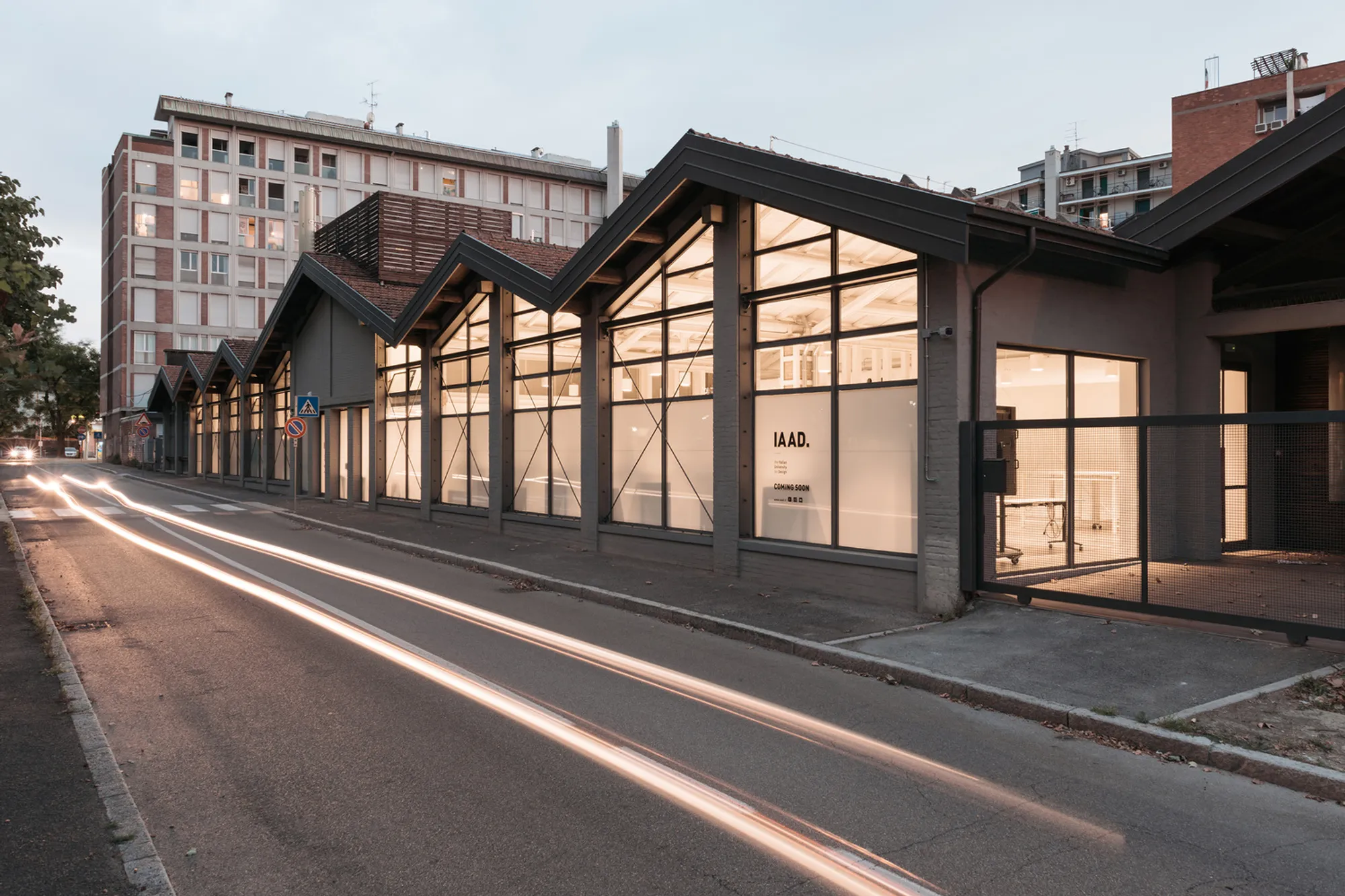
The article details the transformation of an old factory into The Learning Factory, blending historical architecture with modern educational design in Bologna.


The Learning Factory by WNA Walter Nicolino Architects stands as a testament to innovative educational spaces in Bologna, Italy. This private university for Applied Arts and Design embodies the fusion of historical charm with modern architectural principles, setting a new standard for contemporary university architecture in Bologna.

The Transformation of a Historical Site into a Modern Educational Haven
Situated along the railway, this educational facility was once the "Ovidio Vignoni" hand-decorated tile company, a relic from the early twentieth century. In preserving the large, vertically emphasized zones of the original structure, The Learning Factory respects its historical roots while stepping into modern functionality. This blend highlights a unique feature of contemporary university architecture in Bologna: the harmonious balance between past and present.


The Design Philosophy: Transparency and Flexibility
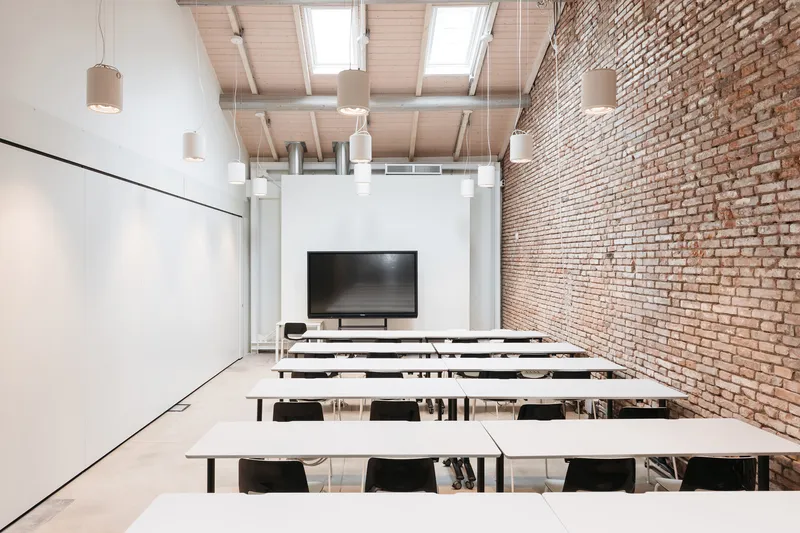
The Learning Factory introduces an open layout transcending the conventional classroom setting. More than 50% of its internal area is dedicated to hybrid and flexible learning spaces. Large windows not only ensure a flood of natural light but also encourage a 'democracy of gazes', a concept where visual connections are facilitated across different learning zones. This open design is pivotal in the evolving landscape of contemporary university architecture in Bologna, reflecting a shift towards more dynamic and interconnected educational environments.


Structural Innovation and Urban Integration
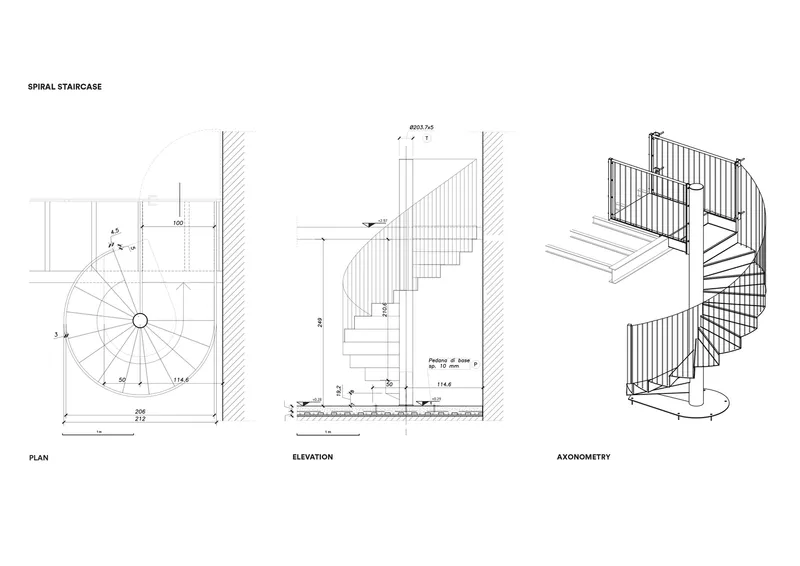
A notable aspect of this project is its response to seismic safety through the integration of a new steel frame with existing brick walls and wooden roofs. The ground floor activities blend seamlessly with the city's external spaces, thanks to minimal height differences and a system of industrial-inspired ramps. The incorporation of three mezzanines via iconic staircases adds layers of utility and design aesthetics, further exemplifying the innovative approaches in contemporary university architecture in Bologna.

Flexibility and Interaction: The Core of Modern Learning Spaces
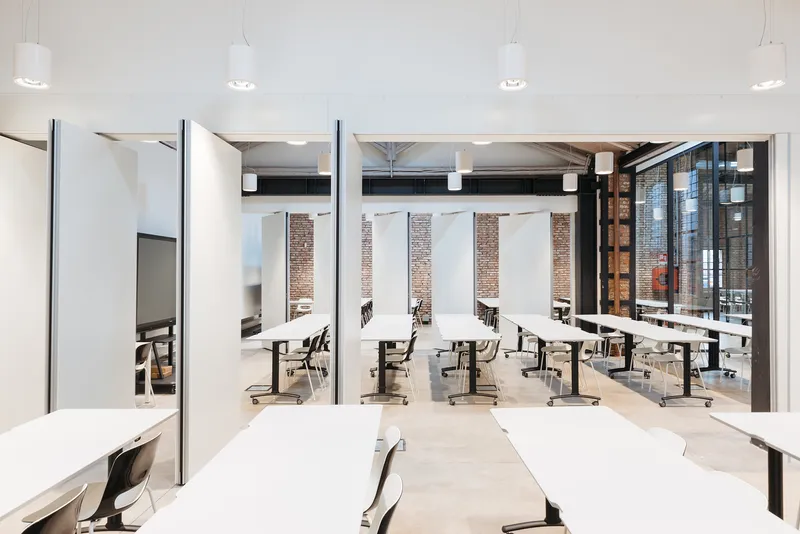
Reconfigurable walls, mobile furniture, and curtain screens transform The Learning Factory into a fluid space for study, interaction, and cultural events. This adaptability underscores the essence of modern educational spaces, where learning is not confined but encouraged to flow and adapt according to needs and events. It's a characteristic increasingly seen in contemporary university architecture in Bologna, reflecting a broader shift towards versatile educational environments.

Sustainability and Cultural Activation
Beyond its physical structure, The Learning Factory integrates exhibition spaces and shared areas to create a vibrant cultural hub, marrying educational purposes with community engagement. The use of radiant concrete floors and light, aerial pipes for air treatment underscores a commitment to environmental sustainability, an increasingly critical component of contemporary university architecture in Bologna.

A Model for Future Educational Spaces
The Learning Factory by WNA Walter Nicolino Architects is more than just a building; it is a blueprint for the future of educational architecture. With its innovative blend of historical preservation, modern design, and flexible learning environments, it sets a new benchmark for contemporary university architecture in Bologna and beyond.
In crafting educational spaces that reflect the dynamism and diversity of modern learning, Bologna is positioning itself at the forefront of architectural innovation in the academic world. The Learning Factory exemplifies how historical spaces can be reimagined to meet contemporary educational needs, embodying the spirit of innovation that characterizes the city's approach to university architecture.

All photographs are work of Massimo Nicolino



Popular Articles
Popular articles from the community


Lunar Spiral: Space Architecture Shaped by the Mathematics of the Universe
Lunar Spiral reimagines space architecture through Fibonacci geometry, lunar regolith, levitating habitats, and self-sustaining Moon living.

Conexión: Biophilic Design Reimagines High-Rise Living in Hong Kong
Conexión reimagines high-rise living in Hong Kong through biophilic design, green facades, shared spaces, daylight, water and nature within.

Play: Fragments of Their World
Familiar architecture becomes modular playground design, creating safe spaces where displaced children can learn, connect, imagine and play.

Co-Life: Senior Housing Design That Reconnects Older Adults With the City
Co-Life reimagines senior housing design through healing gardens, shared streets, workshops, and a sustainable community across generations.


Similar Reads
You might also enjoy these articles

Maya Harvest: A Cacao Resort Village Rooted in Mayan Tradition and Local Craft
Situated within a Tabasco cacao plantation, this shortlisted resort proposal merges vernacular materials with hands-on cultural immersion.
Harmonia: A River-Shaped Community That Grows Over Decades in Boa Vista
Curved pathways and modular grid structures along the Branco River create a phased settlement designed to evolve from 2030 to 2050.
The Architecture of Bathing: A Mughal Hammam Reimagined Across the Yamuna
Charlotte May's honorable mention entry for The Black Taj reinterprets Agra's bathing rituals through red sandstone, water, and framed views of the Taj Mah
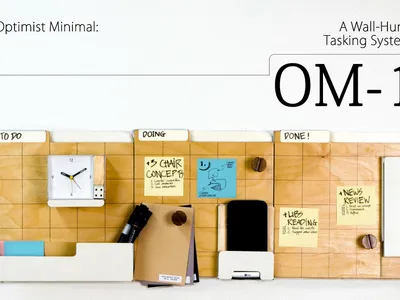
Om-1: A Wall-Hung System That Moves Your Workspace Off the Desk
Modular plywood boards, magnetic pegs, and utility elements migrate clutter from the horizontal surface to the vertical plane.


Explore Educational Building Competitions
Discover active competitions in this discipline



Challenge to design public laboratory


Challenge to reimagine the Iron Throne


Photograph architecture without architects


Illustrate the lost glory of Angkor Wat - Render Challenge
Comments (0)
Please login or sign up to add comments
No comments yet. Be the first to comment!