
Dome x Open Market: A Civic Catalyst for Aleppo's Revival
A perforated dome and modular market system propose a phased rebuilding strategy rooted in memory, trade, and community participation.

What does it look like to rebuild a city without erasing its grief? In Aleppo's Old City, where centuries of commerce and culture were compressed into dense stone corridors before conflict tore them apart, the proposal Dome x Open Market answers with two interlocking spatial gestures: a sculptural concrete dome that serves as memorial and civic anchor, and a modular open market system designed to grow organically with the community it serves. The dome draws its geometry from traditional Syrian beehive structures, those timeless vernacular forms associated with shelter and endurance, but reinvents them at a civic scale with perforated openings that cast shifting light patterns across a meditative interior. The market, rather than replicating the historical bazaar, introduces a phased construction logic where perforated walls come first and lightweight commercial units attach later, folding open by day and securing closed at night.
The project is the work of designers Zsolt Vasáros DLA, Botond Fülöp, Ilona Veres, Maria Ilona Kasza, and Csilla Fehér. Sited adjacent to the Aleppo Citadel, one of the region's most significant ancient fortresses, the intervention carefully negotiates historic density and circulation patterns to position a new landmark that reads as both contemporary and deeply rooted. The design team frames the project not as a fixed masterplan but as a civic catalyst: a spatial framework that invites participation over prescription.
A Tripod Cone Rising from the Rubble
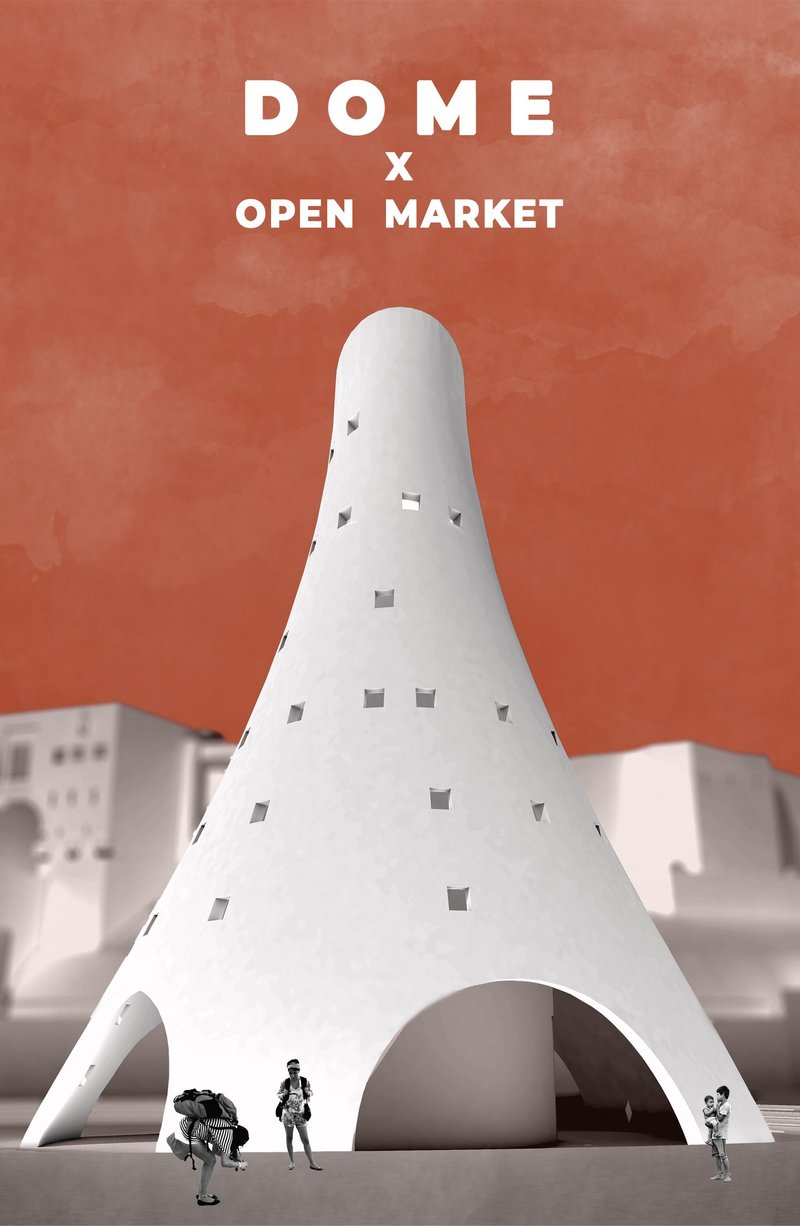
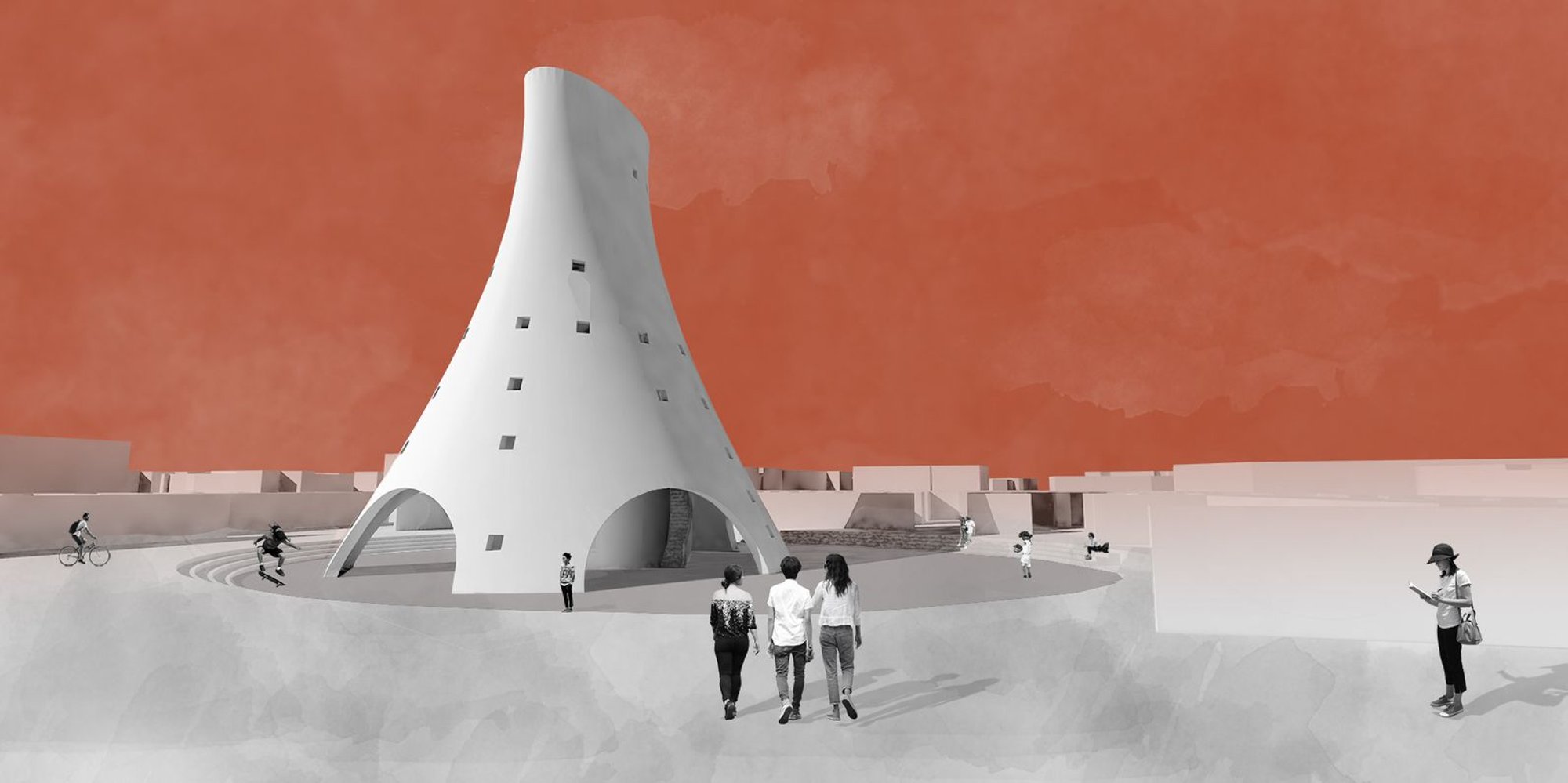
The dome's most striking feature is its structural posture. Rather than sitting heavily on the ground, the conical volume lifts itself on three arched legs, creating a tripod base that opens generous passageways at ground level. Visitors walk through these arches to enter a space where the upward draw of the form encourages reflection and remembrance. Square perforations puncture the cone's skin in an irregular rhythm, filtering daylight into the interior and projecting geometric shadows that shift throughout the day. The effect is simultaneously monumental and porous: a landmark that asserts presence while remaining open, breathable, and inviting.
The inversion of the traditional beehive form is deliberate. Where the vernacular archetype sheltered domestic life at a small scale, this reinterpretation scales up to civic dimensions and flips the enclosure logic. The dome becomes a gathering point connecting citizens across backgrounds, a memorial space, and a visual anchor marking the beginning of the district's revival. It is familiar enough to carry cultural memory and strange enough to signal that something new is underway.
Concentric Rings: Site Plan and Spatial Organization
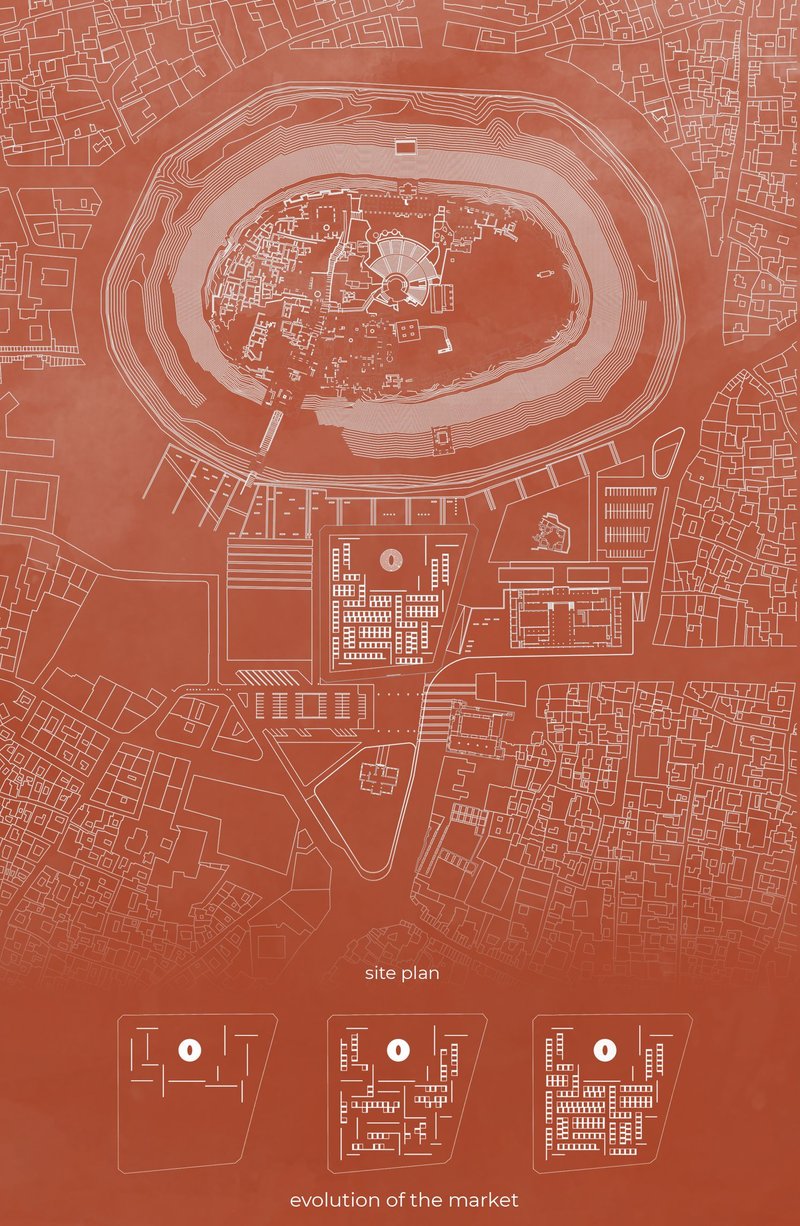
The site plan reveals a carefully orchestrated relationship between the dome and its surrounding urban fabric. An oval amphitheater encircles the base of the cone, its terraced rings stepping down toward the center to create informal seating, gathering space, and a transition zone between the market corridors and the memorial interior. The concentric geometry echoes the dome's circular logic while accommodating the irregular edges of the existing city grid. It is a planning move that negotiates between the ideal and the real, between geometric order and the messy grain of a war-affected urban context.
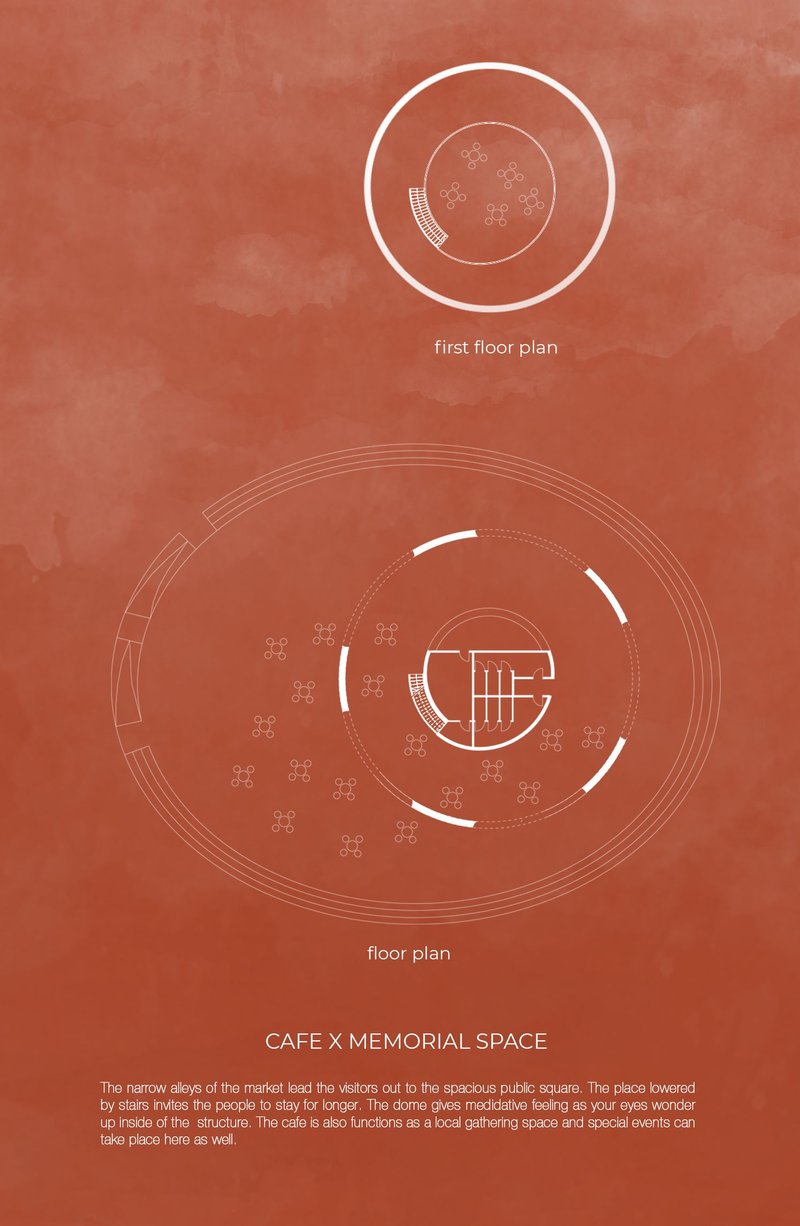
The floor plans elaborate this strategy further, showing circular and oval layouts with central cores surrounded by scattered seating arrangements. These diagrams make clear that the design team prioritized transparency in circulation and openness at every scale. There are no dead ends, no blind corridors. Pathways flow through shaded market walls and into the amphitheater, ensuring that daily rituals and spontaneous encounters unfold naturally. The spatial sequence from market stall to communal node to memorial dome is continuous and legible.
Ground Level: Where Commerce Meets Contemplation
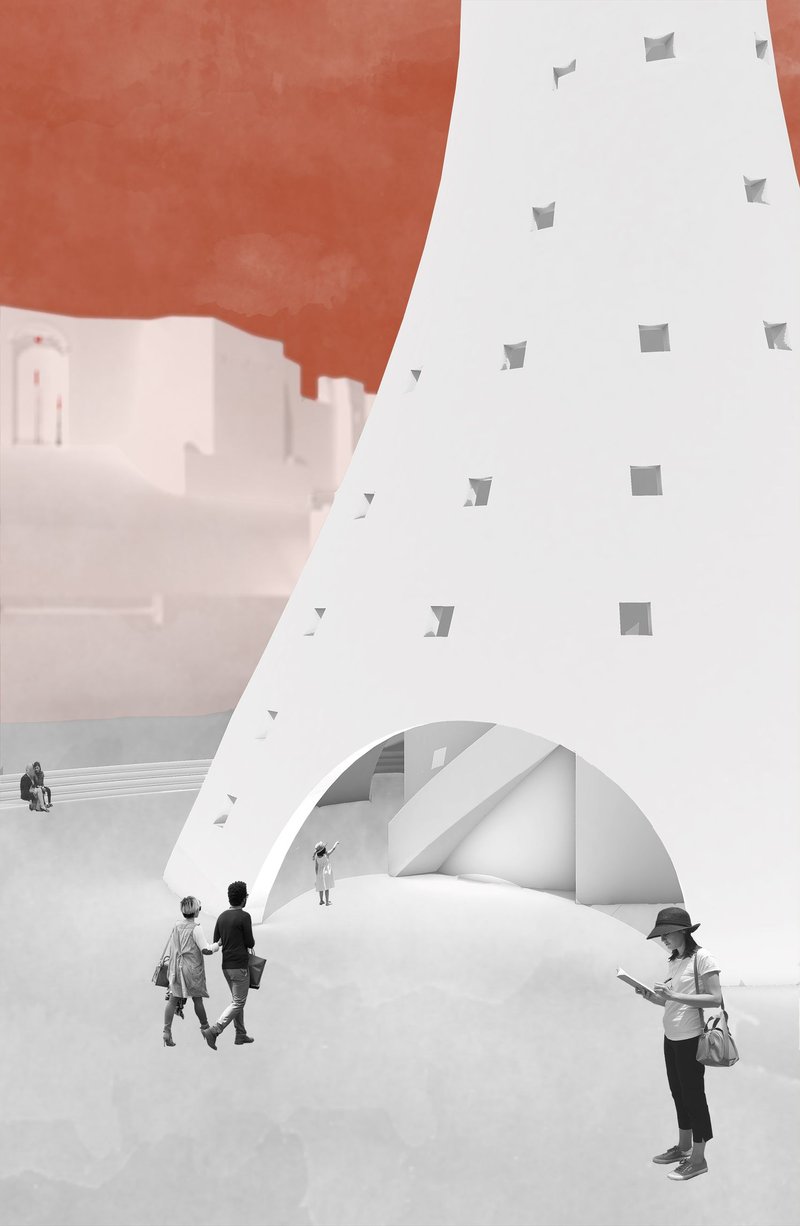
At eye level, the tripod base of the dome creates a threshold experience that is worth lingering on. The arched openings are scaled generously enough to accommodate steady pedestrian flow while maintaining a sense of arrival. Visitors passing through are briefly held in the shadow of the structure before emerging into the light-filled interior, a compression-and-release sequence that gives the transition emotional weight. The rendering shows figures moving casually through the space, some pausing, others walking with purpose. It reads as a place that can absorb both everyday errand-running and more solemn acts of remembrance without forcing either mood.
The modular market units proposed for the surrounding corridors reinforce this dual character. Lightweight and economical, they are designed to attach to the perforated walls that form the initial urban framework. During the day they open as shops; at night they fold into secure storage. This strategy ensures affordability for sellers and ease of construction in a recovering city. As more units appear over time, the market becomes a living organism shaped by participation rather than a fixed commercial program imposed from above.
The Dome in Context: Model and Urban Ensemble
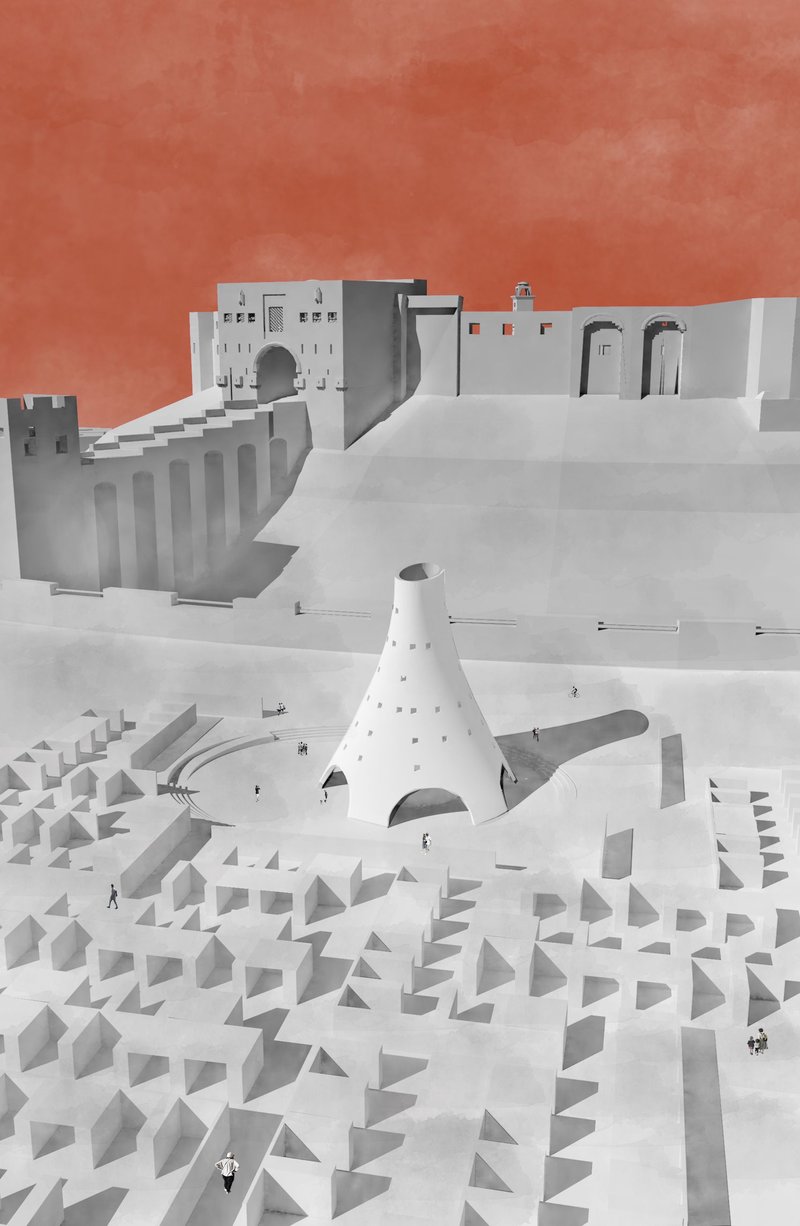
The architectural model places the cone within its broader site context, and the proportional relationship becomes immediately legible. Flanked by stepped seating on one side and the massing of historic buildings on the other, the dome holds its own without overwhelming its neighbors. Its height and profile establish a new datum in the skyline that reads in dialogue with the Citadel rather than in competition with it. The plaza surrounding the base is generous enough to host large public gatherings while the terraced edges offer intimate perches for smaller groups.
What the model also reveals is the project's sensitivity to phasing. The perforated walls, the market units, the amphitheater seating: all of these elements can be built incrementally. The dome itself may serve as the initial catalyst, but the surrounding urban fabric is designed to thicken over years as the community rebuilds. This is architecture that trusts its occupants to complete the vision, a framework rather than a finished product.
Why This Project Matters
Post-conflict reconstruction is one of architecture's most difficult briefs. The temptation is either to freeze the past in nostalgic replication or to steamroll it with generic modernization. Dome x Open Market sidesteps both traps by proposing a spatial system that is legibly rooted in Syrian vernacular tradition yet refuses to be a replica. The beehive dome is transformed, not copied. The bazaar is reimagined as a modular, participatory system, not rebuilt stone by stone. Memory operates here as a guiding force for rebuilding rather than a static monument.
The strength of the proposal lies in its understanding that cities are rebuilt by their inhabitants, not by architects alone. By designing a phased framework that accommodates economic constraints, shifting needs, and the unpredictable rhythms of recovery, the team has created something more valuable than a building. They have proposed an urban protocol: a set of spatial rules flexible enough to absorb the complexity of a community finding its way back to normalcy. In a discipline that too often prizes the finished object, that is a quietly radical position.
View the Full Project
About the Designers
Designers: Zsolt Vasáros DLA, Botond Fülöp, Ilona Veres, Maria Ilona Kasza, Csilla Fehér
Enter a Design Competition on uni.xyz
uni.xyz runs architecture and design competitions year-round that reward proposals with spatial conviction and real site intelligence.
Project credits: Dome x Open Market by Zsolt Vasáros DLA, Botond Fülöp, Ilona Veres, Maria Ilona Kasza, Csilla Fehér.



Popular Articles
Popular articles from the community

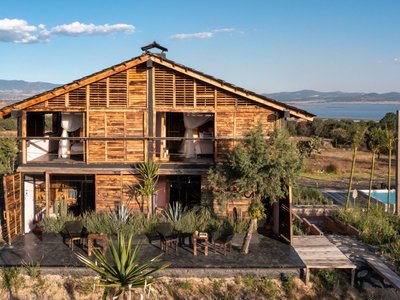
Fausto Terán and Toro Fuse Japanese Craft with Mexican Tradition in a Lakeside Retreat
Nakamura House pairs Shou-Sugi-Ban charred pine with handmade clay tile at the foot of Atlangatepec Lagoon in Mexico.
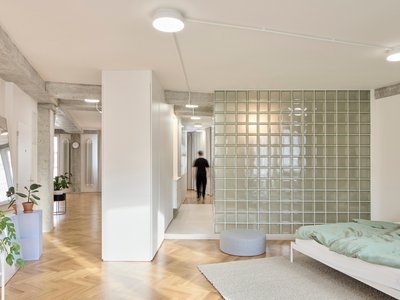
RDTH architekti Rips Out Nearly Every Wall in a Prague Apartment and Replaces Them with Furniture
A 101-square-meter post-war flat in Prague trades rigid partitions for a single rotated furniture block, curtains, and glass concrete.

20 Most Popular Office Building Projects of 2025
From biophilic workspaces in India to net-positive energy offices in New Delhi, 20 office building projects that defined architecture in 2025.
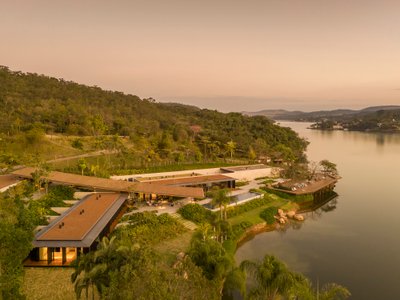
Bernardes Arquitetura Stretches a Timber Roof Along a Reservoir's Edge in Minas Gerais
Dam House in Itaúna lets a sweeping wooden canopy dissolve the boundary between hillside terrain and open water.

Similar Reads
You might also enjoy these articles

Mechanism of Memories: Adaptive Architecture Reimagines Offshore Structures as Living Cultural Machines
Floating adaptive architecture transforms abandoned offshore structures into cultural spaces that preserve memory, habitation, and human connection.
Wildlife Rehabilitation Architecture in Australia: A Regenerative Sanctuary for Koalas by Philip Skein and Keegan Mayber
A regenerative wildlife sanctuary in Queensland redefines sustainable architecture through habitat restoration, healing, and ecological awareness.
The Interfusion: Mobile Performance Architecture Reconnecting Art and Public Space
A mobile performance architecture project transforming Madrid’s streets into inclusive cultural spaces through adaptive urban design.
Biophilic Architecture and Regenerative Stadium Design: Biophilia Lagos by Rachel George
A regenerative stadium in Lagos transforms landfill into a living ecosystem through biophilic architecture, waste reuse, and environmental healing.






Comments (0)
Please login or sign up to add comments
No comments yet. Be the first to comment!