

Domus Affreschi Archaeological Building Cover by LDArchitects
Domus Affreschi Cover by LDArchitects safeguards Roman mosaics with a removable steel structure, blending heritage preservation and contemporary architectural design.


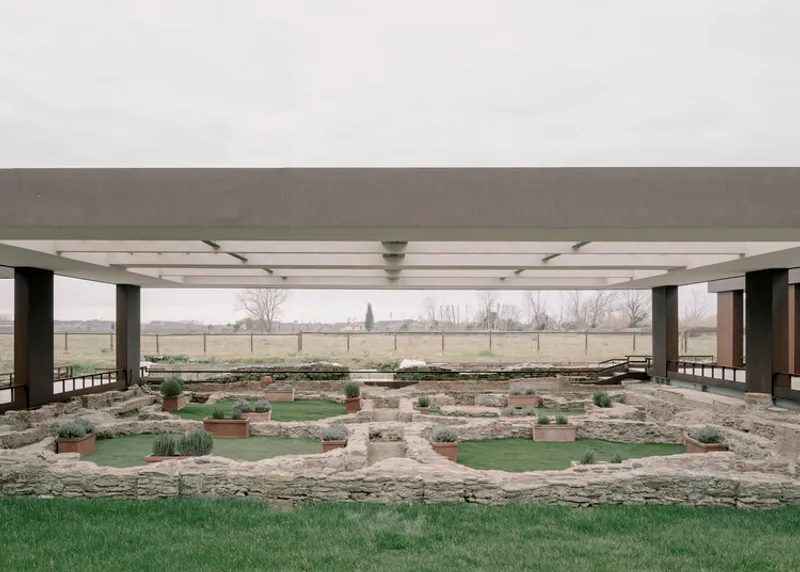
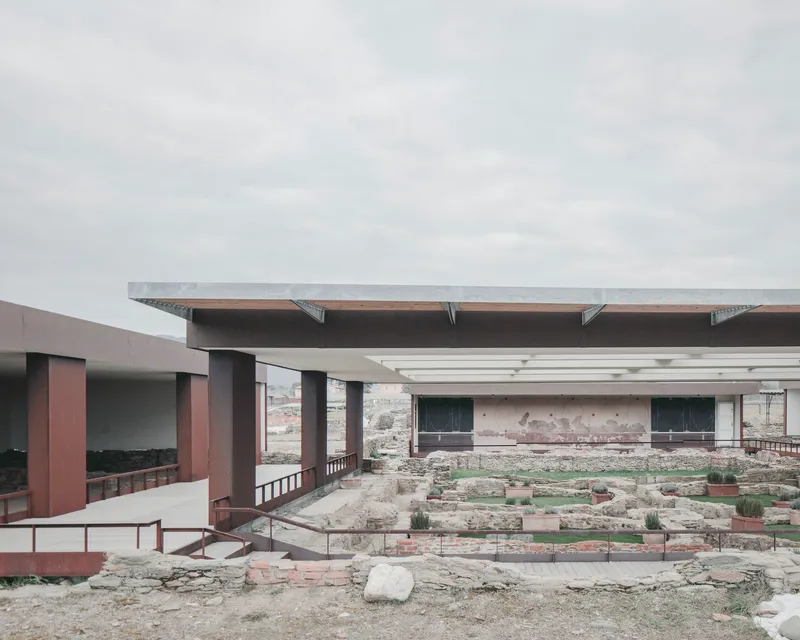
The Domus Affreschi Archaeological Building Cover by LDArchitects represents a delicate balance between architectural innovation and heritage preservation. Located in the historic archaeological site of Luni, Italy, this project was conceived to protect and enhance one of the most significant Roman monuments—the Domus degli Affreschi. With a total area of 900 m², the covering structure ensures the safeguarding of ancient mosaics, frescoes, and marble compositions while providing visitors with a modern, immersive archaeological experience.
Architectural Concept and Design Approach
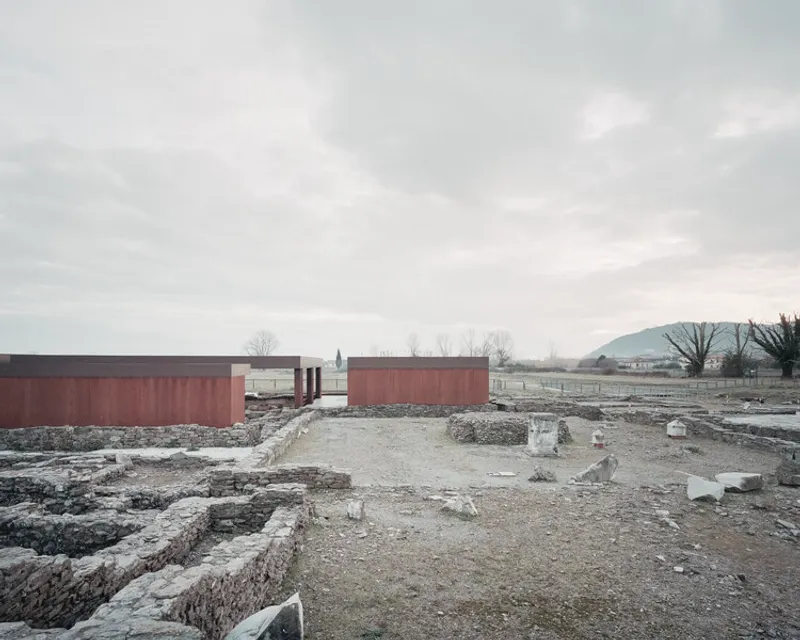
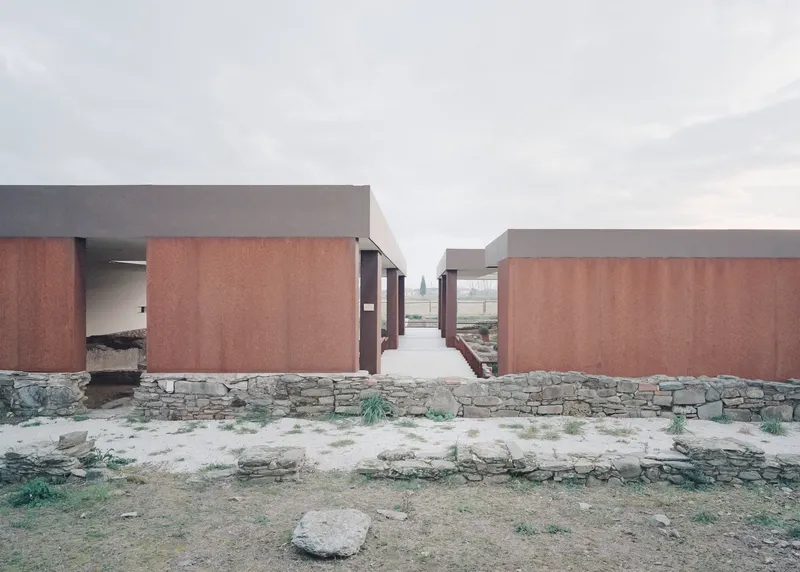
The central idea behind the project was to reinterpret the original Roman volumes of the Domus and its garden with a contemporary architectural language. Rather than reconstructing the ancient building, LDArchitects designed a lightweight, removable protective structure that both shelters the ruins and creates a clear exhibition pathway. The intervention avoids foundations or invasive excavations, respecting the fragility of the site.

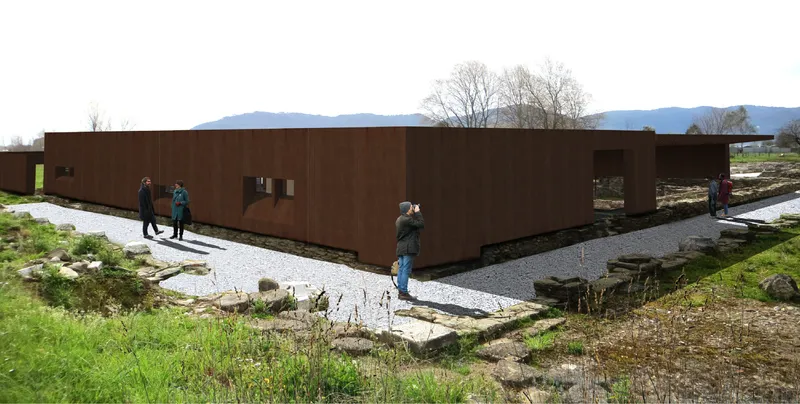
The new roof system is divided into three independent steel structures with spans of 8, 12, and 16 meters. These roofs channel rainwater into a sophisticated drainage system, integrated beneath elevated visitor walkways. The use of weathering steel (Cor-Ten) ensures structural stability while blending harmoniously with the archaeological context. Transparent roof sections protect the historic garden, maintaining daylight exposure while shielding it from environmental damage.
Materials and Construction
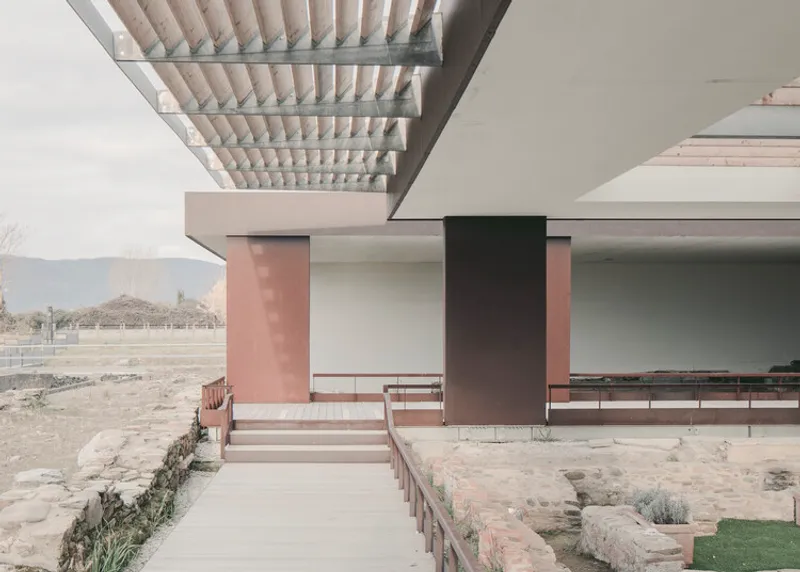
The structure relies entirely on steel framing, with plasterboard ceilings finished in light grey tones to avoid disrupting natural light conditions. Elevated concrete walkways float above the ground, allowing visitors to traverse the site without disturbing the ruins. Water is collected through concealed gutter channels and redirected into the main drainage system of the archaeological park.
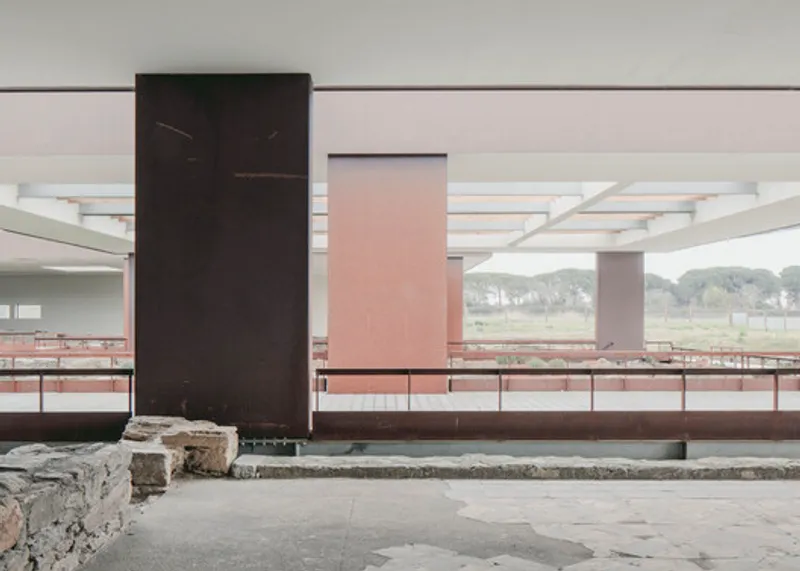
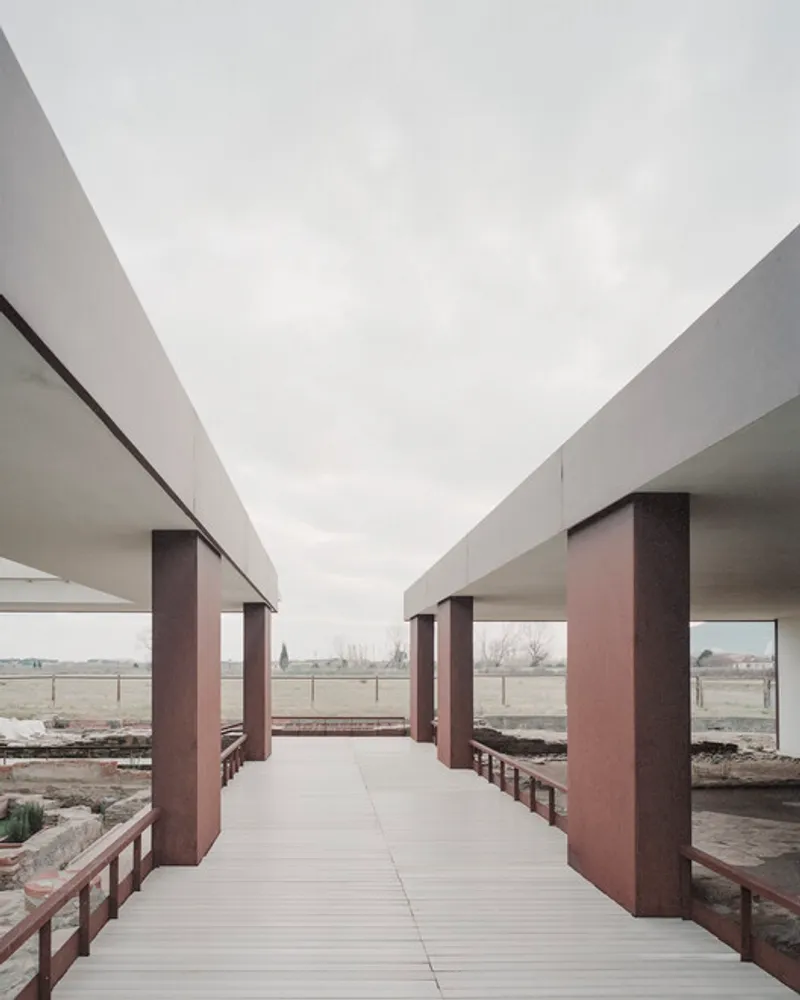
The modular system is composed of removable elements—Cor-Ten steel panels for vertical partitions, gravel-filled trays for roofing weight, and lightweight plasterboard ceilings. This autonomy allows the entire structure to rest gently on the ground level, creating a non-invasive, reversible architectural solution.
Heritage Preservation and Visitor Experience
The project’s primary objective was to protect the Roman mosaics, frescoes, and polychrome marble floors from exposure to sunlight, wind, and rain. Beyond preservation, the design also enhances the visitor experience by establishing a curated exhibition route through raised pathways. These walkways guide visitors across key areas of the Domus, providing elevated perspectives while ensuring conservation of the archaeological remains.
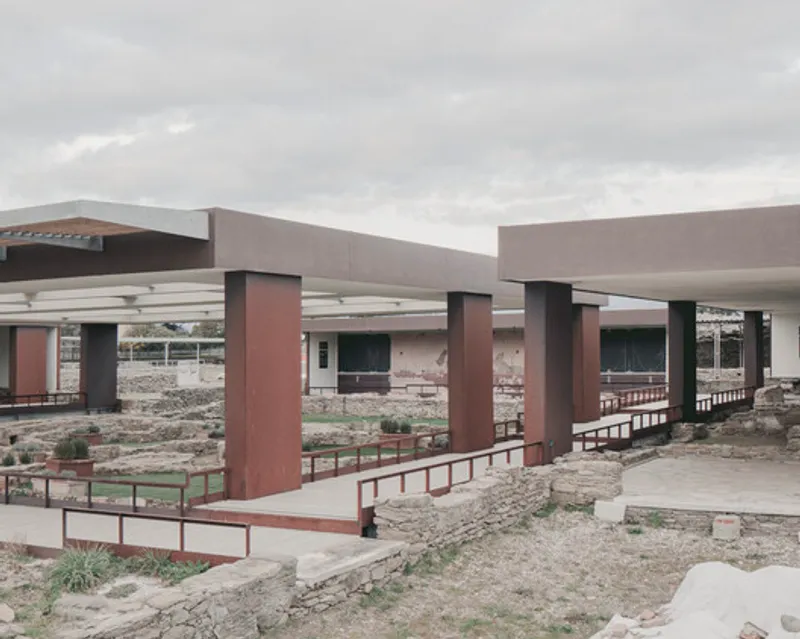
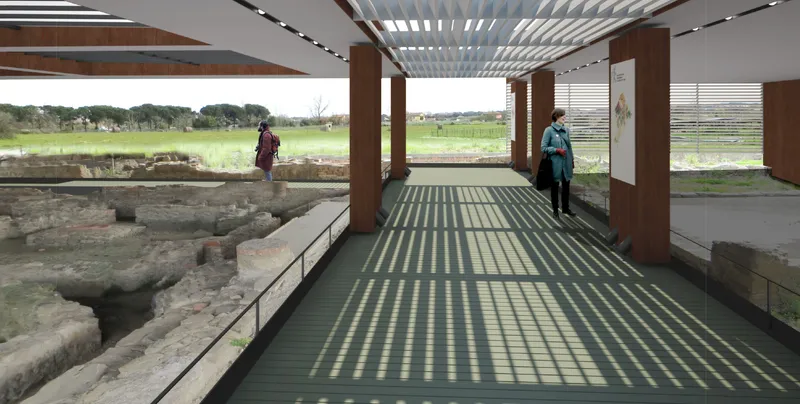
By framing the ruins within a contemporary structure, the project creates a dialogue between ancient Roman architecture and modern design practices. The integration of natural lighting, weather protection, and circulation design transforms the archaeological site into both a research hub and a tourist attraction.
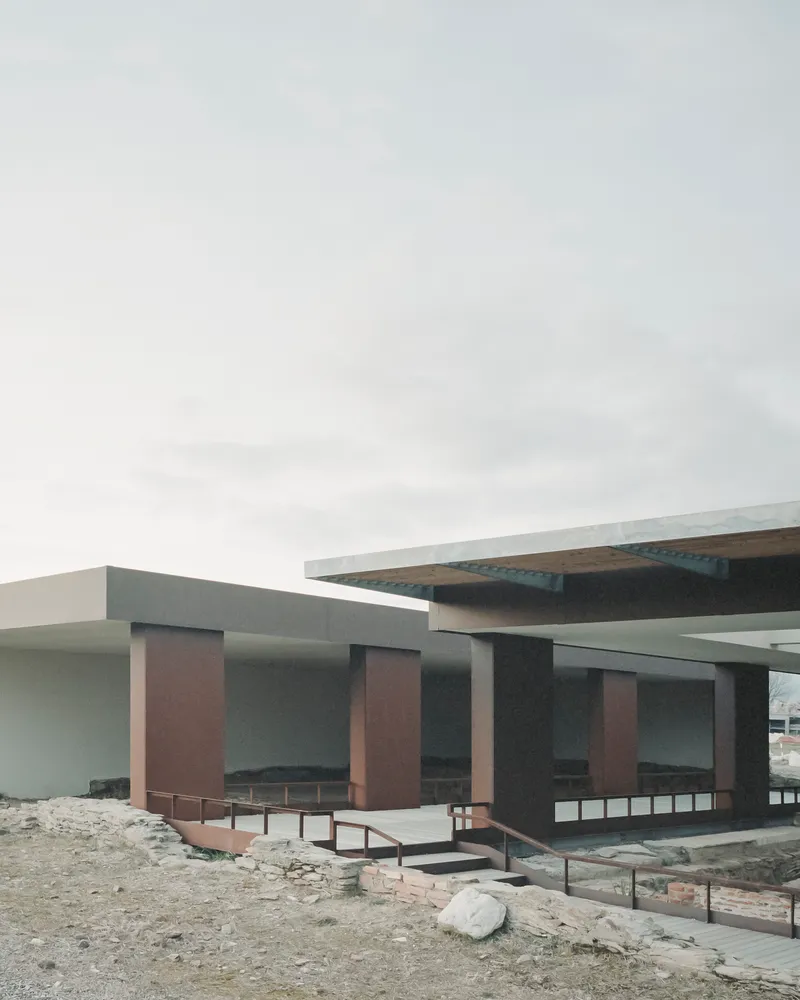
Cultural Significance
The Domus degli Affreschi is one of Luni’s most treasured archaeological landmarks. Its name originates from the extensive fragments of painted plaster discovered during excavations in the 1970s, many of which are now exhibited in the Luni museum system. The Domus features remarkable frescoed walls, marble flooring, and a central garden, reflecting the grandeur of Roman domestic architecture.
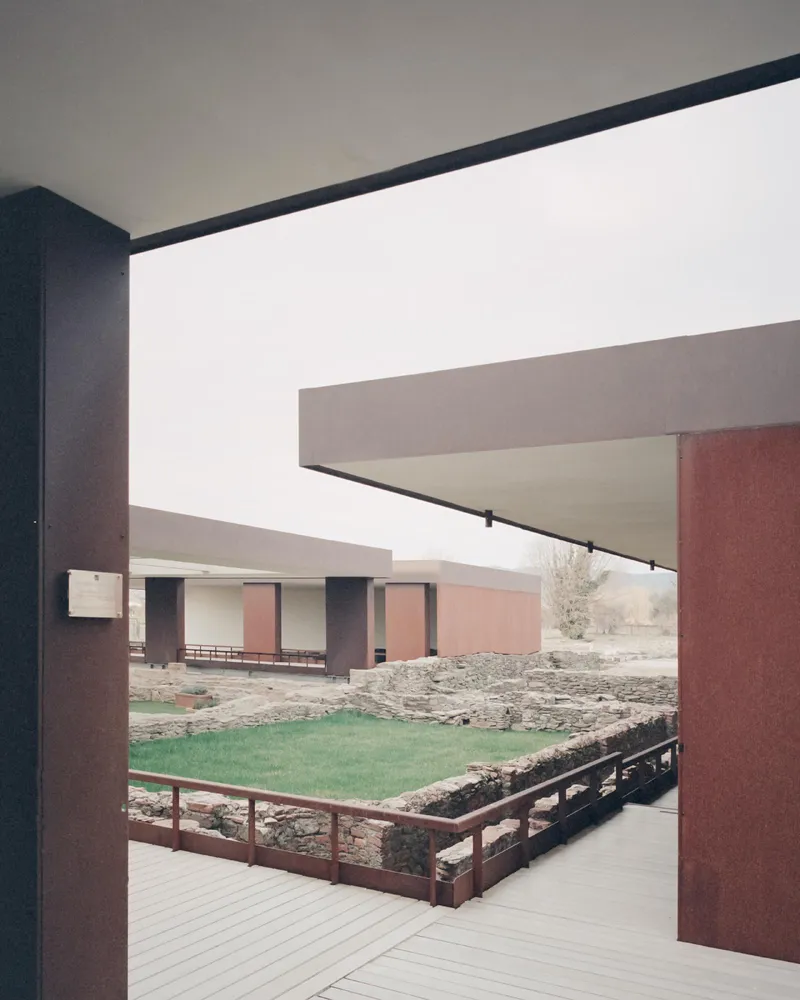
The new protective cover serves not only as a shelter but also as a cultural infrastructure, ensuring that the site remains accessible, comprehensible, and preserved for future generations. By enhancing visibility and visitor engagement, the project contributes to the wider appreciation of Luni’s archaeological heritage.
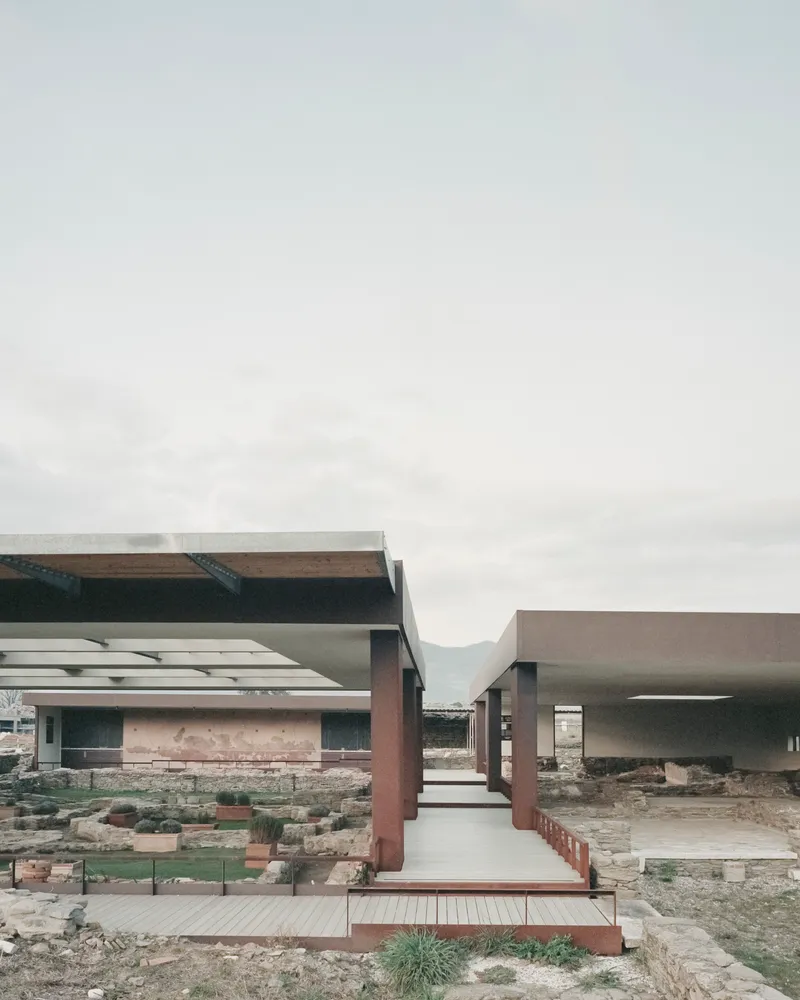
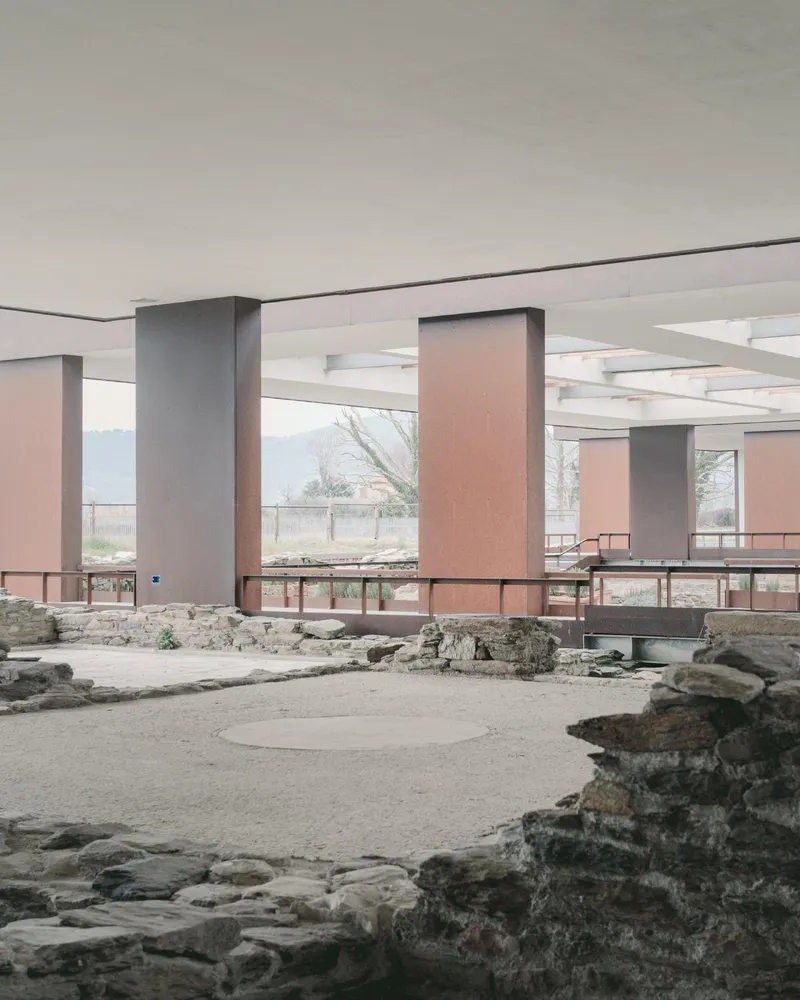
All the photographs are works of Aiste Rakauskaite




Popular Articles
Popular articles from the community


Co-life: Sustainable Architecture for Age-Friendly Community Living
Co-life reimagines sustainable architecture for seniors through courtyards, rammed earth, shared gardens, and spaces designed for belonging.

The Ocean Hive: Sustainable Architecture for a Self-Sufficient Civilization at Sea
The Ocean Hive imagines sustainable architecture at sea, where modular habitats, algae, wave power and ocean waste sustain a growing colony.

Co-Life: Senior Housing Design That Reconnects Older Adults With the City
Co-Life reimagines senior housing design through healing gardens, shared streets, workshops, and a sustainable community across generations.

AL-JANNAH: Sustainable Architecture and Permaculture for Afghan Widows
AL-JANNAH uses sustainable architecture and permaculture to create resilient oasis of housing, learning, work and renewal for Afghan widows.

Similar Reads
You might also enjoy these articles


Hodi-Mandai Geram
Project Function: Preservation and revitalization of the Intangible heritage and socio-spatial identity of the Hodi by Housing, Cultural Memory Center, Sacred Grove, landscape, local tourism economy


Olio Towers: A Mid-Rise for Performers That Fuses Housing, Rehearsal, and Stage
Located blocks from Houston's Theater District, this modular tower stacks living units around a central performance atrium.

Oasis: Modular Green Housing Carved into Dhaka's Urban Fabric
A shortlisted Plugin Housing entry reclaims unauthorized settlements in Dhaka with stepped concrete volumes, green roofs, and ventilation-driven design.

Black Hole: A Floating Megastructure for the Post-Physical Era
Emiliano Mazzarotto envisions a spherical, self-scaling arena where e-sports, digital hotels, and holographic stadiums replace traditional public space.


Explore Architectural Heritage Competitions
Discover active competitions in this discipline



Design Challenge - Contemporary interpretation of a religious complex


Challenge to reimagine the Iron Throne


Photograph architecture without architects


Illustrate the lost glory of Angkor Wat - Render Challenge
Comments (0)
Please login or sign up to add comments
No comments yet. Be the first to comment!