

Dongmingshan Senyu Hotel: A Minimalist Forest Retreat in Hangzhou
Dongmingshan Senyu Hotel in Hangzhou blends minimalist design with nature, offering modular cabins, bamboo structures, and immersive forest experiences.


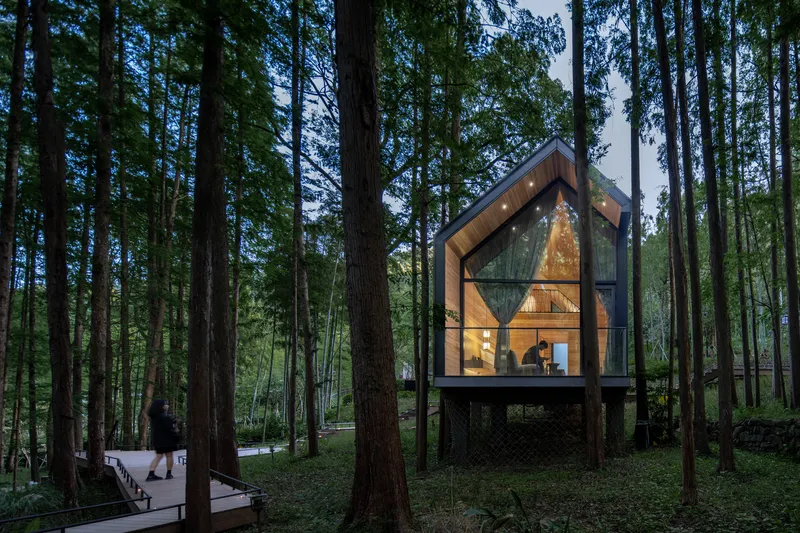
Nestled deep within the lush greenery of Dongmingshan Forest Park, Dongmingshan Senyu Hotel by GLA Design is a remarkable example of minimalist, nature-integrated architecture. Surrounded by towering metasequoia trees and dense moso bamboo groves, the 1,300 m² retreat combines sustainable design principles with immersive natural experiences. The project includes a reception center and three distinct types of detached guest accommodations, each thoughtfully designed to harmonize with the forest environment.
“Minimally Invasive” Design Philosophy
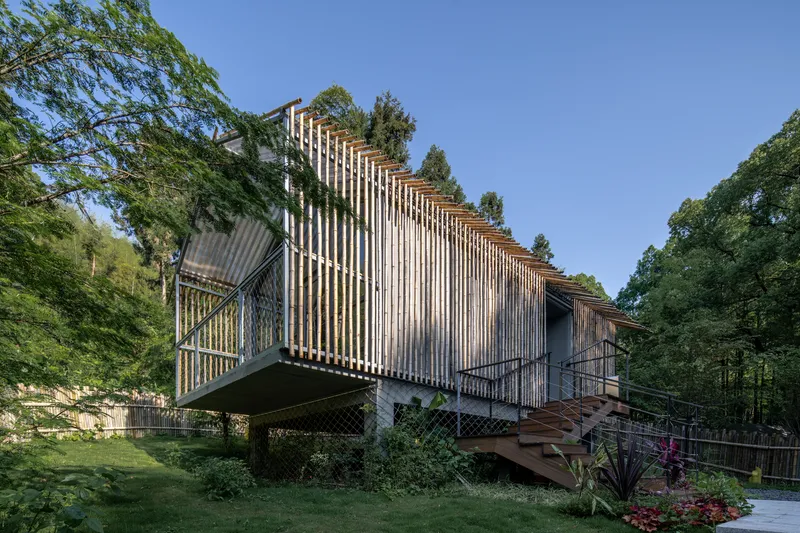
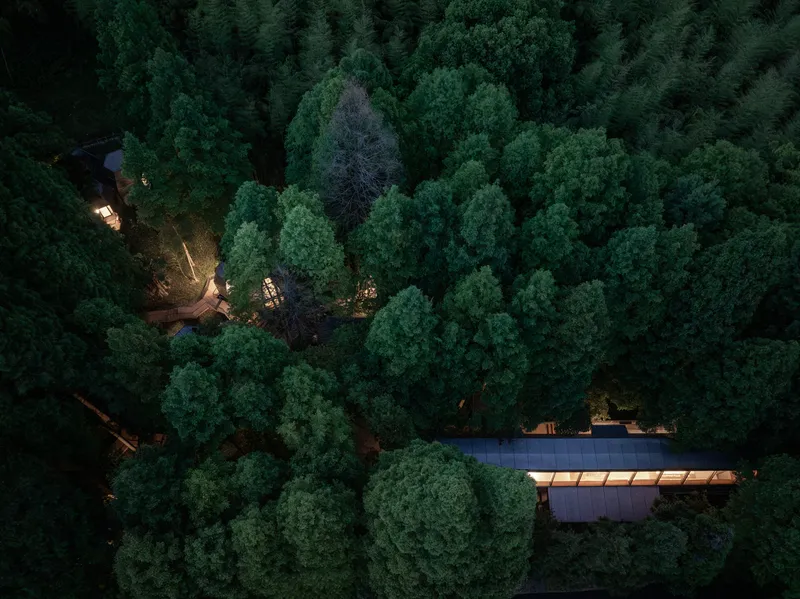
Located along a serene mountain trail, the site features a murmuring stream, towering sequoia trees, and existing rustic wooden houses. In response, GLA Design adopted a “minimally invasive surgery” approach to architecture. By carefully preserving the natural ecology, the design respects the original forest while introducing functional, contemporary structures. The result is a seamless integration where the hotel becomes an organic part of the woodland landscape.
Immersive Forest Experience at the Reception Center
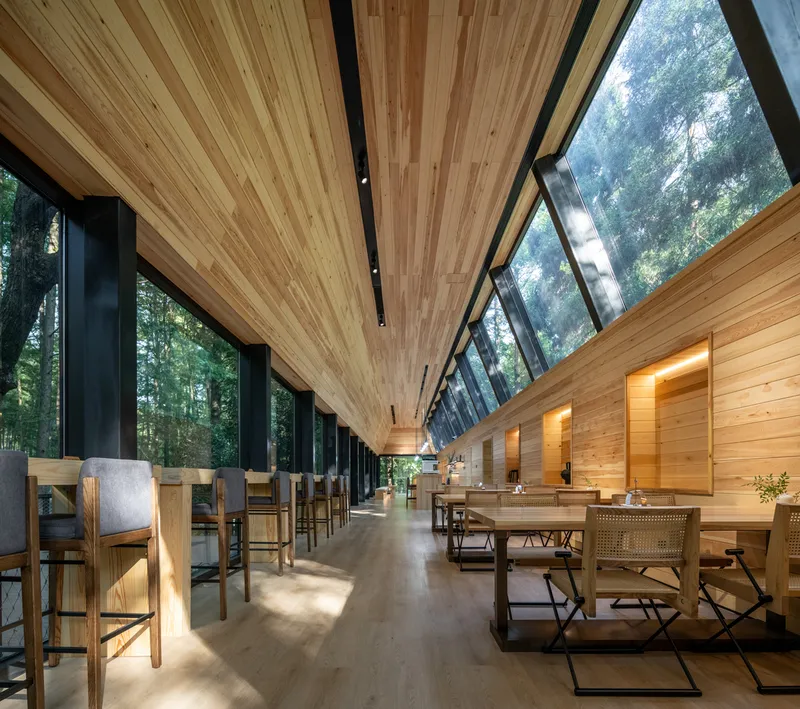
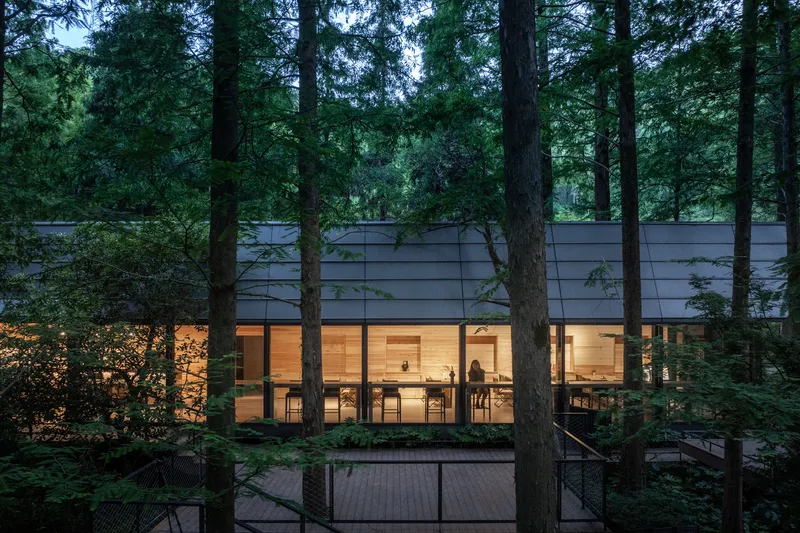
The reception center serves as the main gateway to the forest retreat. While it stands as the most visible architectural intervention, it embodies a dialogue with nature. Large south-facing floor-to-ceiling windows frame breathtaking sequoia views, while the north-facing upper windows bring the verdant bamboo forest indoors. This careful connection between interior and exterior landscapes creates an immersive experience, allowing visitors to feel enveloped by the forest immediately upon arrival.
Modular Pinecone Cabins for Flexible Hospitality
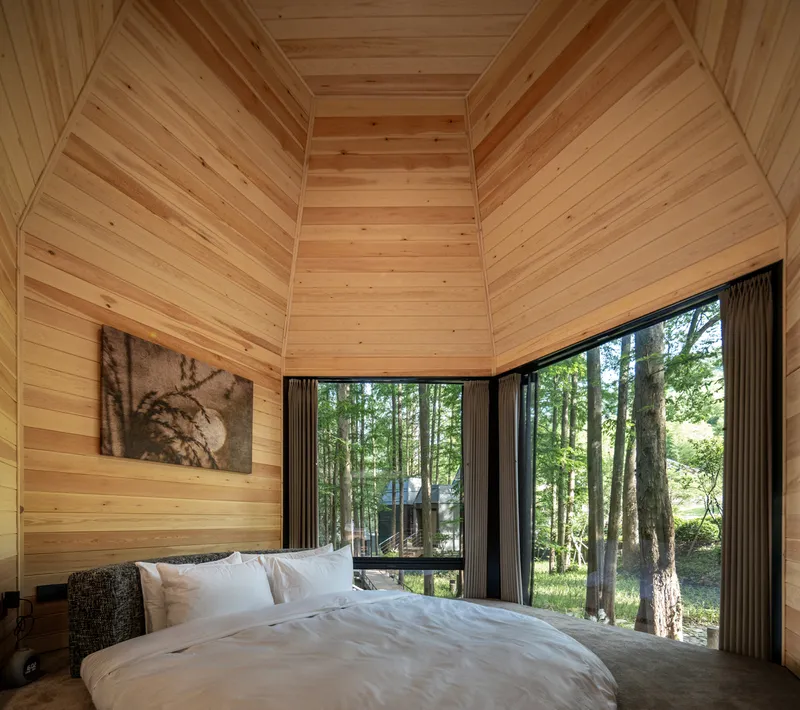
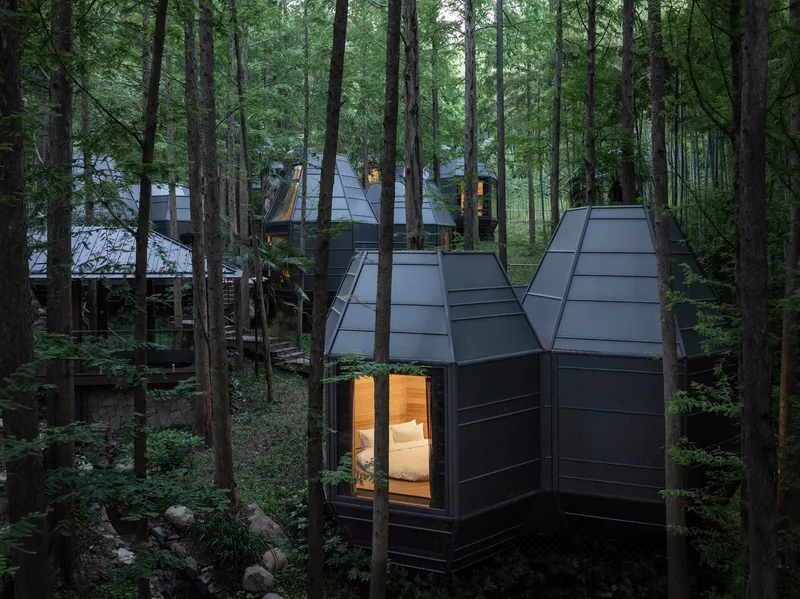
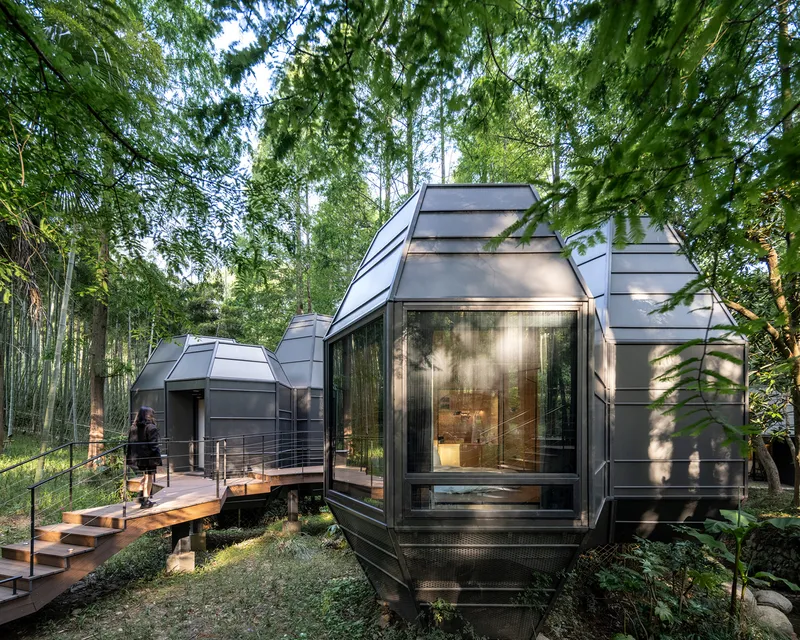
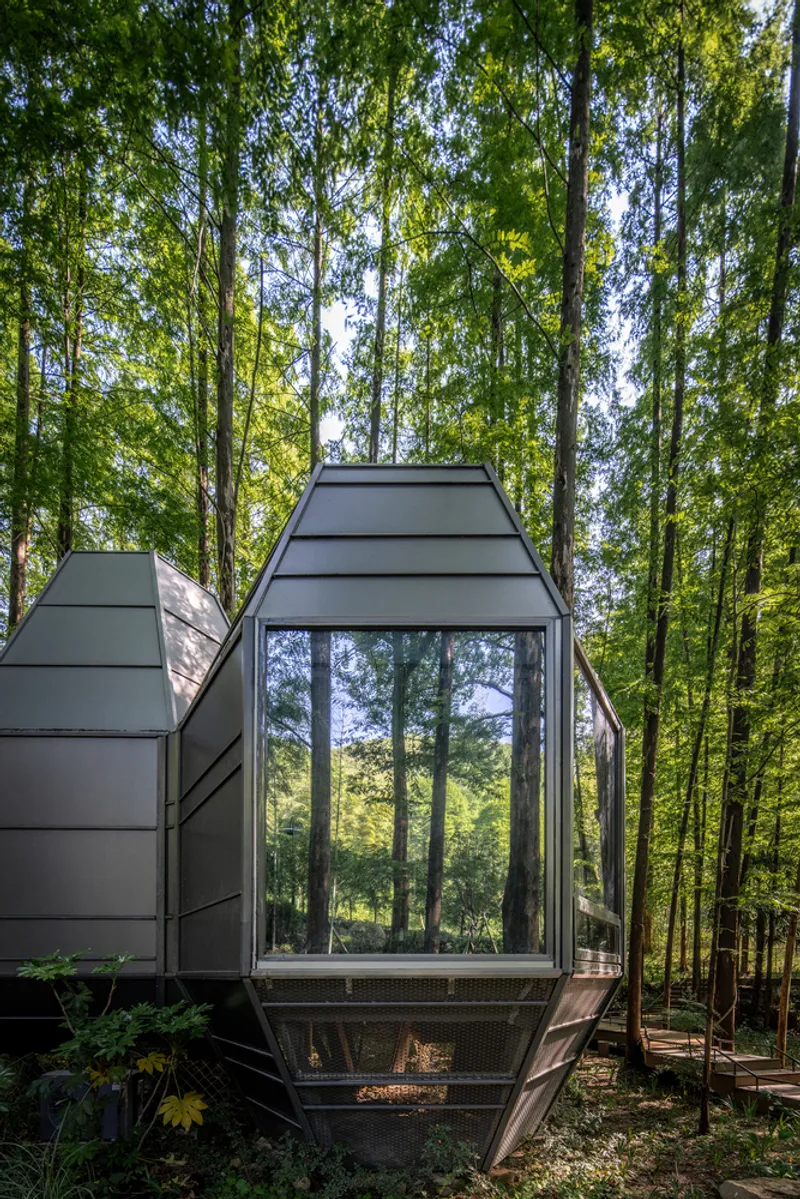
The Pinecone Cabin is designed with modularity and environmental sensitivity at its core. Elevated from the forest floor to adapt to changing terrain, the cabin’s form mirrors the tapering growth of nearby sequoia trunks. Modular construction enables the Pinecone Cabin to efficiently adapt to diverse site conditions, minimizing disruption to the natural habitat while providing versatile, functional guest spaces.
Metasequoia Wood Cottage: Harmonious Interior and Exterior
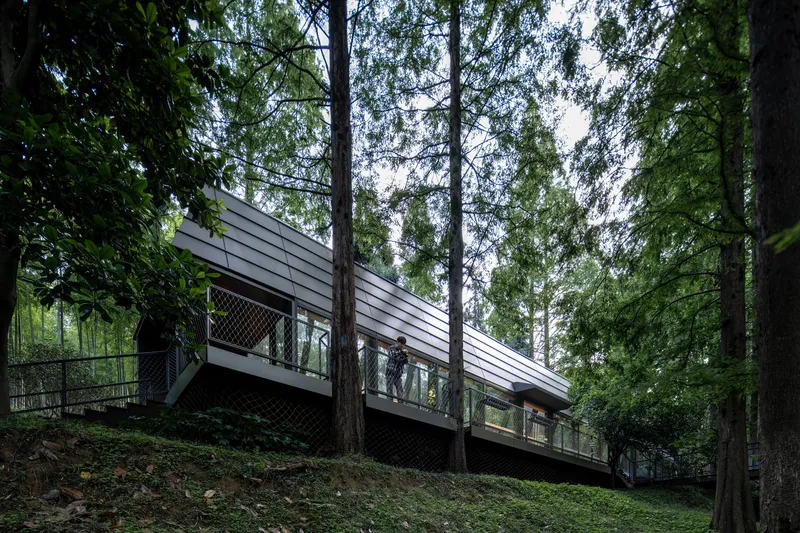
The Metasequoia Wood Cottage, inspired by hammock-like structures, raises its base off the ground to protect the terrain and enhance ventilation. Its double-sloped roof echoes the forest canopy, while interior skylights invite natural light, airflow, and forest sounds into the living spaces. This design allows guests to experience nature from every corner, creating a peaceful, forest-immersed retreat.

Bamboo Hut: Modernized Traditional Materials
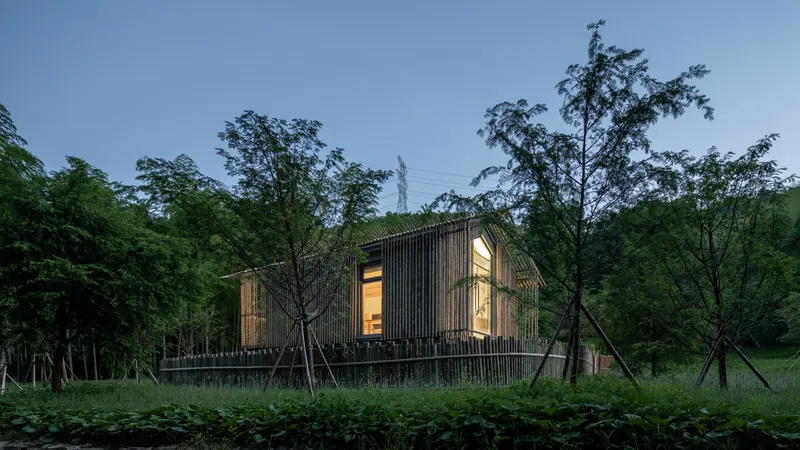
At the edge of the bamboo grove, the Bamboo Hut employs three cube-like structures with woven bamboo façades. The lightweight bamboo curtain walls are supported by an exposed steel frame, demonstrating flexibility and modern adaptation of traditional materials. This approach produces a unique interplay of light and shadow, while also emphasizing the building’s connection to the surrounding bamboo forest.
Site-Sensitive Planning and Construction
To maintain the forest’s original character, designers conducted repeated on-site explorations to locate trees precisely and adapt construction methods accordingly. No trees were removed unnecessarily, ensuring a coexistence of architecture and nature. The result is a hotel that feels like an extension of the forest itself, offering guests a tranquil, restorative experience deeply connected to the mountains and woodland environment.
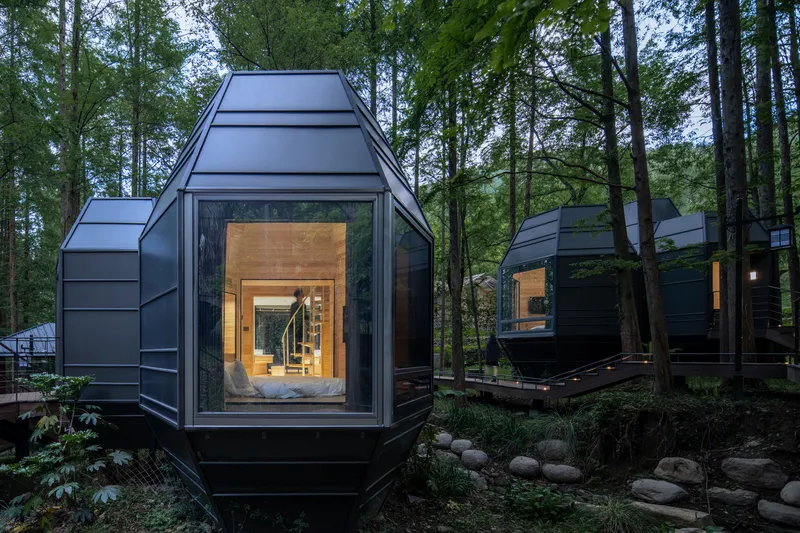
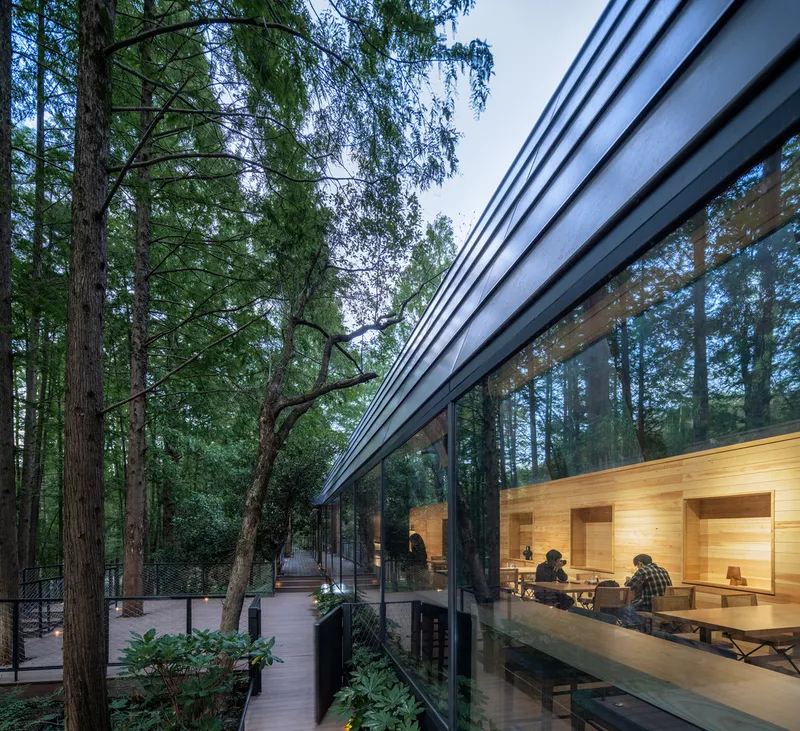
Dongmingshan Senyu Hotel exemplifies sustainable, nature-conscious architecture, where minimal intervention meets thoughtful design. Every element—from reception to guest cabins—prioritizes environmental sensitivity, immersive experiences, and modular adaptability. Visitors leave with a sense of harmony, discovering a home for the soul amid Hangzhou’s majestic forest landscape.
All photographs are works of Chen Xi Studio


Popular Articles
Popular articles from the community


Juan García Correa, John González and Claudia Rueda Sink a Circular Amphitheater into a Manizales Engineering Building
On the La Nubia campus in Manizales, Colombia, the S1 Building folds labs and offices into a hillside of ramped lawns that double as a campus route.

LT2A and OPEN Architectes Thread a Brick and Glass High School Through a Wooded Belgian Campus
In Braine-l'Alleud, a 3,000 m² wing for Collège Cardinal Mercier pairs pale brick with a glazed colonnade, deferring to a small chapel and a dense wood.

David Macias Steps a Doorless Stone and Plaster House Down a Tropical Colombian Hillside
In the humid hills of Colombia, Threshold House replaces the front door with an open void and terraces its 850 m² down the slope instead of fighting it.

longwave studio Reorganizes a 112 m² Tainan Apartment Around the Daily Routines of a Family and Two Cats
In Tainan, Taiwan, birch plywood, rust-red furniture and a freestanding plaster wall link arrival, storage, work and family life in one apartment.

Similar Reads
You might also enjoy these articles


Hodi-Mandai Geram
Project Function: Preservation and revitalization of the Intangible heritage and socio-spatial identity of the Hodi by Housing, Cultural Memory Center, Sacred Grove, landscape, local tourism economy


Olio Towers: A Mid-Rise for Performers That Fuses Housing, Rehearsal, and Stage
Located blocks from Houston's Theater District, this modular tower stacks living units around a central performance atrium.

Oasis: Modular Green Housing Carved into Dhaka's Urban Fabric
A shortlisted Plugin Housing entry reclaims unauthorized settlements in Dhaka with stepped concrete volumes, green roofs, and ventilation-driven design.

Black Hole: A Floating Megastructure for the Post-Physical Era
Emiliano Mazzarotto envisions a spherical, self-scaling arena where e-sports, digital hotels, and holographic stadiums replace traditional public space.

Explore Architecture Competitions
Discover active competitions in this discipline

Challenge to reimagine the Iron Throne

Photograph architecture without architects

Illustrate the lost glory of Angkor Wat - Render Challenge

Design challenge to reuse E-waste
Comments (0)
Please login or sign up to add comments
No comments yet. Be the first to comment!