

Dove Cottage by AGATHOM Co. A Pavilion-Based House Immersed in Nature
Pavilion-based residence weaving concrete, wood, and light into a forest-like journey, fostering sustainability, spatial discovery, and deep connection to nature.


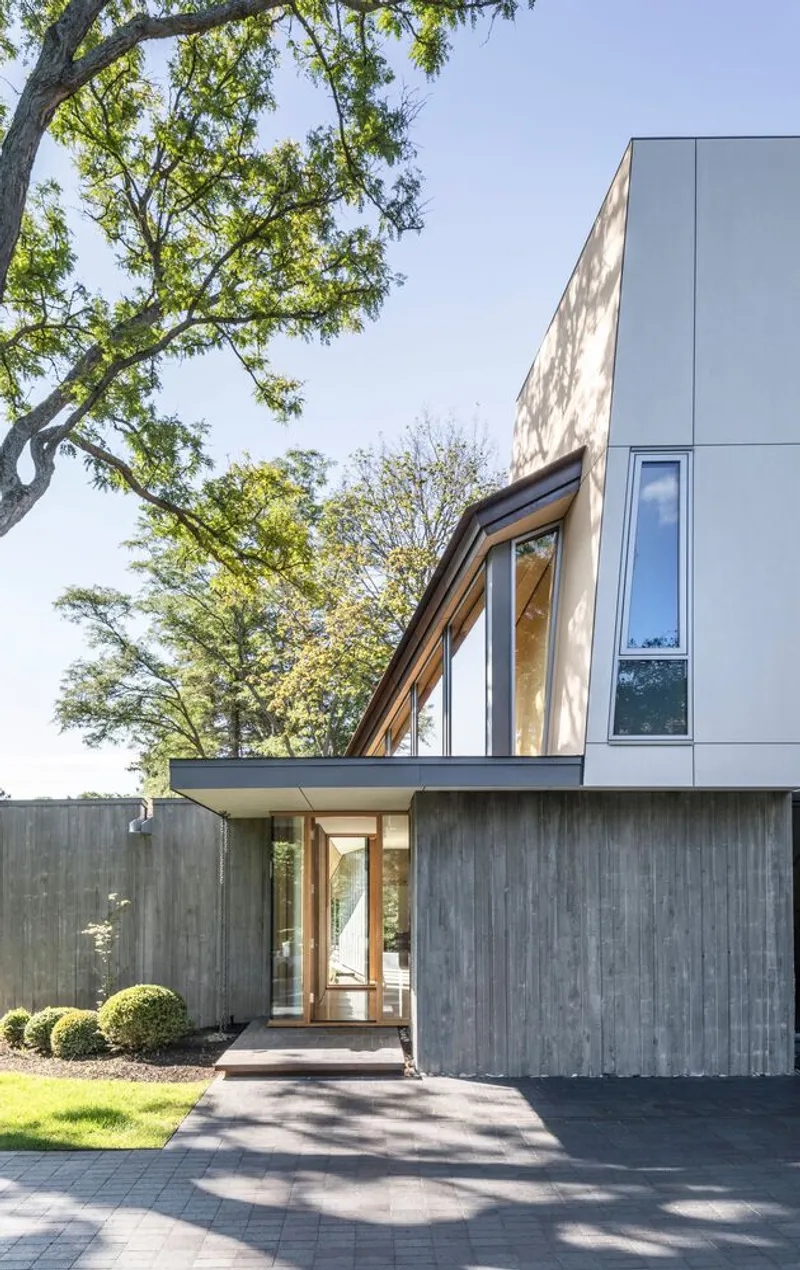
Nestled within the wooded landscape of Toronto, Dove Cottage is a 5,000-square-foot contemporary residence that redefines domestic living through landscape immersion, spatial sequencing, and long-term environmental stewardship. Designed by AGATHOM Co., the project is conceived not as a singular enclosed volume, but as a constellation of interconnected pavilions, each functioning as an architectural destination within a carefully choreographed journey through space.
Architecture as a Walk Through Nature
Dove Cottage is organized as an L-shaped composition of independent yet interlinked volumes, described by the architects as a series of “tents” or pavilions dispersed across the site. Rather than prioritizing rooms alone, the design elevates the spaces between, circulation paths become experiential trails, echoing the sensation of moving through Ontario’s forests and meadows.
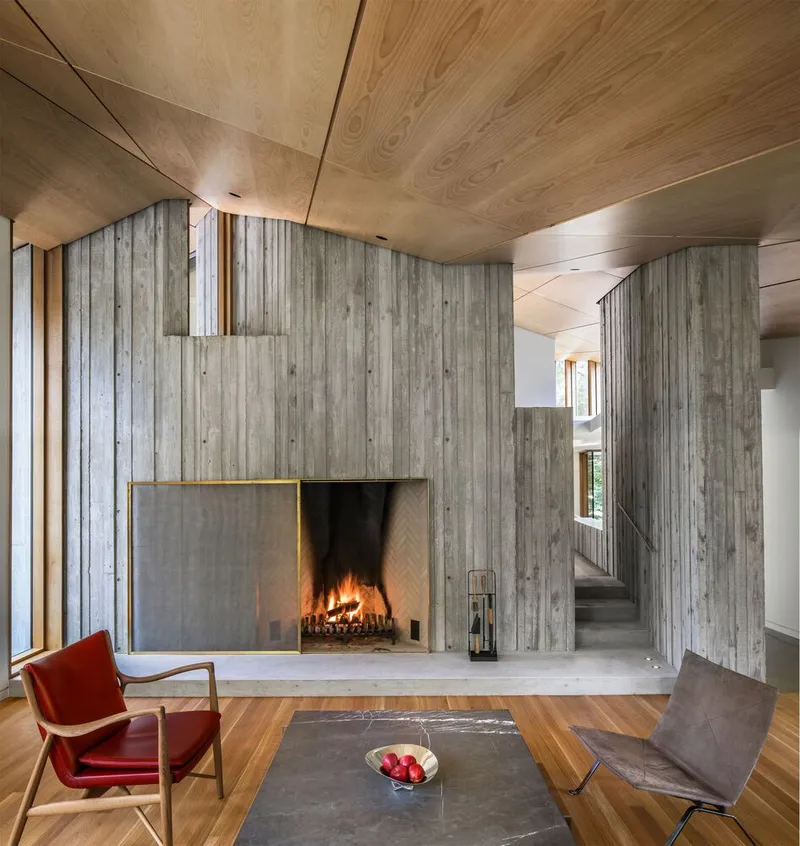
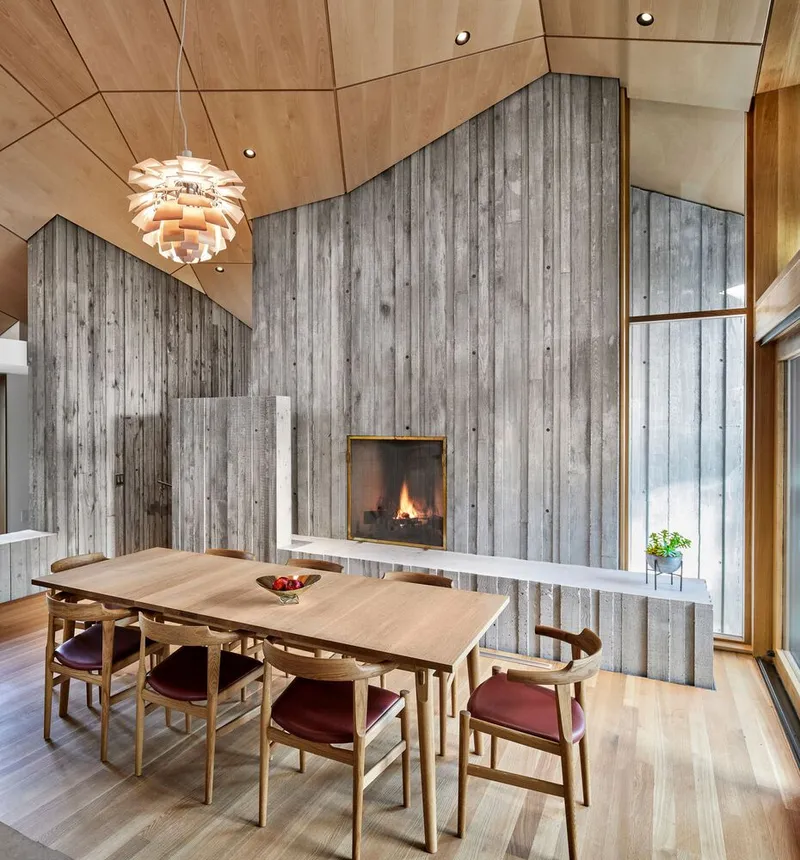
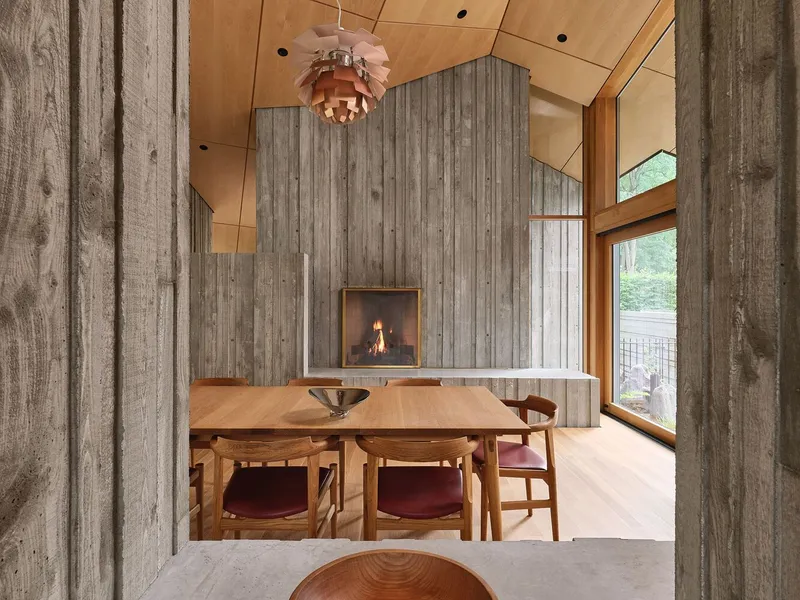
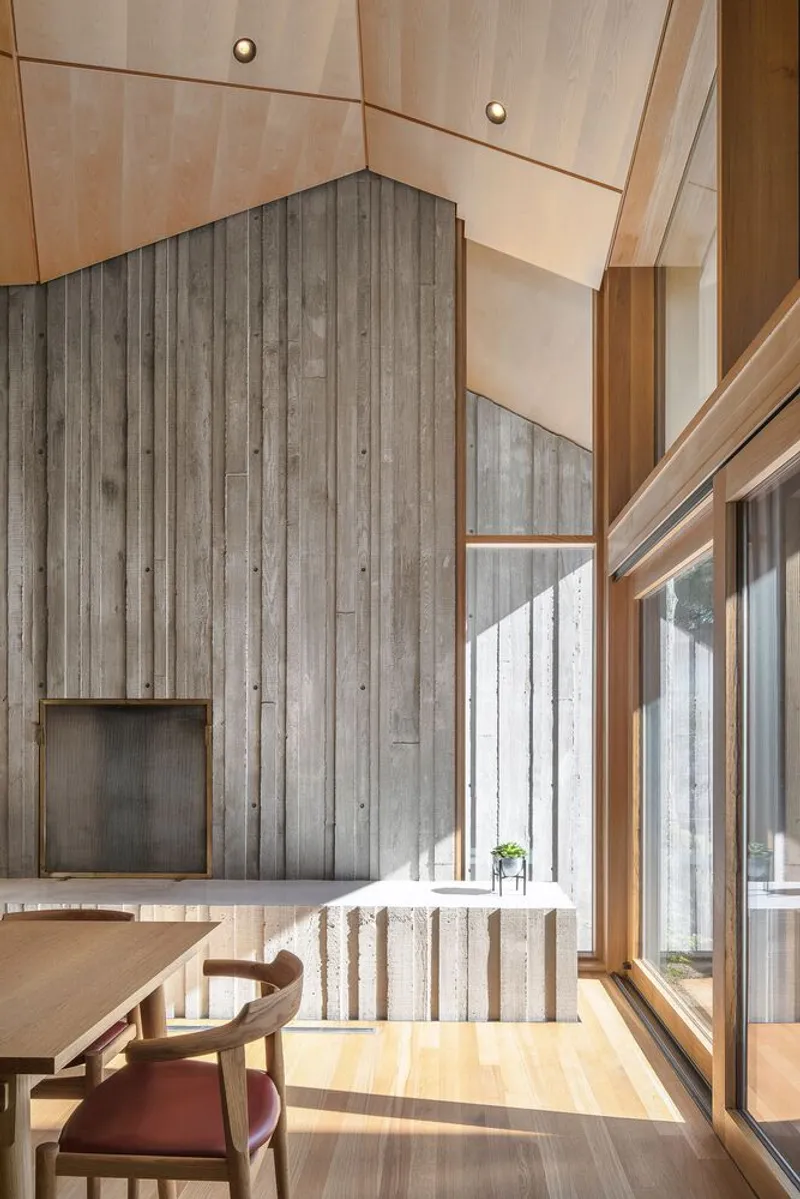
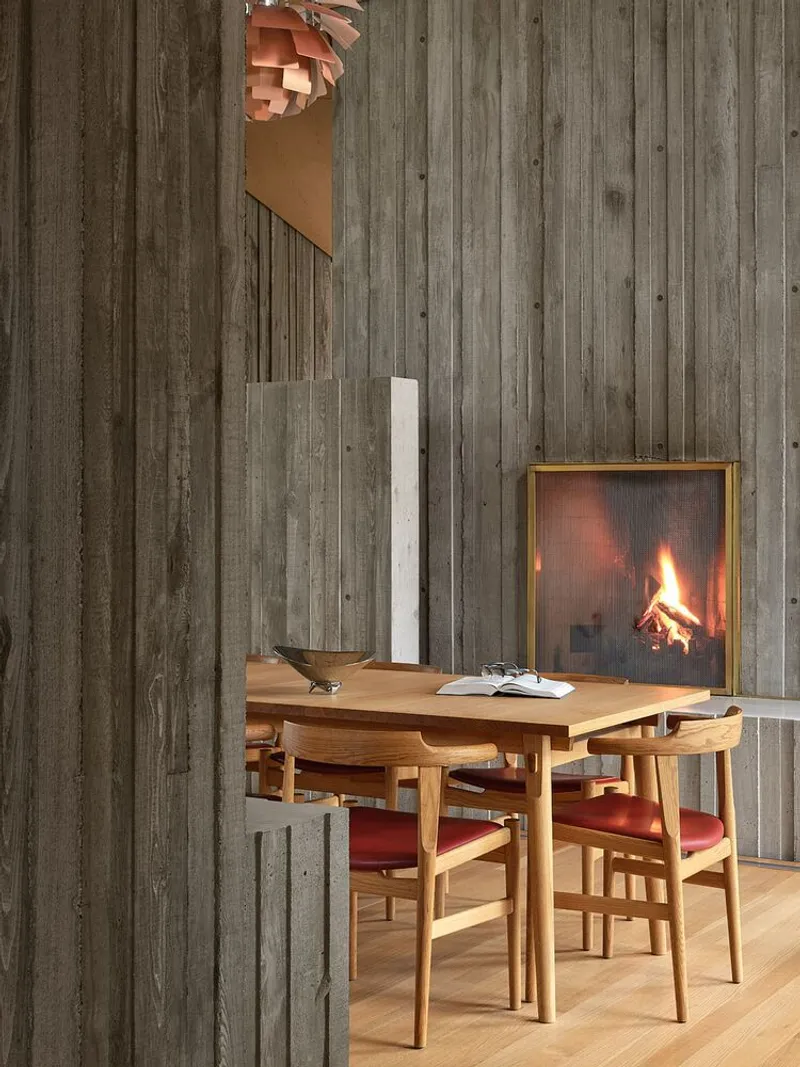
The spatial sequence unfolds with deliberate variation: a soaring, light-filled dining pavilion transitions into a compressed, intimate living space anchored by fire and warmth. Ceiling heights rise and fall, paths narrow and expand, and views shift constantly, creating a rhythmic architectural narrative akin to forest bathing: where movement, light, and material engage the body and senses.
The Hearth as Spatial Anchor
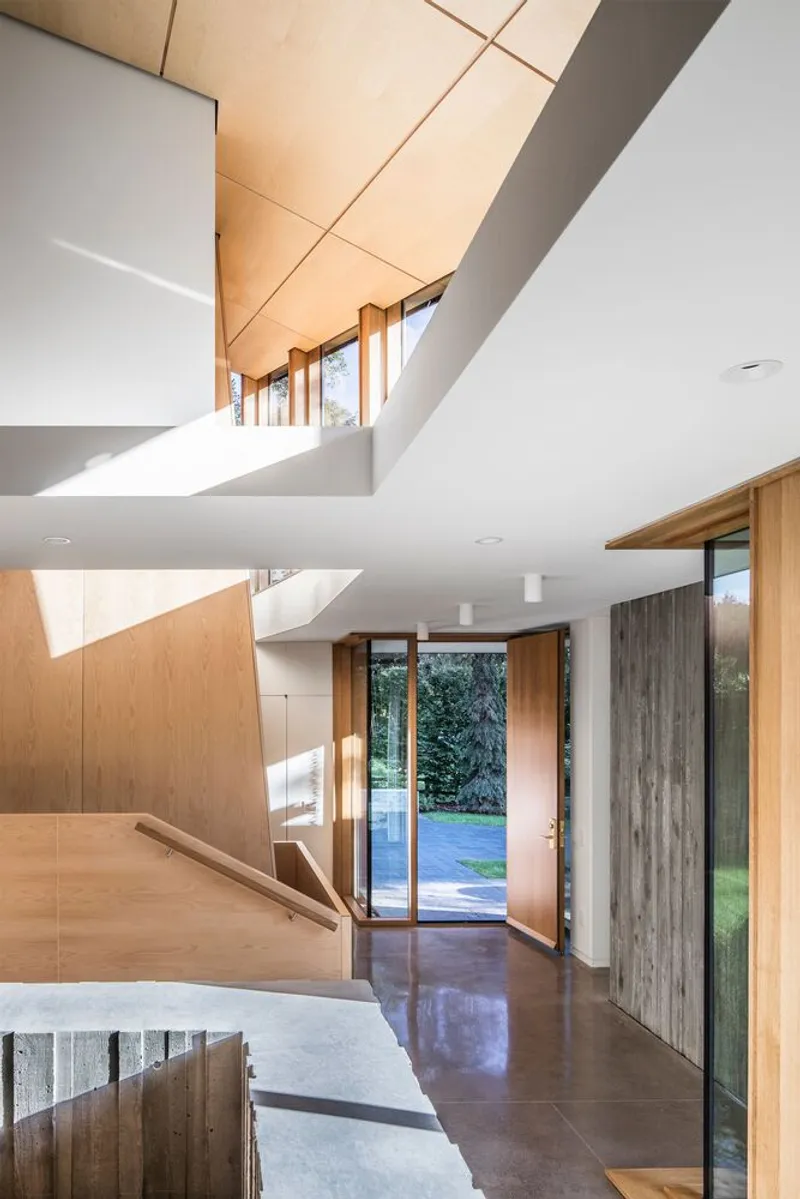
At the heart of the home, back-to-back fireplaces are embedded within monumental cast-in-place concrete trunks. These vertical elements function simultaneously as spatial anchors, thermal masses, and structural armatures. Like a clearing in the woods, this central hearth becomes a point of orientation and gathering, around which daily life unfolds.
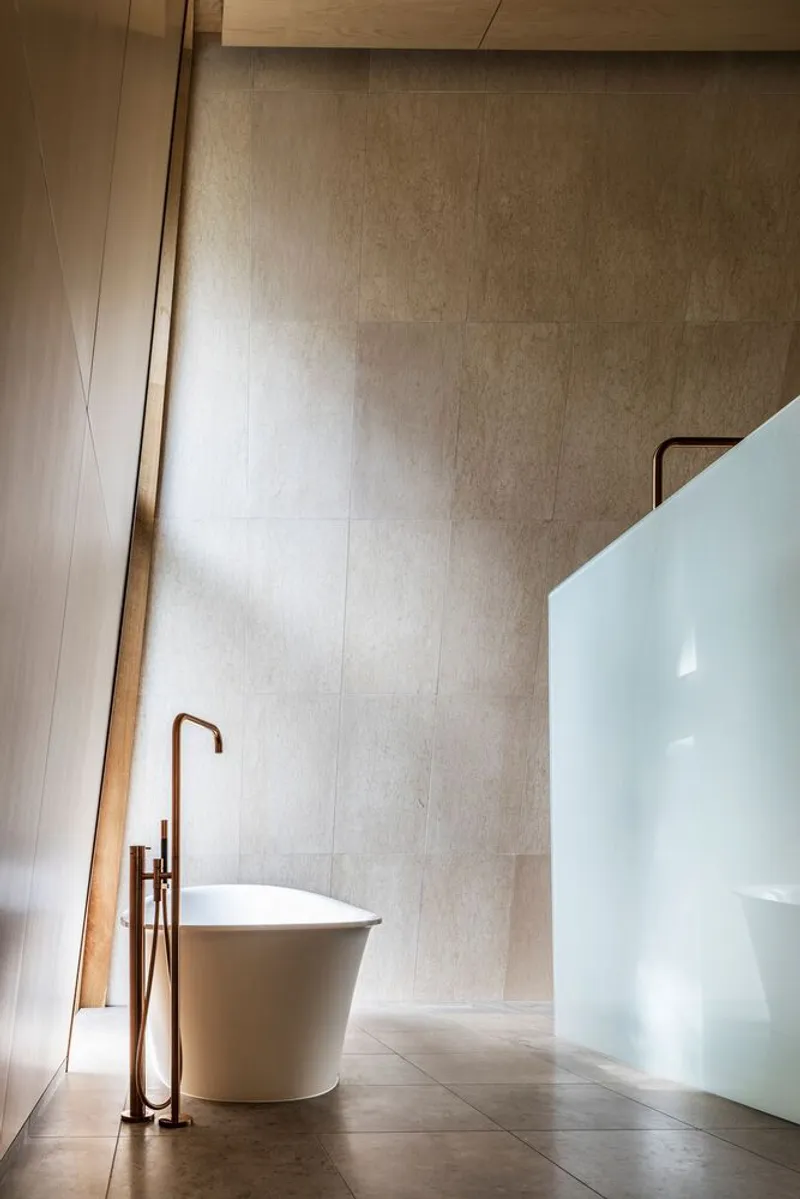
Natural light is treated as a dynamic material throughout the project. Rather than relying on uniform illumination, light enters in fragments: through narrow apertures, reflected surfaces, and unexpected angles, washing walls and ceilings with shifting patterns. Across seasons and hours, the house continuously transforms, revealing new spatial and atmospheric qualities.
Sustainability Rooted in Experience
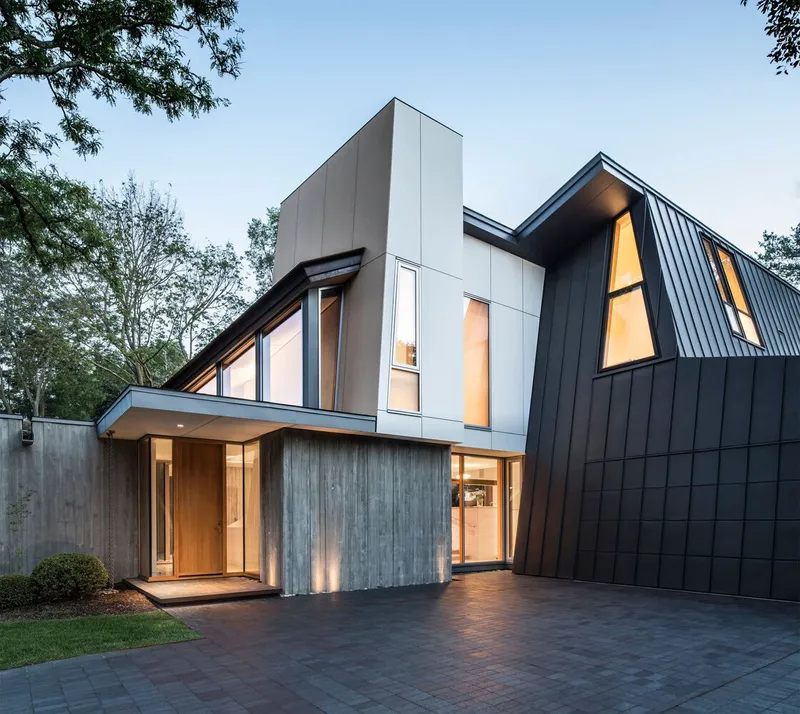
Beyond technical performance, Dove Cottage advances a holistic vision of sustainable residential architecture, one that prioritizes emotional connection to place alongside measurable efficiency. The building envelope is highly insulated, wrapped in a continuous thermal blanket that minimizes energy loss. Concrete elements transition carefully from interior to exterior, creating thermal separation buffers while maintaining material continuity.
The house operates as a net-positive energy system. Forty-one photovoltaic panels installed on the highest roof plane generate more electricity than the home consumes, feeding surplus energy back into the grid. A geothermal system provides year-round heating and cooling, dramatically reducing operational energy demands.
Green roofs planted with native, drought-tolerant species enhance insulation, manage stormwater, and reinforce the project’s visual integration with the surrounding landscape. Collected site water is reused for irrigation, further reducing environmental impact.
Concrete, Steel, and the Illusion of Weightlessness
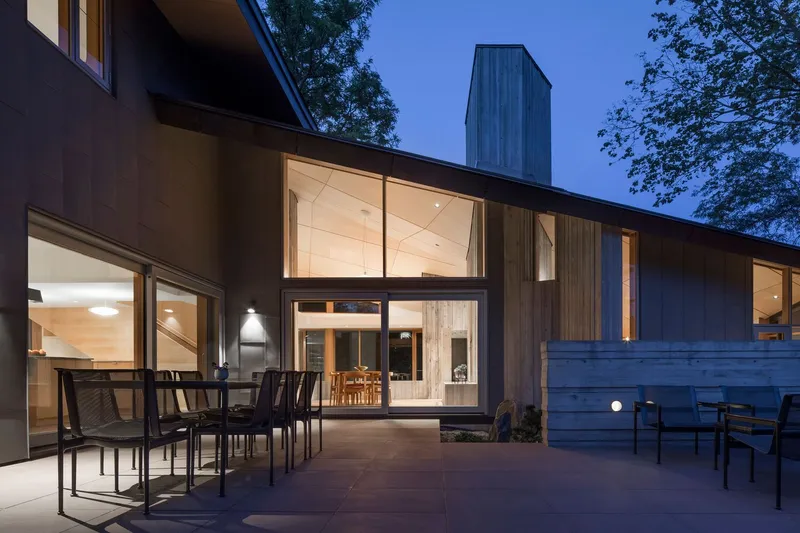
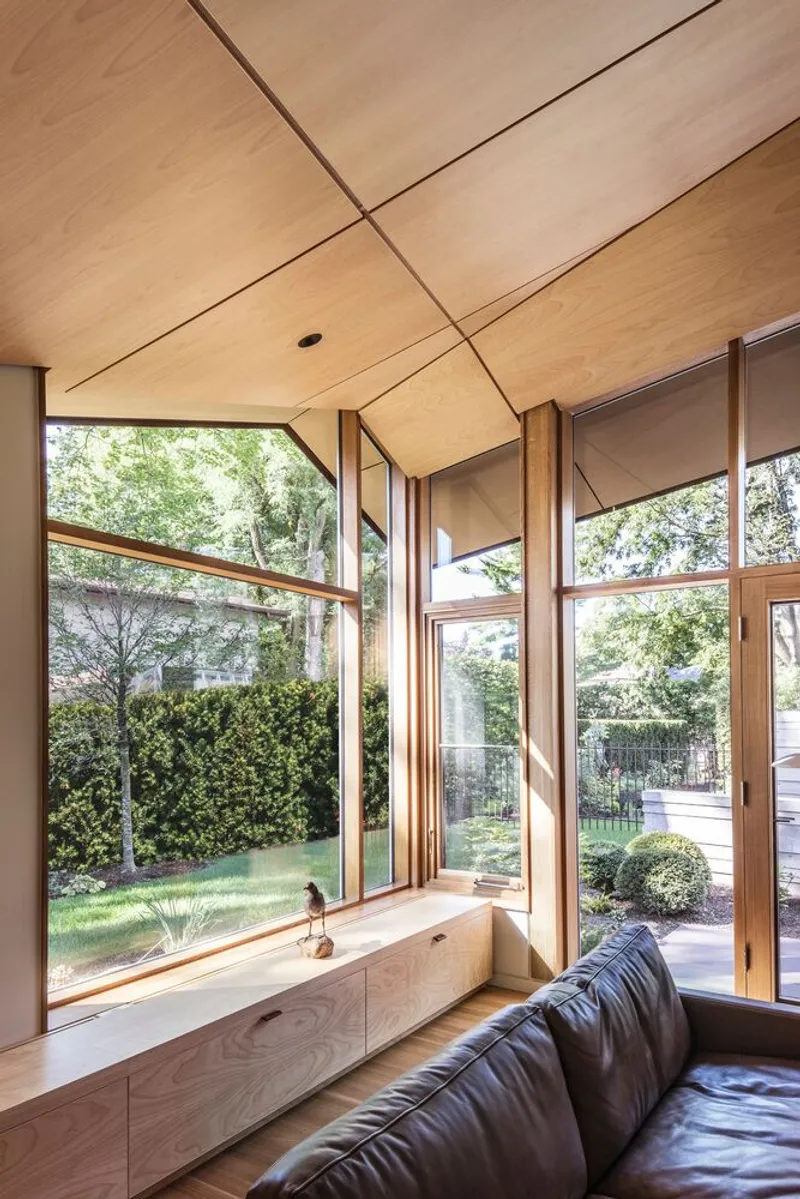
While concrete plays a dominant visual role, its purpose extends far beyond expression. Internal cast-concrete towers and walls act as structural masts, anchoring an intricate system of steel frames that span across and beyond interior spaces. This strategy allows the folded wood ceiling planes to weave seamlessly through the house, appearing to float effortlessly from one pavilion to the next.
The contrast between the mass of concrete and the lightness of the folded roof structure creates a powerful architectural tension, monumental yet delicate, grounded yet ethereal.
Materiality Inspired by Landscape and Time
Material selection throughout Dove Cottage emphasizes durability, tactility, and aging with grace. The primary roof form is clad externally in weathering steel, allowing it to patinate naturally over time, while the interior ceiling is lined with white birch, enveloping the spaces with warmth reminiscent of a protective canopy.
Warm oak floors and millwork are paired with expressive green stone countertops, their reflective surfaces echoing the colors of the surrounding landscape. The concrete surfaces retain the imprint of rough timber formwork, preserving the memory of construction and reinforcing the project’s connection to craft and making.
Integrated Design at Every Scale
AGATHOM Co.’s scope extended well beyond architecture alone. The project includes custom-designed lighting fixtures, bespoke rugs, built-in furniture, and carefully coordinated interior elements. Outdoor components: the greenhouse, covered walkway, swimming pool, and landscape design, are treated as integral architectural layers rather than add-ons.
Lighting design plays a critical role, enhancing the interplay of shadow, texture, and material while reinforcing the experiential narrative of movement through the home. Every element, from structure to furnishings, works in concert to create a cohesive, immersive environment.
A Home Designed for Longevity and Belonging
Dove Cottage stands as a compelling example of contemporary residential architecture that prioritizes connection: between spaces, people, and the natural world. By blending biomorphic design principles, advanced environmental systems, and a deeply sensory spatial experience, the project fosters a lasting sense of stewardship, empathy, and belonging.
Rather than imposing itself on the landscape, the house participates in it: changing with light, weather, and time, and offering its inhabitants a daily reminder of their place within a larger ecological continuum.
All photographs are works of
Steven Evans Photography




Popular Articles
Popular articles from the community


Co-life: Sustainable Architecture for Age-Friendly Community Living
Co-life reimagines sustainable architecture for seniors through courtyards, rammed earth, shared gardens, and spaces designed for belonging.

Hill & Cross Opera: Sculptural Opera House Architecture Shaped by Tallinn’s Landscape and Identity
Hill & Cross Opera reimagines opera house architecture in Tallinn through its sculptural hill, civic plaza, glass wave and a luminous cross.

Conexión: Biophilic Design Reimagines High-Rise Living in Hong Kong
Conexión reimagines high-rise living in Hong Kong through biophilic design, green facades, shared spaces, daylight, water and nature within.

The Earth Pod: 3D Printed Homes for Resilient Refugee Communities
The Earth Pod reimagines refugee housing through 3D printed homes made from clay, combining resilience, self-sufficiency, and rapid shelter.


Similar Reads
You might also enjoy these articles

FAMM Arquitectura Organizes Ten Villas Around Courtyards and Jungle in Nosara, Costa Rica
El Molino pairs two elongated volumes with deep overhangs and timber louvers to build a compact coastal community five minutes from the beach.
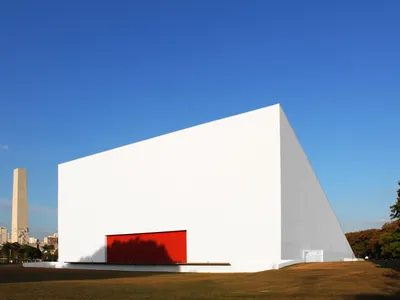
Oscar Niemeyer's Ibirapuera Park Pavilions Define São Paulo's Cultural Identity in Concrete and Curve
A constellation of modernist volumes set within São Paulo's most important urban park, conceived for the city's 400th anniversary in 1954.
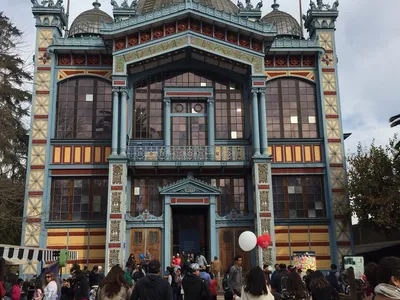
How Henri Picq's 1889 Paris Pavilion Traveled 11,000 Kilometers to Become Santiago's Artequín Museum
A prefabricated iron and glass pavilion built for the Paris Universal Exposition found a second life as a children's art museum in Chile.
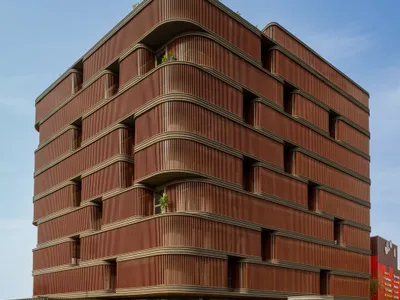
Sanjay Puri Architects Wraps a Jaipur Office Tower in Capsule-Shaped Green Buffers
A nine-level climate-responsive workplace near Jaipur Airport uses stacked planter terraces and aluminium screens to fight 40°C heat.

Explore Residential Building Competitions
Discover active competitions in this discipline


Challenge to design mud housing for contemporary communities


Challenge to reimagine the Iron Throne


Photograph architecture without architects


Illustrate the lost glory of Angkor Wat - Render Challenge
Comments (0)
Please login or sign up to add comments
No comments yet. Be the first to comment!