
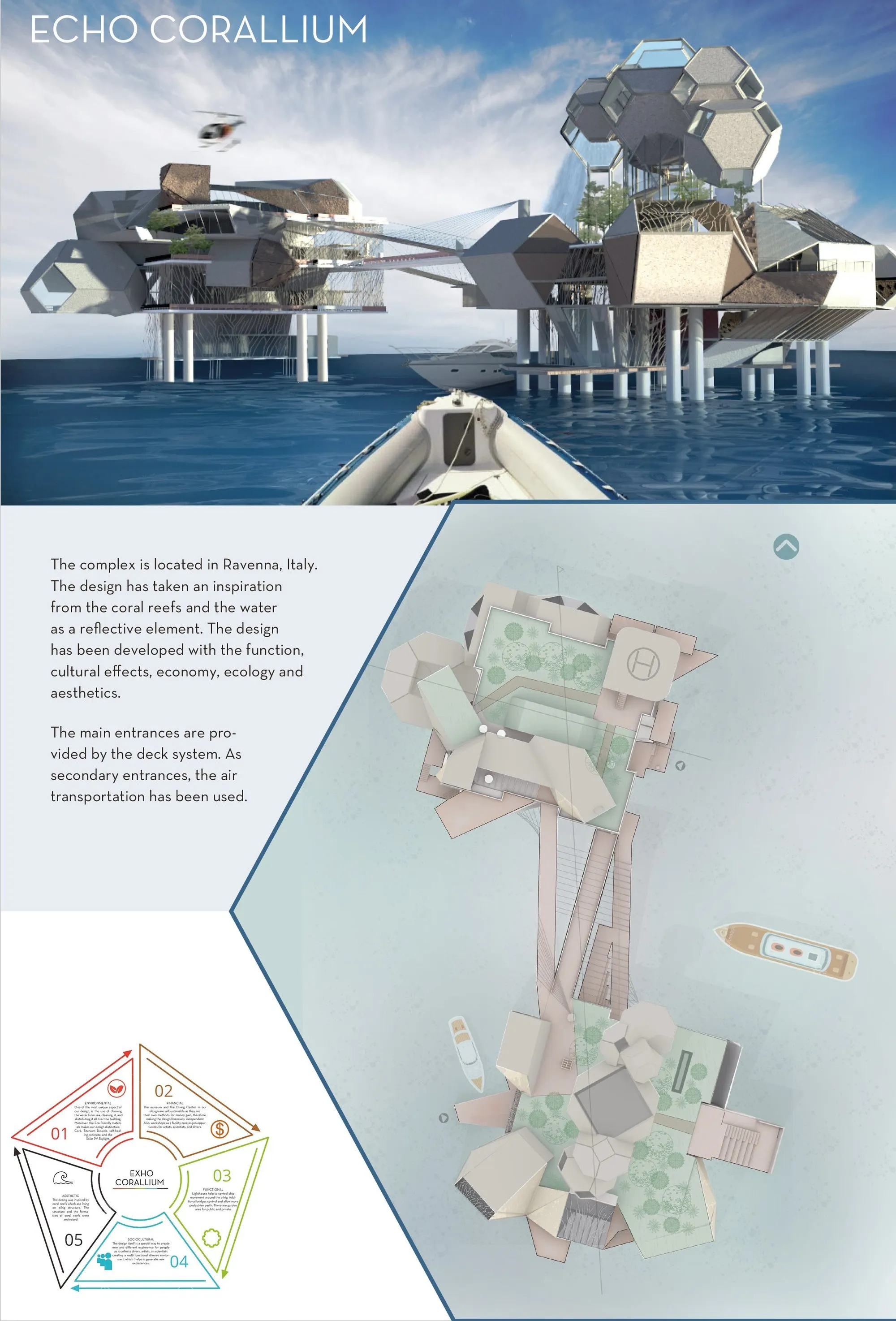
Echo Corallium: A Sustainable Architecture Vision Inspired by Coral Reefs and Ocean Ecology
A visionary sustainable architecture proposal transforms an offshore platform into a coral-inspired cultural hub for ocean renewal.


As coastal environments face increasing ecological challenges, architects are exploring innovative ways to transform existing infrastructure into meaningful destinations that serve both people and nature. Echo Corallium, a remarkable project by Nurlana Mammadli, exemplifies this approach through a visionary proposal that combines marine ecology, culture, research, and environmental stewardship.
Recognized as a Shortlisted Entry of Proximity Island 2019, the project presents a compelling example of sustainable architecture, drawing inspiration from the intricate structures of coral reefs and the reflective qualities of water. Rather than viewing an offshore platform as a relic of industrial activity, Echo Corallium reimagines it as a vibrant ecosystem where architecture becomes a catalyst for education, conservation, and community engagement.
A Coral-Inspired Architectural Language
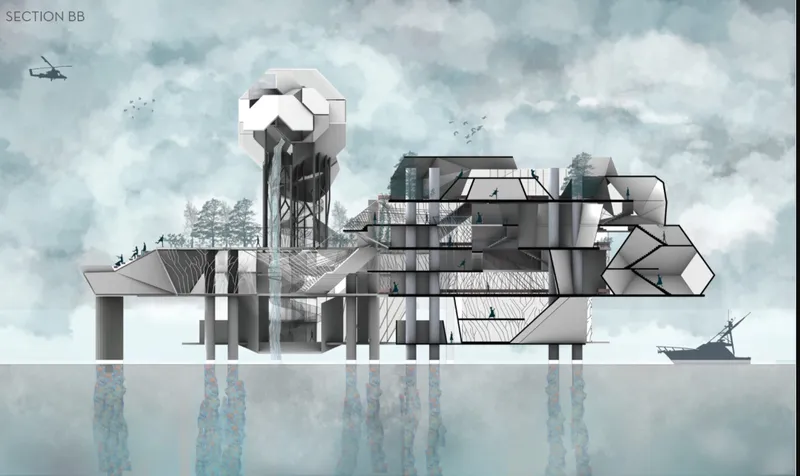
The design language of Echo Corallium emerges directly from the organic geometries found within coral reef systems. The interconnected cellular forms create a distinctive architectural identity that echoes the complexity and beauty of underwater ecosystems.
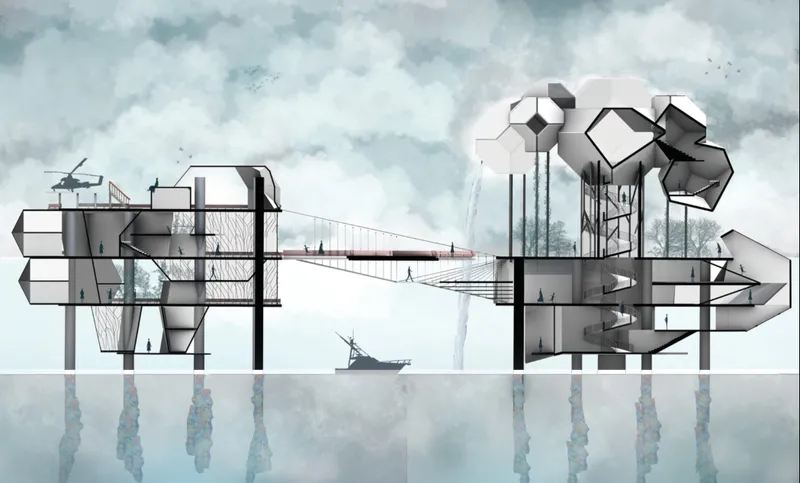
Coral reefs are among the most diverse habitats on Earth, supporting countless species through networks of interconnected structures. This concept is translated into the architecture through a series of modular volumes connected by bridges, circulation paths, and shared public spaces. The resulting composition appears to float above the water, creating a dynamic relationship between built form and the surrounding marine environment.
The geometry is not merely aesthetic. It informs spatial organization, circulation patterns, and environmental performance, allowing architecture and ecology to operate as a unified system.
Designing Between Water and Sky
One of the most striking aspects of the project is its relationship with the ocean. Elevated platforms rise above the water while maintaining visual and experiential connections to the marine landscape below.
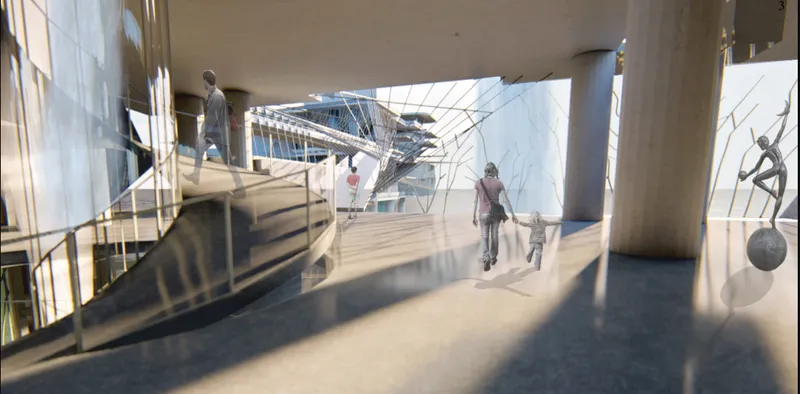
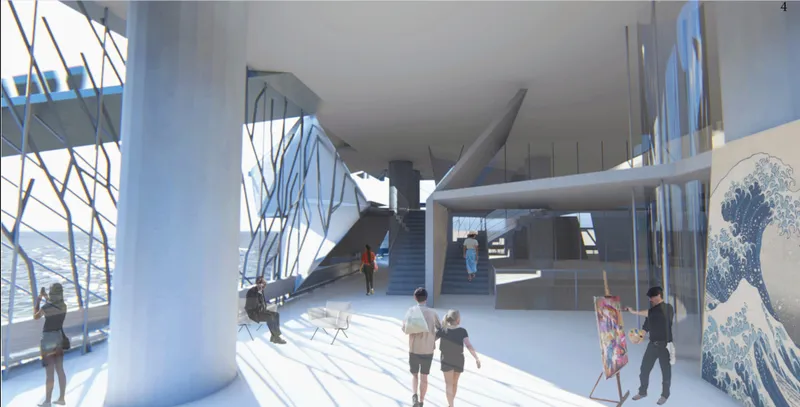
Visitors move through a sequence of bridges, observation decks, galleries, and elevated gardens that frame views of the sea from multiple perspectives. Water becomes both a physical element and a design medium, reflecting light into interior spaces and reinforcing the project's connection to its environment.
This layered spatial experience creates a journey that blurs the boundaries between architecture, landscape, and seascape. Every pathway, platform, and lookout point encourages exploration while fostering awareness of the surrounding ecosystem.
A Mixed-Use Cultural and Environmental Hub
Echo Corallium integrates a diverse program that supports cultural, educational, and environmental objectives.
The proposal includes:
- Museum spaces dedicated to marine education
- Workshops and learning environments
- Research facilities
- Residential accommodations
- Library and knowledge-sharing spaces
- Restaurants and gathering areas
- Offices and meeting rooms
- Diving and marine exploration facilities
- Elevated gardens and public observation zones
The programmatic distribution creates a self-sustaining environment where tourism, research, culture, and environmental conservation coexist. Rather than functioning as a single-purpose destination, the project becomes a multidisciplinary hub capable of attracting a broad range of users.
Architecture Inspired by Coral Ecosystems
The project's design inspirations extend beyond formal geometry. Coral reefs influence both the environmental strategy and the spatial experience.
Coral structures naturally provide shelter, shading, circulation channels, and ecological support systems. Echo Corallium adapts these principles into architecture by using layered façades, interconnected spaces, and porous circulation networks.
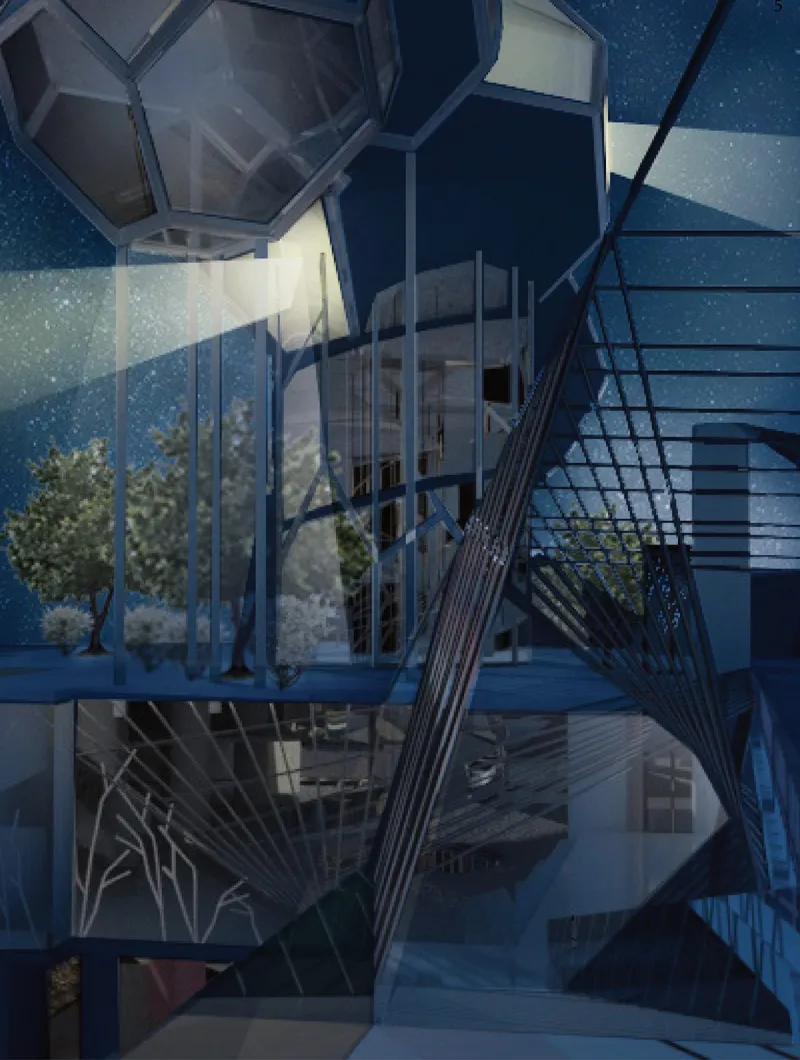
The façade system is inspired by coral formations that naturally create shaded environments beneath the ocean surface. These architectural elements help regulate sunlight while producing dynamic patterns of light and shadow throughout the building.
Internally, the cellular organization encourages fluid movement and visual connectivity between different functions, much like the interconnected chambers found within reef ecosystems.
Sustainability as a Core Design Principle
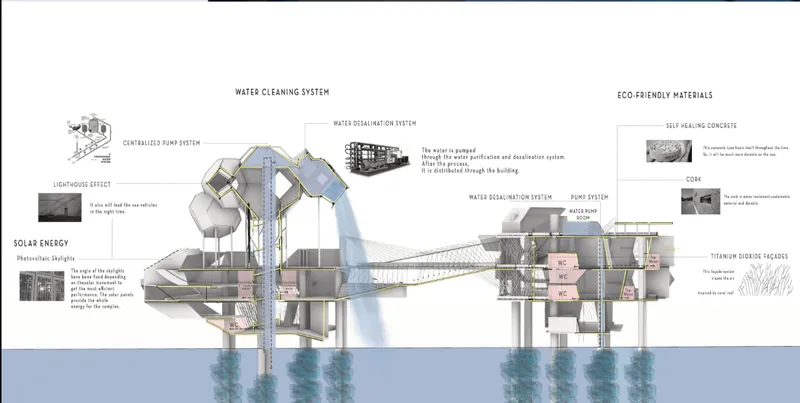
At the heart of Echo Corallium lies a comprehensive environmental strategy that demonstrates the potential of sustainable architecture in marine settings.
Several integrated systems contribute to the project's ecological performance:
Water Purification and Desalination
The proposal incorporates advanced water treatment and desalination technologies. Seawater is collected, purified, and redistributed throughout the complex, reducing dependence on external water sources while supporting long-term self-sufficiency.
Renewable Energy Generation
Photovoltaic skylights are integrated into the design, capturing solar energy and contributing to the building's operational needs. These systems help reduce energy consumption while maximizing the site's exposure to sunlight.
Eco-Friendly Materials
Material selection reflects a commitment to environmental responsibility. The proposal explores:
- Self-healing concrete for durability and reduced maintenance
- Cork as a renewable and sustainable building material
- Titanium dioxide façades capable of helping improve air quality
Together, these strategies establish a framework for resilient and environmentally responsive offshore architecture.
The Lighthouse as a Symbol of Renewal
One of the project's most iconic elements is the elevated lighthouse structure positioned above the complex.
Inspired by coral formations, this sculptural volume serves multiple purposes. Functionally, it operates as a lighthouse, guiding marine traffic and providing visibility across the water. Symbolically, it represents a connection between earth, sea, and sky.
The lighthouse also houses cultural and environmental programs, reinforcing its role as both a landmark and an educational destination. Illuminated at night, the structure becomes a beacon of ecological awareness and architectural innovation.
Creating Experiences Through Circulation
Movement is a central component of the design narrative. Suspended bridges connect major program areas, transforming circulation into an experiential journey.
Visitors transition between museums, gardens, residential spaces, and observation points while continuously engaging with views of the ocean. The bridges act as social connectors and visual corridors, creating moments of discovery throughout the complex.
This circulation strategy reinforces the project's goal of fostering meaningful interactions between people and the marine environment.
A Vision for the Future of Offshore Architecture
Echo Corallium demonstrates how architecture can move beyond traditional building typologies to address broader environmental and cultural challenges. By transforming offshore infrastructure into a destination dedicated to education, ecology, and community, the project offers a powerful vision for future coastal development.
The proposal illustrates how sustainable architecture can integrate environmental technologies, cultural programming, and ecological inspiration into a unified design language. Drawing from the intelligence of coral reefs and the reflective qualities of water, Echo Corallium becomes more than a building. It becomes a living framework for coexistence between humanity and the ocean.
Project Details
Project: Echo Corallium
Designer: Nurlana Mammadli
Competition: Proximity Island 2019
Recognition: Shortlisted



Popular Articles
Popular articles from the community


The Earth Pod: 3D Printed Homes for Resilient Refugee Communities
The Earth Pod reimagines refugee housing through 3D printed homes made from clay, combining resilience, self-sufficiency, and rapid shelter.

Co-life: Sustainable Architecture for Age-Friendly Community Living
Co-life reimagines sustainable architecture for seniors through courtyards, rammed earth, shared gardens, and spaces designed for belonging.

Lunar Spiral: Space Architecture Shaped by the Mathematics of the Universe
Lunar Spiral reimagines space architecture through Fibonacci geometry, lunar regolith, levitating habitats, and self-sustaining Moon living.

Hill & Cross Opera: Sculptural Opera House Architecture Shaped by Tallinn’s Landscape and Identity
Hill & Cross Opera reimagines opera house architecture in Tallinn through its sculptural hill, civic plaza, glass wave and a luminous cross.

Similar Reads
You might also enjoy these articles

Eco Chapel: A Green Architecture Pavilion Designed in Symbiosis with the Forest
Eco Chapel uses green architecture to weave prayer, learning and reuse into a forest pavilion shaped by modular hexagonal canopies for life.
Kaffeebühnen: Coffee Shop Architecture Designed as a Civic Stage Between Vienna’s City and Park
Kaffeebühnen turns coffee shop architecture into a civic stage, linking Vienna’s park edge, urban life, warm timber yards, and coffee craft.
Healing Façade: Sustainable Architecture for Reforestation, Community, and Sacred Ecology in Ethiopia
Healing Façade reimagines sustainable architecture as a living wall that restores soil, catches water and renews Ethiopia's forest churches.

Urban Forest: A Vertical Ecosystem for 5,000 Workers in Singapore's Changi Business Park
Radially stacked pods and layered green decks turn a 7-acre plot into 47 acres of ecological workspace projected for 2040.

Explore Architecture Competitions
Discover active competitions in this discipline



Challenge to reimagine the Iron Throne


Photograph architecture without architects


Illustrate the lost glory of Angkor Wat - Render Challenge


Design challenge to reuse E-waste
Comments (0)
Please login or sign up to add comments
No comments yet. Be the first to comment!