
Eco Chapel: A Model of Sustainable Architecture Rooted in Ecology and Culture
Sustainable architecture meets spirituality in Ethiopia, where Eco Chapel restores ecology, supports communities, and revives pollinator systems.


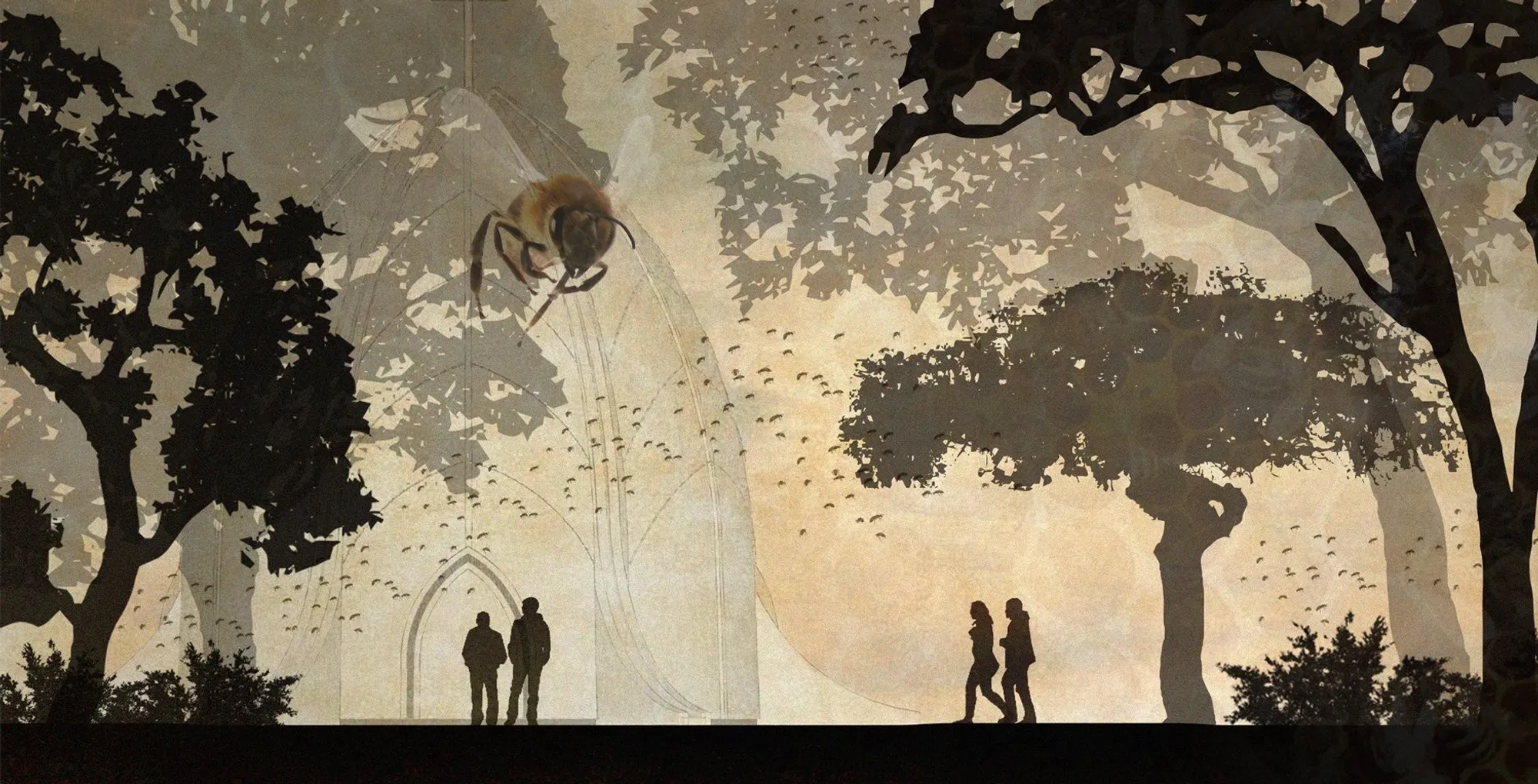
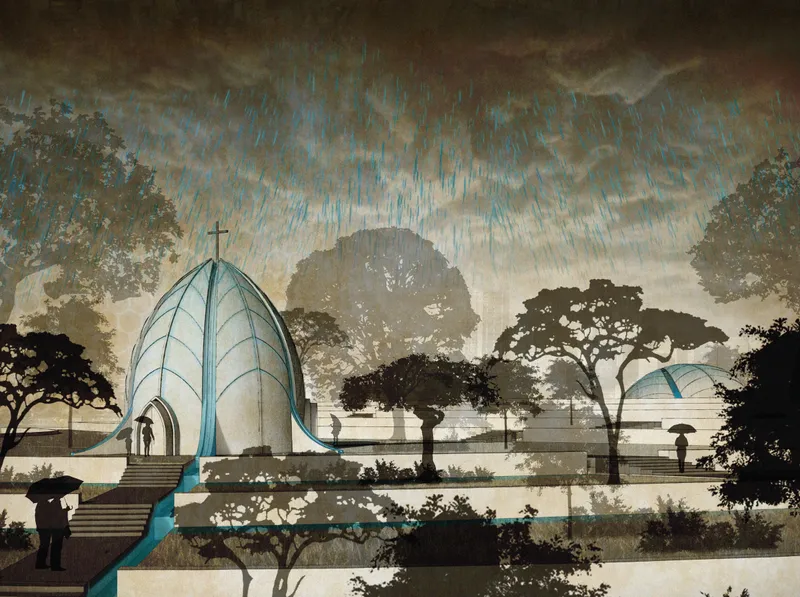
The Eco Chapelby Matthew Unternahrer and Maciej Michalak, a shortlisted entry in the Eco-Chapel competition, represents a compelling vision of sustainable architecture that integrates ecology, spirituality, and community development. Situated within the environmental and cultural context of Ethiopia, the project redefines the role of architecture as an active ecological system rather than a passive built form.
At its core, the Eco Chapel responds to three interrelated challenges: declining pollinator health, increasing desertification, and the socio-economic potential of honey production. By positioning architecture as an agent of regeneration, the project proposes a scalable model that operates at both local and national levels.
Vernacular Intelligence and Architectural Form
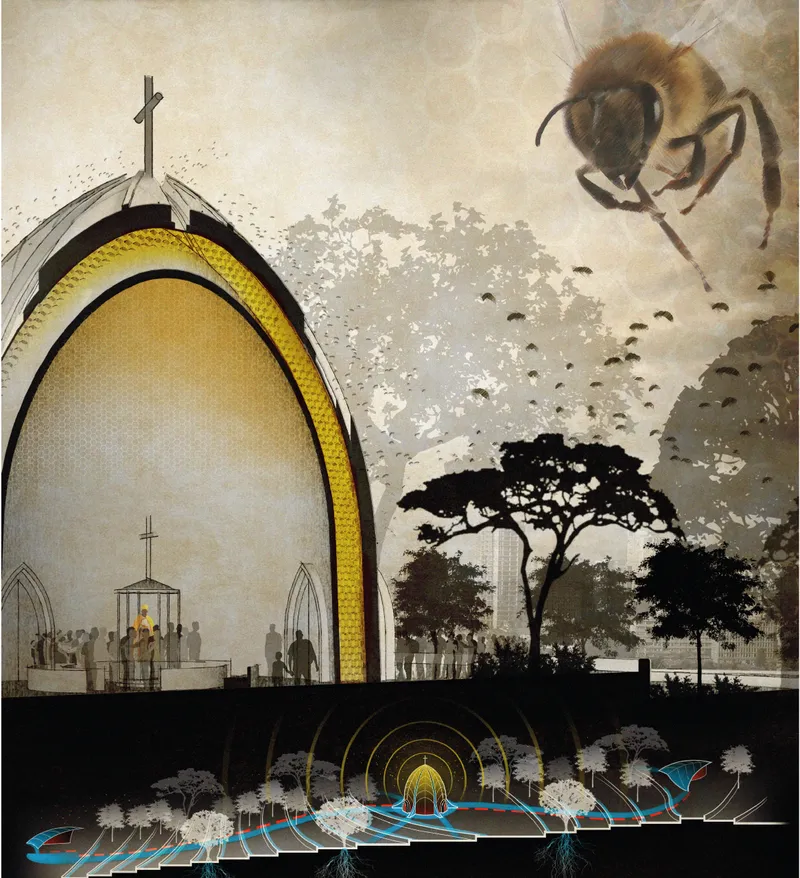
The architectural language of the Eco Chapel draws inspiration from traditional Dorze huts and the historic rock-hewn churches of Lalibela. This synthesis results in a new chapel typology defined by a circular plan and a vertically expressive, layered envelope.
The outer shell of the structure is not merely symbolic. It functions as a performative skin that collects, channels, and distributes rainwater across the site. The sectional logic reveals a cavity-based system embedded within the walls, designed to house bee colonies, echoing traditional Ethiopian honey cave practices. This integration of habitat within architecture positions the chapel as both a sacred and ecological infrastructure.
Pollinator-Centric Sustainable Architecture
A defining aspect of this sustainable architecture project is its explicit focus on pollinators. Ethiopia hosts one of the largest bee populations in Africa, with millions of colonies contributing significantly to local economies and ecosystems. However, environmental degradation has placed these systems at risk.
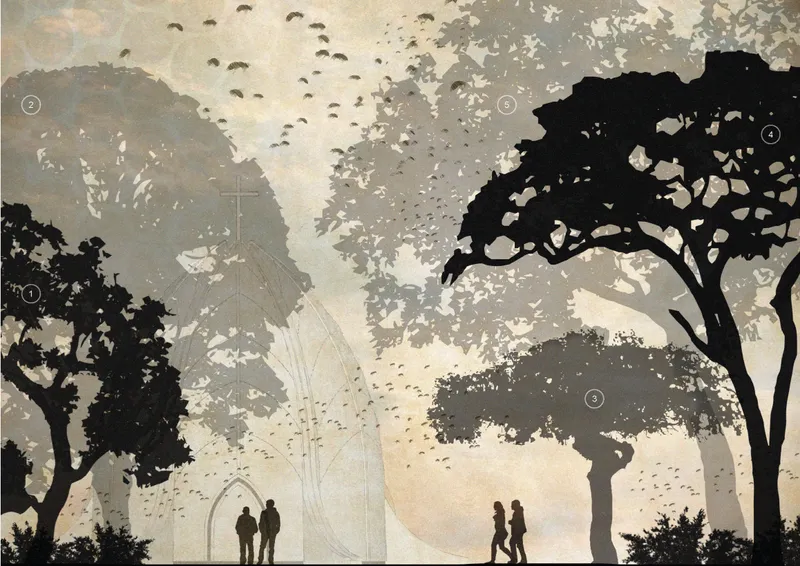
The Eco Chapel addresses this by embedding bee habitats within its structure and designing the surrounding landscape to support pollinator-friendly vegetation. Native plant species are strategically introduced to create a regenerative ecological loop where bees, plants, and human activity coexist.
Over time, the project envisions the expansion of pollination zones beyond the immediate site, forming a network of eco-chapels that collectively restore biodiversity across regions.
Water Systems and Landscape Regeneration
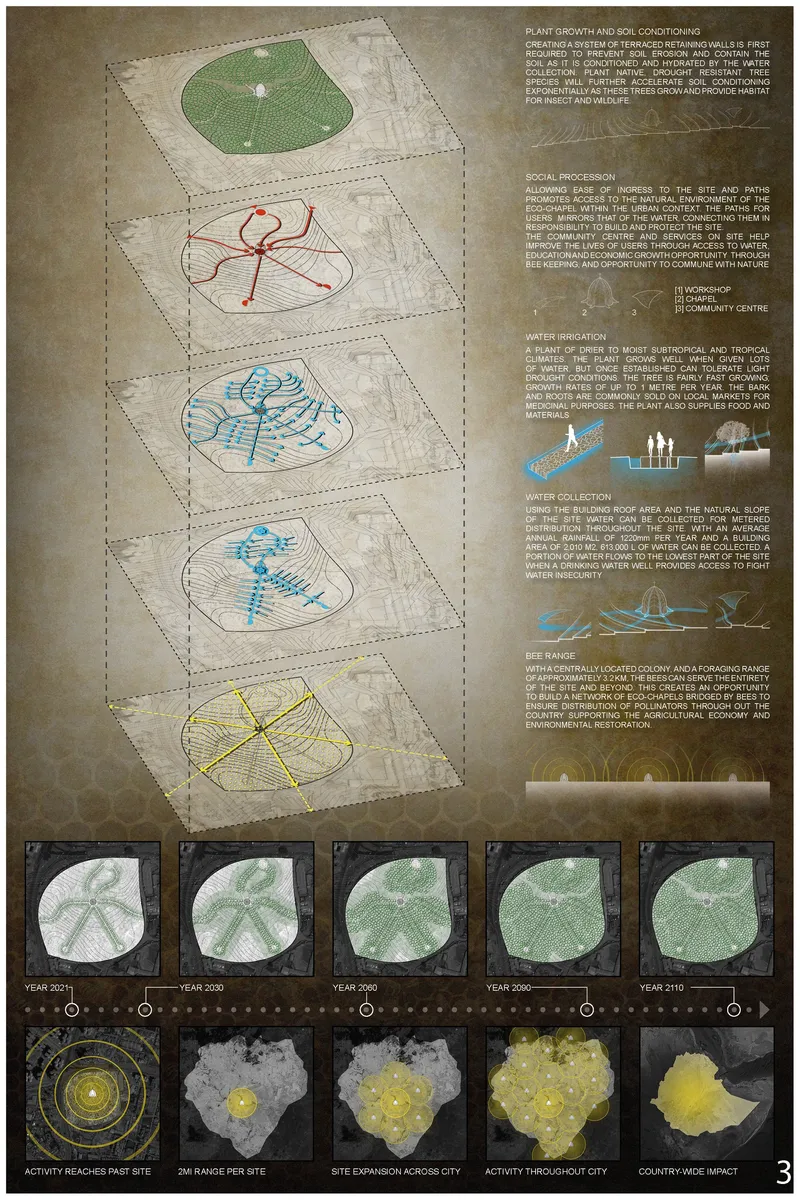
Water management is central to the project’s sustainable architecture strategy. The chapel’s geometry and roof profile are optimized for rainwater harvesting. Collected water is directed through a system of channels into terraced landscapes that retain moisture, reduce soil erosion, and support plant growth.
The stepped irrigation system reflects local agricultural practices, ensuring that the intervention remains accessible and constructible using simple tools. By eliminating reliance on heavy machinery, the project minimizes embodied carbon while maximizing community participation.
The integration of water collection, storage, and distribution transforms the site into a resilient micro-ecosystem capable of supporting both vegetation and human activity during periods of drought.
Social Infrastructure and Community Integration
Beyond its ecological performance, the Eco Chapel functions as a social catalyst. The project incorporates additional programmatic elements including a community center, a nursery, and workshop spaces. These facilities serve as platforms for education, trade, and skill development related to beekeeping and environmental stewardship.
The community center operates as a marketplace and knowledge hub, enabling local residents to engage in honey production and distribution. Meanwhile, the nursery supports reforestation efforts by cultivating native species for transplantation across the site and surrounding areas.
A strategically placed water well further reinforces the project’s social value by providing access to clean water, addressing a critical need in drought-prone regions.
Climate-Responsive Design Strategy
The Eco Chapel demonstrates a nuanced understanding of climate-responsive architecture. The site’s natural slope is leveraged to facilitate water flow and irrigation, while terracing techniques stabilize the soil and mitigate desertification.
Material selection prioritizes locally available resources and construction methods familiar to the community. This approach not only reduces environmental impact but also ensures cultural continuity and ease of replication.
The architecture evolves over time as vegetation matures and ecological systems stabilize, reinforcing the idea that sustainable architecture is not static but adaptive and process-driven.
A Scalable Vision for Environmental Impact
Perhaps the most ambitious aspect of the Eco Chapel is its potential for scalability. The project proposes a network of similar interventions distributed across Ethiopia, each acting as a node in a larger ecological and economic system.
With a bee foraging range of approximately 3.2 kilometers, each chapel can influence a significant area. As these nodes multiply, their combined impact can extend across cities and rural landscapes, promoting widespread pollination, agricultural productivity, and environmental restoration.
This decentralized model aligns with contemporary approaches in sustainable architecture that prioritize distributed systems over centralized infrastructure.
The Eco Chapel exemplifies the transformative potential of sustainable architecture when it is deeply rooted in local context and ecological intelligence. By integrating pollinator systems, water management, and community infrastructure into a cohesive architectural strategy, the project moves beyond symbolism to deliver measurable environmental and social impact.
As climate challenges intensify, such models offer a blueprint for how architecture can actively participate in restoring balance between human activity and natural systems. The Eco Chapel is not just a place of worship, but a living system that pollinates ideas, landscapes, and futures.



Popular Articles
Popular articles from the community


The Ocean Hive: Sustainable Architecture for a Self-Sufficient Civilization at Sea
The Ocean Hive imagines sustainable architecture at sea, where modular habitats, algae, wave power and ocean waste sustain a growing colony.

Hill & Cross Opera: Sculptural Opera House Architecture Shaped by Tallinn’s Landscape and Identity
Hill & Cross Opera reimagines opera house architecture in Tallinn through its sculptural hill, civic plaza, glass wave and a luminous cross.

The Earth Pod: 3D Printed Homes for Resilient Refugee Communities
The Earth Pod reimagines refugee housing through 3D printed homes made from clay, combining resilience, self-sufficiency, and rapid shelter.

Play: Fragments of Their World
Familiar architecture becomes modular playground design, creating safe spaces where displaced children can learn, connect, imagine and play.


Similar Reads
You might also enjoy these articles

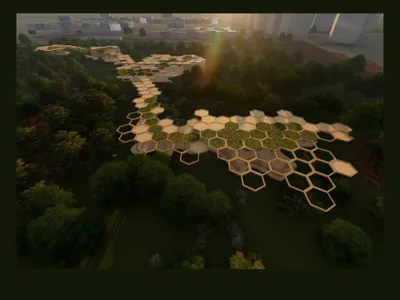
Eco Chapel: A Green Architecture Pavilion Designed in Symbiosis with the Forest
Eco Chapel uses green architecture to weave prayer, learning and reuse into a forest pavilion shaped by modular hexagonal canopies for life.
Kaffeebühnen: Coffee Shop Architecture Designed as a Civic Stage Between Vienna’s City and Park
Kaffeebühnen turns coffee shop architecture into a civic stage, linking Vienna’s park edge, urban life, warm timber yards, and coffee craft.
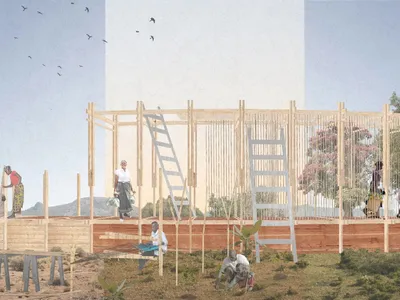
Healing Façade: Sustainable Architecture for Reforestation, Community, and Sacred Ecology in Ethiopia
Healing Façade reimagines sustainable architecture as a living wall that restores soil, catches water and renews Ethiopia's forest churches.


Urban Forest: A Vertical Ecosystem for 5,000 Workers in Singapore's Changi Business Park
Radially stacked pods and layered green decks turn a 7-acre plot into 47 acres of ecological workspace projected for 2040.


Comments (0)
Please login or sign up to add comments
No comments yet. Be the first to comment!