
Eco Chapel Ethiopia: A Sustainable Architecture Vision Rooted in Water, Community, and Regeneration
A sustainable architecture vision for Ethiopia where water, earth, energy, and community unite to create a regenerative spiritual sanctuary.


Architecture has long served as a bridge between people, culture, and nature. In regions facing environmental challenges and resource limitations, architecture carries an even greater responsibility. It must provide shelter, support community development, protect natural resources, and inspire hope for future generations.
Eco Chapel Ethiopia: Water as a Source of Life, designed by Andres Felipe Pinzon Holguin, is a remarkable example of sustainable architecture that responds to these responsibilities. Recognized as a People's Choice Award entry of the Eco-Chapel competition, the project proposes far more than a religious building. It introduces a holistic community ecosystem where spirituality, education, health, sustainability, and environmental stewardship coexist within a unified architectural framework.
At the heart of the proposal lies a powerful concept: water as the origin of life, community, and regeneration.
Sustainable Architecture Inspired by Nature's Cycles
The design takes inspiration from the natural cycles that sustain life. Water serves as the symbolic and functional center of the project, influencing both the spatial organization and environmental systems.
Rather than creating a conventional chapel isolated from everyday life, the proposal establishes a circular campus where community activities orbit around a central spiritual core. This arrangement reflects the interconnected relationship between faith, learning, health, food production, and environmental awareness.
The circular geometry creates a strong sense of unity while encouraging interaction among residents, visitors, educators, and worshippers. Every pathway leads toward a shared center, reinforcing the idea that community development and spiritual growth are inseparable.
A Community-Centered Architectural Masterplan
The Eco Chapel is organized as a multifunctional settlement that supports daily life beyond worship.
The program includes:
- Library and learning facilities
- Workshops and vocational spaces
- Nursery and educational areas
- Health services
- Cooking and hygiene facilities
- Community gathering zones
- Residential units
- Priest residence
- Activity spaces
- Chapel and ceremonial areas
This integrated approach transforms the chapel into a social and educational catalyst. Rather than functioning solely during religious gatherings, the complex remains active throughout the day, supporting local development and strengthening community resilience.
The masterplan demonstrates how sustainable architecture can become a platform for social empowerment.
Water as the Spiritual and Environmental Core
The most distinctive feature of the project is the central water infrastructure integrated directly beneath the chapel.
This underground reservoir serves multiple purposes. Symbolically, it represents life's origin and the spiritual significance of water. Functionally, it acts as a critical resource management system that collects, stores, filters, and redistributes water throughout the complex.
Rainwater harvesting systems capture seasonal rainfall and direct it toward underground storage tanks. Natural filtration methods improve water quality before redistribution for hygiene facilities, gardens, and community functions.
By making water visible within the architectural experience, the design encourages environmental awareness and responsible resource consumption.
The chapel becomes not only a place of worship but also a living demonstration of ecological stewardship.
Passive Design and Local Material Innovation
A key aspect of sustainable architecture is the intelligent use of local materials and climate-responsive construction methods.
The Eco Chapel embraces traditional building techniques while integrating contemporary environmental technologies.
The primary construction materials include:
- Rammed earth walls
- Polished clay flooring
- Native timber structures
- Stone foundations
- Recycled construction elements
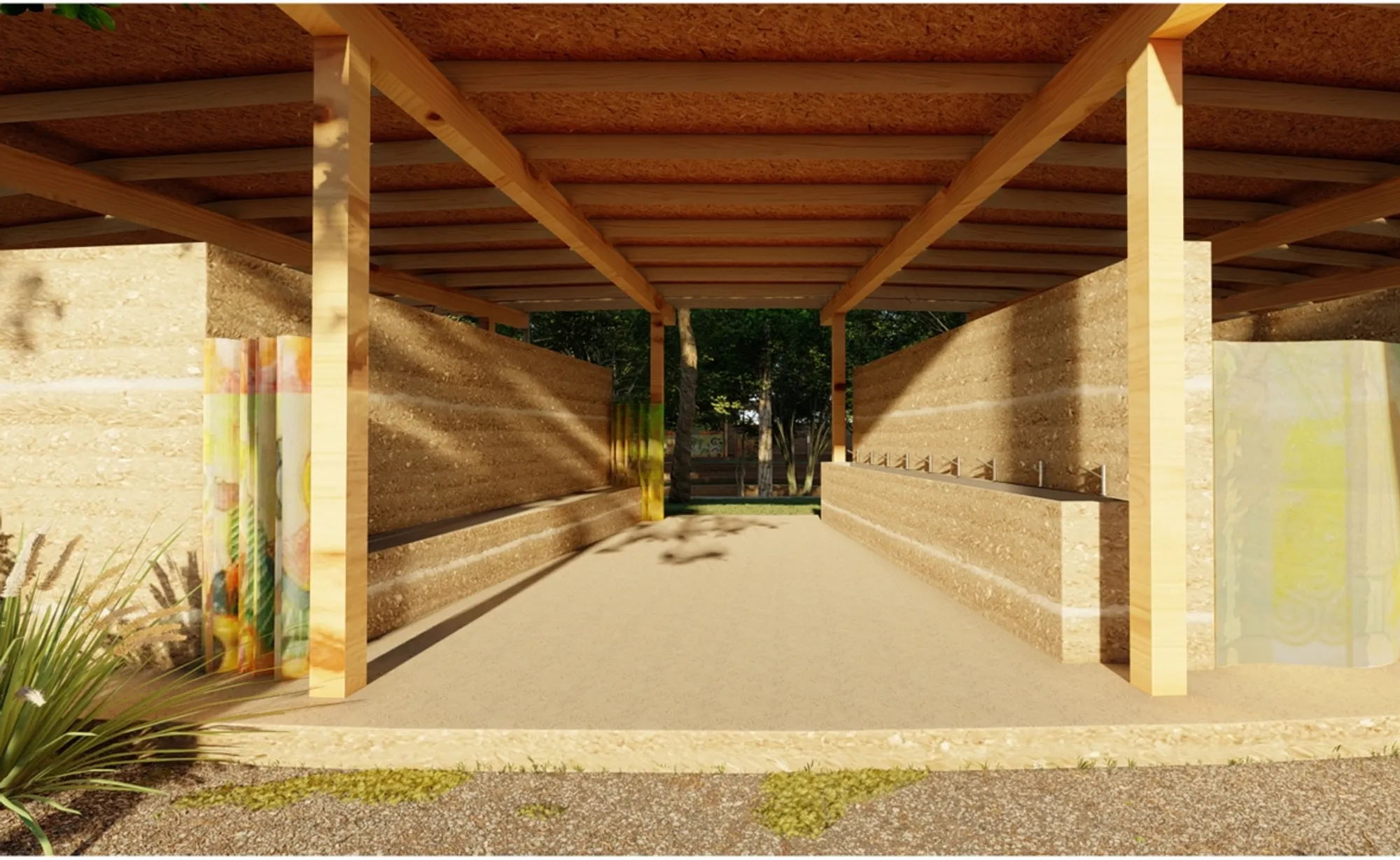
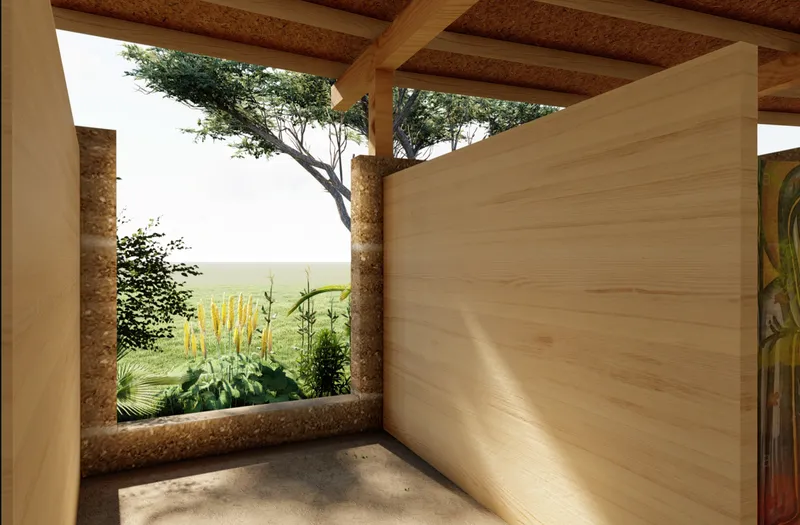
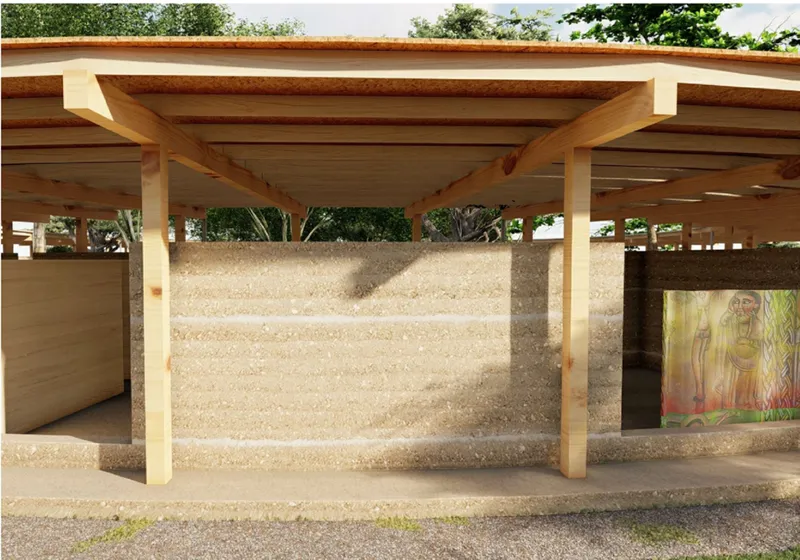
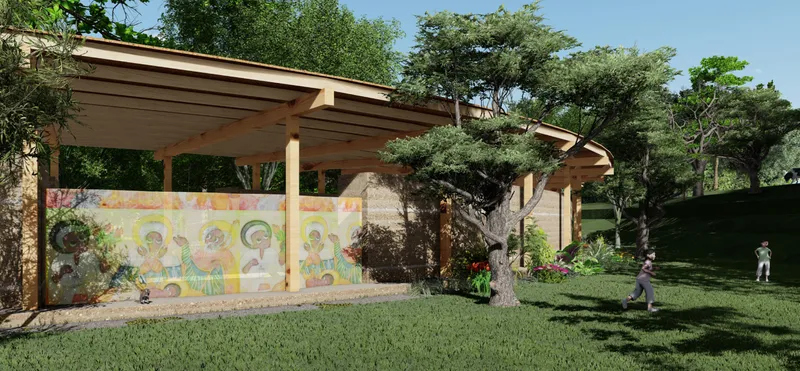
Rammed earth construction significantly reduces embodied carbon compared to conventional concrete systems. The thick earthen walls provide excellent thermal mass, helping regulate indoor temperatures throughout the day.
Native timber framing creates lightweight roof structures while supporting local construction industries and reducing transportation impacts.
The result is a building that feels deeply connected to its landscape while maintaining a low environmental footprint.
Renewable Energy Systems for Long-Term Sustainability
The project demonstrates how community architecture can achieve greater self-sufficiency through renewable energy integration.
Solar thermal and photovoltaic systems are incorporated into the design to generate electricity and support daily operations. Solar energy is collected through roof-mounted panels and stored for future use through batteries and regulation systems.
Beyond solar technology, the proposal explores innovative alternative energy generation through biological processes. Dedicated facilities convert waste streams into usable energy resources, helping reduce dependence on external infrastructure.
These systems collectively strengthen the project's resilience while providing educational opportunities related to renewable energy technologies.
Landscape Architecture and Ecological Restoration
The architecture extends beyond the building itself into the surrounding landscape.
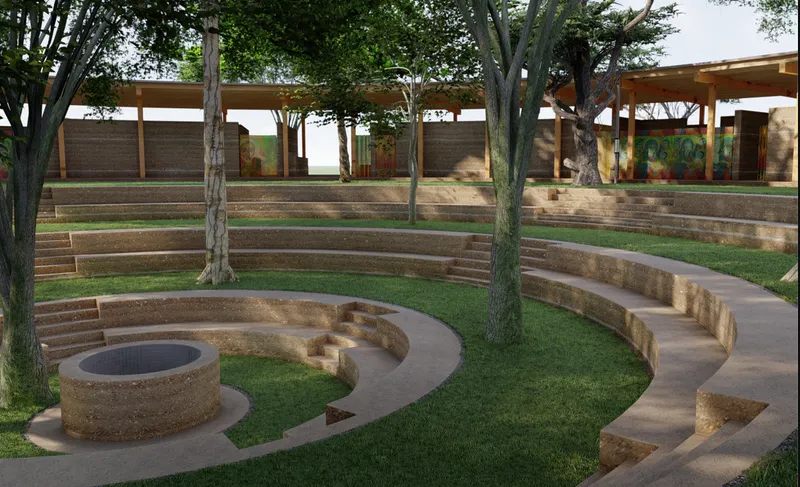
The site plan reveals an extensive network of pathways, gathering spaces, gardens, and ecological zones woven throughout the natural environment. Existing vegetation is preserved wherever possible, creating a seamless relationship between architecture and landscape.
The circular amphitheater-like spaces surrounding the central water element encourage outdoor gatherings, educational programs, cultural performances, and communal celebrations.
This landscape strategy transforms the project into a living environmental classroom where visitors can engage directly with sustainable practices and ecological restoration efforts.
Human Experience Through Circular Space
The project's spatial organization creates a powerful emotional journey.
Visitors move gradually inward through layers of community functions, educational spaces, and landscaped environments before reaching the spiritual center. This progression reinforces the symbolic transition from everyday activity toward reflection and contemplation.
The circular geometry promotes visual connectivity while maintaining a strong sense of enclosure and community identity.
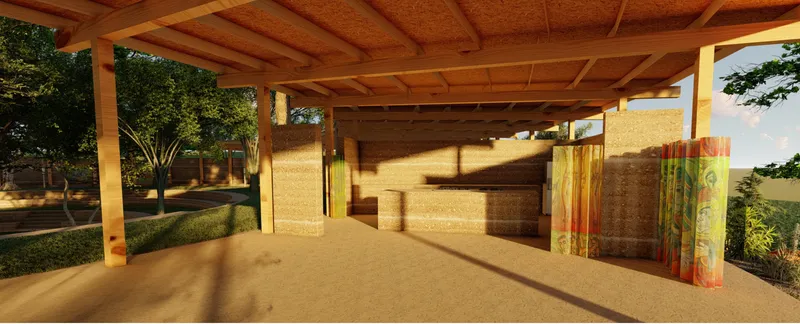
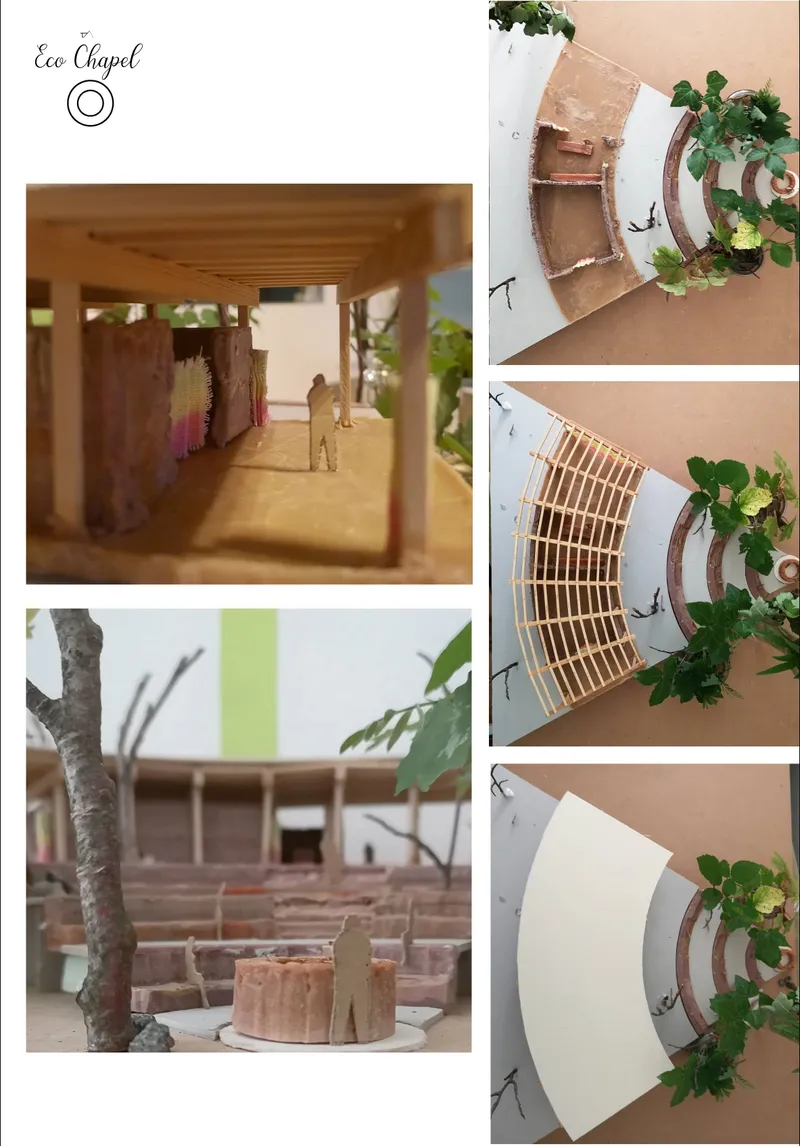
Natural light filters through the open structures, creating changing patterns throughout the day. The combination of timber, earth, vegetation, and filtered sunlight generates a warm and welcoming atmosphere that encourages both social interaction and personal reflection.
Regenerative Design for Future Communities
The Eco Chapel moves beyond sustainability toward regenerative design.
Rather than simply minimizing environmental impact, the project actively contributes to ecological health, community education, resource conservation, and cultural development.
Its integrated systems demonstrate how architecture can:
- Harvest and conserve water
- Generate renewable energy
- Support local economies
- Improve community health
- Encourage environmental awareness
- Strengthen cultural identity
- Create resilient public infrastructure
This holistic approach positions the project as a model for future community architecture in regions facing environmental and social challenges.
A New Vision for Sustainable Sacred Architecture
Eco Chapel Ethiopia presents an inspiring vision of how architecture can address multiple challenges simultaneously. By placing water at the center of both spiritual and environmental systems, the project creates a meaningful connection between faith, ecology, and community development.
Designed by Andres Felipe Pinzon Holguin, this People's Choice Award-winning concept from the Eco-Chapel competition demonstrates the transformative potential of sustainable architecture. Through local materials, renewable energy systems, water management strategies, and community-focused programming, the project offers a blueprint for a more resilient and regenerative future.
In a world increasingly shaped by environmental pressures, Eco Chapel Ethiopia reminds us that architecture can do more than provide shelter. It can educate, heal, connect, and regenerate both people and place.



Popular Articles
Popular articles from the community


The Musturak Paradise: Senior Living Architecture for a Connected Future in Temara, Morocco
The Musturak Paradise reimagines senior living architecture in Temara via private homes, social spaces, culture, community, and shared care.

Co-Life: Senior Housing Design That Reconnects Older Adults With the City
Co-Life reimagines senior housing design through healing gardens, shared streets, workshops, and a sustainable community across generations.

The Earth Pod: 3D Printed Homes for Resilient Refugee Communities
The Earth Pod reimagines refugee housing through 3D printed homes made from clay, combining resilience, self-sufficiency, and rapid shelter.

Play: Fragments of Their World
Familiar architecture becomes modular playground design, creating safe spaces where displaced children can learn, connect, imagine and play.

Similar Reads
You might also enjoy these articles

Eco Chapel: A Green Architecture Pavilion Designed in Symbiosis with the Forest
Eco Chapel uses green architecture to weave prayer, learning and reuse into a forest pavilion shaped by modular hexagonal canopies for life.
Kaffeebühnen: Coffee Shop Architecture Designed as a Civic Stage Between Vienna’s City and Park
Kaffeebühnen turns coffee shop architecture into a civic stage, linking Vienna’s park edge, urban life, warm timber yards, and coffee craft.
Healing Façade: Sustainable Architecture for Reforestation, Community, and Sacred Ecology in Ethiopia
Healing Façade reimagines sustainable architecture as a living wall that restores soil, catches water and renews Ethiopia's forest churches.


Urban Forest: A Vertical Ecosystem for 5,000 Workers in Singapore's Changi Business Park
Radially stacked pods and layered green decks turn a 7-acre plot into 47 acres of ecological workspace projected for 2040.




Comments (0)
Please login or sign up to add comments
No comments yet. Be the first to comment!