

El Huabo Primary and Secondary School by Semillas: A Sustainable Community-Driven Model for Rural Educational Architectu
Community-built rural school in Peru using bamboo, open classrooms, and gardens, promoting sustainable design, experiential learning, and local cultural integration.


El Huabo Primary and Secondary School, designed by Semillas and led by architect Marta Maccaglia, stands as a powerful example of how architecture can transform education in remote and underserved regions. Located in the lush jungle of northern Peru, near the Ecuadorian border in the province of San Ignacio, the project reimagines a rural school as a resilient, sustainable, and community-centered learning environment. Built between 2019 and 2022, the 980-square-meter campus replaces an aging and structurally unsafe facility, creating a new model for educational architecture rooted in participation, ecology, and cultural continuity.
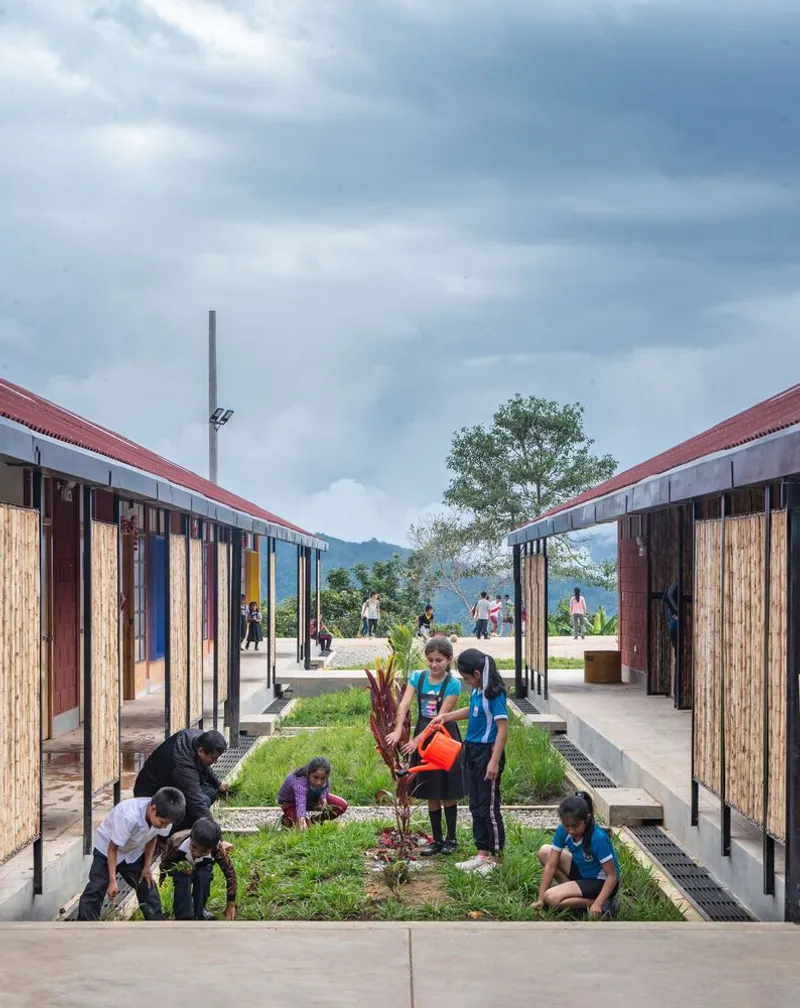
The origins of the school date back to 1973, when the local community first established basic classrooms using wood and adobe. Over decades, parents and residents incrementally improved the infrastructure using available resources. However, repeated earthquakes weakened the structures, and by 2019 the school faced demolition orders without a clear path toward reconstruction. This critical moment became the starting point for a collaborative architectural intervention that would not only rebuild the school but also redefine its role within the community.
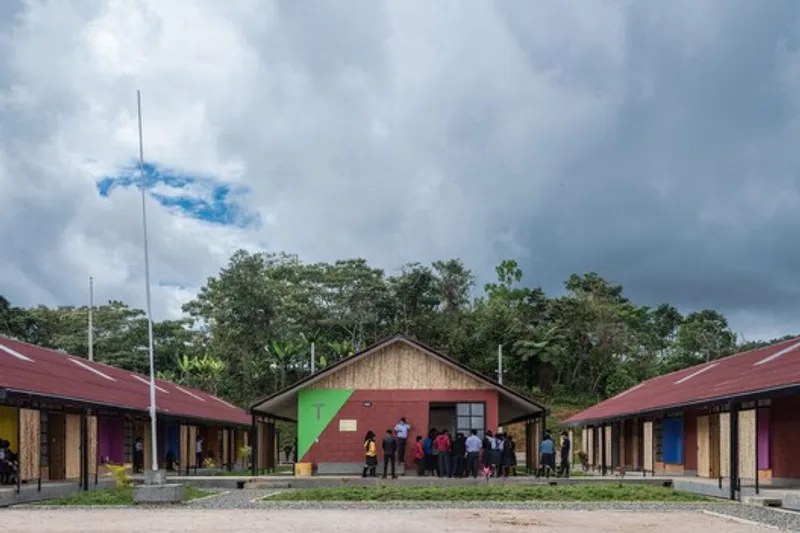
From the outset, the design approach emphasized participation and co-creation. Rather than imposing an external architectural solution, the project evolved through continuous dialogue with local stakeholders, including teachers, students, families, and agricultural organizations. This participatory process ensured that the resulting spaces responded directly to the educational, social, and environmental needs of the village. The outcome is what the architects describe as a “living school,” where the users are not only beneficiaries but also active contributors to its creation and ongoing development.
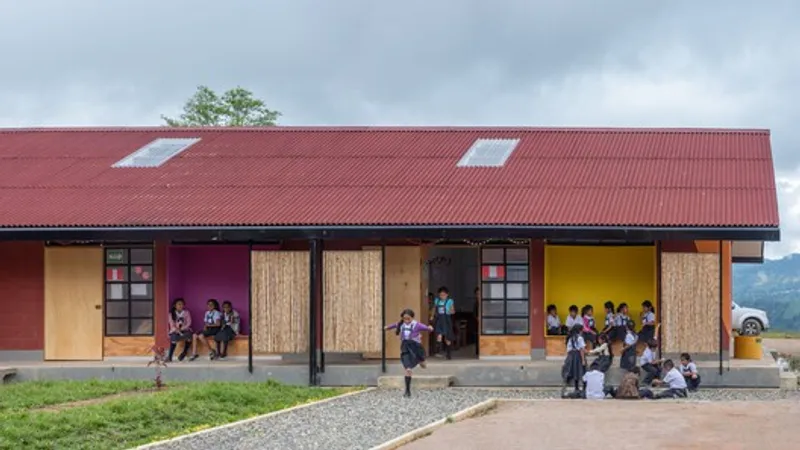
The architectural layout is organized into three primary components: two classroom blocks and a central multipurpose space. The first block accommodates three classrooms for primary education, along with a teachers’ room and sanitary facilities. The second block contains five classrooms dedicated to secondary education. Positioned between these volumes, the multipurpose hall acts as a flexible gathering space for assemblies, workshops, and community events. This central placement reinforces the idea of shared space as the heart of the school.
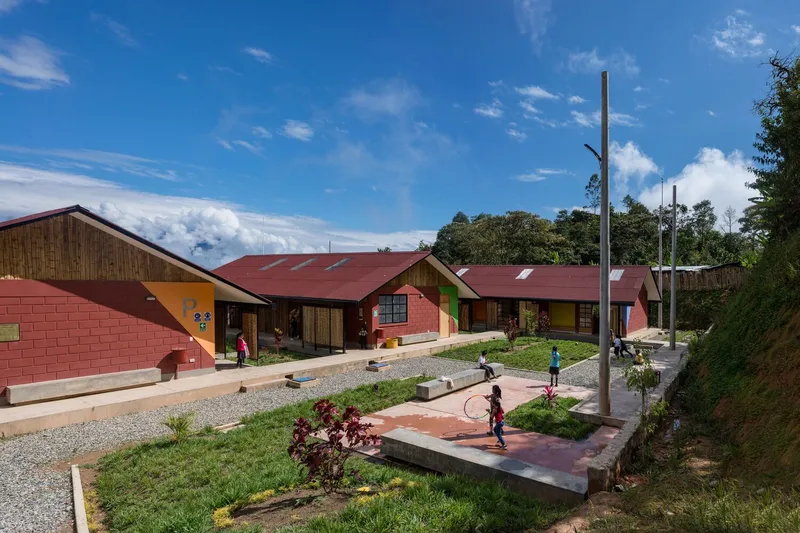
One of the defining features of the design is its strong connection between indoor and outdoor environments. Classrooms are conceived as open and adaptable spaces, with large permeable facades that allow for natural light, cross ventilation, and visual continuity with the surrounding landscape. Sliding or fully opening elements dissolve the boundaries between interior and exterior, enabling learning activities to extend beyond the classroom walls. This approach not only improves thermal comfort in the tropical climate but also fosters a more dynamic and interactive educational experience.
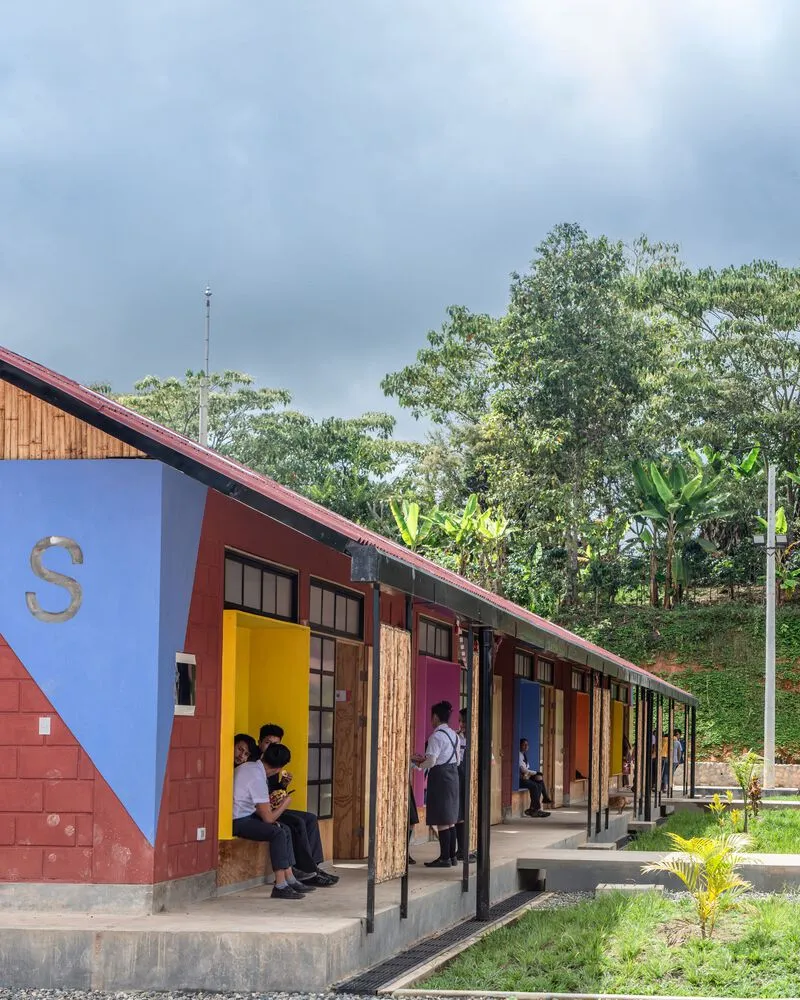
Circulation areas are treated as active social spaces rather than mere transitional zones. Corridors are equipped with benches and exhibition walls, encouraging students to gather, collaborate, and display their work. These semi-open walkways are shaded and ventilated, creating comfortable environments that support informal learning and community interaction. The integration of such spaces reflects a broader pedagogical vision that values collaboration, creativity, and experiential learning.
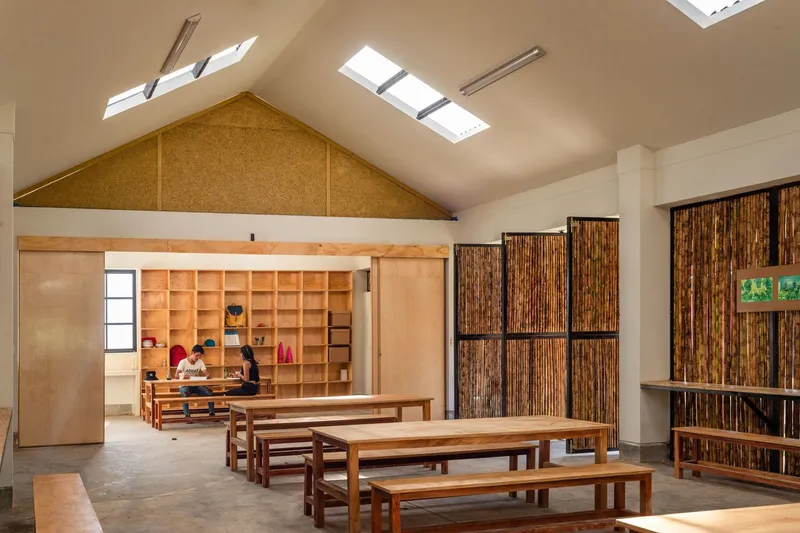
The outdoor areas play an equally important role in the overall design strategy. The campus is organized as a system of built volumes interspersed with gardens, creating a sequence of open spaces that support both recreation and education. A key component is the implementation of an educational farm dedicated to coffee cultivation, a crop that is central to the local economy. This agricultural space serves as a hands-on learning environment where students can acquire practical knowledge about cultivation techniques, sustainability, and economic processes. By integrating agriculture into the school curriculum, the project strengthens the connection between education and local livelihoods.
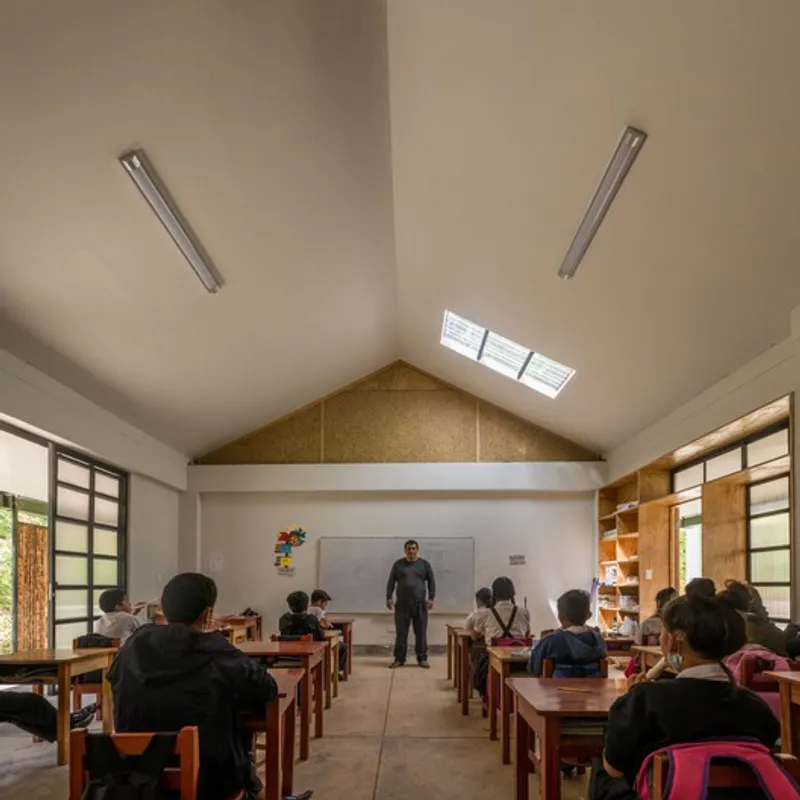
Material selection and construction techniques reflect a careful balance between durability, sustainability, and local identity. The main structural elements are built using reinforced concrete and cement bricks, ensuring resilience against seismic activity and long-term stability. At the same time, the project incorporates locally sourced and renewable materials such as bamboo, which is used in shading devices and façade systems. Bamboo reeds, supported by metal frames, create permeable panels that filter sunlight and promote airflow while adding a distinctive visual character to the buildings.

The roofing system combines metal sheets with ecological calamine, a material made from 100% waterproof vegetable fiber. This choice enhances thermal performance while reducing environmental impact. Wooden elements are extensively used for doors, windows, and furniture, contributing to a warm and tactile interior atmosphere. The use of natural materials not only supports sustainability goals but also resonates with local construction traditions, reinforcing a sense of familiarity and cultural continuity.

A particularly innovative aspect of the project is the integration of educational activities into the construction process itself. The old school buildings were partially repurposed to host a carpentry workshop, where students participated in the fabrication of furniture as part of their Education for Work (EPT) curriculum. Through this hands-on experience, students developed practical skills while contributing directly to the creation of their new learning environment. This approach transforms construction into an educational opportunity, blurring the boundaries between learning and building.
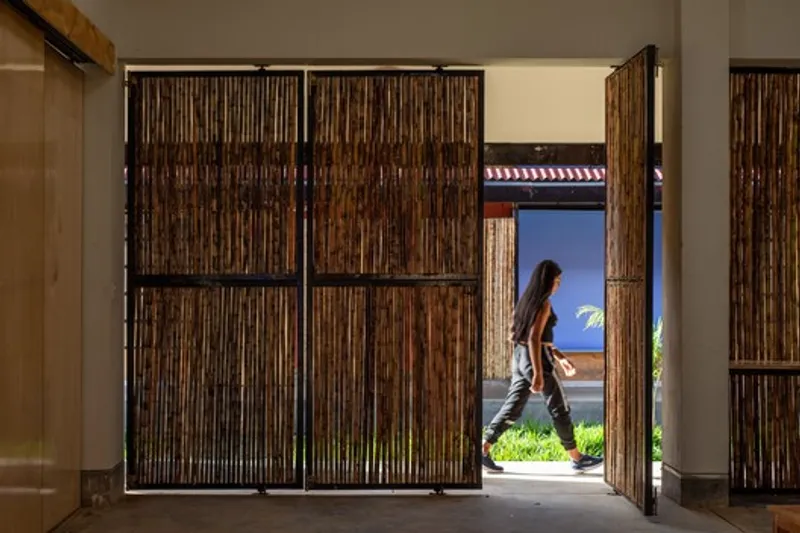
Collaboration with external organizations further enriched the project. The Agencia Agraria de San Ignacio supported landscaping workshops, helping to design and implement the school’s gardens. Meanwhile, the company Volcafe contributed expertise in coffee cultivation, enabling the development of the educational farm. These partnerships demonstrate how interdisciplinary collaboration can enhance the impact of architectural projects, creating synergies between education, agriculture, and community development.
The concept of the “living school” extends beyond the physical design to encompass the social and cultural dynamics of the project. By involving students and community members in every stage, from planning to construction and beyond, the school becomes a shared achievement that fosters a strong sense of ownership and pride. This collective engagement ensures that the spaces are actively used, maintained, and adapted over time, contributing to the long-term sustainability of the project.
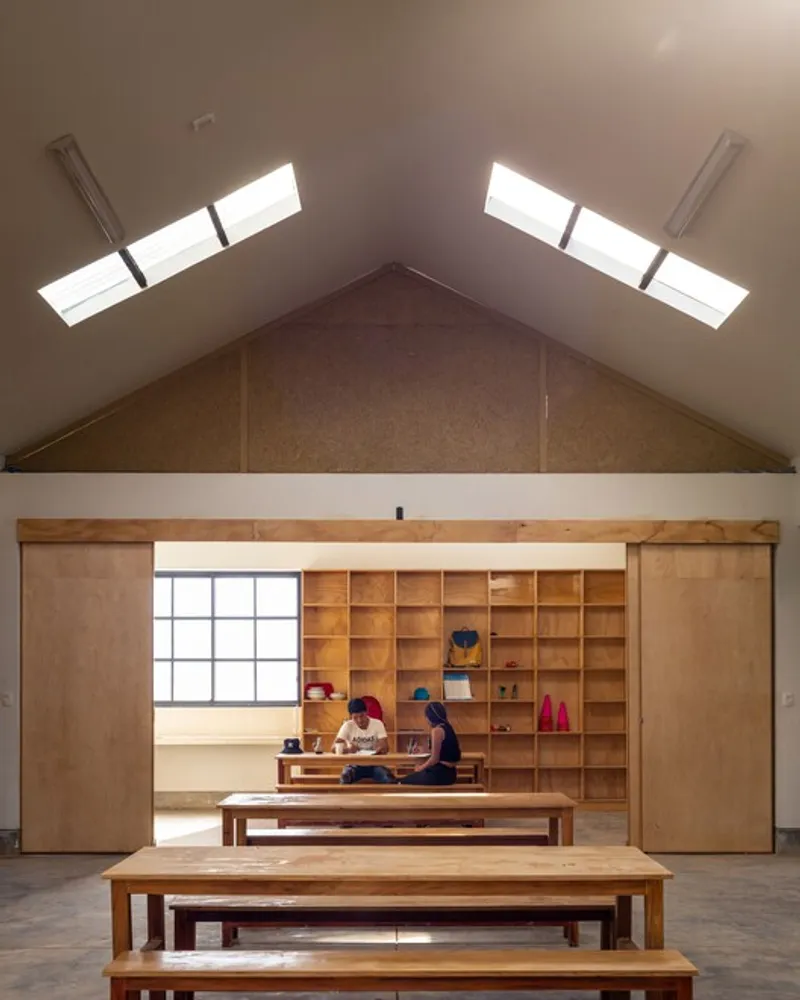
Environmental responsiveness is another key dimension of the design. The orientation of the buildings, the use of shading devices, and the incorporation of natural ventilation strategies all contribute to reducing energy consumption and enhancing comfort. The open layout allows for effective airflow, while the integration of vegetation helps to moderate temperature and create a pleasant microclimate. These passive design strategies are particularly important in remote areas where access to mechanical systems may be limited.
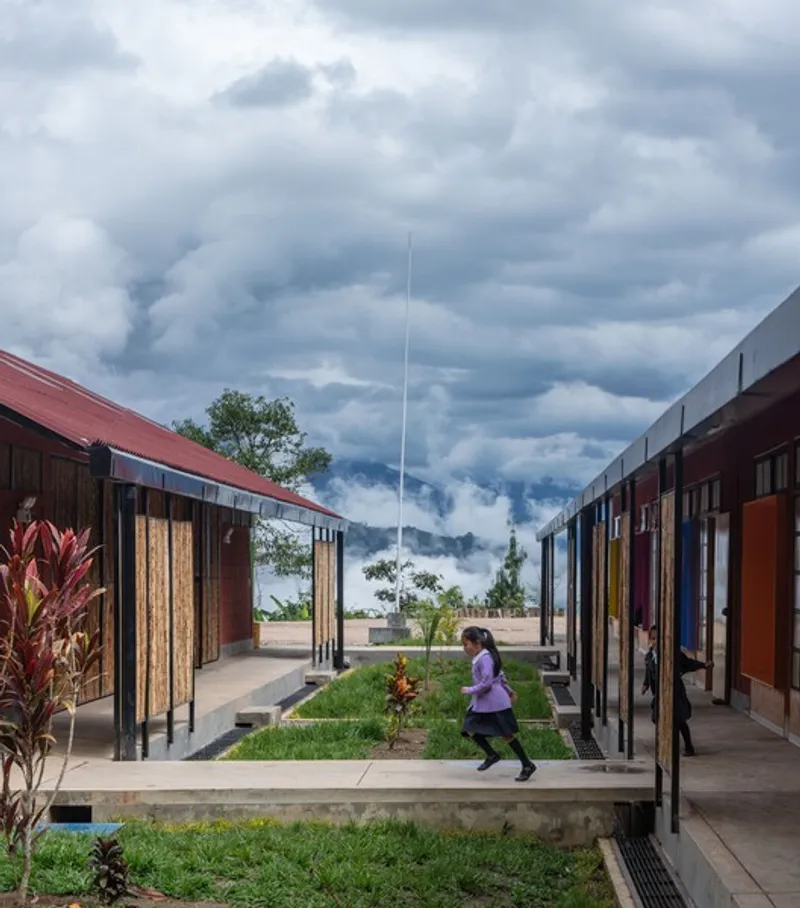
In addition to its environmental and social benefits, the project also addresses broader issues of equity and access to quality education. By providing safe, functional, and inspiring learning spaces, the new school supports the academic and personal development of more than 150 students from the surrounding rural area. It demonstrates that high-quality architecture is not limited to urban centers but can and should be accessible to communities in all contexts.
The aesthetic expression of the school is characterized by simplicity, clarity, and a strong relationship with its natural surroundings. The combination of robust structural elements and lightweight, permeable facades creates a balanced architectural language that is both functional and expressive. The use of natural materials, combined with the rhythm of structural components and shading devices, gives the buildings a distinctive identity that reflects their context.
Ultimately, El Huabo Primary and Secondary School represents a holistic approach to architecture: one that integrates design, education, community engagement, and environmental stewardship. It challenges conventional notions of school design by prioritizing flexibility, participation, and connection to place. The project serves as a model for future educational initiatives, demonstrating how architecture can act as a catalyst for social change and sustainable development.
By transforming a vulnerable and deteriorating facility into a vibrant and resilient learning environment, Semillas has created more than just a school. They have established a framework for community empowerment, where architecture becomes a tool for education, collaboration, and cultural expression. The success of the project lies not only in its physical form but also in the processes and relationships that shaped it.
As rural communities around the world face similar challenges, the lessons from El Huabo offer valuable insights into how thoughtful, context-sensitive design can make a meaningful difference. Through its emphasis on sustainability, participation, and local identity, the project stands as an inspiring example of what is possible when architecture is guided by a deep understanding of people and place.




Popular Articles
Popular articles from the community


The Musturak Paradise: Senior Living Architecture for a Connected Future in Temara, Morocco
The Musturak Paradise reimagines senior living architecture in Temara via private homes, social spaces, culture, community, and shared care.

Hill & Cross Opera: Sculptural Opera House Architecture Shaped by Tallinn’s Landscape and Identity
Hill & Cross Opera reimagines opera house architecture in Tallinn through its sculptural hill, civic plaza, glass wave and a luminous cross.

The Ocean Hive: Sustainable Architecture for a Self-Sufficient Civilization at Sea
The Ocean Hive imagines sustainable architecture at sea, where modular habitats, algae, wave power and ocean waste sustain a growing colony.
EW PARK: Sustainable Architecture Reimagines the Future of Urban Parking
EW PARK reimagines city parking as a modular wooden tower combining automation, solar energy, electric mobility, and adaptable urban design.
Similar Reads
You might also enjoy these articles

FAMM Arquitectura Organizes Ten Villas Around Courtyards and Jungle in Nosara, Costa Rica
El Molino pairs two elongated volumes with deep overhangs and timber louvers to build a compact coastal community five minutes from the beach.
Oscar Niemeyer's Ibirapuera Park Pavilions Define São Paulo's Cultural Identity in Concrete and Curve
A constellation of modernist volumes set within São Paulo's most important urban park, conceived for the city's 400th anniversary in 1954.
How Henri Picq's 1889 Paris Pavilion Traveled 11,000 Kilometers to Become Santiago's Artequín Museum
A prefabricated iron and glass pavilion built for the Paris Universal Exposition found a second life as a children's art museum in Chile.
Sanjay Puri Architects Wraps a Jaipur Office Tower in Capsule-Shaped Green Buffers
A nine-level climate-responsive workplace near Jaipur Airport uses stacked planter terraces and aluminium screens to fight 40°C heat.
Explore Educational Building Competitions
Discover active competitions in this discipline



Challenge to design public laboratory


Challenge to reimagine the Iron Throne


Photograph architecture without architects


Illustrate the lost glory of Angkor Wat - Render Challenge
Comments (0)
Please login or sign up to add comments
No comments yet. Be the first to comment!