
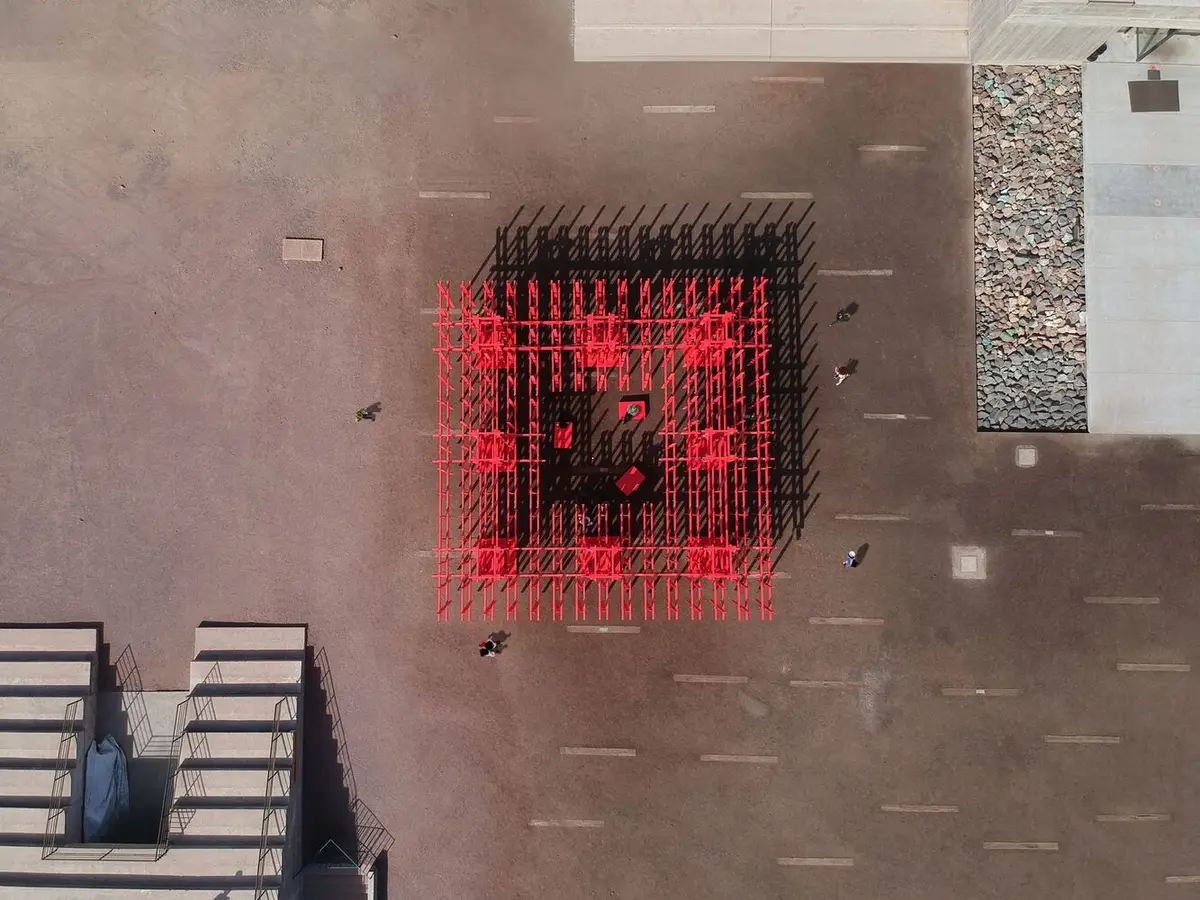
El Pesar del Viento Pavilion by Álvaro Parraguez + Beatriz Harriet
A responsive pavilion in Antofagasta blending wood, wind, and movement to create an immersive, ever-changing architectural and sensory experience.


A Performative Wind Pavilion Rooted in Antofagasta's Ruinas de Huanchaca
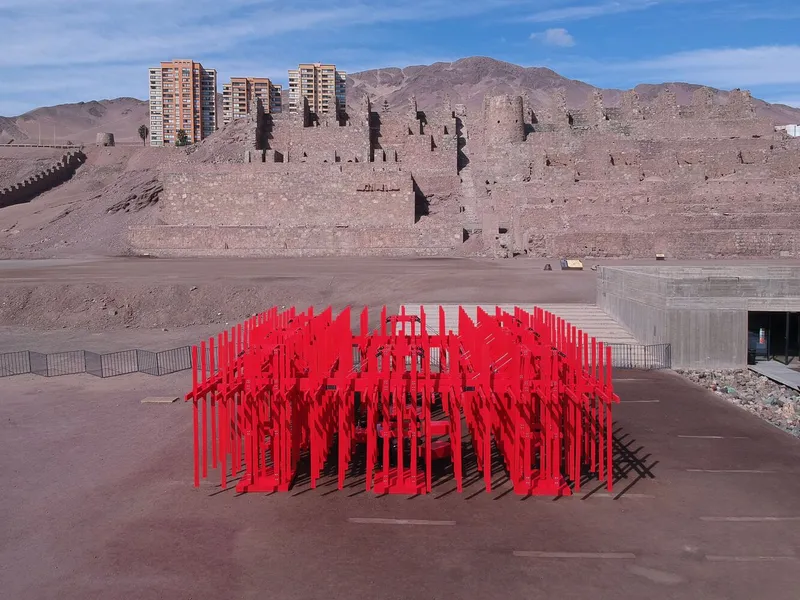
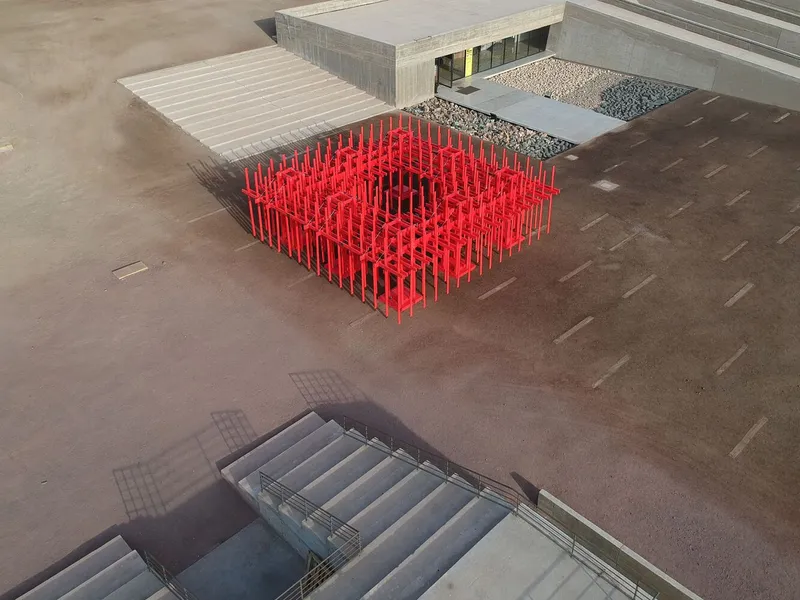
In the heart of Antofagasta, Chile, nestled within the evocative landscape of the Ruinas de Huanchaca Park, architects Álvaro Parraguez and Beatriz Harriet have crafted a dynamic spatial installation titled El Pesar del Viento as part of the YAF_Constructo 2 series. This temporary pavilion, spanning 144 m², is not merely an architectural structure—it is a sensory and performative space, continuously redefined by the natural and cultural forces that surround it.
A Phenomenological Dialogue Between Wind, Space, and Time
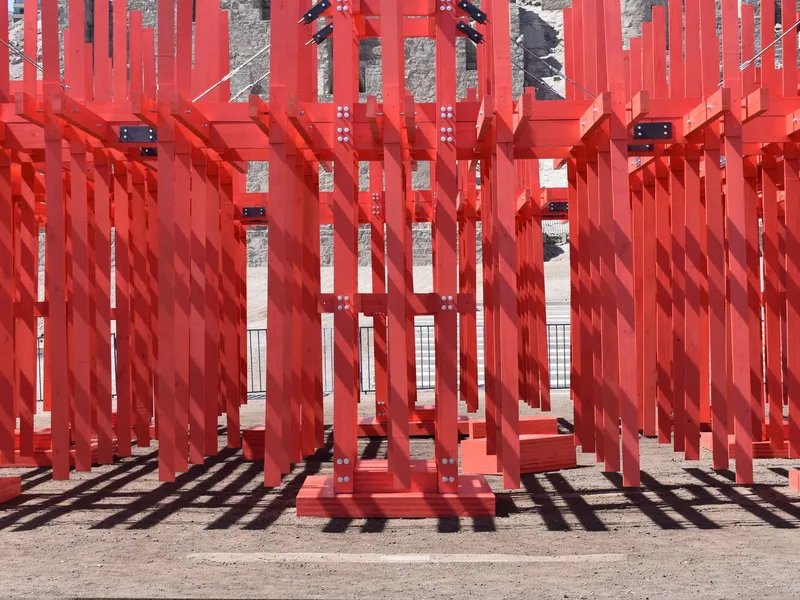
Conceived as an interactive and empirical artifact, the pavilion responds directly to the unique climatic, physical, and social context of its site. The structure is formed by a thick, four-meter-wide permeable perimeter that remains open on all sides—an intentional gesture to invite environmental elements and human interaction to shape its behavior.
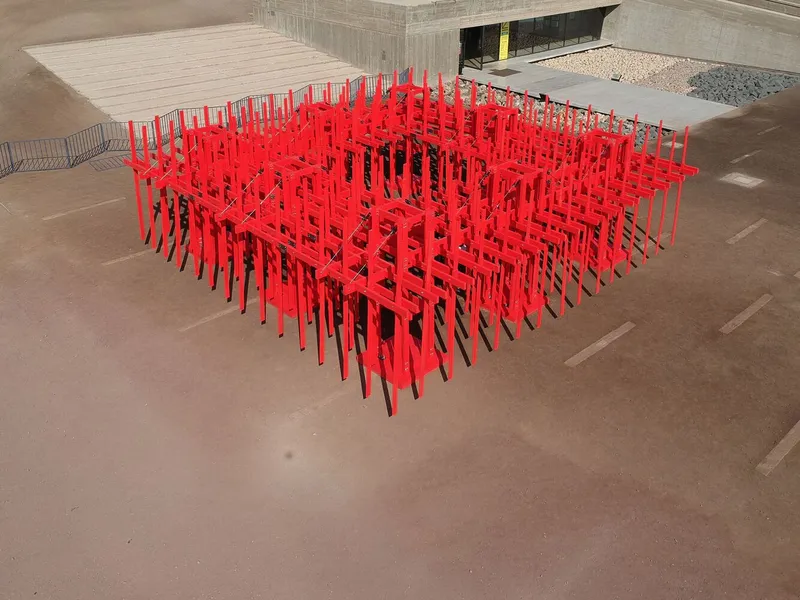
At its core, the pavilion is self-supporting, yet ever-changing. From the structure’s edges, hundreds of suspended wooden fibers cascade downward, reacting to wind, temperature, and the subtle motion of visitors. As these fibers sway and vibrate, they produce an ephemeral "sky of shadows" where no ceiling exists, casting fragmented light and creating a sonic atmosphere that is at once dry, rough, and alive.
Structure, Materiality, and Movement in Symbiosis
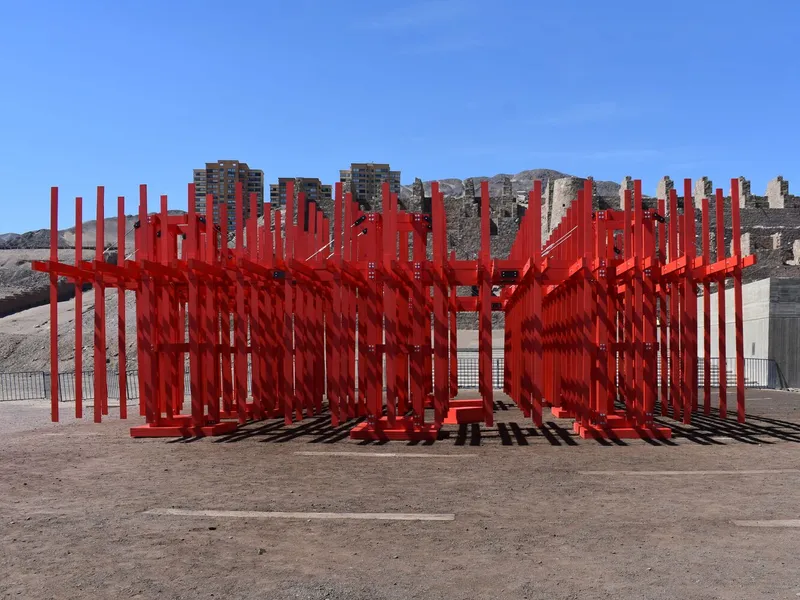
From a spatial perspective, El Pesar del Viento is designed to liberate its center—an introspective void that invites contemplation and physical immersion. The fragile yet intentional structure rises delicately from the ground, mindful not to disturb the historical terrain. This floorless experience evokes the presence of gravity, weight, light, and darkness—all choreographed by the slow, clumsy, or even unconscious movements of its visitors.
Wood serves as the principal material, chosen not only for its expressive warmth but for its transformative nature. It bends, warps, creaks, and adjusts over time due to forces such as wind, humidity, heat, and human touch. This transformation is not seen as deterioration, but as a vital process of organic adaptation and material memory.
Construction Logic: Modular Rigidity and Hanging Narratives
The pavilion’s canopy, or “sky,” is constructed from a modular framework of eight wooden pillars supporting a woven grid of beams, held in tension with structural cables. These beams act as guidelines from which wooden elements are suspended—each piece destined to evolve with weather conditions, usage, and the passage of time.
This kinetic and temporal architecture tells a story of material agency and responsive design. It reclaims the value of slowness, of presence, and of environmental attunement in a world driven by permanence and speed.
Curated Installation at the Intersection of Architecture and Art
Curated by Benjamin Zapico, El Pesar del Viento exemplifies experimental architecture and site-specific installation at its most poetic. It challenges conventional ideas of enclosure, structure, and permanence, inviting users to reflect on their bodily engagement with space and nature.


Popular Articles
Popular articles from the community


Hill & Cross Opera: Sculptural Opera House Architecture Shaped by Tallinn’s Landscape and Identity
Hill & Cross Opera reimagines opera house architecture in Tallinn through its sculptural hill, civic plaza, glass wave and a luminous cross.

The Ocean Hive: Sustainable Architecture for a Self-Sufficient Civilization at Sea
The Ocean Hive imagines sustainable architecture at sea, where modular habitats, algae, wave power and ocean waste sustain a growing colony.

Co-Life: Senior Housing Design That Reconnects Older Adults With the City
Co-Life reimagines senior housing design through healing gardens, shared streets, workshops, and a sustainable community across generations.

Conexión: Biophilic Design Reimagines High-Rise Living in Hong Kong
Conexión reimagines high-rise living in Hong Kong through biophilic design, green facades, shared spaces, daylight, water and nature within.

Similar Reads
You might also enjoy these articles


Hodi-Mandai Geram
Project Function: Preservation and revitalization of the Intangible heritage and socio-spatial identity of the Hodi by Housing, Cultural Memory Center, Sacred Grove, landscape, local tourism economy


Olio Towers: A Mid-Rise for Performers That Fuses Housing, Rehearsal, and Stage
Located blocks from Houston's Theater District, this modular tower stacks living units around a central performance atrium.

Oasis: Modular Green Housing Carved into Dhaka's Urban Fabric
A shortlisted Plugin Housing entry reclaims unauthorized settlements in Dhaka with stepped concrete volumes, green roofs, and ventilation-driven design.

Black Hole: A Floating Megastructure for the Post-Physical Era
Emiliano Mazzarotto envisions a spherical, self-scaling arena where e-sports, digital hotels, and holographic stadiums replace traditional public space.

Explore Architecture Competitions
Discover active competitions in this discipline

Challenge to design a portable theatre

Challenge to design a portable music platform

Challenge to design an open learning module for the elderly

Challenge to reimagine the Iron Throne
Comments (0)
Please login or sign up to add comments
No comments yet. Be the first to comment!