
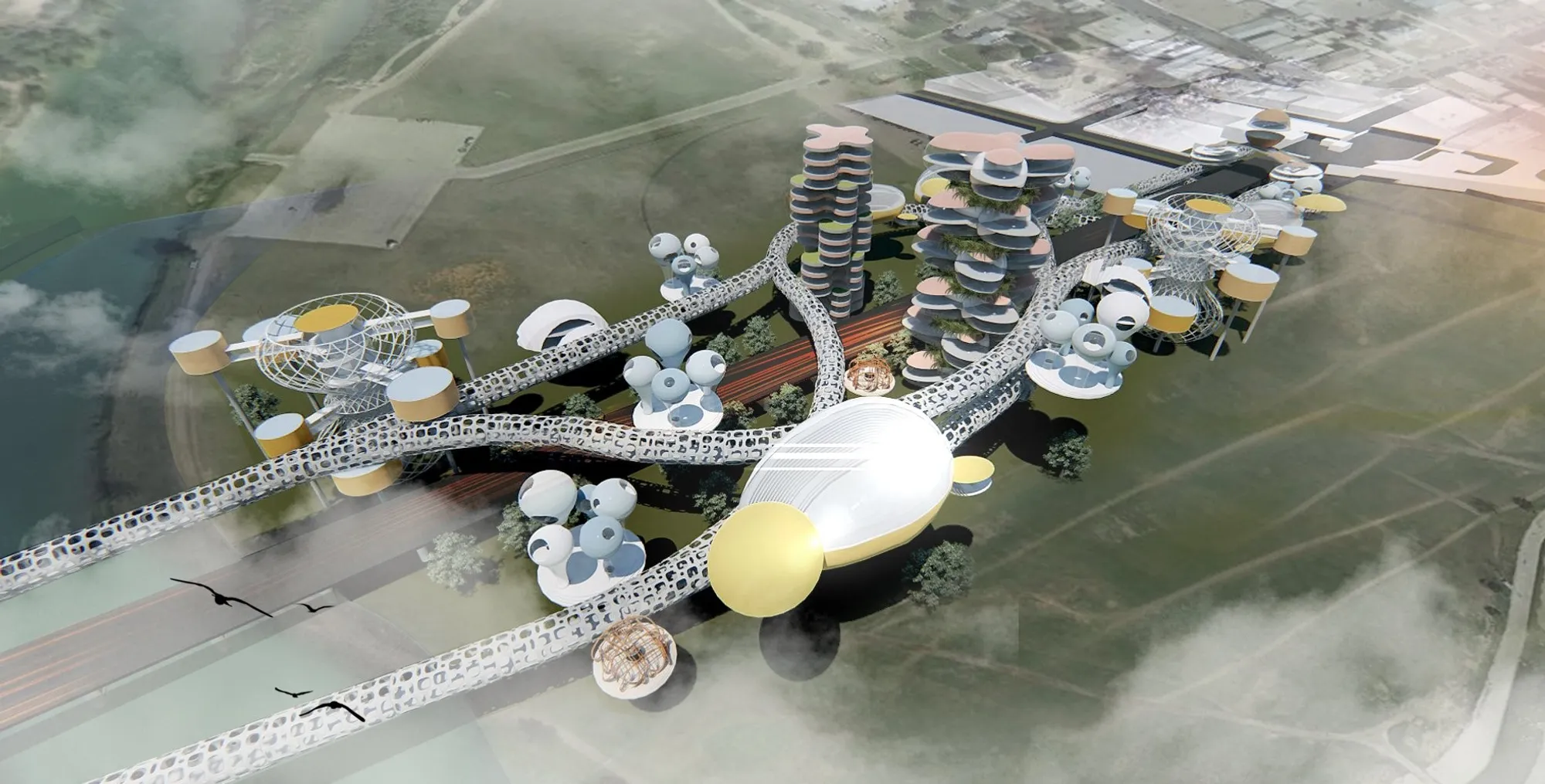
El Puente De La Esperanza – Humanitarian Architecture
A transformative humanitarian architecture proposal turning a border bridge into a resilient ecosystem of shelter, care, and cultural exchange.


El Puente De La Esperanza by Budiyanto Pradono redefines the potential of humanitarian architecture by transforming a politically charged border condition into a spatial system of care, adaptability, and human dignity. Located along the US–Mexico boundary, the proposal challenges the conventional perception of infrastructure as static and functional, instead positioning it as an evolving framework that responds to urgent social realities.
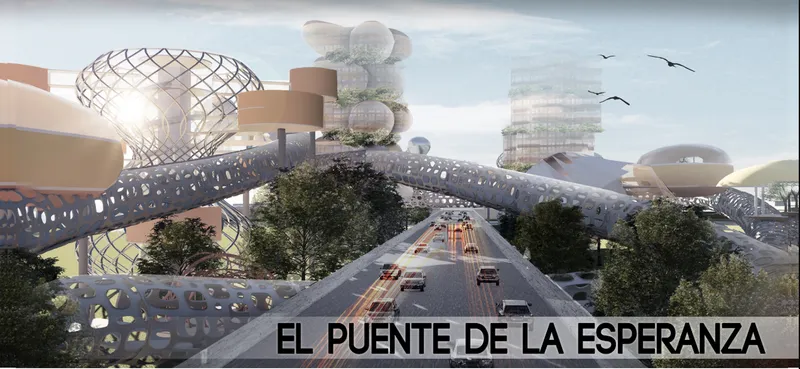
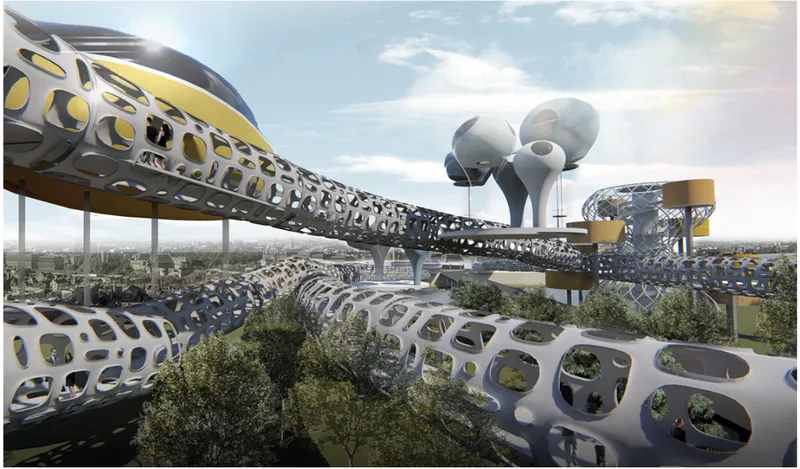
The project reconceptualizes the Eagle Pass International Bridge as more than a connector. It becomes an inhabitable architectural landscape where movement, dwelling, and interaction coexist. This shift is critical. Rather than treating asylum seekers as transient users, the design acknowledges them as individuals in transition, requiring not only shelter but also opportunity, identity, and agency.
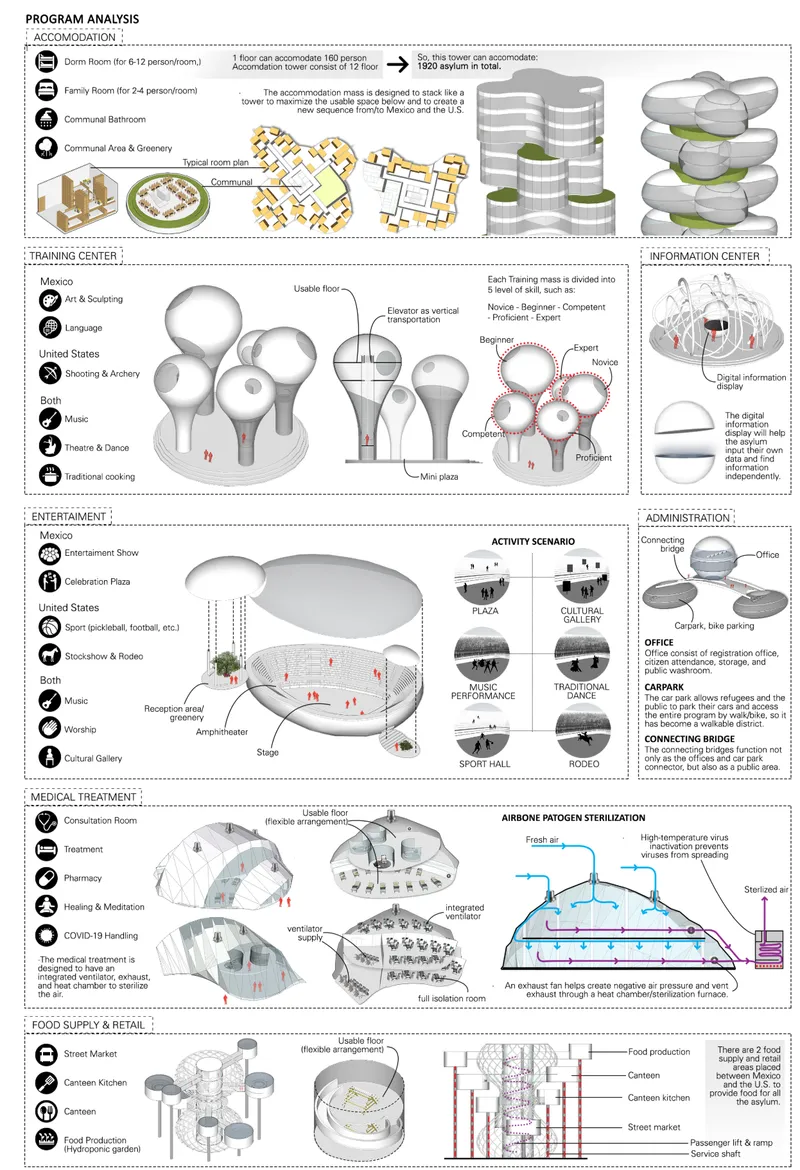
At the core of the proposal lies the idea of fragmented programming. Functions are distributed along the bridge rather than centralized, creating a sequence of distinct yet interconnected spatial nodes. These include accommodation, training centers, medical facilities, entertainment zones, food systems, and administration. Each program is expressed through a unique architectural mass, allowing intuitive navigation and spatial clarity. This decentralized logic enables users to choose their own paths, reinforcing autonomy within a structured environment.
The concept of the “House of Hope” defines the emotional and psychological foundation of the project. Here, humanitarian architecture is positioned as a catalyst for recovery and growth. Spaces are designed not only to protect but also to prepare individuals for future integration. Training programs embedded within the architecture support skill development, learning, and self-improvement, transforming the bridge into a platform for long-term empowerment.
Parallel to this is the notion of “Life Exploration,” where architecture becomes an experiential journey. The spatial sequence encourages movement through varied environments that stimulate curiosity, interaction, and discovery. This approach reframes refugee infrastructure from passive containment into an active system of engagement.
The bridge itself evolves into a “Place for Dialogue.” It operates simultaneously as infrastructure and public realm, enabling cultural exchange between Mexico and the United States. By integrating shared spaces for events, performances, and everyday interaction, the project dissolves the rigid boundary condition and introduces a new hybrid territory rooted in coexistence.
From an urban design perspective, the proposal departs from the rigid grid patterns typical of both nations. Through macro analysis, it introduces a fluid spatial logic that responds to the unique conditions of the border. This new pattern does not belong exclusively to either side, but instead creates a shared architectural language that blends identities while establishing a distinct sense of place.
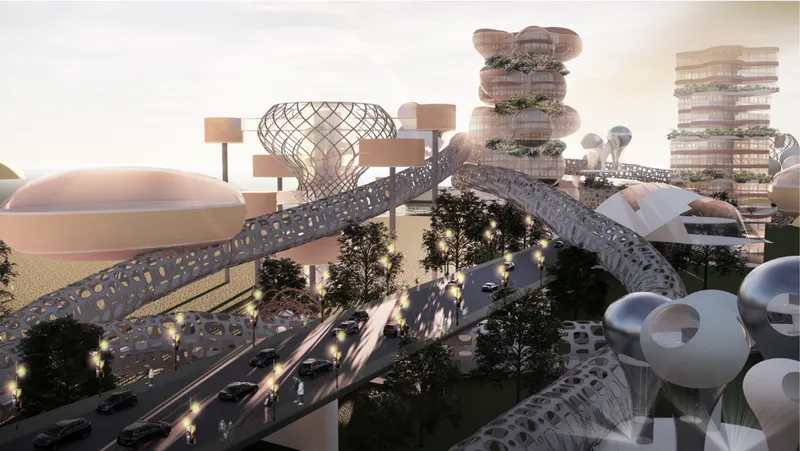
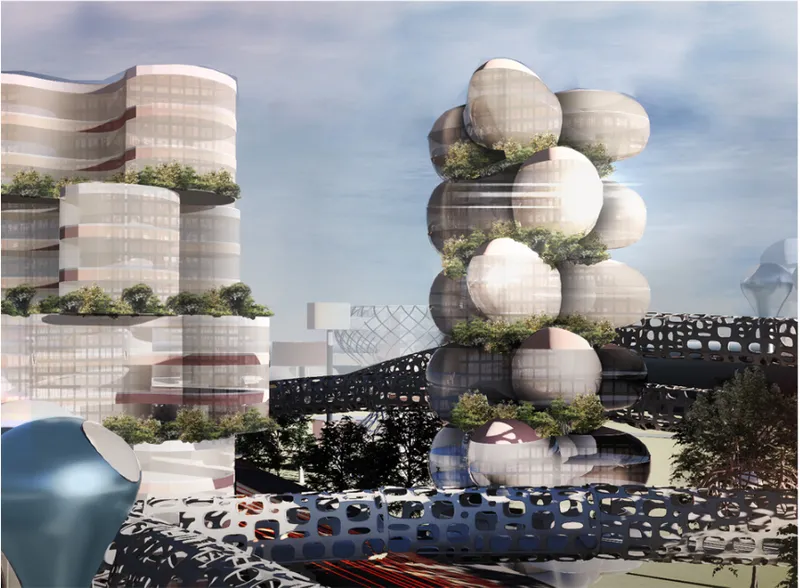
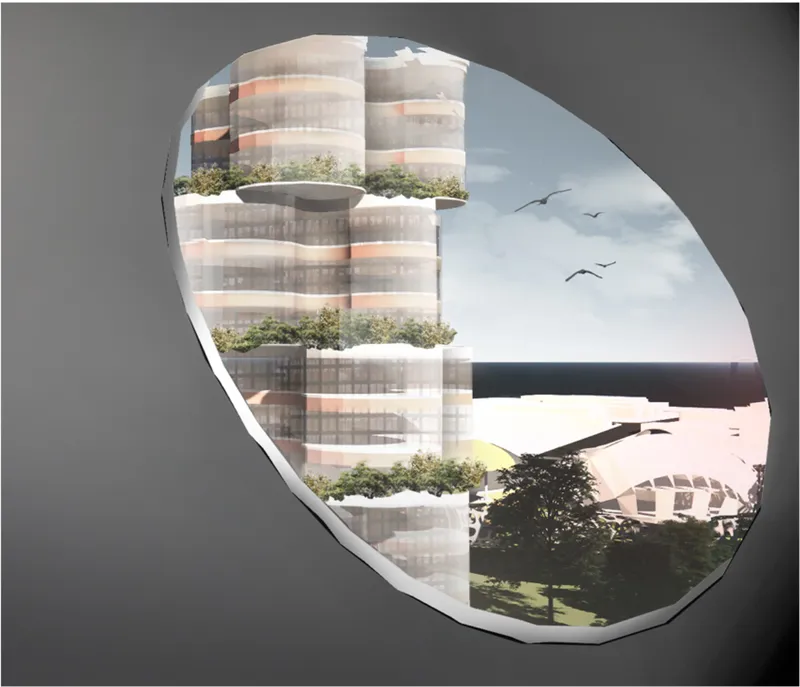
The site strategy maximizes the potential of the existing 565-meter bridge by activating both its upper and lower layers. These interventions transform the structure into a multi-dimensional environment, attracting not only asylum seekers but also the general public. The border is reimagined as an experiential destination rather than a line of separation.
Programmatically, the project addresses a comprehensive range of needs. Accommodation modules balance density with communal living. Training centers operate through progressive skill systems, enabling users to move from beginner to advanced levels across disciplines such as language, art, music, and vocational practices. Entertainment spaces provide cultural and social engagement, while medical facilities ensure essential healthcare access.
A significant component of the design is its response to public health challenges. The integration of time-based architecture allows spaces to adapt according to shifting demands, functioning as isolation units, emergency shelters, or communal areas. This flexibility is reinforced by an airborne pathogen sterilization system that utilizes high-temperature air treatment to reduce viral transmission, enhancing safety in critical environments.
Circulation is carefully structured through a dual system separating pedestrian and vehicular flows. This ensures operational efficiency while maintaining user safety and accessibility. Controlled entry points and restricted zones further strengthen security, addressing the sensitivities of a border condition.
Formally, the project employs a strategy of mass mutation, where each program evolves into a distinct geometric identity. This generates a visually dynamic yet coherent architectural language. Color psychology further reinforces spatial differentiation, using calibrated tones to influence user perception, from calming environments in residential areas to vibrant atmospheres in social zones.
El Puente De La Esperanza ultimately positions humanitarian architecture as a proactive, systems-driven discipline. It demonstrates how architecture can move beyond shelter to become a framework for resilience, integration, and shared humanity. By transforming a border into a place of opportunity, the project proposes a future where infrastructure supports not only movement, but meaningful human experience.


Popular Articles
Popular articles from the community


Co-Life: Senior Housing Design That Reconnects Older Adults With the City
Co-Life reimagines senior housing design through healing gardens, shared streets, workshops, and a sustainable community across generations.

The Musturak Paradise: Senior Living Architecture for a Connected Future in Temara, Morocco
The Musturak Paradise reimagines senior living architecture in Temara via private homes, social spaces, culture, community, and shared care.

Riyadh For All: Intergenerational Urban Design for Active Aging in Rabat
Riyadh For All reimagines urban design in Rabat with intergenerational co-living, adaptive courtyards, and Moroccan cultural exchange today.

The Earth Pod: 3D Printed Homes for Resilient Refugee Communities
The Earth Pod reimagines refugee housing through 3D printed homes made from clay, combining resilience, self-sufficiency, and rapid shelter.

Similar Reads
You might also enjoy these articles

Eco Chapel: A Green Architecture Pavilion Designed in Symbiosis with the Forest
Eco Chapel uses green architecture to weave prayer, learning and reuse into a forest pavilion shaped by modular hexagonal canopies for life.
Kaffeebühnen: Coffee Shop Architecture Designed as a Civic Stage Between Vienna’s City and Park
Kaffeebühnen turns coffee shop architecture into a civic stage, linking Vienna’s park edge, urban life, warm timber yards, and coffee craft.
Healing Façade: Sustainable Architecture for Reforestation, Community, and Sacred Ecology in Ethiopia
Healing Façade reimagines sustainable architecture as a living wall that restores soil, catches water and renews Ethiopia's forest churches.


Urban Forest: A Vertical Ecosystem for 5,000 Workers in Singapore's Changi Business Park
Radially stacked pods and layered green decks turn a 7-acre plot into 47 acres of ecological workspace projected for 2040.

Explore Architecture Competitions
Discover active competitions in this discipline



Challenge to reimagine the Iron Throne


Photograph architecture without architects


Illustrate the lost glory of Angkor Wat - Render Challenge


Design challenge to reuse E-waste
Comments (0)
Please login or sign up to add comments
No comments yet. Be the first to comment!