

El Rincón House by Juan Carlos Sabbagh Arquitectos: A Contemporary Architectural Marvel in Santiago, Chile
El Rincón House blends sculptural concrete, granite, and wood, offering stunning views, functional spaces, and seamless indoor-outdoor living.


El Rincón House, designed by the renowned architectural firm Juan Carlos Sabbagh Arquitectos, is a striking residential project located in Santiago, Chile. Completed in 2021, this 640 m² house combines cutting-edge modern design with a deep sensitivity to the natural landscape. The house is an exploration of space, light, and materiality, resulting in a structure that not only provides a functional living space but also offers a profound connection to the environment surrounding it.
Architectural Concept: Suspended Volume and Sculptural Form
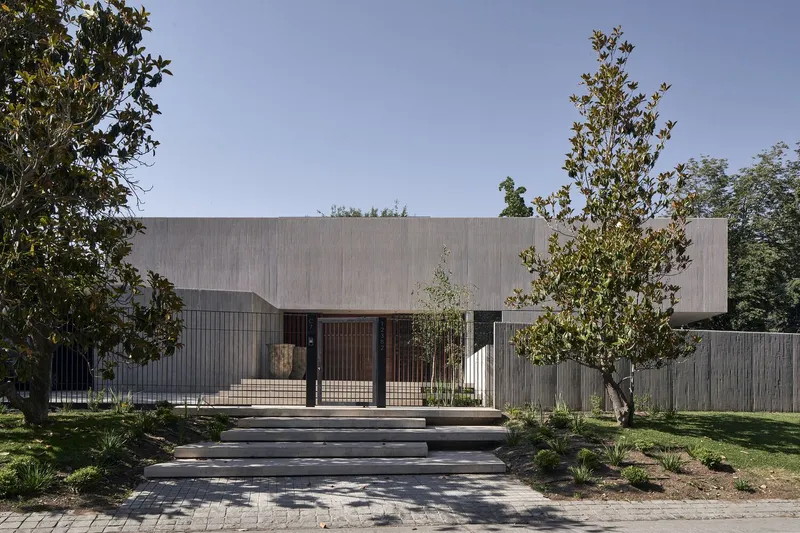
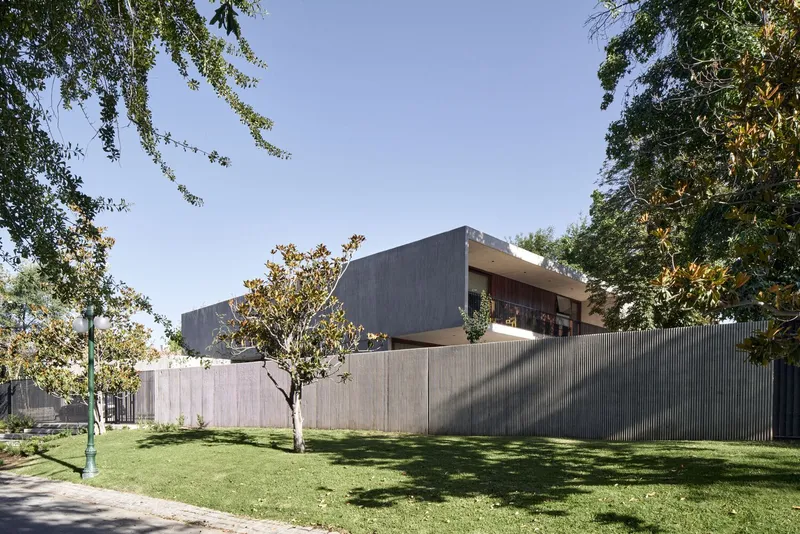
The design of El Rincón House takes inspiration from the idea of integrating architecture with nature, particularly through its use of a suspended volume that floats above the ground. The house is oriented to the north, making the most of the sun’s path and providing expansive, unobstructed views of the Andes Mountain Range in the distance. At its core, the house is made up of a solid concrete parallelepiped, which has been transformed into a sculptural form through the addition of textured granite surfaces. The sculpting process creates an intriguing contrast between smooth, polished walls and the rough, natural surfaces of untouched stone. This contrast is a fundamental aspect of the house’s architectural identity, blending the raw beauty of nature with the clean lines of modern design.
A Play of Full and Empty Spaces
One of the most innovative elements of the design is the interplay between full and empty spaces within the house. The architects used the concept of excavation to carve into the concrete volume, creating voids that serve as key functional and aesthetic spaces. These voids break up the solid mass of the house, allowing for natural light to penetrate deeper into the interior and creating a sense of openness. The strategic use of these carved-out spaces enhances the sculptural quality of the design, making the house feel both dynamic and integrated with its surroundings.
Materiality and Warmth: Wood and Light
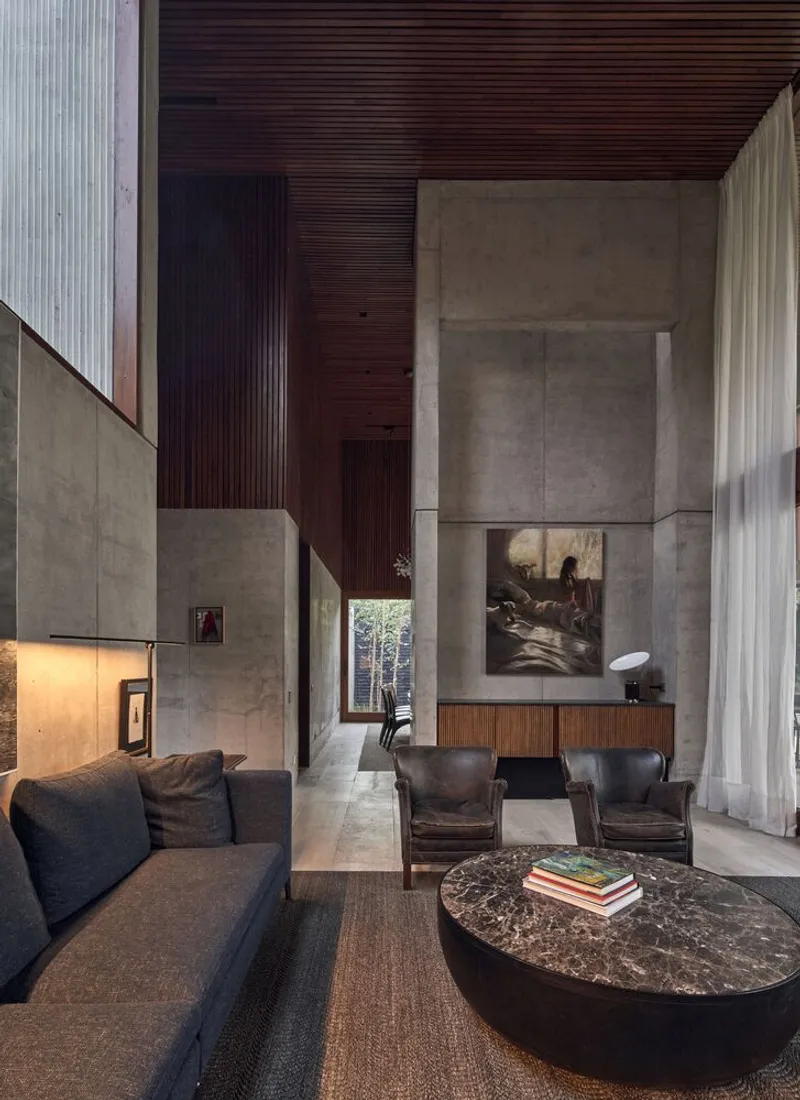
While the exterior of the house is dominated by the raw beauty of concrete and granite, the interior spaces are designed to be warm and inviting. To achieve this, the architects introduced wood as a primary material for select surfaces within the house. Wooden panels cover some interior walls, while latticework elements serve as both a design feature and a practical solution for controlling light and heat. These wooden lattices not only add warmth and texture to the space but also filter sunlight, allowing for a comfortable indoor environment regardless of the time of day or season.
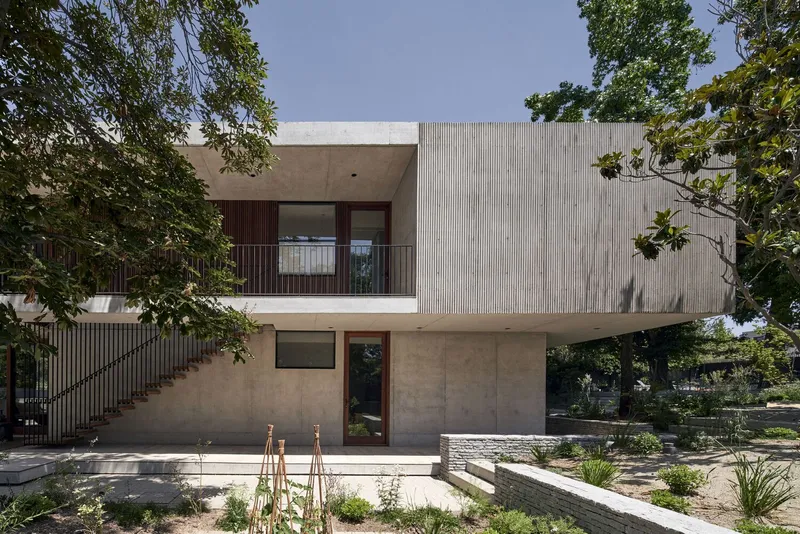
This careful blending of materials—smooth concrete, textured granite, and warm wood—creates a balance between the house’s sculptural exterior and the cozy, functional interior spaces. The result is a home that feels both modern and welcoming, providing its residents with a serene and stylish living environment.
Responding to Site Conditions: Integration with the Terrain
The site for El Rincón House posed a unique set of challenges due to its sloping terrain. The house is situated on a horizontal platform that was once a tennis court, which places the building in a somewhat sunken position relative to the surrounding garden. The architects addressed this by designing the house with generous double-height spaces throughout, which serve to counteract the feeling of being below ground level. These vertical spaces open up the interior, allowing for a greater influx of light and providing sweeping views of the surrounding landscape, including the iconic American oaks that are already established on the property.
This careful consideration of the site's topography ensures that El Rincón House remains connected to the landscape, despite its somewhat buried position. By elevating key spaces and optimizing natural light, the architects have created a home that feels expansive and integrated into its environment.
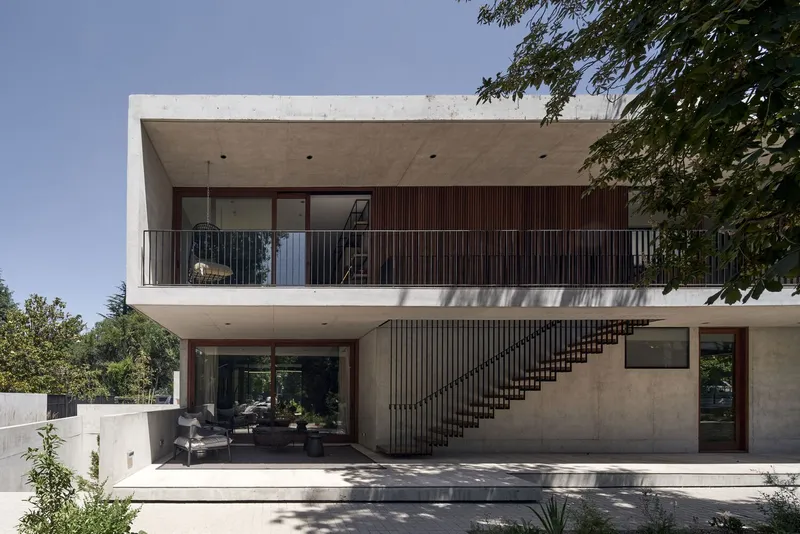
Spatial Planning: Maximizing Functionality for a Growing Family
El Rincón House was designed to accommodate a large family with diverse needs. The programmatic requirements included a variety of functional spaces, such as study rooms, an art workshop, and a gym. The architects approached this challenge by organizing the house across three levels, allowing for a thoughtful arrangement of spaces while maintaining a compact footprint.
Each level serves a specific function, with the lower levels devoted to more private areas such as bedrooms and personal spaces, and the upper levels dedicated to common areas like the living room and dining areas. The central open-plan space, which includes the kitchen, living room, and dining area, is designed with flexibility in mind, offering a spacious environment for both everyday living and entertaining guests.
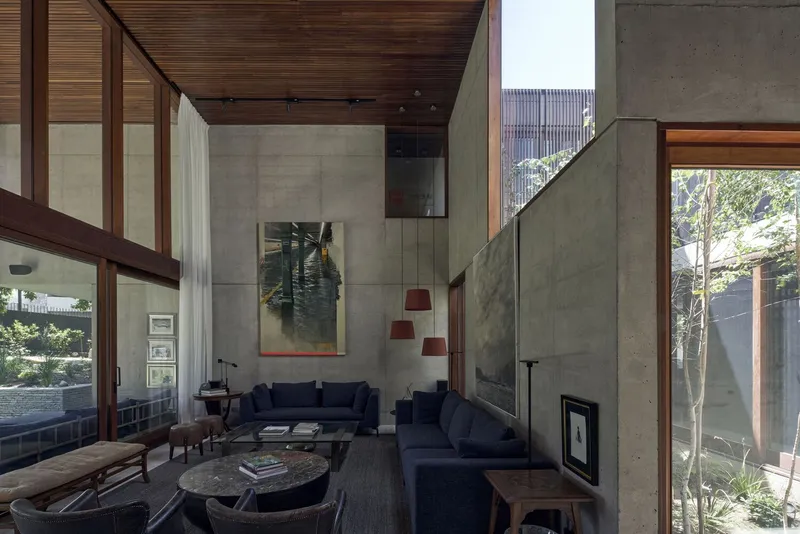
Seamless Indoor-Outdoor Connection: Terrace and Sun Control
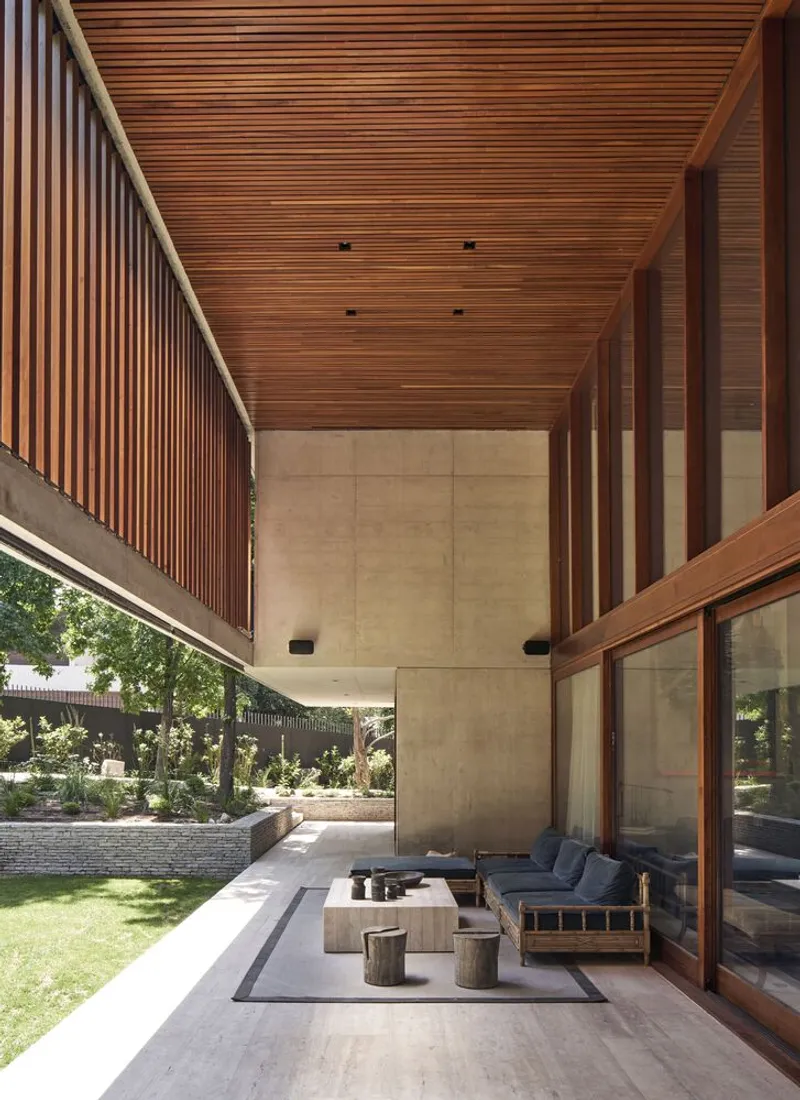
One of the standout features of El Rincón House is its seamless connection between indoor and outdoor spaces. A large terrace extends from the main living and dining areas, flowing directly into the garden. This terrace mirrors the double height of the interior spaces, ensuring that it feels like a natural extension of the home’s living areas. To protect this outdoor space from the intense Chilean sun, the architects designed a wooden lattice on the second level, which runs the full length of the terrace. This lattice serves as a sunshade, reducing direct sunlight and heat gain.
Additionally, the terrace features an automated lattice system that allows for gradual control of light and heat entry, making it adaptable to varying weather conditions. In colder months, retractable awnings, hidden within the mezzanine beam, can fully enclose the space, transforming it into a comfortable, protected area that can be enjoyed year-round.
A Sustainable and Thoughtful Approach to Modern Living
El Rincón House is a testament to the possibilities of modern residential design that is both aesthetically striking and highly functional. By using sustainable materials, integrating natural light, and maximizing the connection to the surrounding landscape, the house offers a living environment that is in harmony with its context. The architects’ use of textures, natural elements, and innovative design solutions reflects a deep respect for both the environment and the people who will call this home.

Key Features:
- Sculptural design with concrete and granite
- Use of wood to add warmth and texture to the interior
- Double-height spaces that enhance openness and light
- Seamless transition between interior and exterior spaces
- Automated sun control system for energy efficiency
- Thoughtful spatial organization across three levels
- Large, flexible spaces tailored to the needs of a family.




Popular Articles
Popular articles from the community


The Earth Pod: 3D Printed Homes for Resilient Refugee Communities
The Earth Pod reimagines refugee housing through 3D printed homes made from clay, combining resilience, self-sufficiency, and rapid shelter.

Lunar Spiral: Space Architecture Shaped by the Mathematics of the Universe
Lunar Spiral reimagines space architecture through Fibonacci geometry, lunar regolith, levitating habitats, and self-sustaining Moon living.

Play: Fragments of Their World
Familiar architecture becomes modular playground design, creating safe spaces where displaced children can learn, connect, imagine and play.

Riyadh For All: Intergenerational Urban Design for Active Aging in Rabat
Riyadh For All reimagines urban design in Rabat with intergenerational co-living, adaptive courtyards, and Moroccan cultural exchange today.

Similar Reads
You might also enjoy these articles


Hodi-Mandai Geram
Project Function: Preservation and revitalization of the Intangible heritage and socio-spatial identity of the Hodi by Housing, Cultural Memory Center, Sacred Grove, landscape, local tourism economy


Olio Towers: A Mid-Rise for Performers That Fuses Housing, Rehearsal, and Stage
Located blocks from Houston's Theater District, this modular tower stacks living units around a central performance atrium.

Oasis: Modular Green Housing Carved into Dhaka's Urban Fabric
A shortlisted Plugin Housing entry reclaims unauthorized settlements in Dhaka with stepped concrete volumes, green roofs, and ventilation-driven design.

Black Hole: A Floating Megastructure for the Post-Physical Era
Emiliano Mazzarotto envisions a spherical, self-scaling arena where e-sports, digital hotels, and holographic stadiums replace traditional public space.

Explore Architecture Competitions
Discover active competitions in this discipline



Challenge to reimagine the Iron Throne


Photograph architecture without architects


Illustrate the lost glory of Angkor Wat - Render Challenge


Design challenge to reuse E-waste
Comments (0)
Please login or sign up to add comments
No comments yet. Be the first to comment!