

Enrico Sassi Architetto Turns a 200-Year-Old Swiss Mill into an Educational Center
In Coldrerio's Motta Valley Park, a historic grain mill finds a second life as a congress and teaching facility framed by raw concrete.


The Daniello Mill has stood on the banks of the Roncaglia stream since 1802, grinding cereal with water-powered stone wheels for over 150 years before falling silent around 1960. Donated to the public along with four hectares of surrounding land, the compound sat between the municipalities of Coldrerio and Novazzano, a relic of agrarian infrastructure slowly absorbed into the Motta Valley Park. Enrico Sassi Architetto took on the task of converting this cluster of traditional masonry buildings into something that could hold classrooms, exhibition space, and a multipurpose hall without pretending the mill was anything other than what it had always been.
The most interesting decision here is the refusal to smooth over the difference between old and new. Where reinforced concrete is introduced, it is left exposed, board-formed, and unadorned. Where original plaster shows decades of patching and weathering, it stays. The mill room itself was restored without thermal insulation so that its character would survive intact. The result is a building that reads as a timeline: you can see where the 19th century stops and the 21st century begins, and neither era apologizes for the other.
A Compound in the Valley

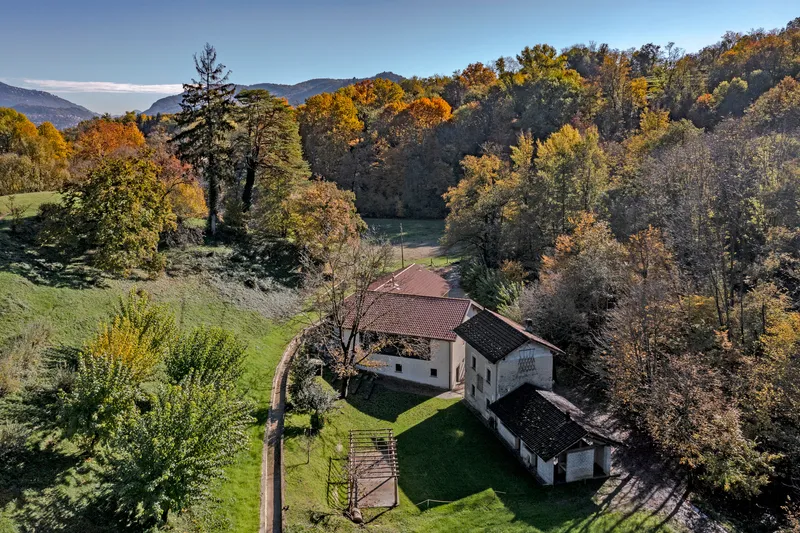
From above, the Daniello Mill reads as a tightly gathered family of gabled volumes nestled into the crease where meadow meets woodland. The red clay tile roofs anchor the buildings to the regional vernacular, while the autumn foliage around them underlines just how thoroughly the site has been folded into the park landscape. Two buildings intersect at right angles, a geometry that creates sheltered courtyard spaces and allows the program to spread across distinct wings without sprawling.
The four hectares of donated land are not incidental. They give the project breathing room and context, ensuring that the mill is experienced not as an isolated object but as the nucleus of a broader public territory. The stream that once drove the water wheels still runs alongside, a working reminder of the site's hydraulic logic.
Old Skin, Honest Scars
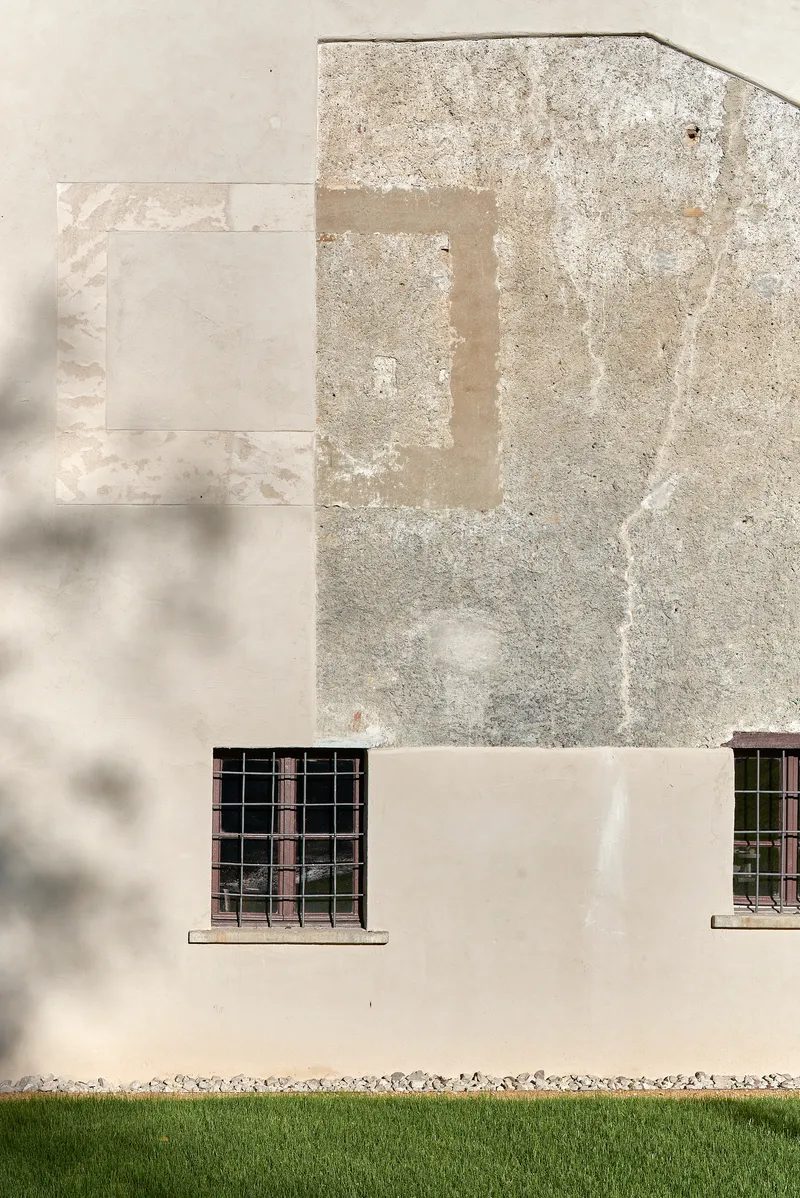
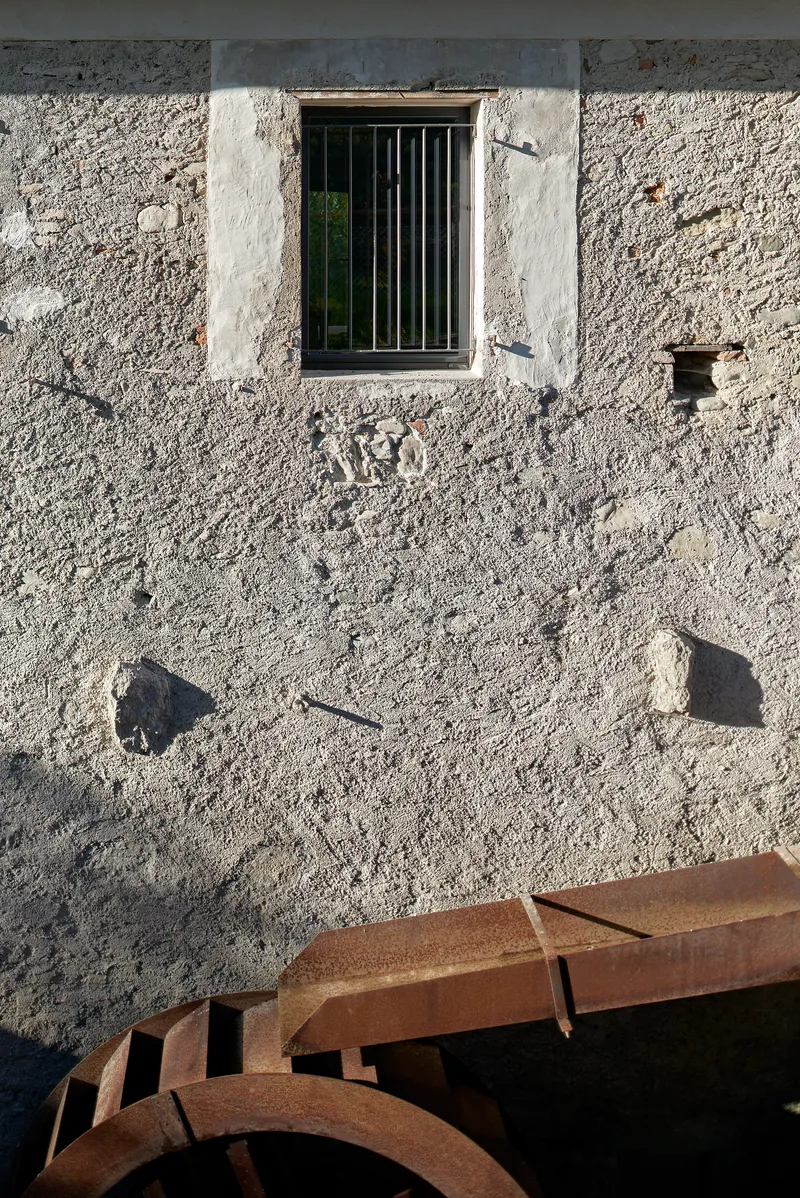
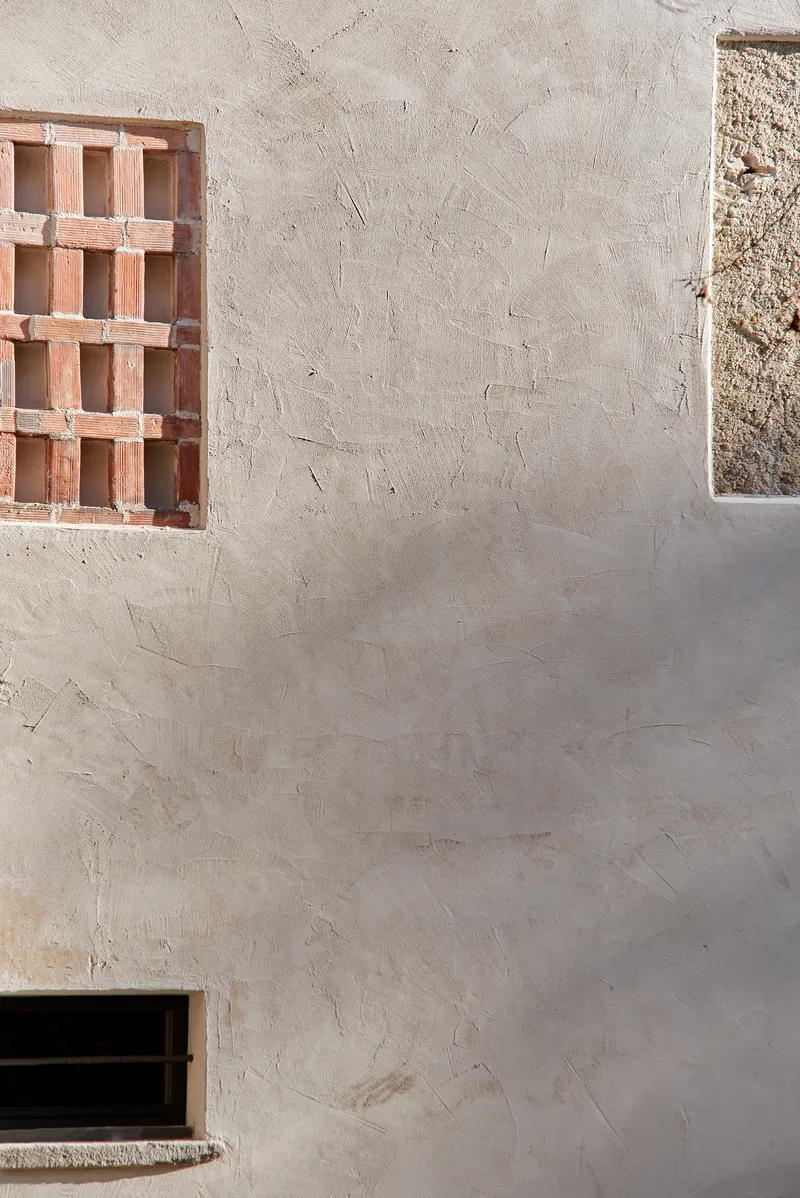
The facades tell the story of the building's life in layered plaster, patched repairs, rusted iron bars, and terracotta brick screens. Sassi's approach treats these surfaces as documents rather than defects. A narrow concrete slit cut beside a traditional brick screen window reveals the logic at work: new openings are surgically precise, their material frankly modern, while everything around them retains the texture of two centuries of maintenance and decay.
This is not preservation in the museum-glass sense. It is a working tolerance for imperfection, a recognition that the building's visual roughness is inseparable from its identity. Cleaning up every scar would erase the very thing that makes the mill worth renovating in the first place.
Dusk and the Courtyard
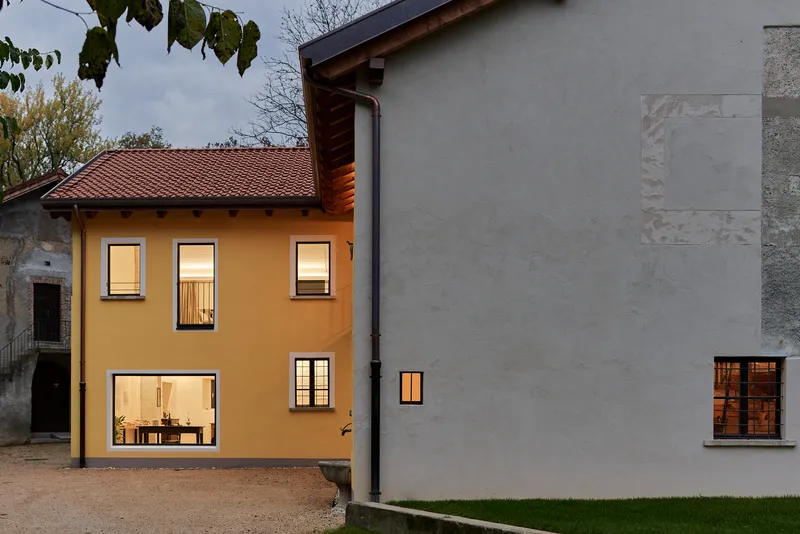
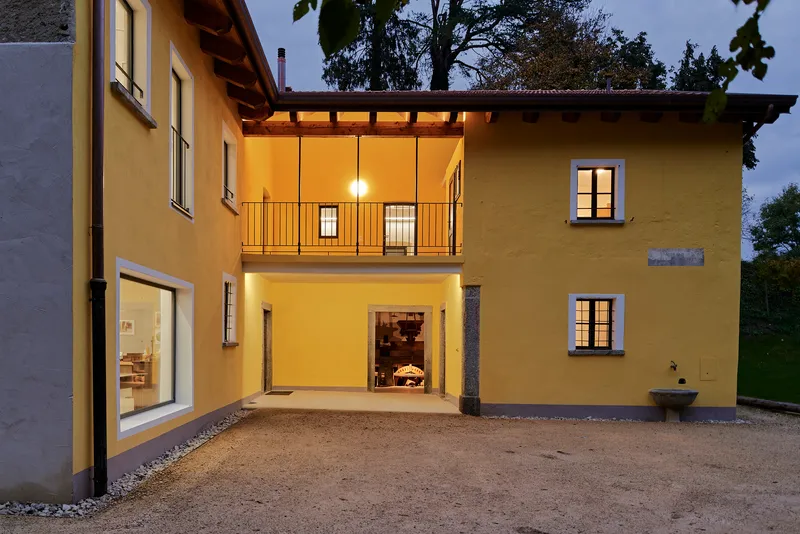
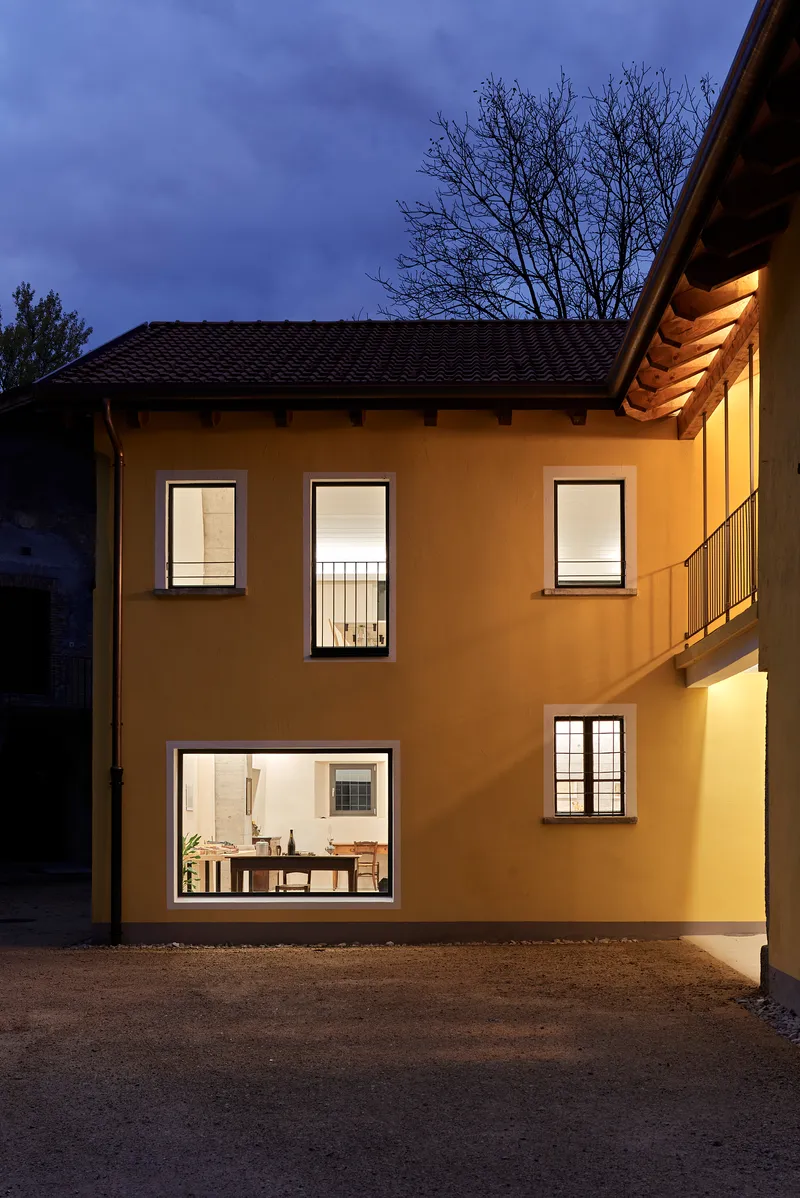
At twilight the courtyard comes alive. Warm light spills from new openings onto gravel surfaces and weathered stone walls, and the ochre-painted facade glows against the blue hour sky. These images reveal how carefully the fenestration has been calibrated: each illuminated opening acts as a lantern, drawing the eye through the compound and giving the public spaces an inviting presence after dark.
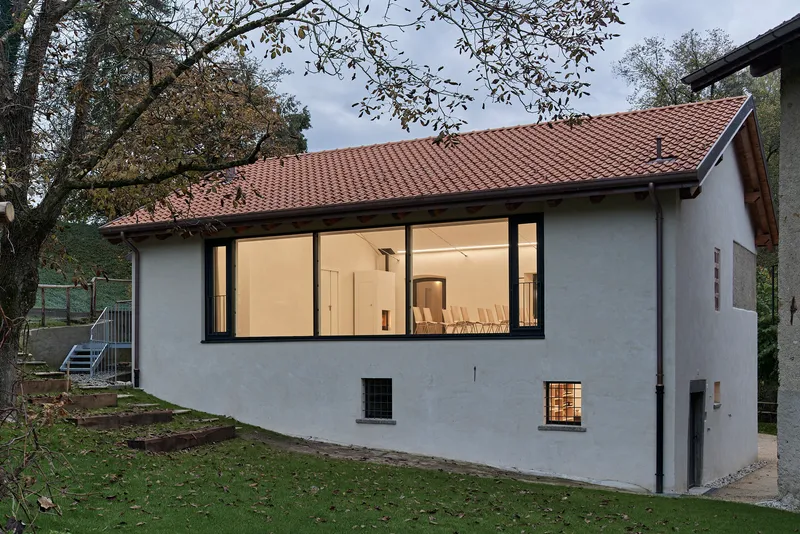
The grey-rendered addition, visible in the courtyard views, sits comfortably beside the older ochre volumes. It does not mimic them, nor does it compete with them. Its large glazed opening frames views back toward the historic structures, creating a conversation between the two eras that plays out most dramatically in the transitional light of evening.
Concrete Insertions and the New Threshold
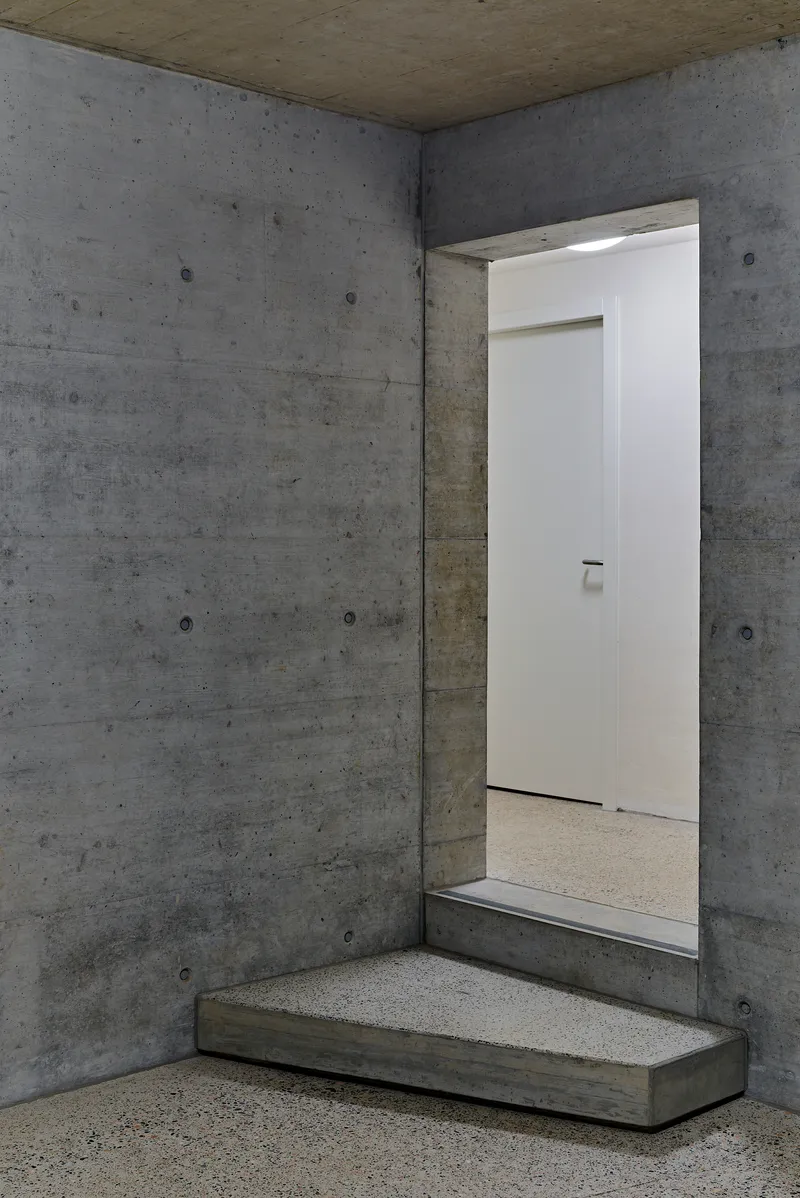
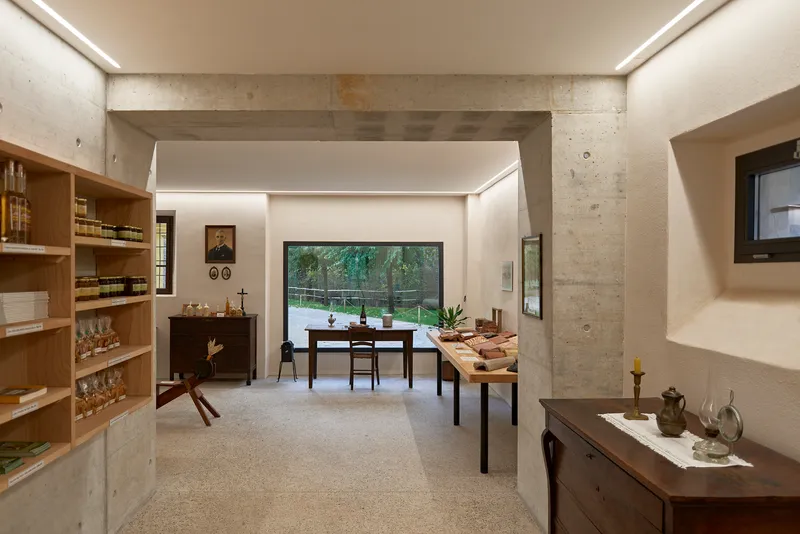
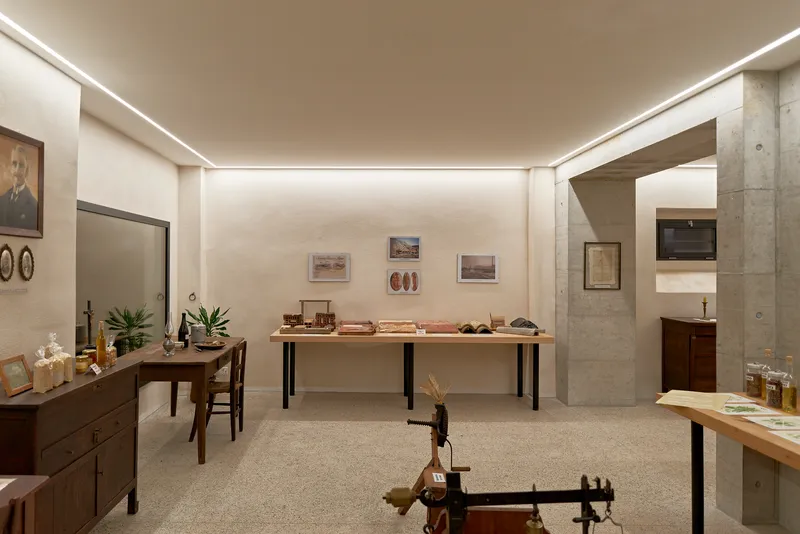
The board-formed concrete entryway is the project's clearest statement of intent. A stepped platform and a raw concrete portal frame announce the transition from outside to inside without softening the material vocabulary. Inside, concrete columns stand beside original masonry walls, their surfaces left deliberately unfinished. In the exhibition room, perimeter cove lighting washes over display tables beneath exposed concrete structure, turning infrastructure into atmosphere.
The view through one concrete portal to a room with timber shelving, a long dining table, and floor-to-ceiling glass overlooking the garden is perhaps the project's most compelling interior moment. It layers old timber, new concrete, domestic furniture, and landscape into a single sightline, compressing the full range of the renovation's ambitions into one frame.
The Multipurpose Hall and Its Fabric Ceiling
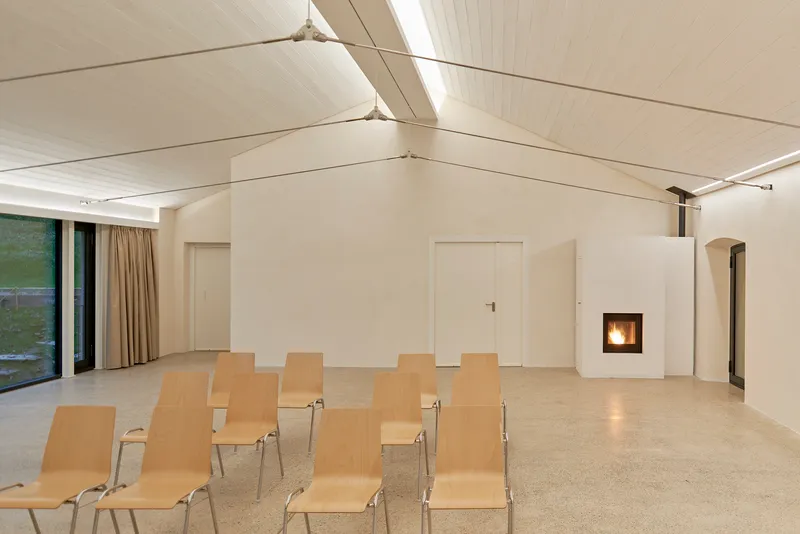
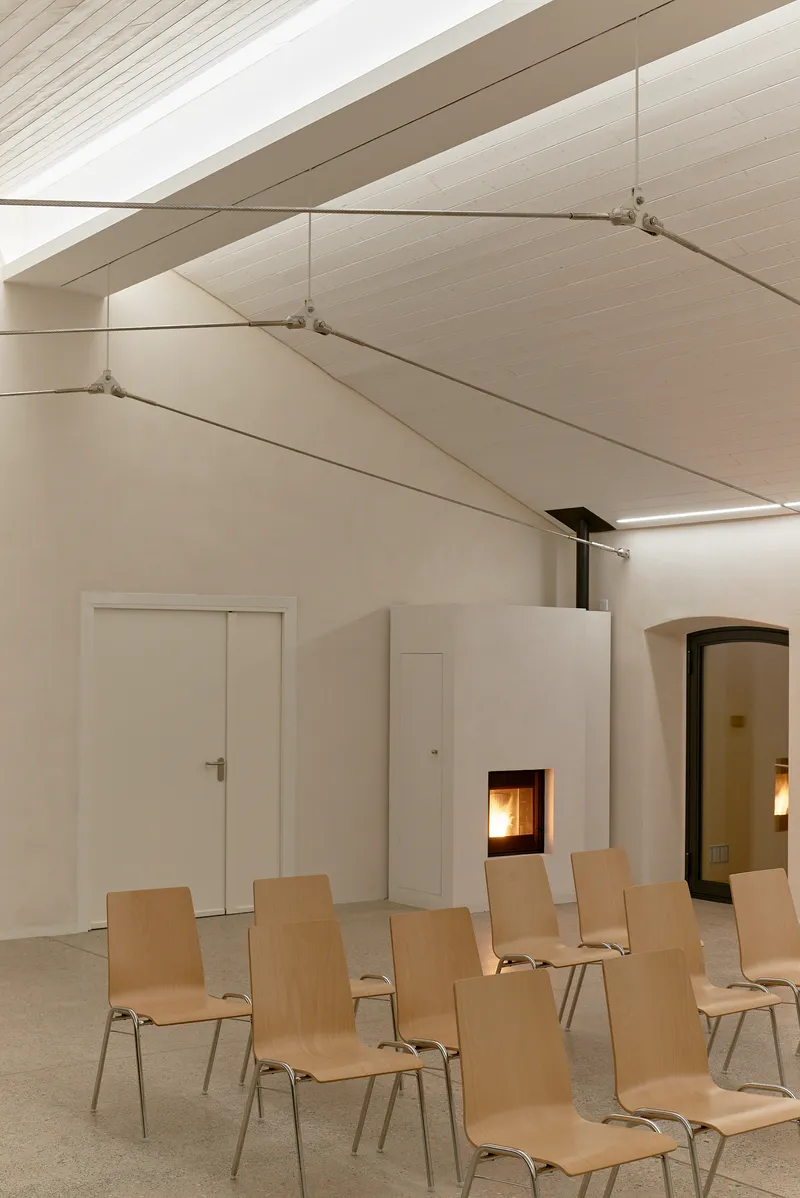

The 100-square-meter multipurpose room on the first floor is the project's most spatially inventive space. Tensioned fabric panels stretch beneath the existing gabled roof structure, suspended on cable supports to create a luminous, softly undulating ceiling plane. The fabric diffuses light and tames acoustics while leaving the original roof geometry legible above. A freestanding fireplace with an active flame anchors the room, giving it a domestic warmth that counterbalances the institutional rows of plywood chairs.
Floor-to-ceiling glazing along one wall opens the hall to the garden, pulling the park landscape into the room and ensuring that even during a lecture or conference, the building's relationship to its site remains visible. The terrazzo floor ties this space to the adjacent 50-square-meter classroom, creating continuity across the upper level.
The Mill Room Preserved
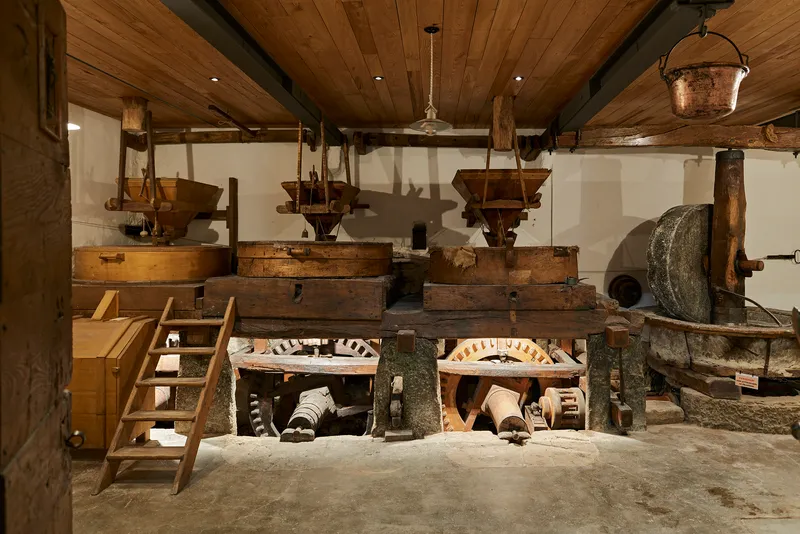

The decision to leave the mill room uninsulated and essentially untouched is the renovation's most principled move. Three cereal millstones, a vertical stone crusher, wooden hoppers, timber gears, and the heavy plank ceiling survive intact, forming a house-museum of the Galli family's milling operation. Two external water wheels, one wood and one metal, each 2.40 meters in diameter, have been restored alongside the interior machinery.
By resisting the temptation to climate-control this space, Sassi preserves its atmospheric continuity with the past. You feel the temperature shift when you step into the mill room. The air is different, the light is different, and the machinery is not behind glass. It is a curatorial choice as much as an architectural one, and it makes the contrast with the heated, glazed rooms elsewhere in the building all the more legible.
Domestic Interiors and Teaching Spaces
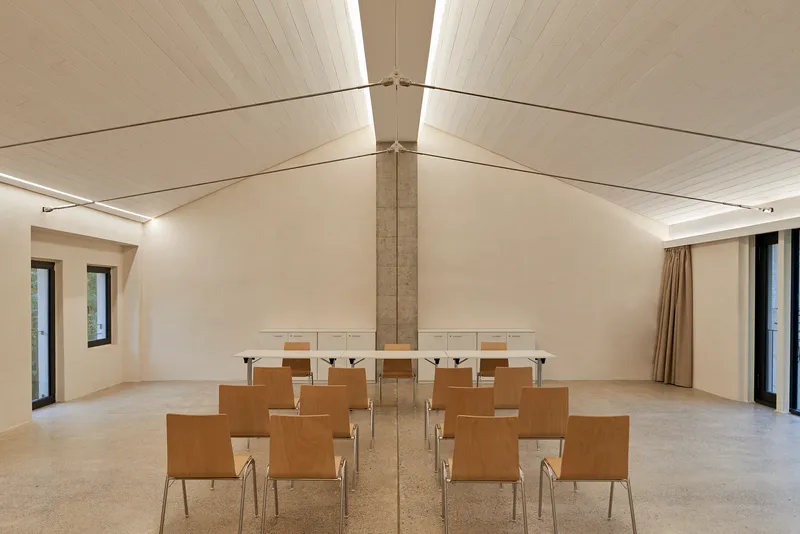
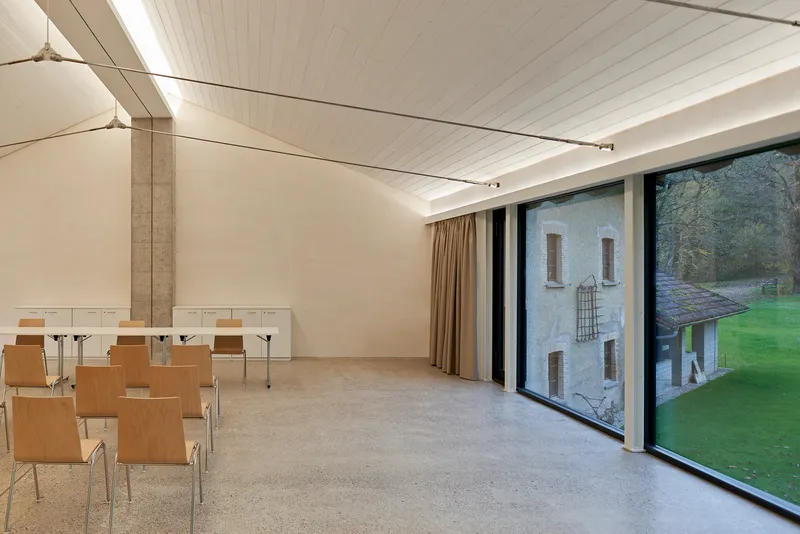
The 50-square-meter classroom occupies the ancient truss room on the first floor, where a vaulted timber ceiling, a central concrete column, and terrazzo flooring establish a calm, precise atmosphere for teaching. Floor-to-ceiling glazing in the adjacent meeting room frames the hillside and the weathered stone building beyond, turning the landscape into a permanent backdrop for discussions and seminars.
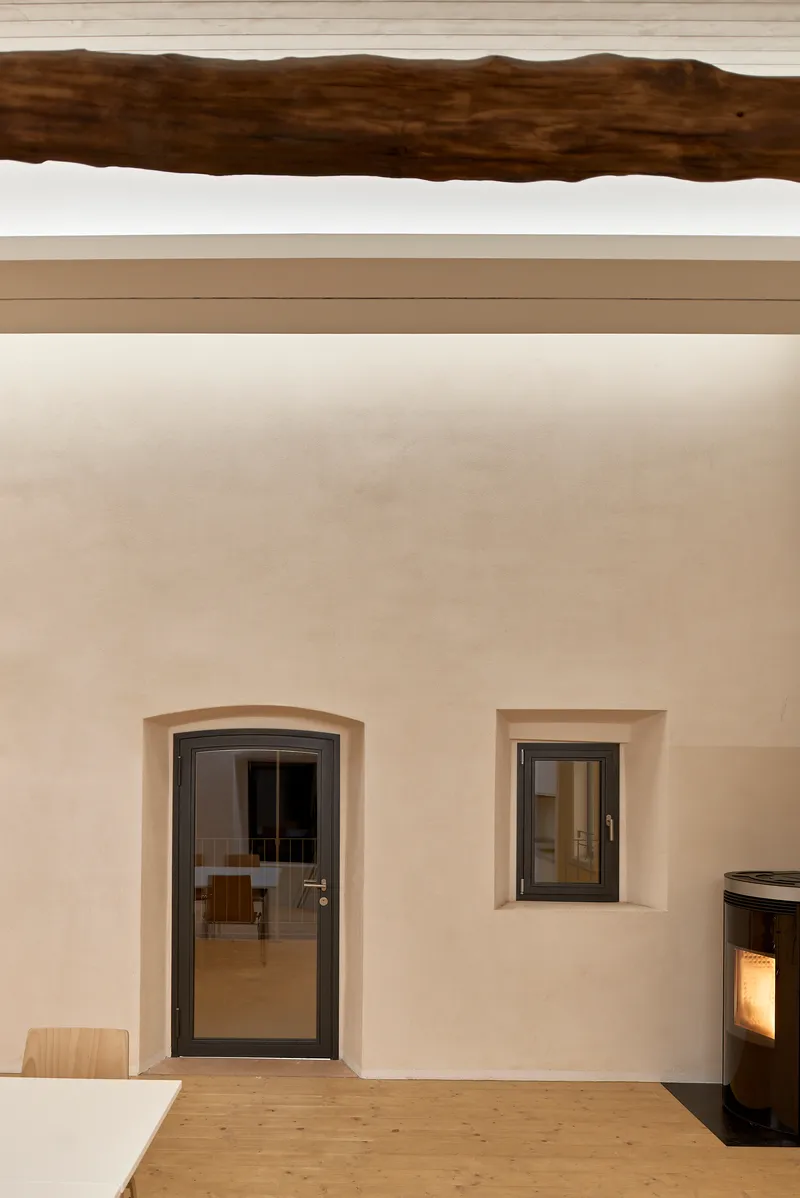
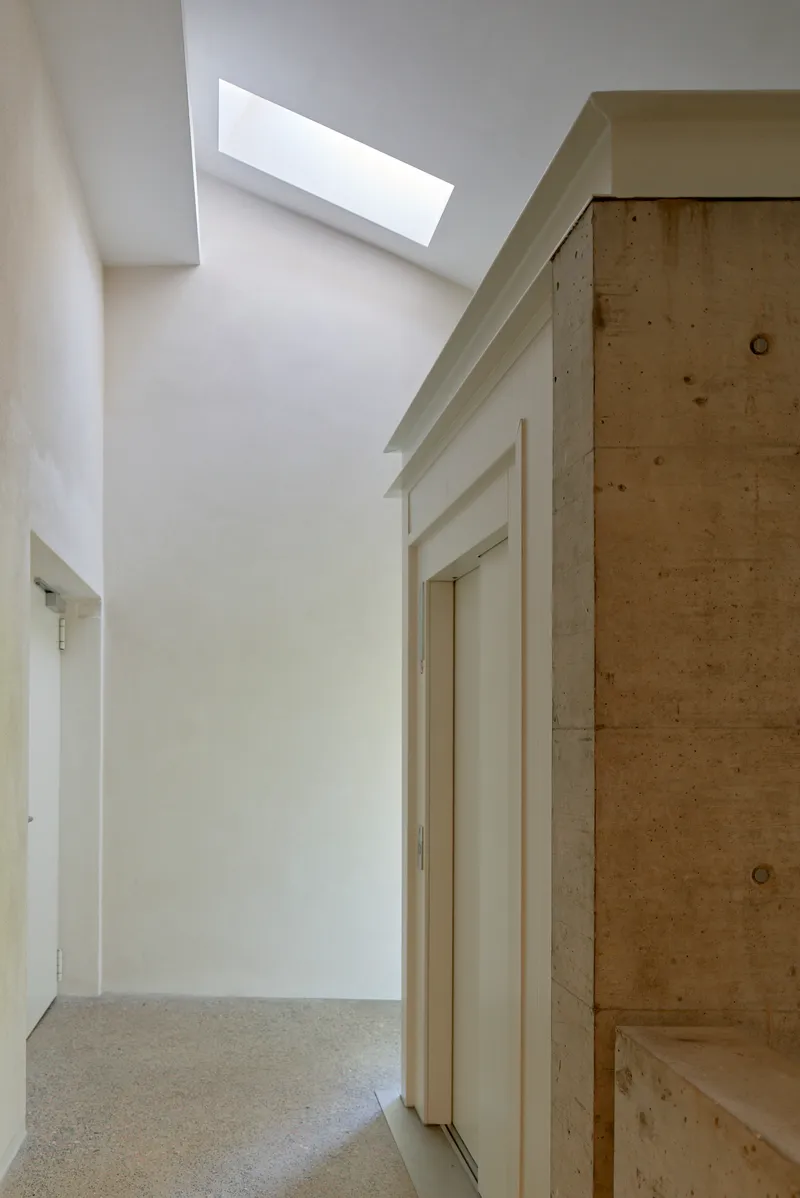

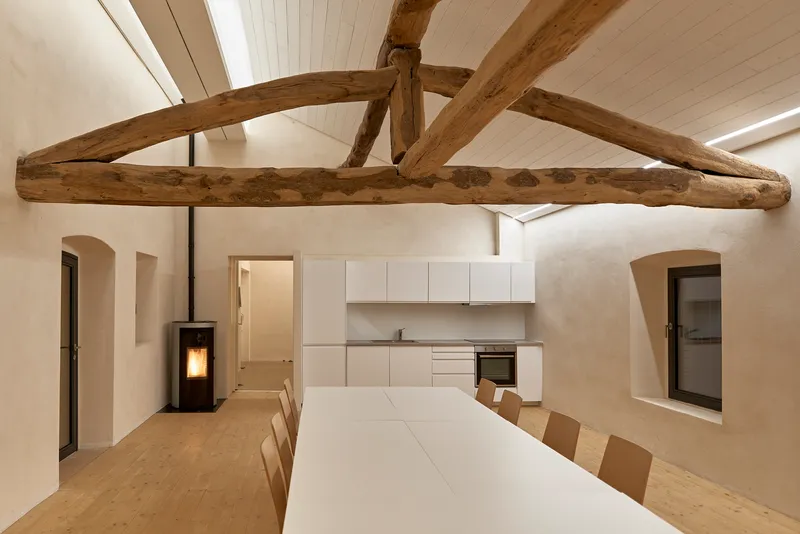
Elsewhere, the program weaves educational and domestic functions together. An arched doorway and a pellet stove evoke the miller's living quarters. A hallway lined with plywood built-in storage receives daylight through a rectangular skylight. A dining area sits beneath an exposed timber roof truss with kitchen cabinetry along the rear wall. These moments feel inhabited rather than exhibited, a quality that keeps the building from sliding into heritage-object territory.
Plans and Drawings
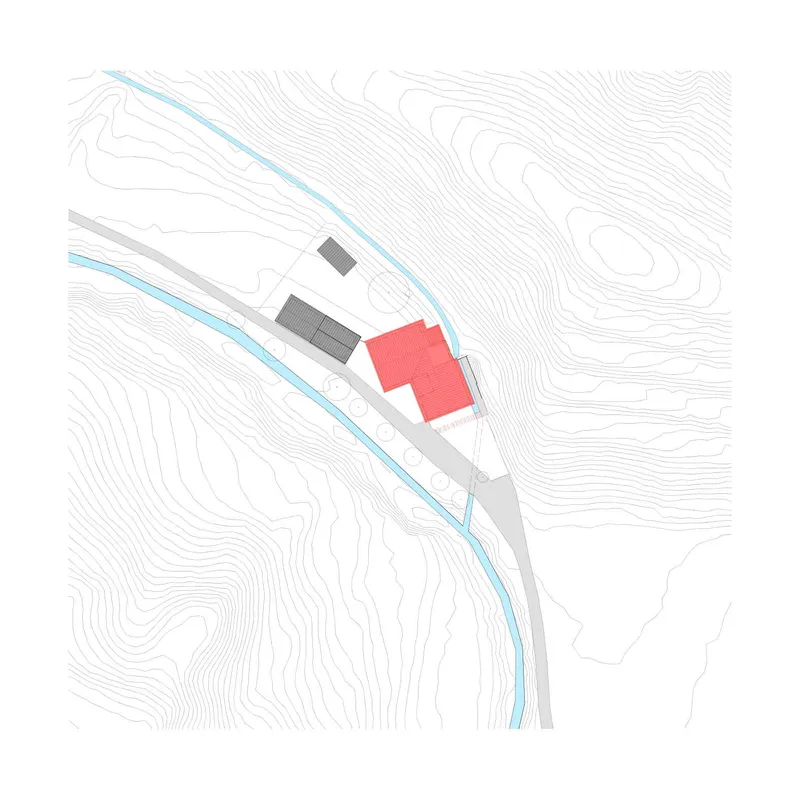
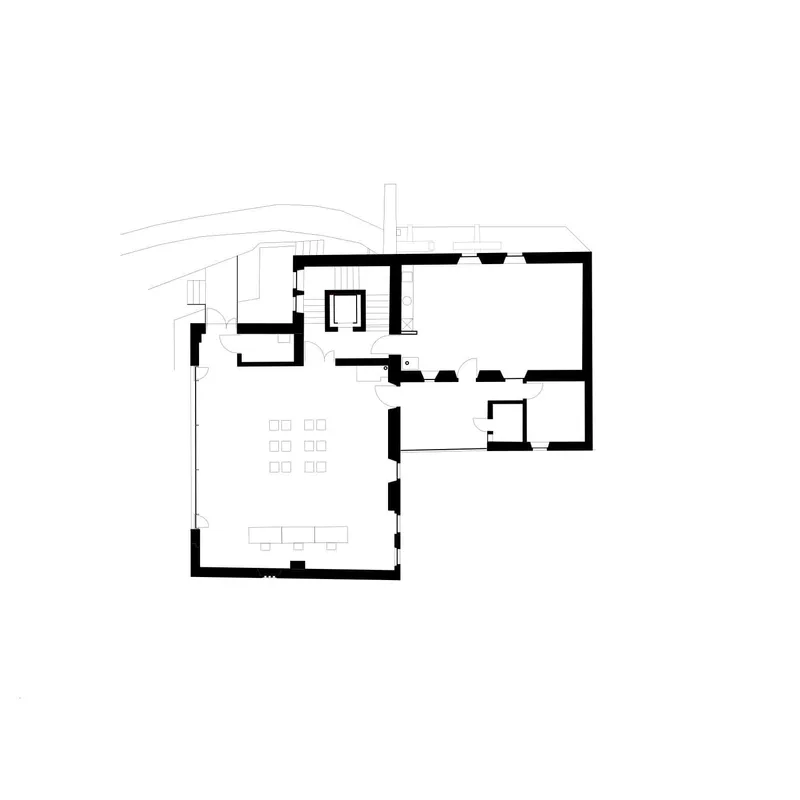
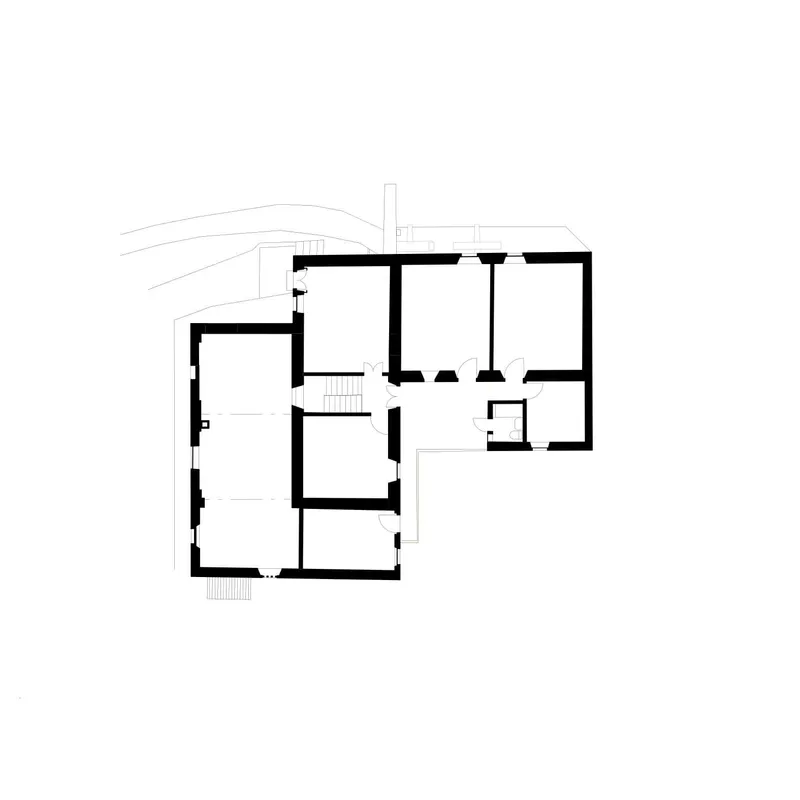
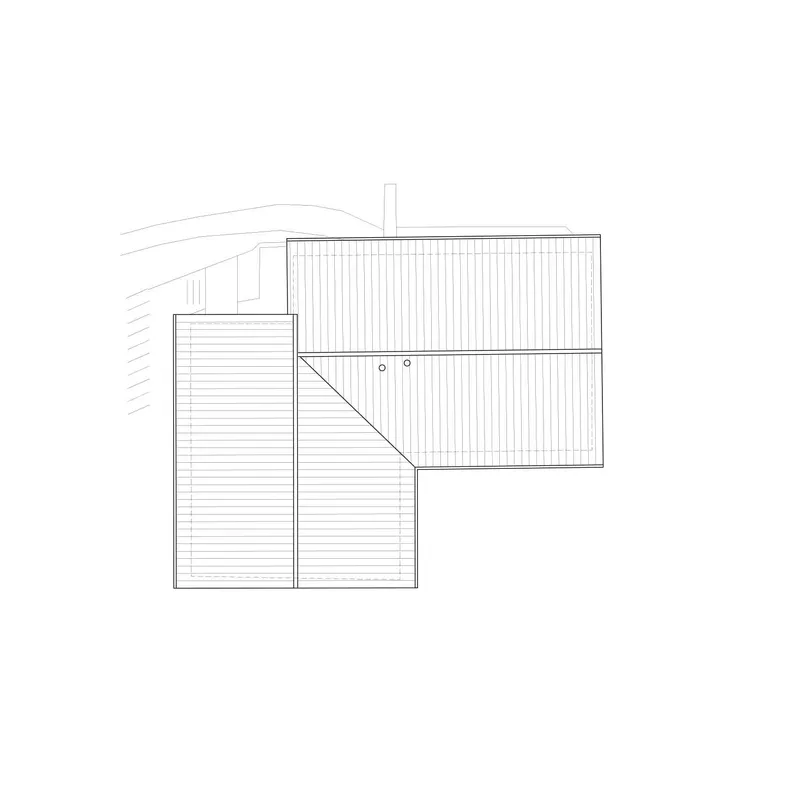
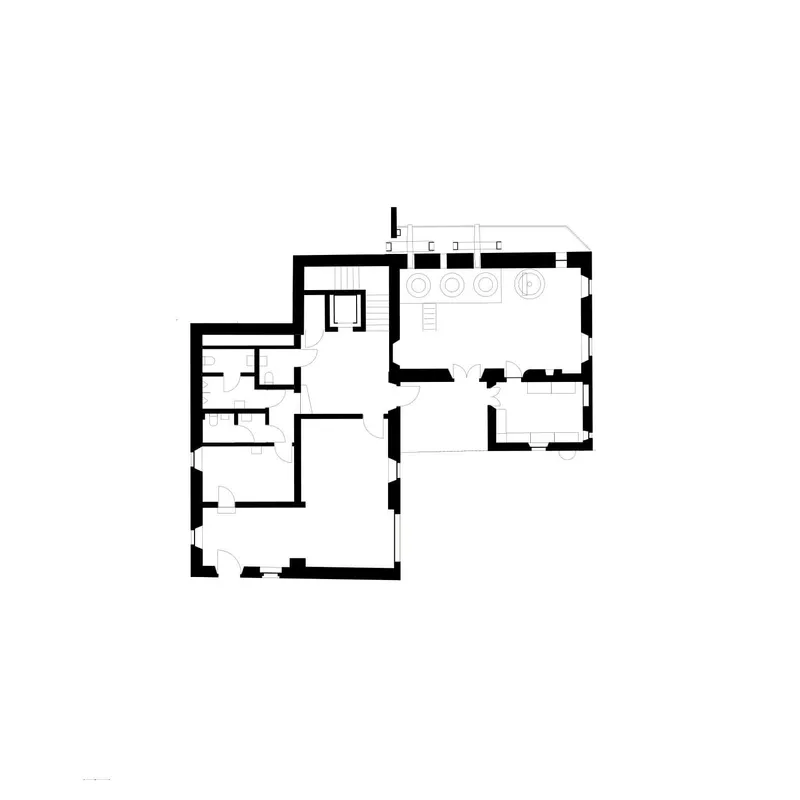

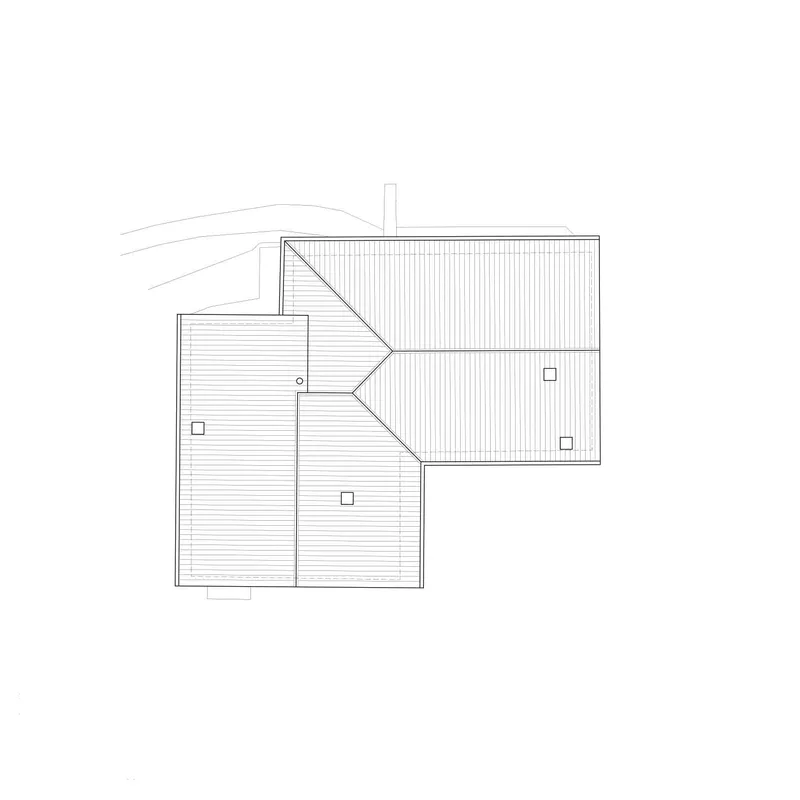
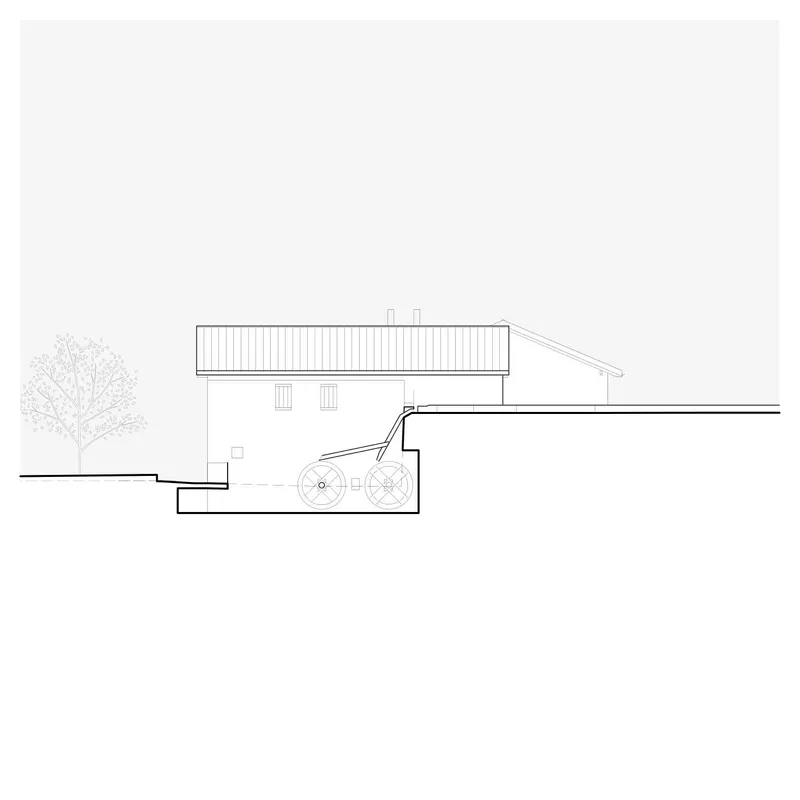
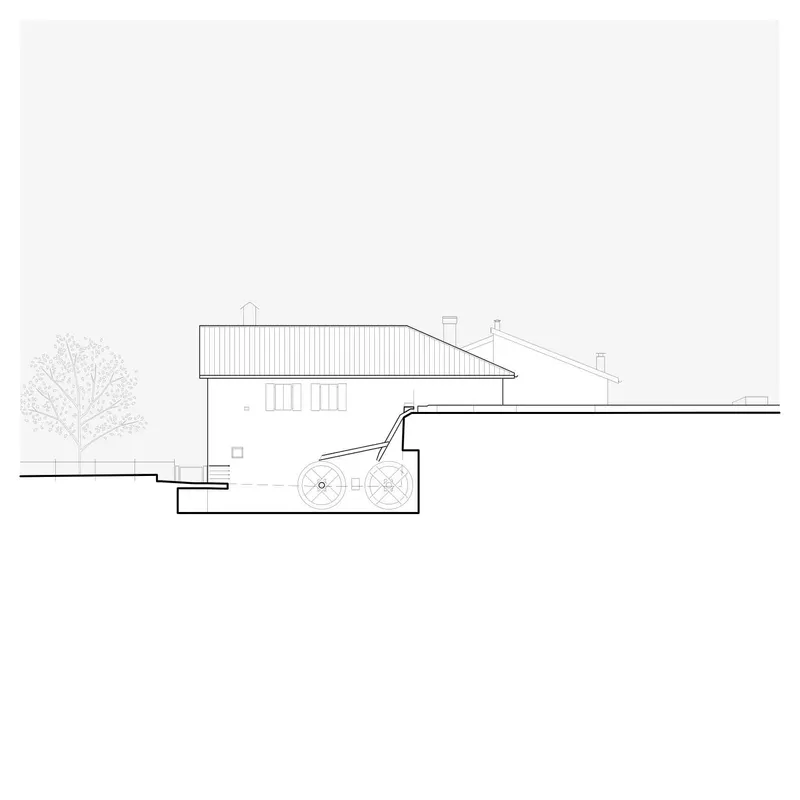


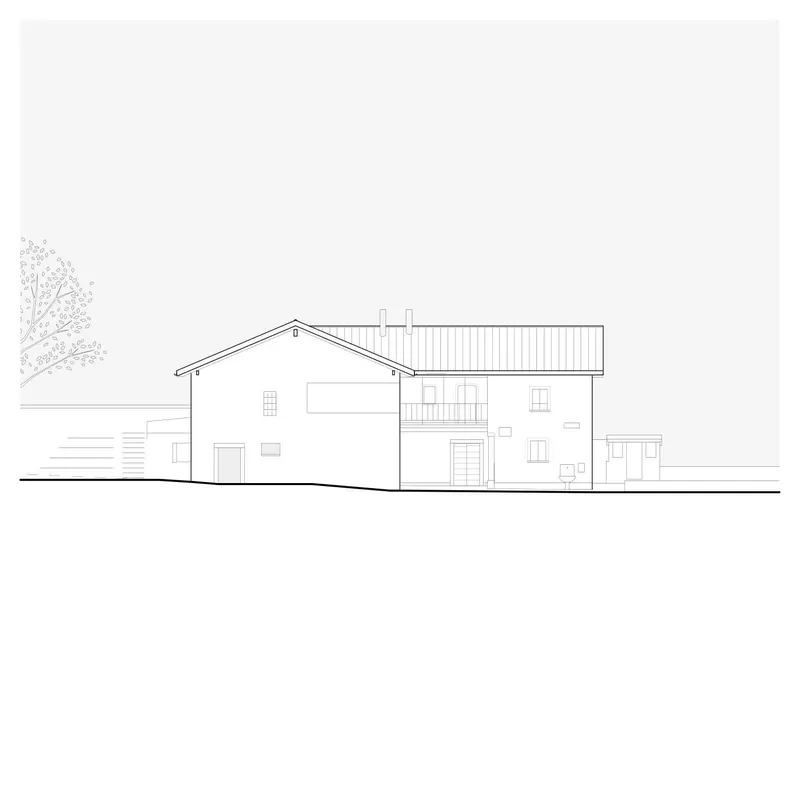


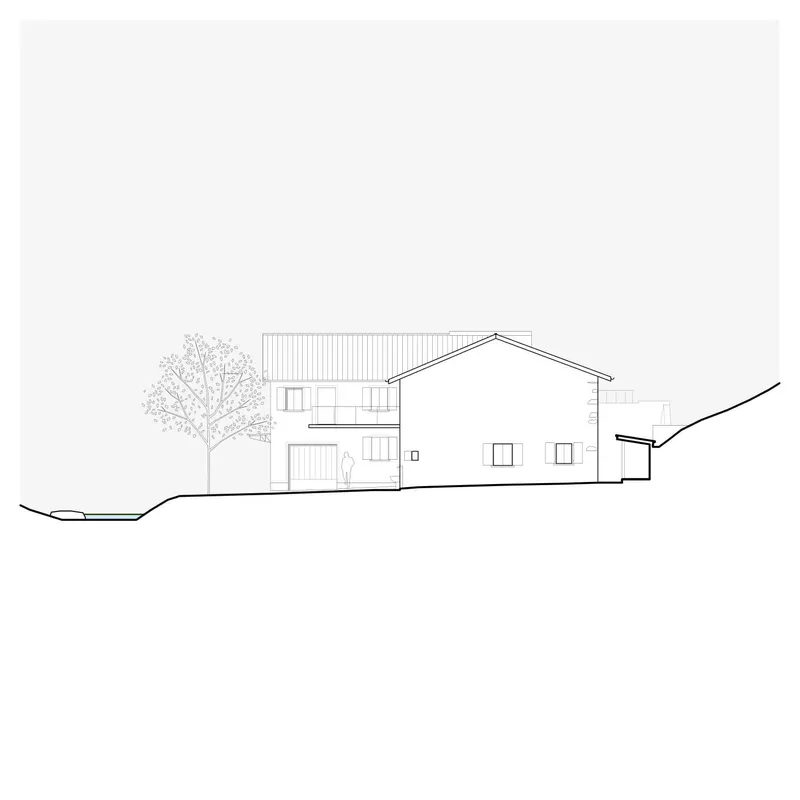
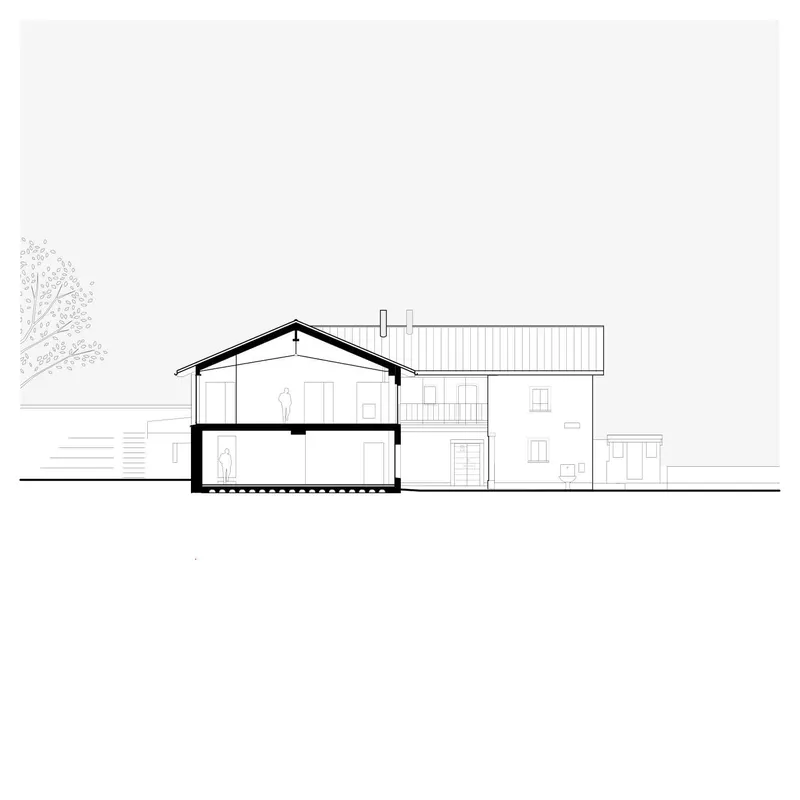

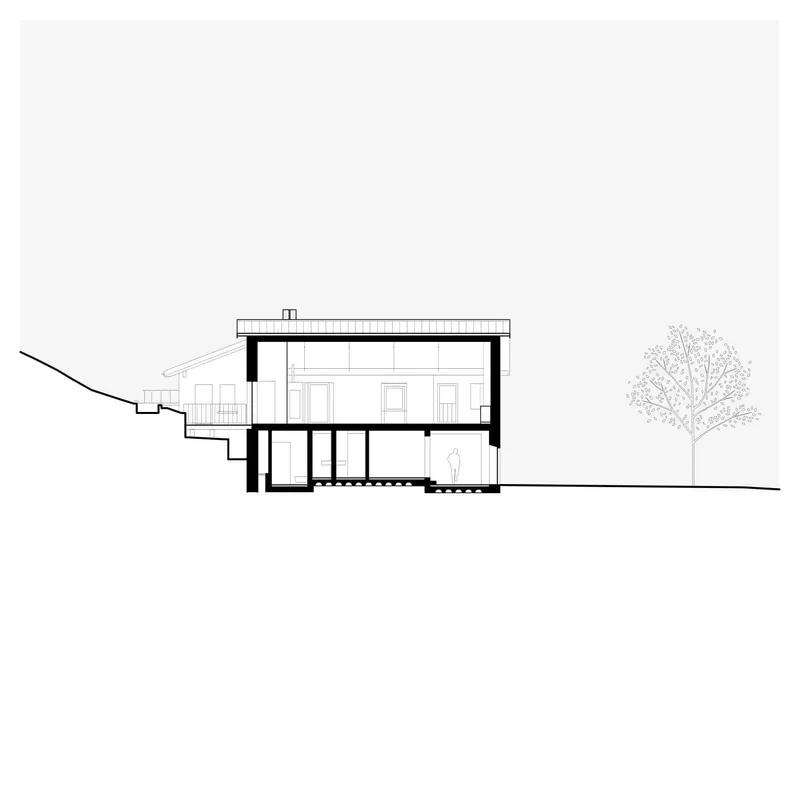
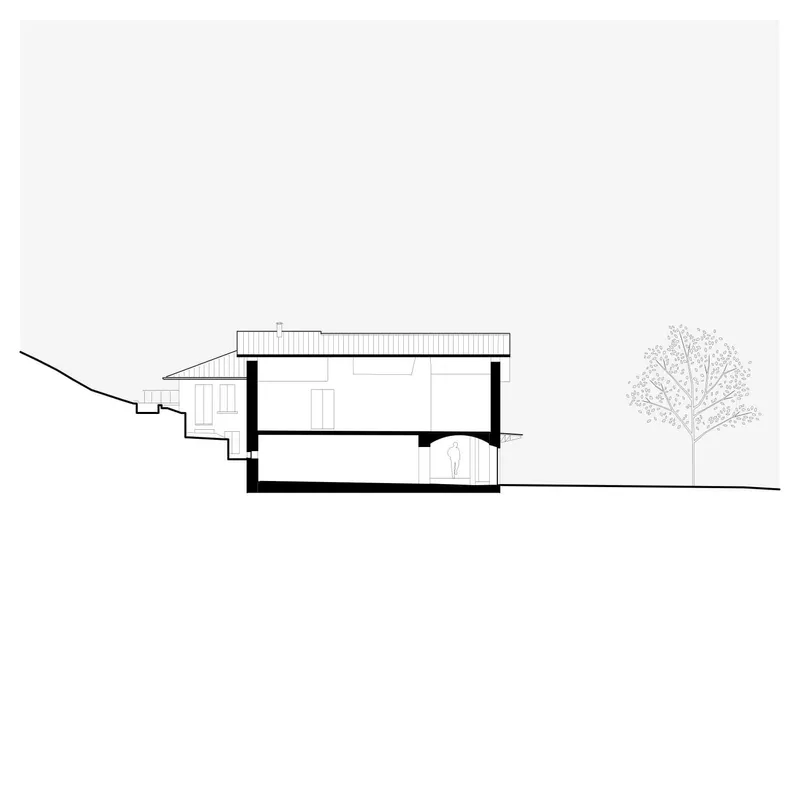
The site plan makes the hydraulic logic of the compound immediately clear: the buildings align along the curved waterway that once fed the mill's canal. Ground and upper floor plans reveal the L-shaped layout created by the intersection of two volumes at right angles, with the new elevator-stairway block and toilet rooms inserted as precise surgical additions. The sections are the most revealing drawings, showing how the program stacks across split levels, how the fabric ceiling sits below the original roof structure, and how mechanical plant is tucked below grade to keep the historic envelope undisturbed.
The elevations document the full range of facade conditions: corrugated roof panels, garage door openings, balconies, and the varied fenestration patterns that distinguish each face of the compound. Reading them together, you understand that the building is not a single coherent object but a collection of accretions, each elevation a record of a different moment in the mill's long constructive history.
Why This Project Matters
Adaptive reuse projects in rural settings face a particular tension: the building's value lies in its specificity, its connection to a particular landscape and a particular economy, yet the new program usually has nothing to do with either. Sassi resolves this by letting the mill remain a mill in its most important room while introducing contemporary functions in clearly differentiated spaces. The exposed concrete, the fabric ceilings, the plywood furniture: these are not nostalgic gestures. They belong to the present, and they make no attempt to disguise that fact.
What elevates the Daniello Mill above a competent renovation is its willingness to leave things alone. The uninsulated mill room, the scarred plaster, the patched facades: these are active design decisions, not oversights. They create an architecture of restraint in which the most powerful move is often the decision not to intervene. For a building that has been grinding grain and weathering storms since 1802, that is exactly the right kind of respect.
Daniello Mill Renovation by Enrico Sassi Architetto. Coldrerio, Switzerland. Completed 2022. Photography by Marcelo Villada Ortiz.
About the Studio
Share Your Own Work on uni.xyz
If projects like this are the kind of work you want to make, uni.xyz is a place to publish your own, find collaborators, and enter design competitions.


Popular Articles
Popular articles from the community

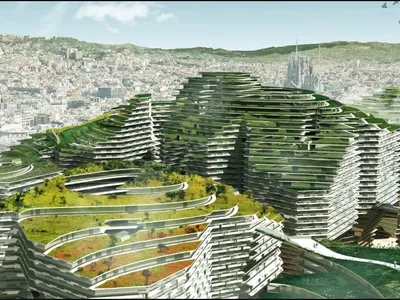
Manzana Morphosis: Stretching Barcelona's Grid into a Living Landscape for 2050
A radical reworking of the Eixample manzana turns density into a tool for generous public space, vertical ecology, and environmental performance.

Aquadapt: An Underwater Habitat That Rewrites Its Rooms by the Hour
Curved modules ring the seabed while one shell shifts from breakfast room to cinema, farm and football pitch as residents' needs change.


David Ortega Stacks a Two-Story Mexico City Penthouse Around a Steel Stair and a Pergola-Shaded Roof Terrace
In Colonia Roma, a 300 m² penthouse uses oak joinery, a planted steel stair and a slatted roof pergola to make a new-build apartment feel like a house.

graciastudio Turns a Viewless Tijuana Lot Inward Around a Courtyard of Concrete, Timber and Trees
In Tijuana, Jorge Gracia's GA2 House stacks a timber-clad private floor over exposed concrete and replaces a missing view with a planted interior patio.

Similar Reads
You might also enjoy these articles

LAVA Architecten Gives Vocational Education a Sawtooth-Roofed Face on a Mechelen School Campus
In Mechelen, Belgium, a 2,053 m² STEM school on a 6×6 m grid turns workshops and classrooms into rooms that can be rearranged as teaching changes.

KEMA Studio Turns a Derelict Marvila Attic into a 60 m² Lighthouse Apartment Above Lisbon
In Lisbon's Marvila district, a rebuilt roof, four skylights and two plywood volumes turn an unlivable attic into a bright home facing the Tagus.

Pixel Gardens: One Repeated Module Stacked Into a Terraced Social Housing Tower for Famagusta
Salem Bader's shortlisted housing tower builds a vertical neighbourhood from one repeated module, offsetting units to carve terraces, light and air.

Bao Huynh Watercolor Atelier: A Serene Art Retreat in Hội An
Bao Huynh Watercolor Atelier in Hội An blends multifunctional art spaces, sustainable design, local materials, and family-friendly living in a serene environment.

Explore Renovation Competitions
Discover active competitions in this discipline

Challenge to design luxury tourism on rails

VR headsets Storefront design competition

Designing a staircase for a client
Comments (0)
Please login or sign up to add comments
No comments yet. Be the first to comment!