

Etapa Vila Mascote School by Biselli Katchborian Arquitetos: A Contemporary Educational Retrofit in São Paulo
A vibrant retrofit by Biselli Katchborian transforms Etapa School into a light-filled, multi-level educational campus in São Paulo.


In the heart of São Paulo, Brazil, the Etapa Vila Mascote School has been transformed through a comprehensive retrofit and expansion by renowned architecture firm Biselli Katchborian Arquitetos, led by architects Artur Katchborian and Mario Biselli. Originally designed in 1984 by Brazilian architect Paulo Bastos, the building has been reimagined to meet the evolving demands of modern education while respecting its architectural legacy.


Educational Architecture Reimagined
The architectural renovation of the 5318 m² campus demonstrates a careful balance between preserving structural integrity and implementing contemporary upgrades. The intervention addresses both spatial and programmatic challenges, taking full advantage of a 15-meter level difference between Palestina Street and Mascote Avenue to design dual-access points that enhance circulation and institutional clarity.
The project comprises two primary volumes:
- A larger academic block housing classrooms, science labs, and learning spaces for students from kindergarten to high school
- A smaller, restructured administrative block that gained two additional floors to meet the program’s functional needs
Maximizing Light, Space, and Functionality
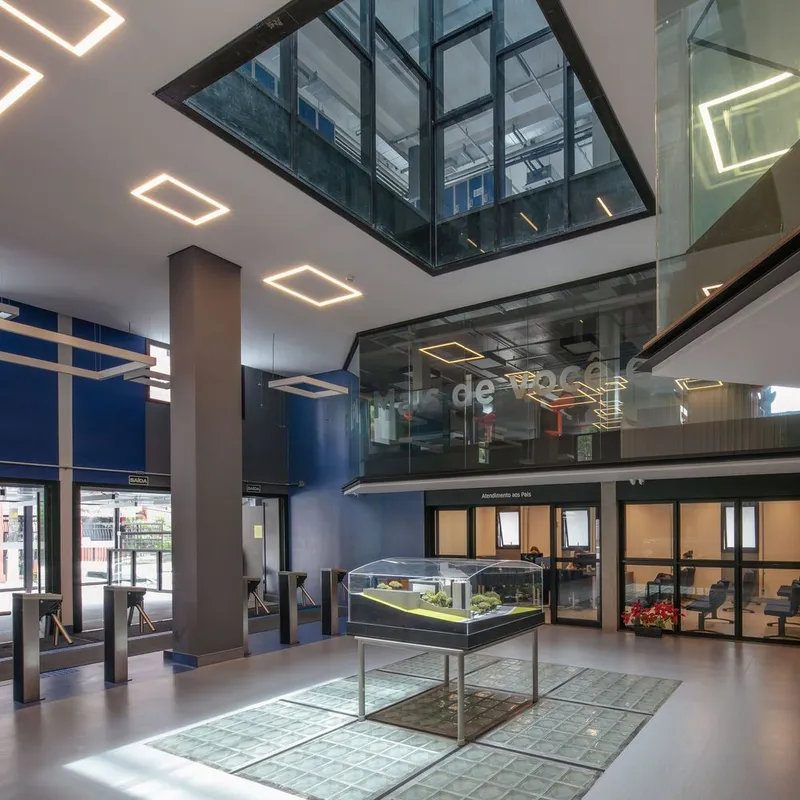
A key move in the design was the expansion of the central void in the administrative block, configured around a square floor plan. This atrium floods the interiors with natural light, enhancing visual connectivity across floors and reinforcing the architectural concept of openness and transparency in education. According to architect Artur Katchborian, “We pushed the site usage to its legal limits, integrating multiple educational stages under one unified, light-filled structure.”


Integrated Sports and Recreational Areas
Alongside an existing indoor sports court, the architects introduced two new rooftop courts, made accessible through the revitalized building circulation. These new open-air recreational areas provide students with additional space for physical education and informal activities while leveraging unused roof space — a sustainable design strategy in dense urban environments.

Upgrading Infrastructure for Accessibility and Safety
Compliant with updated safety and accessibility regulations, the project includes:
- Installation of elevators
- Renovated emergency stairwells
- Accessible circulation paths across levels
These interventions ensure that the school serves a wider demographic and meets contemporary standards for educational environments.

Spatial Organization Anchored by an Interior Patio
One of the original building’s key spatial assets — an indoor central patio — was preserved and repurposed as a vertical and programmatic organizer. The ground level, accessible via Mascote Avenue, accommodates Early Childhood Education, while Elementary and High School classrooms are positioned above, with direct access from Palestina Street. This internal layout not only streamlines movement but also fosters age-appropriate zones within the campus.

Cohesive Identity Through Color and Visual Design
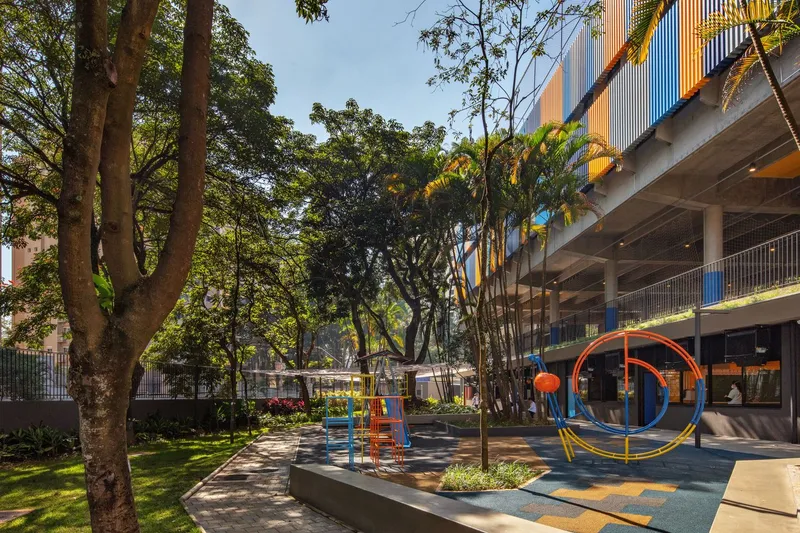
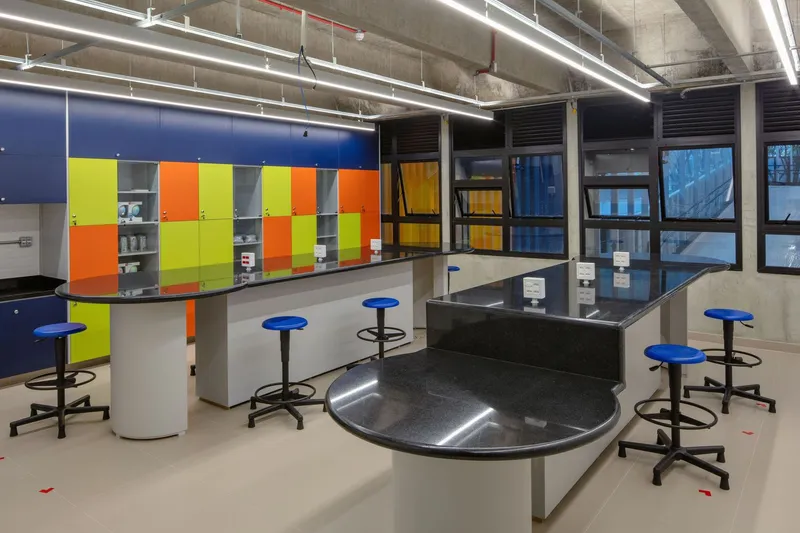
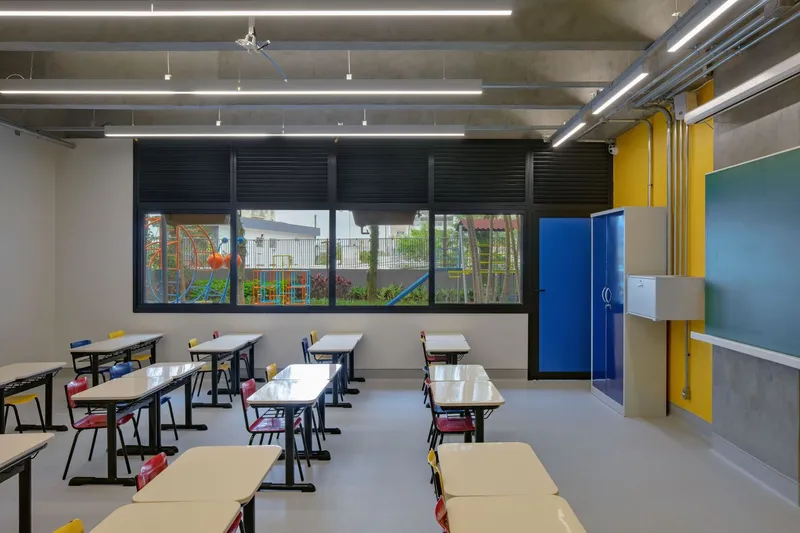
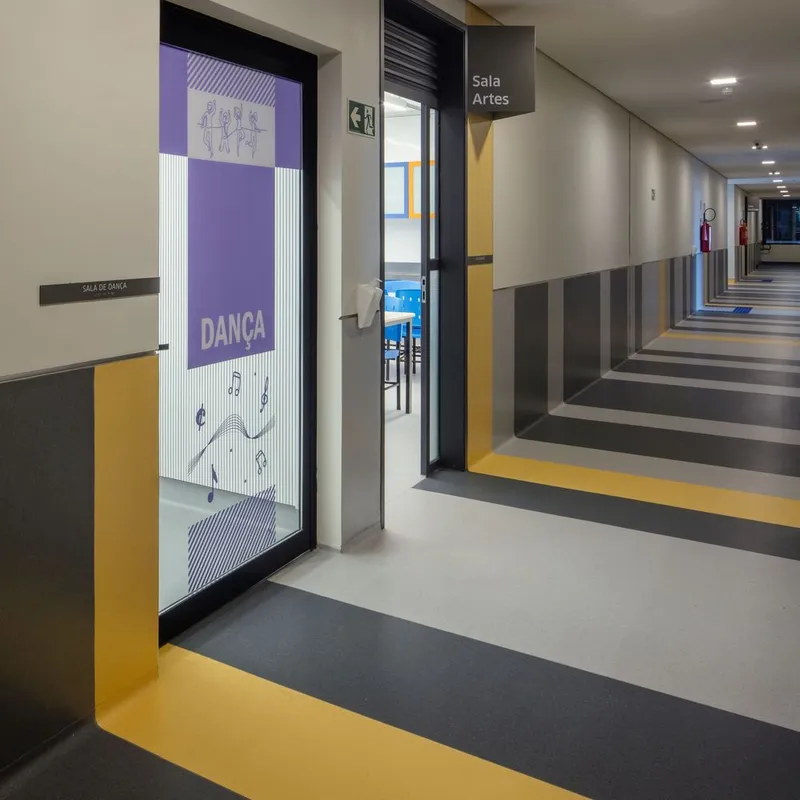
The chromatic strategy plays a crucial role in the school’s visual coherence. A consistent color palette stretches from the exterior façades into the interiors and wayfinding systems, creating a unified visual identity for the institution. This comprehensive design language helps reinforce the educational brand and enhances user orientation across the expanded complex.


A Landmark in Contemporary Brazilian Educational Architecture
The Etapa Vila Mascote School retrofit by Biselli Katchborian Arquitetos is more than just a building upgrade; it's a paradigm for contemporary educational architecture in Brazil. Through thoughtful adaptive reuse, innovative spatial planning, and strategic interventions in light, accessibility, and circulation, the project offers a model for future school renovations across Latin America.


All Photographs are works of Nelson Kon



Popular Articles
Popular articles from the community


The Musturak Paradise: Senior Living Architecture for a Connected Future in Temara, Morocco
The Musturak Paradise reimagines senior living architecture in Temara via private homes, social spaces, culture, community, and shared care.

The Earth Pod: 3D Printed Homes for Resilient Refugee Communities
The Earth Pod reimagines refugee housing through 3D printed homes made from clay, combining resilience, self-sufficiency, and rapid shelter.

Conexión: Biophilic Design Reimagines High-Rise Living in Hong Kong
Conexión reimagines high-rise living in Hong Kong through biophilic design, green facades, shared spaces, daylight, water and nature within.

AL-JANNAH: Sustainable Architecture and Permaculture for Afghan Widows
AL-JANNAH uses sustainable architecture and permaculture to create resilient oasis of housing, learning, work and renewal for Afghan widows.
Similar Reads
You might also enjoy these articles


Hodi-Mandai Geram
Project Function: Preservation and revitalization of the Intangible heritage and socio-spatial identity of the Hodi by Housing, Cultural Memory Center, Sacred Grove, landscape, local tourism economy


Olio Towers: A Mid-Rise for Performers That Fuses Housing, Rehearsal, and Stage
Located blocks from Houston's Theater District, this modular tower stacks living units around a central performance atrium.

Oasis: Modular Green Housing Carved into Dhaka's Urban Fabric
A shortlisted Plugin Housing entry reclaims unauthorized settlements in Dhaka with stepped concrete volumes, green roofs, and ventilation-driven design.

Black Hole: A Floating Megastructure for the Post-Physical Era
Emiliano Mazzarotto envisions a spherical, self-scaling arena where e-sports, digital hotels, and holographic stadiums replace traditional public space.


Explore Educational Building Competitions
Discover active competitions in this discipline



Challenge to design public laboratory


Challenge to reimagine the Iron Throne


Photograph architecture without architects


Illustrate the lost glory of Angkor Wat - Render Challenge
Comments (0)
Please login or sign up to add comments
No comments yet. Be the first to comment!