

Exploring the Boundless Winery: A Seamless Integration of Architecture and Landscape
A comprehensive exploration of innovative winery architecture blending nature and modern design for seamless visitor experiences.


In the heart of an expansive vineyard, where nature and architecture seamlessly blend, lies the award-winning project POUR by Action Liu in Pour Competition. This modern winery stands as a testament to the delicate balance between the natural and man-made, the ancient and contemporary. It is a space where production meets hospitality, creating a unique sensory experience for visitors.
Balancing Nature and Architecture
A modern winery design requires the art of balancing the conflict between nature and man-made structures, ancient traditions and contemporary trends, production efficiency, and hospitality excellence. Especially for a building situated in the midst of a vast vineyard, merging these elements is crucial to create a context where the influence of the winery starts to take effect.
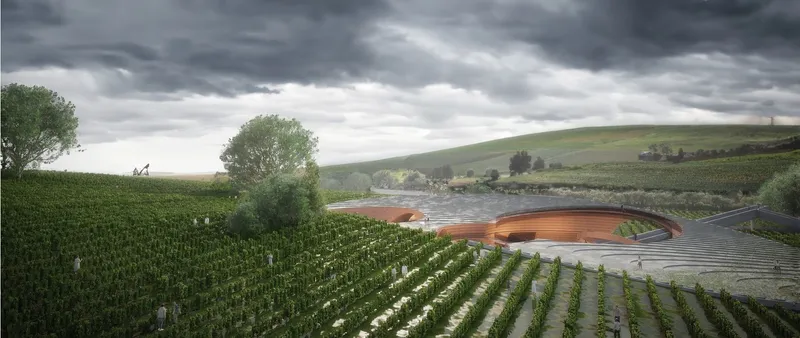
Considering the relatively smaller area of the site compared to its surrounding vineyard landscape, respecting the existing context makes it easier for the winery to blur its boundaries with nature. Instead of making significant landscape changes, the plan incorporates mostly vineyard areas, creating a harmonious blend with the environment.
Design Concept: The Hidden Cave
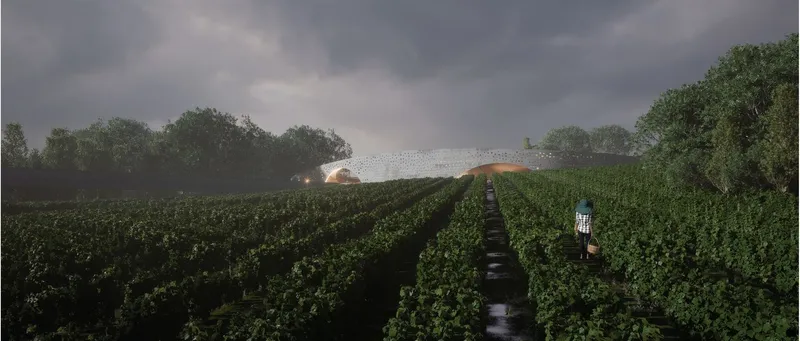
The concept of the "hidden cave" plays a significant role in the design of this innovative winery. The idea is to provide an immersive experience that begins as soon as visitors arrive. The winery, half sprouting from the highland and half buried on a higher level, creates an impression of an outcrop protruding above the vineyard, manifesting its deep-rooted relationship with the environment. Constructed with pure concrete on the exterior, the building's topographical characteristics suggest further internal exploration.
Visitor Experience: Journey from Above and Beneath
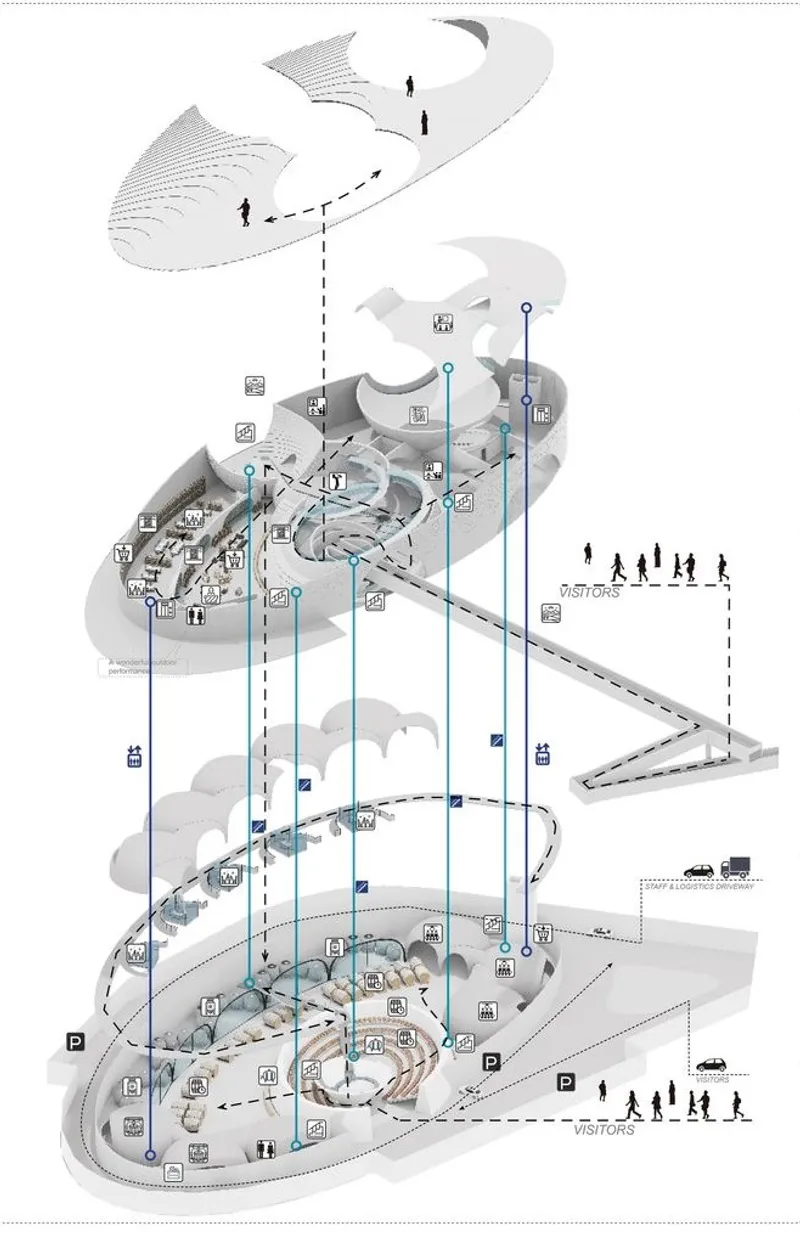
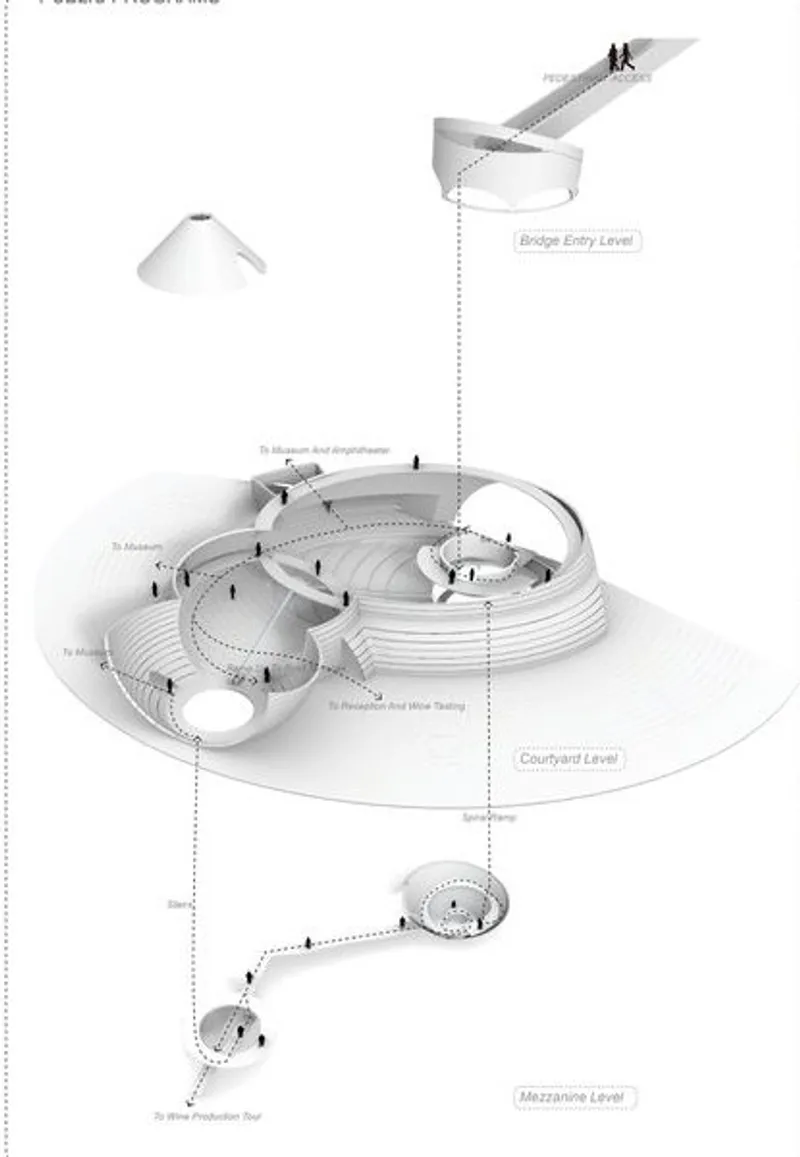
From the main road, two primary pathways guide visitors through their journey: one from above and one from beneath.
Path from Above
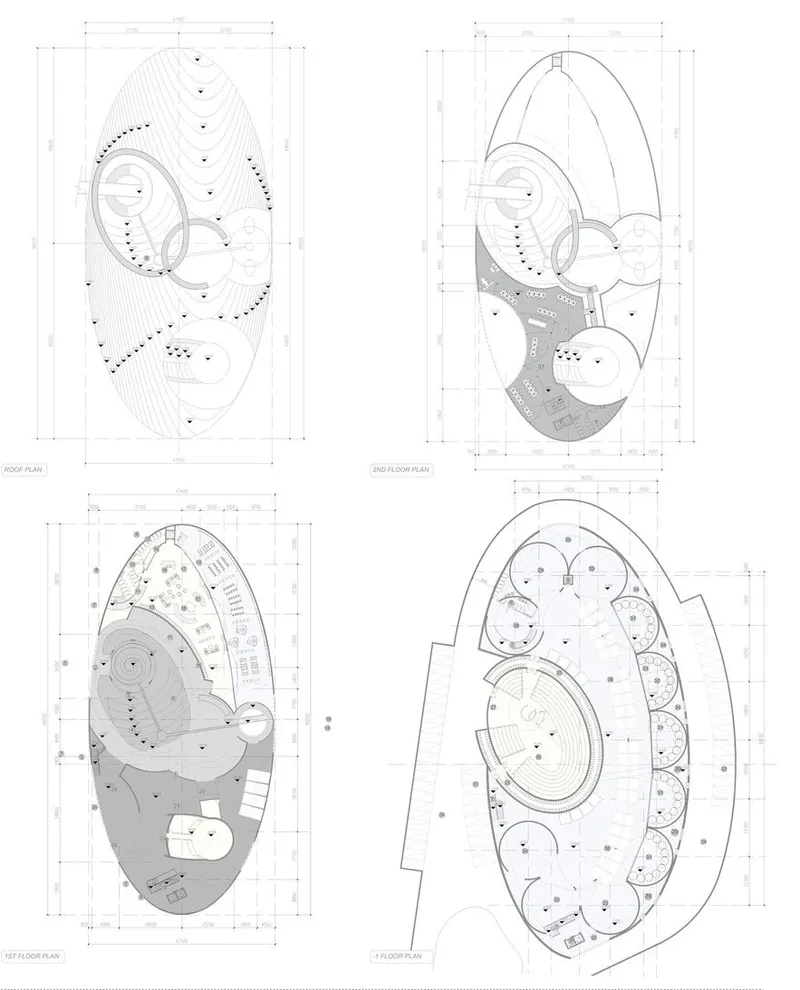
Visitors approaching from above can drop off at the main entry and ramp up to a sky bridge connecting them to the winery. As they pass over the vineyard, they are welcomed by a giant archway leading to a semi-sunken, valley-like courtyard. Clad mainly in red bricks, this courtyard plays a crucial role in organizing the winery. It splits the building into two parts: the sales and reception area on the north, and the museum and administration area on the south.
The courtyard also provides access to the underground wine production line, connecting iconic structures with a linear water channel. This composition reminds visitors of an ancient wine press within a mountain valley, marking the beginning of their journey to discover the origins of wine. The courtyard establishes connectivity to the terraced roof through a spiral ramp, offering visitors a 360-degree view of the surrounding landscape.
Path from Beneath
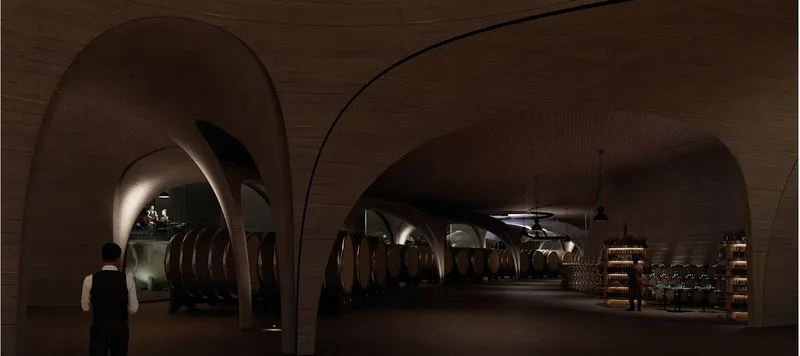
Driving past the tunnel under the vineyard, visitors arrive at the underground level where they park their cars and enter the wine-display lobby. Terraces of barrels and bottles welcome guests in a ceremonial manner. The lobby marks the beginning of their exploration, guiding them through a spiral ramp within a funnel space to reach the courtyard on the ground.
Alternatively, visitors can bifurcate in the middle to a mezzanine and visit the wine production rooms, which finally lead them back to either the reception or the museum. The underground floor houses the main production line of winemaking, with dome units arranged side by side for different stages, including wine pressing, fermentation, aging, and bottling. Some dome units feature wine-tasting spaces overlooking the production rooms, offering visitors pleasurable drinking experiences.
Multifunctional Spaces: Museum and Amphitheater
Following the mezzanine path, visitors can continue their wine-tasting journey back at the reception or tour around the museum to see the latest wine exhibitions. The reception hall includes sales areas for wine and lounge bars for visitors. The museum is designed as a flexible space for temporary exhibitions, with two different heights along its circulation.
An amphitheater next to the museum serves as an extension of the museum space, designed to hold product activities, wine education sessions, and cultural events. This multifunctional approach ensures that the winery is not just a place for production but also a hub for cultural and social engagement.
The POUR winery by Action Liu is a complex integration of nature, culture, and industry. The design aims to arouse a sense of origin while offering a contemporary space where the demands of modern life and industry can be met. It is a place where boundaries between landscape and architecture blur, creating a seamless transition between the inside and outside, and providing a unique sensory experience for all visitors.


Popular Articles
Popular articles from the community


Faces of the Soviet Avant-Garde: Turning Moscow's Street Names into an Open-Air Museum
A network of sculptural installations across a Moscow residential district transforms forgotten architect names into spatial encounters with cultural memor
Cloaked Colonization: A Mobile Underwater Habitat That Moves Like a Fish
Micah Abaya's shortlisted EHC Pacific entry reimagines ocean settlement as a dispersed network of self-sustaining architectural organisms.

Tsunami Convergenics: Turning Catastrophic Ocean Forces into Underwater Housing Infrastructure
A speculative underwater settlement off the coast of Onagawa, Japan, treats tsunamis and typhoons as energy sources rather than threats.

Singing Woman: Contemporary Architecture Inspired by Estonia’s Voice and the Sea
Singing Woman turns Estonia’s song culture into flowing opera house architecture, blending public life, landscape, sea, and national memory.

Similar Reads
You might also enjoy these articles

Day and Night Park: A Time-Based Urban Newsstand in Beijing
A temporary urban newsstand in Beijing blending travel, light, and reading through poetic colors, compact form, and community-focused design.

Modernist Patio Renovation in El Masnou, Barcelona by Oliver Segura Arquitectura + Cebrià Arquitectura
Modernist patio renovation blending tradition and innovation with a movable pool, leveled floors, and Catalan materials in El Masnou.

Alto Residencial Coop: Cooperative Housing Development in Santiago de Compostela by Carbajo Barrios Arquitectos
A linear cooperative housing complex blending white volumes and perforated metal façades, enhancing community living, natural light, privacy, and urban integration.

Vil Genis School by BPA ARCHITECTURE – Massy, France
Vil Genis School in Massy, France, features sustainable design, south-facing classrooms, community integration, accessible spaces, and modern educational architecture.

Explore Winery Architecture Competitions
Discover active competitions in this discipline

Challenge to reimagine the Iron Throne

Photograph architecture without architects

Illustrate the lost glory of Angkor Wat - Render Challenge

Design challenge to reuse E-waste
Comments (0)
Please login or sign up to add comments
No comments yet. Be the first to comment!