
Exploring the Reimagining of Somapura Mahavihara: A Conceptual and Spatial Renaissance
Reimagining Somapura Mahavihara: A Journey Through Time, Heritage, and Sacred Landscapes

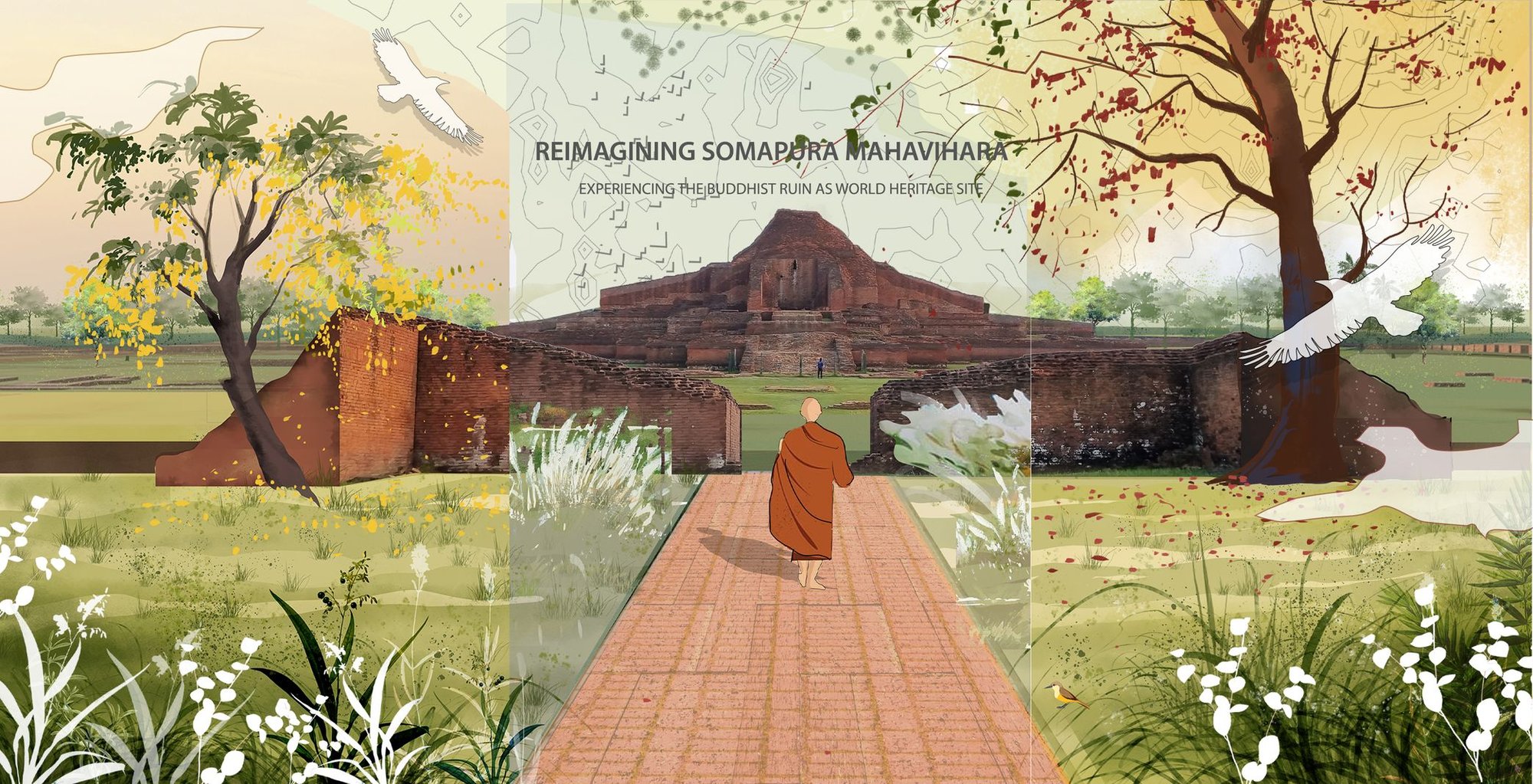
The project titled "Reimagining Somapura Mahavihara," by Mahia Mustary, brings a fresh perspective to the ancient ruins of Somapura Mahavihara, one of the most significant Buddhist monasteries in Bangladesh. This visionary plan, which was shortlisted for the UnIATA '24 award, aims to rejuvenate the historical significance and spiritual ambiance of this UNESCO World Heritage site while addressing modern challenges related to climate change, cultural preservation, and biodiversity.
Site Overview and Historical Context
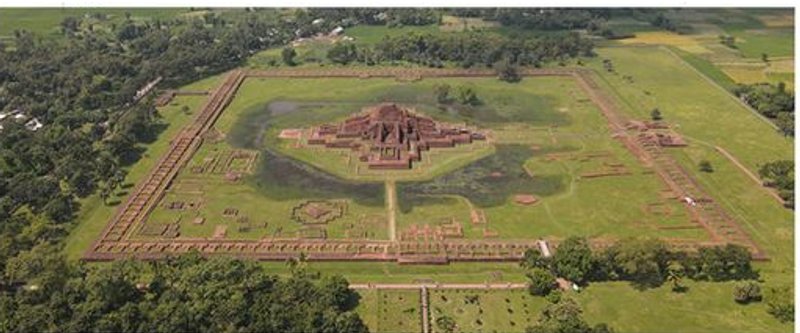
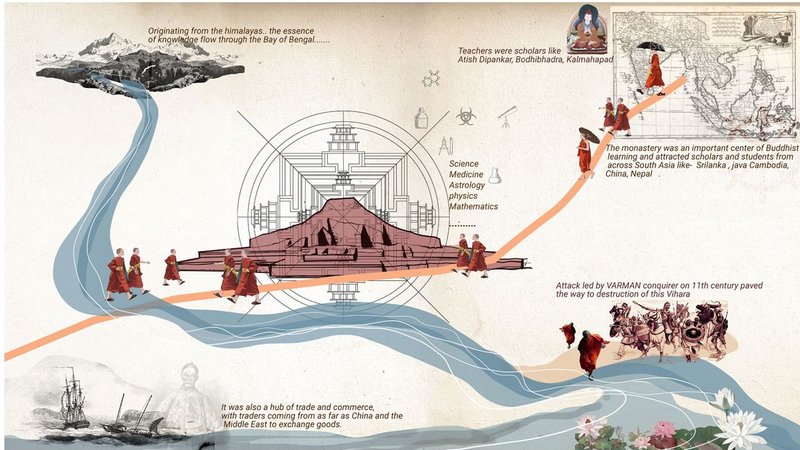
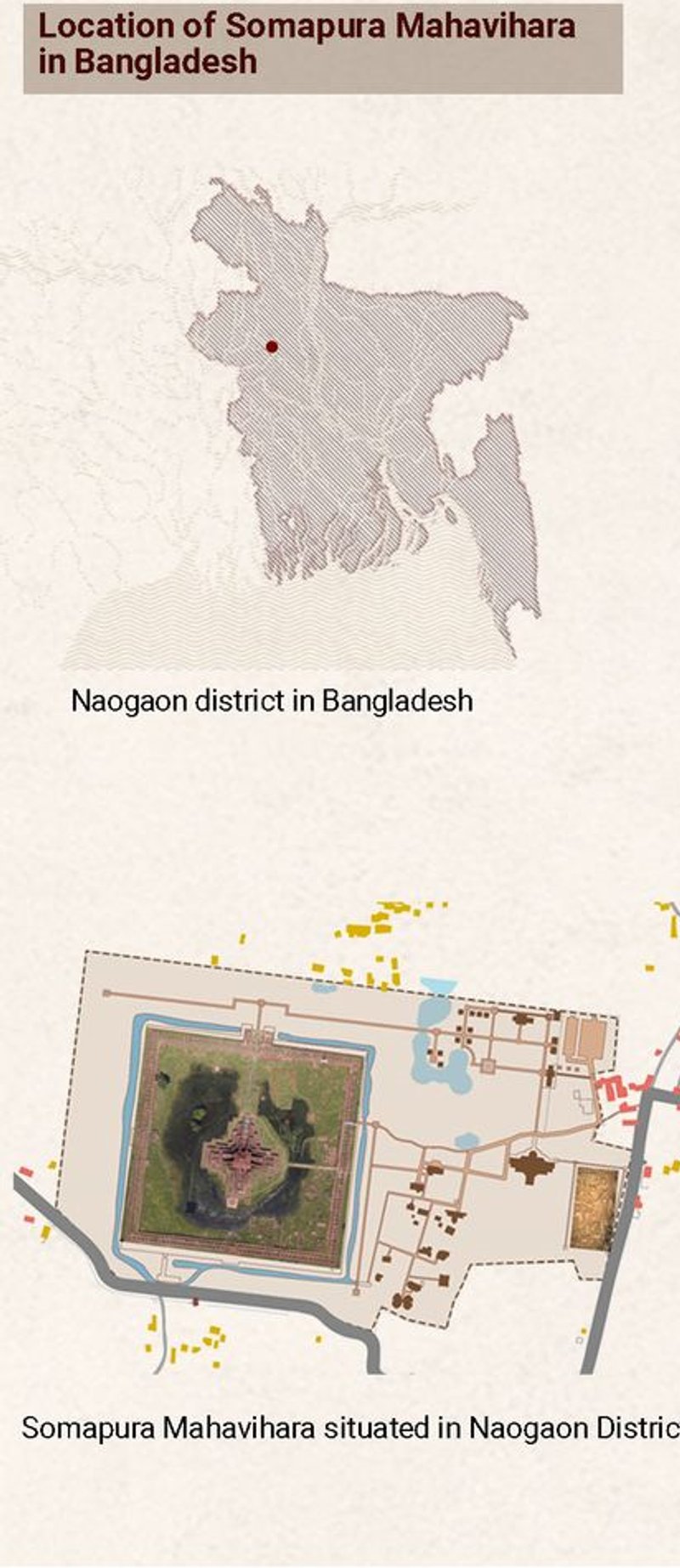
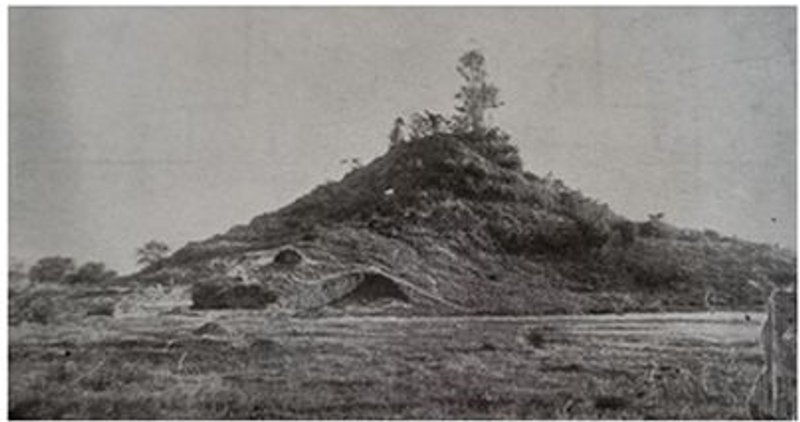
Somapura Mahavihara, located in Naogaon District of Bangladesh, was constructed in the late 8th century CE under the patronage of the Pala King Dharmapala. This monastic complex spans over 27 acres (11 hectares), making it one of the largest monasteries south of the Himalayas. For centuries, it was a vital center for Buddhist learning and monastic life, attracting scholars, monks, and pilgrims from across South and East Asia. However, following centuries of neglect and natural wear, the site now lies in ruins, with many visitors unaware of its deep historical and spiritual roots.
Design Vision and Objectives
The primary goal of Mustary's project is to create an immersive experience that reconnects visitors with the site’s historical and spiritual essence. By enhancing the landscape and access points, the design seeks to communicate the site's Buddhist heritage and cosmological beliefs, while simultaneously ensuring its ecological sustainability. The intervention follows Buddhist principles of impermanence, presenting the site as a place of contemplation, connection, and historical reverence.
Key objectives of the reimagining project include:
Educational Engagement: Raising awareness about the monastery's historical and religious significance.
Sustainable Site Access: Reconfiguring access points to honor the original entrance and protect the site from further damage.
Environmental Rehabilitation: Restoring ancient water systems to support local biodiversity and mitigate waterlogging.
Spiritual and Contemplative Space: Designing spaces that foster reflection, echoing Buddhist values of mindfulness and impermanence.
Masterplan Considerations and Landscape Design
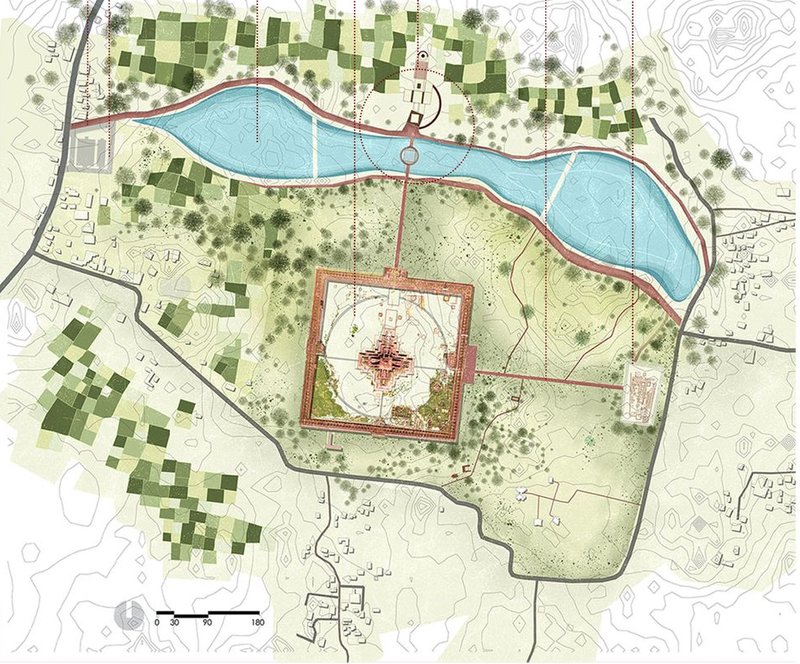
The masterplan for Somapura Mahavihara is deeply inspired by Buddhist mandalas, which represent spiritual harmony and the cosmos. By following this geometric and symbolic model, the masterplan integrates various pathways, access points, and sacred spaces, all connected to the central monastery in a way that mimics a mandala’s radial symmetry.
Key Elements of the Masterplan
Restored Access Points: The project rethinks the visitor’s approach to the monastery by shifting the main access from the east to the north, where the original entryway once stood. This reorientation not only enhances the historical authenticity of the visitor experience but also protects sensitive areas of the ruins.
Subterranean Museum: To respect the scale and prominence of the monastery, a museum is proposed below ground level. This subterranean structure follows a "reverse" design, mirroring the monastery’s three-tier layout. Visitors will journey through an interpretive exhibition that traces Buddhist architectural history, with spaces evoking the form and atmosphere of early Buddhist stupas.
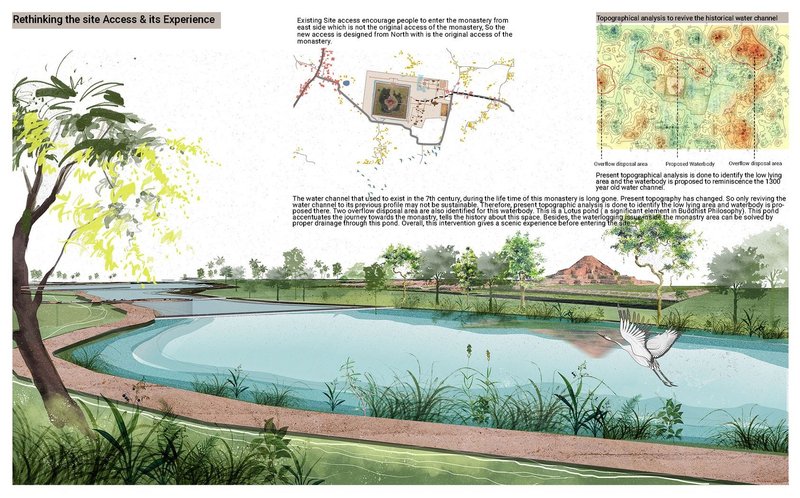
Water Channel and Lotus Pond: Based on topographical studies, the plan revives a historical water channel that existed in the 7th century. The reintroduction of a lotus pond—a symbol of purity in Buddhism—creates a picturesque approach to the monastery, allowing visitors to engage with the landscape in a contemplative manner before entering the main complex.
Environmental and Cultural Sensitivity
The landscape design incorporates seasonal vegetation to reflect Buddhist concepts of impermanence. By changing colors and textures with the seasons, the plantings serve as a subtle reminder of the transient nature of all life, in keeping with Buddhist teachings. Furthermore, the addition of the lotus pond and the reestablished water channels supports biodiversity by creating a microhabitat for aquatic and terrestrial species, addressing environmental goals such as climate resilience and ecosystem restoration.
Cultural Interpretation Spaces
The reimagined site includes interpretation spaces along the pathways and near significant ruins. These spaces are designed to encourage reflection and dialogue, providing an educational experience that also respects the site’s meditative ambiance. Visitors are guided along a pilgrimage-like journey, culminating in the main ruins of the monastery where the historical narratives converge.
Conceptual Framework and Global Significance
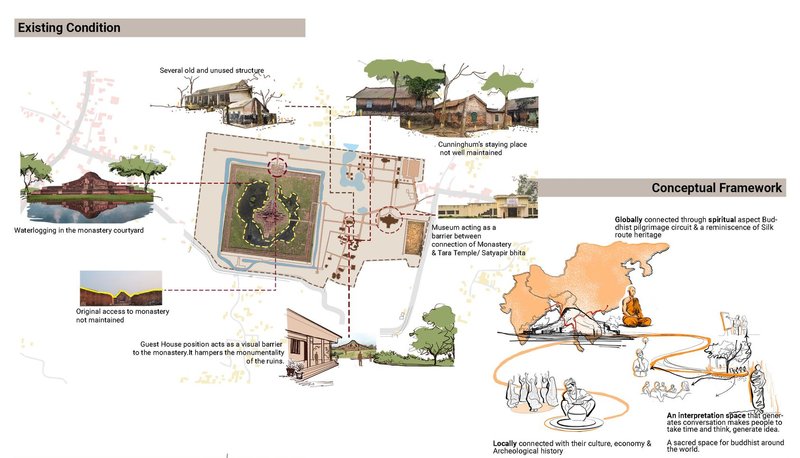
The project aligns Somapura Mahavihara within a broader spiritual and cultural framework, connecting it to the historic Silk Road Buddhist pilgrimage routes. This approach emphasizes the site’s role as part of a global network of Buddhist heritage, linking South Asian culture with China, Nepal, Cambodia, and other regions that share a legacy of Buddhist scholarship and monastic life.
Moreover, this concept addresses local and global identities by integrating culturally resonant designs and landscapes that speak to both regional heritage and universal Buddhist themes. The project’s educational and interpretative elements aim to instill a deeper respect for this sacred space, deterring behaviors that could harm the ruins.
Challenges and Strategic Solutions
Addressing Visitor Engagement and Preservation
One of the ongoing challenges with ancient ruins like Somapura Mahavihara is managing visitor behavior to prevent damage. Many visitors, unaware of the site's sanctity and fragility, attempt to climb the ruins, causing physical degradation. By guiding visitors through a well-defined journey that educates and immerses them in the historical context, the project aims to foster respectful engagement with the ruins.
Climate-Responsive Design
With the threat of climate change and seasonal monsoon floods, managing water flow and preventing waterlogging are critical for preserving the site. The restored water channels are strategically designed to drain excess water during heavy rains, reducing the risk of flooding and soil erosion around the ruins.
Future Implications and Impact
If implemented, Mustary's vision for Somapura Mahavihara could set a precedent for heritage site management and sustainable tourism. By integrating environmental stewardship, cultural education, and spatial design, this project offers a model for how ancient sites can be preserved in a way that honors their past while preparing for future challenges.
Additionally, the project can enhance local economic development by attracting both domestic and international tourists who are drawn to heritage tourism. This increased attention to the site can further bolster conservation efforts, providing funds and awareness to maintain the ruins and protect them from urban encroachment.
Mahia Mustary's reimagining of Somapura Mahavihara offers a profound exploration of how ancient heritage can be made accessible and meaningful to contemporary visitors while respecting its original sanctity. By combining ecological restoration, spatial storytelling, and mindful design, this project provides a roadmap for honoring the legacy of Buddhist learning at Somapura Mahavihara while engaging with the pressing environmental and cultural challenges of our time.
In a world where many historical sites are at risk of losing their relevance or being damaged by modern development, "Reimagining Somapura Mahavihara" demonstrates how thoughtful design can rekindle appreciation for ancient places, encouraging both local communities and global visitors to preserve and protect these irreplaceable landmarks.



Popular Articles
Popular articles from the community

20 Most Popular Furniture Design Projects of 2025
Modular street systems, parametric benches, and insect hotels: the furniture design projects that captivated architects on uni.xyz in 2025.

Studio Gram Unfurls a Concrete Curve Through an Adelaide Queen Anne Villa
In Rose Park, a billowing concrete threshold stitches a century-old house to a sun-chasing pavilion organized around an existing pool.
H&P Architects Stack a Vertical River of Brick and Greenery in Hanoi
A perforated terracotta tower in Dong Anh channels water, light, and air through eight staggered levels of domestic life.
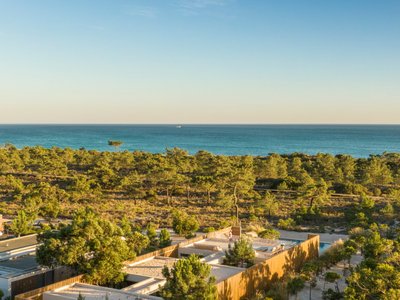
BICA Arquitectos Buries a Coastal Home in a Man-Made Dune on Portugal's Tróia Peninsula
A 300-square-meter house of timber, sand mortar, and travertine dissolves into the dune landscape it helped regenerate on the Alentejo coast.


Similar Reads
You might also enjoy these articles

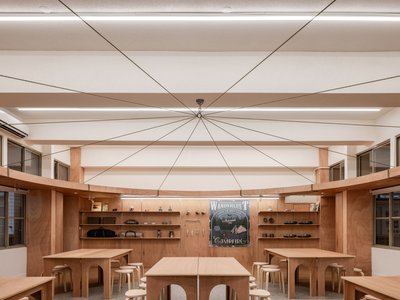
317studio Turns an 87 m² Classroom into a Forest Clearing for Scouts in New Taipei City
A rope canopy, student-made specimens, and campfire geometry replace rows of desks in this Scouting classroom in Xizhi District.
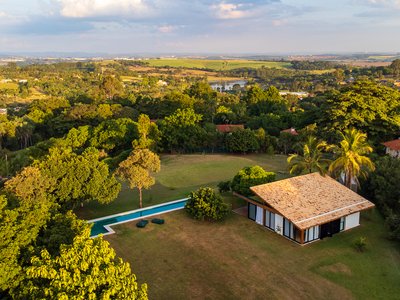
24 7 Arquitetura Builds a Timber Pavilion as a Family's First Act on a 5,000 m² Brazilian Plot
In Jaguariúna, a prefabricated glulam house nestles among mature trees as the opening move of a larger residential masterplan.
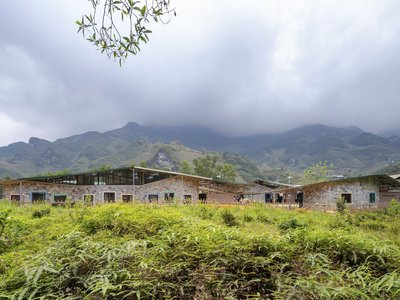
1+1>2 Architects Build a School from 900 Blocks of Hmong Stone on Vietnam's Rocky Plateau
On a barren valley in Ha Giang province, a community quarried its own stone to raise a kindergarten and primary school rooted in Hmong identity.
100A Associates Builds a Volcanic Stone Retreat on Jeju Island Rooted in Ritual and Restraint
Watarstay [Wa:Tar] in Bongseong-ri channels Jeju's basalt, reed, and hemp into a 150 m² hospitality space shaped by contemplation.






Comments (0)
Please login or sign up to add comments
No comments yet. Be the first to comment!