
Extended Co-Life: Reimagining Humanitarian Architecture Through Co-Living Systems
A humanitarian architecture proposal transforming a border bridge into a modular co-living system offering dignity, flexibility, and shared life.

In the evolving discourse of humanitarian architecture, the need to move beyond temporary shelters toward dignified, adaptive living environments has become increasingly urgent. Extended Co-Life, a project by Shaha Maiteh, positions itself within this critical shift by proposing a co-living framework that redefines how asylum seekers experience transitional spaces. Recognized as a Shortlisted entry of No Man's Land, the project transforms an infrastructural edge condition into a spatial and social bridge between uncertainty and stability.
Humanitarian Architecture as a Living System
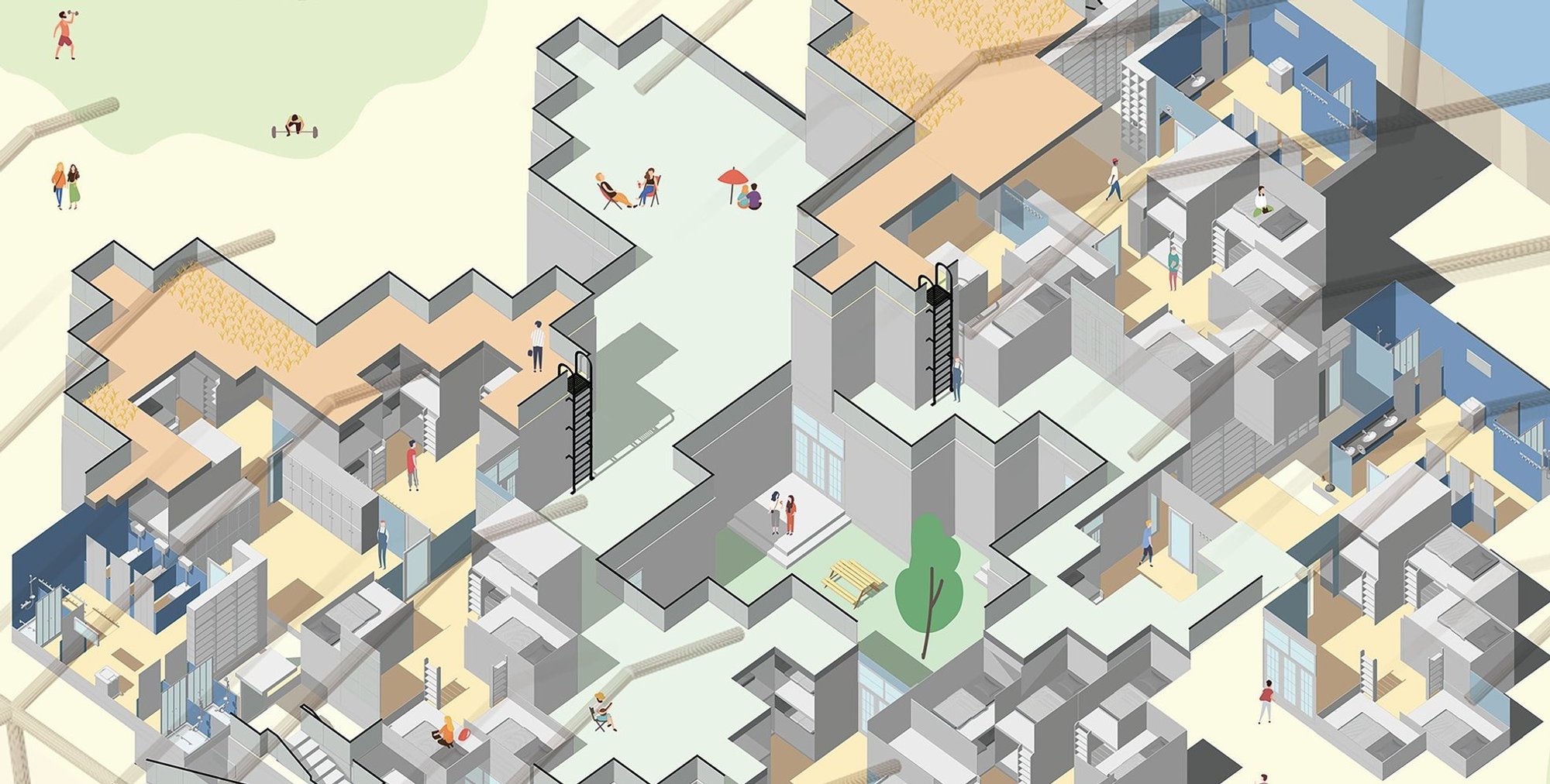
Rather than approaching refugee accommodation as a static, short-term intervention, the project introduces a scalable and modular system rooted in co-living principles. The design operates through a hierarchy of spatial units, beginning with compact pod-based modules that aggregate into extended family clusters, and further into a larger community network.
This strategy allows the architecture to respond dynamically to fluctuating population densities while maintaining a sense of domestic familiarity. The emphasis is not only on shelter, but on creating a full living cycle that integrates social, functional, and psychological needs within a cohesive spatial framework.
Bridging the Gap: Infrastructure as Habitat
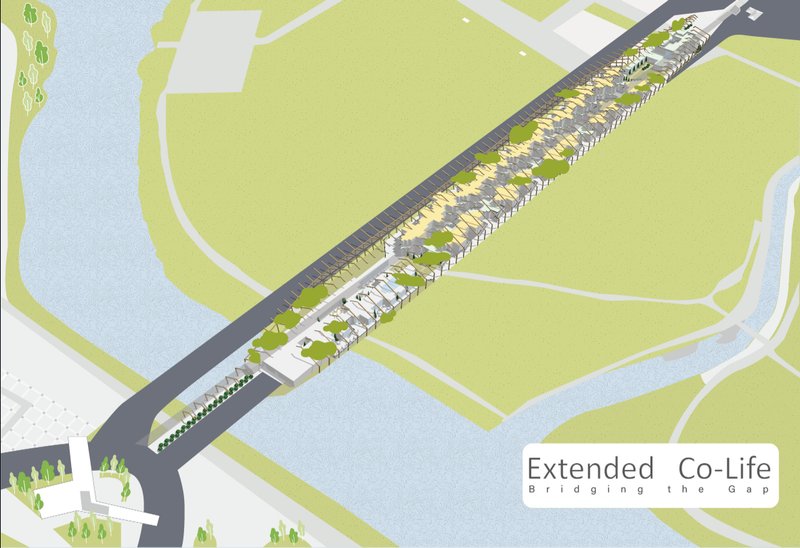
The proposal situates itself along the border between the United States and Mexico, reimagining an existing bridge as a linear community spine. This transformation is central to the project’s humanitarian architecture approach, converting a symbol of division into one of connection.
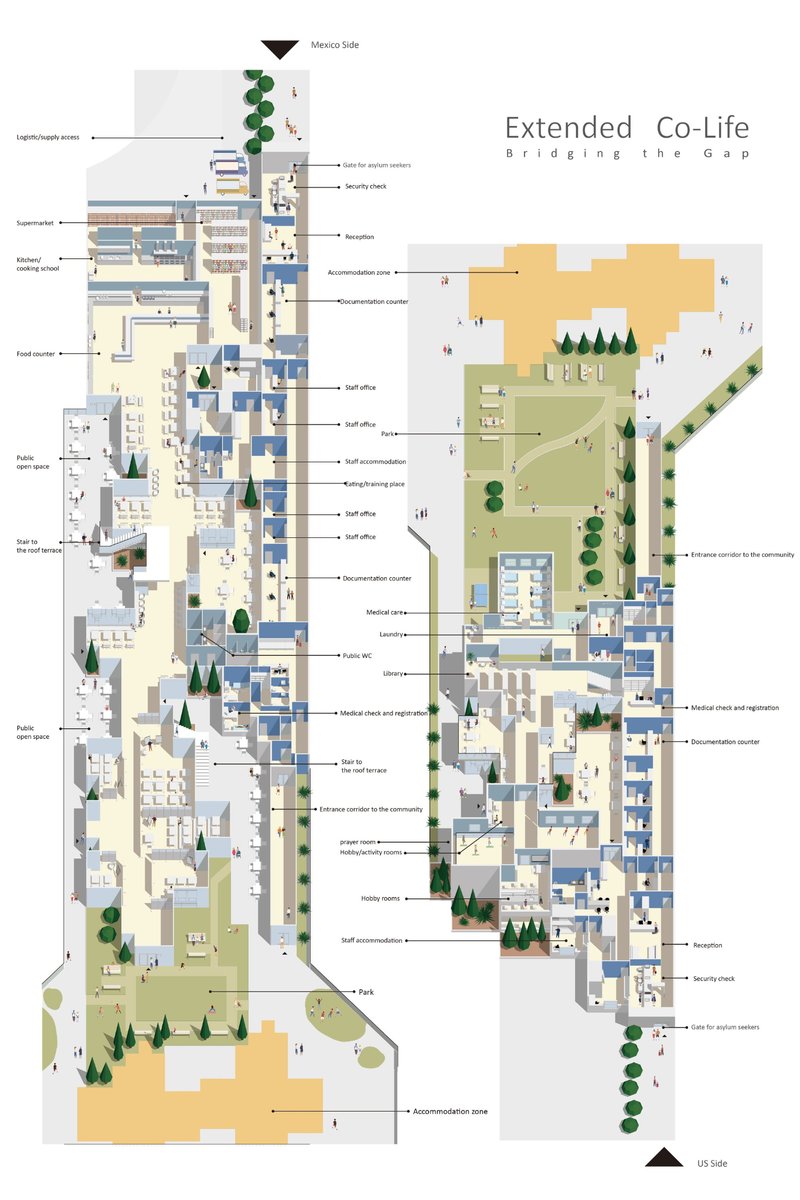
The bridge is reconceived as a ‘No Man’s Land’ community, hosting a sequence of public, administrative, and residential zones. Administrative functions anchor both ends, managing entry, documentation, and medical processes, while the central span accommodates living units, shared amenities, and open spaces.
This linear urbanism enables controlled movement, clarity of circulation, and a structured transition from arrival to integration. Simultaneously, it fosters a sense of belonging through layered public and semi-private environments.
Modular Co-Living and Spatial Flexibility
At the core of the project lies its modular co-living system. Individual pod units are designed to be combinable in multiple configurations, allowing them to evolve into extended family units and neighborhood clusters. These units are organized around shared courtyards, encouraging interaction while preserving a degree of privacy.
The adaptability of this system is critical within the context of humanitarian architecture, where uncertainty defines occupancy patterns. The design allows for incremental growth, reconfiguration, and even partial disassembly, ensuring long-term usability beyond immediate crises.
The second-level extensions introduce additional communal and agricultural functions, including rooftop farming zones that promote self-sufficiency and skill development. This integration of productive landscapes enhances both environmental performance and community resilience.
Public Realm and Social Infrastructure
The project carefully integrates a diverse range of public and semi-public programs. These include kitchens, canteens, training spaces, libraries, medical facilities, and recreational zones. The spatial sequencing ensures that daily life activities are distributed along the bridge, reinforcing a sense of routine and normalcy.
Indoor and outdoor public spaces are interwoven, allowing flexibility in use throughout the day. On one side, functions such as grocery and dining adapt to different time cycles, while on the other, educational and healthcare facilities establish a more stable institutional presence.
Green spaces are strategically inserted as courtyards, linear parks, and rooftop gardens. These elements not only improve environmental conditions but also introduce moments of pause, reflection, and social interaction within an otherwise dense spatial system.
Structural Logic and Environmental Response
The structural system is defined by a lightweight wooden framework that spans the length of the bridge. Its form is derived from a simplified house geometry, split and extended to create a continuous sheltering canopy. This approach reinforces the project’s conceptual emphasis on ‘home’ while addressing climatic requirements.
Vegetation is integrated into the structure through climbing systems and distributed planting zones, providing shading and thermal comfort. The use of modular construction techniques further enhances efficiency, enabling rapid deployment and adaptability across different contexts.
Human Experience and Narrative Layers
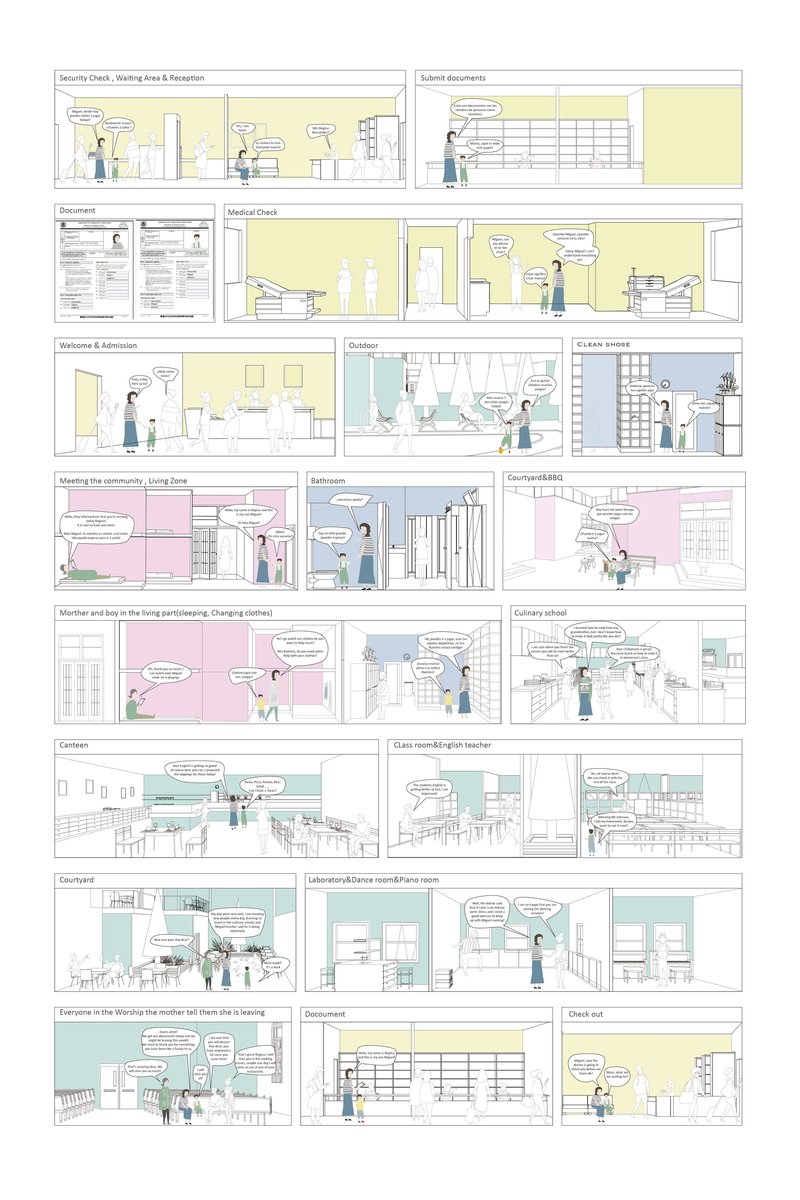
Beyond spatial organization, the project communicates a strong narrative of human experience. Illustrated sequences depict the journey of an asylum seeker, from arrival and documentation to integration into the community. These narratives highlight the importance of dignity, clarity, and emotional stability within humanitarian architecture.
Spaces such as reception areas, medical rooms, living quarters, and communal courtyards are designed not only for function but also for psychological comfort. The emphasis on familiarity, visibility, and accessibility reflects a deeper understanding of the lived realities of displacement.
Critical Reflections from the Jury
The project’s ambition and spatial clarity were recognized by the jury, while also prompting critical observations regarding its applicability and conceptual alignment with the realities of refugee conditions.
Salvador Reyes Ríos (Juror) noted: “It seems to be a proposal designed for a much more permanent accommodation. Love the volumetric composition. A parallel bridge seems not to be the best solution for a better quality of life for the migrants.”
This critique highlights a key tension within humanitarian architecture: the balance between temporary solutions and long-term habitation strategies. While the project excels in spatial articulation, it raises questions about the appropriateness of permanence in transitional contexts.
Luis Diego Barahona Ortega (Juror) added: “Despite having merit in the visual presentation, a greater connection with the reality of the challenge presented by the contest would be recommended based on the characteristics of the refugee situation.”
This observation underscores the importance of grounding architectural proposals in the socio-political and logistical complexities of displacement, beyond formal and spatial innovation.
Reframing Humanitarian Architecture
Extended Co-Life ultimately contributes to an ongoing redefinition of humanitarian architecture. By merging co-living strategies with infrastructural transformation, it challenges conventional models of refugee accommodation and proposes a more integrated, community-driven approach.
While critiques point to the need for stronger alignment with real-world constraints, the project’s conceptual clarity and spatial ambition offer valuable insights. It positions architecture not merely as a response to crisis, but as a framework for dignity, adaptability, and collective life.
In doing so, it expands the discourse from emergency shelter toward resilient, human-centered environments capable of supporting life in transition.



Popular Articles
Popular articles from the community

Gunawarman 35: Jakarta's Corner of Quiet Complexity
WOFF's mixed-use building in Jakarta pairs translucent glass block walls with a buff brick cylinder to hold coffee, wellness, and work under one roof.

20 Most Popular Commercial Architecture Projects of 2025
From sustainable market concepts to heritage factories, the commercial buildings and proposals that drew the most attention on uni.xyz this year.
Free Architecture Competitions You Can Enter Right Now
No entry fees, real prizes. Here are the best free architecture competitions open for submissions in 2026.

Filtering Space: A Gradual Spatial Experience
From urban intensity to spatial calm.

Similar Reads
You might also enjoy these articles
Twilight Crossing: A Pedestrian Bridge That Performs with Light and Water
Angel Gamboa's tensile cable bridge transforms a lakeside crossing into a choreographed sequence of color, reflection, and framed views at dusk.
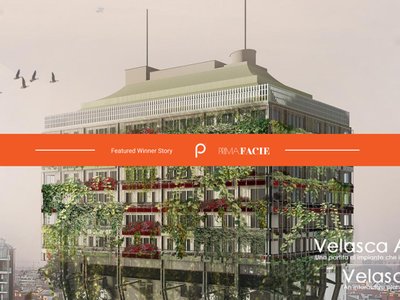
Digital Façade Design for our cities’ urban fronts
Prima Facie - Result Story
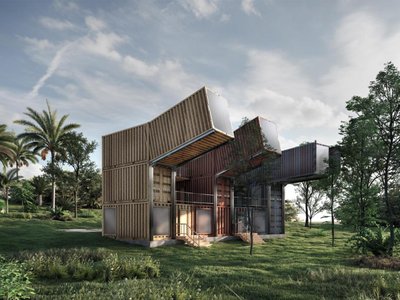
Protecting avian biodiversity: Bird observatories to help spread awareness & save rare bird species.
Results for ‘Fly’ - Landscape design competition out now

Explore Urban Design Competitions
Discover active competitions in this discipline




Comments (0)
Please login or sign up to add comments
No comments yet. Be the first to comment!