
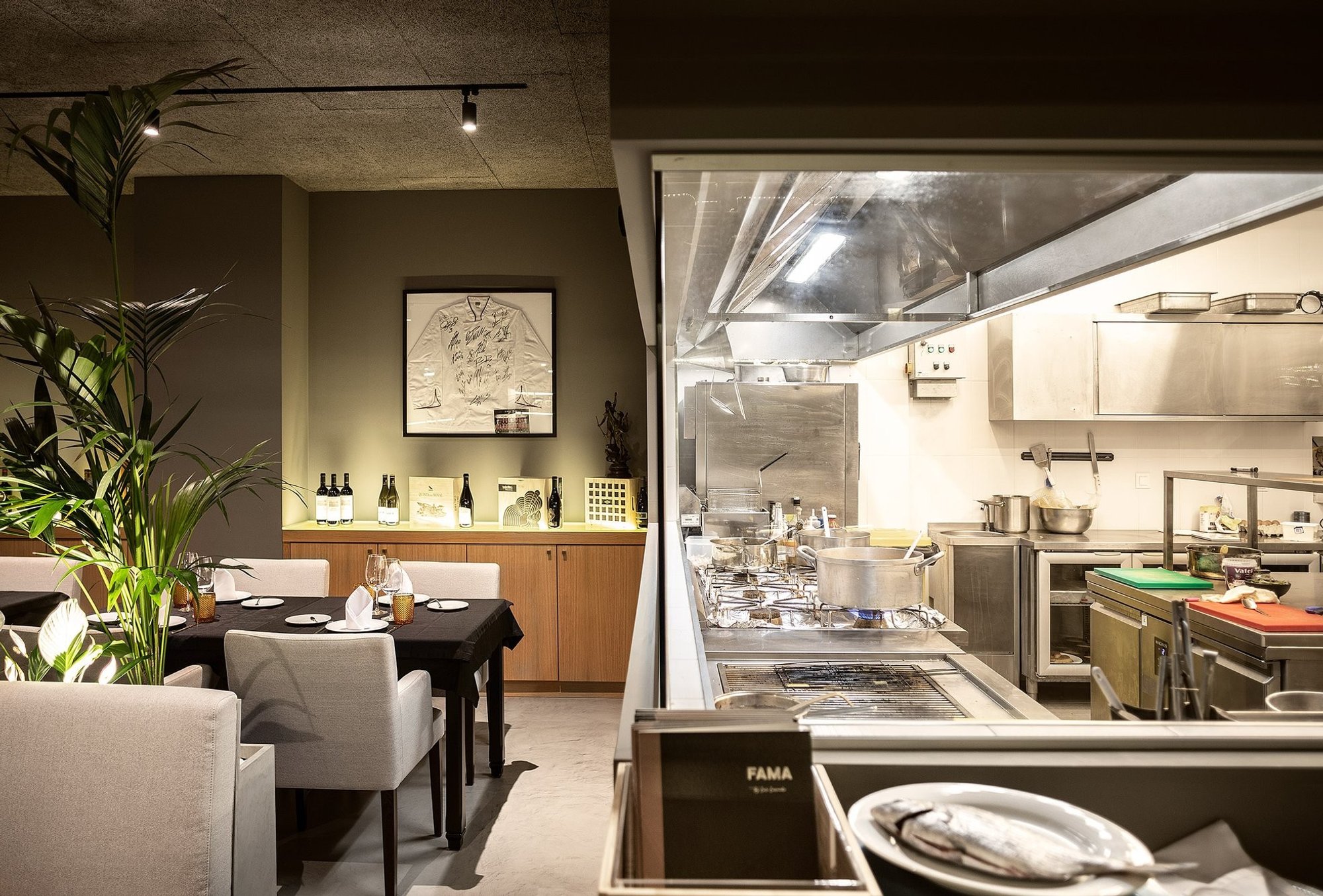
FAMA Restaurant by Paulo Martins | A Study in Contemporary Restaurant Interior Design
A refined contemporary restaurant interior design in Aveiro, where material clarity, lighting, and spatial zoning create intimacy and sensory dining.

The FAMA Restaurant, designed by Paulo Martins, stands as a compelling example of contemporary restaurant interior design, where spatial clarity, material restraint, and atmospheric precision converge to shape a memorable dining experience. As the first gastronomic venture by chef Luis Lavrador, the project is conceived not merely as a place to eat, but as a destination for lingering, connection, and sensory immersion.
Located in a relatively new district of Aveiro, the restaurant establishes itself as both a local reference and a social anchor. The design strategy is grounded in the idea of permanence and comfort, where architecture becomes an active participant in shaping how users experience food, time, and interaction.
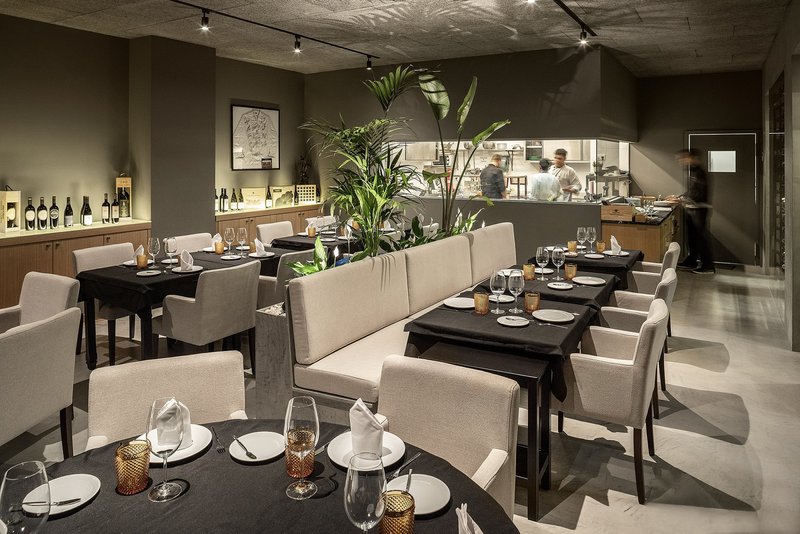
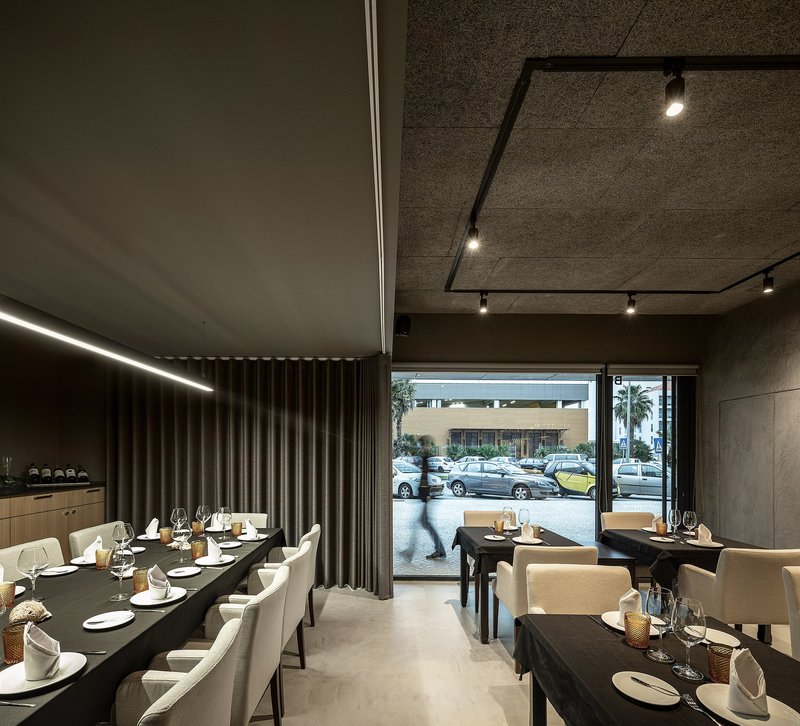
At the core of the layout is a central service volume that organizes the plan into two distinct spatial zones. This intervention is critical to the contemporary restaurant interior design approach, allowing for both functional efficiency and spatial hierarchy. The central element acts as a mediator, separating yet visually connecting different dining environments, while maintaining a coherent spatial narrative.
Materiality plays a defining role in reinforcing this architectural language. The use of ash-toned microcement across floors and central volumes creates a continuous and monolithic reading of the space. This continuity eliminates visual fragmentation, allowing the interior to feel grounded and cohesive. Walls and ceilings are finished in deep, muted green tones, enhancing the perception of intimacy while amplifying the effects of controlled artificial lighting.
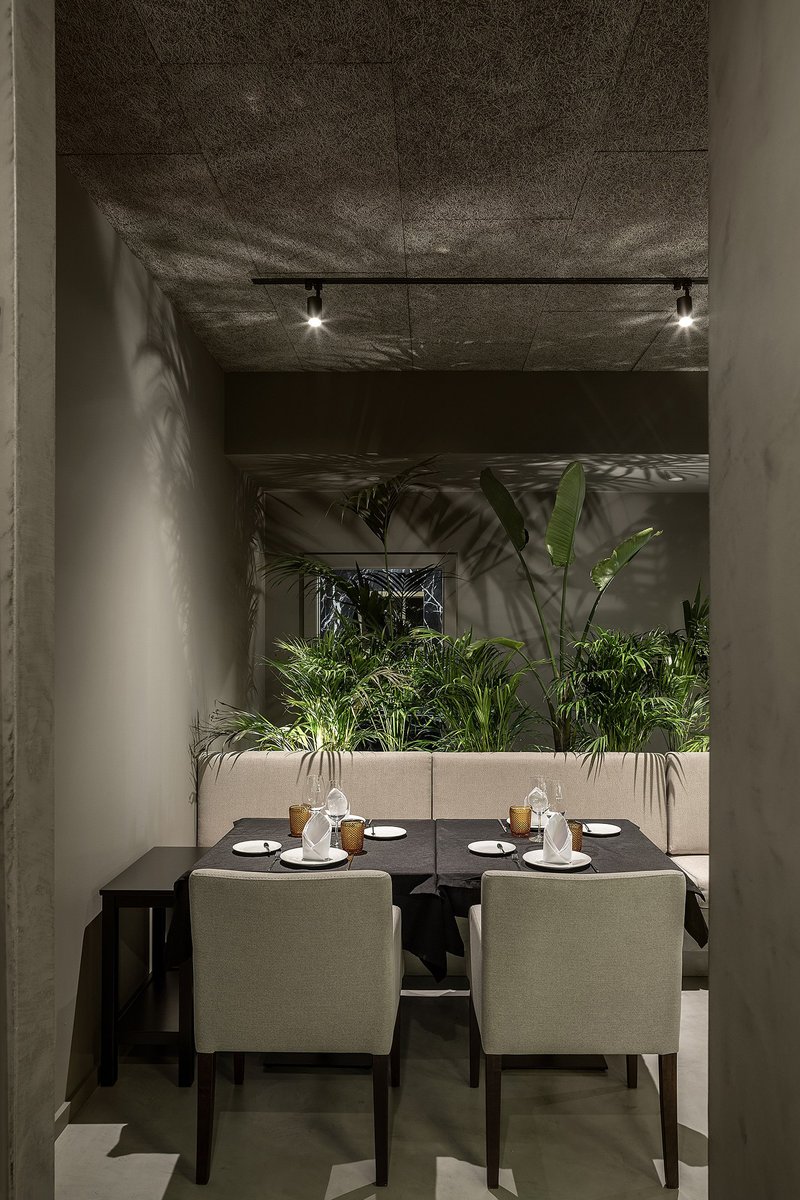
Lighting design is carefully calibrated to define micro-environments within the larger space. Each table or cluster of tables is subtly framed through light intensity and shadow, creating a sense of enclosure without physical barriers. This technique, central to high-quality contemporary restaurant interior design, enhances privacy while preserving openness.
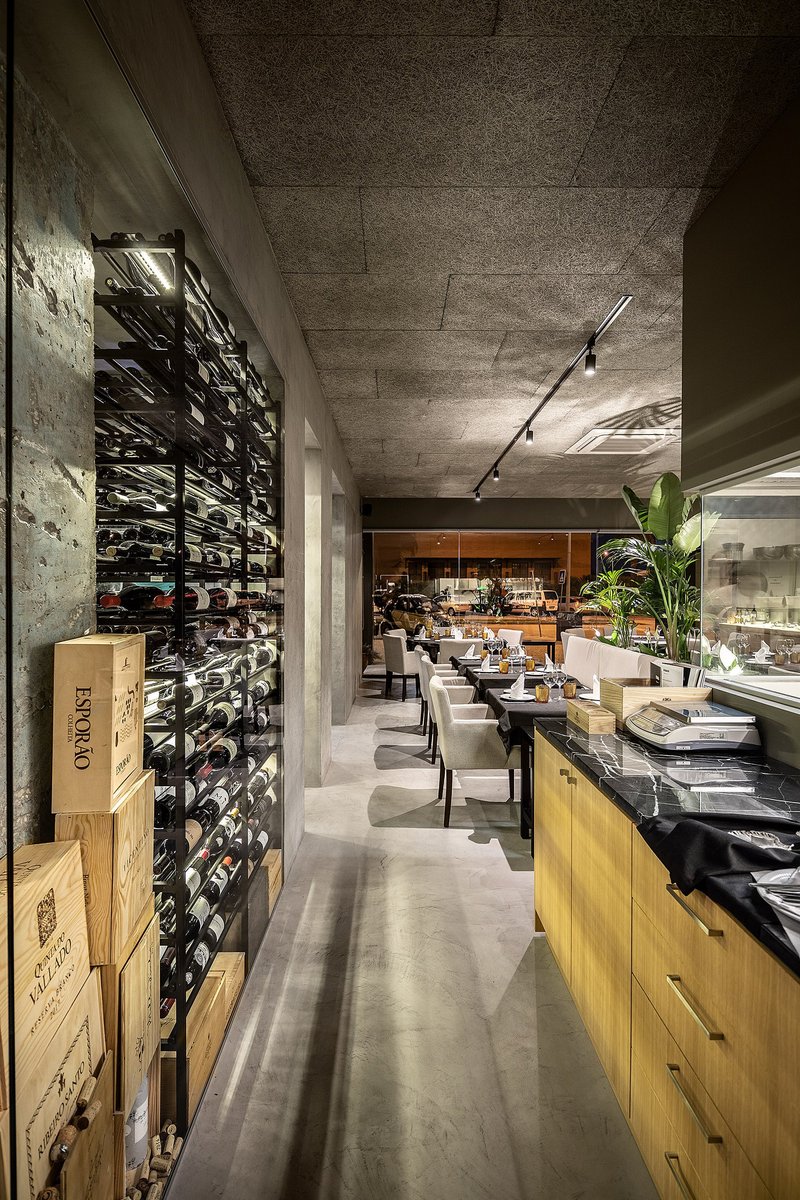
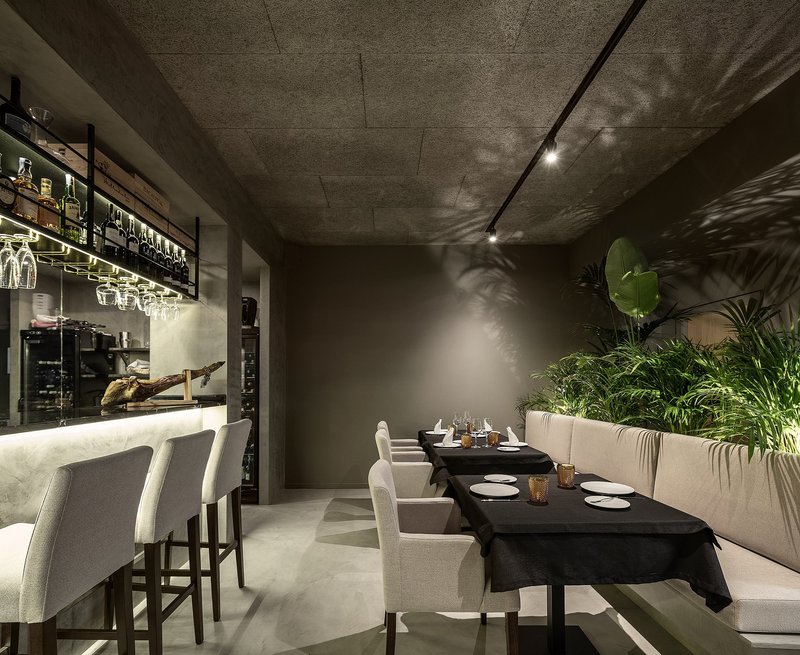
Vegetation is introduced as both a spatial and sensory device. Strategically placed greenery softens the architectural rigidity of the materials while simultaneously acting as a visual and acoustic buffer between seating areas. The presence of plants restores a sense of balance within the constructed environment, contributing to a calmer and more intimate dining atmosphere.
Furniture selection further reinforces the design narrative. Natural oak wood elements contrast with the otherwise subdued palette, adding warmth and tactility. Upholstered seating enhances comfort, aligning with the project’s core intention of encouraging guests to linger. The furniture is not treated as an isolated layer but as an integrated component of the overall architectural composition.
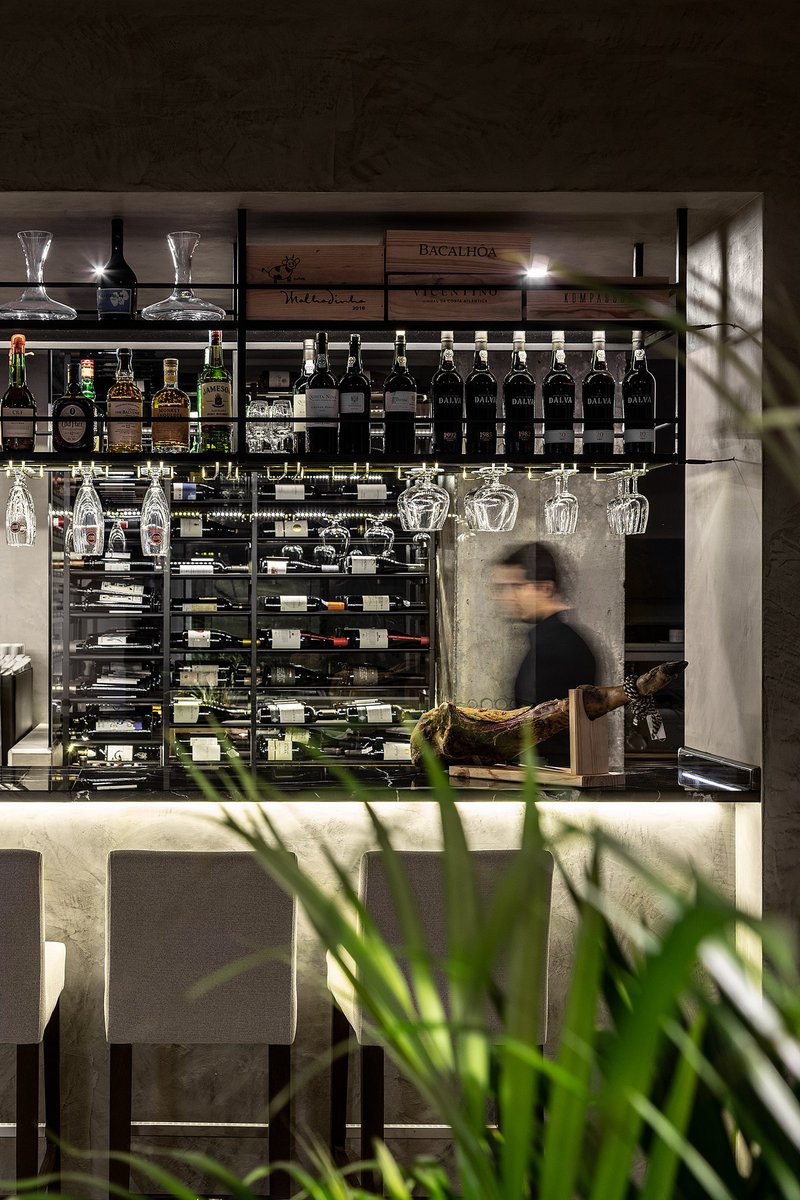
The open kitchen and bar areas introduce a dynamic layer to the experience, offering glimpses of activity without disrupting the calm ambiance. This transparency strengthens the connection between preparation and consumption, a key aspect in contemporary dining environments.
Overall, FAMA Restaurant exemplifies how contemporary restaurant interior design can move beyond aesthetics to orchestrate experience. Through controlled materiality, spatial zoning, lighting precision, and subtle natural interventions, the project achieves a delicate balance between intimacy and openness. It is an environment where architecture quietly enhances the act of dining, transforming it into a multisensory experience.
This project, recognized as a Jury Commendation entry in Commercial '20, reinforces Paulo Martins’ approach to designing spaces that prioritize atmosphere, human experience, and architectural clarity.



Popular Articles
Popular articles from the community

20 Most Popular Office Building Projects of 2025
From biophilic workspaces in India to net-positive energy offices in New Delhi, 20 office building projects that defined architecture in 2025.
20 Most Popular Furniture Design Projects of 2025
Modular street systems, parametric benches, and insect hotels: the furniture design projects that captivated architects on uni.xyz in 2025.

MAVA Design Turns a Column-Riddled Shell into a Serene Hair Extension Salon in Kyiv
Inside a former motorcycle factory campus, a 110 square metre beauty atelier treats structural obstacles as spatial anchors.
Prokop Hartl Turns a 1930s Prague Corner Apartment into a Lesson in Structural Honesty
A 115 m² renovation on the Vltava River celebrates exposed concrete, restored parquet, and a mirrored column as its centerpiece.


Similar Reads
You might also enjoy these articles

Urban Forest: A Vertical Ecosystem for 5,000 Workers in Singapore's Changi Business Park
Radially stacked pods and layered green decks turn a 7-acre plot into 47 acres of ecological workspace projected for 2040.

interACT: A Wearable Transit Object That Turns Commuting Into Social Infrastructure
A backpack-mounted foldable device transforms walking, waiting, and riding into moments of shared comfort across Jakarta's transit network.

Lean On Barrier System: Where Traffic Safety Meets Chai Culture in Ahmedabad
A modular steel barrier doubles as informal seating and lean-on furniture at one of Ahmedabad's busiest intersections, keeping vendors in place.

The Black Bagh: A Living Monument Built from Water, Light, and Memory
On the banks of the Yamuna, two designers replace the myth of a marble mausoleum with a regenerative landscape of reflection and ritual.


Explore Conceptual Architecture Competitions
Discover active competitions in this discipline




The International Standard for Design Portfolios


The Global Benchmark for Architecture Dissertation Awards


The Global Benchmark for Graduation Excellence


Challenge to design luxury tourism on rails
Comments (0)
Please login or sign up to add comments
No comments yet. Be the first to comment!