

Fengyuan Station by TJAD Original Design Studio: A Sculptural Hub of Hangzhou’s Riverfront Public Space
Fengyuan Station in Hangzhou is a sculptural riverfront pavilion blending playful origami design with community, landscape, and lightweight architecture.


Project Title: Hangzhou Riverfront Public Space – Fengyuan Station Architects: TJAD Original Design Studio Location: Binjiang District, Hangzhou, China Area: 1,513 m² Year of Completion: 2023 Lead Architects: Zhang Ming, Zhang Zi, Chen Bo Photography: Zhang Yong, Original Design Studio
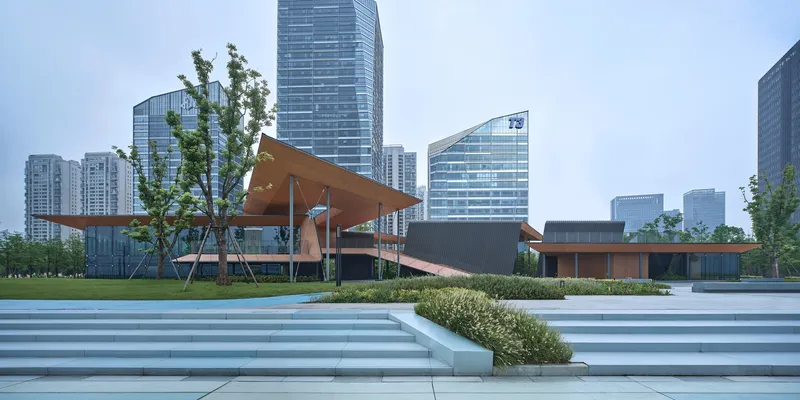
Revitalizing the Qiantang Riverbank: A New Urban Landmark
Situated along the south bank of the Qiantang River in Hangzhou’s Binjiang District, Fengyuan Station is a key component of a 12-kilometer waterfront revitalization project led by TJAD Original Design Studio. This innovative visitor center reimagines public riverfront architecture by blending functional infrastructure with immersive landscape design, creating a multi-dimensional children’s paradise nestled in a lush forest setting.
The project addresses several challenges common to urban public spaces: disconnected cycling and pedestrian paths, underutilized river access, and a lack of integrated service facilities. Fengyuan Station transforms these weaknesses into strengths, merging architectural creativity with landscape sensitivity to create a dynamic community hub that serves both locals and visitors.
Origami-Inspired Forms and Interactive Architecture
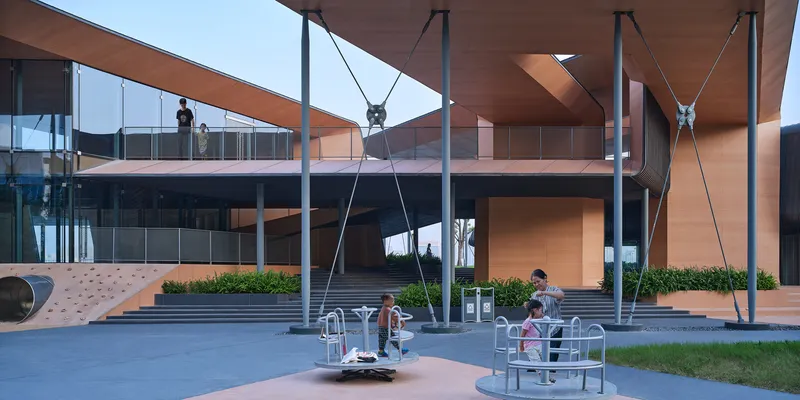
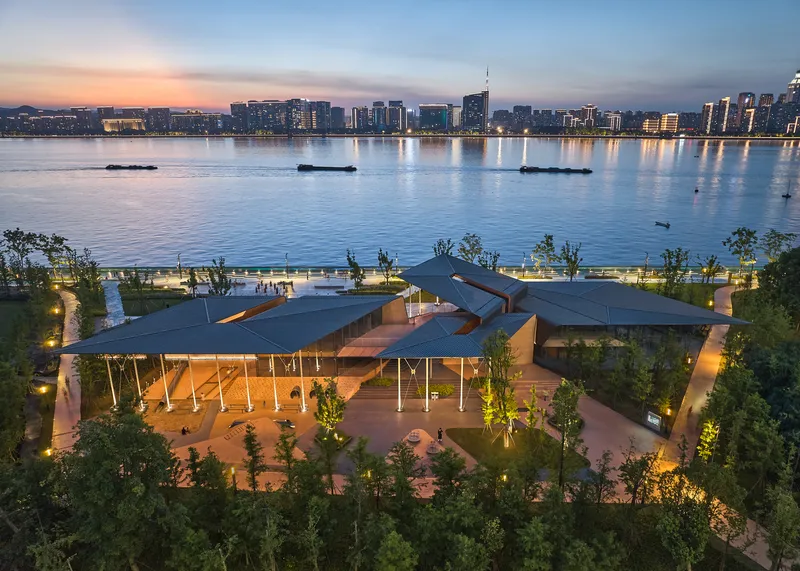
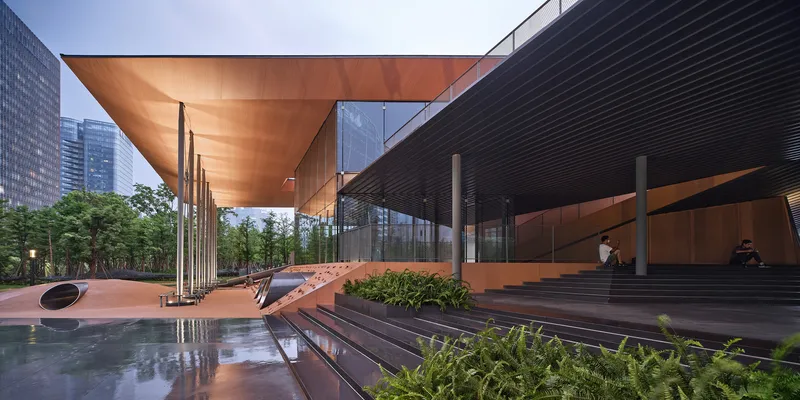
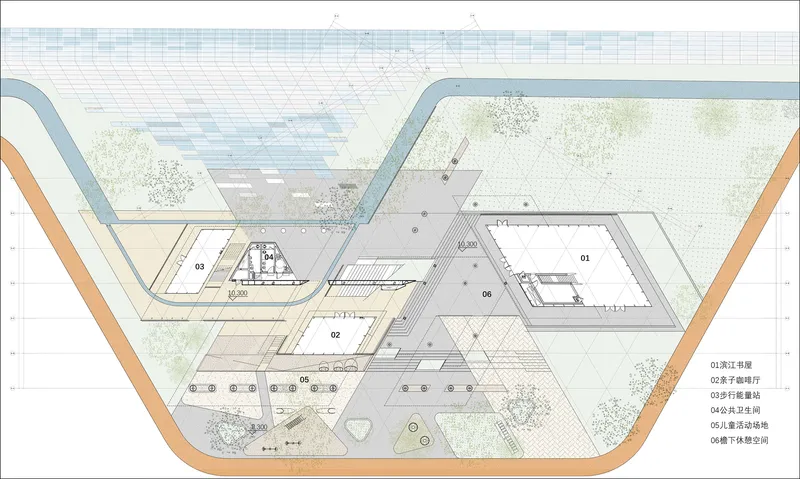
The architectural language of Fengyuan Station is rooted in simplicity and playful geometry. Drawing inspiration from origami and the imagery of paper kites fluttering in the breeze, the station is composed of five C-shaped modular units, each uniquely oriented to either embrace the river or connect with the city behind.
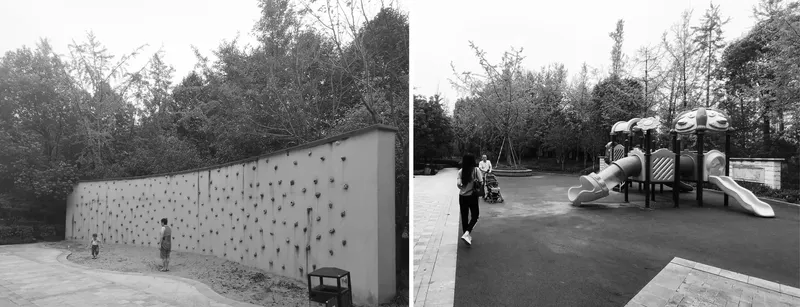
Three units face the Qiantang River, housing the Binjiang Bookstore, while two others open toward the urban interior, offering a café and an outdoor children’s playground. This thoughtful layout takes advantage of the site’s topographical variation and creates a spatial rhythm that encourages exploration. The sculpted eaves offer shaded seating, especially designed as resting spots for families and caregivers.
Materiality and Structural Integration
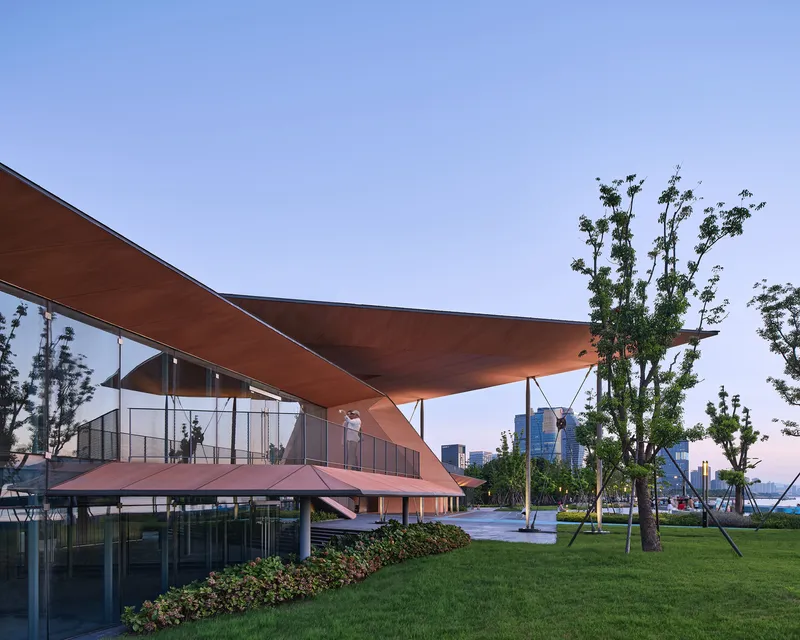
A sophisticated palette of materials reinforces the folded, kite-like design. The interior surfaces are clad in imitation wood aluminum panels, while the exterior features dark gray vertical locking titanium-zinc panels that sweep from rooftop to base, visually grounding each unit. Color-tinted concrete defines spatial boundaries and elevates the sensory experience of the modular architecture.
Between the C-shaped units, deliberate voids create organic circulation paths and gathering spaces. The placement of ladders and walkways within these gaps enhances accessibility while fostering spontaneous social interaction.
Lightweight, High-Performance Engineering
TJAD’s design prioritizes structural elegance through a “lightweight construction system” that visually minimizes mass while maximizing performance. A “dense columns + separated gravity and lateral load system” ensures stability while reducing the visual footprint. The primary vertical supports—a series of slender steel frame columns measuring just 100x160mm—double as curtain wall keels, embodying the project’s holistic integration of architecture and engineering.
Further emphasizing lightness and articulation, shuttle columns with spherical joint nodes are fitted with tension bolts to eliminate bending forces. Cross cables between columns enhance lateral stability without disrupting the minimalist aesthetic. These precision-engineered components allow for thinner, more refined elements—such as reducing shuttle column diameters to a sleek 194mm—without compromising structural integrity.
Community-Centered Public Space Design
Fengyuan Station is more than a service node—it’s a civic space that celebrates public interaction, child-friendly design, and waterfront ecology. By seamlessly weaving together urban infrastructure, architectural innovation, and cultural playfulness, TJAD Original Design Studio has created a landmark that resonates with both locals and tourists, reinforcing Hangzhou’s identity as a city of living riverscapes.
This project exemplifies how architectural design can transform underused public land into vibrant, inclusive, and sustainable community assets. Fengyuan Station stands as a compelling example of contemporary public architecture that is both functionally responsive and emotionally uplifting.




Popular Articles
Popular articles from the community


Riyadh For All: Intergenerational Urban Design for Active Aging in Rabat
Riyadh For All reimagines urban design in Rabat with intergenerational co-living, adaptive courtyards, and Moroccan cultural exchange today.
EW PARK: Sustainable Architecture Reimagines the Future of Urban Parking
EW PARK reimagines city parking as a modular wooden tower combining automation, solar energy, electric mobility, and adaptable urban design.

Co-Life: Senior Housing Design That Reconnects Older Adults With the City
Co-Life reimagines senior housing design through healing gardens, shared streets, workshops, and a sustainable community across generations.

Hill & Cross Opera: Sculptural Opera House Architecture Shaped by Tallinn’s Landscape and Identity
Hill & Cross Opera reimagines opera house architecture in Tallinn through its sculptural hill, civic plaza, glass wave and a luminous cross.


Similar Reads
You might also enjoy these articles


Hodi-Mandai Geram
Project Function: Preservation and revitalization of the Intangible heritage and socio-spatial identity of the Hodi by Housing, Cultural Memory Center, Sacred Grove, landscape, local tourism economy


Olio Towers: A Mid-Rise for Performers That Fuses Housing, Rehearsal, and Stage
Located blocks from Houston's Theater District, this modular tower stacks living units around a central performance atrium.

Oasis: Modular Green Housing Carved into Dhaka's Urban Fabric
A shortlisted Plugin Housing entry reclaims unauthorized settlements in Dhaka with stepped concrete volumes, green roofs, and ventilation-driven design.

Black Hole: A Floating Megastructure for the Post-Physical Era
Emiliano Mazzarotto envisions a spherical, self-scaling arena where e-sports, digital hotels, and holographic stadiums replace traditional public space.


Explore Landscape Design Competitions
Discover active competitions in this discipline



Challenge to reimagine the Iron Throne


Photograph architecture without architects


Illustrate the lost glory of Angkor Wat - Render Challenge


Design challenge to reuse E-waste
Comments (0)
Please login or sign up to add comments
No comments yet. Be the first to comment!